


Chidambaram Nataraja Temple
General information
-
Ideal Duration:
3-4 Hours (Minimum for a detailed visit).Place Type:
Category: Hindu Temple, Paadal Petra Sthalam, UNEntry Fees:
Temple Entry: Entry into the general prakarams (courtyards) and viewing the major shrines like the Sivakamiamman Temple and the Govindaraja Shrine are Free for all visitors.
Special Darshan/Pooja: Accessing the closest viewing point, specific...Temple Entry: Entry into the general prakarams (courtyards) and viewing the major shrines like the Sivakamiamman Temple and the Govindaraja Shrine are Free for all visitors.
Special Darshan/Pooja: Accessing the closest viewing point, specifically the Kanaka Sabha (Golden Hall) platform in front of the sanctum, may require a nominal ticket/fee, typically around Rs.50 to Rs.100 per person, especially during peak times or for non-Hindus (though this policy can be inconsistent). Fees for specific archanas and abhishekams vary widely based on the ritual. The temple is primarily managed through donations from devotees. :Timing:
Regular Timings: The temple generally opens from 6:00 AM to 12:30 PM and again from 4:30 PM to 10:00 PM daily. Visitors should consult the specific Pooja timings, as the curtain to the Chit Sabha is closed during ritual preparations. The main Poojas are held around 8:00 AM...Regular Timings: The temple generally opens from 6:00 AM to 12:30 PM and again from 4:30 PM to 10:00 PM daily. Visitors should consult the specific Pooja timings, as the curtain to the Chit Sabha is closed during ritual preparations. The main Poojas are held around 8:00 AM, 11:00 AM (Noon), 6:30 PM, and 8:00 PM (Evening).
Ideal Visit Time: The best time is the early morning (6:00 AM to 7:30 AM) for a serene atmosphere and the first Poojas, or the late afternoon/early evening (4:30 PM to 6:00 PM) to avoid the peak heat and witness the beautifully lit evening rituals. The most important Poojas (Uchi Kala at Noon and Sayarakshai in the evening) are the most crowded but also the most spiritually potent and visually engaging. :Special Events:
Aani Thirumanjanam: Celebrated in the Tamil month of Aani (June-July), this is the second-most important festival (after Arudra Darshan) for Lord Nataraja. It culminates in a massive car festival (Ther Utsavam) where the deity is taken in a magnificent procession, drawing m...Aani Thirumanjanam: Celebrated in the Tamil month of Aani (June-July), this is the second-most important festival (after Arudra Darshan) for Lord Nataraja. It culminates in a massive car festival (Ther Utsavam) where the deity is taken in a magnificent procession, drawing millions of pilgrims.
Arudra Darshan (Margazhi Thiruvathirai): Held in the Tamil month of Margazhi (December-January), this is the most significant festival, where the Cosmic Dance of Lord Nataraja is re-enacted, attracting global attention and culminating in another colossal car festival. It is the holiest day for worshipping Nataraja.
Natyanjali Dance Festival: Held annually during Maha Shivaratri (February-March), where hundreds of classical dancers from all over India and the world perform Bharatanatyam in front of Lord Nataraja for five days. This is a globally famous cultural and artistic event that celebrates the temple as the source of classical dance. :Best Photo Spots:
The Four Gopurams: Each of the four Gopurams provides a different vantage point and subject. The Eastern Gopuram is best for capturing the full height and detail of the 108 Karanams. The towering, colorful structures against the blue sky are the most classic photo spots. <...The Four Gopurams: Each of the four Gopurams provides a different vantage point and subject. The Eastern Gopuram is best for capturing the full height and detail of the 108 Karanams. The towering, colorful structures against the blue sky are the most classic photo spots.
The Sivaganga Tank Reflection: The edges of the massive Sivaganga Tank offer a stunning, reflective image of the inner wall and the nearby shrines, especially during sunrise or the golden hour, providing a peaceful and aesthetically pleasing composition.
The Nritta Sabha Carving: This chariot-shaped hall is filled with incredibly detailed carvings of dance postures and mythological figures. The pillars and the chariot wheels are exceptional subjects for close-up and detailed architectural photography.
The Golden Roof (Ponnambalam): While close-up photos of the main sanctum are strictly prohibited, shots taken from the outermost prakarams or courtyards, subtly capturing the gilded roof (Ponnambalam) of the Chit Sabha peeking over the inner structures, symbolize the Golden Hall and the spiritual heart of the temple. :Photo Gallery

Things To Do
-
Witness the Pooja and Aarathi: The primary activity is witnessing the five daily Kala (ritual) Poojas for Lord Nataraja, especially the grandest ones—the Uchi Kala Poojai (Noon Puja) or the Sayarakshai (Evening Puja). Observing the curtain opening to reveal the Chidambara Ragasiyam is a profound, must-do spiritual experience.
Explore the 108 Karanams: Spend time on the Eastern Gopuram, meticulously studying and identifying the 108 Karanams of Bharatanatyam carved into the stone, which serves as a valuable resource for dancers and art historians. This offers a unique cultural and artistic activity.
Circumambulate the Prakarams: Walk through the massive four concentric prakarams (courtyards). This allows one to appreciate the colossal scale of the complex, visit the other major shrines like the ...Witness the Pooja and Aarathi: The primary activity is witnessing the five daily Kala (ritual) Poojas for Lord Nataraja, especially the grandest ones—the Uchi Kala Poojai (Noon Puja) or the Sayarakshai (Evening Puja). Observing the curtain opening to reveal the Chidambara Ragasiyam is a profound, must-do spiritual experience.
Explore the 108 Karanams: Spend time on the Eastern Gopuram, meticulously studying and identifying the 108 Karanams of Bharatanatyam carved into the stone, which serves as a valuable resource for dancers and art historians. This offers a unique cultural and artistic activity.
Circumambulate the Prakarams: Walk through the massive four concentric prakarams (courtyards). This allows one to appreciate the colossal scale of the complex, visit the other major shrines like the Sivakamiamman Temple, the Govindaraja Perumal Shrine (Thillai Thiruchitrakootam), and the Subramanyar Shrine, and observe the architecture, carvings, and diverse smaller temples.
Visit the 1000-Pillared Hall: Explore the vast Raja Sabha (1000-Pillared Hall), visualizing the grand festivals and ceremonies that take place there. Count or appreciate the scale of the pillars, designed to host thousands of devotees, and look for specific mythological carvings.
Meditate by the Sivaganga Tank: Take a quiet break near the massive Sivaganga Temple Tank, observing the reflection of the gopurams in the water. The tank area is a spot for reflection and a break from walking, allowing for peaceful contemplation within the massive spiritual complex.
Attend a Cultural Event: If visiting during a major festival like Aani Thirumanjanam or Arudra Darshan, attend the special Abhishekams and the majestic procession of the temple car (Ther). This provides a vibrant, unforgettable cultural and religious immersion experience.
Explore the Nritta Sabha: Spend time at the Nritta Sabha (Hall of Dance), which is architecturally built like a chariot, dedicated to the dance contest between Shiva and Kali. The carvings here are some of the finest in the entire complex, showcasing detailed dance postures and mythological scenes. :
Information
-
Why Famous:
The Dancing God Nataraja: The temple is uniquely famous as the only major Shiva shrine where the main deity, Lord Shiva, is worshipped in his anthropomorphic form as Nataraja, the Cosmic Dancer, representing the five fold acts of creation, preservation, destruction, illusion...The Dancing God Nataraja: The temple is uniquely famous as the only major Shiva shrine where the main deity, Lord Shiva, is worshipped in his anthropomorphic form as Nataraja, the Cosmic Dancer, representing the five fold acts of creation, preservation, destruction, illusion, and grace. This image is the spiritual heart of Shaivism, drawing pilgrims and art connoisseurs worldwide.
The Chidambara Ragasiyam: Its fame is hugely amplified by the Chidambara Ragasiyam (The Secret), a philosophical concept represented by a curtain and an empty space within the Chit Sabha. The "secret" is the ultimate realization that God is formless (Akasha Lingam), symbolized by emptiness. This powerful theological concept attracts deep spiritual seekers.
Architectural Synthesis: The temple complex is a living testament to the evolution of Dravidian architecture, showcasing the contributions of the Pallava, Chola, Pandya, and Vijayanagara dynasties over centuries, making it a globally famous historical and architectural site. The 108 Karanams carved on the eastern gopuram are a primary source for the study of the classical dance form, Bharatanatyam. : -
Architecture:
Architectural Marvel and Dimension: Spanning over 40 acres (160,000 m2) within a total area of 51 acres, the temple is a masterpiece of Dravidian architecture, structured into five concentric prakarams (courtyards). It is enclosed by high granite walls. The four magnificen...Architectural Marvel and Dimension: Spanning over 40 acres (160,000 m2) within a total area of 51 acres, the temple is a masterpiece of Dravidian architecture, structured into five concentric prakarams (courtyards). It is enclosed by high granite walls. The four magnificent, towering gopurams (pyramidal gateways) in the cardinal directions—East, South, West, and North—are each about 43 meters (141 feet) high, with seven tiers. The Eastern Gopuram is particularly famous for displaying all 108 Karanams (postures of Bharatanatyam dance) carved into its surfaces.
Key Structures: The Raja Sabha (1000-Pillared Hall) symbolizes the Sahasrara Chakra (the thousand-petaled lotus in yoga) and is a massive structure. The Nritta Sabha (Hall of Dance) is uniquely designed like a stone chariot. The most crucial part is the wooden Chit Sabha on a granite base, covered with 21,600 gold tiles (representing the number of breaths a human takes in a day) fixed with 72,000 gold nails (representing the nadis or blood vessels in the body). The Panchaatchara Padi (five steps) leading to the sanctum represent the five syllables of the Shiva mantra. The temple tank, Sivaganga Tank, is a massive water body inside the complex. : -
How To Reach:
By Air: The nearest major international airport is Chennai International Airport (MAA) at approximately 235 KM. From the airport, one can hire a taxi or take a pre-booked bus to Chidambaram. The journey takes around 5-6 hours. A smaller, closer option is Puducherry Airpor...By Air: The nearest major international airport is Chennai International Airport (MAA) at approximately 235 KM. From the airport, one can hire a taxi or take a pre-booked bus to Chidambaram. The journey takes around 5-6 hours. A smaller, closer option is Puducherry Airport (PNY) at 78 KM, but flight connectivity is limited, requiring a 2-hour taxi ride.
By Train: Chidambaram Railway Station (CDM) is the central railhead, well-connected to major cities like Chennai Egmore, Tiruchirappalli (Trichy), and Madurai. The temple is less than 1 KM from the station; a short walk or a very quick auto-rickshaw ride will take you directly to the East or West Gate.
By Road: Chidambaram is easily accessible via NH32 (East Coast Road) and NH36. The State Express Transport Corporation (SETC) and private operators run frequent, high-quality bus services from all major cities in Tamil Nadu and neighboring states like Bengaluru. The temple is in the town center, right next to the bus stand, making road travel extremely convenient.
By Local Transport: The temple is the center of the town, and local transport is readily available. Auto-rickshaws are the most common form of local transport. For local sightseeing, walking is the best way to explore the four surrounding Car Streets. Cycle rickshaws can also be hired for short distances. : -
Weather and Best Time to Visit:
Different Seasons: Winter (October to March) is unequivocally the best time, offering cool and pleasant weather ideal for walking the vast temple complex and waiting for Darshan. Monsoon season is acceptable but can be humid, and Summer (April to June) should be avoided as ...Different Seasons: Winter (October to March) is unequivocally the best time, offering cool and pleasant weather ideal for walking the vast temple complex and waiting for Darshan. Monsoon season is acceptable but can be humid, and Summer (April to June) should be avoided as the granite floors can become extremely hot, especially during the day.
Different Parts of the Day: Early Morning (6:00 AM - 8:00 AM) is perfect for a peaceful Darshan and exploring the carvings without the crowds. Late Afternoon (4:30 PM - 7:00 PM) is the most atmospheric time, with the setting sun illuminating the gopurams and the beginning of the evening poojas and Aarathi, offering a vibrant spiritual experience. Noon is the hottest and often the most crowded for the Uchi Kala Poojai. : -
Near Tourist Places:
Sivakamiamman Temple (Inside complex); Thillai Kali Amman Temple (~5 KM); Government Museum (~0. 8 KM); Annamalai University (~4 KM); Chathapurinathar Temple (~1. 5 KM); Pichavaram Mangrove Forest (~16 KM); Tirunallurpperumanam Temple (~25 KM); Tiruvetkalam Temple (~4 KM); Vaitheeswaran Koil (~50 KM); Gangaikonda Cholapuram Temple (~100 KM).
Tourism Tips
-
Health & Safety: The temple complex is massive; wear cotton clothing and apply sunscreen. Be wary of unauthorized guides and touts. The granite floor can be scalding hot in the summer midday sun; try to stick to shaded areas or wear socks (though generally discouraged in...Health & Safety: The temple complex is massive; wear cotton clothing and apply sunscreen. Be wary of unauthorized guides and touts. The granite floor can be scalding hot in the summer midday sun; try to stick to shaded areas or wear socks (though generally discouraged in the sanctum, they are permitted in outer prakarams). Leave valuables securely at your hotel.
Packing:
Dress code is strictly traditional/modest: men must remove shirts before entering the main sanctum but can wear dhotis/pants; women must wear sarees or churidars (covering shoulders and legs). Carry a camera (strictly no photography in the inner sanctum/Golden Hall). Carry a small bag for your footwear (or use a designated stand).
Accommodation: Numerous budget, mid-range, and pilgrim-friendly hotels and lodges are available immediately around the four car streets and near the bus stand. Booking well in advance is essential during major festivals like Arudra Darshan.
Other Tips: Attend one of the major Poojas for a full ritual experience. Hire an official guide (if desired) to understand the temple's complex philosophical and architectural details. Be respectful of the Podhu Dikshitars (hereditary priests) and their unique customs. Do not disrupt the prayers or rituals. :
Reviews
FAQs
Chidambaram Itineray And Cost:-
Chidambaram Nataraja Temple Tourism:-
Other Places In Chidambaram :-
Other States In India :-
Information about New and Updated Locations() of Tamil Nadu Has Been Added :-
Card subtitle
Note:-
Information provided here in good Faith and for reference only.
Near Places

Annamalai University
Some quick example text to build on the card title and make up the bulk of the card's content.
Go somewhere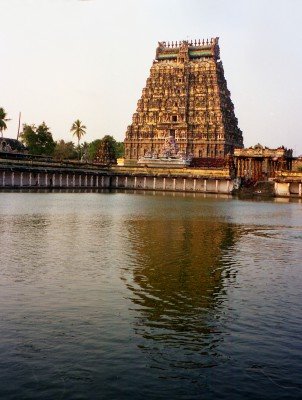
Bhuvanagiri Temple
Some quick example text to build on the card title and make up the bulk of the card's content.
Go somewhere
Chathapurinathar Temple
Some quick example text to build on the card title and make up the bulk of the card's content.
Go somewhere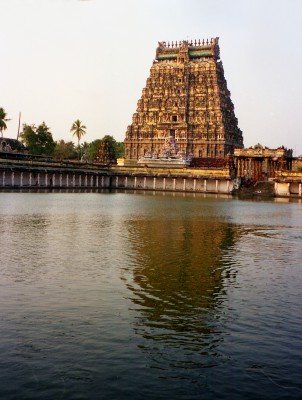
Chidambaram Nataraja Temple
Some quick example text to build on the card title and make up the bulk of the card's content.
Go somewhere
Gangaikonda Cholapuram
Some quick example text to build on the card title and make up the bulk of the card's content.
Go somewhere
Government Museum, Chidambaram
Some quick example text to build on the card title and make up the bulk of the card's content.
Go somewhere
Pichavaram Backwaters
Some quick example text to build on the card title and make up the bulk of the card's content.
Go somewhere
Pichavaram Mangrove Forest
Some quick example text to build on the card title and make up the bulk of the card's content.
Go somewhere
Poompuhar Beach / Town
Some quick example text to build on the card title and make up the bulk of the card's content.
Go somewhere
Silver Beach
Some quick example text to build on the card title and make up the bulk of the card's content.
Go somewhere
Sivakamiamman Temple
Some quick example text to build on the card title and make up the bulk of the card's content.
Go somewhere
Tharangambadi
Some quick example text to build on the card title and make up the bulk of the card's content.
Go somewhere
Thillai Kali Amman Temple
Some quick example text to build on the card title and make up the bulk of the card's content.
Go somewhere
Thillai Nataraja Temple
Some quick example text to build on the card title and make up the bulk of the card's content.
Go somewhere
Tirunallurpperumanam Temple
Some quick example text to build on the card title and make up the bulk of the card's content.
Go somewhere
Tiruvetkalam Temple
Some quick example text to build on the card title and make up the bulk of the card's content.
Go somewherein Other Cities