Paarijaat Divine Tree
General information
-
Ideal Duration:
1-2 Hours:Place Type:
Mythology, Natural Wonder, Pilgrimage:Entry Fees:
Entry Fee: Entry is entirely Free to the site. Donations for the temple's upkeep and the tree's preservation are voluntary and greatly appreciated.
Photography Fees: There are no fees for general photography of the exterior. Commercial pho...Entry Fee: Entry is entirely Free to the site. Donations for the temple's upkeep and the tree's preservation are voluntary and greatly appreciated.
Photography Fees: There are no fees for general photography of the exterior. Commercial photography or filming may require specific permission from the local administrative or forest department due to the tree's protected status.
Protection and Preservation: Because of its rarity and age, the area around the tree is protected, and touching, climbing, or plucking any part of the tree (especially the flowers) is strictly Prohibited, with fines or penalties enforced by local authorities:Timing:
Regular Timings: 6:00 AM to 7:00 PM (The site is generally open during daylight hours, but the outer area is always accessible). The shrine usually opens early for morning prayers.
Ideal Visit Time: October to March (Winter) offers the most...Regular Timings: 6:00 AM to 7:00 PM (The site is generally open during daylight hours, but the outer area is always accessible). The shrine usually opens early for morning prayers.
Ideal Visit Time: October to March (Winter) offers the most pleasant weather for the long travel to the village. Early Morning (7:00 AM - 10:00 AM) is the best time for photography, peaceful contemplation, and to avoid the crowds that gather in the late afternoon.
Peak Time: Tuesdays are especially sacred and can be crowded.
Festivals can draw massive crowds:Special Events:
Kartik Purnima Mela: A significant religious fair (Mela) is held near the tree during Kartik Purnima (October/November), attracting a large number of pilgrims for prayer and community gathering.
Hanuman Jayanti and Shivratri: Due to its asso...Kartik Purnima Mela: A significant religious fair (Mela) is held near the tree during Kartik Purnima (October/November), attracting a large number of pilgrims for prayer and community gathering.
Hanuman Jayanti and Shivratri: Due to its association with Lord Krishna (who brought it from heaven) and Lord Shiva (to whom its flowers were offered), major Hindu festivals like Hanuman Jayanti and Shivratri also draw special worship and community events.
Newly-weds Ceremony: The tree is a popular spot for newlyweds to visit to seek blessings for a long and prosperous marriage, often involving a special small ceremony:Best Photo Spots:
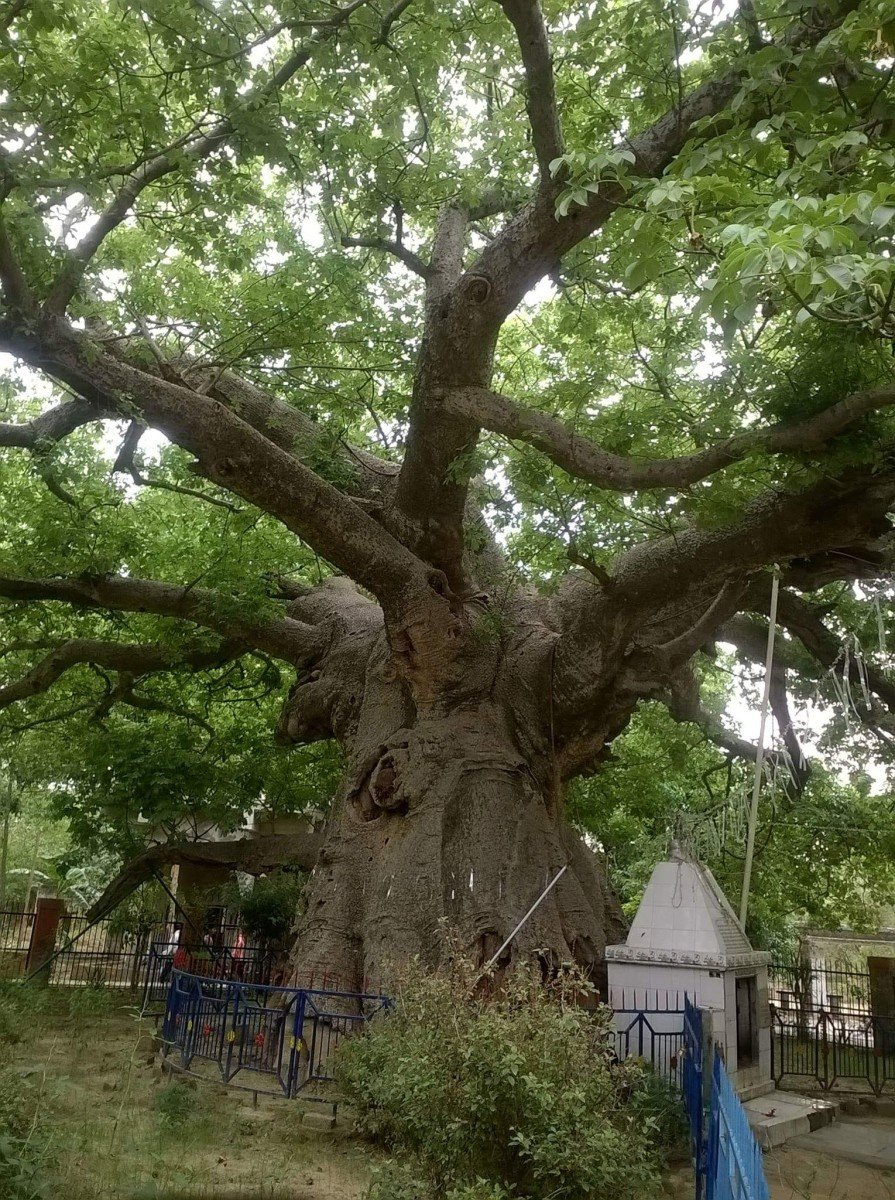
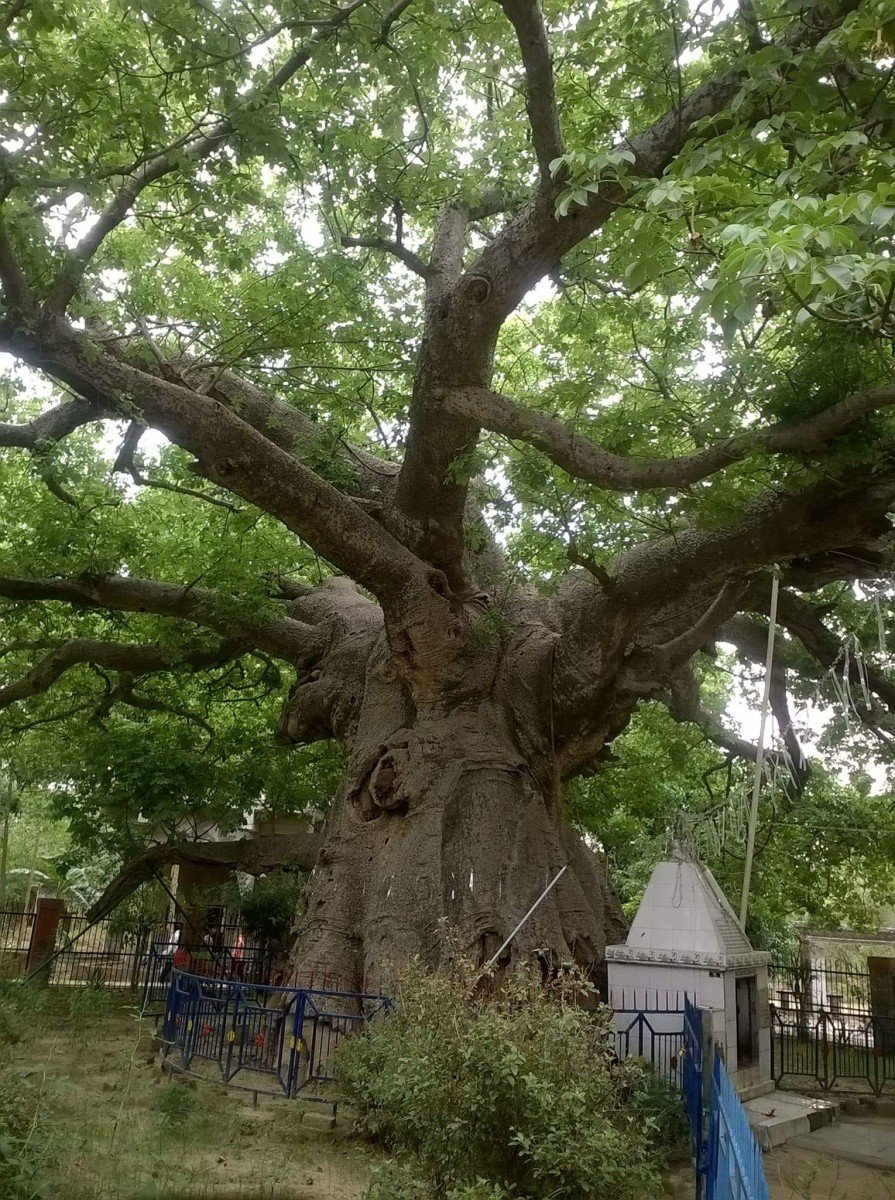
The Trunk's Texture and Scale: Capture a close-up, high-detail shot of the massive, rough bark of the Baobab trunk, emphasizing its immense age and unique texture.
The Canopy from Below: Lie on the ground and shoot upwards, capturing the vas...The Trunk's Texture and Scale: Capture a close-up, high-detail shot of the massive, rough bark of the Baobab trunk, emphasizing its immense age and unique texture.
The Canopy from Below: Lie on the ground and shoot upwards, capturing the vast, gnarled canopy of the tree against the clear sky, emphasizing its architectural dominance and the sense of its ancient age.
The Shrine and Tree Framing: Capture the small adjacent shrine or the protective railing in the foreground, using the gigantic tree as a powerful, symbolic backdrop, framing the religious and natural aspects together.
Sunrise Silhouette: Capture the distinct, bulbous silhouette of the tree against the colorful backdrop of a rural sunrise or sunset:Photo Gallery
Things To Do
-
Spiritual Activities:
Make a Wish under the Tree (): The primary spiritual act is to stand beneath the canopy of the Paarijaat and make a heartfelt wish or prayer, believing the divine tree has the power to fulfill it, often by tying a sacred thread around the protective railing.
Offer Prayers at the Shrine (): Offer flowers and incense at the small shrine located near the tree, following the local custom of devotion. The tree's fallen flowers are considered highly sacred for offering.
Study the Tree's Unique Form (): Spend time examining the unique, massive trunk, the gnarled branches, and the distinctive foliage, appreciating the botanical wonder that has survived for centuries in a non-native land.
Photography of the Majestic Stru...Spiritual Activities:
Make a Wish under the Tree (): The primary spiritual act is to stand beneath the canopy of the Paarijaat and make a heartfelt wish or prayer, believing the divine tree has the power to fulfill it, often by tying a sacred thread around the protective railing.
Offer Prayers at the Shrine (): Offer flowers and incense at the small shrine located near the tree, following the local custom of devotion. The tree's fallen flowers are considered highly sacred for offering.
Study the Tree's Unique Form (): Spend time examining the unique, massive trunk, the gnarled branches, and the distinctive foliage, appreciating the botanical wonder that has survived for centuries in a non-native land.
Photography of the Majestic Structure (): Capture the sheer size and unique architectural form of the ancient Baobab tree against the sky, emphasizing its isolated, powerful presence in the rural landscape.
Learning the Local Legends (): Engage with the temple priests or the long-time caretakers to hear the numerous, slightly varying mythological stories of the tree's celestial descent and its various historical roles.
Visit During Bloom Season (Optional) (): If possible, plan a visit during the brief period when the tree is in bloom (often in the late summer or early monsoon), offering a rare chance to see its unique, fragrant flowers.
Quiet Meditation and Reflection (): The rural setting is very peaceful. Find a spot on the surrounding platform to sit quietly and absorb the spiritual and natural energy of this profound ancient monument:
Totaling (approx):
Information
-
Why Famous:
Celestial Origin and Wish-Fulfilling Power: Its fame is absolutely tied to the legend of it being the divine Kalpavriksha brought from heaven. The belief that the tree can grant wishes is the single biggest reason it attracts pilgrims from all over the country.Celestial Origin and Wish-Fulfilling Power: Its fame is absolutely tied to the legend of it being the divine Kalpavriksha brought from heaven. The belief that the tree can grant wishes is the single biggest reason it attracts pilgrims from all over the country.
Botanical Rarity: It is famous among scientists and botanists as an extremely rare, ancient Baobab tree in Northern India, whose presence is a geographical and botanical enigma, adding a layer of scientific curiosity to its mythological fame. It is a symbol of faith and an object of deep reverence, standing as a living embodiment of the Ramayana/Mahabharata era legends: -
Architecture:
Natural Monument: The architecture here is that of a natural monument, the tree itself. It is a massive, towering Baobab with a strikingly thick, bulbous trunk (often over 50 feet in diameter at the base) and distinctive, gnarled branches that look ancient and powerful. Th...Natural Monument: The architecture here is that of a natural monument, the tree itself. It is a massive, towering Baobab with a strikingly thick, bulbous trunk (often over 50 feet in diameter at the base) and distinctive, gnarled branches that look ancient and powerful. The tree's sheer size and unique shape create a natural architectural dome.
Man-Made Structures: To protect this ancient marvel, the site features man-made structures that are purely functional and respectful of the tree. These include a circular or square concrete platform built around the base of the trunk for seating and worship, a low boundary wall or fence to prevent visitors from touching or damaging the tree, and often a simple, small shrine or temple built in brick or marble nearby for offerings. The primary 'architecture' is the massive, almost mythical natural form of the tree itself, which visually dominates the quiet rural landscape, embodying strength and ancient wisdom. The overall aesthetic is one of reverence for a natural deity: -
How To Reach:
By Air ():
Nearest Airport: Ayodhya Airport (AYJ), about 100 KMS away. Lucknow (LKO) is also a common entry point, about 100-110 KMS away. The site is a considerable distance from both. From either airport, hire a pre-paid taxi directly to...By Air ():
Nearest Airport: Ayodhya Airport (AYJ), about 100 KMS away. Lucknow (LKO) is also a common entry point, about 100-110 KMS away. The site is a considerable distance from both. From either airport, hire a pre-paid taxi directly to Kintur Village near Musafirkhana. The journey will be long and expensive, so negotiate the fare for the round trip.
By Train: The nearest major station is Sultanpur Junction Railway Station (SLN), about 55 KMS away, or Musafirkhana Railway Station, which is closer but less connected. From Sultanpur, hire a private taxi or auto-rickshaw for the long drive. Shared transport is limited.
By Road: The tree is located in a rural area, but the approach road is usually a decent State Highway/Major District Road connecting Sultanpur and Musafirkhana. Driving your own vehicle is the most convenient option. State-run bus services may drop you at the main road, requiring a long walk or short local transport ride to the final spot.
By Local Transport: Hiring a private taxi for a half-day round trip from Sultanpur city is the most practical way to reach the site: -
Weather and Best Time to Visit:
Different Types of Seasons: Winter (October to March) is the Best Time for travel and enjoying the site in comfortable weather. Summer is difficult due to the remoteness and intense heat. Monsoon brings lush greenery but can make rural roads challenging and access difficul...Different Types of Seasons: Winter (October to March) is the Best Time for travel and enjoying the site in comfortable weather. Summer is difficult due to the remoteness and intense heat. Monsoon brings lush greenery but can make rural roads challenging and access difficult.
Different Parts of the Day: Early Morning is highly recommended for tranquility, photography, and to beat the heat, as the site is fully exposed. Late Afternoon is also popular but can be crowded with locals who visit after work or farm duties.
Midday is quiet but hot: -
Near Tourist Places:
Bijethua Mahaviran Temple (40 KMS), HAL Lake Korwa (15-20 KMS), Musafirkhana Town (15 KMS), Sultanpur Junction (55 KMS), Amhat Park (58 KMS), Dhopap Temple (50 KMS), Indira Gandhi Memorial Park (45 KMS - Amethi), Kamla Nehru Institute of Technology (60 KMS), Shivdham Eco Paryatan Sthal (60 KMS):
Tourism Tips
-
Health & Safety: Wear comfortable shoes for walking in the rural area. Carry sufficient water and snacks, as the area has minimal commercial facilities. Be respectful of the tree's protected status; do not climb, touch, or take cuttings. Watch out for local dogs and farm...Health & Safety: Wear comfortable shoes for walking in the rural area. Carry sufficient water and snacks, as the area has minimal commercial facilities. Be respectful of the tree's protected status; do not climb, touch, or take cuttings. Watch out for local dogs and farm animals in the village approach roads.
Packing: Carry a camera and binoculars. A light jacket or shawl may be needed for an early morning visit. Carry small cash (Indian Rupees) for offerings and any potential small purchases from local vendors. Book transport for the return journey well in advance.
Accommodation: Stay in the main city of Sultanpur or Musafirkhana. The village has no suitable tourist accommodation. Check local festival dates before visiting, as crowds can be overwhelming:
Reviews
FAQs
Sultanpur Itineray And Cost:-
Paarijaat Divine Tree Tourism:-
Other Places In Sultanpur :-
Other States In India :-
Information about New and Updated Locations() of Uttar Pradesh Has Been Added :-
Card subtitle
Note:-
Information provided here in good Faith and for reference only.
Near Places

Amhat Park
Some quick example text to build on the card title and make up the bulk of the card's content.
Go somewhere
Bijethua Mahaviran Temple
Some quick example text to build on the card title and make up the bulk of the card's content.
Go somewhere
Chiman Lal Park
Some quick example text to build on the card title and make up the bulk of the card's content.
Go somewhere
Christ Church
Some quick example text to build on the card title and make up the bulk of the card's content.
Go somewhere
Clock Tower
Some quick example text to build on the card title and make up the bulk of the card's content.
Go somewhere
Dhopap Temple
Some quick example text to build on the card title and make up the bulk of the card's content.
Go somewhere
Golaghaat
Some quick example text to build on the card title and make up the bulk of the card's content.
Go somewhere
Gomti Riverfront
Some quick example text to build on the card title and make up the bulk of the card's content.
Go somewhere
HAL Lake
Some quick example text to build on the card title and make up the bulk of the card's content.
Go somewhere
Lohramau Devi Temple
Some quick example text to build on the card title and make up the bulk of the card's content.
Go somewhere
Paarijaat Divine Tree
Some quick example text to build on the card title and make up the bulk of the card's content.
Go somewhere
Pant Sports Stadium
Some quick example text to build on the card title and make up the bulk of the card's content.
Go somewhere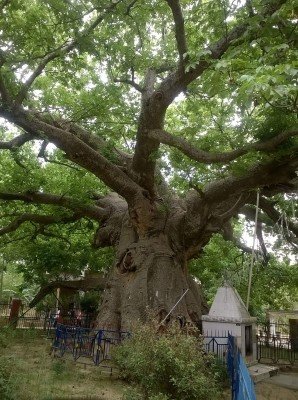
Parijaat Vriksh
Some quick example text to build on the card title and make up the bulk of the card's content.
Go somewhere
Sita Kund
Some quick example text to build on the card title and make up the bulk of the card's content.
Go somewhere
Sunder Lal Memorial Hall
Some quick example text to build on the card title and make up the bulk of the card's content.
Go somewhere
Victoria Manzil
Some quick example text to build on the card title and make up the bulk of the card's content.
Go somewherein Other Cities