


Rajwada Palace
General information
-
Ideal Duration:
1-2 Hours (Plus Museum Time):Place Type:
Heritage, History, Museum:Entry Fees:
Museum Entry Fee: The entry fee for the Rajwada Palace Museum is very nominal, typically around Rs.10 per person for Indian citizens and a slightly higher amount (e. g. , Rs.100) for foreign tourists. This charge is for accessing the museum section and the internal courtyard, n...Museum Entry Fee: The entry fee for the Rajwada Palace Museum is very nominal, typically around Rs.10 per person for Indian citizens and a slightly higher amount (e. g. , Rs.100) for foreign tourists. This charge is for accessing the museum section and the internal courtyard, not just the exterior view.
Separate Illumination/Light & Sound Show Fee: If the palace is hosting an evening Light and Sound Show, there will be a separate ticket charge for this event, which is usually higher than the standard daytime entry fee (e. g. , Rs.50 to Rs.100). Check the timings and availability at the ticket counter.
Photography and Videography Charges: Generally, still photography (using a smartphone or basic camera) is allowed without extra charge. However, professional photography or video camera usage (especially inside the museum) might incur a small, separate fee, so it is best to inquire upon entry to avoid any issues.
Parking Fees: Since the palace is in the congested city center, vehicle parking is limited. Paid parking lots or roadside parking fees are applicable in the surrounding areas.
Timing:
Regular Operating Hours: The Rajwada Palace Museum is generally open from 10:00 AM to 5:00 PM (17:00 IST) on all days of the week, with the exception of Mondays, when it is usually closed for maintenance. The exterior and surrounding garden area are accessible at all times....Regular Operating Hours: The Rajwada Palace Museum is generally open from 10:00 AM to 5:00 PM (17:00 IST) on all days of the week, with the exception of Mondays, when it is usually closed for maintenance. The exterior and surrounding garden area are accessible at all times.
Ideal Visit Time: The best time for a visit is in the Late Afternoon (around 3:00 PM to 5:00 PM). This allows enough time to explore the museum before it closes, and then to witness the spectacular lighting of the palace façade after sunset (around 6:30 PM in Winter) and then walk to Sarafa Bazaar for dinner.
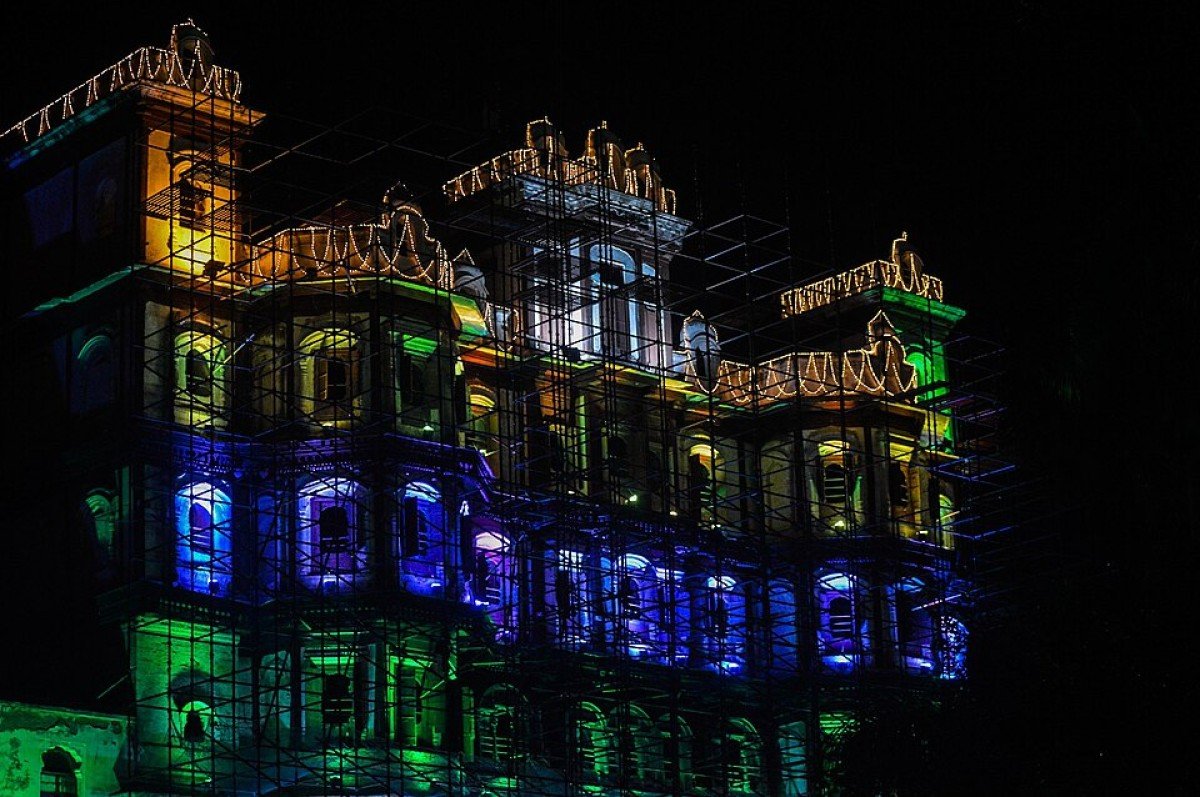
Timing for Photography: Photographers should aim to be there just before sunset (the Golden Hour) to capture the facade in soft light and then stay for the evening illumination, which truly brings the wooden architecture to life. The early morning can also be quiet and offer good light, but the museum will be closed.
Special Events:
Holkar Dynasty Anniversaries: Significant events related to the Holkar Dynasty, such as the birth or death anniversaries of rulers like Malhar Rao Holkar or Ahilya Bai Holkar, often see special ceremonies or public functions held at the palace grounds, drawing historians and...Holkar Dynasty Anniversaries: Significant events related to the Holkar Dynasty, such as the birth or death anniversaries of rulers like Malhar Rao Holkar or Ahilya Bai Holkar, often see special ceremonies or public functions held at the palace grounds, drawing historians and descendants of the royal families.
Indore Heritage Week: During the annual Indore Heritage Week (often in November or December), Rajwada Palace is a primary venue for cultural exhibitions, guided historical tours, and open-house access to certain areas, aimed at promoting awareness of the city's past and the palace's conservation.
National Festivals and Illumination: On major national holidays like Republic Day (January 26) and Independence Day (August 15), and festivals like Diwali, the palace is spectacularly illuminated with special lights. These lighting displays, particularly on Diwali, make the palace a center point of the city's festive celebration.
Cultural Programs and Performances: The palace courtyard or the front garden is occasionally used as a stage for traditional Maratha or Malwa folk dance and music performances, especially during tourist season to provide a cultural showcase to visitors.
Best Photo Spots:
The Illuminated Palace at Night: The palace is arguably at its most majestic in the evening when it is fully illuminated. The play of light on the wooden façade and the towering structure provides a dramatic, high-contrast shot, best taken from across the street or the gar...The Illuminated Palace at Night: The palace is arguably at its most majestic in the evening when it is fully illuminated. The play of light on the wooden façade and the towering structure provides a dramatic, high-contrast shot, best taken from across the street or the garden area.
The Massive Wooden Entrance Gate: The intricate carvings on the huge wooden gate, studded with iron spikes, are a powerful subject. Focus on the detail of the wood and the texture of the iron for close-up, architectural photography, best captured with natural daylight.
The Ahilya Bai Holkar Statue and Water Feature: Frame the statue of Maharani Ahilya Bai Holkar with the towering palace façade in the background. The artificial waterfall or fountain in the front garden can be used as a foreground element to add visual interest and a sense of scale.
Jharokha and Balcony Close-ups: Concentrate on the traditional Maratha-style wooden jharokhas (balconies) on the upper floors. Their delicate lattice work and colorful paintwork make for excellent detail shots that highlight the unique craftsmanship and blend of styles, best photographed on a clear day with directional sunlight.
Photo Gallery
Things To Do
-
Exploring the Palace Museum: Dedicate time to thoroughly explore the museum within the palace premises. The museum showcases the rich history of the Holkar rulers, including rare coins, detailed maps, sculptures, and a display of royal attire. Focus on the narratives accompanying the artifacts to gain a deeper appreciation for the dynasty's political and cultural contributions.
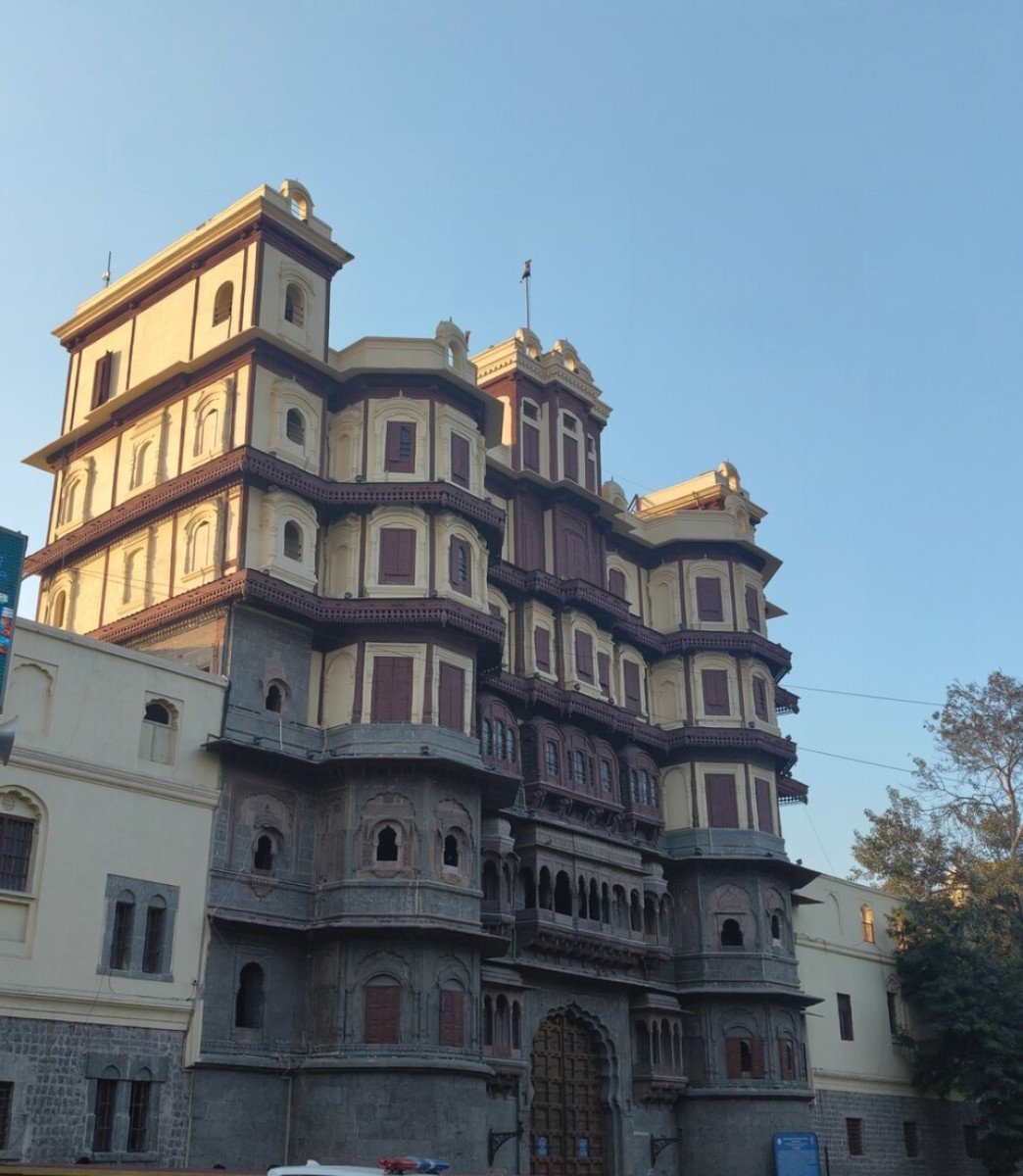
Admiring the Architecture from Multiple Angles: Take a full walk around the entire structure, including the rear section that faces the garden. Observe the distinct change in material from the stone base to the wooden upper stories, which beautifully illustrates the Maratha and Mughal architectural fusion. Pay special attention to the detailed carvings on the wooden jharokhas and the large front door.
Photography of the Gr...Exploring the Palace Museum: Dedicate time to thoroughly explore the museum within the palace premises. The museum showcases the rich history of the Holkar rulers, including rare coins, detailed maps, sculptures, and a display of royal attire. Focus on the narratives accompanying the artifacts to gain a deeper appreciation for the dynasty's political and cultural contributions.
Admiring the Architecture from Multiple Angles: Take a full walk around the entire structure, including the rear section that faces the garden. Observe the distinct change in material from the stone base to the wooden upper stories, which beautifully illustrates the Maratha and Mughal architectural fusion. Pay special attention to the detailed carvings on the wooden jharokhas and the large front door.
Photography of the Grand Façade: The most popular activity is photographing the imposing Seven-Storeyed front façade. The best time for this is in the late afternoon or evening when the palace is illuminated, which highlights the wooden detailing and the sheer scale of the entrance. Use the garden and the Ahilya Bai Holkar statue in the foreground for a classic shot.
Paying Respects at the Ganesha Temple: Visit the palace temple dedicated to Lord Ganesha inside the main courtyard. It’s a quiet space for a moment of spiritual reflection and to observe the traditional temple architecture within a royal residence. The temple holds significant cultural importance for the people of Indore.
Strolling in the Front Garden: Spend some time in the well-maintained garden in front of the palace. This area provides an excellent space to sit, relax, and appreciate the scale of the palace from a distance. The garden also features a fountain and the statue of Maharani Ahilya Bai Holkar.
Combining the Visit with Sarafa Bazaar: A quintessential Indore experience is visiting Rajwada Palace in the late afternoon/early evening and then walking across to the adjacent Sarafa Bazaar (the night street food market). This dual activity allows you to experience Indore’s historical heart followed by its culinary soul, all in one go.
Shopping in the Surrounding Bazaars: The area around Rajwada is surrounded by historic, bustling markets, including Khajuri Bazaar and Sarafa Bazaar (during the day, it's a jewelry market). Spend time exploring these narrow lanes for traditional textiles, jewelry (especially Sarafa), and local crafts, offering an authentic glimpse into Indore’s commercial life.
Attending the Light and Sound Show (If Available): While often subject to renovation or scheduling, inquire if the palace is currently hosting a Light and Sound Show in the evening. This show uses illumination and narration to bring the history of the Holkar Dynasty and the palace to life.
Information
-
Why Famous:
The Blend of Architectural Styles: Rajwada Palace is famous for its unique and striking blend of three distinct architectural traditions: Maratha, Mughal, and French styles, which is exceptionally rare. This synthesis reflects the cultural richness and strategic importance ...The Blend of Architectural Styles: Rajwada Palace is famous for its unique and striking blend of three distinct architectural traditions: Maratha, Mughal, and French styles, which is exceptionally rare. This synthesis reflects the cultural richness and strategic importance of the Holkar kingdom, making it a key subject for architectural studies.
Symbol of the Holkar Dynasty: It is the ancestral palace and the primary residence of the founding father of the Holkar Dynasty, Malhar Rao Holkar. The palace is the most visible and enduring symbol of the Holkar reign in Indore, representing two centuries of their history, power, and cultural patronage over the region.
Resilience Through Repeated Rebuilding: The palace is famously known for its resilience. Despite being nearly destroyed by fire four times, most notably in 1984, it was meticulously rebuilt each time, demonstrating the historical commitment to preserving this central monument. Its latest restoration, completed in 2023, used original blueprints to revive its former glory.
Proximity to Sarafa Bazaar: Its location in the heart of the city, directly adjacent to the famous Sarafa Bazaar, the city's jewel and night food market, makes it a unique cultural anchor. Tourists often visit the palace in the evening and then proceed to enjoy the bustling street food, combining history and gastronomy in one central location.
-
Architecture:
Architectural Synthesis and Dimension: The palace is a magnificent example of a hybrid architectural style, predominantly Maratha but with significant influences from Mughal and subtle French styles, a rarity in Central India. It is a Seven-Storey structure, rectangular in ...Architectural Synthesis and Dimension: The palace is a magnificent example of a hybrid architectural style, predominantly Maratha but with significant influences from Mughal and subtle French styles, a rarity in Central India. It is a Seven-Storey structure, rectangular in shape, encompassing an area of approximately 2. 4 acres. The strategic use of materials defines its Dimension and resilience: the lower three floors are built with stone (black basalt and brick-in-lime mortar) for structural stability, while the upper floors are built with wood, showcasing intricate woodwork and balconies.
The Main Façade and Grand Entrance: The most recognizable part is the grand, multi-tiered facade, which is richly decorated with wooden jharokhas (balconies) and arched windows, typical of Maratha architecture. The main entrance features a massive Wooden Door supported by large Iron Studs (historically placed to deter elephant attacks). This leads to a beautiful courtyard.
Courtyard and Ganesha Hall: Inside the entryway is a traditional Maratha arched Ganesha Hall with intricately carved pillars and a central marble platform. This courtyard links to various galleried rooms and showcases the traditional residential layout (wada) of the Maratha era, with the palace temple dedicated to Lord Ganesha featuring a silver door.
The Rear Palace Section: The rear part of the structure is often overlooked but faces a garden with a fountain and the Ahilya Bai Holkar statue. This section provides a contrast with its more structured, museum-like layout, highlighting different periods of the palace's construction and renovation. The cylindrical bastions at the four corners of the rectangular structure further emphasize its defensive and imposing Dimension.
-
How To Reach:
By Air (Flight): The nearest airport is Devi Ahilyabai Holkar Airport (IDR), approximately 10-12 KMS from the palace. Due to the central location, it takes about 30 minutes to reach by taxi or cab. You can hire a pre-paid taxi or use ride-sharing services like Ola or Uber....By Air (Flight): The nearest airport is Devi Ahilyabai Holkar Airport (IDR), approximately 10-12 KMS from the palace. Due to the central location, it takes about 30 minutes to reach by taxi or cab. You can hire a pre-paid taxi or use ride-sharing services like Ola or Uber.
By Train (Rail): The palace is extremely close to Indore Junction (INDB) railway station, which is only about 2-3 KMS away. An auto-rickshaw or a short, local cab ride will take you directly to the palace in about 10-15 minutes, depending on the dense traffic of the old city area. This close proximity makes rail travel very convenient.
By Road (Bus/Car): Rajwada Palace is located in the absolute heart of Indore's old city, at the center of the road network. State-run and private buses connect Indore to all major nearby cities. However, driving a private car directly to the palace can be challenging due to the narrow, busy lanes of the central market area. It is better to park a short distance away (e. g. , near Krishnapura Chhatri) and walk.
By Local Transport: This is the most recommended way to reach the palace. Auto-rickshaws and e-rickshaws are easily available and can navigate the narrow city streets efficiently. The palace is a major landmark, so all local transport drivers know the location. It is also a key stop for the city's bus network, including the iBus system, making it highly accessible from all parts of Indore.
-
Weather and Best Time to Visit:
Winter Season (October to March): This is the Best Time to Visit. The mild and pleasant weather, with comfortable daytime temperatures, is ideal for walking around the complex and combining the visit with the adjacent local markets like Sarafa Bazaar. The evening illuminat...Winter Season (October to March): This is the Best Time to Visit. The mild and pleasant weather, with comfortable daytime temperatures, is ideal for walking around the complex and combining the visit with the adjacent local markets like Sarafa Bazaar. The evening illumination is also best enjoyed when the temperature is cool.
Monsoon Season (July to September): The palace looks beautiful against the monsoon sky, but the narrow surrounding market lanes can get messy and crowded due to waterlogging and the high foot traffic of the central city. It is advisable to carry an umbrella and wear waterproof shoes during this time.
Summer Season (April to June): The high daytime temperatures make the old city area very hot and crowded. If visiting in Summer, limit the visit to the Early Morning (for the facade) or the Late Evening (for the illumination and Sarafa Bazaar).
Different Parts of the Day: Ideal Visit Time is the Late Afternoon (3:00 PM to 5:00 PM) to view the museum and historical exhibits. Then, stay until Evening (6:30 PM to 9:00 PM) to witness the grand illumination of the palace and enjoy the nearby Sarafa Bazaar night food market.
-
Near Tourist Places:
Sarafa Bazaar (approx. 0. 3 KMS), Krishnapura Chhatri (approx. 0. 5 KMS), Bada Ganpati Temple (approx. 2 KMS), Central Museum (approx. 3. 5 KMS), Kanch Mandir (approx. 3 KMS), Indore Zoo (Kamala Nehru Prani Sangrahalaya) (approx. 4. 5 KMS), Lal Bagh Palace (approx. 5 KMS), Khajrana Ganesh Temple (approx. 6 KMS), Chhappan Dukaan (approx. 3 KMS), Gita Bhavan (approx.
4 KMS):
Tourism Tips
-
Health & Safety: The palace is in a very crowded, bustling area. Be highly aware of pickpockets, especially in the surrounding markets. Carry a small bag and keep valuables secure. Wear comfortable flat shoes as the ground in the courtyard and surrounding lanes is uneven ...Health & Safety: The palace is in a very crowded, bustling area. Be highly aware of pickpockets, especially in the surrounding markets. Carry a small bag and keep valuables secure. Wear comfortable flat shoes as the ground in the courtyard and surrounding lanes is uneven and made of stone/brick. Traffic is chaotic, so be cautious when crossing streets.
Packing Essentials: Carry a small bottle of water. A good camera is essential for capturing the majestic architecture and the night illumination. Since the museum is small, you won't need an elaborate bag. If planning to eat at Sarafa Bazaar, keep hand sanitizer handy.
Accommodation: Stay in the Central Indore area for easy access to Rajwada and other major sites like Sarafa Bazaar and Krishnapura Chhatri. There are many budget and mid-range hotels in the surrounding areas, but for luxury options, you may need to stay further away and use a cab. Book well in advance during peak season.
Other Tips: Bargaining is expected when shopping in the surrounding bazaars. Plan your visit to end around 8:00 PM to fully immerse yourself in the culinary adventure of Sarafa Bazaar (which opens after 8:00 PM). Check the museum's closure on Mondays to avoid disappointment. Use local transport like auto-rickshaws or walking to avoid parking hassles.
Reviews
FAQs
Indore Itineray And Cost:-
Other Places In Indore :-
Other States In India :-
Information about New and Updated Locations() of Madhya Pradesh Has Been Added :-
Card subtitle
Note:-
Information provided here in good Faith and for reference only.
Near Places

Bijasen Tekri Temple
Some quick example text to build on the card title and make up the bulk of the card's content.
Go somewhere
Chhatri Bagh
Some quick example text to build on the card title and make up the bulk of the card's content.
Go somewhere
Chidiya Bhadak Waterfall
Some quick example text to build on the card title and make up the bulk of the card's content.
Go somewhere
Crescent Water Park & Resort
Some quick example text to build on the card title and make up the bulk of the card's content.
Go somewhere
Gita Bhawan
Some quick example text to build on the card title and make up the bulk of the card's content.
Go somewhere
Gommat Giri
Some quick example text to build on the card title and make up the bulk of the card's content.
Go somewhere
Hanumantiya Island
Some quick example text to build on the card title and make up the bulk of the card's content.
Go somewhere
Indore Zoo
Some quick example text to build on the card title and make up the bulk of the card's content.
Go somewhere
ISCON Temple Indore
Some quick example text to build on the card title and make up the bulk of the card's content.
Go somewhere
Janapav Hill
Some quick example text to build on the card title and make up the bulk of the card's content.
Go somewhere
Jogi Bhadak Waterfalls
Some quick example text to build on the card title and make up the bulk of the card's content.
Go somewhere
Khajrana Ganesh Mandir
Some quick example text to build on the card title and make up the bulk of the card's content.
Go somewhere
Krishnapura Chhatris
Some quick example text to build on the card title and make up the bulk of the card's content.
Go somewhere
Ralamandal Wildlife Sanctuary
Some quick example text to build on the card title and make up the bulk of the card's content.
Go somewhere
Sardar Vallabhbhai Patel Smarak
Some quick example text to build on the card title and make up the bulk of the card's content.
Go somewherein Other Cities