Shri Ganesh Mandir Tekdi
General information
-
Ideal Duration:
30 Minutes to 1 HourPlace Type:
Sub Place Category: Religious Site, Temple, LandmaEntry Fees:
No Entry Fee: There is no entry fee to visit the Shri Ganesh Mandir Tekdi. This makes it an accessible religious and cultural site for everyone, regardless of economic status. The only expenses are for personal offerings.
Donations and Offerin...No Entry Fee: There is no entry fee to visit the Shri Ganesh Mandir Tekdi. This makes it an accessible religious and cultural site for everyone, regardless of economic status. The only expenses are for personal offerings.
Donations and Offerings: While entry is free, visitors may choose to purchase prasadam (sweets, flowers, coconuts) from vendors or offer voluntary donations to the temple trust. These offerings are entirely optional and vary based on the devotee's personal wish, generally ranging from Rs.10 to Rs.50 for a small offering tray.
Special Seva/Pooja Charges: For specific religious services (Seva or Pooja), especially on auspicious days like Ganesh Chaturthi or for personal ceremonies, there might be a nominal charge set by the temple management. This is for specialized, optional services, not for general entry.Timing:
Regular Timings: The temple is generally open every day, from early morning around 5:30 AM to late evening, usually closing around 9:00 PM or sometimes as late as 12:00 AM on special days. It remains open throughout the week, accommodating the continuous flow of local devot...Regular Timings: The temple is generally open every day, from early morning around 5:30 AM to late evening, usually closing around 9:00 PM or sometimes as late as 12:00 AM on special days. It remains open throughout the week, accommodating the continuous flow of local devotees and travelers.
Ideal Visit Time: The best time to visit is during the early morning hours (6:00 AM to 8:00 AM) for a peaceful and meditative experience or during the evening Aarti (7:00 PM to 8:30 PM) to witness the vibrant devotional atmosphere. Visiting on a Wednesday is recommended for the most vibrant religious experience, but expect larger crowds.
Aarti Timings: The main Aarti is typically performed in the morning around sunrise and in the evening around sunset. Confirming the exact times from a local source upon arrival is advisable, as they can fluctuate slightly with the seasons.Special Events:
Ganesh Chaturthi Festival: The most significant special event is the Ganesh Chaturthi festival, typically celebrated in the August or September months. The temple becomes the epicenter of Nagpur's celebrations, with elaborate decorations, continuous chanting and prayer serv...Ganesh Chaturthi Festival: The most significant special event is the Ganesh Chaturthi festival, typically celebrated in the August or September months. The temple becomes the epicenter of Nagpur's celebrations, with elaborate decorations, continuous chanting and prayer services, and a massive influx of devotees. The entire area around the hillock is transformed into a vibrant cultural and spiritual fair for the ten days of the festival.
Wednesday Devotion: While a regular occurrence, Wednesdays are considered a special, highly auspicious day for Lord Ganesha. On this day, the temple sees significantly increased footfall, and special, elongated Aartis and prayer services are often conducted throughout the day, giving the feeling of a mini-festival every week.
Religious Anniversaries: Other important Hindu festivals and the specific anniversary dates related to the temple's establishment or significant past events also bring about special ceremonies, extended prayer hours, and cultural programs like bhajans (devotional songs) and kirtans (narrative singing).Best Photo Spots:
View from the Main Steps: The best spot for photography is often on the main steps leading up to the temple or just outside the main shrine, capturing the temple's distinctive architecture against the sky. This view symbolizes the climb to the spiritual haven.View from the Main Steps: The best spot for photography is often on the main steps leading up to the temple or just outside the main shrine, capturing the temple's distinctive architecture against the sky. This view symbolizes the climb to the spiritual haven.
Overlooking the Railway Station: From the elevated vantage points near the temple's edge, you can take unique photographs that juxtapose the peaceful temple complex with the massive, bustling backdrop of the Nagpur Junction Railway Station and the city's commercial areas, capturing the contrast that defines its location.
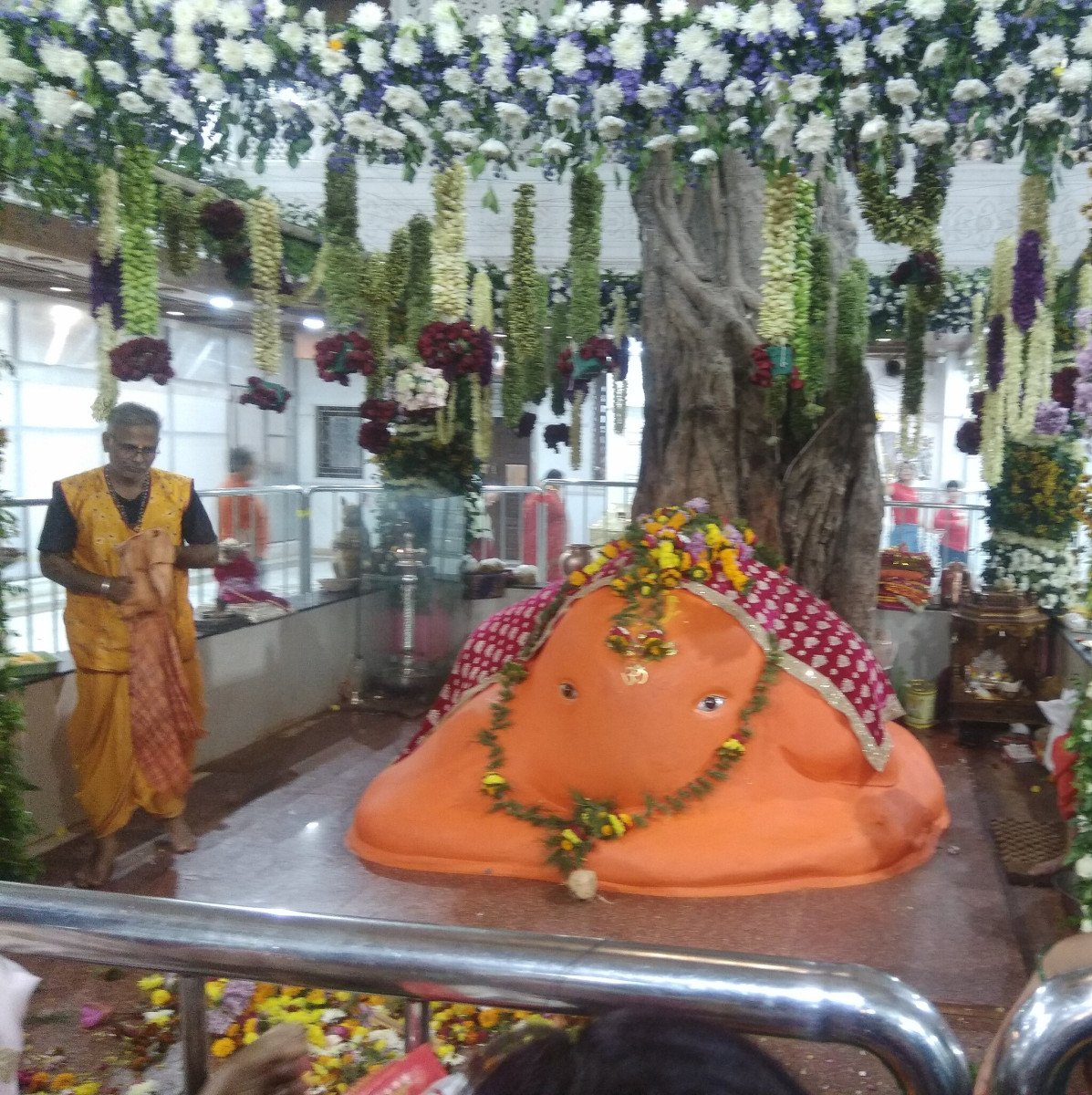
Ganesha Idol Focus: While often restricted inside the inner sanctum, if photography is permitted (usually without flash), capturing the richly adorned Swayambhu idol on a special occasion or during an Aarti is a powerful photo op. Focus on the traditional ornamentation and the expressions of devotion.
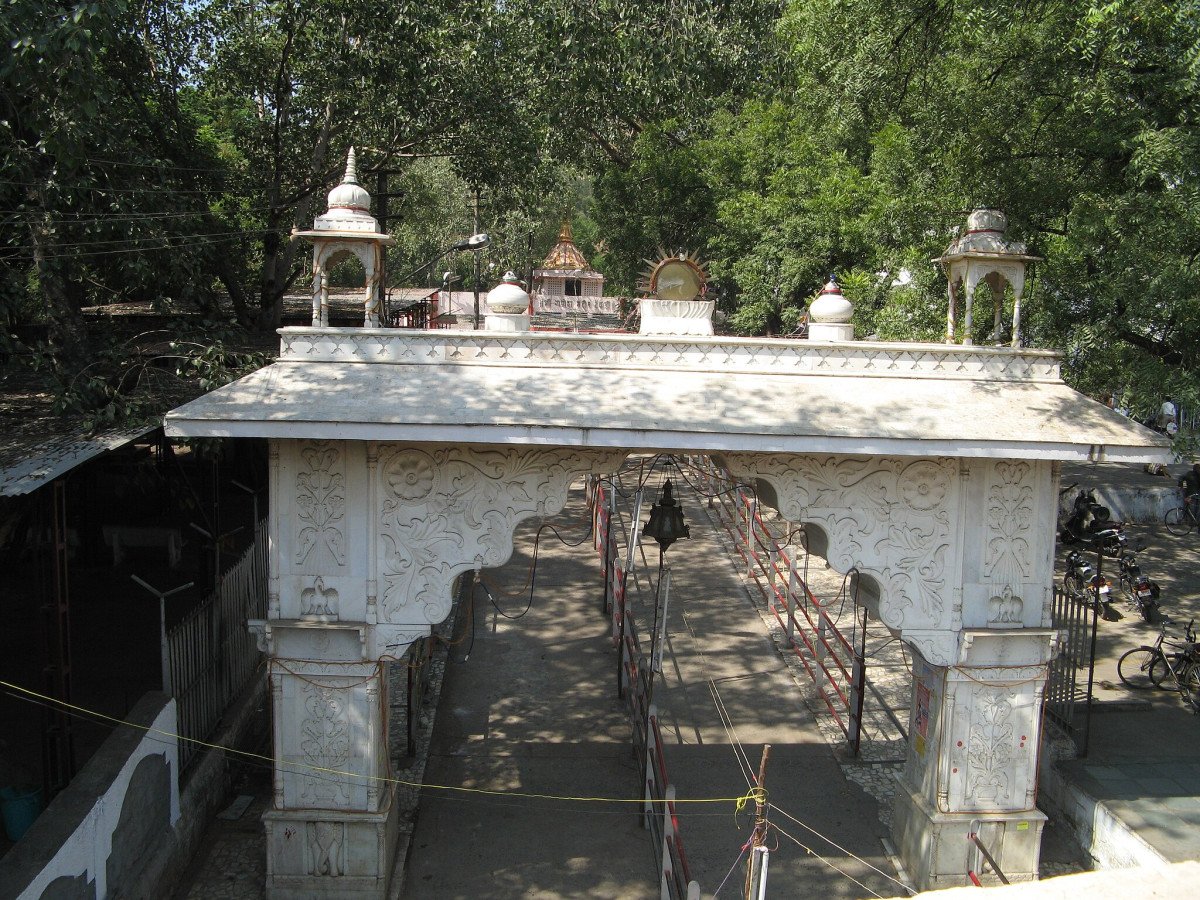
Decorative Entrance Gate: The main entrance gate to the complex is usually well-decorated and serves as a good spot for a portrait or group photo, marking the beginning of the spiritual journey.Photo Gallery

Things To Do
-
Offer Prayers and Seek Blessings: The primary activity is to offer prayers to Lord Ganesha. Devotees often perform a small ritual or simply meditate for a few moments in the sanctum. The peaceful environment is conducive to quiet reflection and spiritual connection, focusing on the belief in the Swayambhu nature of the idol.
Attend the Aarti: Try to time your visit to coincide with the morning or evening Aarti. Participating in the collective prayer ritual is a very immersive and culturally rich experience, allowing you to witness the depth of local devotion. The timings are usually around sunrise and sunset.
Enjoy the Scenic View: Take a moment to pause at the top of the hill. The elevated location provides a decent view of the bustling Nagpur Junction Railway Station and the surrounding ci...Offer Prayers and Seek Blessings: The primary activity is to offer prayers to Lord Ganesha. Devotees often perform a small ritual or simply meditate for a few moments in the sanctum. The peaceful environment is conducive to quiet reflection and spiritual connection, focusing on the belief in the Swayambhu nature of the idol.
Attend the Aarti: Try to time your visit to coincide with the morning or evening Aarti. Participating in the collective prayer ritual is a very immersive and culturally rich experience, allowing you to witness the depth of local devotion. The timings are usually around sunrise and sunset.
Enjoy the Scenic View: Take a moment to pause at the top of the hill. The elevated location provides a decent view of the bustling Nagpur Junction Railway Station and the surrounding city, offering a sharp contrast between the spiritual peace of the temple and the urban activity below. It's a great spot for observing the city's pulse.
Purchase Prasadam and Offerings: Buy traditional offerings like flowers, sweets (modaks are particularly associated with Ganesha), or coconuts from the small vendors outside the temple complex. This participation in the local religious economy is an integral part of the temple visit experience.
Walk the Steps: Instead of taking the ramp, ascend and descend the gentle stone steps. This small walk is considered part of the devotional exercise and provides a moment of calm and focus as you approach the main shrine.
Observe Local Devotional Practices: Sit quietly for a while on the premises and observe the varied devotional practices of the local worshippers. This provides insight into the local culture and the strong role the temple plays in the community life of Nagpur.
Visit on Wednesday: If possible, visit on a Wednesday, which is the day dedicated to Lord Ganesha. The atmosphere is more vibrant and festive, with a higher number of devotees, special rituals, and sometimes small, temporary market stalls set up for offerings.
Information
-
Why Famous:
The Swayambhu Idol Belief: The temple is most famous for the deeply held belief that the idol of Lord Ganesha is Swayambhu (self-manifested) and is continually growing in size. This extraordinary spiritual claim elevates the temple's status far above a simple city temple, d...The Swayambhu Idol Belief: The temple is most famous for the deeply held belief that the idol of Lord Ganesha is Swayambhu (self-manifested) and is continually growing in size. This extraordinary spiritual claim elevates the temple's status far above a simple city temple, drawing devotees who seek blessings from this living, increasing divine presence.
Strategic Location: Its location directly next to the incredibly busy Nagpur Junction Railway Station makes it a unique and iconic landmark. Many travelers passing through Nagpur make it a point to visit the temple immediately upon arrival or just before departure, considering it an auspicious beginning or end to their journey. This accessibility contributes significantly to its fame.
The Tekdi Identity: The temple's popular name, Tekdicha Ganpati (Ganpati of the Hill), is intrinsically linked to Nagpur's identity. The presence of a sacred hill-top shrine in the center of the city provides a cultural and spiritual focal point that is known throughout the entire Vidarbha region. -
Architecture:
Traditional Temple Architecture: The temple primarily features a traditional Hindu temple architectural style, characterized by a central shrine (garbhagriha) housing the main deity and a surrounding mandapa (hall). The exterior is often brightly painted and adorned with in...Traditional Temple Architecture: The temple primarily features a traditional Hindu temple architectural style, characterized by a central shrine (garbhagriha) housing the main deity and a surrounding mandapa (hall). The exterior is often brightly painted and adorned with intricate carvings and sculptures depicting various mythological figures and religious motifs, although it has undergone renovations over the centuries.
Hilltop Location and Foundation: The most distinctive architectural aspect is its location atop a small natural hillock (tekdi). The structure is built into the rock, giving it a strong foundation. Stone steps or a gentle ramp lead up to the main temple complex, providing a distinct, elevated approach that symbolizes the spiritual ascent. This strategic location also connects it visually and physically to the adjacent Sitabuldi Fort hillock.
Interior and Sanctum: The inner sanctum is modest and focused entirely on the revered, central idol of Lord Ganesha. The design ensures a spiritual focus, often using marble or polished stone and traditional ornamentation. The dimensions of the temple complex are constrained by the hillock but are optimized to accommodate a large flow of devotees, particularly in the open spaces surrounding the main shrine. -
How To Reach:
By Air: The Dr. Babasaheb Ambedkar International Airport (NAG) is approximately 10 KMS away. Due to the temple's central location right next to the railway station, finding a taxi or auto-rickshaw is very easy. The journey typically takes about 30 minutes.By Air: The Dr. Babasaheb Ambedkar International Airport (NAG) is approximately 10 KMS away. Due to the temple's central location right next to the railway station, finding a taxi or auto-rickshaw is very easy. The journey typically takes about 30 minutes.
By Train: The temple's location is unparalleled; it is literally right next to the Nagpur Junction Railway Station (NGP), which is one of the busiest and most important stations in central India. From the station, it is a very short walk (less than 5 minutes) to the hillock's base and up the steps or ramp. It is the most convenient way to reach the temple.
By Road - Taxi/Auto: The temple is located in Sitabuldi, the commercial heart of Nagpur, which is well-connected by all major roads. Auto-rickshaws and taxis can drop you right near the base of the hillock on the Ganesh Tekdi Road. The location is famous, so drivers will have no trouble finding it.
By Local Transport - Bus and Metro: Being in the center of the city and next to the railway station, the temple is extremely well-served by local city buses from all directions. The Sitabuldi area is also home to the Sitabuldi Interchange Metro Station, the main hub of the Nagpur Metro. From the metro station, the temple is a short walk away, making it very accessible via public transit. -
Weather and Best Time to Visit:
Different Types of Seasons: Winter (October to March) is the most comfortable time to visit, with pleasant temperatures ideal for the morning and evening visits. The crowds are also manageable. Summer (April to June) requires early morning or late evening visits to avoid t...Different Types of Seasons: Winter (October to March) is the most comfortable time to visit, with pleasant temperatures ideal for the morning and evening visits. The crowds are also manageable. Summer (April to June) requires early morning or late evening visits to avoid the scorching heat, making the outdoor walk up the hill much more bearable. The Monsoon (July to September) makes the surroundings lush and green, offering a beautiful backdrop, but the steps can be slippery, requiring caution.
Different Parts of the Day: Sunrise and Sunset are the optimal times. The morning hours offer a tranquil start to the day and a quiet, spiritual experience, while the evening hours, especially during the Aarti, provide a vibrant, deeply devotional, and culturally rich experience with better lighting for the temple structure. -
Near Tourist Places:
Sitabuldi Fort (0. 5 KMS), Nagpur Junction Railway Station (0. 1 KMS), Zero Mile Stone (1. 5 KMS), Raman Science Center (1. 5 KMS), Sitabuldi Market (1 KMS), Maharaj Bagh and Zoo (2 KMS), Ram Jhula (1. 5 KMS), Deeksha Bhoomi (4 KMS), Variety Square (2 KMS), Swaroop Talkies (0. 5 KMS)
Tourism Tips
-
Health & Safety: The steps to the temple are generally well-maintained, but visitors should watch their footing, especially during the Monsoon season or when carrying offerings. Given its proximity to a busy railway station, always be aware of your surroundings, especially ...Health & Safety: The steps to the temple are generally well-maintained, but visitors should watch their footing, especially during the Monsoon season or when carrying offerings. Given its proximity to a busy railway station, always be aware of your surroundings, especially in crowded conditions like festivals or Wednesdays. It is advisable to avoid carrying large bags.
Packing: Dress modestly, as it is a place of worship; traditional attire is appreciated but clean, respectful clothing is sufficient. No special packing is required beyond a small offering if you wish to make one. Since entry is free, a wallet with a small amount of cash for prasadam is sufficient.
Accommodation: Being in the heart of Nagpur's commercial and transit hub (Sitabuldi and Nagpur Junction), countless hotels are available within a short walking or driving distance, catering to all budgets. This is the most convenient area in the city for lodging.
Other Different Topics Heading: The area around the temple is generally very busy, but the temple complex itself is quiet. Plan a short visit of about 30 minutes to 1 hour. Try to combine this visit with the Sitabuldi Fort or the nearby Zero Mile Stone, as they are all within very close proximity, making for a geographically efficient morning or afternoon tour.
Reviews
FAQs
Nagpur Itineray And Cost:-
Shri Ganesh Mandir Tekdi Tourism:-
Other Places In Nagpur :-
Other States In India :-
Information about New and Updated Locations() of Maharashtra Has Been Added :-
Card subtitle
Note:-
Information provided here in good Faith and for reference only.
Near Places

Ambazari Lake & Garden
Some quick example text to build on the card title and make up the bulk of the card's content.
Go somewhere
Deeksha Bhoomi
Some quick example text to build on the card title and make up the bulk of the card's content.
Go somewhere
Dragon Palace Buddhist Temple
Some quick example text to build on the card title and make up the bulk of the card's content.
Go somewhere
Futala Lake
Some quick example text to build on the card title and make up the bulk of the card's content.
Go somewhere
Gandhi Sagar Lake
Some quick example text to build on the card title and make up the bulk of the card's content.
Go somewhere
Japanese Rose Garden
Some quick example text to build on the card title and make up the bulk of the card's content.
Go somewhere
Khekranala Lake & Dam
Some quick example text to build on the card title and make up the bulk of the card's content.
Go somewhere
Khindsi Lake
Some quick example text to build on the card title and make up the bulk of the card's content.
Go somewhere
Koradi Temple
Some quick example text to build on the card title and make up the bulk of the card's content.
Go somewhere
Lata Mangeshkar Musical Garden
Some quick example text to build on the card title and make up the bulk of the card's content.
Go somewhere
Maharajbagh Zoo
Some quick example text to build on the card title and make up the bulk of the card's content.
Go somewhere
Nagardhan Fort
Some quick example text to build on the card title and make up the bulk of the card's content.
Go somewhere
Narrow Gauge Rail Museum
Some quick example text to build on the card title and make up the bulk of the card's content.
Go somewhere
Raman Science Center
Some quick example text to build on the card title and make up the bulk of the card's content.
Go somewhere
Ramtek Fort Temple
Some quick example text to build on the card title and make up the bulk of the card's content.
Go somewhere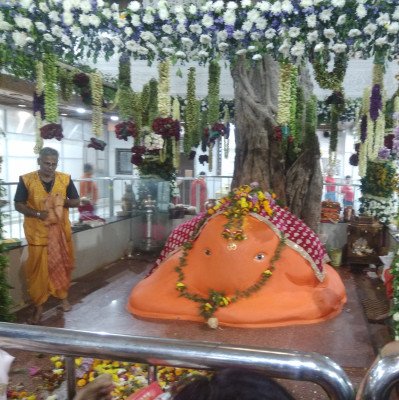
Shri Ganesh Mandir Tekdi
Some quick example text to build on the card title and make up the bulk of the card's content.
Go somewherein Other Cities