...

FAQs On Aloobari Monastery

Darjeeling, West Bengal, India
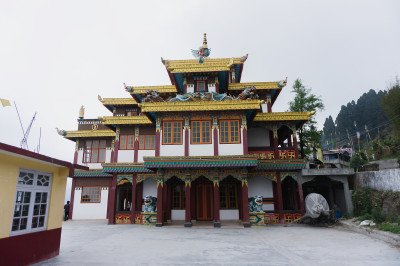
Historical Significance: The Aloobari Monastery, formally known as Mag-Dhog Yolmowa Monastery, stands as a silent sentinel of faith in the hills of Darjeeling. Established in the year 1914, it coincides with the outbreak of the First World War. The name 'Mag-Dhog' translates to 'Warding off War', re flecting the founders' intentions to pray for global harmony during a time of immense conflict. This sanctuary was built under the guidance of Sri Sangay Lama, a highly respected religious figure of the Yolmo community. The Yolmo people are an ethnic group originally from Nepal who found a home in the misty altitudes of Bengal. Walking through its gates, one feels the weight of history and the collective prayers of a century. The monastery serves as more than a religious site; it is a cultural anchor for the Yolmo people. Over the decades, it has witnessed the transformation of Darjeeling from a colonial retreat to a bustling tourist hub, yet it has maintained its serene, unhurried atmosphere. The interior is adorned with statues of Gautama Buddha and Padmasambhava, surrounded by frescoes that tell stories of enlightenment. The murals are particularly unique because they were crafted using natural dyes derived from local herbs and grasses, showcasing the indigenous wisdom of the mountain folk. Visitors often find themselves drawn to the rare manuscripts preserved here, which provide a window into ancient Buddhist philosophy. Despite being the second oldest monastery in the region, it remains remarkably peaceful, offering a contrast to the more crowded tourist spots. It is a place where time slows down, and the rhythmic chanting of monks blends with the mountain breeze.

Ans:- Aloobari Monastery offers spectacular panoramic views of the Darjeeling hills and the lush green valleys below. On a clear day, the site provides a serene backdrop of the Himalayan range. The open courtyard in front of the monastery is an excellent spot for visitors to sit quietly and soak in the natural beauty and silence.

Ans:- From the Chowrasta Mall, you can take a leisurely downhill walk of about 30 to 40 minutes through Tungsung Basti. The path is narrow and provides a glimpse into the local lifestyle of Darjeeling residents. Alternatively, you can hire a private taxi from the town center, which will take about 10 to 15 minutes to reach the gate.

Ans:- No, there is no formal entry fee to visit the Aloobari Monastery. Like most religious sites in Darjeeling, it is open to all seekers and tourists for free. However, it is a customary and kind gesture to leave a small donation in the charity box to help with the maintenance and daily operations of the temple.

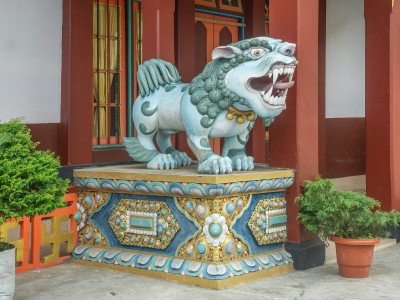
Ans:- Photography is generally restricted inside the main sanctum to maintain the sanctity of the prayer area and protect the delicate natural-dye wall paintings. However, you are usually free to take photos of the exterior architecture, the lions at the gate, and the stunning valley views from the monastery courtyard. Always ask the resident monks for permission first.

Ans:- The Aloobari Monastery, officially known as Mak Dhog Yolmowa Monastery, was established in 1914 during the start of World War I. It was built under the supervision of Sri Sangay Lama to promote world peace and ward off the ravages of war. It stands as a symbol of tranquility and spiritual resilience for the Yolmo people.

Ans:- The monastery celebrates several Tibetan Buddhist festivals, including Losar (the Tibetan New Year) and Buddha Jayanti. During these times, the monastery is beautifully decorated, and special prayer ceremonies are held. Visitors during these festivals can witness traditional rituals, though the dates vary annually based on the lunar calendar, so it is best to check locally.

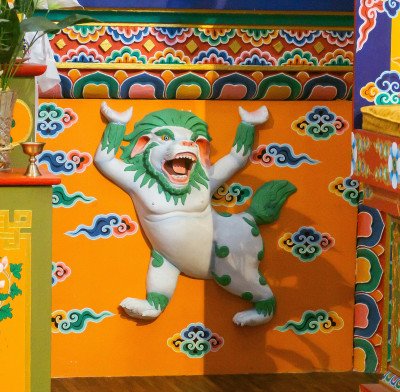
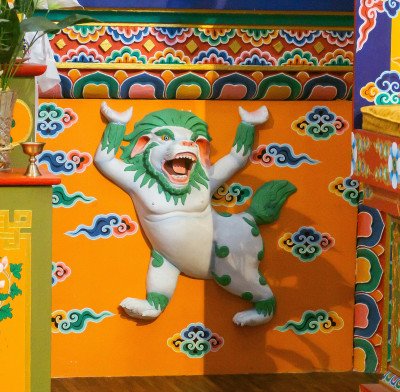
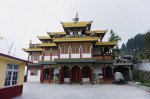
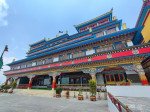
Ans:- The monastery is known for its vibrant red and yellow exterior walls and distinct concrete models of lions guarding the entrance and the main building. Inside, it houses magnificent statues of Lord Buddha and the sage Padmasambhava (Guru Rinpoche). The walls are adorned with intricate frescoes and paintings created using natural herbs and grasses.

Ans:- The monastery was founded by Sangay Lama, a highly respected religious leader originally from North Eastern Nepal. He belonged to the Yolmo ethnic group and sought to establish a spiritual center for his community in Darjeeling. His vision was to create a place of refuge and prayer that would serve both the local population and the broader world.

Ans:- There are no commercial shops or restaurants directly attached to the monastery, which helps maintain its quiet environment. However, since it is located in a residential area, you might find small local "gumtis" or tea stalls nearby selling basic snacks and tea. For a full meal or proper souvenir shopping, you would need to head back to Darjeeling.

Ans:- This monastery is situated in the Aloobari locality, approximately 3 kilometers away from the main Darjeeling town center (Chowrasta). It can be reached via Tungsung Road, which is a narrow lane offering a scenic walk through local settlements, or by a short taxi ride from the town, providing a peaceful escape from the crowds.

Ans:- While the monastery is open throughout the day, the early morning hours are particularly magical. Visiting during the morning prayer sessions allows you to experience the rhythmic chanting of the monks and the serene atmosphere. Additionally, the morning light provides the best visibility for the spectacular views of the surrounding valleys and the distant mountains.

Ans:- While the monastery itself is relatively flat once you enter the gates, the road leading to it (Tungsung Road) is narrow and can be steep in parts. For senior citizens, it is highly recommended to hire a taxi that can drop them directly at the entrance gate to avoid the strenuous walk from the town center or the mall.

Ans:- While there is no strict "uniform," visitors are expected to dress modestly out of respect for the sacred nature of the site. It is recommended to wear clothes that cover your shoulders and knees. Additionally, you must remove your shoes before entering the main prayer hall, a common practice across all Buddhist monasteries in India.

Ans:- Yes, the Aloobari Monastery is a treasure trove of religious history, preserving several ancient Buddhist manuscripts and scripts. These texts are highly revered by the monks and scholars who visit the site. Observing these centuries-old documents provides visitors with a profound sense of the deep-rooted Buddhist traditions and literary heritage of the Himalayan region.
Information about New and Updated Locations(575+) of West Bengal Has Been Added :-
Card subtitle

Note:-

Information provided here in good Faith and for reference only.

All information and pictures will be updated soon, please keep visiting.

Near Places
...
Aloobari Monastery

Some quick example text to build on the card title and make up the bulk of the card's content.

Go somewhere
...
Badamtam Tea Estate

Some quick example text to build on the card title and make up the bulk of the card's content.

Go somewhere
...
Batasia Loop

Some quick example text to build on the card title and make up the bulk of the card's content.

Go somewhere
...
Bengal Natural History Museum

Some quick example text to build on the card title and make up the bulk of the card's content.

Go somewhere
...
Bhutia Busty Monastery

Some quick example text to build on the card title and make up the bulk of the card's content.

Go somewhere

...
Bijanbari

Some quick example text to build on the card title and make up the bulk of the card's content.

Go somewhere
...
Chauk Bazaar

Some quick example text to build on the card title and make up the bulk of the card's content.

Go somewhere
...
Chota Mangwa

Some quick example text to build on the card title and make up the bulk of the card's content.

Go somewhere
...
Chowrasta & The Mall

Some quick example text to build on the card title and make up the bulk of the card's content.

Go somewhere
...
Dali Monastery

Some quick example text to build on the card title and make up the bulk of the card's content.

Go somewhere
in Other Cities