...

FAQs On Buxa Fort

Dooars, West Bengal, India
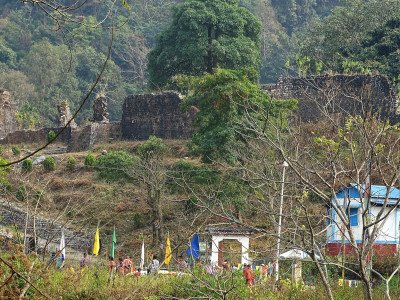
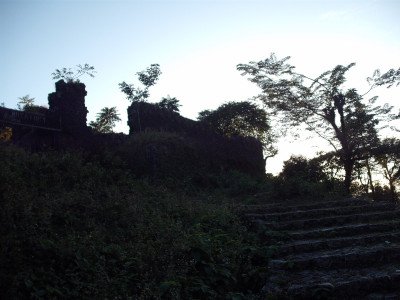
Historical Sentinel: Buxa Fort is a historic monument perched at an altitude of 2,600 feet on the Sinchula Range within the Buxa Tiger Reserve. The fort has a deep and somewhat dark history, originally built by the King of Bhutan to guard the famous Silk Route connecting India and Tibet. In 1865, fo llowing the Sinchula Treaty, the British took over the fort and converted it into a high-security prison. It became notorious for housing Indian freedom fighters, including many prominent revolutionaries, due to its remote and inaccessible location. The fort is surrounded by dense, leopard-infested forests, making escape nearly impossible. Over time, the structure has fallen into ruins, but it still stands as a powerful symbol of the Indian independence struggle. To reach the fort, visitors must undertake a scenic 5 km trek starting from Santalabari. The trail winds through lush tropical vegetation, offering glimpses of rare birds and butterflies. Reaching the fort provides a panoramic view of the vast Dooars plains and the Bhutanese mountains. Today, the fort is a major trekking hub, attracting history buffs and adventure seekers alike. The atmosphere at the fort is somber yet awe-inspiring, as one walks through the old stone cells and barracks. It also served as a refuge for Tibetan monks fleeing the Chinese occupation in the 1950s. The site is now maintained by the Archeological Survey of India and the Forest Department. Visiting Buxa Fort is not just a physical journey but a walk through time, where every stone tells a story of resistance and resilience. The surrounding Buxa Tiger Reserve adds a layer of wildlife excitement to the historical exploration. It is a must-visit destination for anyone wanting to understand the soul of North Bengal's history and its deep connection with the surrounding wilderness.

Ans:- Buxa Fort is an ancient structure located on the Sinchula Range. It was originally built by the Bhutanese King to protect the Silk Route between India and Tibet. Later, the British captured it in 1865 and converted it into a high-security prison where many Indian freedom fighters, including those from the Anushilan Samiti, were detained.

Ans:- During the monsoon season and shortly after, leeches are very common on the trek. If you are trekking during this time, it is advisable to wear long socks, apply tobacco-soaked water or salt on your shoes, and carry a small pouch of salt to detach any leeches that might stick to you.

Ans:- Electricity in the Buxa Sadar village near the fort is limited. Most homestays rely on solar power for lighting. Charging mobile phones and cameras can be a challenge, so it is highly recommended to carry a fully charged power bank if you plan to stay overnight in the village.

Ans:- Lepchakha is a small Drukpa village located about 2 km further uphill from Buxa Fort. Often called the "Queen of Dooars," it offers a breathtaking 360-degree view of the 12 tea gardens of Dooars and the Bhutan hills. The village has a beautiful monastery and offers a glimpse into the Drukpa culture.

Ans:- The best time is from October to April. The weather is cool, and the sky is usually clear, offering great views. Avoid the monsoon months (June to September) because the trail becomes very slippery, and the area is infested with leeches, making the trekking experience quite uncomfortable and difficult.

Ans:- The trek is considered moderate. It is a steady uphill climb on a well-marked rocky trail. While most people with average fitness can complete it in 1 to 1.5 hours, senior citizens might find it a bit tiring. It is recommended to wear sturdy shoes and carry a water bottle for the journey.

Ans:- There is a popular belief and historical accounts suggesting that Netaji Subhash Chandra Bose was briefly detained at Buxa Fort by the British. The fort was notorious as the second most "difficult to escape" prison after the Cellular Jail in the Andamans, used specifically for high-profile political prisoners of the independence movement.

Ans:- To reach Buxa Fort, you first need to reach Santarabari, which is the base camp. From Santarabari, it is a 3 to 4 km uphill trek through the forest. Santarabari can be reached by car from Alipurduar (30 km) or Rajabhatkhawa. The trek is moderate and offers beautiful views of the valley below.

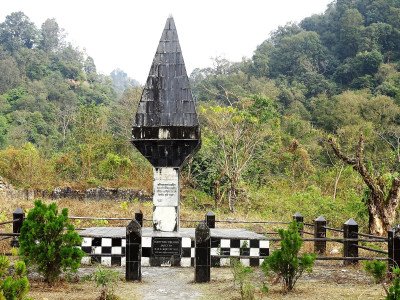
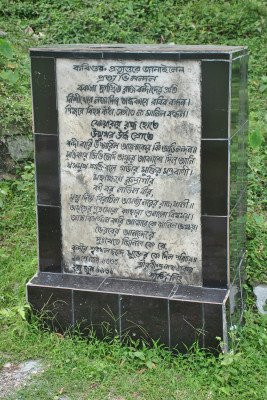
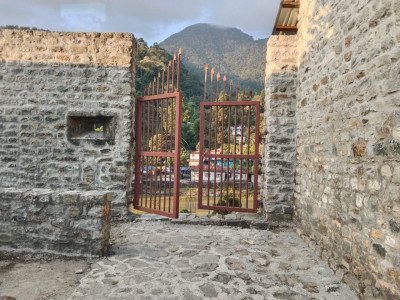
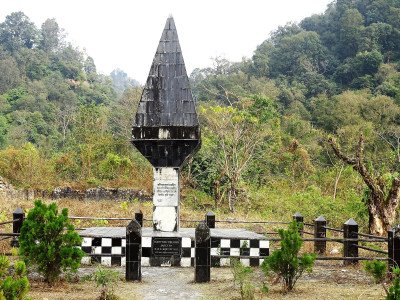
Ans:- Today, the Buxa Fort is mostly in ruins, but visitors can still see the stone walls, the prison cells where revolutionaries were kept, and the memorial plaques dedicated to the freedom fighters. The site offers a somber historical atmosphere combined with stunning panoramic views of the surrounding hills and the tea gardens of Dooars.

Ans:- While the path is relatively easy to follow, hiring a local guide from Santarabari is mandatory as per forest department rules. Guides provide valuable historical information about the fort and ensure your safety from wild animals, as the trail passes through the core area of the Buxa Tiger Reserve.

Ans:- Yes, children aged 7 and above can usually handle the trek if they are active. However, parents should be cautious and keep children close, as the trail is within a tiger reserve. It is a great educational trip for kids to learn about Indian history and forest conservation.

Ans:- Yes, there is an entry fee for the Buxa Tiger Reserve which is collected at the Rajabhatkhawa gate. Additionally, you may need to pay a small fee at the Santarabari entry point. These fees contribute to the maintenance of the park and the protection of the wildlife in the region.

Ans:- You should carry a light backpack with a water bottle, some dry snacks, a raincoat (as weather can change quickly), and a first-aid kit. If you plan to stay overnight, carry basic toiletries and warm clothes. A walking stick can be very helpful for the rocky uphill and downhill sections of the trail.

Note:-

Information provided here in good Faith and for reference only.

All information and pictures will be updated soon, please keep visiting.

Near Places
...
Bhutanghat

Some quick example text to build on the card title and make up the bulk of the card's content.

Go somewhere

...
Bindu

Some quick example text to build on the card title and make up the bulk of the card's content.

Go somewhere
...
Buxa Fort

Some quick example text to build on the card title and make up the bulk of the card's content.

Go somewhere
...
Buxa Tiger Reserve

Some quick example text to build on the card title and make up the bulk of the card's content.

Go somewhere
...
Chapramari Wildlife Sanctuary

Some quick example text to build on the card title and make up the bulk of the card's content.

Go somewhere
...
Chilapata Forest

Some quick example text to build on the card title and make up the bulk of the card's content.

Go somewhere
...
Gorumara National Park

Some quick example text to build on the card title and make up the bulk of the card's content.

Go somewhere
...
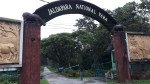
Jaldapara National Park

Some quick example text to build on the card title and make up the bulk of the card's content.

Go somewhere
...
Jayanti

Some quick example text to build on the card title and make up the bulk of the card's content.

Go somewhere
...
Jhalong

Some quick example text to build on the card title and make up the bulk of the card's content.

Go somewhere
in Other Cities