...

FAQs On Chapramari Wildlife Sanctuary

Dooars, West Bengal, India
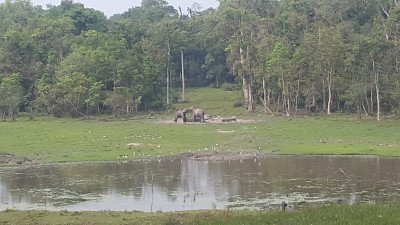
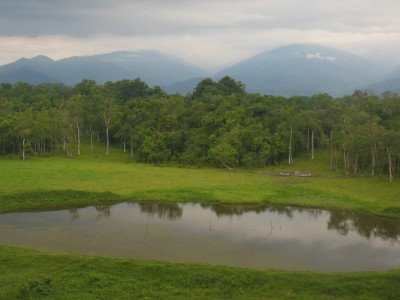
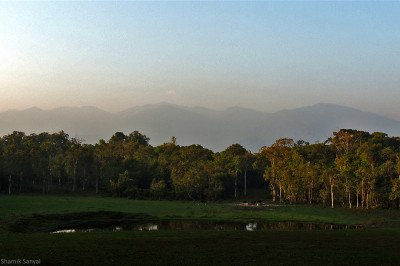
Biodiversity Hub: Chapramari Wildlife Sanctuary is one of the oldest wildlife reserves in India, located in the foothills of the Eastern Himalayas. It is a relatively small sanctuary, covering about 9.6 square kilometers, but it is incredibly rich in biodiversity. The name "Chapramari" is derived fr om 'Chapra', a type of fish, and 'Mari', meaning abundance, reflecting the rich aquatic life in its rivers. It is separated from the Gorumara National Park by the Murti River, and the two essentially form one continuous ecological zone. The sanctuary is dominated by moist deciduous forests, featuring trees like Sal, Teak, and Shirish. It is most famous for its large population of Asiatic Elephants and Indian Bison (Gaur). Visitors often flock to the sanctuary's watchtower, which overlooks a salt lick where animals frequently gather. Apart from the larger mammals, Chapramari is home to leopards, wild boars, and several species of deer, including the Chital and Sambar. For bird enthusiasts, the sanctuary is a paradise, housing over 200 species of birds, including the Green Magpie and Scarlet Minivet. The Murti River flowing along its borders provides a scenic backdrop and opportunities for angling. The sanctuary was officially established in 1895 as a forest reserve and upgraded to a wildlife sanctuary in 1998. It offers a more intimate wildlife experience compared to larger parks. The quietude of the forest is only interrupted by the calls of the wild, making it a perfect spot for those seeking peace. Jeep safaris are the primary way to explore the interior, taking visitors through dense canopies and grasslands. The proximity to the Lataguri hub makes it an easy addition to any Dooars itinerary.

Ans:- Absolutely. Chapramari is home to a wide variety of forest birds. You can see the Scarlet Minivet, Green Magpie, Great Indian Hornbill, and various species of kingfishers and raptors. The proximity to the Murti River also attracts many water-dependent birds, making it a hotspot for bird photography.

Ans:- Chapramari is located about 30 km from Lataguri and about 10 km from Chalsa. It lies on the banks of the Murti River. The sanctuary is easily accessible from Siliguri (75 km) via the National Highway. It forms a vital part of the elephant corridor in the Dooars region.

Ans:- Chapramari is one of the oldest wildlife sanctuaries in India, located in the Jalpaiguri district. It is an extension of the Gorumara National Park, separated only by the Murti River. It is famous for its dense forest of Sal and Teak and its significant population of Asian Elephants and Gaur.

Ans:- It is advisable to wear earthy tones like olive green, khaki, or brown to blend in with the forest environment. Avoid bright colors like red or yellow, which can agitate the animals. During winter safaris, bring a warm jacket as the open jeeps can get very cold in the forest air.

Ans:- Malbazar is the nearest town with a major railway station (New Mal Junction), located about 20 km away. You can hire a taxi or take a local bus from Malbazar to reach the Chapramari area. The drive through the tea gardens and the crossing of the Murti River is very scenic.

Ans:- The best time to visit is from November to March when the weather is pleasant and wildlife sightings are at their peak. Like other parks in the region, Chapramari remains closed from June 16th to September 15th every year to accommodate the monsoon and the animal breeding season.

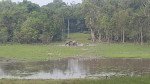
Ans:- The Chapramari Watchtower is the primary viewing point for tourists. It overlooks a large glade where animals often come to graze or lick salt from the artificial salt pits. There is a small pond in front of the tower which attracts birds and animals, making it an excellent spot for photography.

Ans:- The morning safari usually starts around 6:00 AM or 6:30 AM, and the afternoon safari starts around 3:00 PM or 3:30 PM. Each safari lasts for about 1.5 to 2 hours. Timings may vary slightly depending on the season and sunlight. It is recommended to reach the ticket counter early to secure a slot.

Ans:- There is a Forest Rest House located right near the watchtower, which offers a thrilling stay experience. However, it is very difficult to book and is mostly reserved for officials. Most tourists stay in the private resorts of Murti or Lataguri and visit Chapramari for a morning or evening safari.

Ans:- While both are part of the same ecosystem, Chapramari is much smaller (about 10 sq km) and often considered more "intimate" and less crowded than Gorumara. It is known specifically for its large elephant herds that are frequently seen near the main watchtower and the salt lick provided by the forest department.

Ans:- While the Royal Bengal Tiger is officially listed as a resident of these forests, they are extremely elusive and sightings are nearly non-existent. The sanctuary is managed more as a habitat for mega-herbivores like elephants and rhinos. Leopard sightings, however, are occasionally reported by lucky visitors during evening safaris.

Ans:- Yes, carrying an original government-issued photo ID (like Voter ID, Passport, or Aadhaar Card) is mandatory for every person booking a safari. The forest department checks these IDs before issuing the entry permits. It is also a good idea to keep a few photocopies of the ID with you.

Ans:- Yes, Jeep Safaris are the only way to explore the sanctuary. Safaris are organized in shifts: early morning and late afternoon. Tickets must be collected from the forest department counters in Lataguri or Murti. Each jeep can carry up to 6 people plus a mandatory forest guide.

Ans:- Yes, though Gorumara is more famous for Rhinos, they are also frequently spotted in Chapramari as the animals move freely between the two protected areas. One-horned Rhinoceros, along with Indian Bison (Gaur) and various types of deer, are the most common sightings from the Chapramari watchtower.

Note:-

Information provided here in good Faith and for reference only.

All information and pictures will be updated soon, please keep visiting.

Near Places
...
Bhutanghat

Some quick example text to build on the card title and make up the bulk of the card's content.

Go somewhere

...
Bindu

Some quick example text to build on the card title and make up the bulk of the card's content.

Go somewhere
...
Buxa Fort

Some quick example text to build on the card title and make up the bulk of the card's content.

Go somewhere

...
Buxa Tiger Reserve

Some quick example text to build on the card title and make up the bulk of the card's content.

Go somewhere
...
Chapramari Wildlife Sanctuary

Some quick example text to build on the card title and make up the bulk of the card's content.

Go somewhere

...
Chilapata Forest

Some quick example text to build on the card title and make up the bulk of the card's content.

Go somewhere
...
Gorumara National Park

Some quick example text to build on the card title and make up the bulk of the card's content.

Go somewhere

...
Jaldapara National Park

Some quick example text to build on the card title and make up the bulk of the card's content.

Go somewhere
...
Jayanti

Some quick example text to build on the card title and make up the bulk of the card's content.

Go somewhere
...
Jhalong

Some quick example text to build on the card title and make up the bulk of the card's content.

Go somewhere
in Other Cities