...

FAQs On Dalmadal Cannon

Bishnupur, West Bengal, India
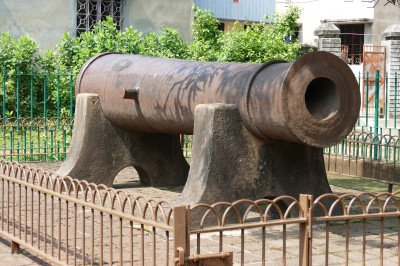
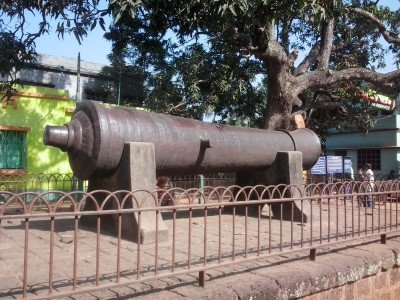
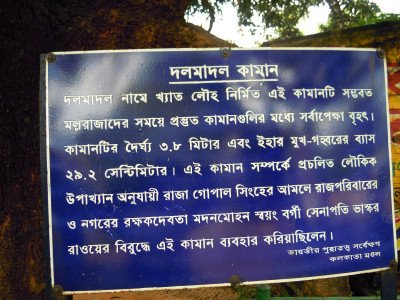
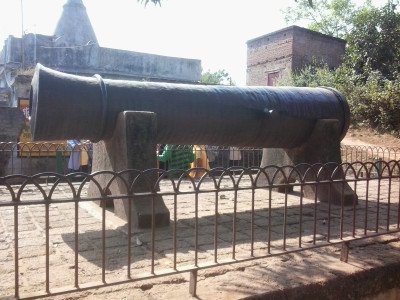
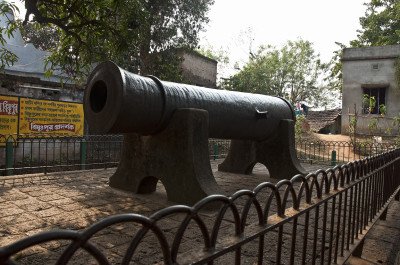
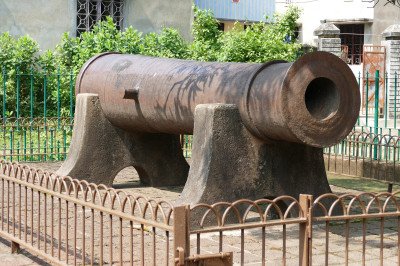
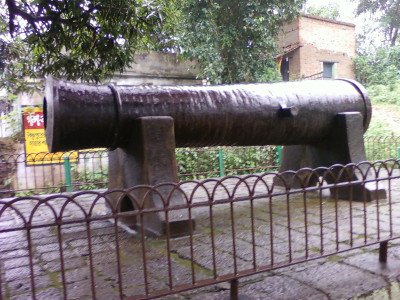
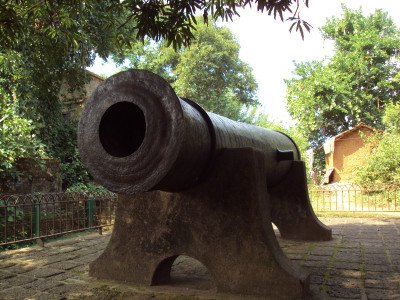
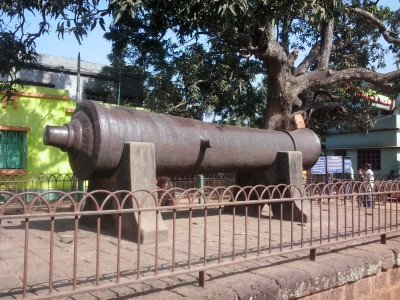
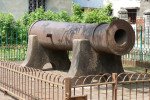
The Dalmadal Cannon, also known as the Dal Madal Kaman, is a massive historical cannon located in Bishnupur, Bankura district, West Bengal, India. Its name, Dalmadal, literally translates to "destroyer of the enemy," reflecting its crucial role in the military defense of the Mallabhum kingdom. It wa s forged in 1742 CE under the command of Malla King Gopal Singha to protect the capital, Bishnupur, from the invading Maratha forces led by Bhaskar Rao. The cannon is a symbol of the Malla dynasty's martial power and their successful resistance against invaders. A popular local legend dramatically enhances its fame, claiming that when the Malla army was on the verge of defeat, the family deity, Lord Madan Mohan, miraculously appeared and fired the cannon himself, routing the Maratha army. This story deeply embeds the cannon in the local religious and cultural lore of Bishnupur. Forged by the local master blacksmith, Jagannath Karmakar, it is a remarkable example of indigenous iron casting and metallurgy of the 18th century. Today, the cannon stands proudly on a raised masonry platform, protected by the Archaeological Survey of India (ASI), attracting historians, military enthusiasts, and tourists who are fascinated by its size, history, and the myths surrounding it. It is one of the key non-temple historical attractions in the town, providing a glimpse into the defensive strategies of the Malla kings.

Ans:- A visit usually takes about 15 to 20 minutes. You can read the information plaque provided by the ASI, take photos, and admire the craftsmanship. Since it is located next to the Chhinamasta Temple, most tourists spend about 45 minutes in total for both these attractions before moving on to the Rajbari.

Ans:- According to local folklore, when the Maratha army attacked Bishnupur, King Gopal Singha was busy in prayer. It is believed that the tutelary deity, Lord Madan Mohan himself, came out of the temple and fired the Dalmadal Cannon to drive away the invaders. This legend is deeply ingrained in the culture and faith of the people of Bishnupur.

Ans:- It is located on a raised masonry plinth in the Dalmadal Para area, near the Bishnupur Rajbari and the Chhinamasta Temple. It is easily accessible by road and is a standard stop for any tourist visiting the historical sites of Bishnupur. The area around it is open and provides a clear view of the weapon.

Ans:- Like most sites in Bishnupur, the best time to visit is during the cooler months from October to March. Visiting during the daytime allows you to see the fine hammer marks and the joining of the 63 iron rings. It is also quite impressive to see it lit up during the evening during festive seasons like the Bishnupur Mela.

Ans:- No, there is no entry fee to visit the Dalmadal Cannon. It is a centrally protected monument under the Archaeological Survey of India (ASI) and is open to the public for free. You can walk right up to the enclosure to see the intricate details of its construction and the massive iron rings.

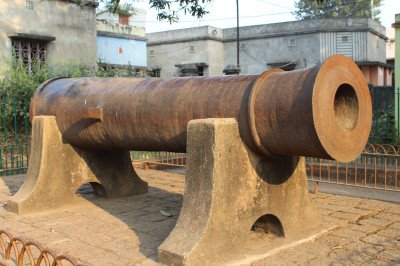
Ans:- The cannon has a small square groove called the "Ranjakghar" on its upper rear section. This was filled with gunpowder and ignited to fire the main charge inside the barrel. It also had two iron sticks or axles in the middle, which were originally connected to massive wheels to allow for positioning and movement during a battle.

Ans:- The cannon is about 3.8 meters (12.5 feet) long and weighs nearly 12 tons (approximately 296 maunds). It has a large bore with a diameter of about 11 inches. The body of the cannon is made of 63 iron rings welded together so perfectly that the joints are barely visible, showcasing the advanced metallurgy of that era.

Ans:- The cannon is kept within a fenced enclosure to protect it from damage and vandalism. While you can get very close and see it clearly, visitors are generally not allowed to touch or climb on the cannon. This is to ensure that the ancient metal and its unique surface are preserved for future generations.

Ans:- The cannon was commissioned by Malla King Gopal Singha in 1742. It was forged by a local blacksmith named Jagannath Karmakar. The cost of building this massive weapon was approximately 1.25 lakh rupees at the time, which was a staggering amount. It was designed to be a state-of-the-art defensive weapon for the kingdom.

Ans:- The Dalmadal Cannon is a massive 18th-century iron cannon and one of the most famous historical artifacts in Bishnupur. It was built by the Malla kings to protect the city from Maratha invasions. Known for its incredible size and the fact that it has remained rust-free for centuries, it is a symbol of Malla military power.

Ans:- While Dalmadal is the largest and most famous, there are a few smaller cannons and old military structures scattered around the Bishnupur fort area. However, none match the scale or the historical lore of Dalmadal. The nearby Garh Darwaja and the fortifications also provide a glimpse into the military setup of the Malla era.

Ans:- Yes, the site is very accessible as it is located right next to the main road. The area around the cannon is paved and flat, making it easy for elderly visitors or those with limited mobility to view the monument without having to walk long distances or climb steep stairs. Rickshaws can drop you right at the gate.

Note:-

Information provided here in good Faith and for reference only.

All information and pictures will be updated soon, please keep visiting.

Near Places
...
Acharya Jogesh Chandra Museum

Some quick example text to build on the card title and make up the bulk of the card's content.

Go somewhere

...
Big Stone Gateway

Some quick example text to build on the card title and make up the bulk of the card's content.

Go somewhere

...
Bishnupur Mela Ground

Some quick example text to build on the card title and make up the bulk of the card's content.

Go somewhere
...
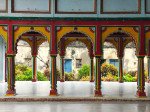
Bishnupur Rajbari

Some quick example text to build on the card title and make up the bulk of the card's content.

Go somewhere
...
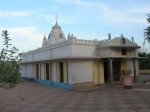
Chhinnamasta Temple

Some quick example text to build on the card title and make up the bulk of the card's content.

Go somewhere
...
Dalmadal Cannon

Some quick example text to build on the card title and make up the bulk of the card's content.

Go somewhere
...
Garh Darwaja

Some quick example text to build on the card title and make up the bulk of the card's content.

Go somewhere
...
Gokul Chand Temple

Some quick example text to build on the card title and make up the bulk of the card's content.

Go somewhere

...
Hadal-Narayanpur

Some quick example text to build on the card title and make up the bulk of the card's content.

Go somewhere
...
Jhilimili & Sutan Forest

Some quick example text to build on the card title and make up the bulk of the card's content.

Go somewhere
in Other Cities