...

Tinikunia Pukhuri

Tinsukia, Assam, India
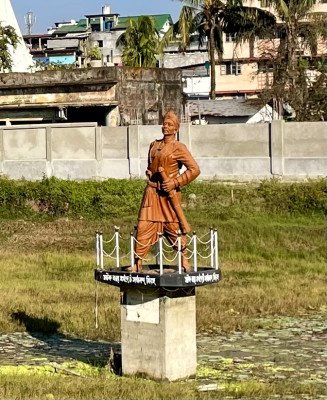
Tinikunia Pukhuri, literally translating to the "Triangular Pond" (from the Assamese words Tini meaning three, and Kunia meaning corner/angle, and Pukhuri meaning pond), is a water body with immense historical and cultural significance located right in the heart of Tinsukia town. The name of the ent ire town of Tinsukia itself is directly derived from this distinctive pond. Historically, the area was known as Bengmora, the capital of the Muttack Kingdom founded by Swargadeo Sarbananda Singha in the late 18th century. The pond was dug around 1791 A.D. under the direction of King Sarbananda Singha by his minister, Gopinath Barbaruah (also known as Godha Baruah), as part of a benevolence initiative that saw the construction of many tanks. The pond's unusual triangular shape is its defining feature, setting it apart from other water bodies in the region. The king had instructed the minister to dig a pond with three corners, which became this landmark. In 1884, when the British-era Dibru-Sadiya Railway line was constructed, a railway station was established near this famous triangular pond. The station, and subsequently the growing settlement, was named Tinsukia after the pond, immortalizing its unique shape and historical importance. Over the years, the area around the pond has developed, and while the original pond exists, the surrounding space has often been developed into a park or a recreational area, sometimes mistakenly conflated with the nearby, larger cluster of nine ponds known as Na-Pukhuri. However, the Tinikunia Pukhuri remains the specific, triangular pond that gave the town its name and is a quiet testament to the legacy of the Muttack Kingdom. It serves as a reminder of the city's ancient roots before it grew into the modern commercial hub it is today.

General information

  • ...

    Ideal Duration:

    30 minutes to 1 hour
  • ...

    Place Type:

    Historical Landmark, Pond, Cultural Significance
  • ...

    Entry Fees:

    Direct Entry Fee: There is No Entry Fee to visit Tinikunia Pukhuri. As a historical public water body and a central landmark, access to the pond and its immediate surroundings is completely free of charge for the general public and tourists. This ensures that the historica...
    Direct Entry Fee: There is No Entry Fee to visit Tinikunia Pukhuri. As a historical public water body and a central landmark, access to the pond and its immediate surroundings is completely free of charge for the general public and tourists. This ensures that the historical significance of the site remains open and accessible to everyone.

    Photography Charges: There are No Specific Photography Charges for casual tourists and amateur photographers. You can freely use your phone or standard camera equipment to take pictures and videos for personal use. However, for professional filming or commercial photography projects, it is always advisable to seek necessary permissions from the local municipal body to avoid any unforeseen issues, though this is rarely enforced for small projects.

    Parking and Other Service Fees: Since the pond is located in a crowded, central area of Tinsukia, you may incur nominal parking fees if you use a paid public or private parking facility nearby. There are no fees for services like benches or pathways directly surrounding the pond. Any local vendors or food stalls in the area will charge standard commercial rates for their goods. The overall cost of visiting the Tinikunia Pukhuri is effectively zero, making it a highly economical cultural stop.
  • ...

    Timing:

    Regular Timings: Being an open public landmark in the middle of a city, Tinikunia Pukhuri does not have strict official opening and closing hours like a dedicated park or museum. It is generally accessible 24 hours a day, seven days a week. However, the best hours for a co...
    Regular Timings: Being an open public landmark in the middle of a city, Tinikunia Pukhuri does not have strict official opening and closing hours like a dedicated park or museum. It is generally accessible 24 hours a day, seven days a week. However, the best hours for a comfortable and meaningful visit usually correspond to daylight hours.

    Ideal Visit Time (Day): The Ideal Visit Time is during the early morning, from 6:00 AM to 9:00 AM, or late afternoon, from 4:00 PM to 6:00 PM. The early morning offers the best light for photography, cooler temperatures, and a quieter atmosphere for reflection. The late afternoon provides a pleasant temperature and the golden hour light, perfect for photography just before sunset. Mid-day is generally very hot, crowded with city traffic, and less comfortable.

    Best Time by Season: The post-monsoon and winter months, from October to March, are the best time to visit. The weather during this period is cool and dry, providing a much more enjoyable experience. The peak summer months of April to June should be avoided during mid-day due to intense heat and humidity.

    Safety Considerations (Night): While technically open, it is generally recommended to avoid visiting late at night (after 8:00 PM) or in the very early hours for reasons of personal safety, as the immediate surrounding area might have reduced activity and lighting.
  • ...

    Special Events:

    Local Festivals and Observances: While no large-scale, annual, dedicated festival is held at the small Tinikunia Pukhuri itself due to its size and central location, it remains a symbolic focal point for certain local religious observances and festivals. During major Assame...
    Local Festivals and Observances: While no large-scale, annual, dedicated festival is held at the small Tinikunia Pukhuri itself due to its size and central location, it remains a symbolic focal point for certain local religious observances and festivals. During major Assamese festivals like Bihu (especially Bohag Bihu in April), the spirit of the pond, as a source of water and life, is often celebrated by the nearby community. Small, spontaneous gatherings for ritualistic offerings or traditional songs may occur on the banks.

    City-Naming Anniversaries and Heritage Walks: The pond is regularly included as a key stop on heritage walks and historical tours organized by local cultural bodies or district administration, especially those commemorating the history of Tinsukia's naming or the Muttack Kingdom's legacy. These events often involve local historians sharing narratives right next to the pond, making it a temporary hub of historical education.

    Environmental and Cleanliness Drives: Being an important urban water body, the pond is a frequent site for environmental awareness programs and cleanliness drives. Local youth groups, NGOs, and the municipality often conduct activities around the pond to highlight the importance of preserving historical and ecological resources, especially on days like World Environment Day or other national observance dates.
  • ...

    Best Photo Spots:

    The Corner View: The best and most essential photo spot is one of the three corners of the pond. Stand slightly back from one corner and try to frame the shot so that the triangular shape is distinctly visible, emphasizing the geometry that gave the town its name. This is ...
    The Corner View: The best and most essential photo spot is one of the three corners of the pond. Stand slightly back from one corner and try to frame the shot so that the triangular shape is distinctly visible, emphasizing the geometry that gave the town its name. This is crucial for capturing the unique identity of Tinikunia Pukhuri.

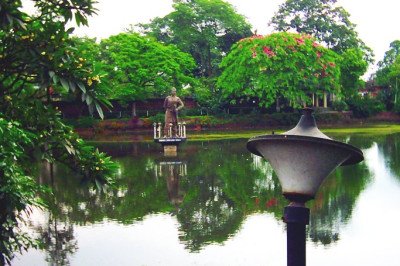
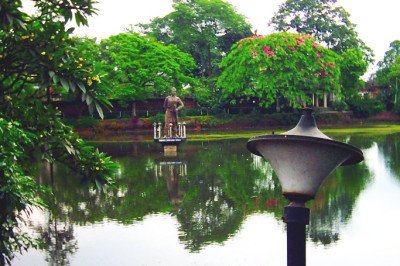
    Reflection on Water: Early mornings or late afternoons, when the water is calm and the light is soft, are perfect for capturing the reflection of the surrounding trees and the sky in the pond's surface. A well-composed reflection shot can add a serene and artistic quality, beautifully contrasting the tranquility of the water with the busy city sounds.

    The Historical Context Shot: Look for a vantage point that allows you to capture a portion of the pond along with a glimpse of the old town architecture or the nearby railway area, if possible. This juxtaposes the 18th-century structure with the 19th-century colonial development that it inspired, creating a visually rich photo that tells a story of the town's history.

    Candid Shots of Local Life: As a central town landmark, the area is active with local life. The steps or benches near the pond offer a great opportunity for candid photography—capturing locals interacting with the space, such as people crossing by, sitting to rest, or street vendors nearby. These shots provide a lively, human element to the historical monument.

    Panoramic View: If you can find a suitable raised point in the immediate vicinity (like a nearby building's upper floor with permission, if available), a panoramic shot can best showcase the pond's full triangular shape in relation to the surrounding urban sprawl of Tinsukia. This is the definitive way to document the "Triangular Pond. "

Photo Gallery

...
Darjeeling
Queen of Hills • Tea Gardens
...
Darjeeling
Queen of Hills • Tea Gardens

Things To Do

  • ...
    Historical Reflection and Photography: This is the primary activity at Tinikunia Pukhuri. Spend time simply walking around the pond, contemplating its age and its importance as the city's namesake. It’s an ideal spot for historical reflection, imagining the Bengmora capital of the Muttack Kingdom before the railways came. Use your camera to capture the unique triangular shape of the pond, perhaps contrasting the ancient water body with the surrounding modern city life. Look for any informational signboards that might detail its history and take pictures of the pond reflecting the sky. This can easily take 30-45 minutes for a thorough and thoughtful visit.

    A Moment of Urban Serenity: Although centrally located, the pond area offers a brief escape from the hustle and bustle of the main Tinsukia commercial areas. Sit on a ne...
    Historical Reflection and Photography: This is the primary activity at Tinikunia Pukhuri. Spend time simply walking around the pond, contemplating its age and its importance as the city's namesake. It’s an ideal spot for historical reflection, imagining the Bengmora capital of the Muttack Kingdom before the railways came. Use your camera to capture the unique triangular shape of the pond, perhaps contrasting the ancient water body with the surrounding modern city life. Look for any informational signboards that might detail its history and take pictures of the pond reflecting the sky. This can easily take 30-45 minutes for a thorough and thoughtful visit.

    A Moment of Urban Serenity: Although centrally located, the pond area offers a brief escape from the hustle and bustle of the main Tinsukia commercial areas. Sit on a nearby bench, if available, and enjoy the quiet ambiance. Observe the local life—pedestrians, shopkeepers, and local residents—that passes by this historical marker daily. This simple act of observational relaxation provides a genuine taste of the city's living history. It’s a great place to pause and recharge during a busy day of sightseeing or shopping in the town.

    Local Street Food Exploration: Being located in a central commercial area, the vicinity of Tinikunia Pukhuri is a good starting point for exploring local street food. Look for small stalls offering Assamese snacks like pithas (rice cakes), ghugni (curried peas), or local savory snacks. You can easily find tea stalls or small eateries to sample a true cup of Assam Tea. This culinary exploration ties into the local life that has grown around this historic center.

    Cultural Photography and Documentation: For the serious photographer or blogger, the pond serves as an excellent subject for a cultural documentation project. The triangular shape is a striking visual element. Try capturing it from different angles, especially from a slightly elevated vantage point if possible, to emphasize the geometry. Document the blend of the old pond and the new buildings to create a visual narrative of Tinsukia's evolution. This includes close-up shots of the water, the surrounding vegetation, and the general urban environment.

    Combine with Na-Pukhuri Visit: The larger and more developed Na-Pukhuri (Cluster of Nine Ponds), which also dates back to the Muttack King's era, is often a short distance away. Plan to visit both sites together. Use the Tinikunia Pukhuri as the starting point for understanding the history, then head to Na-Pukhuri to see the larger scale of the Muttack waterworks. Na-Pukhuri usually offers more amenities like boating and a children's park, providing a contrast between the simple, original landmark and the modern recreational area.

    Shopping and Browsing: Since the pond is located near the commercial center, it's naturally close to some of Tinsukia's popular market areas, including GNB Road. After your visit, you can easily transition into shopping for local goods, including the famous Assam tea, handicrafts, and traditional Assamese textiles like the Mekhela Chador. This makes the pond a convenient cultural stop amidst a commercial itinerary.

Resturants

Show All

Information

  • ...

    Why Famous:

    The Origin of Tinsukia's Name: The primary reason for the fame of Tinikunia Pukhuri is its direct contribution to the naming of the modern city. The British established the railway station nearby and named the area Tinsukia because of this distinctive 'three-cornered pond'....
    The Origin of Tinsukia's Name: The primary reason for the fame of Tinikunia Pukhuri is its direct contribution to the naming of the modern city. The British established the railway station nearby and named the area Tinsukia because of this distinctive 'three-cornered pond'. This makes it the eponymous landmark of the commercial capital of Upper Assam, a truly unique distinction among Indian cities.

    Legacy of the Muttack Kingdom: The pond is a tangible link to the powerful Muttack Kingdom that once ruled this region. It was constructed under the patronage of Swargadeo Sarbananda Singha, making it a remnant of the last independent Assamese kingdom before the British consolidation of power. Visiting the pond is stepping back into a pivotal era of Assamese history, offering a glimpse into the welfare and public works undertaken by the Matak kings.

    Unique Geometric Design: The pond's triangular shape (Tinikunia) is an unusual and memorable architectural feature. This deviation from the typical quadrilateral pond shape is a talking point for tourists and historians alike. It showcases a deliberate, perhaps symbolic, design choice by the 18th-century builders. This unique feature ensures its place in local memory and tourism.
  • ...

    Architecture:

    The Defining Triangular Shape: The most significant "architectural" element of Tinikunia Pukhuri is its precise triangular geometry. Unlike typical square or rectangular ponds dug for utility, this one was intentionally shaped with three distinct corners. This design choic...
    The Defining Triangular Shape: The most significant "architectural" element of Tinikunia Pukhuri is its precise triangular geometry. Unlike typical square or rectangular ponds dug for utility, this one was intentionally shaped with three distinct corners. This design choice is not common in Assamese pond construction and immediately distinguishes it as a royal project, built more as a symbolic or landmark structure than just a simple reservoir. The shape itself is the central piece of its historical architecture.

    Dimension: While precise, modern-day surveys may vary due to urban development, the pond's original conception was a notable-sized water body reflecting the grandeur of the Muttack Kingdom's capital at Bengmora. It is not as large as the cluster of nine ponds (Na-Pukhuri), but substantial enough to warrant naming the town after it. The length of its three sides is not officially published for tourism, but its prominence suggests a base and two roughly equal sides forming an isosceles or near-equilateral triangular shape, typical of its representation on historical maps and in local lore.

    Modern Surrounding Structures: The immediate surroundings often feature basic civil engineering additions like concrete embankments or retaining walls to prevent erosion and define its boundaries within the busy urban environment. There may be a small fenced area, pathways, or benches added by the local municipality to facilitate visitor viewing and maintain the site, but the pond itself is the historical structure.
  • ...

    How To Reach:

    By Air: The nearest airport to Tinsukia is Dibrugarh Airport (also known as Mohanbari Airport), with the IATA code DIB. It is located approximately 40 kilometers away from the Tinsukia City Center. The airport has regular flights connecting it to major Indian cities like G...
    By Air: The nearest airport to Tinsukia is Dibrugarh Airport (also known as Mohanbari Airport), with the IATA code DIB. It is located approximately 40 kilometers away from the Tinsukia City Center. The airport has regular flights connecting it to major Indian cities like Guwahati, Kolkata, and Delhi. From the airport, you can hire a pre-paid taxi or a cab service to reach Tinsukia town, which takes about 1 to 1. 5 hours. Once you reach the city center, Tinikunia Pukhuri is easily accessible via local transport.

    By Train: Tinsukia is exceptionally well-connected by rail, thanks to the historical Dibru-Sadiya Railway line that runs through the region.

    There are two major stations:

    the main station is New Tinsukia Junction (Code: NTSK), which connects to nearly all major cities across India, including Delhi, Kolkata, Chennai, and Mumbai. The second, older station is Tinsukia Junction (Code: TSK), which is closer to the city center and the pond. From either station, you can easily hire an auto-rickshaw or take a cycle-rickshaw to the pond. Tinikunia Pukhuri is very close to the Tinsukia Junction (the old station), just a short ride of about 0. 5 to 1 KM.

    By Road: Tinsukia is well-connected by a network of National Highways, notably NH 37 (now part of NH-2 and NH-15). Regular bus services, both government and private, connect Tinsukia to other major towns and cities in Assam like Guwahati, Dibrugarh, and Jorhat. If traveling by car, follow the signs for the Tinsukia City Center or GNB Road. Since the pond is in the city center, the local roads can be busy, and finding parking might require some searching.

    By Local Transport: Once you are in Tinsukia town, the best way to reach Tinikunia Pukhuri is by auto-rickshaw or a cycle-rickshaw. Given its central location, it's a very short and cheap ride from any part of the main market or railway station. Most local drivers will instantly recognize the name "Tinikunia Pukhuri" or "Teen-konia Pukhuri. " You can also simply walk there from the nearby commercial hub or the old railway station (Tinsukia Junction).
  • ...

    Weather and Best Time to Visit:

    Winter (October to March) - The Best Season: The period from October to March is considered the Best Time to Visit Tinikunia Pukhuri and the entire Tinsukia district. During this time, the weather is pleasantly cool and dry, with average temperatures ranging from 10°C to 2...
    Winter (October to March) - The Best Season: The period from October to March is considered the Best Time to Visit Tinikunia Pukhuri and the entire Tinsukia district. During this time, the weather is pleasantly cool and dry, with average temperatures ranging from 10°C to 25°C. The clear skies and comfortable atmosphere make walking and exploring the central areas around the pond enjoyable. The air is fresh, and the chance of rain is minimal. This is also when most other nearby tourist attractions like Dibru-Saikhowa National Park are at their most accessible.

    Summer (April to May) - Hot and Humid: The summer months are characterized by hot and humid weather. Temperatures can rise above 35°C, and the high humidity can make daytime outdoor activities uncomfortable. Visits during this season should be strictly limited to the early mornings or late evenings to avoid the peak heat. The pond itself doesn't offer much relief from the heat, but the cool breeze of the early day can be refreshing.

    Monsoon (June to September) - Wet and Challenging: The monsoon season brings heavy and prolonged rainfall to Assam. While the surrounding greenery is at its lush best, the constant rain can disrupt travel plans and make walking around the pond difficult due to muddy or slippery conditions. However, the post-rain freshness and the sight of the pond filled with rainwater can be beautiful. If visiting in the monsoon, carry proper rain gear and plan for a short visit between downpours. Ideal Time of Day (Morning vs.

    Evening): Early Morning (6:00 AM - 9:00 AM) is the most Ideal Time for both comfort and photography, offering soft light and minimal crowds. The air is crisp, and the reflection of the sky on the pond is at its most beautiful. Evening (4:00 PM - 6:00 PM) is the second best option, as the heat subsides, and the golden hour light provides excellent photo opportunities. Avoid the midday heat for a comfortable visit.
  • ...

    Near Tourist Places:

    1.

    Na-Pukhuri (Cluster of Nine Ponds): Approx. 1 KM2.

    Tinsukia Junction Railway Station (Old Station): Approx. 0. 5 KM3. New Tinsukia Junction Railway Station (Main Station): Approx. 2. 5 KM4.

    Marut Nandan Kanan Park: Approx. 1. 5 KM5.

    Tilinga Mandir (Bell Temple, Bordubi): Approx. 12 KM6.

    Bherjan-Borajan-Padumoni Wildlife Sanctuary: Approx. 6 KM7.

    Dibru-Saikhowa National Park (Entry Point): Approx. 13 KM8.

    Rangagora Tea Garden: Approx. 10 KM9.

    Digboi (Oil Town & Golf Course): Approx. 32 KM10.

    War Cemetery, Digboi: Approx. 34 KM

Tourism Tips

  • ...
    Health & Safety: Always carry a bottle of drinking water, especially if visiting between March and October. The pond is a water body in an urban setting, so do not attempt to swim or drink the water. Be cautious of traffic, as it is centrally located near busy roads. Use ...
    Health & Safety: Always carry a bottle of drinking water, especially if visiting between March and October. The pond is a water body in an urban setting, so do not attempt to swim or drink the water. Be cautious of traffic, as it is centrally located near busy roads. Use mosquito repellent, particularly during the humid months or in the evening, as Tinsukia is in a tropical region. While the area is generally safe, always be aware of your personal belongings in crowded market areas.

    Packing Essentials: Since the visit is short, you won't need much. Pack light clothing (cotton) for summer and warm clothing (jackets, sweaters) for the winter months of December and January. Bring a hat or cap and sunglasses for sun protection. A good camera is a must for capturing the unique triangular shape. For the monsoon season (June to September), a raincoat or umbrella is essential. Comfortable walking shoes are recommended, even for the short walk around the pond.

    Accommodation: Tinsukia is a major town and offers a wide range of accommodation options. Since the pond is centrally located, staying at any hotel near the Tinsukia Junction or the main GNB Road will place you within walking distance or a short auto-rickshaw ride of the landmark. Options range from budget guest houses to mid-range and premium hotels. It is best to book in advance, especially if traveling during the peak tourist season (October to March) or during major local festivals like Bihu.

    Cultural Etiquette & Other Tips: Remember that this is a historical and cultural landmark. Show respect for the site and the local environment by ensuring you do not litter and keeping noise levels low. Engaging with local people is often rewarding; they are usually helpful and can share interesting local stories about the pond. Learn a few basic Assamese phrases like Namaskar (Hello) and Dhoniyabad (Thank you). Since Tinsukia is a major commercial hub, most people understand Hindi and English to some extent. Combine the visit with the nearby local market exploration for a complete cultural experience.

Reviews

FAQs

Tinsukia Itineray And Cost:-

Information about New and Updated Locations() of Assam Has Been Added :-
Card subtitle

Note:-

Information provided here in good Faith and for reference only.

All information and pictures will be updated soon, please keep visiting.

Near Places
...
Bherjan-Borajan-Padumoni Wildlife Sanctuary

Some quick example text to build on the card title and make up the bulk of the card's content.

Go somewhere
...
Chauldhuwa Pukhuri

Some quick example text to build on the card title and make up the bulk of the card's content.

Go somewhere
...
Dehing Patkai National Park

Some quick example text to build on the card title and make up the bulk of the card's content.

Go somewhere
...
Dibru-Saikhowa National Park

Some quick example text to build on the card title and make up the bulk of the card's content.

Go somewhere
...
Doomdooma

Some quick example text to build on the card title and make up the bulk of the card's content.

Go somewhere
...
Historic Lekhapani Station Tomb

Some quick example text to build on the card title and make up the bulk of the card's content.

Go somewhere
...
Ledo

Some quick example text to build on the card title and make up the bulk of the card's content.

Go somewhere
...
Maguri Motapung Beel

Some quick example text to build on the card title and make up the bulk of the card's content.

Go somewhere
...
Margherita Sunset Point

Some quick example text to build on the card title and make up the bulk of the card's content.

Go somewhere
...
Margherita

Some quick example text to build on the card title and make up the bulk of the card's content.

Go somewhere
in Other Cities