Nagnath Temple
General information
-
Ideal Duration:
30 mins - 1 hour:Place Type:
Hindu Temple/Historical Monument:Entry Fees:
Waiver of Fees for Faith: As a sacred place of worship, there are No Entry Fees for visitors or pilgrims:
Donations are Voluntary: Visitors are welcome to offer voluntary donations for the temple's maintenance and the performance of rituals:<...Waiver of Fees for Faith: As a sacred place of worship, there are No Entry Fees for visitors or pilgrims:
Donations are Voluntary: Visitors are welcome to offer voluntary donations for the temple's maintenance and the performance of rituals:
No Camera Fees: There are generally No Fees for personal photography, but be respectful and avoid taking photos inside the main sanctum:
Small Shop Purchases: Support the local area by purchasing flower garlands, Prasad (offering), or small religious trinkets from the stalls outside the temple. :Timing:
Regular Timings: 06:00 AM to 07:30 PM (Generally follows daylight hours, with variation for Pooja):
Ideal Visit Time: Early morning (07:00 AM to 09:00 AM) for quiet prayers and the first light on the stone carvings:
Read MoreRegular Timings: 06:00 AM to 07:30 PM (Generally follows daylight hours, with variation for Pooja):
Ideal Visit Time: Early morning (07:00 AM to 09:00 AM) for quiet prayers and the first light on the stone carvings:
Peak Season: Can be slightly crowded during the summer tourist season (May-June) and on auspicious Mondays. :Special Events:
Maha Shivaratri Festival: The most significant annual event is Maha Shivaratri (in February/March), which is celebrated with traditional rituals, all-night worship, and a fair attended by a large crowd of devotees:
Local Purnima (Full Moon) Gathe...Maha Shivaratri Festival: The most significant annual event is Maha Shivaratri (in February/March), which is celebrated with traditional rituals, all-night worship, and a fair attended by a large crowd of devotees:
Local Purnima (Full Moon) Gatherings: On certain full moon nights, the temple may host special congregations and folk singing (Bhajans) attended by the local community. :Best Photo Spots:
The Curvilinear Shikhara: Capture the iconic Nagara tower structure against the blue mountain sky, emphasizing its unique architectural style:
Detailed Stone Carvings: Focus on the intricate carvings on the exterior walls, which are less crow...The Curvilinear Shikhara: Capture the iconic Nagara tower structure against the blue mountain sky, emphasizing its unique architectural style:
Detailed Stone Carvings: Focus on the intricate carvings on the exterior walls, which are less crowded and can offer excellent, focused photo opportunities:
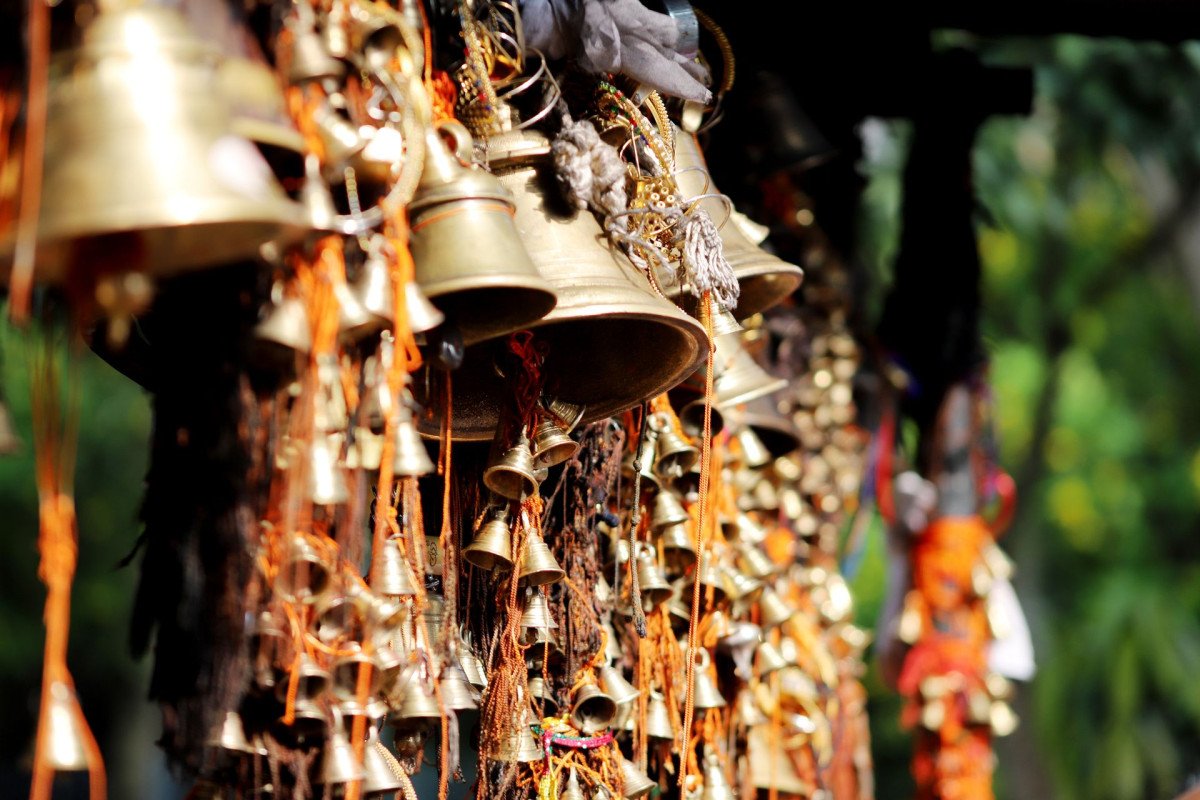
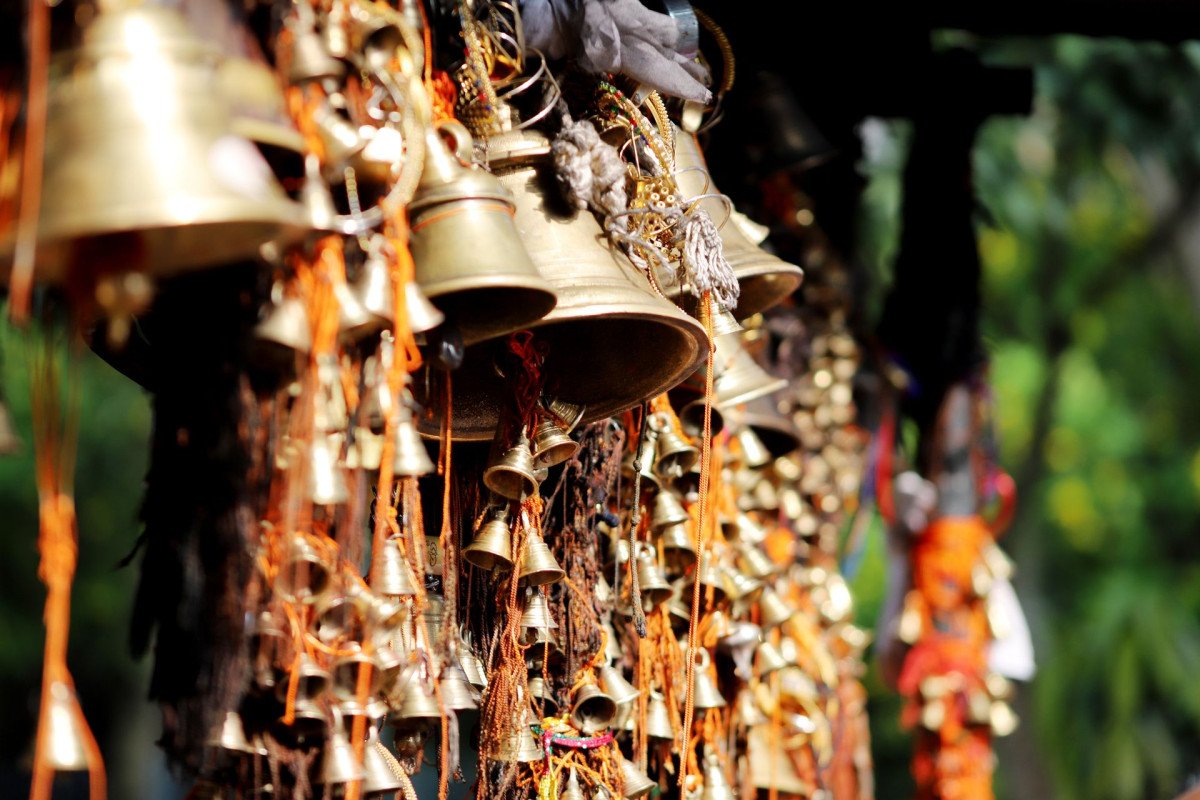
The Entrance Bell Frame: Use the large bronze temple bell at the entrance to frame a shot of the main sanctum or the courtyard:
Early Morning Tranquility: A soft-light photograph of the temple in the misty, quiet hours just after dawn, capturing its ancient, peaceful atmosphere. :Photo Gallery
Things To Do
-
Perform Darshan and Pooja: Offer prayers to the Shiva Linga and seek the blessings of Lord Shiva, particularly recommended on Monday:
Study the Architecture: Take time to appreciate the Nagara style of the structure and the fine details of the carvings on the exterior walls:
Local Cultural Immersion: Engage with the local Kumaoni devotees to understand the temple's specific customs and its unique place in local mythology:
Combine with Baleshwar: Due to its proximity, a visit to Nagnath Temple is typically combined with a visit to the Baleshwar Temple:
Photography: Capture the ancient stone structure and the Shikhara, especially during the golden hour of sunrise or sunset:
Attend Evening Aarti: Witness...Perform Darshan and Pooja: Offer prayers to the Shiva Linga and seek the blessings of Lord Shiva, particularly recommended on Monday:
Study the Architecture: Take time to appreciate the Nagara style of the structure and the fine details of the carvings on the exterior walls:
Local Cultural Immersion: Engage with the local Kumaoni devotees to understand the temple's specific customs and its unique place in local mythology:
Combine with Baleshwar: Due to its proximity, a visit to Nagnath Temple is typically combined with a visit to the Baleshwar Temple:
Photography: Capture the ancient stone structure and the Shikhara, especially during the golden hour of sunrise or sunset:
Attend Evening Aarti: Witness the Aarti ceremony in the evening for a spiritual and serene experience:
Explore the Locality: Take a brief walk in the immediate surrounding area, which is part of the old Champawat town, to see local life. :
Information
-
Why Famous:
Ancient Nagara Architecture: It is Most Famous for being one of the best-preserved examples of the Nagara style of temple architecture in Champawat, showcasing the region's ancient artistic skill:
Chand Dynasty Legacy: Its strong association ...Ancient Nagara Architecture: It is Most Famous for being one of the best-preserved examples of the Nagara style of temple architecture in Champawat, showcasing the region's ancient artistic skill:
Chand Dynasty Legacy: Its strong association with the capital and the ruling Chand Dynasty emphasizes its long-standing role as a center of religious life in Kumaon:
Lord Shiva Devotion: As a prominent Lord Shiva shrine, it attracts a constant stream of pilgrims, especially on Mondays and during festivals:
Accessibility: Its central location and easy accessibility contribute significantly to its popularity with all types of tourists and locals. : -
Architecture:
Style and Technique: The temple is built in the classic Nagara style characterized by its curvilinear tower (Shikhara), which is generally topped by an Amalaka and a Kalasha:
Stone Carvings: The exterior and interior are often adorned with in...Style and Technique: The temple is built in the classic Nagara style characterized by its curvilinear tower (Shikhara), which is generally topped by an Amalaka and a Kalasha:
Stone Carvings: The exterior and interior are often adorned with intricate stone carvings depicting scenes from Hindu mythology, various deities, floral patterns, and other ornamental motifs, though often less grand than the Baleshwar Temple:
Sanctum and Idol: The main sanctuary (Garbhagriha) houses a sacred Shiva Linga, which is the focal point of the temple's worship and devotion:
Dimensions: It is a modest-sized temple, but its ancient construction and well-maintained structure reflect the enduring craftsmanship and the patronage it received from the Chand rulers. : -
How To Reach:
By Air: The nearest airport is Pantnagar Airport (PGH), approx. 170 KMs away; hire a taxi to Champawat town;
the temple is located centrally:
By Train: The nearest railway station is Tanakpur Railway Statio...By Air: The nearest airport is Pantnagar Airport (PGH), approx. 170 KMs away; hire a taxi to Champawat town;
the temple is located centrally:
By Train: The nearest railway station is Tanakpur Railway Station (TPU), approx. 75 KMs away. From Tanakpur, take a shared taxi or bus to Champawat bus stand:
By Road: The temple is located in the old part of Champawat town and is easily reached via the main road network from places like Lohaghat and Haldwani:
By Local Transport: Due to its proximity to the town center (1 KM), it is best reached by a short walk, a local cycle-rickshaw, or an auto-rickshaw from the market square. : -
Weather and Best Time to Visit:
Spring and Autumn (March-June and September-November): Best Time for overall comfortable weather for travel and viewing the architecture:
Winter (December-February): Cold but offers very clear, crisp air and often a beautiful backdrop for the stone structure:
...Spring and Autumn (March-June and September-November): Best Time for overall comfortable weather for travel and viewing the architecture:
Winter (December-February): Cold but offers very clear, crisp air and often a beautiful backdrop for the stone structure:
Different Parts of the Day: Morning is the Best Time for a spiritual visit and the best light for clear photography of the stonework:
Avoid Afternoon Closure: Check local timings, as some small temples observe a brief midday rest period. : -
Near Tourist Places:
Baleshwar Temple (1 KM), Gwal Devta Temple (2 KMs), Champawat View Point (4 KMs), Kranteshwar Mahadev Temple (7 KMs), Ek Hathiya Ka Naula (6 KMs), Nandadevi Temple (Champawat) (0. 5 KM), Lohaghat (14 KMs), Abbott Mount (22 KMs), Vanasur Ka Kila (26 KMs), Ritha Sahib (74 KMs):
Tourism Tips
-
Health & safety: Be careful of the wet floors/steps after rainfall;
the area is generally safe:
Packing: Dress modestly, covering shoulders and knees, as is customary for Hindu temples;
Read MoreHealth & safety: Be careful of the wet floors/steps after rainfall;
the area is generally safe:
Packing: Dress modestly, covering shoulders and knees, as is customary for Hindu temples;
remove shoes before entering the temple compound:
Accommodation: Plenty of hotels and guesthouses are available within a short walking distance in Champawat town:
Respect the Sanctity: Be mindful of the devotees and maintain silence and reverence inside the temple premises:
Shoes/Leather: Avoid carrying any leather items (belts, bags) into the main sanctum, as is traditional in many Hindu temples. :Reviews
FAQs
Champawat Itineray And Cost:-
Other Places In Champawat :-
Other States In India :-
Information about New and Updated Locations() of Uttarakhand Has Been Added :-
Card subtitle
Note:-
Information provided here in good Faith and for reference only.
Near Places

Abbott Mount
Some quick example text to build on the card title and make up the bulk of the card's content.
Go somewhere
Aditya Temple
Some quick example text to build on the card title and make up the bulk of the card's content.
Go somewhere
Baleshwar Temple
Some quick example text to build on the card title and make up the bulk of the card's content.
Go somewhere
Banasur Ka Kila
Some quick example text to build on the card title and make up the bulk of the card's content.
Go somewhere
Banbasa Barrage
Some quick example text to build on the card title and make up the bulk of the card's content.
Go somewhere
Champawat View Point
Some quick example text to build on the card title and make up the bulk of the card's content.
Go somewhere
Devidhura Temple
Some quick example text to build on the card title and make up the bulk of the card's content.
Go somewhere
Dhankeshwar Rudrakund
Some quick example text to build on the card title and make up the bulk of the card's content.
Go somewhere
Ek Hathiya Ka Naula
Some quick example text to build on the card title and make up the bulk of the card's content.
Go somewhere
Gwal Devta Temple
Some quick example text to build on the card title and make up the bulk of the card's content.
Go somewhere
Henry Waterfall
Some quick example text to build on the card title and make up the bulk of the card's content.
Go somewhere
Kranteshwar Mahadev Temple
Some quick example text to build on the card title and make up the bulk of the card's content.
Go somewhere
Lohaghat Town
Some quick example text to build on the card title and make up the bulk of the card's content.
Go somewhere
Maunpokhari Himalaya Viewpoint
Some quick example text to build on the card title and make up the bulk of the card's content.
Go somewhere
Mayawati Ashram
Some quick example text to build on the card title and make up the bulk of the card's content.
Go somewhere
Meetha Reetha Sahib Gurdwara
Some quick example text to build on the card title and make up the bulk of the card's content.
Go somewherein Other Cities