Puri Rath Yatra Museum
General information
-
Ideal Duration:
1-2 HoursPlace Type:
Museum/Cultural/HistoryEntry Fees:
Nominal Museum Entry Fee: The Puri Rath Yatra Museum typically charges a small, nominal entry fee, often ranging from INR 10 to INR 50 per person for Indian citizens, with a slightly higher fee for foreign nationals. This fee helps cover the operational costs and the preser...Nominal Museum Entry Fee: The Puri Rath Yatra Museum typically charges a small, nominal entry fee, often ranging from INR 10 to INR 50 per person for Indian citizens, with a slightly higher fee for foreign nationals. This fee helps cover the operational costs and the preservation of the delicate artifacts.
Concession for Students: There is often a concession in the entry fee for students with valid identification, making it an affordable educational destination for school and college groups.
Photography and Video Charges: While carrying a camera is usually permitted, there may be a separate, small fee for still photography and a higher fee for professional-grade video recording inside the exhibition halls, particularly in sensitive areas near the older artifacts.
No Fee for Informational Access: If any public events or outdoor displays are organized by the museum, they may often be free of charge, but this is subject to the specific event. ()Timing:
Regular Timings: The Puri Rath Yatra Museum generally operates on standard museum hours, typically from 10:00 AM to 6:00 PM daily, with a possible lunch break around 1:00 PM. It might be closed on specific public holidays or Mondays, so checking in advance is advisable.Regular Timings: The Puri Rath Yatra Museum generally operates on standard museum hours, typically from 10:00 AM to 6:00 PM daily, with a possible lunch break around 1:00 PM. It might be closed on specific public holidays or Mondays, so checking in advance is advisable.
Ideal Visit Time: The ideal time to visit is in the late morning (around 10:00 AM to 11:00 AM) right after it opens, or in the early afternoon (around 3:00 PM), as these times generally have fewer crowds, allowing for a quieter and more detailed examination of the intricate exhibits and reading the informational panels. ()Special Events:
Special Rath Yatra Anniversaries: The museum occasionally hosts special exhibitions or events to commemorate significant anniversaries of the Rath Yatra, particularly those related to the rare Nabakalebara year, which brings together scholars, historians, and pilgrims.
<...Special Rath Yatra Anniversaries: The museum occasionally hosts special exhibitions or events to commemorate significant anniversaries of the Rath Yatra, particularly those related to the rare Nabakalebara year, which brings together scholars, historians, and pilgrims.
Cultural Lectures and Seminars: The institution sometimes organizes special lectures, seminars, and workshops focused on the cultural, historical, and architectural aspects of the Jagannath Cult, the construction of the chariots, and the traditions of Pattachitra, featuring renowned experts and scholars.
Showcase of New Artifacts: Whenever a significant historical artifact or a new piece of art related to the Rath Yatra is acquired, the museum might host a special unveiling or a small exhibition to showcase the item, attracting history buffs and local media.
Traditional Art Demonstrations: As part of its educational outreach, the museum may arrange special demonstrations by local artisans on the craft of Pattachitra or the intricate palm-leaf engraving, offering a hands-on learning experience for visitors. ()Best Photo Spots:
Scaled Chariot Replicas: The best photo spot is capturing the main display of the three scaled chariot replicas. Use a wide-angle lens to capture all three together, or focus on the intricate carvings of a single chariot for a detailed shot.
Pa...Scaled Chariot Replicas: The best photo spot is capturing the main display of the three scaled chariot replicas. Use a wide-angle lens to capture all three together, or focus on the intricate carvings of a single chariot for a detailed shot.
Pattachitra Details: Take close-up photographs of the traditional Pattachitra paintings on display, focusing on the fine lines, natural color palette, and the mythological narratives depicted in the artwork.
Artifacts in Display Cases: For a historical photograph, frame the display cases containing old wooden fragments, ceremonial tools, or traditional costumes, capturing the preserved artifacts that tell the story of the festival's past.
The Nabakalebara Display: Find the exhibit detailing the Nabakalebara ceremony. A photograph of the sequence of the new idols' creation and the old idols' burial is a uniquely cultural and historical image. ()Photo Gallery
Things To Do
-
Study the Chariot Models: The main activity is the detailed examination of the scaled models of the three Rathas (Nandighosa, Taladhwaja, and Darpadalana), noting the intricate carvings, colors, and the differences between the three chariots.
Trace the Rath Yatra History: Read through the detailed informational panels, photographs, and historical documents that chronicle the history of the Rath Yatra from its origins to the present day, including the key role of the Ganga Dynasty rulers.
Explore Pattachitra Exhibits: Observe the gallery dedicated to Pattachitra paintings and other traditional arts connected with the festival. Pay attention to the use of natural colors and the mythological stories depicted.
Learn about Rituals and Sevaks: Study the exhibits expla...Study the Chariot Models: The main activity is the detailed examination of the scaled models of the three Rathas (Nandighosa, Taladhwaja, and Darpadalana), noting the intricate carvings, colors, and the differences between the three chariots.
Trace the Rath Yatra History: Read through the detailed informational panels, photographs, and historical documents that chronicle the history of the Rath Yatra from its origins to the present day, including the key role of the Ganga Dynasty rulers.
Explore Pattachitra Exhibits: Observe the gallery dedicated to Pattachitra paintings and other traditional arts connected with the festival. Pay attention to the use of natural colors and the mythological stories depicted.
Learn about Rituals and Sevaks: Study the exhibits explaining the complex and unique rituals (Niti) of the festival and the roles of the various Sevaks (servitors), like the Daitapatis and the Raja of Puri, in the smooth running of the annual event.
View the Artifacts: Look closely at the collection of smaller artifacts, including ceremonial tools, old chariot fragments, traditional costumes, and palanquins, which offer a tangible link to the centuries-old tradition.
Watch the Documentary/Film: Check if the museum offers a short documentary or film about the Rath Yatra. Watching the live footage of the chariots being pulled can be a deeply moving and educational experience, bringing the static exhibits to life.
Understand the Nabakalebara Tradition: Look for exhibits detailing the unique Nabakalebara (change of form) ritual, the process of finding the divine trees, carving the new idols, and the burial of the old ones—a rare and fascinating tradition. ()
Information
-
Why Famous:
Preservation of Rath Yatra Heritage: The Puri Rath Yatra Museum is famous as the only institution dedicated entirely to documenting, preserving, and showcasing the immense socio-religious and cultural heritage of the Rath Yatra, which is arguably India's most magnificent fes...Preservation of Rath Yatra Heritage: The Puri Rath Yatra Museum is famous as the only institution dedicated entirely to documenting, preserving, and showcasing the immense socio-religious and cultural heritage of the Rath Yatra, which is arguably India's most magnificent festival.
Showcasing the Chariot Replicas: Its fame is built on the key exhibits, which include detailed, scaled replicas of the enormous chariots (Rathas) used in the festival. These models allow visitors to appreciate the intricate craftsmanship and sheer size of the original chariots up close, an experience not possible during the actual festival.
Educational and Cultural Resource: The museum is a significant educational hub, providing scholarly details through photographs, artifacts, and literature about the different rituals, the roles of the Sevaks (servitors), and the history of the Jagannath Cult, attracting researchers and cultural historians.
Highlighting Pattachitra and Traditional Art: It showcases an exclusive collection of Pattachitra paintings, a traditional art form intrinsically linked to the Jagannath lore and the festival, thereby celebrating the traditional artistry of Odisha alongside the religious fervor. () -
Architecture:
Exhibition Hall and Display Design: The Puri Rath Yatra Museum's architecture focuses on functionality, primarily serving as a repository and exhibition space. The internal layout is designed to facilitate a narrative flow, guiding visitors through the history and significa...Exhibition Hall and Display Design: The Puri Rath Yatra Museum's architecture focuses on functionality, primarily serving as a repository and exhibition space. The internal layout is designed to facilitate a narrative flow, guiding visitors through the history and significance of the Rath Yatra. It features large open halls to accommodate full-scale models of the chariots and numerous display cases for smaller artifacts. The lighting and climate control systems are crucial for preserving old textiles, palm-leaf manuscripts, and ancient photographs.
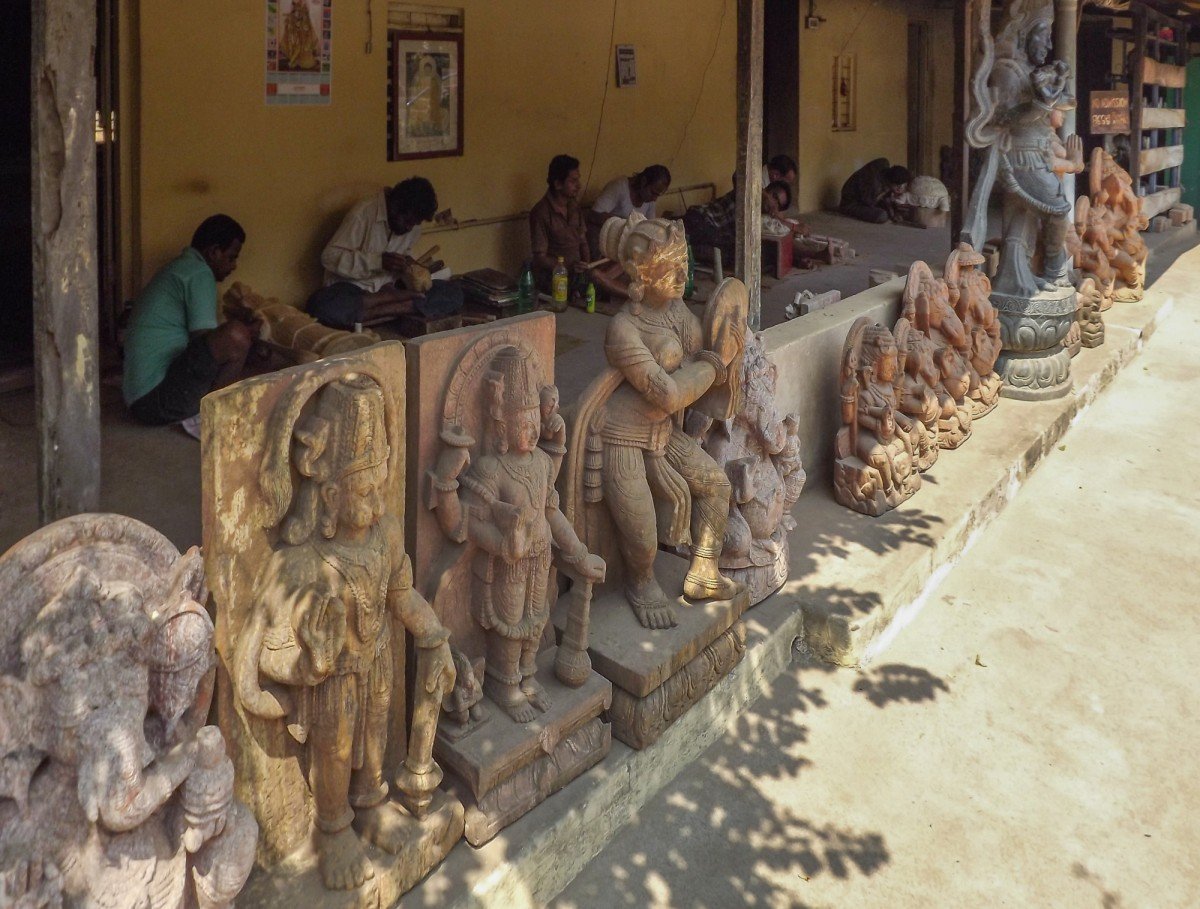
Model Replicas and Art Showcase: A central feature is the display of miniature or scaled-down versions of the three main chariots—Taladhwaja (for Balabhadra), Darpadalana (for Subhadra), and Nandighosa (for Jagannath). These models showcase the intricate carpentry and traditional ornamentation. The walls are used as a canvas to display original Pattachitra paintings, which are religious scroll paintings related to Jagannath lore.
Dimension: The models of the chariots can be quite large, sometimes reaching 10 to 15 feet in height and length, requiring significant indoor space. The total exhibition area of the museum is typically spread over several halls, perhaps over 5,000 to 8,000 square feet, providing ample space for the extensive collection of artifacts and large photographs documenting the historical festival. () -
How To Reach:
By Air: Access is through Biju Patnaik International Airport (BBI) in Bhubaneswar, approximately 60 KMS away. From BBI, hire a taxi or bus to Puri city. Once in Puri, the museum is close to the main temple.
By Train: The museum is very clo...By Air: Access is through Biju Patnaik International Airport (BBI) in Bhubaneswar, approximately 60 KMS away. From BBI, hire a taxi or bus to Puri city. Once in Puri, the museum is close to the main temple.
By Train: The museum is very close to the center of Puri city, making the Puri Railway Station (PURI) the most convenient rail access point. From the station, the distance is short, easily covered by a quick auto-rickshaw ride.
By Road: Puri is served by excellent national highways. The city bus stand receives regular services from Bhubaneswar and other major towns. The museum is generally located in the old town area, easily reached by car or taxi. Parking may be restricted in the immediate vicinity due to the narrow streets.
By Local Transport: Given its central location near the Jagannath Temple, the museum is most efficiently reached by local auto-rickshaws, battery-operated rickshaws, or cycle-rickshaws from anywhere in Puri. The most enjoyable local transport method is often a short walk from a nearby major street to fully appreciate the old city's ambiance. () -
Weather and Best Time to Visit:
Different Types of Seasons: The best time to visit the museum is during the winter season, from October to March. The comfortable weather makes touring the city and traveling to the museum pleasant. The museum's subject is most relevant if visited near the time of the Rath...Different Types of Seasons: The best time to visit the museum is during the winter season, from October to March. The comfortable weather makes touring the city and traveling to the museum pleasant. The museum's subject is most relevant if visited near the time of the Rath Yatra in June/July, which might be hotter but adds context. The monsoon and summer months are manageable as the museum is an indoor, air-conditioned space.
Different Parts of the Day: The best part of the day to visit is the late morning (around 10:00 AM to 12:00 PM) or the early afternoon (around 3:00 PM to 4:00 PM). These timings are generally less crowded, allowing for a relaxed and unhurried study of the intricate exhibits and detailed plaques without the rush of peak visitor hours. () -
Near Tourist Places:
1. Shree Jagannath Temple (0. 5 KMS) 2. Swargadwar Market (2. 5 KMS) 3. Puri Beach (3 KMS) 4. Gundicha Temple (2 KMS) 5. Narendra Pushkarini (1. 5 KMS) 6. Lokanath Temple (4 KMS) 7. Statue of Sri Chaitanya Mahaprabhu (2 KMS) 8. Sudarshan Craft Museum (4 KMS) 9. Markandeswara Temple (1 KM) 10. Mausima Temple (2 KMS)
Tourism Tips
-
Health & Safety: The museum is an indoor, well-maintained space, making it safe. Be mindful of not touching or leaning on the display cases to protect the fragile artifacts. Children should be supervised to prevent damage to the exhibits.
Pack...Health & Safety: The museum is an indoor, well-maintained space, making it safe. Be mindful of not touching or leaning on the display cases to protect the fragile artifacts. Children should be supervised to prevent damage to the exhibits.
Packing: Carry a small notebook to take notes about the exhibits. While photography is generally allowed, be ready to pay the nominal camera fee. Bags might need to be checked in at a cloakroom, so carry minimal items.
Accommodation: The museum is in the central old town area of Puri, close to the main temple. Numerous hotels and guesthouses catering to pilgrims and budget travelers are nearby. Mid-range and luxury options are better sought near the Beach Road.
Other Different Topics: To fully appreciate the significance of the exhibits, it is highly recommended to visit the museum after visiting the Jagannath Temple or understanding the basic history of the Rath Yatra. This provides context. Take your time to read the detailed descriptions as they are rich in historical and cultural information. ()
Reviews
FAQs
Puri Itineray And Cost:-
Puri Rath Yatra Museum Tourism:-
Other Places In Puri :-
Other States In India :-
Information about New and Updated Locations() of Odisha Has Been Added :-
Card subtitle
Note:-
Information provided here in good Faith and for reference only.
Near Places
Alarnatha Temple
Some quick example text to build on the card title and make up the bulk of the card's content.
Go somewhere
Atharnala Bridge
Some quick example text to build on the card title and make up the bulk of the card's content.
Go somewhere
Atharnala
Some quick example text to build on the card title and make up the bulk of the card's content.
Go somewhere
Baliharlaya Beach
Some quick example text to build on the card title and make up the bulk of the card's content.
Go somewhere
Balukhand-Konark Wildlife Sanctuary
Some quick example text to build on the card title and make up the bulk of the card's content.
Go somewhere
Beleswar Beach
Some quick example text to build on the card title and make up the bulk of the card's content.
Go somewhere
Blue Flag Beach
Some quick example text to build on the card title and make up the bulk of the card's content.
Go somewhere
Chaitanya Mahaprabhu Museum
Some quick example text to build on the card title and make up the bulk of the card's content.
Go somewhere
Chakra Tirtha Temple
Some quick example text to build on the card title and make up the bulk of the card's content.
Go somewhere
Chilika Lake
Some quick example text to build on the card title and make up the bulk of the card's content.
Go somewhere
Gopalpur Beach
Some quick example text to build on the card title and make up the bulk of the card's content.
Go somewhere
Govardhan Math
Some quick example text to build on the card title and make up the bulk of the card's content.
Go somewhere
Gundicha Temple
Some quick example text to build on the card title and make up the bulk of the card's content.
Go somewhere
Loknath Temple
Some quick example text to build on the card title and make up the bulk of the card's content.
Go somewhere
Markandeswar Temple
Some quick example text to build on the card title and make up the bulk of the card's content.
Go somewhere
Markandeswara Temple
Some quick example text to build on the card title and make up the bulk of the card's content.
Go somewherein Other Cities