Rasmancha
General information
-
Ideal Duration:
1 to 2 HoursPlace Type:
Historical MonumentEntry Fees:
ASI Monument Ticket System: The Rasmancha is a protected monument under the Archaeological Survey of India (ASI), and a consolidated entry ticket is required for access. This single ticket, typically purchased at the counter near the Rasmancha gate, is valid for entry to th...ASI Monument Ticket System: The Rasmancha is a protected monument under the Archaeological Survey of India (ASI), and a consolidated entry ticket is required for access. This single ticket, typically purchased at the counter near the Rasmancha gate, is valid for entry to the three main, ticketed ASI-protected sites in Bishnupur: Rasmancha, Jor Bangla Temple, and Shyam Rai Temple. The current fee structure is revised periodically but typically stands at approximately Rs.20 to Rs.25 per person for Indian citizens. This 'combo-ticket' system provides excellent value, allowing visitors to see the three most important architectural masterpieces in the area within the same day.
Foreign Nationals and Digital Payment: The entry fee for foreign nationals, including those from SAARC and BIMSTEC countries, is significantly higher, usually around Rs.250 or Rs.300, and for other foreign visitors, it is typically around Rs.600. It is highly recommended that all visitors utilize the government's online/QR code booking system for ASI monuments, which often offers a slight discount over the cash price and simplifies the process. Children below the age of 15 years are usually exempt from all entry fees. Visitors should keep their ticket safe, as it must be presented at the entry point of the other two temples. The fee collection is crucial for the preservation and maintenance of these historical sites.Timing:
Regular Timings:
Sunrise to Sunset: The Rasmancha and the surrounding ASI-protected temple complex follow a standard schedule, opening from Sunrise (approximately 6:00 AM) and closing at Sunset (approximately 5:30 PM). The temples are open s...Regular Timings:
Sunrise to Sunset: The Rasmancha and the surrounding ASI-protected temple complex follow a standard schedule, opening from Sunrise (approximately 6:00 AM) and closing at Sunset (approximately 5:30 PM). The temples are open seven days a week, including all national and public holidays, although access may be restricted during very adverse weather conditions or special governmental events. Since the ticket is valid for the whole day, visitors have the flexibility to enter and leave the complex once during the operating hours.
Ideal Visit Time:
Golden Hours of the Day: The absolutely ideal time to visit the Rasmancha is either in the very early morning (6:00 AM to 8:00 AM) or late afternoon (4:30 PM to 5:30 PM). The early morning offers a tranquil atmosphere, lower temperatures, and the best opportunity for photography, as the suns soft, horizontal rays dramatically highlight the terracotta and laterite textures. The late afternoon provides a beautiful warm glow on the monument, known as the "golden hour. " Avoiding the harsh, hot sun between 11:00 AM and 3:00 PM is highly recommended, as this is when the area is often most crowded with groups and the light is least flattering for photography and viewing.Special Events:
The Grand Ras Utsav (Historical Significance): The Rasmancha was conceived and built specifically for the annual Ras Utsav, a grand festival celebrating the Raas Leela of Lord Krishna with Radha and the Gopis. This festival traditionally took place on the full moon day of t...The Grand Ras Utsav (Historical Significance): The Rasmancha was conceived and built specifically for the annual Ras Utsav, a grand festival celebrating the Raas Leela of Lord Krishna with Radha and the Gopis. This festival traditionally took place on the full moon day of the Bengali month of Karthik (usually November or December). During the Malla rule, it was a massive state affair. Idols from numerous temples, often around 30, were brought in a spectacular procession, complete with music, dancing, and royal fanfare, and displayed for public viewing within the illuminated, three-tiered galleries of the Rasmancha. The unique architecture was thus a direct physical manifestation of a royal, public religious ritual, making the building's purpose as sacred as its design was innovative.
The Bishnupur Mela (Modern Cultural Echo): While the original religious function of displaying deities at the Rasmancha ceased in 1932, the monument remains a focal point for the town's cultural life. Today, the cultural spirit is largely captured by the annual Bishnupur Mela. This large fair, usually held in the Bengali month of Poush (around the end of December), takes place in the open grounds near the temple complex. It features vibrant displays of local handicrafts, including Baluchari Sarees and terracotta items, alongside performances of the classical Dhrupad music of the Bishnupur gharana and traditional folk dances. Although the event is a modern fair, it serves as a significant cultural echo of the grand communal gatherings the Rasmancha was originally built to facilitate, drawing tourists and locals to celebrate the region's artistic legacy.Best Photo Spots:
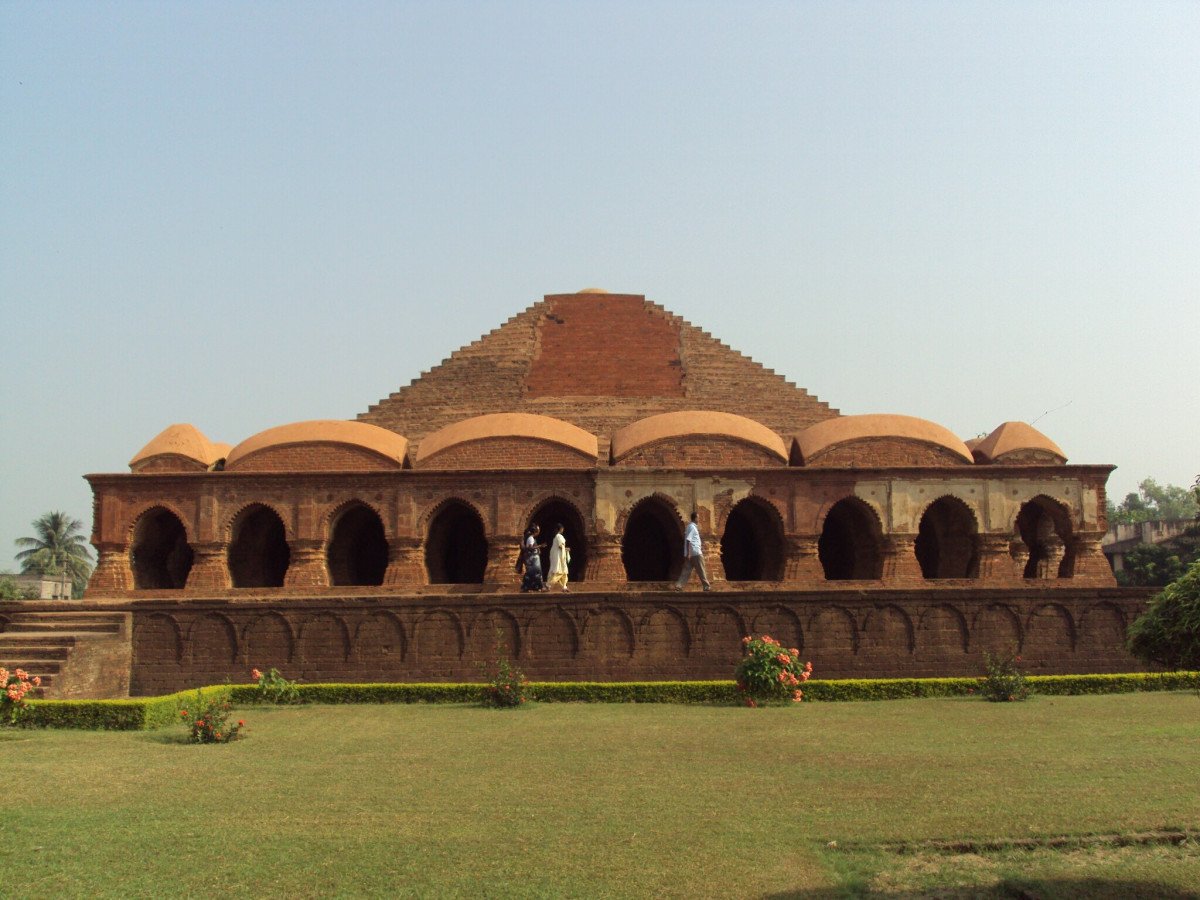
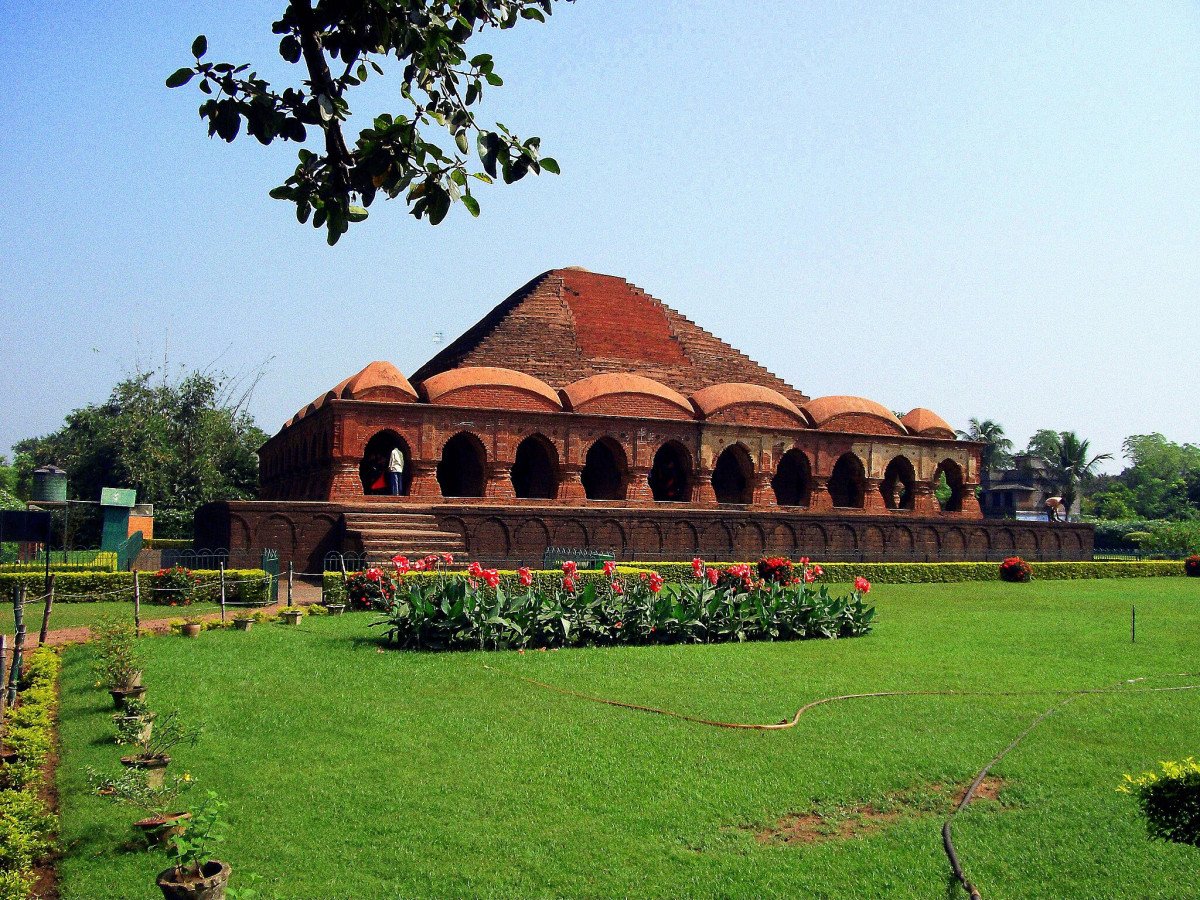
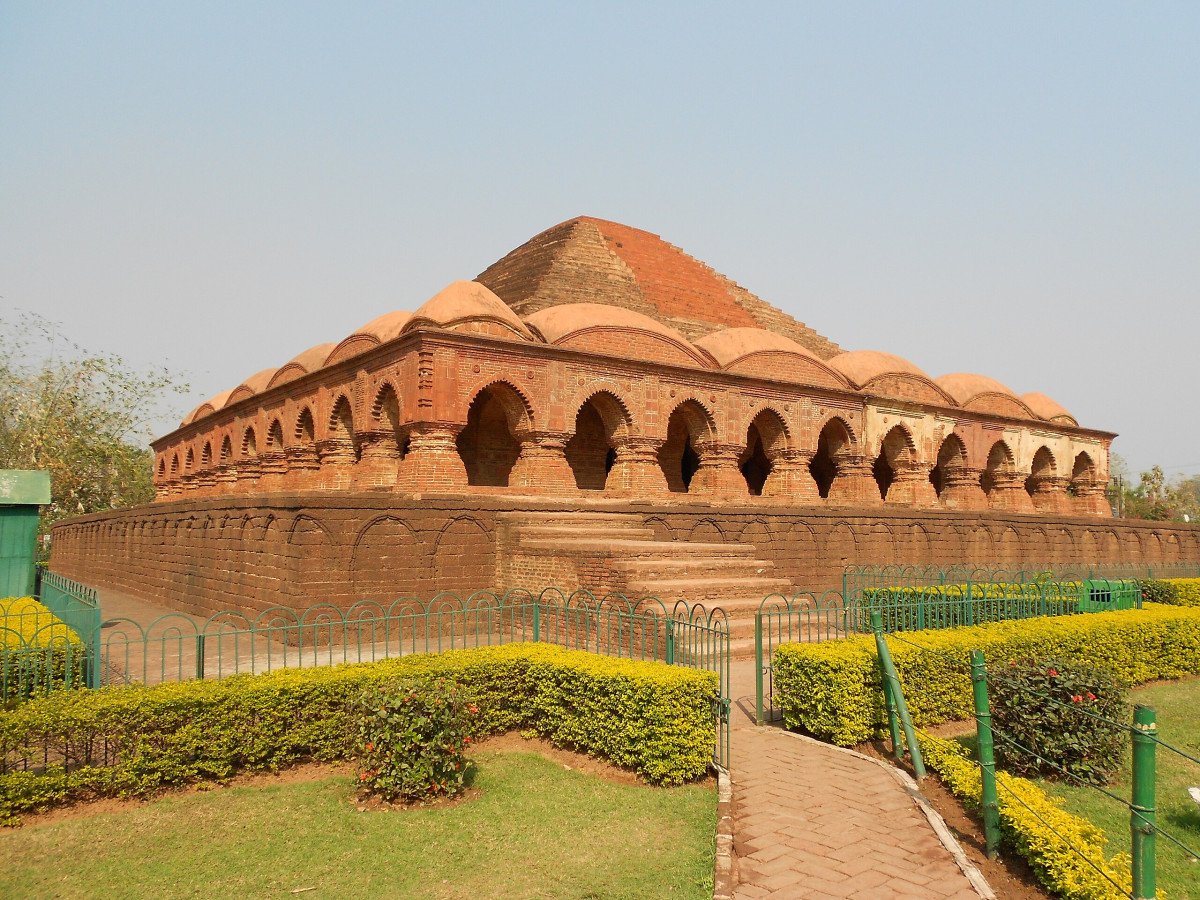
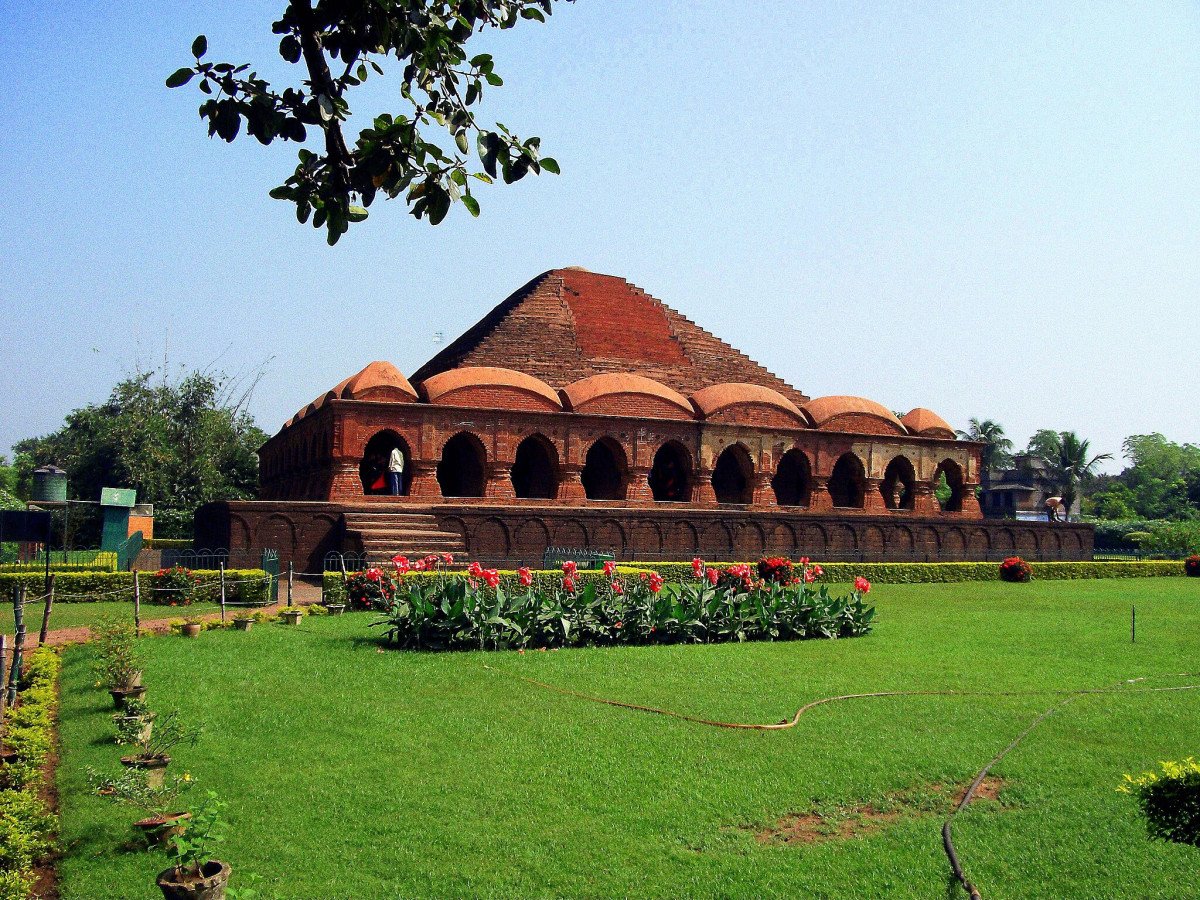
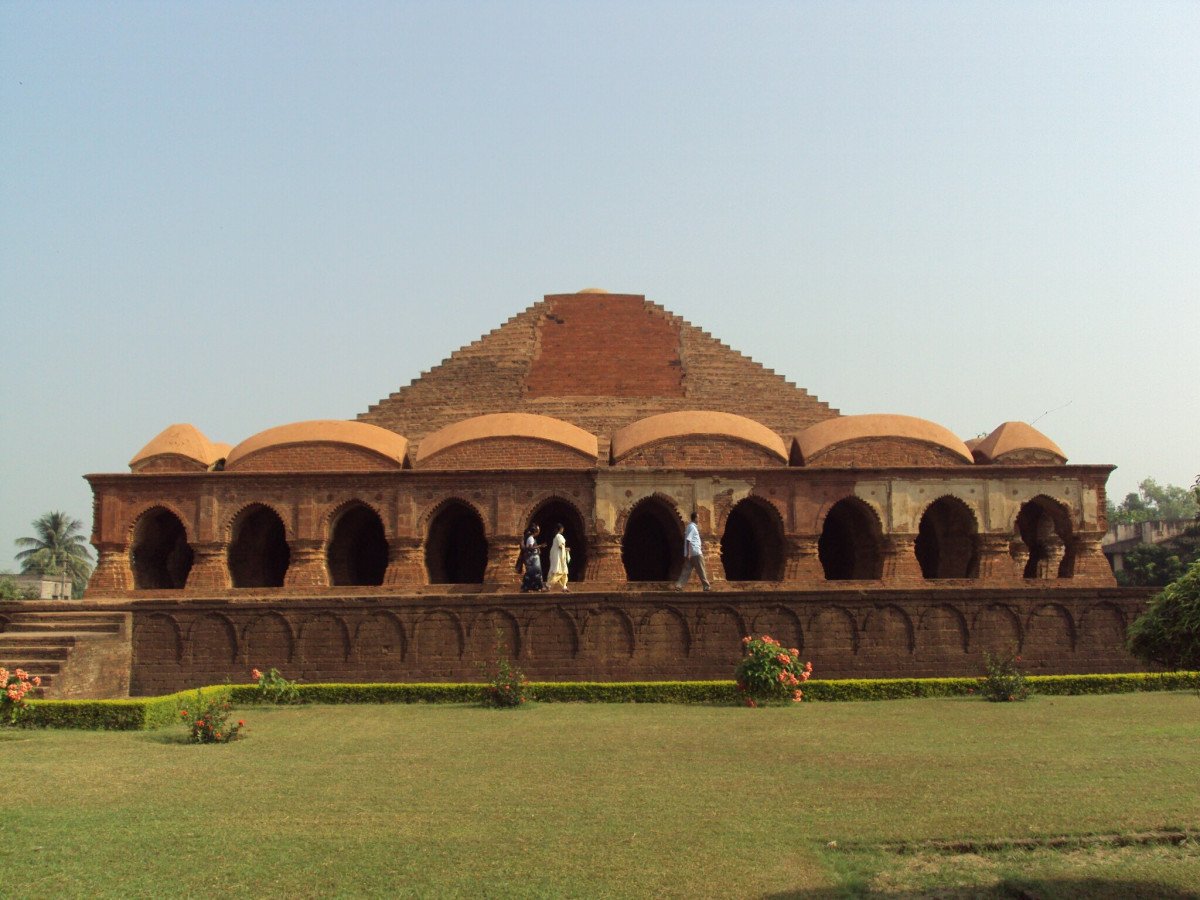
The Pyramidal Silhouette Shot: The classic, most iconic photograph of Rasmancha is a wide-angle shot capturing its entire pyramidal silhouette. For this, stand outside the main protective fencing, slightly to the front, early in the morning or late afternoon. This angle em...The Pyramidal Silhouette Shot: The classic, most iconic photograph of Rasmancha is a wide-angle shot capturing its entire pyramidal silhouette. For this, stand outside the main protective fencing, slightly to the front, early in the morning or late afternoon. This angle emphasizes the monument's height and unique stepped roof against the backdrop of the sky. The pyramidal form, unlike the curved Bengali roofs of other temples, creates clean, strong lines, making this the definitive postcard image. If a wide lens is used, you can incorporate the perfectly manicured green lawns of the ASI complex to frame the historical structure.
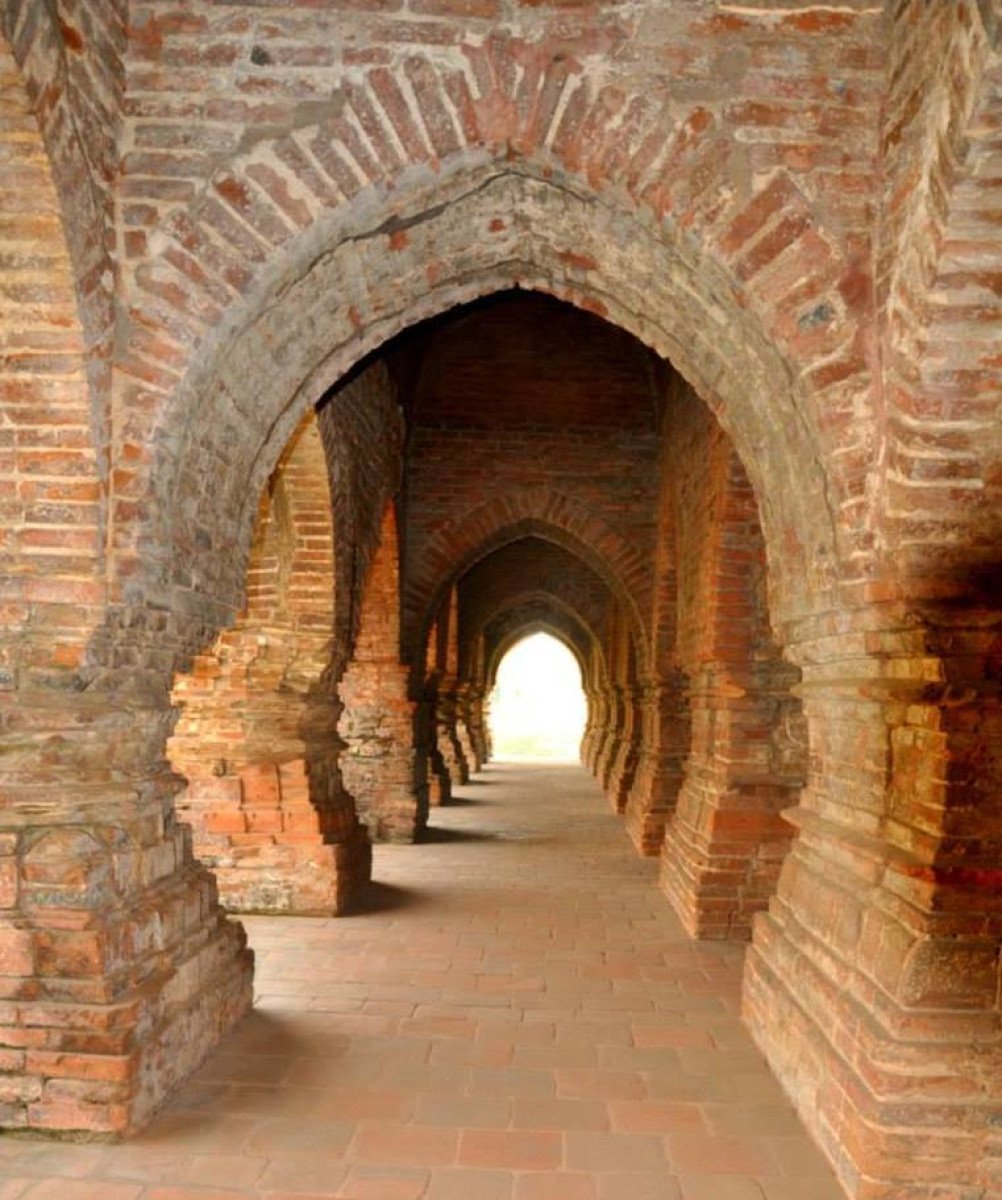
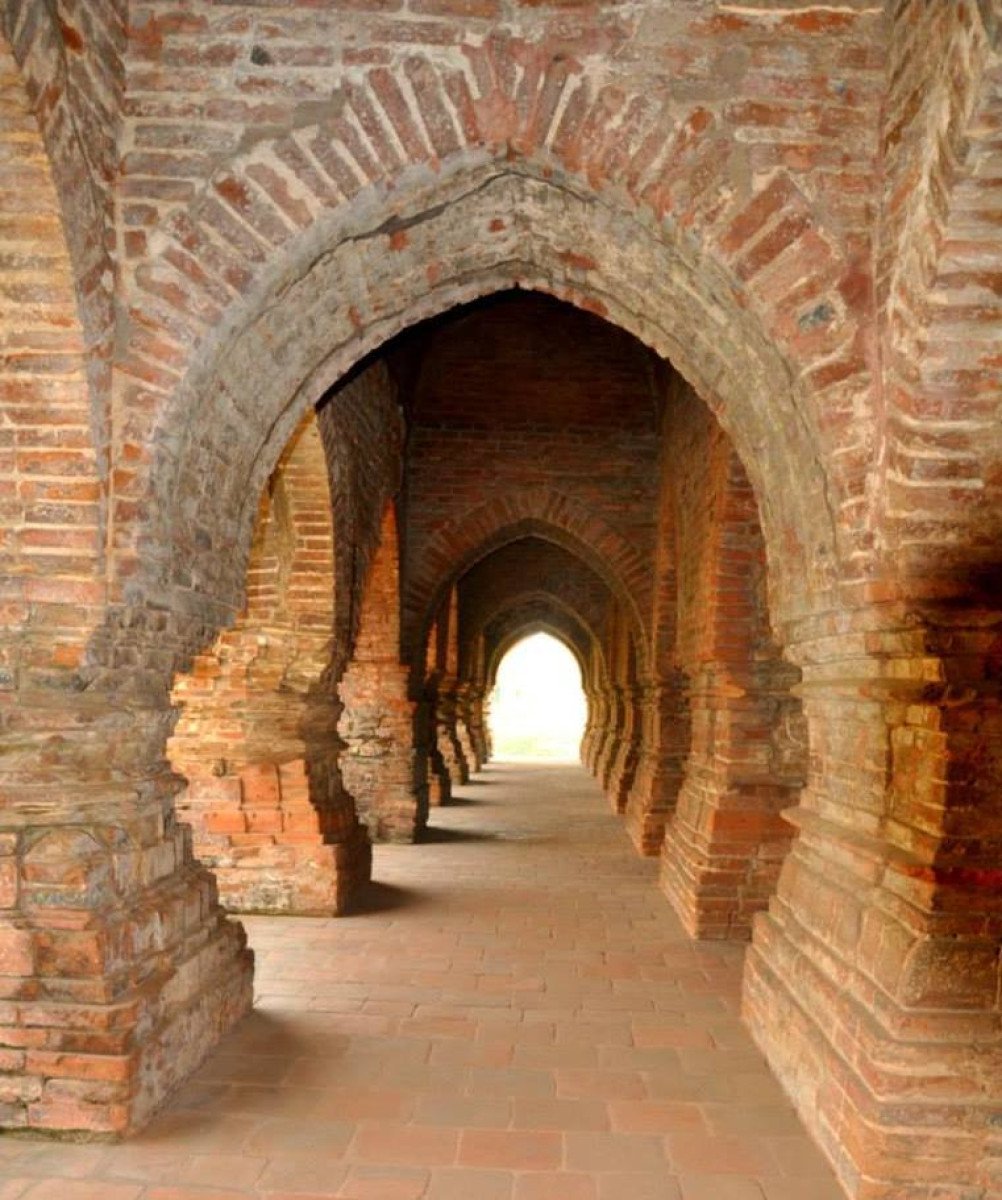
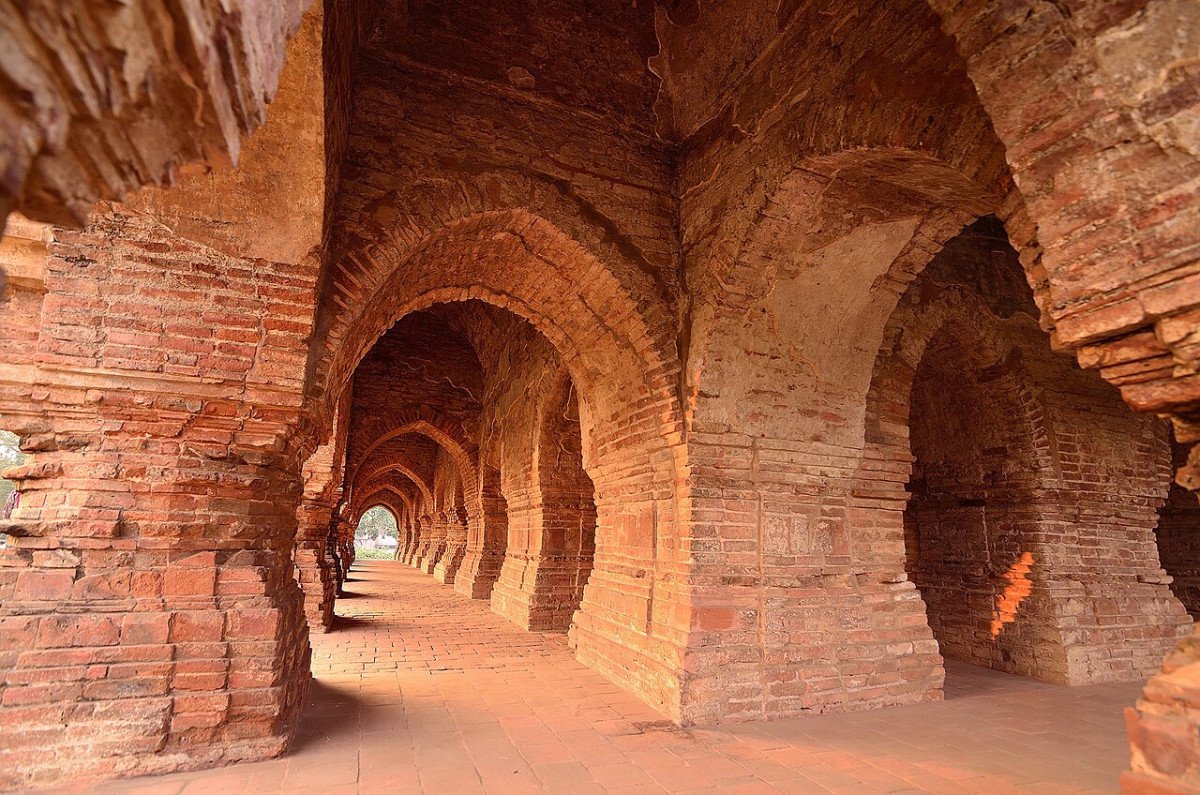
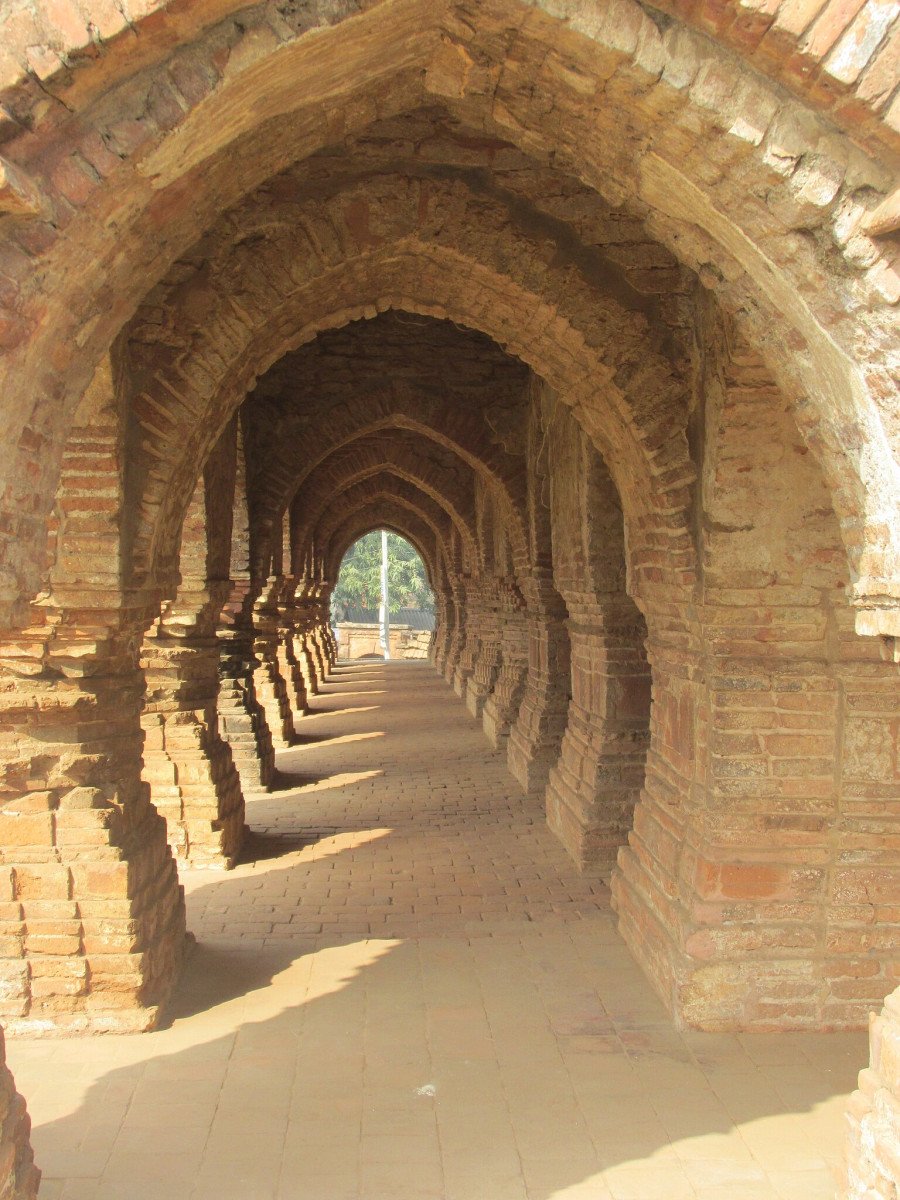
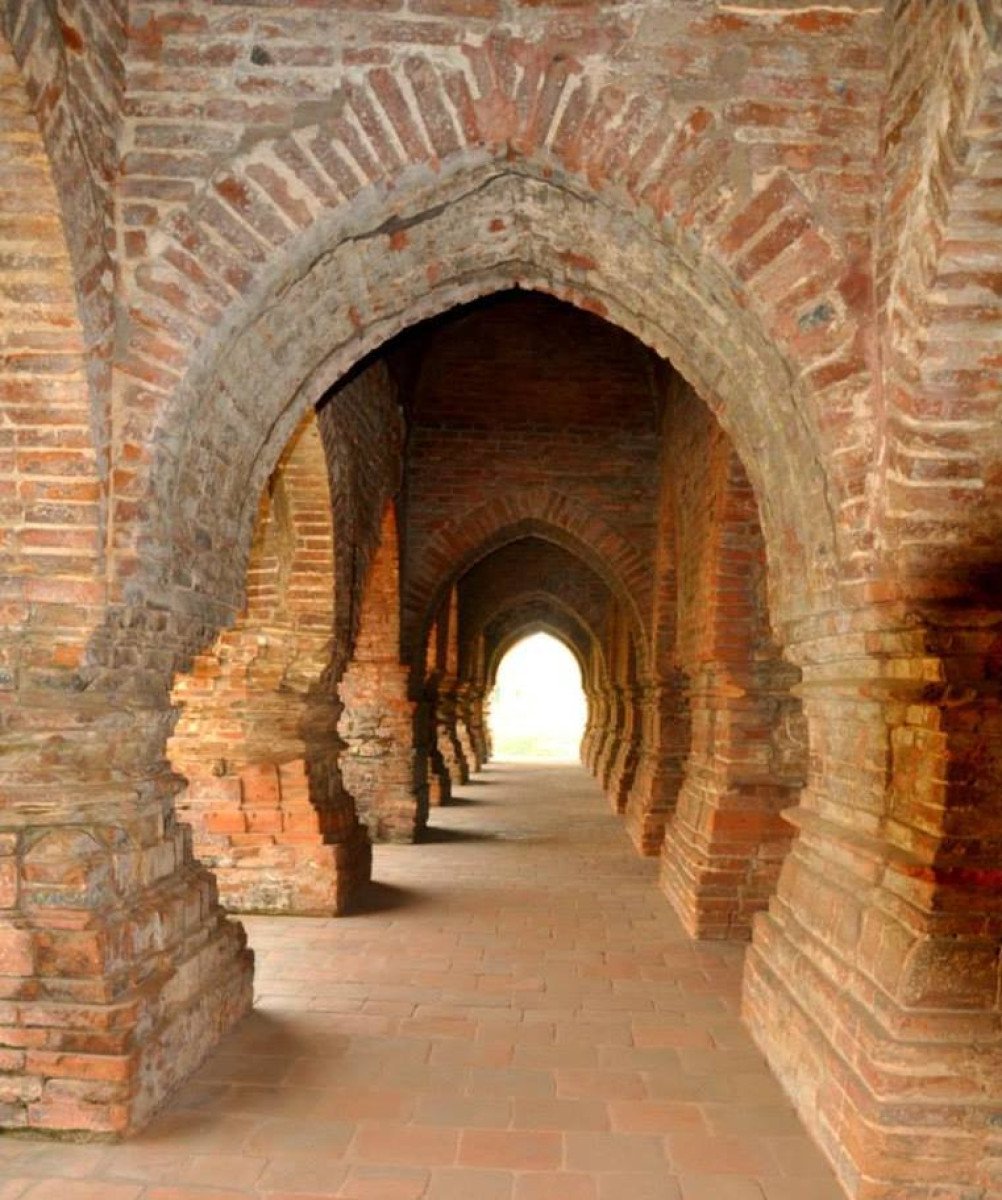
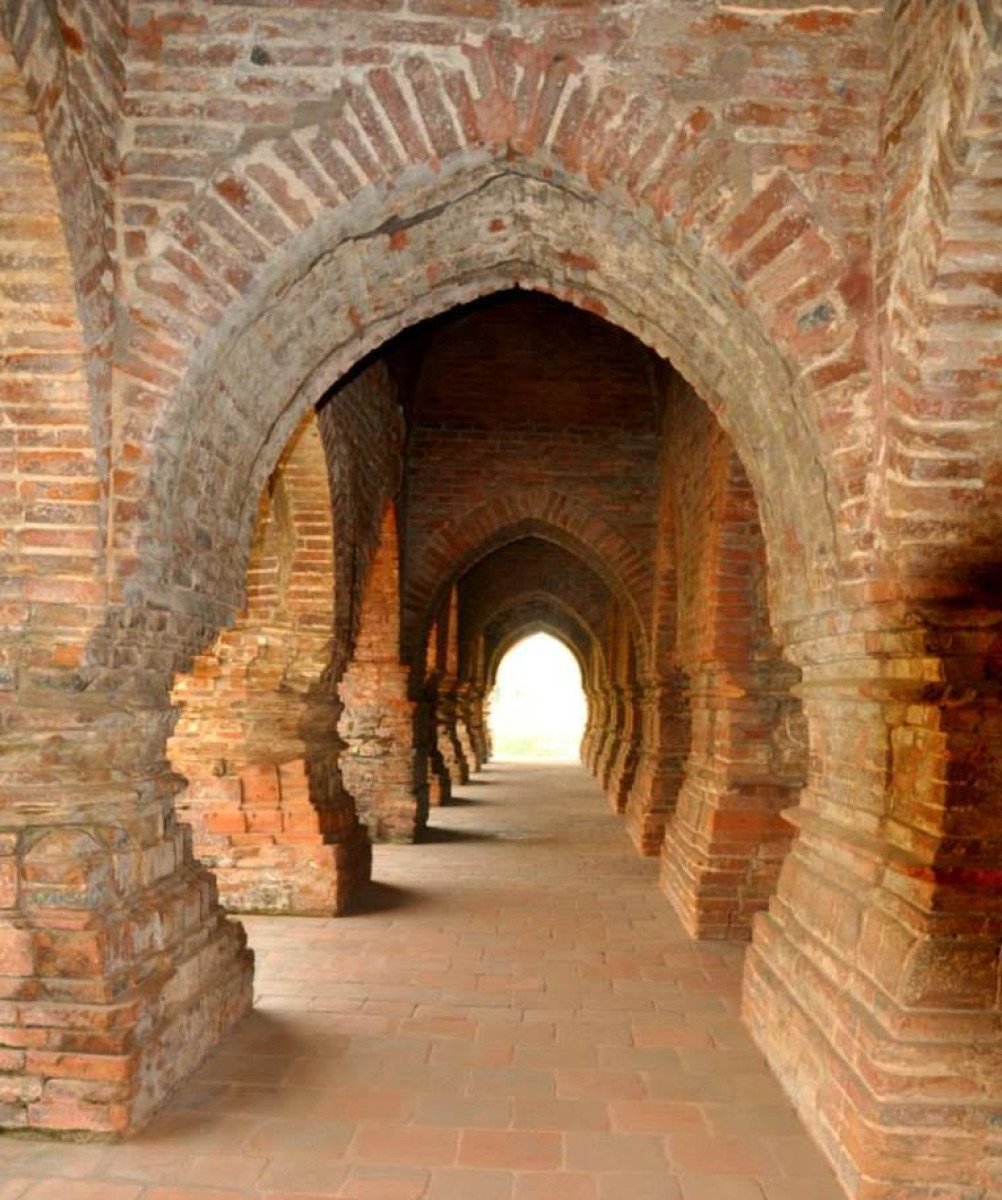
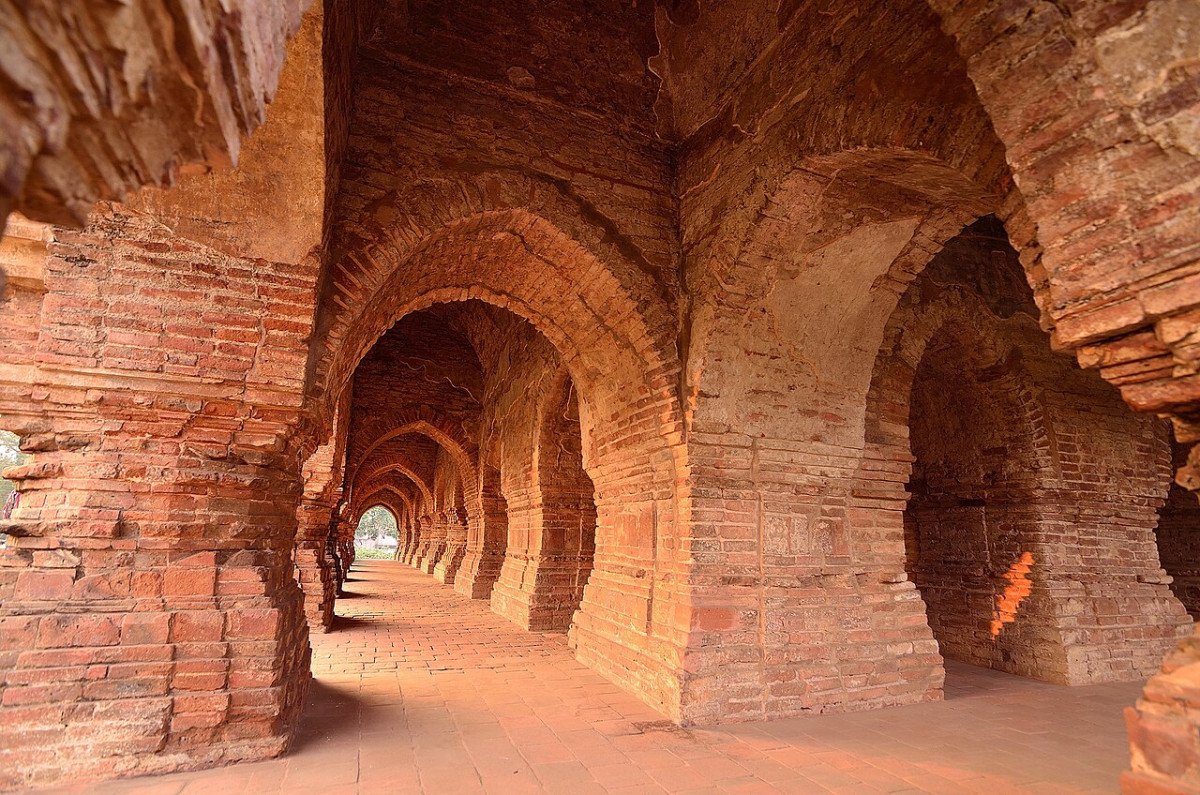
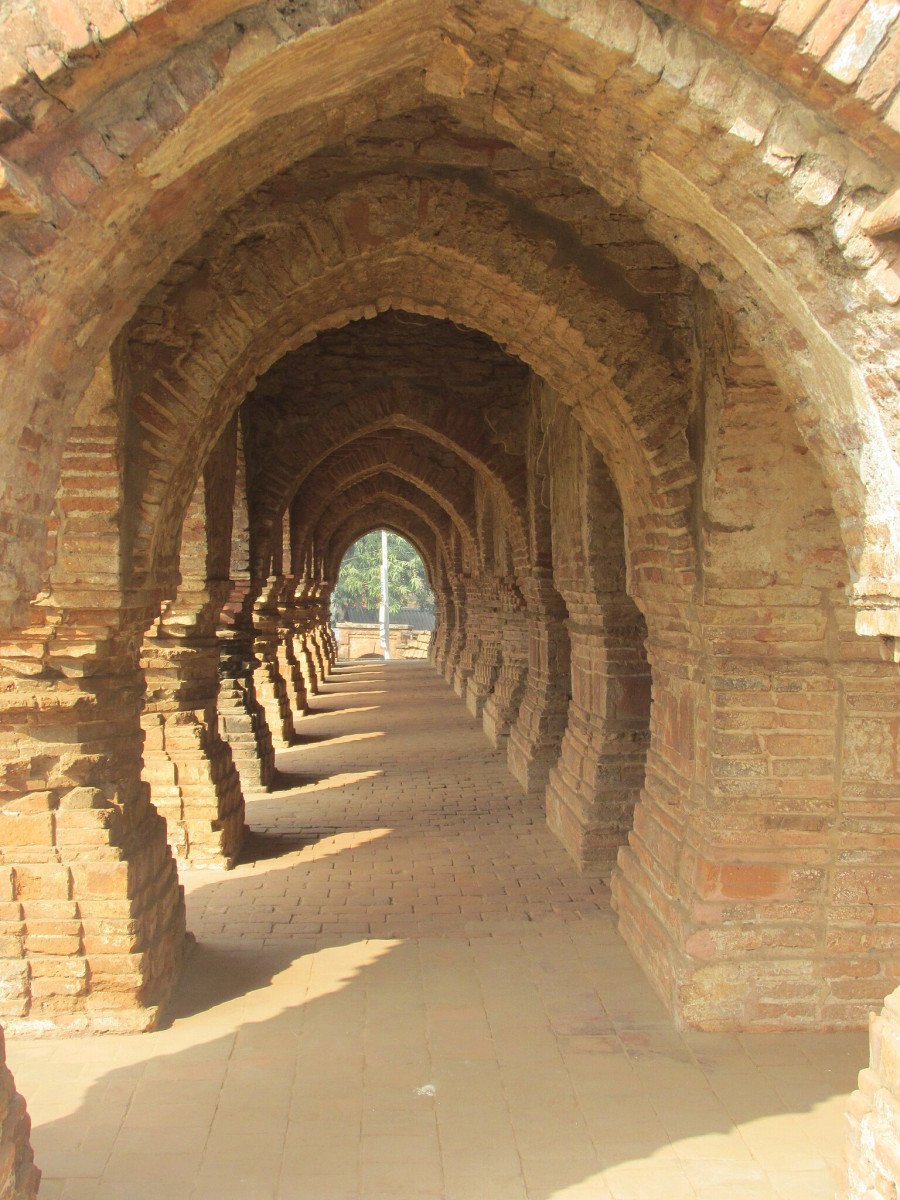
Symmetrical Arches and Corridor Depth: The hidden gem of the interior is the mesmerizing symmetry of the three concentric galleries. The best photos in this area are taken by standing at the entrance arch of the outermost corridor and shooting straight down the length, using the receding arches to create an incredible sense of depth and geometric repetition. The effect of the light filtering through the small gaps, contrasting with the dark interior, offers dramatic black-and-white photography opportunities. This shot highlights the architectural functionalitythe provision for three successive viewing pathsa feature unique to this 'display pavilion' design.
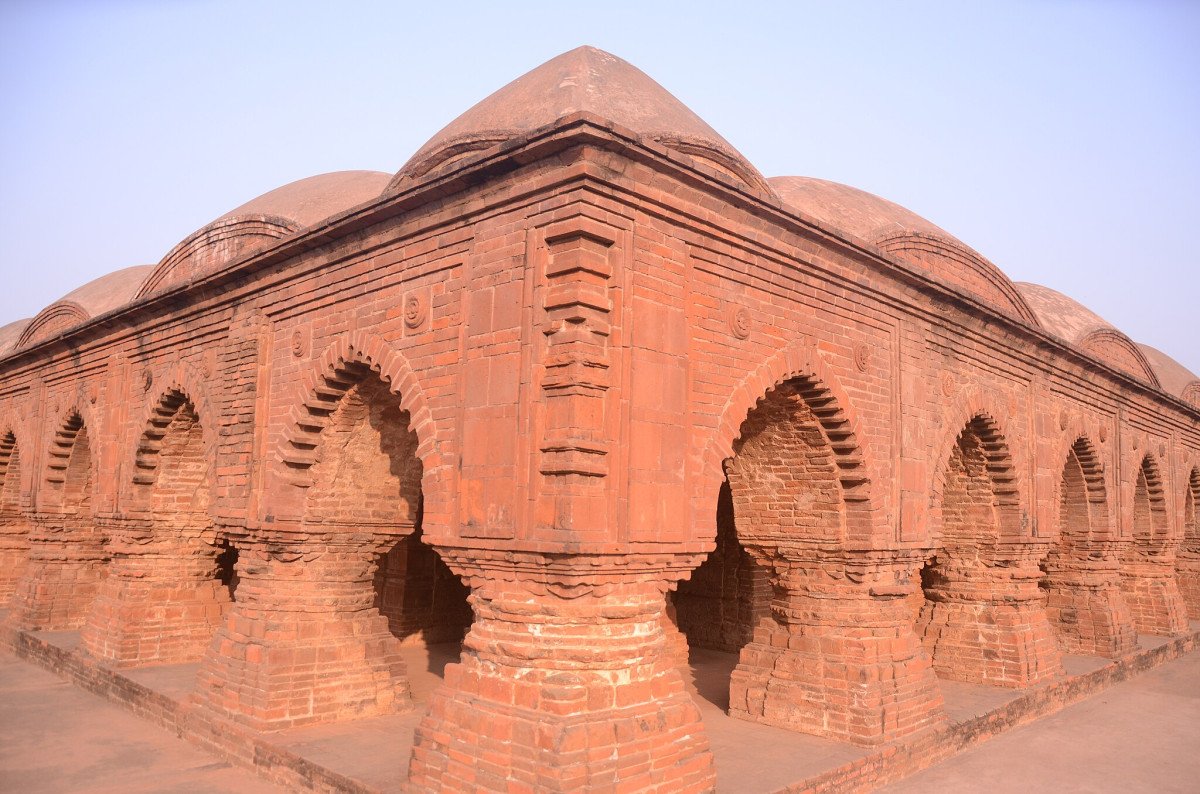
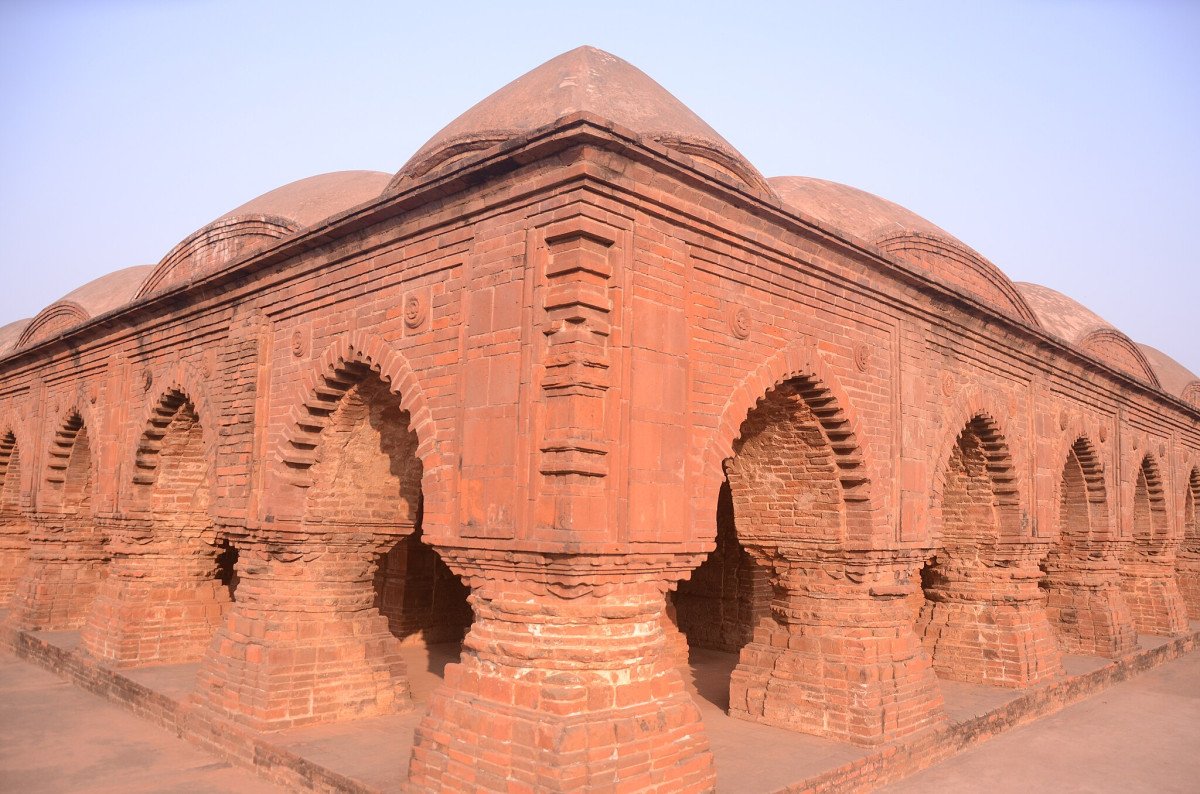
Laterite Plinth and Texture Contrast: Photographers interested in texture should focus on the monument's lower half. The Rasmanchas laterite base is a rich, reddish-brown stone that offers a striking contrast to the brickwork above. Use a close-up lens to capture the rough, porous texture of the laterite, which often contains patches of moss or lichen, indicating its age. Try a low-angle shot from the base of the plinth to emphasize the monuments upward thrust and its sheer weight, linking the structure physically to the earth of Mallabhum. These shots offer a tactile and grounded perspective on the temple architecture.Photo Gallery

Things To Do
-
Architectural Exploration and Study: Visitors should dedicate substantial time to a self-guided architectural tour. Start by circling the vast Laterite Stone plinth to appreciate the sheer scale of the foundation and how the laterite block, a difficult material, was masterfully shaped. Focus on the transition zones where the laterite meets the brickwork. Step inside the three circumambulatory galleriesthe first layer features the largest arches, creating a grand entrance feel. Walk slowly through all three corridors, noting the gradual decrease in light and the change in perspective as you move toward the empty central sanctum. Count the number of arches and pillars (108 is the traditional number mentioned in some accounts) and observe the architectural ingenuity used to construct the massive pyramidal roof without modern steel supportits a feat of corbelled...Architectural Exploration and Study: Visitors should dedicate substantial time to a self-guided architectural tour. Start by circling the vast Laterite Stone plinth to appreciate the sheer scale of the foundation and how the laterite block, a difficult material, was masterfully shaped. Focus on the transition zones where the laterite meets the brickwork. Step inside the three circumambulatory galleriesthe first layer features the largest arches, creating a grand entrance feel. Walk slowly through all three corridors, noting the gradual decrease in light and the change in perspective as you move toward the empty central sanctum. Count the number of arches and pillars (108 is the traditional number mentioned in some accounts) and observe the architectural ingenuity used to construct the massive pyramidal roof without modern steel supportits a feat of corbelled brick construction. Pay close attention to the smaller, hut-like turrets surrounding the pyramid; these represent the classic Bengali Do-chala and Aat-chala styles, seamlessly integrated onto a single platform. This focused study will reveal the depth and complexity of the Malla style beyond mere surface decoration.
Photography for Dramatic Light and Symmetry: The Rasmancha is a paradise for photographers due to its perfect symmetry and dramatic light conditions. The best times for photography are the "golden hours": early morning (shortly after sunrise) and late afternoon (an hour before sunset).
Morning Shot: Stand outside the compound gate to capture the full, imposing silhouette of the pyramidal roof against a softly lit sky. The monument appears majestic and solitary.
Mid-Day Angles: Use the strong overhead light to highlight the repetitive patterns of the cusped arches from within the corridors. This creates powerful geometric shots of light and shadow, emphasizing the depth and structure.
Interior Corridor Shots: Capture the effect of the light filtering through the multiple rows of arches. A long shot down a corridor can create a sense of infinity and depth, a visual representation of the monument's layered history.
Details: Focus on the terracotta lotus motifs on the arch spandrels for close-up texture and pattern shots. Also, look for the subtle differences between the laterite stone of the base and the terracotta brickwork above.
Historical and Cultural Immersion: Take time to sit near the monument and simply read about its history. The Rasmancha is a monument built around a central event, the Ras Utsav.
Imagine the spectacle in the 17th century: hundreds of palanquins carrying deities from surrounding temples converging on this very spot, priests performing rituals, musicians playing the Bishnupur gharana of Dhrupad, and thousands of devotees milling about. This imaginative exercise transforms the empty platform into a vibrant cultural hub. Seek out any ASI-provided information plaques or a local guide to narrate the stories of King Bir Hambir and his conversion to Vaishnavism, which led to this entire temple-building spree. While the festival itself is now held in a different, more modern venue, the monument is a powerful anchor for the towns cultural memory.
Art and Handicraft Connection: After visiting the Rasmancha, the experience provides a crucial context for local shopping. The famous Baluchari Sarees of Bishnupur often feature designs directly inspired by the terracotta panels and motifs found on the temples. Visit the local craft markets and shops to see how the geometric and floral designs you observed on the Rasmanchas arches are translated into the complex silk weaving of a Baluchari Saree or the molding of a small Bankura Horse terracotta artifact. This links the ancient architectural art with the living handicraft tradition of the town, offering a richer context for any purchase. The nearby village of Panchmura (19. 35 KM awa
Hotels
● Bishnupur River Side Resort
Address: Bishnupur, Bankura - 722122
Distance: 5.0 km
Details: Bishnupur River Side Resort provides an upscale experience with amenities like a swimming pool, a restaurant, and 24-hour room service. The resort is ...
● Bishnupur Tourism Property
Address: Bishnupur, Bankura - 722122
Distance: 1.5 km
Details: The Bishnupur Tourism Property is a well-regarded government-managed hotel that offers a reliable and comfortable stay for tourists. Featuring 3-star ...
● Hotel Annapurna
Address: Professors Colony, Bishnupur, Bankura - 722122
Distance: 2.3 km
Details: Hotel Annapurna is a premier 3-star property offering a sophisticated stay in Bishnupur. It features well-appointed rooms, a swimming pool, and an on-...
● Hotel Banalata
Address: SH-2, Joypur, Bankura - 722138
Distance: 7.6 km
Details: Hotel Banalata is a 3-star resort known for its peaceful environment and excellent service. Facilities include a restaurant, indoor games, and 24-hour...
● Hotel Sonar Bangla Joypur Forest
Address: Village - Basudebpur, Bishnupur, Bankura - 722122
Distance: 5.5 km
Details: Hotel Sonar Bangla Joypur Forest is a luxury resort located amidst the serene greenery of Joypur Forest. It offers premium amenities such as a large s...
● Hotel Suryadeep
Address: Bishnupur, Bankura - 722122
Distance: 3.5 km
Details: Hotel Suryadeep is a well-known establishment offering elegantly designed rooms including standard and deluxe categories. Guests can enjoy premium ame...
● Lodge Meghamallar
Address: Meghamallar Building, Rasikganj, Bishnupur, Bankura - 722122
Distance: 2.9 km
Details: Lodge Meghamallar offers a functional and comfortable stay for travelers visiting the historic town of Bishnupur. Facilities include complimentary Wi-...
● Monalisa Lodge
Address: Bus Stand Road, Bishnupur, Bankura - 722122
Distance: 2.6 km
Details: Monalisa Lodge is a budget-friendly accommodation located conveniently on Bus Stand Road. It provides essential amenities such as clean, comfortable r...
● New Mukherjee Lodge
Address: Pokabandh, Bishnupur, Bankura - 722122
Distance: 2.1 km
Details: New Mukherjee Lodge offers simple yet comfortable rooms with lake views in some units. It features basic amenities like Wi-Fi and a banquet hall for e...
● Resort Jorbangla
Address: Bishnupur, West Bengal - 722122
Distance: 1.6 km
Details: Resort Jorbangla provides a serene retreat near major historical sites like the Rasmancha and Lalji Temple. The property offers comfortable accommodat...
Show AllRestaurants
● Bfc Bishnupur
Address: Chowkbajar, Bishnupur, Kalindibandh, Bankura, West Bengal
Distance: 1.6 KM
Details: Bfc Bishnupur is a modern favorite for snacks and fast food near Rasmancha. Particularly popular in December during the winter season, their Fried Chi...
Food List: Fried Chicken, Chicken Burger, Veg Burger, Sandwic...
● Bishnupur Kebab House
Address: Marar, Bankura, West Bengal
Distance: 2.1 KM
Details: Bishnupur Kebab House brings the smoky, savory delight of kebabs to the area near Rasmancha. In April, when the weather is warm, their grilled snacks ...
Food List: Seekh Kebab, Reshmi Kebab, Chicken Tikka, Paneer T...
● Dada Boudi Biryani
Address: Bishnupur, College Road, Sankattala, Bankura, West Bengal
Distance: 1.9 KM
Details: Dada Boudi Biryani is legendary near Rasmancha, drawing crowds throughout the year, especially in September. Their Kolkata-style Biryani is a must-try...
Food List: Mutton Biryani, Chicken Biryani, Egg Biryani, Chic...
● Ganesh Dar Chaa
Address: Bishnupur, Bishnupur College Road, Mayra Pukur, Bankura, West Bengal
Distance: 2.7 KM
Details: Ganesh Dar Chaa is a classic tea and snack stall near Rasmancha, ideal for a break in August. Their Masala Chai and Singara (samosa) are a must-try, o...
Food List: Masala Chai, Singara, Nimki, Kochuri, Chana Dal, V...
● Itihas Mess
Address: Na, Jomuna Bandh, Koloni, P.O, P.S, Bishnupur, Bankura, West Bengal
Distance: 1.1 KM
Details: Itihas Mess is a charming, budget-friendly eatery located near Rasmancha. During February, students and tourists frequently visit this place for its c...
Food List: Egg Curry, Dal, Rice, Alu Dum, Vegetable Fry, Sabz...
Show AllInformation
-
Why Famous:
The Only One of Its Kind: The foremost reason for the Rasmancha's fame lies in its unparalleled architecture. No other structure in India or Bengal mirrors its unique design: a square laterite plinth topped by a large, stepped pyramidal superstructure. This singular design...The Only One of Its Kind: The foremost reason for the Rasmancha's fame lies in its unparalleled architecture. No other structure in India or Bengal mirrors its unique design: a square laterite plinth topped by a large, stepped pyramidal superstructure. This singular design was specifically conceived to accommodate the unique need of a ceremonial pavilion, not a regular temple. Its sheer originality and structural audacity make it an architectural anomaly and a celebrated achievement of the 17th-century Malla architects, who expertly adapted available materials (brick and laterite) to create a grand, towering structure, earning it the moniker, 'The Pride of Bishnupur. '
Center of a Grand Festival: For over 300 years, the Rasmancha was the central stage for the grandest event in the Mallabhum kingdom: the Ras Utsav. During this festival, all the principal deities from over 30 templesincluding Madan Mohan, Radha-Shyam, and Jor Banglawere brought here in a majestic procession. The galleries of the Rasmancha would be fully illuminated, transforming it into a divine display hall where thousands of people could obtain darshan (viewing) of their beloved Lord Krishna and Radha together in one place. This profound communal and religious role solidified its importance as the spiritual heart of the region for generations of devotees and Malla rulers. -
Architecture:
Unique Fusion Style: The architecture of Rasmancha is a one-of-a-kind example, often described as an eccentric architectural experiment combining indigenous Bengali hut-style roofing with a grand pyramidal superstructure, perhaps to achieve maximum height and visual dominanc...Unique Fusion Style: The architecture of Rasmancha is a one-of-a-kind example, often described as an eccentric architectural experiment combining indigenous Bengali hut-style roofing with a grand pyramidal superstructure, perhaps to achieve maximum height and visual dominance. The central idea of three circumambulatory galleries around a single shrine chamber is also unusual for a temple complex of this era. The structure successfully integrates various influences: the sturdy laterite stone platform is a local signature, the curved cornices hint at the traditional thatched roofs (chala style), and the numerous cusped arches reflect a decorative borrowing from the Sultanate architectural style, creating a harmonious and uniquely Bengali-Vaishnavite structure.
Monument Dimensions and Material: The Rasmancha stands on a generous, raised square plinth made of durable Laterite Stone, measuring approximately 24. 5 meters (80 feet) on each side. The overall height of the structure reaches around 12. 5 meters (41 feet), giving it a commanding presence in the landscape. The entire upper portion and the triple-tiered galleries are constructed using high-quality Terracotta Bricks, a material necessitated by the scarcity of large stone blocks in the deltaic region of Bengal. The central sanctum, although small, is enclosed by three concentric corridors, which are buttressed by a total of 108 highly decorative pillars and arches. The sheer volume of brickwork and the structural complexity of the stepped, corbelled roof make its successful endurance for over four centuries a testament to the skill of the Malla-era master builders. -
How To Reach:
By Air:
The Nearest International Gateway: The nearest major airport is Netaji Subhas Chandra Bose International Airport (CCU) in Kolkata, located approximately 150 KM to 170 KM away by road. From CCU, travelers have several options to reach...By Air:
The Nearest International Gateway: The nearest major airport is Netaji Subhas Chandra Bose International Airport (CCU) in Kolkata, located approximately 150 KM to 170 KM away by road. From CCU, travelers have several options to reach Bishnupur: hire a direct pre-paid taxi or cab, which takes about 4 to 5 hours depending on traffic; alternatively, take a taxi from the airport to Howrah or Shalimar Railway Station in Kolkata and then continue the journey by train. A closer, regional airport is Kazi Nazrul Islam Airport (RDP) near Durgapur (100 KM), which is an option if flying from a few specific domestic cities, but Kolkata offers better connectivity.
By Train:
The Most Convenient Option: Bishnupur has its own railway station, Bishnupur Junction (VSU), which is well-connected to major cities, especially Kolkata. This is generally the most convenient and recommended way to travel. Direct express and local trains ply regularly from Howrah (HWH) and Shalimar (SHM) stations in Kolkata.
Key Trains: Popular trains include the Rupashi Bangla Express and the Purulia Express. The journey from Kolkata takes approximately 3. 5 to 4. 5 hours.
From Northern India: Travelers from other parts of India can take any train heading towards Kharagpur or Tatanagar and then change trains for a local connection to Bishnupur. The station is very close to the main temple complex, allowing for easy onward travel via local rickshaw or auto-rickshaw.
By Road:
A Scenic Drive: Bishnupur is easily accessible by road from Kolkata (approx. 150 KM). The drive usually takes about 4 to 5 hours.
Route: The common route is via the Durgapur Expressway (NH-19/NH-16) until you take a left turn towards Arambagh and then proceed to Bishnupur via State Highway 2 (SH-2). The road conditions are generally good, but local traffic in the smaller towns can slow down the journey.
Bus: State-run buses (CSTC and SBSTC) and private operators run regular, frequent services between Esplanade/Dharmatala Bus Stand in Kolkata and Bishnupur. Buses are a budget-friendly option, though the journey can be slightly longer and less comfortable than the train.
By Local Transport:
Navigating the Town: Once in Bishnupur, the temples are clustered closely together, making a combination of walking and hiring local transport the best way to explore.
Cycle-Rickshaws: The most traditional and leisurely way to travel between the monuments. They are readily available near the station and major temple sites and can be hired for the entire day.
Auto-Rickshaws/Totos: Auto-rickshaws (diesel or CNG) and Totos (battery-operated rickshaws) are also available and are faster alternatives, especially for reaching slightly further out temples like Madan Mohan. Always negotiate the price for a fixed route or a half-day hire before starting the journey. The Rasmancha itself is within easy walking distance from the main bazaar and bus stop. -
Weather and Best Time to Visit:
The Winter and Post-Monsoon Season (Best Time to Visit): The absolute best time to visit the Rasmancha and Bishnupur in general is during the cool, dry season, specifically from October to March.
Post-Monsoon (October - November): The weather is highly pleasant, th...The Winter and Post-Monsoon Season (Best Time to Visit): The absolute best time to visit the Rasmancha and Bishnupur in general is during the cool, dry season, specifically from October to March.
Post-Monsoon (October - November): The weather is highly pleasant, the humidity has dropped, and the surrounding countryside is lush and green after the rains. The biggest religious festival, Ras Utsav (or its modern equivalent Bishnupur Mela/Festival), often falls during the end of this period, adding a vibrant cultural dimension to the trip.
Peak Winter (December - February): This season offers the most comfortable sightseeing weather, with temperatures ranging from a pleasant 10C to 25C. It's perfect for long hours of walking and exploration of the temple complex without the discomfort of heat.
Summer and Monsoon Season (Times to Avoid):
Summer (April - Mid-June): This period is intensely hot, with temperatures soaring past 40C. The extreme heat makes daytime sightseeing almost impossible and is highly discouraged, as the laterite and brick structures absorb and radiate heat.
Monsoon (Mid-June - September): While the rain brings relief, the high humidity, occasional heavy downpours, and risk of localized flooding can disrupt travel plans and outdoor photography. However, the washed-clean terracotta and the lush green surroundings can offer a unique, if challenging, scenic beauty for the dedicated traveler. Different Parts of the Day (Maximizing the Experience): Early Morning (6:00 AM - 9:
00 AM): This is the golden window for photography and comfortable exploration. Visit the Rasmancha first to see the morning light rake across its pyramidal structure and filter through the arches. Midday (11:00 AM - 3:
00 PM): This time is best reserved for an indoor activity like visiting the local museum, shopping for Baluchari Sarees, or having lunch, away from the intense sun. Late Afternoon (4:
00 PM - Sunset): A second excellent time for a leisurely visit, perfect for capturing the sunset colors on the reddish laterite stone and brickwork. The atmosphere is cooler and more relaxed, ideal for sitting and reflecting on the history. -
Near Tourist Places:
Jor Bangla Temple (Keshta Rai Temple): 0. 5 KM (Very close to Rasmancha, within the same ticket complex)
Shyam Rai Temple (Panchchura): 0. 8 KM (Within the central complex)
Dalmadal Cannon (Bishnupur Kaman): 0. 9 KM (The famous cannon, a key historical artifact)
Madan Mohan Temple: 1. 0 KM (Slightly further north, an important Eka-Ratna style temple)
Lalji Temple: 1. 0 KM (Another major temple in the area)
Bishnupur Fort Ruins and Stone Gateways: 1. 5 KM (Historical gates like Pathar Darja and Garh Darwaja)
Panchmura Terracotta Village: 19. 35 KM (Famous for the Bankura Horse craft)
Dihar (Saileswar & Sareswar Temples): 8 KM (Ancient proto-historic site)
Joyrambati: 33 KM (Birthplace of Sri Sarada Devi)
Kamarpukur: 43 KM (Birthplace of Sri Ramakrishna Paramahansa)
Susunia Hill: 62 KM (Good for trekking and historical inscriptions)
Mukutmanipur Dam: 67 KM (Scenic earthen dam and reservoir)
Tourism Tips
-
Health & Safety Guidelines:
Hydration and Sun Protection: Always carry sufficient drinking water, especially if visiting outside the peak winter months. The sun can be intense. Wear a hat, sunglasses, and apply a high SPF sunscreen. The te...Health & Safety Guidelines:
Hydration and Sun Protection: Always carry sufficient drinking water, especially if visiting outside the peak winter months. The sun can be intense. Wear a hat, sunglasses, and apply a high SPF sunscreen. The temple complex involves a lot of walking in open areas.
Footwear: Wear comfortable, sturdy walking shoes, as the ground around the monuments is often uneven, and the laterite stone can be rough.
Ticket Safety: Keep your ASI ticket safe, as it is a single ticket for multiple sites.
Photography Ethics: While photography is generally allowed, avoid using flash on the delicate terracotta panels, and always respect local sentiment. Do not climb on any part of the historical structure.
Essential Packing Checklist:
Identification and Documents: Carry your original government-issued ID (Aadhaar, Passport, Voter ID) and photocopies, as they are needed for ticket purchase, entry, and hotel check-in.
Winter Attire: If traveling between November and February, pack light woolens, a shawl, or a jacket, as mornings and evenings can be quite cool.
Camera Gear: Bring a good camera with a wide-angle lens for the broad monument and a zoom lens for the detailed terracotta work on the other temples. A tripod is useful for the low-light interior shots of the Rasmancha's arches.
Accommodation Options:
Variety: Bishnupur offers a range of accommodation from basic budget hotels to mid-range lodges. Options include the state-run tourist lodge (WBTDC), which is a reliable and popular choice, as well as various private hotels and guesthouses.
Location: The best location to stay is close to the Rasmancha area, as this puts you within easy walking distance of the central cluster of temples and the main town area. Always book in advance, especially if traveling during the peak season (October to March) or during the Bishnupur Mela/Festival in December.
Other General Tips for Exploration:
Local Guides: Consider hiring a local government-approved guide (available near the Rasmancha or the Tourist Lodge) for an hour or two. They can provide detailed historical context and point out intricacies in the terracotta carvings that might otherwise be missed.
Cash and Connectivity: While some places accept digital payments, carrying a sufficient amount of cash is advisable, especially for small local eateries and cycle-rickshaw fares. Mobile connectivity is generally good, but Wi-Fi access in budget accommodations may be limited.
Shopping Strategy: Dedicate separate time for shopping, which is best done in the local craft bazaars and dedicated co-operative shops for Baluchari Sarees and terracotta. Bargaining is generally expected in small local markets. The village of Panchmura is the best place to buy the iconic Bankura Horse directly from the artisans.
Reviews
FAQs
Ans:- A thorough visit to Rasmancha takes about 30 to 45 minutes. This gives you enough time to walk through all the galleries, admire the terracotta work on the pillars, and take photographs from different angles. If you are a photography enthusiast or a student of architecture, you might want to spend even longer studying its unique construction.Ans:- During the Ras Utsav, which lasted until 1932, the idols of Lord Krishna from all the temples of Bishnupur were brought here. They were placed in the inner sanctum and the surrounding galleries so that thousands of devotees could view them simultaneously. This practice transformed the building into a grand public gallery of divine images once a year.Ans:- Rasmancha is a must-visit because it is a one-of-a-kind structure that exists nowhere else in the world. It represents a specific moment in history when art, religion, and royalty came together to create something truly original. It stands as a testament to the engineering skills of ancient Bengal and remains the iconic symbol of Bishnupur’s glorious past.Ans:- Rasmancha is quite centrally located and is only about 2 to 3 kilometers away from the Bishnupur bus stand and railway station. It is usually the first stop for most tourists. You can easily reach it by hiring a cycle-rickshaw or an e-rickshaw (toto), which are the most common and eco-friendly modes of transport within the town.Ans:- Rasmancha is the oldest brick structure in Bishnupur, commissioned by King Bir Hambir in 1600 AD. It is unique because it was not built for a single deity but as a massive stage to house all the idols of Radha and Krishna from across the kingdom during the annual Ras festival, symbolizing religious unity and royal devotion.Ans:- The base or plinth of the Rasmancha is made of sturdy laterite blocks, while the main superstructure is built of burnt clay bricks. The bricks are held together by a mortar of lime and surki (crushed brick). Despite the lack of stone, the engineering of the corbelled roof has allowed the building to survive for over four centuries.Ans:- The best time to visit is during the late afternoon, shortly before sunset. The golden light illuminates the red bricks and creates long, dramatic shadows through the many arched openings. After dark, the ASI often illuminates the structure with floodlights, making it look spectacular against the night sky, though you cannot enter the galleries after sunset.Ans:- The structure stands on a square platform that is 1.5 meters high. The building itself is approximately 24.5 meters on each side, and the topmost point of the pyramidal roof reaches about 9.2 meters above the ground. Its massive scale makes it one of the most imposing and visible historical landmarks in the town of Bishnupur.Ans:- The tradition of bringing all idols to Rasmancha was discontinued in 1932, primarily due to the deteriorating state of the building at the time and the logistical challenges of moving the idols. Since then, the structure has been maintained as a historical monument rather than an active place of worship, allowing for its better preservation by the archaeological authorities.Ans:- Walking through the three concentric circumambulatory galleries of Rasmancha is a highlight for visitors. The rhythmic arrangement of pillars and arches creates a beautiful play of light and shadow. As you move through the corridors, you can feel the coolness of the thick brick walls and imagine the thousands of devotees who once crowded these spaces.Ans:- While not as densely decorated as the Shyam Rai Temple, Rasmancha features beautiful terracotta plaques on its exterior arches and pillars. The motifs primarily include lotus flowers, geometric patterns, and figures of dancers and musicians. These decorations were intended to enhance the festive atmosphere of the Ras Leela celebrations for which the building was designed.Ans:- Yes, local guides registered with the tourism department are usually available near the entrance of Rasmancha. Hiring a guide is highly recommended, as they can point out the subtle architectural details, explain the history of the Malla dynasty, and share local legends that make the visit much more enriching and educational.Ans:- Yes, Rasmancha is a ticketed monument under the ASI. Usually, the ticket purchased here is a "cluster ticket" that also grants entry to other major sites like the Shyam Rai and Jorbangla temples. The fee is nominal for Indian citizens, while foreign tourists are charged a higher rate. Tickets can often be purchased digitally via QR codes at the site.Ans:- Yes, Rasmancha shows clear Islamic architectural influences, particularly in its use of the pointed and cusped arches and the internal vaulted roofing. The Malla kings were contemporary to the Mughal and Sultanate periods, and their architects often blended local Bengali "chala" roofs with the structural innovations brought by Islamic builders to create this unique hybrid style.Bishnupur Itineray And Cost:-
Information about New and Updated Locations() of West Bengal Has Been Added :-
Card subtitle
Note:-
Information provided here in good Faith and for reference only.
Near Places
Acharya Jogesh Chandra Museum
Some quick example text to build on the card title and make up the bulk of the card's content.
Go somewhere
Big Stone Gateway
Some quick example text to build on the card title and make up the bulk of the card's content.
Go somewhere
Bishnupur Mela Ground
Some quick example text to build on the card title and make up the bulk of the card's content.
Go somewhere
Bishnupur Rajbari
Some quick example text to build on the card title and make up the bulk of the card's content.
Go somewhere
Chhinnamasta Temple
Some quick example text to build on the card title and make up the bulk of the card's content.
Go somewhere
Dalmadal Cannon
Some quick example text to build on the card title and make up the bulk of the card's content.
Go somewhere
Garh Darwaja
Some quick example text to build on the card title and make up the bulk of the card's content.
Go somewhere
Gokul Chand Temple
Some quick example text to build on the card title and make up the bulk of the card's content.
Go somewhere
Hadal-Narayanpur
Some quick example text to build on the card title and make up the bulk of the card's content.
Go somewhere
Jhilimili & Sutan Forest
Some quick example text to build on the card title and make up the bulk of the card's content.
Go somewhere
Jor Bangla Temple
Some quick example text to build on the card title and make up the bulk of the card's content.
Go somewhere
Jor Mandir Complex
Some quick example text to build on the card title and make up the bulk of the card's content.
Go somewhere
Jorbangla Temple
Some quick example text to build on the card title and make up the bulk of the card's content.
Go somewhere
Joypur Forest
Some quick example text to build on the card title and make up the bulk of the card's content.
Go somewhere
Kalachand Temple
Some quick example text to build on the card title and make up the bulk of the card's content.
Go somewhere
Kamarpukur
Some quick example text to build on the card title and make up the bulk of the card's content.
Go somewherein Other Cities