Varaha Cave Temple
General information
-
Ideal Duration:
45 minutes (For sculpture appreciation)Place Type:
Rock-Cut Cave Temple / UNESCO MonumentEntry Fees:
Free Access: The Varaha Cave Temple is another stand-alone cave temple on the hillock that is generally free to access for all visitors. This is a major benefit, as its high artistic value makes it one of the most important monuments, accessible without a ticket.Free Access: The Varaha Cave Temple is another stand-alone cave temple on the hillock that is generally free to access for all visitors. This is a major benefit, as its high artistic value makes it one of the most important monuments, accessible without a ticket.
Context with the Unified Ticket: Like the Trimurti Cave, the Varaha Cave Temple is located near the ticketed sites. The unified ASI ticket (approx. Rs.40 for Indians, Rs.600 for Foreigners) is required for other nearby sites like the Shore Temple and Pancha Rathas. Visitors must purchase this if they plan to see the paid monuments.
Local Guide Fees: While the site is free, hiring a licensed local guide is highly recommended. The guide can expertly explain the complex mythological narratives and iconographic details of the bas-reliefs, which is essential to fully appreciate the cave's artistic significance. Guide fees should be negotiated in advance.Timing:
Regular Timings: The monument is an open-air, rock-cut site, generally accessible from Sunrise to Sunset (typically 6:00 AM to 6:00 PM). Its location on the hillock means access is available throughout the day, following the general park opening hours.
Read MoreRegular Timings: The monument is an open-air, rock-cut site, generally accessible from Sunrise to Sunset (typically 6:00 AM to 6:00 PM). Its location on the hillock means access is available throughout the day, following the general park opening hours.
Ideal Visit Time: The Ideal Visit Time is the Early Morning (6:00 AM to 9:00 AM), when the temperatures are cool, and the morning sun angles perfectly to illuminate the carvings within the cave hall, bringing out the depth and relief of the sculptures for optimal viewing and photography. The Late Afternoon (4:00 PM to 6:00 PM) is the second-best choice for a cool visit.
Midday Avoidance: Avoid the midday hours (10:00 AM to 3:00 PM) as the granite rock heats up significantly, and the harsh overhead sun flattens the appearance of the bas-relief sculptures, making them less dramatic and difficult to photograph.Special Events:
Local Offerings and Blessings: Although a protected ASI site, the Varaha Cave Temple remains a sacred space. On auspicious days, like Varaha Jayanti (the birth anniversary of the Varaha avatar), local devotees may gather near the cave entrance to offer prayers and perform s...Local Offerings and Blessings: Although a protected ASI site, the Varaha Cave Temple remains a sacred space. On auspicious days, like Varaha Jayanti (the birth anniversary of the Varaha avatar), local devotees may gather near the cave entrance to offer prayers and perform simple, quiet rituals. Witnessing these authentic, localized spiritual events is a special experience that highlights the living heritage of the temple.
Archaeological Tours: Due to the high artistic merit of the sculptures, the cave is often included in specialized art and archaeology tours and seminars. Occasionally, these tours may feature talks by local historians or archaeologists near the site, providing an exceptionally detailed interpretation of the carvings. Checking with the local tourism department for such events can be rewarding.Best Photo Spots:
The Varaha Masterpiece Shot: Focus on the central Varaha panel. The best composition is a close-up that captures the Varaha's powerful posture and the delicate Bhudevi (Earth Goddess) on his tusk, using the natural light to emphasize the three-dimensionality of the figures....The Varaha Masterpiece Shot: Focus on the central Varaha panel. The best composition is a close-up that captures the Varaha's powerful posture and the delicate Bhudevi (Earth Goddess) on his tusk, using the natural light to emphasize the three-dimensionality of the figures. Avoid using a direct flash, as it flattens the relief.
Gajalakshmi Serenity: Capture the Gajalakshmi panel with a slightly wider shot that includes the figures of the elephants showering her. The composition should aim to highlight the panel's symmetry and serene atmosphere, contrasting the powerful Varaha panel.
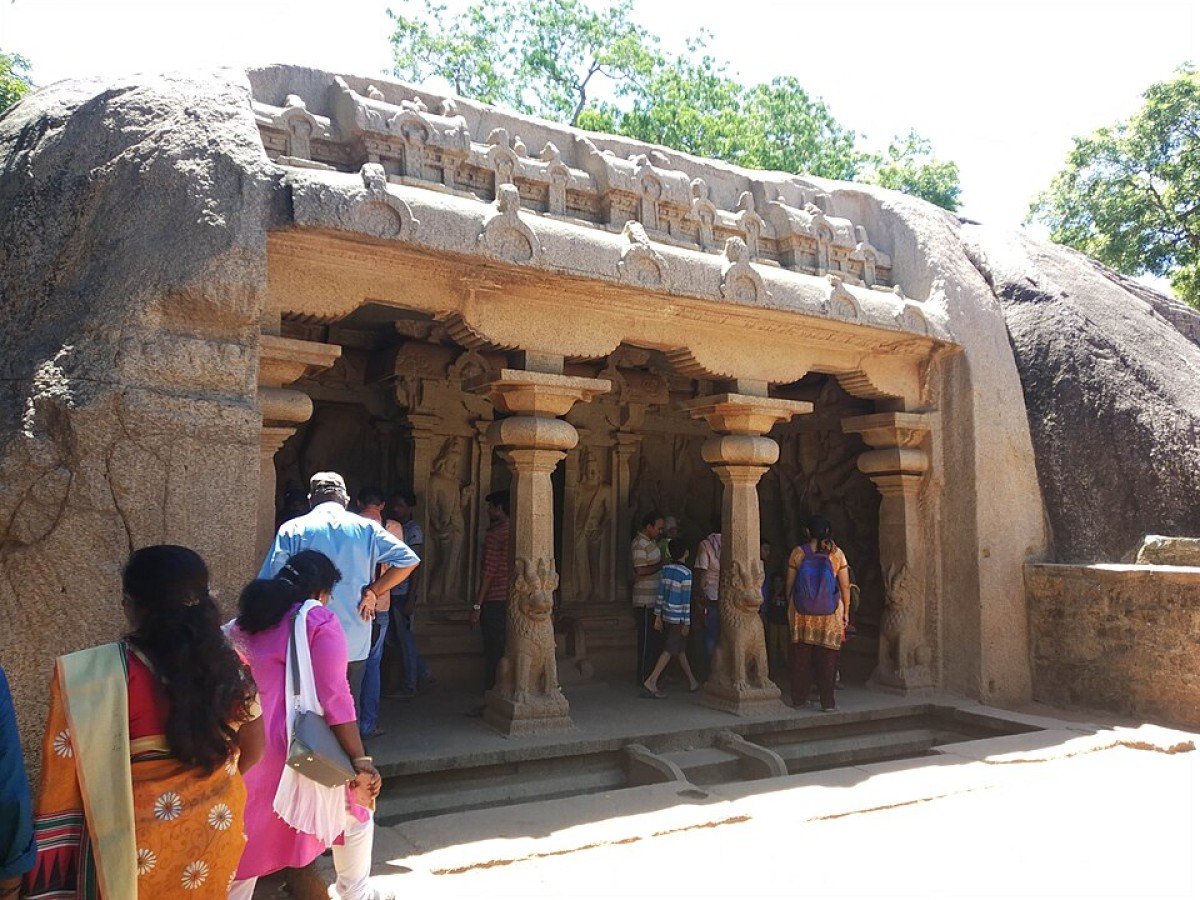
Framing the Entrance: Position yourself outside the cave and use the stone columns and pilasters of the mandapam façade to naturally frame the inner hall and the magnificent carvings within. This provides an excellent depth of field and captures the essence of the rock-cut architectural style.
Shadow and Light Play: Visit in the early morning when the sun casts deep, raking shadows across the surface of the carvings. These shadows bring out the incredible detail and the high relief of the sculptures, making them appear almost alive in the stone. This is the optimal time for artistic photography.Photo Gallery
Things To Do
-
Detailed Sculpture Study: Spend ample time studying each of the four main bas-relief panels—Varaha, Gajalakshmi, Durga, and Trivikrama. Use a guide or a detailed guidebook to understand the mythological story and iconographic details of each figure. Look for the subtle details, such as the figures near the Varaha's feet and the details of the elephants in the Gajalakshmi panel.
Photography of the Reliefs: The cave's open facade allows for natural light to enter, creating deep shadows that dramatically highlight the relief sculptures. Experiment with different times of the day (early morning is best) to see how the light and shadows bring the stone figures to life. Use your camera to capture the naturalistic poses and expressions of the figures.
Comparison of Divine Forms: The cave provides ...Detailed Sculpture Study: Spend ample time studying each of the four main bas-relief panels—Varaha, Gajalakshmi, Durga, and Trivikrama. Use a guide or a detailed guidebook to understand the mythological story and iconographic details of each figure. Look for the subtle details, such as the figures near the Varaha's feet and the details of the elephants in the Gajalakshmi panel.
Photography of the Reliefs: The cave's open facade allows for natural light to enter, creating deep shadows that dramatically highlight the relief sculptures. Experiment with different times of the day (early morning is best) to see how the light and shadows bring the stone figures to life. Use your camera to capture the naturalistic poses and expressions of the figures.
Comparison of Divine Forms: The cave provides an excellent opportunity to compare the Pallava artist's representation of different divine forms: the fierce and dynamic (Varaha, Trivikrama, Durga) versus the serene and elegant (Gajalakshmi). This comparative study of artistic styles and narrative is a rewarding activity for art enthusiasts.
Explore the Hillock: The Varaha Cave Temple is part of the larger central hill complex. After your visit, take a walk to the nearby Krishna Mandapam and the Trimurti Cave to compare their architectural features and sculptural styles. This short walk connects you to other masterpieces of Pallava rock-cut architecture.
Art Sketching: The highly realistic and anatomically correct figures in the cave make it an ideal subject for sketching. Bring a pad and pencil to copy the forms of the deities and the mythological scenes. This is a quiet, meditative activity that helps you internalize the beauty of the 7th-century art.
Meditation and Quiet Reflection: The ancient, sheltered space of the cave, particularly in the early morning, offers a quiet, cool spot for a few minutes of reflection. The powerful, spiritual narratives carved into the walls enhance the meditative atmosphere, providing a connection to the centuries of devotion that have taken place in this very space.
Information
-
Why Famous:
Iconic Varaha Panel: The Varaha Cave Temple is famously known worldwide for its spectacular bas-relief of Lord Vishnu as Varaha (the Boar Avatar) lifting the Earth Goddess Bhudevi from the sea. This panel is considered one of the finest examples of Pallava sculptural art, n...Iconic Varaha Panel: The Varaha Cave Temple is famously known worldwide for its spectacular bas-relief of Lord Vishnu as Varaha (the Boar Avatar) lifting the Earth Goddess Bhudevi from the sea. This panel is considered one of the finest examples of Pallava sculptural art, noted for its expressive naturalism, powerful composition, and spiritual depth. It is a canonical work studied by art historians globally.
Masterpiece of Pallava Relief Art: Beyond the Varaha panel, the cave is famous for the entire ensemble of its four main reliefs, including the elegant Gajalakshmi (Lakshmi bathed by elephants) and the fierce Durga. The quality and stylistic maturity of these carvings are a major draw. They are celebrated for their soft, flowing lines and their ability to convey complex mythological stories with visual economy and extraordinary grace.
Central Location and Accessibility: Its position on the main hillock, within easy walking distance of the other key inland monuments like Krishna's Butterball and Arjuna's Penance, adds to its fame and accessibility for tourists, making it a mandatory stop on any tour of Mahabalipuram. -
Architecture:
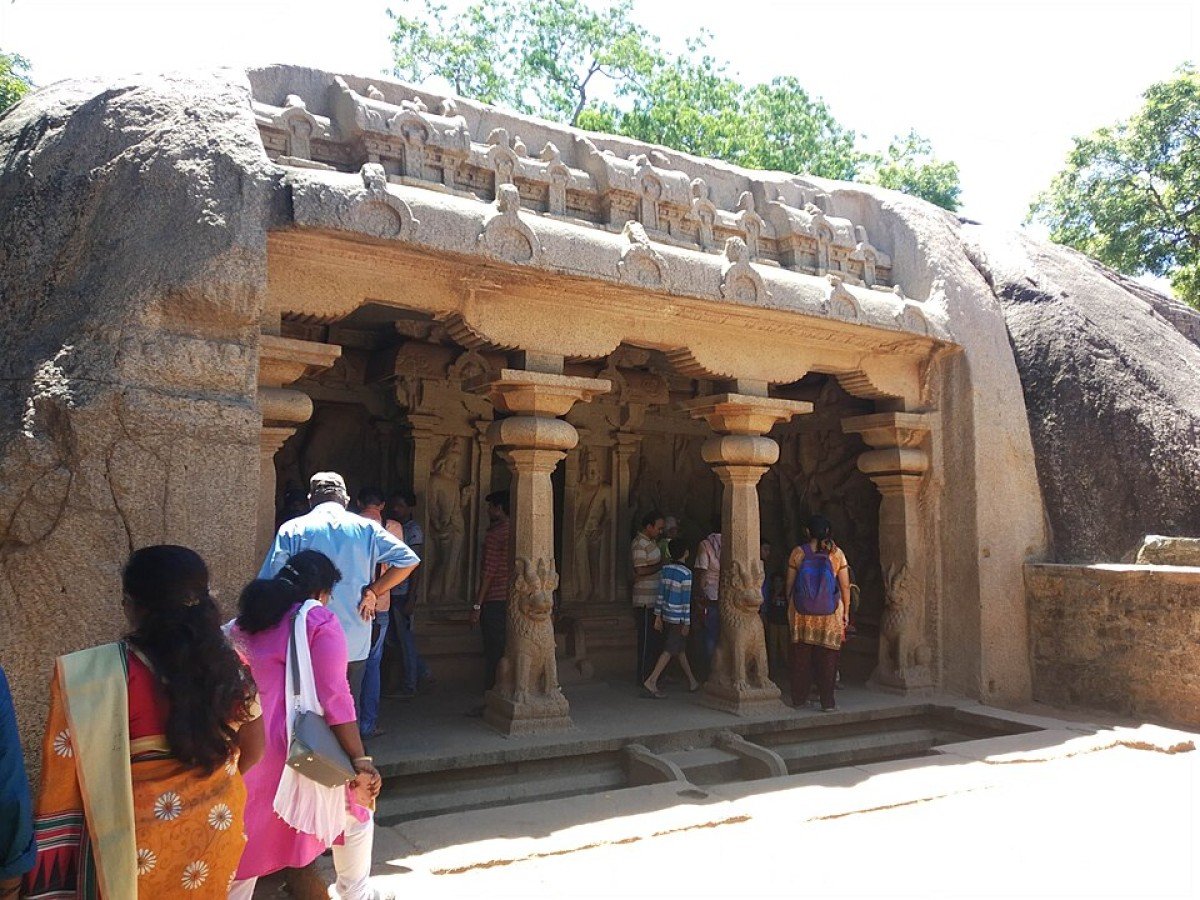
Mamalla Bas-Relief Masterpiece: The Varaha Cave Temple is a simple, single-chambered, rock-cut mandapam from the Mamalla period. The façade is supported by two ornate pillars and two pilasters, a common architectural arrangement. The most significant architectural feature...Mamalla Bas-Relief Masterpiece: The Varaha Cave Temple is a simple, single-chambered, rock-cut mandapam from the Mamalla period. The façade is supported by two ornate pillars and two pilasters, a common architectural arrangement. The most significant architectural feature is not the structure itself but the monumental bas-relief panels carved onto the interior walls. The panels display a remarkable sense of movement and volume. The Varaha relief, the centrepiece, shows the powerful boar-headed god raising the Earth Goddess; the figures are portrayed with exceptional vitality and natural grace, standing out nearly in the round.
Architectural Dimensions: The cave is a simple, rectangular hall, approximately 25-30 feet in width and 10-15 feet in depth. The height of the cave entrance is about 8 feet. The pillars are of the Simha-pada type (lion-based), though simple, and the pillar shafts are decorated. The four main narrative panels on the back and side walls are the primary focus, each panel measuring approximately 10-12 feet in height. The cave is an elegant example of the functional and decorative use of rock-cut architecture, where the entire focus is on the narrative art. -
How To Reach:
By Air: The nearest air gateway is Chennai International Airport (MAA), approximately 55-60 KMS away. Travelers can hire a pre-paid taxi or a private car to travel via the East Coast Road (ECR) to Mahabalipuram (about 1. 5-2 hours). Public bus transport from the airport ar...By Air: The nearest air gateway is Chennai International Airport (MAA), approximately 55-60 KMS away. Travelers can hire a pre-paid taxi or a private car to travel via the East Coast Road (ECR) to Mahabalipuram (about 1. 5-2 hours). Public bus transport from the airport area is also available.
By Train: The closest major railway station is Chengalpattu Junction (CGL), 30 KMS away. Direct buses and local taxis are available from CGL. The principal rail hub is Chennai Central (MAS), at 60 KMS, from which Express Buses and private cars provide a comfortable journey to the town.
By Road: Mahabalipuram is well-connected by road, particularly the scenic ECR. Direct bus services from Chennai (1. 5 hours) and Pondicherry (2 hours) stop near the town centre. Driving a private vehicle or hiring a cab on the ECR is a convenient and scenic option.
By Local Transport: The Varaha Cave Temple is on the central hillock, easily reachable by a short 5-10 minute walk uphill from the main road and the Descent of the Ganges relief. Auto-rickshaws are the most common form of local transport and can take you close to the base of the hill path. Walking is the most common way to navigate between the various monuments on the hill. -
Weather and Best Time to Visit:
Different Types of Seasons: Winter (October to March) is the Best Time to Visit, with cool, dry, and pleasant weather, which is ideal for the walk uphill and for appreciating the open-air carvings. Summer (April to June) is extremely hot and should be avoided during the mid...Different Types of Seasons: Winter (October to March) is the Best Time to Visit, with cool, dry, and pleasant weather, which is ideal for the walk uphill and for appreciating the open-air carvings. Summer (April to June) is extremely hot and should be avoided during the mid-day hours. Monsoon (July to September) makes the granite rock surfaces slippery and the path difficult, but the cool weather and lush greenery can be pleasant. November to February are the most comfortable months. Different Parts of the Day Early Morning (6:00 AM to 9:00 AM) is the Ideal Time to visit for the cool temperatures and the dramatic natural light that highlights the famous bas-relief sculptures. The Late Afternoon (4:00 PM to 6:00 PM) is also a good choice for comfortable viewing and photography. Avoid the intense heat and harsh light of the mid-day hours. -
Near Tourist Places:
Krishna Mandapam (0.
1 KMS): Rock-cut temple. Krishna's Butterball (0.
2 KMS): Gravity-defying boulder. Descent of the Ganges (Arjuna's Penance) (0.
5 KMS): Massive rock relief. Mahabalipuram Light House (0.
5 KMS): Offers a view of the town.
Trimurti Cave (
1 KMS): Rock-cut shrine.
Raya Gopuram (
1 KMS): Unfinished gateway. Ganesh Ratha (1.
5 KMS): Monolithic temple. Sri Sthala Sayana Perumal Temple (1.
5 KMS): Active Vishnu temple.
Shore Temple (
2 KMS): Iconic coastal temple. Pancha Rathas (2.
5 KMS): Monolithic chariot complex.
Tourism Tips
-
Health & Safety: Wear sturdy footwear for the walk up the hillock; the granite surfaces can be uneven and occasionally slippery. Carry a hat and sunscreen for sun protection. Do not touch the carvings; oil and sweat can damage the ancient stone. There are no railings, s...Health & Safety: Wear sturdy footwear for the walk up the hillock; the granite surfaces can be uneven and occasionally slippery. Carry a hat and sunscreen for sun protection. Do not touch the carvings; oil and sweat can damage the ancient stone. There are no railings, so watch your step on the cave's plinth.
Packing: Bring a good camera and a small water bottle. Since the carvings are the main attraction, a detailed guidebook or the services of a local guide are highly recommended to fully appreciate the mythological context. A small torch can help illuminate details in the corners.
Accommodation: Staying in the town centre is the most convenient option, as the Varaha Cave Temple is part of the central monument cluster, within walking distance of many hotels. Accommodations range widely in price and comfort. Check local transport availability if staying outside the main town.
Other Topics Heading:
Respect the Site: Treat the cave and its sculptures with the reverence due to an ancient and sacred shrine.
Photography: Be patient to wait for crowds to clear to get an unobstructed view and photograph of the magnificent bas-relief panels, especially the Varaha and Gajalakshmi panels.
Reviews
FAQs
Mahabalipuram Itineray And Cost:-
Varaha Cave Temple Tourism:-
Other Places In Mahabalipuram :-
Other States In India :-
Information about New and Updated Locations() of Tamil Nadu Has Been Added :-
Card subtitle
Note:-
Information provided here in good Faith and for reference only.
Near Places

Arjuna's Penance
Some quick example text to build on the card title and make up the bulk of the card's content.
Go somewhere
Dakshinachitra Museum
Some quick example text to build on the card title and make up the bulk of the card's content.
Go somewhere
Flipflops Beach Shack
Some quick example text to build on the card title and make up the bulk of the card's content.
Go somewhere
Ganesh Ratha Temple
Some quick example text to build on the card title and make up the bulk of the card's content.
Go somewhere
India Seashell Museum
Some quick example text to build on the card title and make up the bulk of the card's content.
Go somewhere
Krishna's Butter Ball
Some quick example text to build on the card title and make up the bulk of the card's content.
Go somewhere
Mahabalipuram Beach
Some quick example text to build on the card title and make up the bulk of the card's content.
Go somewhere
Mahabalipuram Stone Carving
Some quick example text to build on the card title and make up the bulk of the card's content.
Go somewhere
Mahishasura Rock
Some quick example text to build on the card title and make up the bulk of the card's content.
Go somewhere
Mahishasuramardini Cave
Some quick example text to build on the card title and make up the bulk of the card's content.
Go somewhere
Mamallapuram Lighthouse
Some quick example text to build on the card title and make up the bulk of the card's content.
Go somewhere
Mukunda Nayanar Temple
Some quick example text to build on the card title and make up the bulk of the card's content.
Go somewhere
Olakkannesvara Temple
Some quick example text to build on the card title and make up the bulk of the card's content.
Go somewhere
Pancha Pandava Rathas
Some quick example text to build on the card title and make up the bulk of the card's content.
Go somewhere
Pancha Rathas
Some quick example text to build on the card title and make up the bulk of the card's content.
Go somewhere
Pidari Ratha / Valian Kuttai Ratha
Some quick example text to build on the card title and make up the bulk of the card's content.
Go somewherein Other Cities