Bodhi Vriksh
Botanical and Spiritual Significance: This is a direct descendant or sapling of the original Bodhi Tree (Ficus religiosa) in Bodh Gaya under which Lord Buddha attained enlightenment. It represents the continuity of Buddha's spiritual journey and a living connection to his life. It offers a tranquil spot for meditation and reverence, especially significant for pilgrims visiting the site of Buddha's Mahaparinirvana. Its presence in Kushinagar is symbolic, marking the final resting place with the tree of enlightenment. The tree is considered holy by both Buddhists and Hindus, symbolizing knowledge, life, and rebirth. It is a focal point for silent prayer and contemplation within the main pilgrimage area.:
General information
-
Ideal Duration:
30 minutes to 1 hour for contemplation and offerings:Place Type:
Religious/Pilgrimage Site, NEntry Fees:
Access is Free and Open to the Public: There is no entry ticket required to visit the Bodhi Vriksh area within the Mahaparinirvana Temple Complex. This ensures that the spiritual heart of the pilgrimage site remains accessible to everyone, regardless of economic status.Access is Free and Open to the Public: There is no entry ticket required to visit the Bodhi Vriksh area within the Mahaparinirvana Temple Complex. This ensures that the spiritual heart of the pilgrimage site remains accessible to everyone, regardless of economic status.
Voluntary Donations for Maintenance: While entry is free, visitors are encouraged to make small, voluntary donations towards the tree's and the surrounding complex's maintenance. Donation boxes are usually available near the tree or the main temple office.
Fees for Commercial Photography: Using professional camera equipment or shooting for commercial purposes may require a prior permit from the Archaeological Survey of India (ASI) or the relevant temple trust, which often involves a fee. This typically applies only to large-scale shoots.
Cost of Ritual Items: The only associated cost is for personal devotional items like fresh flowers, incense sticks, or candles, which are purchased from local vendors outside the main gate, usually for a nominal fee. This is a personal choice, not a mandatory fee. :Timing:
Regular Timings: The site is generally accessible from Sunrise (around 6:00 AM) to Sunset (around 6:00 PM) daily, consistent with the timings of the main Mahaparinirvana Temple complex it is part of, although access to the open area around the tree can sometimes be slightly ...Regular Timings: The site is generally accessible from Sunrise (around 6:00 AM) to Sunset (around 6:00 PM) daily, consistent with the timings of the main Mahaparinirvana Temple complex it is part of, although access to the open area around the tree can sometimes be slightly extended.
Ideal Visit Time: The best time to visit for a tranquil and cool experience is during the early morning (6:00 AM to 8:00 AM) or the late afternoon (4:30 PM to 6:00 PM). Midday is extremely hot and less conducive to silent meditation due to the harsh sun, despite the tree's shade.
Peak Season Timings: During peak pilgrimage season (October to March) and on festivals like Buddha Purnima, the site sees heavier crowds, and the best time for peaceful reflection is right at the opening time in the early morning. :Special Events:
Buddha Purnima Celebration: The most significant annual event is the celebration of Buddha Purnima (Vesak) in April or May, marking the Buddha's birth, enlightenment, and Mahaparinirvana. Special prayers, a large assembly of monks, and a procession around the tree and the M...Buddha Purnima Celebration: The most significant annual event is the celebration of Buddha Purnima (Vesak) in April or May, marking the Buddha's birth, enlightenment, and Mahaparinirvana. Special prayers, a large assembly of monks, and a procession around the tree and the Mahaparinirvana Stupa take place.
International Meditation Retreats: Occasionally, international Buddhist associations organize quiet, multi-day meditation sessions or Vipassana retreats where the tree is a central point for group sittings. These non-public events offer a very intense spiritual atmosphere.
The Vesak Festival Night Lighting: On Buddha Purnima, the entire complex, including the area around the Bodhi Vriksh, is illuminated with thousands of small lamps (diyas), creating a spectacular, ethereal glow, transforming the peaceful site into a vibrant center of festive light and devotion. :Best Photo Spots:
The Golden Hour Canopy Silhouette: Capture the tree at sunrise or sunset (the golden hour), focusing on the intricate silhouette of the branches and leaves against the vibrant, richly colored sky. Shoot from a low angle to emphasize the tree's height and dominance over the ...The Golden Hour Canopy Silhouette: Capture the tree at sunrise or sunset (the golden hour), focusing on the intricate silhouette of the branches and leaves against the vibrant, richly colored sky. Shoot from a low angle to emphasize the tree's height and dominance over the landscape.
Close-up of Offerings at the Base: A macro or close-up shot of the colorful floral and cloth offerings and the patina of the tree’s bark, symbolizing devotion and transience. Use a shallow depth of field to keep the focus sharply on the offerings.
Monks in Contemplation: Photographing a monk or pilgrim meditating peacefully beneath the canopy, using the natural light and shade to create a contrasting, serene portrait that embodies the spirit of the site. Always ask for permission or shoot candidly from a respectful distance without disruption.
Leaf and Light Details: A specific focus on a single, heart-shaped Peepal leaf backlit by the sun, showcasing the fine vein structure and the symbol of life and impermanence it represents in Buddhism.
The Wider Complex Context: A shot that frames the tree's trunk and lower branches with the distant view of the Mahaparinirvana Temple or Stupa visible in the background, linking the natural symbol of enlightenment to the monumental symbol of liberation. :Photo Gallery
Things To Do
-
Engage in Silent Meditation Beneath the Holy Tree: The primary activity is sitting quietly beneath the tree's widespread branches to meditate or simply reflect. The serene, shaded environment is spiritually charged, offering a perfect setting for mindfulness, focusing on the significance of the tree as a symbol of enlightenment and awakening, and drawing spiritual energy from the site's profound history. Visitors often spend extended periods here in deep contemplation.
Perform Pradakshina (Circumambulation): Walk clockwise around the tree's protective platform (chabutra) while reciting mantras or offering silent prayers. This traditional act of reverence acknowledges the tree's sacredness and the spiritual journey of Lord Buddha, representing respect for the cycles of life and death. It's a key ritual for devout Buddhists. T...Engage in Silent Meditation Beneath the Holy Tree: The primary activity is sitting quietly beneath the tree's widespread branches to meditate or simply reflect. The serene, shaded environment is spiritually charged, offering a perfect setting for mindfulness, focusing on the significance of the tree as a symbol of enlightenment and awakening, and drawing spiritual energy from the site's profound history. Visitors often spend extended periods here in deep contemplation.
Perform Pradakshina (Circumambulation): Walk clockwise around the tree's protective platform (chabutra) while reciting mantras or offering silent prayers. This traditional act of reverence acknowledges the tree's sacredness and the spiritual journey of Lord Buddha, representing respect for the cycles of life and death. It's a key ritual for devout Buddhists. Take High-Quality Nature Photography of the Foliage: Capture the intricate leaf structure and the way the morning or late afternoon light filters through the vast, dense canopy. Focus on the contrasting textures of the old, gnarled trunk and the fresh, heart-shaped leaves, utilizing the natural sunlight to highlight the tree’s ancient and living beauty, avoiding generic wide shots.
Observe and Appreciate the Pilgrim Rituals: Sit back discreetly and observe the varied, devotional practices of the pilgrims, such as the lighting of incense sticks, placing candles, and the offering of water or cloth pieces. This provides a deep cultural insight into the diverse forms of Buddhist piety practiced by visitors from different nations.
Journal and Sketch the Environment: Bring a notebook and sketchpad to capture the tree's form and the tranquil atmosphere. Writing down personal reflections or sketching the Peepal leaves and branches can be a deeply personal way to engage with the energy of the site, turning the visit into a creative and meditative exercise.
Learn About the Tree's Lineage and Botany: Engage with a local guide or informational plaque to understand the history of this specific sapling—how it was brought from Bodh Gaya—and its botanical significance as a species traditionally associated with spiritual awakening across India.
Offer Floral Tributes and Incense: Purchase fresh flowers from nearby vendors or use pre-bought incense sticks to make a traditional offering at the base of the tree. This small act of reverence is a gesture of respect and a way to participate actively in the pilgrimage tradition. :
Information
-
Why Famous:
The Living Symbol of Enlightenment: Bodhi Vriksh is highly regarded because it is a direct descendant of the tree where Gautama Buddha achieved enlightenment in Bodh Gaya. Its importance stems from its profound spiritual lineage, making it a tangible link to the founding mo...The Living Symbol of Enlightenment: Bodhi Vriksh is highly regarded because it is a direct descendant of the tree where Gautama Buddha achieved enlightenment in Bodh Gaya. Its importance stems from its profound spiritual lineage, making it a tangible link to the founding moments of Buddhism. Pilgrims believe sitting or meditating under it confers blessings and deepens spiritual understanding.
The Mahaparinirvana Complex Integration: Its strategic placement near the Mahaparinirvana Temple and Stupa connects the two most critical events in Buddha's life—enlightenment and his ultimate passing—in one sacred complex. This physical and spiritual link is a central theme for visitors, highlighting the full cycle of the Buddha's journey.
A Universal Buddhist Shrine: The tree is an international symbol, revered by Buddhists from all over the world, including Sri Lanka, Thailand, and Japan, who visit to pay homage. It stands as a beacon of peace and spiritual continuity in a place associated with the finality of life. : -
Architecture:
Natural, Monumental, and Symbolic Structure: The tree itself is the central architectural feature, not a built structure. It is surrounded by a low stone or brick platform (chabutra) that serves as a raised area for pilgrims to sit and meditate or offer prayers. The focus ...Natural, Monumental, and Symbolic Structure: The tree itself is the central architectural feature, not a built structure. It is surrounded by a low stone or brick platform (chabutra) that serves as a raised area for pilgrims to sit and meditate or offer prayers. The focus is on the grand canopy and aerial roots of the Peepal tree, which creates a natural, living shrine. The platform's dimensions are modest, typically a few meters square, designed to enclose the tree trunk and provide a clean circumambulation space. The simple design emphasizes the tree's natural sanctity over man-made ornamentation, adhering to the Buddhist tradition of venerating natural sites. The canopy provides a vast, natural dome over the spiritual space. : -
How To Reach:
By Air: The nearest major airport is Kushinagar International Airport (KBK), about 10-15 KMs away. From the airport, one can hire a pre-paid taxi or a local cab directly to the main temple complex. Gorakhpur Airport (GOP) is about 50 KMs away and offers more connectivity; ...By Air: The nearest major airport is Kushinagar International Airport (KBK), about 10-15 KMs away. From the airport, one can hire a pre-paid taxi or a local cab directly to the main temple complex. Gorakhpur Airport (GOP) is about 50 KMs away and offers more connectivity; from there, hire a taxi or take a pre-booked car, which takes about 1. 5-2 hours.
By Train: The closest major railway station is Gorakhpur Junction (GKP), a significant hub well-connected to all major Indian cities. From GKP, you can take a local bus, shared taxi, or hire a private cab to Kushinagar, which is about a 1. 5-hour drive. A closer, smaller station is Kaptanganj Junction (CPJ), about 30 KMs away, but with limited major train stops.
By Road: Kushinagar is easily accessible via National Highway 27 (NH 27) and is about 50 KMs from Gorakhpur. State and private buses operate regular services from Gorakhpur, Lucknow, and other nearby cities to the Kushinagar Bus Station, which is a short 10-15 minute rickshaw ride from the site.
By Local Transport: Within Kushinagar, the site is easily reachable by auto-rickshaws, cycle-rickshaws, or hired private taxis for a short ride from the bus stand or any major hotel. The main temple complex is well-known, and all drivers will recognize the destination. : -
Weather and Best Time to Visit:
Different Types of Seasons: Winter (October to March) is the Best Time to Visit due to pleasant and mild weather, ideal for walking and meditation. Summer (April to June) is extremely hot (up to 45°C) and should be avoided for prolonged outdoor visits. Monsoon (July to Se...Different Types of Seasons: Winter (October to March) is the Best Time to Visit due to pleasant and mild weather, ideal for walking and meditation. Summer (April to June) is extremely hot (up to 45°C) and should be avoided for prolonged outdoor visits. Monsoon (July to September) brings heavy rain, making outdoor movement difficult, but the lush greenery after the rain is beautiful.
Different Parts of the Day: Early Mornings (6:00 AM to 8:00 AM) are best for peaceful reflection, avoiding crowds, and enjoying the cooler temperatures and soft light for photography. Late Afternoons (4:30 PM to 6:00 PM) are also good for the pleasant temperature and the golden light, which is excellent for capturing the ambiance of the complex. : -
Near Tourist Places:
Mahaparinirvana Temple and Stupa (Adjacent, 0 KMs): Matha Kuar Shrine (Approx. 0. 5 KM) Ramabhar Stupa (Approx. 1.
5 KMs): Japanese Temple (Atago Isshin) (Approx. 1 KM) Lin Sun Chinese Temple (Approx. 1.
5 KMs): Wat Thai Kushinara Chalermaraj Temple (Approx. 1 KM) Kushinagar Museum (Government Buddha Museum) (Adjacent, 0 KMs): Buddha Relic Distribution Site (Approx. 0. 5 KM) Meditation Park (Approx. 0. 5 KM) Ramkola (Town, Approx.
1
5 KMs):
Tourism Tips
-
Health & Safety: Carry a first-aid kit with basic medication for stomach issues or heat exhaustion, especially during the Summer months. Drink only bottled water and avoid street food to prevent illness. Be mindful of uneven ground in the older excavated areas.Health & Safety: Carry a first-aid kit with basic medication for stomach issues or heat exhaustion, especially during the Summer months. Drink only bottled water and avoid street food to prevent illness. Be mindful of uneven ground in the older excavated areas.
Packing: Pack light cotton clothing suitable for the warm climate, regardless of the season, and ensure modest dressing to respect the sacred nature of the site. Wear comfortable, easily removable footwear as you must enter most shrines barefoot. Carry sunglasses, a hat, and sunscreen.
Accommodation: Book accommodation in advance, especially during the peak season (October to March). Options range from budget guest houses to mid-range hotels near the Buddha Marg area or slightly more upscale options in Gorakhpur for a day trip. Consider staying at the guesthouses run by the international monasteries for a unique experience.
Other Different Topics Heading: Respect the silence and sacred atmosphere, especially near the Bodhi Vriksh and within the temples; turn off mobile phone ringers. Engage with local vendors and rickshaw drivers politely and negotiate fares before starting the journey. Learn a few basic phrases in Hindi or Bhojpuri for better interaction. :
Reviews
FAQs
Kushinagar Itineray And Cost:-
Other Places In Kushinagar :-
Other States In India :-
Information about New and Updated Locations() of Uttar Pradesh Has Been Added :-
Card subtitle
Note:-
Information provided here in good Faith and for reference only.
Near Places
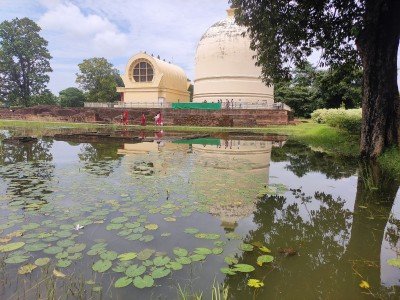
Meditation Park
Some quick example text to build on the card title and make up the bulk of the card's content.
Go somewhere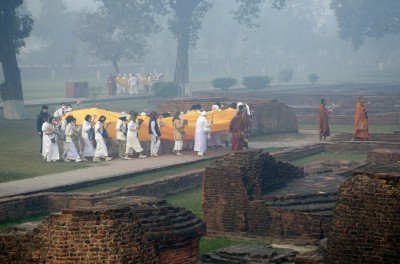
Nauka Vihar
Some quick example text to build on the card title and make up the bulk of the card's content.
Go somewhere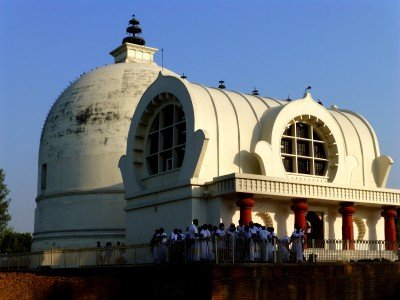
Parinirvana Stupa
Some quick example text to build on the card title and make up the bulk of the card's content.
Go somewhere
Raaj Darbaar
Some quick example text to build on the card title and make up the bulk of the card's content.
Go somewhere
Ramabhar Stupa
Some quick example text to build on the card title and make up the bulk of the card's content.
Go somewhere
Ruins of Ancient Kushinagar
Some quick example text to build on the card title and make up the bulk of the card's content.
Go somewhere
Wat Thai Temple
Some quick example text to build on the card title and make up the bulk of the card's content.
Go somewherein Other Cities