Mahaparinirvana Temple
Spiritual and Historical Significance: This is the most sacred site in Kushinagar, marking the exact spot where Gautama Buddha attained Mahaparinirvana—the ultimate liberation from the cycle of birth and death—in 487 BCE at the age of 80. The temple, rebuilt multiple times, most recently in 1956 to commemorate the 2500th anniversary of the Buddha Jayanti, houses the famous 6.10-meter-long reclining statue of Lord Buddha. This monolithic sculpture, carved from Chunar sandstone, depicts the Buddha lying on his right side with his head to the north (the position of his last moments) and is a powerful symbol of his final liberation. The temple stands amidst the ruins of ancient monasteries and is the focal point of the entire Buddhist pilgrimage circuit in Kushinagar, drawing millions of devotees annually who come to pay their final respects. The inscription recovered at the site attributes the statue as a gift from a Gupta-era monk named Haribal.:
General information
-
Ideal Duration:
1 to 2 hours for temple, stupa, and complex viewing:Place Type:
Religious/Pilgrimage Site, HEntry Fees:
No Entry Fee for the Temple: There is generally no entry fee to enter the Mahaparinirvana Temple and the immediate surrounding complex (including the Bodhi Vriksh and Mahanirvana Stupa). This is a public sacred space, ensuring universal access for all pilgrims.No Entry Fee for the Temple: There is generally no entry fee to enter the Mahaparinirvana Temple and the immediate surrounding complex (including the Bodhi Vriksh and Mahanirvana Stupa). This is a public sacred space, ensuring universal access for all pilgrims.
No Camera Fees in the Complex: There are usually no separate fees for carrying a still or video camera in the open area of the complex. However, strictly observe the potential ban on all photography and videography inside the main temple shrine where the Reclining Buddha statue is housed.
Voluntary Offerings/Donations: The temple relies on voluntary donations for its upkeep. Visitors can make offerings in cash or kind inside the temple or at the donation counter, which is entirely optional and based on personal will.
Fees for Guide Services: The only cost is for hiring a local, authorized guide to explain the rich historical and spiritual context of the complex and ruins, which should be negotiated beforehand. :Timing:
Regular Timings: The temple complex is typically open from Sunrise (around 6:00 AM) to Sunset (around 6:00 PM) daily. Access to the main shrine housing the statue is strictly within these daylight hours and may have a brief closure during midday for a rest period.
<...Regular Timings: The temple complex is typically open from Sunrise (around 6:00 AM) to Sunset (around 6:00 PM) daily. Access to the main shrine housing the statue is strictly within these daylight hours and may have a brief closure during midday for a rest period.
Ideal Visit Time: The best time to visit for a peaceful, uncrowded experience is the early morning (6:00 AM to 8:30 AM), which is also ideal for photography. The heat of the midday sun is best avoided for walking around the exposed archaeological ruins.
Peak Season and Festival Timings: During the peak winter pilgrimage season and on Buddha Purnima, crowds are heavy. Visit right at the opening time to ensure quiet reflection and to have a better, closer view of the Reclining Buddha statue before the busloads of tourists arrive. :Special Events:
Buddha Purnima (Vesak) Celebrations: This is the most massive annual event in Kushinagar, held in April or May. The temple is the epicenter of the celebration, featuring day-long chanting, a grand procession, mass meditations, and a huge gathering of monks, scholars, and pi...Buddha Purnima (Vesak) Celebrations: This is the most massive annual event in Kushinagar, held in April or May. The temple is the epicenter of the celebration, featuring day-long chanting, a grand procession, mass meditations, and a huge gathering of monks, scholars, and pilgrims from around the world to commemorate the Buddha's triple anniversary.
Annual Rains Retreat (Vassa or Pavarana): While a quiet event, the temple complex and surrounding monasteries observe the three-month Vassa retreat during the Monsoon season (July to October), leading to an intensified period of monastic discipline and study, which creates a highly charged spiritual atmosphere.
International Delegations Visit: The temple frequently hosts official visits by high-ranking Buddhist leaders, heads of state, and international monastic delegations, often involving special ceremonies, offerings, and public addresses that are significant news and community events. :Best Photo Spots:
The Reclining Buddha Statue (Internal Shot): The most crucial shot is the 6. 10-meter statue itself. Focus on its serene face and the draping of the robe, using the controlled interior lighting to create a sense of profound calm (Note: Photography may be heavily restricted ...The Reclining Buddha Statue (Internal Shot): The most crucial shot is the 6. 10-meter statue itself. Focus on its serene face and the draping of the robe, using the controlled interior lighting to create a sense of profound calm (Note: Photography may be heavily restricted or banned inside the sanctum, so check rules first).
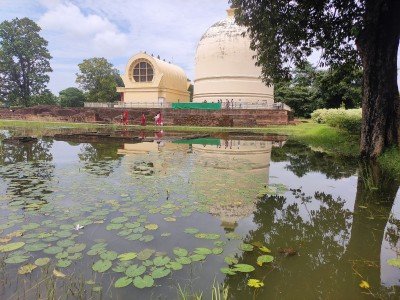
The Temple and Stupa Together: A wide-angle exterior shot that captures both the main temple building and the adjacent, massive circular mound of the Mahanirvana Stupa, linking the two most sacred structures in one frame. Sunrise light is often dramatic here.
Pilgrims in Devotion: Capture pilgrims in a moment of sincere prayer or meditation outside the temple or near the Bodhi Vriksh, using the sacred architecture as a background to convey the human, spiritual element of the site. Always seek permission or shoot candidly from a respectful distance.
Archaeological Ruins Perspective: A photo capturing the rows of ancient brick foundations of the monastic cells and stupas in the complex, using the pathway or a monk in the foreground for scale, emphasizes the immense historical depth of the site. Golden Hour is best for texture. :Photo Gallery
Things To Do
-
Pay Final Homage to the Reclining Buddha: The most important activity is to enter the temple and offer prayers, light a candle, or perform a short, silent meditation before the 6. 10-meter Reclining Buddha. Spend time absorbing the statue's serenity, which represents the Buddha's final moment of freedom.
Circumambulate the Mahanirvana Stupa and Complex: Perform the ritual walk (Pradakshina) around the adjacent Mahanirvana Stupa and the temple complex. This act of devotion symbolizes respect for the Buddha's final resting place and the completion of the pilgrimage.
Explore the Archaeological Ruins: Walk through the extensive surrounding ruins of the ancient monasteries and stupas. Reading the informational plaques helps visualize the immense scale and grandeur of the monastic university and set...Pay Final Homage to the Reclining Buddha: The most important activity is to enter the temple and offer prayers, light a candle, or perform a short, silent meditation before the 6. 10-meter Reclining Buddha. Spend time absorbing the statue's serenity, which represents the Buddha's final moment of freedom.
Circumambulate the Mahanirvana Stupa and Complex: Perform the ritual walk (Pradakshina) around the adjacent Mahanirvana Stupa and the temple complex. This act of devotion symbolizes respect for the Buddha's final resting place and the completion of the pilgrimage.
Explore the Archaeological Ruins: Walk through the extensive surrounding ruins of the ancient monasteries and stupas. Reading the informational plaques helps visualize the immense scale and grandeur of the monastic university and settlement that once flourished here.
Attend Group Chanting or Puja: If a large group of monks or pilgrims is present, respectfully join or observe their organized chanting or Puja sessions, which are highly moving and enhance the spiritual atmosphere of the site.
Take Reflective Photography of the Ruins: Capture the historical and artistic beauty of the ancient brickwork and foundation ruins, utilizing the soft light of the early morning to emphasize the texture and age of the structures.
Observe the Diverse Pilgrims: Sit quietly in the compound and observe the variety of Buddhist pilgrims from different countries (Sri Lanka, Thailand, Japan, Tibet) and the unique ways they express their devotion, providing a rich cultural experience. Read the Historical Plaque at the Temple's Entrance: Take time to read the detailed historical accounts of the statue's discovery and restoration by the early archaeologists, gaining a deeper understanding of the monument's journey back into prominence. :
Information
-
Why Famous:
The Site of Buddha's Final Liberation: Its paramount fame is derived from being the exact, historically verified location where Gautama Buddha attained Mahaparinirvana. It is the end-point of the traditional Buddhist pilgrimage, marking the finality of the Buddha's physical...The Site of Buddha's Final Liberation: Its paramount fame is derived from being the exact, historically verified location where Gautama Buddha attained Mahaparinirvana. It is the end-point of the traditional Buddhist pilgrimage, marking the finality of the Buddha's physical life and the success of his teachings, making it one of the four most sacred sites for all Buddhists globally.
The Colossal Reclining Buddha Statue: The 6. 10-meter-long statue of the Reclining Buddha is one of the most iconic and revered images in Buddhism. This particular idol, with its serene face and posture of ultimate peace, is considered a masterpiece of the Gupta art period and attracts art historians and devotees alike to witness its profound spiritual and artistic quality.
A Testament to Ancient Indian History: The complex is an extraordinary archaeological site, featuring extensive ruins of ancient monasteries and the Mahanirvana Stupa, which were excavated and restored by archaeologists like Alexander Cunningham and A. C. L. Carlleyle. It offers a tangible link to the Mauryan, Kushan, and Gupta dynasties that patronized and expanded the site over centuries. : -
Architecture:
Gupta-Era Reconstruction with Modern Restoration: The current temple structure is a modern, plain rectangular hall built in the traditional Indian architectural style, but it stands on the remains of a much older temple, significantly expanded during the Gupta Empire (c. 32...Gupta-Era Reconstruction with Modern Restoration: The current temple structure is a modern, plain rectangular hall built in the traditional Indian architectural style, but it stands on the remains of a much older temple, significantly expanded during the Gupta Empire (c. 320-647 CE). Dimensionally, the temple hall is designed to perfectly accommodate the 6. 10-meter-long reclining Buddha statue on a large stone couch or platform. The structure is built on a single platform, approximately 2. 74 meters high, shared with the adjacent Mahanirvana Stupa ruins. The statue itself is a monolithic sculpture of Chunar red sandstone, resting on a pedestal with three carved figures. The architecture’s primary focus is to enshrine and display the colossal reclining image, using controlled light to highlight its serene expression. The adjacent ruin of the Mahanirvana Stupa, which is a circular mound of bricks crowned with a dome, measures 19. 81 meters in height and is part of the same complex. : -
How To Reach:
By Air: The nearest international access is Kushinagar International Airport (KBK), a short 10-15 KM drive via hired taxi. The next option is Gorakhpur Airport (GOP), about 50 KMs away. From GOP, hire a private cab for the smooth 1. 5-hour drive along NH 27 to the main tem...By Air: The nearest international access is Kushinagar International Airport (KBK), a short 10-15 KM drive via hired taxi. The next option is Gorakhpur Airport (GOP), about 50 KMs away. From GOP, hire a private cab for the smooth 1. 5-hour drive along NH 27 to the main temple complex on Buddha Marg.
By Train: The closest major railhead is Gorakhpur Junction (GKP). From GKP, you can easily hire a pre-paid taxi, a shared cab, or take a direct state bus to the Kushinagar Bus Station. The temple complex is the major landmark and is only a short auto-rickshaw ride from the station.
By Road: Kushinagar is on a well-connected road network. The temple is located centrally on Buddha Marg and is the town's most prominent landmark. State transport buses run frequently from cities like Gorakhpur and Deoria.
By Local Transport: Within Kushinagar, the complex is a short ride from any hotel or the bus station via auto-rickshaw or cycle-rickshaw. The destination is universally known as the "Nirvana Temple" or "Bada Mandir" (Big Temple) by local drivers. : -
Weather and Best Time to Visit:
Different Types of Seasons: Winter (October to March) is the most comfortable and recommended season due to the pleasant daytime weather, which is perfect for extended exploration of the large, open-air complex. Summer is characterized by extreme heat, necessitating a very ...Different Types of Seasons: Winter (October to March) is the most comfortable and recommended season due to the pleasant daytime weather, which is perfect for extended exploration of the large, open-air complex. Summer is characterized by extreme heat, necessitating a very early morning visit to avoid the discomfort. Monsoon brings heavy rain, making the paths slick and the ruins harder to navigate, but the air is clear and the ruins are washed clean.
Different Parts of the Day: Sunrise is the best time for meditation and a serene, uncrowded visit. The golden light of the early morning beautifully illuminates the temple's facade and the statue inside (if photography is permitted), while the heat of the day is still low. Late afternoon is the second-best option. : -
Near Tourist Places:
Mahanirvana Stupa (Adjacent, 0 KMs):
Bodhi Vriksh (Adjacent, 0 KMs): Kushinagar Museum (Government Buddha Museum) (Adjacent, 0 KMs): Matha Kuar Shrine (Approx. 0. 5 KM) Buddha Relic Distribution Site (Approx. 0. 5 KM) Japanese Temple (Atago Isshin) (Approx. 0. 5 KM) Lin Sun Chinese Temple (Approx. 1 KM) Wat Thai Kushinara Chalermaraj Temple (Approx. 0. 5 KM) Ramabhar Stupa (Approx.
2 KMs): Meditation Park (Approx. 0. 5 KM)
Tourism Tips
-
Health & Safety: Given the heavy foot traffic, be aware of pickpockets, especially during large festivals. Drink only bottled water and carry light, protective clothing against the sun and heat. Be prepared to remove your footwear and walk barefoot (or in socks) inside the...Health & Safety: Given the heavy foot traffic, be aware of pickpockets, especially during large festivals. Drink only bottled water and carry light, protective clothing against the sun and heat. Be prepared to remove your footwear and walk barefoot (or in socks) inside the temple and main stupa areas.
Packing: Wear modest clothing that covers your knees and shoulders as a sign of respect for this highly sacred site. A comfortable pair of socks is highly recommended for walking on the hot or cold stone floors. Carry a small day-bag for water and essentials.
Accommodation: Book accommodation near the Buddha Marg area for the closest access to this and all the other major sites. Consider a quiet stay in one of the international guesthouses for a devout, serene experience.
Other Different Topics Heading: Respect the Silence inside the main shrine. If a monk is present, approach with respect and a folded hands gesture (Anjali Mudra). Avoid taking selfies or posing inappropriately with the statue, as this is a deeply sacred image of the Buddha's passing. :
Reviews
FAQs
Kushinagar Itineray And Cost:-
Mahaparinirvana Temple Tourism:-
Other Places In Kushinagar :-
Other States In India :-
Information about New and Updated Locations() of Uttar Pradesh Has Been Added :-
Card subtitle
Note:-
Information provided here in good Faith and for reference only.
Near Places
Meditation Park
Some quick example text to build on the card title and make up the bulk of the card's content.
Go somewhere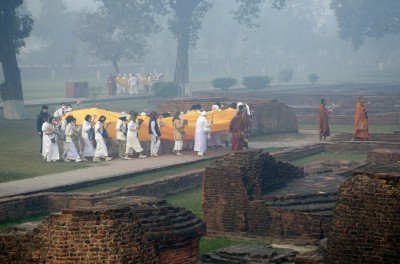
Nauka Vihar
Some quick example text to build on the card title and make up the bulk of the card's content.
Go somewhere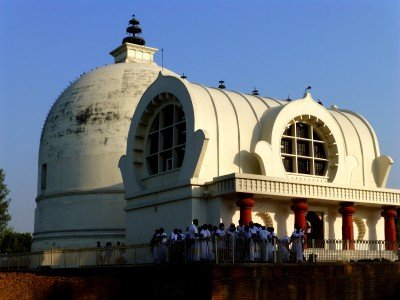
Parinirvana Stupa
Some quick example text to build on the card title and make up the bulk of the card's content.
Go somewhere
Raaj Darbaar
Some quick example text to build on the card title and make up the bulk of the card's content.
Go somewhere
Ramabhar Stupa
Some quick example text to build on the card title and make up the bulk of the card's content.
Go somewhere
Ruins of Ancient Kushinagar
Some quick example text to build on the card title and make up the bulk of the card's content.
Go somewhere
Wat Thai Temple
Some quick example text to build on the card title and make up the bulk of the card's content.
Go somewherein Other Cities