

Ruins of Ancient Kushinagar
The Archaeological Landscape: These ruins encompass the excavated foundations of numerous ancient monasteries (Viharas), smaller votive stupas, and shrines that once made up the thriving Buddhist city of Kushinagara. They date from the Mauryan period (3rd century BCE) through the Gupta period (4th t o 7th centuries CE) and later, showing continuous religious activity until the site was abandoned around the 12th Century. The ruins are protected and maintained by the ASI and are primarily located in the large park area surrounding the Mahaparinirvana Temple and Parinirvana Stupa, providing a tangible sense of the scale of the ancient city. They are critical historical evidence confirming the accounts of the Chinese pilgrims like Xuanzang.:
General information
-
Ideal Duration:
1-2 Hours:Place Type:
Archaeological Site, Heritage Site, History:Entry Fees:
Free Entry: The entry to the main park area with the ruins is generally Free, as it is an open archaeological park.
Guide Services: A local guide can enhance the experience by explaining the layout and history for a fee.
Read MoreFree Entry: The entry to the main park area with the ruins is generally Free, as it is an open archaeological park.
Guide Services: A local guide can enhance the experience by explaining the layout and history for a fee.
Kushinagar Museum Fee: A separate ticket must be purchased to see the artifacts excavated from these very ruins, which are now housed in the nearby museum. :Timing:
Regular Timings: 7:00 AM to 5:00 PM (Generally aligning with the main complex hours).
Ideal Visit Time: Morning (9:00 AM to 11:00 AM) after the first rush of pilgrims, or late afternoon (3:00 PM to 5:00 PM) when the light is softer and the h...Regular Timings: 7:00 AM to 5:00 PM (Generally aligning with the main complex hours).
Ideal Visit Time: Morning (9:00 AM to 11:00 AM) after the first rush of pilgrims, or late afternoon (3:00 PM to 5:00 PM) when the light is softer and the heat subsides.
Accessibility: Easily accessible, being right next to the main temple. :Special Events:
Archaeology Week/Heritage Days: Special guided tours and talks by ASI experts are sometimes organized during national heritage or archaeology events (November/December).
Cultural Heritage Festivals: Local and state governments occasionally h...Archaeology Week/Heritage Days: Special guided tours and talks by ASI experts are sometimes organized during national heritage or archaeology events (November/December).
Cultural Heritage Festivals: Local and state governments occasionally host cultural events celebrating the region's ancient history. :Best Photo Spots:
The Wall Layers: Capture close-up photographs of the exposed brick walls, showcasing the different layers and textures that represent different centuries of construction.
Geometric Patterns: The overhead view of the Vihara foundations create...The Wall Layers: Capture close-up photographs of the exposed brick walls, showcasing the different layers and textures that represent different centuries of construction.
Geometric Patterns: The overhead view of the Vihara foundations creates striking, geometric patterns in the landscape.
Contrasting Views: Photograph the ancient ruins in the foreground with the modern temples (like the Mahaparinirvana Temple) in the background. :Photo Gallery
Things To Do
-
Archaeological Walk: Take a slow, detailed walk through the preserved foundations, imagining the daily life of the monks who lived there centuries ago.
Historical Study: Engage with the ASI information boards to understand the different structural phases (Gupta, Kushan, etc. ).
Contemplation: Sit near the ruins to contemplate the theme of impermanence, central to Buddhist philosophy, as you view the remains of a once-great civilization.
Sketching/Drawing: The geometric patterns of the foundations are excellent subjects for sketching. :...Archaeological Walk: Take a slow, detailed walk through the preserved foundations, imagining the daily life of the monks who lived there centuries ago.
Historical Study: Engage with the ASI information boards to understand the different structural phases (Gupta, Kushan, etc. ).
Contemplation: Sit near the ruins to contemplate the theme of impermanence, central to Buddhist philosophy, as you view the remains of a once-great civilization.
Sketching/Drawing: The geometric patterns of the foundations are excellent subjects for sketching. :
Information
-
Why Famous:
Tangible History: Famous for providing physical proof of the ancient city of Kushinagara, a once-great capital and the site of the Buddha's Mahaparinirvana.
Continuity of Devotion: The multitude of smaller stupa ruins shows the sustained dev...Tangible History: Famous for providing physical proof of the ancient city of Kushinagara, a once-great capital and the site of the Buddha's Mahaparinirvana.
Continuity of Devotion: The multitude of smaller stupa ruins shows the sustained devotion of pilgrims and royalty from different eras, with offerings from centuries of Buddhist history.
Pilgrim Accounts Confirmation: The ruins match the descriptions left by ancient Chinese pilgrims, validating the historicity of the site. : -
Architecture:
Modular Indian Monastic Architecture: The ruins display the classic layout of a Buddhist monastic complex, centered on courtyards and shrines.
Key Features and Dimension: The foundations show the cellular structure of the Viharas (monk's qua...Modular Indian Monastic Architecture: The ruins display the classic layout of a Buddhist monastic complex, centered on courtyards and shrines.
Key Features and Dimension: The foundations show the cellular structure of the Viharas (monk's quarters) built around a central courtyard, often with a main shrine. The remains are primarily red brick walls and foundations, excavated up to a certain level. Dimension is not single but multiple interconnected structures spanning a large protected area. The walls show clear evidence of different phases of construction, rebuilding, and expansion over a millennium.
Use of Brick: The use of large, baked red bricks is characteristic of the construction materials of the time. : -
How To Reach:
By Air: Nearest airport is Gorakhpur (GOP), about 55 KMS away. Hire a private cab or use the frequent bus service to the main Kushinagar complex.
By Train: Nearest major railhead is Gorakhpur Junction (GKP), approx. 60 KMS away. Take a ta...By Air: Nearest airport is Gorakhpur (GOP), about 55 KMS away. Hire a private cab or use the frequent bus service to the main Kushinagar complex.
By Train: Nearest major railhead is Gorakhpur Junction (GKP), approx. 60 KMS away. Take a taxi, private car, or local bus.
By Road: Located on the main Buddha Marg, easily reached from the Kushinagar bus stand.
Local Transport: Walkable from the Parinirvana Stupa and Mahaparinirvana Temple. : -
Weather and Best Time to Visit:
Different Seasons: Winter (October to March) is the most comfortable for long walks around the open site. Monsoon makes the grounds lush but can be slightly muddy. Summer is challenging due to the lack of shade.
Different Parts of the Day:...Different Seasons: Winter (October to March) is the most comfortable for long walks around the open site. Monsoon makes the grounds lush but can be slightly muddy. Summer is challenging due to the lack of shade.
Different Parts of the Day: Mid-Morning is best to view the foundations clearly when the sun is not directly overhead. : -
Near Tourist Places:
Parinirvana Stupa (0. 1 KMS), Mahaparinirvana Temple (0. 1 KMS), Matha Kuar Shrine (0. 5 KMS), Kushinagar Museum (0. 5 KMS), Meditation Park (0. 5 KMS), Japanese Temple (0. 5 KMS), Wat Thai Temple (1 KMS), Ramabhar Stupa (2. 5 KMS), Chinese Temple (1 KMS), Burmese Temple (0.
8 KMS):
Tourism Tips
-
Health & Safety: Wear sturdy shoes, as the ground is uneven. Respect the archaeological boundaries and do not climb on the ancient walls.
Packing: Carry a good guidebook or utilize the ASI information boards. A magnifying glass can be help...Health & Safety: Wear sturdy shoes, as the ground is uneven. Respect the archaeological boundaries and do not climb on the ancient walls.
Packing: Carry a good guidebook or utilize the ASI information boards. A magnifying glass can be helpful for viewing fine details in the bricks.
Accommodation: Plenty of options available in the town, all within short walking distance.
Other Tips: Avoid littering. Appreciate the site as a delicate historical record, not merely rubble. Visit the Kushinagar Museum after to see the excavated artifacts. :
Reviews
FAQs
Kushinagar Itineray And Cost:-
Ruins of Ancient Kushinagar Tourism:-
Other Places In Kushinagar :-
Other States In India :-
Information about New and Updated Locations() of Uttar Pradesh Has Been Added :-
Card subtitle
Note:-
Information provided here in good Faith and for reference only.
Near Places
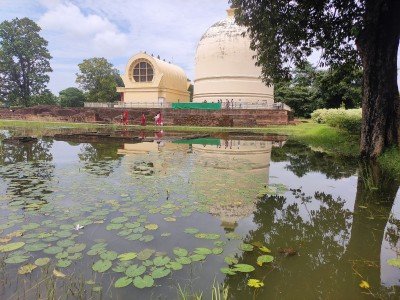
Meditation Park
Some quick example text to build on the card title and make up the bulk of the card's content.
Go somewhere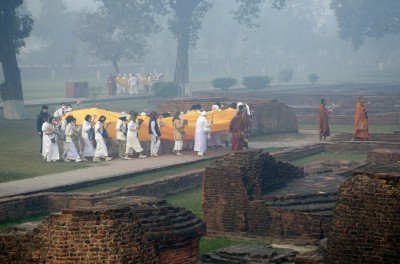
Nauka Vihar
Some quick example text to build on the card title and make up the bulk of the card's content.
Go somewhere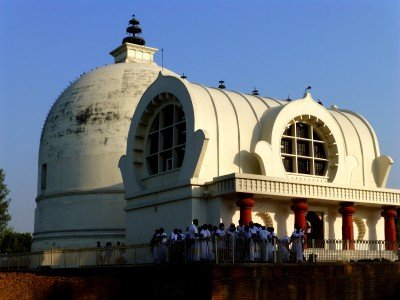
Parinirvana Stupa
Some quick example text to build on the card title and make up the bulk of the card's content.
Go somewhere
Raaj Darbaar
Some quick example text to build on the card title and make up the bulk of the card's content.
Go somewhere
Ramabhar Stupa
Some quick example text to build on the card title and make up the bulk of the card's content.
Go somewhere
Ruins of Ancient Kushinagar
Some quick example text to build on the card title and make up the bulk of the card's content.
Go somewhere
Wat Thai Temple
Some quick example text to build on the card title and make up the bulk of the card's content.
Go somewherein Other Cities