Buddha Relic Distribution Site
Historical and Ritual Significance: This site marks the spot where the ashes and mortal remains (sarira) of Lord Buddha were enshrined by the Malla dynasty after his cremation at the nearby Ramabhar Stupa. Following the Buddha's Mahaparinirvana, his relics were initially claimed entirely by the Mall as of Kushinagar. However, to prevent war, a Brahmin named Drona intervened and divided the relics into eight portions for distribution among the eight claimants (Drona Parinirvana story). This site is symbolically dedicated to the sanctity of the relics and the peaceful resolution of the dispute, representing the spread of Buddhism across the world. The current structure is a modern reconstruction based on archaeological findings and historical accounts, emphasizing the spiritual importance of the physical remains in Buddhist veneration.:
General information
-
Ideal Duration:
20 minutes to 30 minutes for viewing and reflection:Place Type:
Historical, Religious/PilgriEntry Fees:
Entry is Free for All Visitors: There are no mandatory entry charges to visit the Buddha Relic Distribution Site, making this historical and sacred place fully accessible to pilgrims and tourists. This aligns with the overall accessibility of the key Buddhist sites in Kushi...Entry is Free for All Visitors: There are no mandatory entry charges to visit the Buddha Relic Distribution Site, making this historical and sacred place fully accessible to pilgrims and tourists. This aligns with the overall accessibility of the key Buddhist sites in Kushinagar.
Camera Fees are Not Common: Unlike some larger archaeological sites, there is generally no separate fee for carrying still or video cameras for personal use, though commercial or professional photography might require permits from the Archaeological Survey of India (ASI).
Cost of Guide Services: Hiring a local guide to explain the complex historical context of the relic distribution and the different layers of the site is the main associated cost. Guide fees should be agreed upon in advance after polite negotiation.
Small Offerings Boxes: Visitors may find voluntary donation boxes for the site's upkeep, and any contribution is entirely optional and up to the visitor's discretion, generally used for the maintenance of the grounds and structure. :Timing:
Regular Timings: The site is generally open from Sunrise (around 6:00 AM) to Sunset (around 6:00 PM). As an open-air archaeological site and monument, it adheres to typical daylight operational hours for the Mahaparinirvana complex area.
Ideal ...Regular Timings: The site is generally open from Sunrise (around 6:00 AM) to Sunset (around 6:00 PM). As an open-air archaeological site and monument, it adheres to typical daylight operational hours for the Mahaparinirvana complex area.
Ideal Visit Time: The best time to visit is during the early morning (6:00 AM to 8:30 AM) when the light is soft, temperatures are cool, and the atmosphere is most serene, allowing for quiet reflection on the historical event. Avoid the harsh sun and heat of the midday hours.
Winter Season Timings: During the peak winter pilgrimage season (November to February), the opening hours might be slightly adjusted due to dense fog, which often requires a visit slightly later in the morning to enjoy clear visibility and warmth. :Special Events:
Annual Relic Ceremony (If Held): Though not always publicly advertised as a major event, some Buddhist groups may hold small annual ceremonies or special Pujas to commemorate the relic division on the anniversary of Mahaparinirvana, involving chanting and offerings.
...Annual Relic Ceremony (If Held): Though not always publicly advertised as a major event, some Buddhist groups may hold small annual ceremonies or special Pujas to commemorate the relic division on the anniversary of Mahaparinirvana, involving chanting and offerings.
Pilgrim Group Arrival and Processions: The arrival of large, organized pilgrim groups, particularly those from Southeast Asian countries like Thailand and Myanmar, can turn a quiet morning into a vibrant display of devotional rituals and colorful traditional attire, offering a cultural spectacle.
Dharma Lectures: Local monastic orders or visiting scholars occasionally hold impromptu Dharma talks or lectures near the site, providing profound insights into the historical and spiritual context of the relic distribution. :Best Photo Spots:
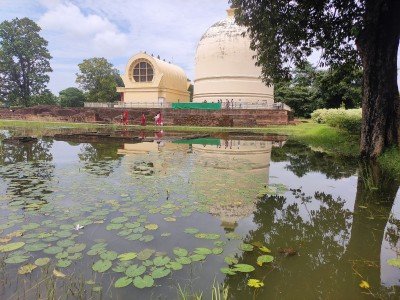
The Stupa against the Sky: Photograph the dome of the stupa from a distance, using a wide-angle lens to capture the entire structure framed by the open sky, emphasizing its solitary significance. The soft light of early morning is best for minimizing harsh shadows.
...The Stupa against the Sky: Photograph the dome of the stupa from a distance, using a wide-angle lens to capture the entire structure framed by the open sky, emphasizing its solitary significance. The soft light of early morning is best for minimizing harsh shadows.
The Foundation Details: Capture the texture and structure of the base and any visible ancient brickwork, using a close-up perspective to highlight the historical depth of the ruins beneath the modern reconstruction. This requires patience and a good eye for detail.
The Walkway Leading to the Stupa: A photo of the pathway or the open space leading up to the stupa, with a focus on symmetry and perspective, conveying the feeling of approaching a historical, sacred mound. Wait for a moment when the path is clear for a clean, compelling composition.
The Historical Plaque with Context: A clear, well-lit shot of the key informational or artistic plaque detailing the story, serving as an important visual memory of the site's narrative significance, especially useful for documentation and sharing the story later.
Group Photo with the Stupa: Due to the open space, this is an excellent spot for a group or family photo with the whole stupa clearly visible in the background, making a memorable record of the visit to this important historical point. :Photo Gallery
Things To Do
-
Read the Historical Plaque and Narrative: Spend time reading the provided historical and archaeological descriptions, focusing on the story of the relic division by Drona to fully grasp the site's significance and its role in the spread of Buddhism. Visualize the event as described.
Circumambulation and Prayer: Walk the Pradakshina Patha around the central structure in a clockwise direction, maintaining a reverent mindset. This act is a symbolic gesture of respect to the relics and the peaceful legacy they represent. Recite a short prayer or mantra during the walk.
Photographic Documentation of the Structure: Capture the modern structure, paying attention to its clean lines and simple symmetry. The site often offers excellent light in the early morning for architectural and atmospheric photog...Read the Historical Plaque and Narrative: Spend time reading the provided historical and archaeological descriptions, focusing on the story of the relic division by Drona to fully grasp the site's significance and its role in the spread of Buddhism. Visualize the event as described.
Circumambulation and Prayer: Walk the Pradakshina Patha around the central structure in a clockwise direction, maintaining a reverent mindset. This act is a symbolic gesture of respect to the relics and the peaceful legacy they represent. Recite a short prayer or mantra during the walk.
Photographic Documentation of the Structure: Capture the modern structure, paying attention to its clean lines and simple symmetry. The site often offers excellent light in the early morning for architectural and atmospheric photography. Use the open space to frame the stupa against the sky, emphasizing its isolation and importance.
Group Dhamma Talk or Recitation: If traveling with a group of pilgrims or fellow travelers, use the peaceful, open space for a brief group recitation from the Mahaparinibbana Sutta or a discussion on the importance of the relics in the Buddhist tradition.
Reflect on Mortal Impermanence: Use the site, which deals with the Buddha's physical remains, as a point of personal reflection on the Buddhist concept of impermanence (anicca) and the importance of the Dharma (teachings) over the physical form.
Observe the Surrounding Greenery: The site is often bordered by well-maintained lawns and trees; take a few moments to appreciate the peaceful, landscaped environment that provides a fitting setting for this historic event.
Collect Informational Brochures: Check if the site's office or nearby visitor center has any free, printed informational materials or maps, which often contain details not available on the main plaque. :
Information
-
Why Famous:
Marking the Birth of Stupa Veneration: This site is immensely famous as the location where the Buddha's relics were divided, an event that directly led to the construction of the first eight Stupas across Ancient India. It is a foundational site for the concept of Stupa wor...Marking the Birth of Stupa Veneration: This site is immensely famous as the location where the Buddha's relics were divided, an event that directly led to the construction of the first eight Stupas across Ancient India. It is a foundational site for the concept of Stupa worship in Buddhism, symbolizing the presence of the Enlightened One even after his physical demise.
Symbol of Peaceful Resolution: The event of Drona's intervention and the peaceful division of the relics is a key narrative, making the site famous as a powerful symbol of diplomacy and the ability of the Sangha to resolve disputes non-violently, a central tenet of Buddhist teachings.
Completing the Kushinagar Circuit: As one of the core four sites in Kushinagar (Mahaparinirvana Temple, Ramabhar Stupa, Matha Kuar Shrine, and this site), it is a mandatory stop for pilgrims tracing the Buddha's final days, providing context to the Mahaparinirvana event and the subsequent spread of the relics. : -
Architecture:
Modern Stupa and Symbolic Architecture: The site features a relatively modern, circular Stupa built over the historical area. The architecture is a simplified, contemporary interpretation of the ancient Stupa form, typically a hemispherical dome (anda) resting on a square o...Modern Stupa and Symbolic Architecture: The site features a relatively modern, circular Stupa built over the historical area. The architecture is a simplified, contemporary interpretation of the ancient Stupa form, typically a hemispherical dome (anda) resting on a square or circular base (medhi). The main structure is constructed from brick and stone, often covered in white plaster. Dimension is notable for its simplicity, being smaller and less ornate than the Mahaparinirvana Stupa. The emphasis is on the surrounding walls and interpretive plaques that narrate the relic distribution story, a key theme. Its design focuses on creating an open, contemplative space rather than housing a massive structure. The layout often includes a circumambulatory path (pradakshina patha). : -
How To Reach:
By Air: Kushinagar International Airport (KBK) is the closest, about 10-12 KMs away; hire a taxi from there. Alternatively, use Gorakhpur Airport (GOP), which is 50 KMs away. A pre-booked taxi or cab from GOP is the most convenient way to cover the distance in about 1. 5 ...By Air: Kushinagar International Airport (KBK) is the closest, about 10-12 KMs away; hire a taxi from there. Alternatively, use Gorakhpur Airport (GOP), which is 50 KMs away. A pre-booked taxi or cab from GOP is the most convenient way to cover the distance in about 1. 5 hours, driving along the highway to Kushinagar.
By Train: The primary rail access point is Gorakhpur Junction (GKP). From GKP, you can utilize various modes of road transport, including private cabs, shared taxis, or state buses, to reach the main Kushinagar pilgrimage area. The site is a short ride from the main bus station.
By Road: The site is well-marked and easily accessible via the main road network that connects Kushinagar with Gorakhpur (NH 27). Local buses and private vehicles can reach the vicinity of the temple complex. It's a key stop on the standard Buddhist circuit route.
By Local Transport: From the main market or bus station in Kushinagar, it is a very short and inexpensive ride via auto-rickshaw or cycle-rickshaw. The drivers are familiar with the "Relic Distribution Site" and the main cluster of monuments, ensuring a quick and easy transfer. : -
Weather and Best Time to Visit:
Different Types of Seasons: The Winter months (October to March) offer the most comfortable climate for walking and spending time outdoors at this exposed site, with daytime temperatures being mild. Summer visits must be strictly scheduled for early morning to avoid the ext...Different Types of Seasons: The Winter months (October to March) offer the most comfortable climate for walking and spending time outdoors at this exposed site, with daytime temperatures being mild. Summer visits must be strictly scheduled for early morning to avoid the extreme heat. Monsoon season makes the exposed brickwork and pathways slippery, requiring careful movement.
Different Parts of the Day: Early Morning is the ideal time to visit for historical reflection, clear photography, and avoiding large crowds that gather later in the day, especially from tour buses. The soft morning light is also excellent for illuminating the site's historical significance. : -
Near Tourist Places:
Mahaparinirvana Temple and Stupa (Approx. 0. 5 KM) Matha Kuar Shrine (Approx. 0. 1 KM) Ramabhar Stupa (Approx. 1.
5 KMs): Japanese Temple (Atago Isshin) (Approx. 1 KM) Lin Sun Chinese Temple (Approx. 1.
5 KMs): Wat Thai Kushinara Chalermaraj Temple (Approx. 1 KM) Kushinagar Museum (Government Buddha Museum) (Approx. 0. 5 KM) Bodhi Vriksh (Approx. 0. 5 KM) Meditation Park (Approx. 0. 5 KM) Padrauna (District Headquarters, Approx.
1
5 KMs):
Tourism Tips
-
Health & Safety: Wear a wide-brimmed hat and sunscreen if visiting during the late morning or afternoon, as the site is open and exposed. Carry water to stay hydrated. Be respectful of the boundaries of the archaeological area, as walking on certain ruins might be restrict...Health & Safety: Wear a wide-brimmed hat and sunscreen if visiting during the late morning or afternoon, as the site is open and exposed. Carry water to stay hydrated. Be respectful of the boundaries of the archaeological area, as walking on certain ruins might be restricted.
Packing: Bring a camera with a zoom lens to capture any distant details of the ruins. Wear comfortable walking shoes, as the ground is uneven at parts of the complex. Keep a small notebook to record your reflections on the historical narrative of the site.
Accommodation: Stay in the hotels or monasteries located on or near Buddha Marg for the closest access, allowing for early morning visits before the crowds arrive. This proximity maximizes the peaceful experience of the sacred area.
Other Different Topics Heading: Hiring a Guide is recommended here to understand the complex history of the relic division and the archaeological context, as the site's importance is more narrative than immediately visual. Always walk clockwise around the structure as a mark of respect. :
Reviews
FAQs
Kushinagar Itineray And Cost:-
Buddha Relic Distribution Site Tourism:-
Other Places In Kushinagar :-
Other States In India :-
Information about New and Updated Locations() of Uttar Pradesh Has Been Added :-
Card subtitle
Note:-
Information provided here in good Faith and for reference only.
Near Places
Meditation Park
Some quick example text to build on the card title and make up the bulk of the card's content.
Go somewhere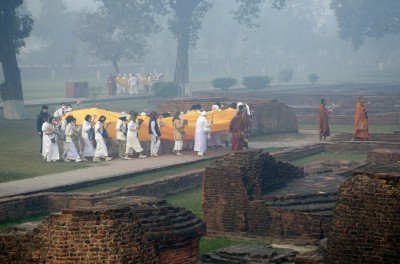
Nauka Vihar
Some quick example text to build on the card title and make up the bulk of the card's content.
Go somewhere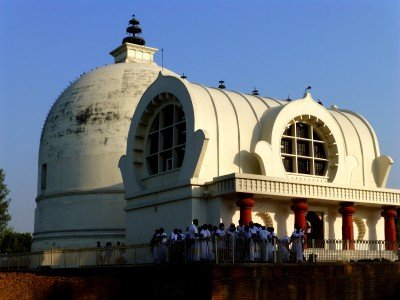
Parinirvana Stupa
Some quick example text to build on the card title and make up the bulk of the card's content.
Go somewhere
Raaj Darbaar
Some quick example text to build on the card title and make up the bulk of the card's content.
Go somewhere
Ramabhar Stupa
Some quick example text to build on the card title and make up the bulk of the card's content.
Go somewhere
Ruins of Ancient Kushinagar
Some quick example text to build on the card title and make up the bulk of the card's content.
Go somewhere
Wat Thai Temple
Some quick example text to build on the card title and make up the bulk of the card's content.
Go somewherein Other Cities