
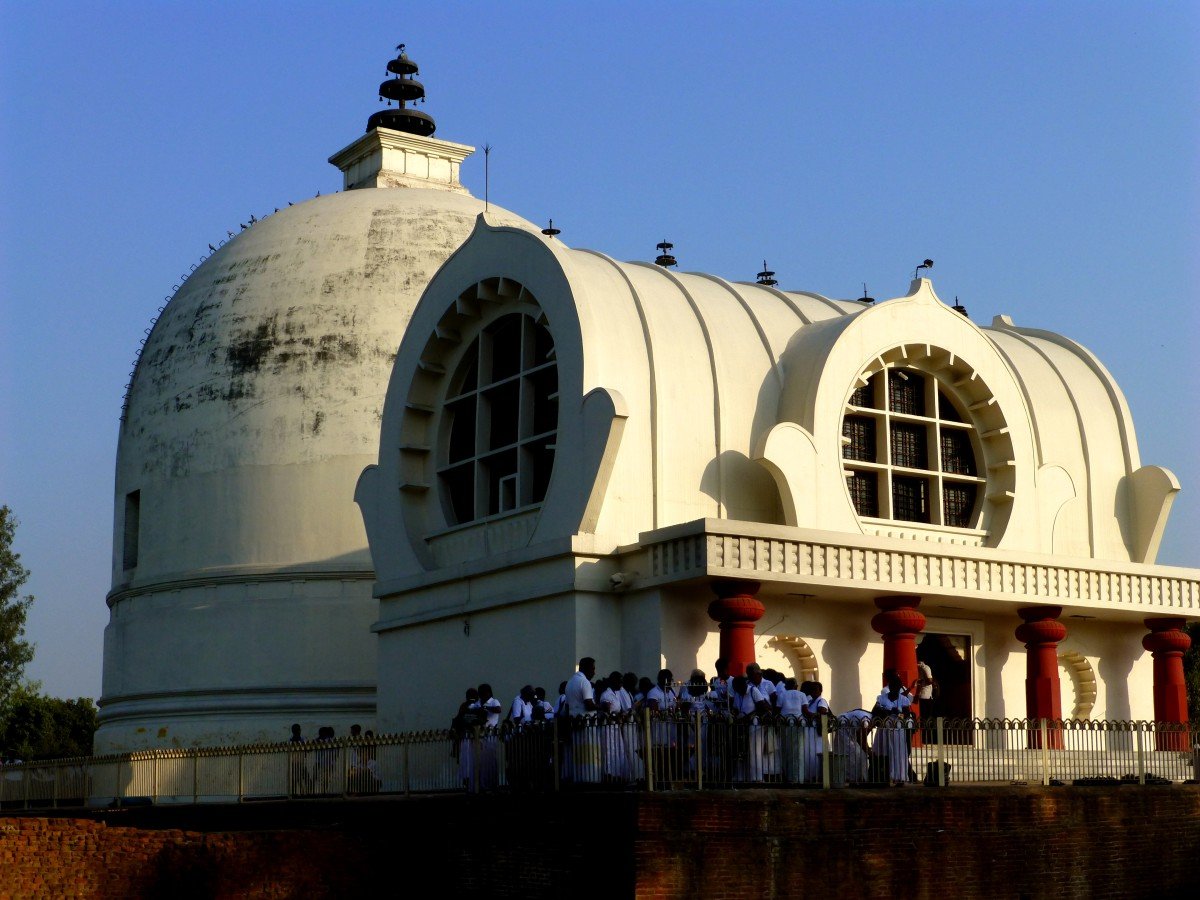
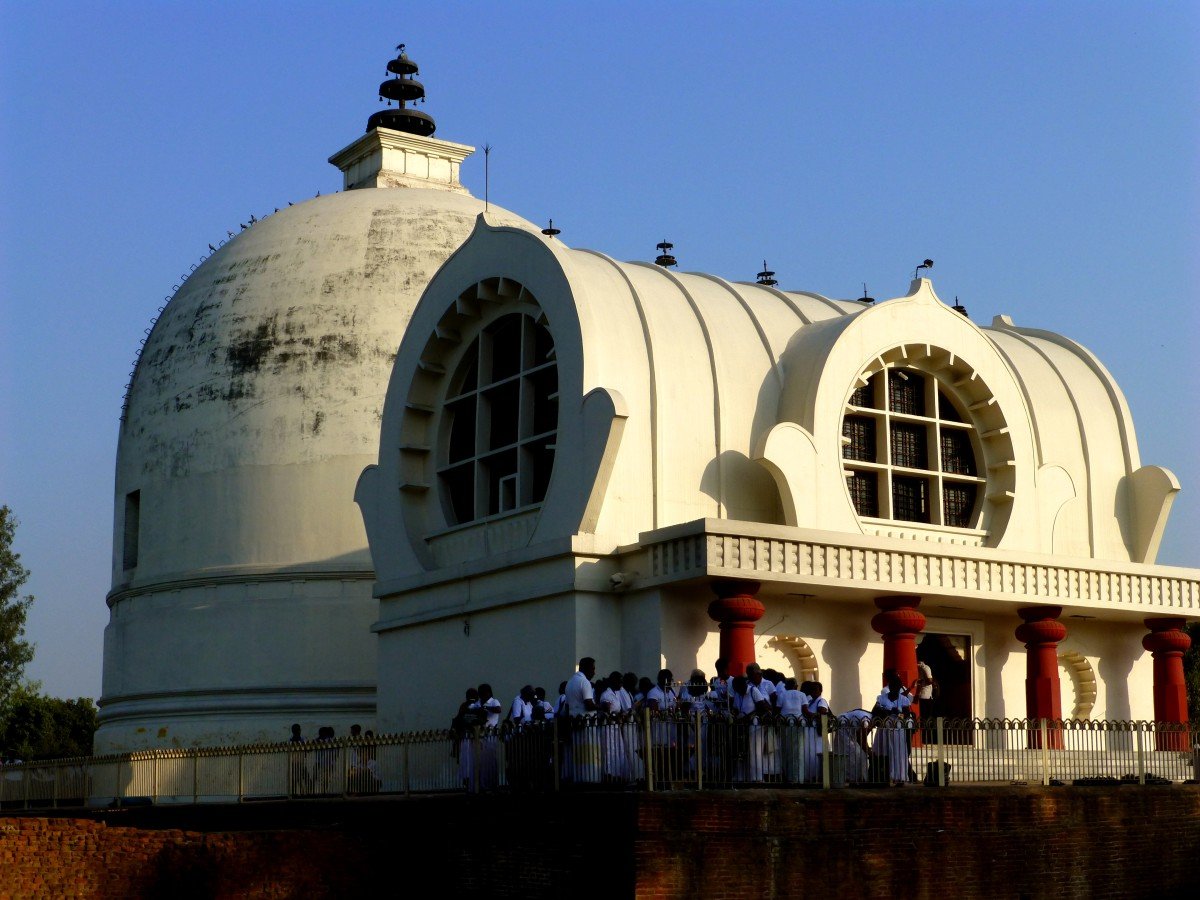
Parinirvana Stupa
Holiness of the Final Rest: The Parinirvana Stupa (also known as Nirvana Chaitya) is one of the most important structures in Kushinagar, situated immediately behind the Mahaparinirvana Temple. It is believed to have been constructed on the site where the Buddha's body was kept before cremation. The stupa itself is an ancient brick mound, first excavated by Alexander Cunningham's team in the late 19th Century. A crucial discovery made here was a copper plate inscription by a Buddhist monk named Haribala, which helped confirm the site as the ancient Kushinagara where the Buddha attained final liberation (Mahaparinirvana). The stupa structure, now restored, symbolizes the funerary monument and is a major focal point for circumambulation (parikrama) by Buddhist pilgrims globally.:
General information
-
Ideal Duration:
1-2 Hours:Place Type:
Pilgrimage Site, Stupa, Heritage Site:Entry Fees:
Generally Free Entry: There is no formal entry ticket to the stupa itself, which is part of the main protected archaeological area.
Camera Policy: Photography of the exterior is usually Free, but check for any restrictions on video or profes...Generally Free Entry: There is no formal entry ticket to the stupa itself, which is part of the main protected archaeological area.
Camera Policy: Photography of the exterior is usually Free, but check for any restrictions on video or professional equipment.
Donation Boxes: Voluntary donations are welcomed for the upkeep of the site.
Combined Visit: The stupa is part of the larger complex including the Mahaparinirvana Temple (often also Free to enter). :Timing:
Regular Timings: 7:00 AM to 5:00 PM (The main complex timings).
Ideal Visit Time: Early morning (Sunrise) for the most serene atmosphere and cool temperatures, or late afternoon for the Sunset view and the sight of monks performing evening r...Regular Timings: 7:00 AM to 5:00 PM (The main complex timings).
Ideal Visit Time: Early morning (Sunrise) for the most serene atmosphere and cool temperatures, or late afternoon for the Sunset view and the sight of monks performing evening rituals.
Crowd Management: Mid-day can be crowded, particularly during Winter peak season (November to February).
Seasonal Variations: Open daily throughout the year. :Special Events:
Buddha Purnima: The main festival in April/May sees massive processions, chanting, and special services.
Kagyu Monlam Chenmo (Buddhist Prayer Festival): An annual gathering of monks and devotees from the Himalayan region for collective praye...Buddha Purnima: The main festival in April/May sees massive processions, chanting, and special services.
Kagyu Monlam Chenmo (Buddhist Prayer Festival): An annual gathering of monks and devotees from the Himalayan region for collective prayers and teachings.
Anniversary of Mahaparinirvana: A day of deep spiritual significance and prayer. :Best Photo Spots:
The Grandeur of the Mound: Photograph the massive, imposing brick mound, especially from an angle that shows its height and scale against the sky.
Pilgrims in Prayer: Capture the reverence of the devotees performing Parikrama, particularly t...The Grandeur of the Mound: Photograph the massive, imposing brick mound, especially from an angle that shows its height and scale against the sky.
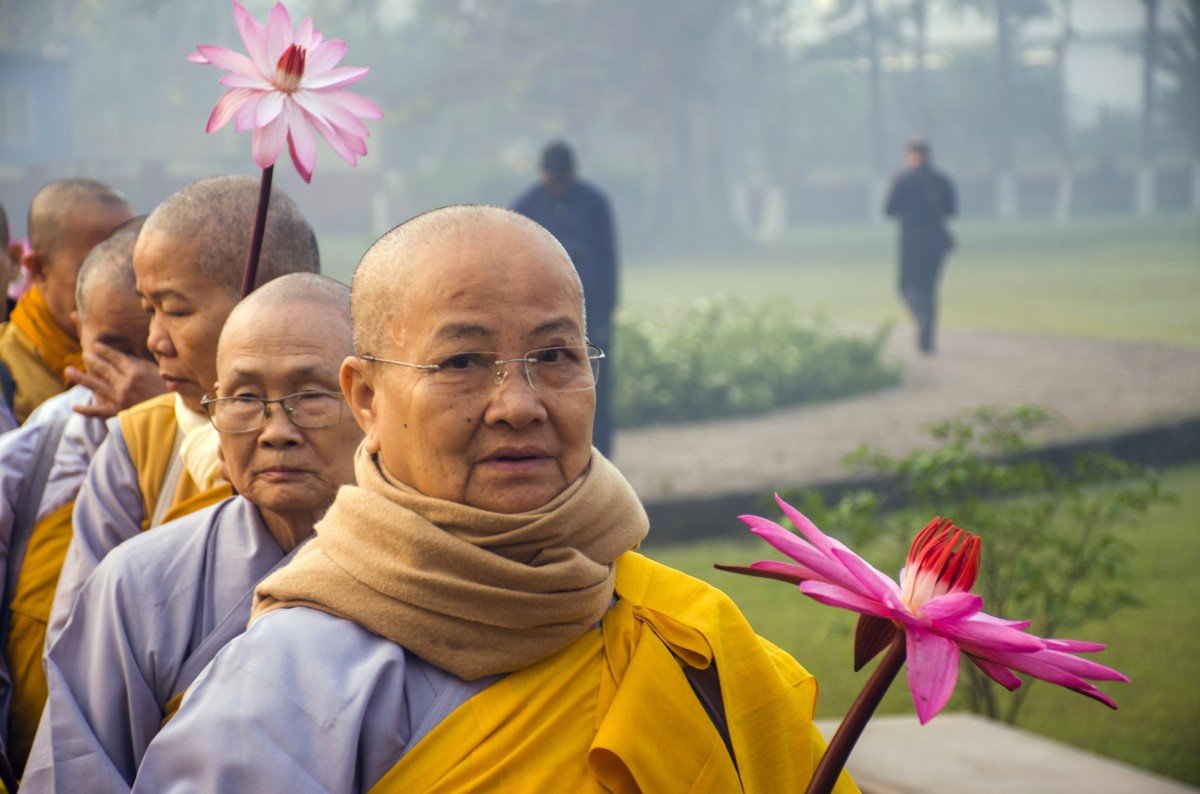
Pilgrims in Prayer: Capture the reverence of the devotees performing Parikrama, particularly those in traditional robes.
Sunset Silhouette: A popular spot to capture the stupa's silhouette against the vibrant colors of the Sunset. :Photo Gallery
Things To Do
-
Parikrama (Circumambulation): Perform the traditional clockwise walk around the stupa, a central ritual for Buddhists, focusing on mindful movement and devotion.
Offerings: Offer flowers, incense, or light candles at the stupa's base as a mark of respect and devotion.
Contemplation: Sit near the stupa, distinct from the temple crowds, to reflect on impermanence and the life of the Buddha.
Visit the Mahaparinirvana Temple: Combine the visit with the adjacent temple housing the reclining Buddha statue. :...Parikrama (Circumambulation): Perform the traditional clockwise walk around the stupa, a central ritual for Buddhists, focusing on mindful movement and devotion.
Offerings: Offer flowers, incense, or light candles at the stupa's base as a mark of respect and devotion.
Contemplation: Sit near the stupa, distinct from the temple crowds, to reflect on impermanence and the life of the Buddha.
Visit the Mahaparinirvana Temple: Combine the visit with the adjacent temple housing the reclining Buddha statue. :
Information
-
Why Famous:
Witness of Mahaparinirvana: Its paramount fame comes from marking the believed spot where the Buddha’s body rested before its cremation, an event that concluded the Buddha’s mortal life and marked his final Nirvana.
Archaeological Significan...Witness of Mahaparinirvana: Its paramount fame comes from marking the believed spot where the Buddha’s body rested before its cremation, an event that concluded the Buddha’s mortal life and marked his final Nirvana.
Archaeological Significance: The stupa's excavation and the discovery of the Haribala inscription in 1876 were pivotal in definitively establishing modern Kushinagar as the ancient site of Kushinagara.
Global Devotion: It attracts pilgrims from all schools of Buddhism and all corners of the world (Thailand, Japan, Sri Lanka, Tibet, etc. ) to pay homage to the Enlightened One. : -
Architecture:
Ancient Indian Buddhist Architecture: The Parinirvana Stupa exemplifies the classic ancient Buddhist stupa design, representing the Buddha's final resting place.
Key Features and Dimension: It is a large, circular brick structure, essentiall...Ancient Indian Buddhist Architecture: The Parinirvana Stupa exemplifies the classic ancient Buddhist stupa design, representing the Buddha's final resting place.
Key Features and Dimension: It is a large, circular brick structure, essentially a mound (Anda) on a round base. The stupa was found with fragments of a brick dome. It was restored to its present form, standing approximately 15. 4 meters high, atop a platform that it shares with the Mahaparinirvana Temple. The structure emphasizes simplicity and mass, characteristic of early stupas.
Historical Layers: The structure shows different periods of construction and expansion, from the original Mauryan or pre-Gupta base to later renovations under the Gupta Empire, reflecting the site's enduring religious significance over centuries. : -
How To Reach:
By Air: Nearest airport is Gorakhpur (GOP), about 55 KMS away. Pre-booked taxis are the most convenient option to cover the distance to the main complex.
By Train: Nearest major railhead is Gorakhpur Junction (GKP), approx. 60 KMS away. T...By Air: Nearest airport is Gorakhpur (GOP), about 55 KMS away. Pre-booked taxis are the most convenient option to cover the distance to the main complex.
By Train: Nearest major railhead is Gorakhpur Junction (GKP), approx. 60 KMS away. Take a taxi, private car, or local bus.
By Road: Kushinagar is connected by NH-27. Use public or private bus services. The stupa is well-signposted on the main Buddha Marg.
Local Transport: It is the central point of Kushinagar, easily walkable from most nearby temples and hotels. : -
Weather and Best Time to Visit:
Different Seasons: Winter (October to March) is perfect due to pleasant daytime temperatures for outdoor devotion and walking. Monsoon brings frequent rain but intense greenery. Summer is best avoided due to extreme heat.
Different Parts of th...Different Seasons: Winter (October to March) is perfect due to pleasant daytime temperatures for outdoor devotion and walking. Monsoon brings frequent rain but intense greenery. Summer is best avoided due to extreme heat.
Different Parts of the Day: Early Morning is highly recommended for meditation and peaceful viewing before the tour buses arrive. : -
Near Tourist Places:
Mahaparinirvana Temple (0. 1 KMS), Matha Kuar Shrine (0. 5 KMS), Japanese Temple (0. 5 KMS), Wat Thai Temple (1 KMS), Ruins of Ancient Kushinagar (0. 2 KMS), Meditation Park (0. 5 KMS), Kushinagar Museum (0. 5 KMS), Ramabhar Stupa (2. 5 KMS), Chinese Temple (1 KMS), Burmese Temple (0.
8 KMS):
Tourism Tips
-
Health & Safety: Be mindful of your steps on the ancient brick pathways. Carry sunscreen and a hat during the day.
Packing: Dress modestly, covering shoulders and knees, as it is a deeply revered religious site. Remove footwear before appr...Health & Safety: Be mindful of your steps on the ancient brick pathways. Carry sunscreen and a hat during the day.
Packing: Dress modestly, covering shoulders and knees, as it is a deeply revered religious site. Remove footwear before approaching the stupa platform.
Accommodation: Many hotels are within walking distance. Consider staying at the Thai or Japanese monasteries for a unique experience.
Other Tips: Observe silence in the vicinity. Do not touch or climb on the ancient structures. Use the main gate for entry/exit. :
Reviews
FAQs
Kushinagar Itineray And Cost:-
Parinirvana Stupa Tourism:-
Other Places In Kushinagar :-
Other States In India :-
Information about New and Updated Locations() of Uttar Pradesh Has Been Added :-
Card subtitle
Note:-
Information provided here in good Faith and for reference only.
Near Places
Meditation Park
Some quick example text to build on the card title and make up the bulk of the card's content.
Go somewhere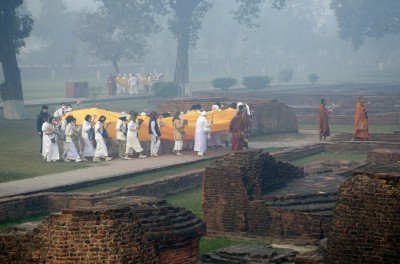
Nauka Vihar
Some quick example text to build on the card title and make up the bulk of the card's content.
Go somewhere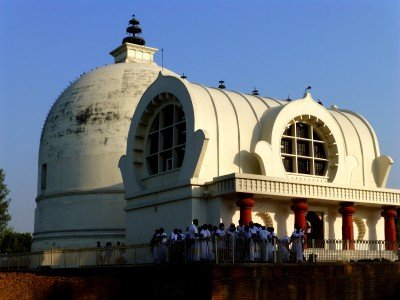
Parinirvana Stupa
Some quick example text to build on the card title and make up the bulk of the card's content.
Go somewhere
Raaj Darbaar
Some quick example text to build on the card title and make up the bulk of the card's content.
Go somewhere
Ramabhar Stupa
Some quick example text to build on the card title and make up the bulk of the card's content.
Go somewhere
Ruins of Ancient Kushinagar
Some quick example text to build on the card title and make up the bulk of the card's content.
Go somewhere
Wat Thai Temple
Some quick example text to build on the card title and make up the bulk of the card's content.
Go somewherein Other Cities