Chhatris
General information
-
Ideal Duration:
2-3 HoursPlace Type:
Historical Monument and Royal Heritage Site:Entry Fees:
Modest Entry Fee (Maintenance): There is a nominal Entry Fee charged by the Archaeological Survey of India (ASI) or the State Tourism Department, as the site is a protected historical monument. The fee is generally very modest (e. g. , Rs.25-Rs.50 for Indian citizens, and sligh...Modest Entry Fee (Maintenance): There is a nominal Entry Fee charged by the Archaeological Survey of India (ASI) or the State Tourism Department, as the site is a protected historical monument. The fee is generally very modest (e. g. , Rs.25-Rs.50 for Indian citizens, and slightly higher for foreign nationals) and is used for the preservation, maintenance, and upkeep of the marble structures and the extensive gardens.
Photography/Video Fee: Casual photography is typically included in the entry ticket. However, a small, separate Fee may be charged for the use of video cameras or if you plan to use large, professional camera equipment (tripods, external lights) that may require a commercial permit. Always check the ticket counter for the most current rules regarding photography and videography to avoid fines.
Guide Fees: A local, authorized guide is highly recommended to explain the complex history, the architectural nuances, and the symbolism of the memorials. Their service fee is separate from the entry fee, but it is a worthwhile investment for a deep, enriching visit to this historical site, and should be negotiated in advance.Timing:
Regular Timings: 8:30 AM to 6:
30 PM: The monument is typically open from the mid-morning to the late evening hours. It is best to avoid going when it is getting completely dark, as the interiors and pathways can be poorly lit.Regular Timings: 8:30 AM to 6:
30 PM: The monument is typically open from the mid-morning to the late evening hours. It is best to avoid going when it is getting completely dark, as the interiors and pathways can be poorly lit.
Ideal Visit Time: The most popular and photogenic time is the late afternoon (4:00 PM to 6:30 PM) to catch the stunning golden hour light on the white marble. The early morning is also excellent for quiet contemplation and capturing the structures reflected in the central pool before the crowds arrive.
Weekly Off/Holiday: The site is generally open seven days a week, but always check for any government holidays or maintenance closures before planning your visit. Mondays are often a maintenance day for some monuments in India, so it's best to confirm.Special Events:
Scindia Family Memorial Days: The most significant special events are the private memorial ceremonies held by the descendants of the Scindia family or their affiliated trusts on the death anniversaries (Punyatithi) of the rulers commemorated at the Chhatris. These events, t...Scindia Family Memorial Days: The most significant special events are the private memorial ceremonies held by the descendants of the Scindia family or their affiliated trusts on the death anniversaries (Punyatithi) of the rulers commemorated at the Chhatris. These events, though often private, involve grand ritual prayers, floral tributes, and a coming together of the family and local dignitaries, highlighting the site's enduring significance as a living memorial. Local visitors may witness the elaborate floral decoration and the presence of political figures.
Local Heritage and Culture Festivals: The site often serves as a beautiful backdrop for local government-organized cultural events or heritage festivals, typically held during the cooler months of November to February. These events often feature classical music and dance performances, with the majestic marble cenotaphs illuminated at night, creating an ethereal and highly special atmosphere that showcases the region's art and culture, transforming the memorial into a vibrant cultural hub.Best Photo Spots:
The Symmetrical Reflection Shot: The absolute best shot is from the front of the central water channel/pool, positioned to capture the perfect, symmetrical reflection of the two main facing Chhatris in the still water. This shot beautifully emphasizes the architectural symm...The Symmetrical Reflection Shot: The absolute best shot is from the front of the central water channel/pool, positioned to capture the perfect, symmetrical reflection of the two main facing Chhatris in the still water. This shot beautifully emphasizes the architectural symmetry and the serene setting. The best time is the early morning (8:00 AM to 10:00 AM) on a clear, windless day.
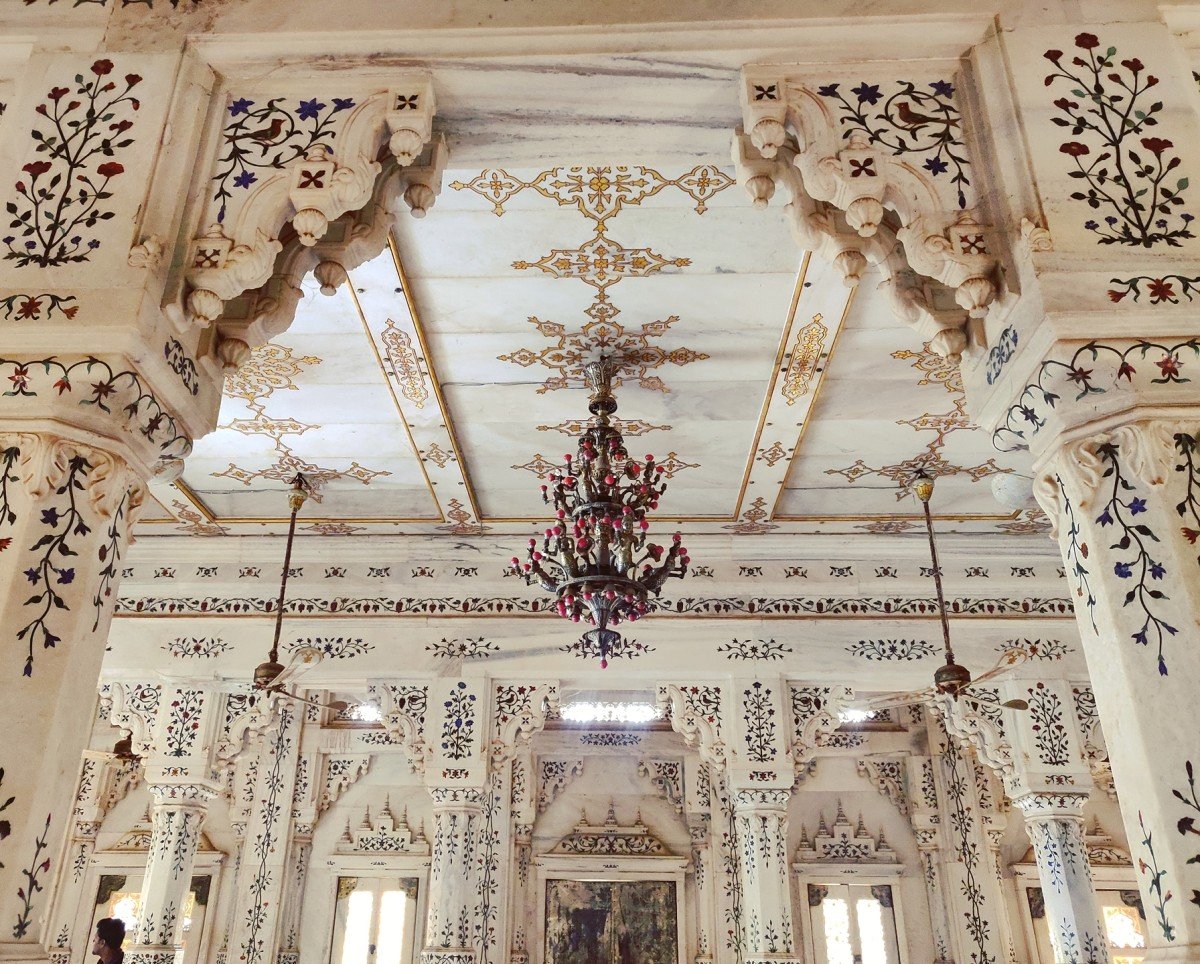
The Jali Work and Light Patterns: Focus on the intricate white marble lattice screens (jali work) and the beautiful patterns of light and shadow they cast inside the chambers. This close-up shot requires a slightly shaded or diffused light, best achieved during the mid-morning hours or on a soft, cloudy day, to highlight the delicate craftsmanship.
The Mughal Garden Frame: Using the manicured lawns, tall trees, and the formal pathways of the Mughal Garden as a frame for the white marble monuments provides a contextual shot that emphasizes the scale and the planned nature of the entire complex. This shot is best taken from one of the corners of the garden, allowing the green grass to contrast dramatically with the white marble.Photo Gallery
Things To Do
-
Architectural Photography and Study: Dedicate a significant amount of time to photographing and closely studying the intricate architecture, particularly the white marble jali work, the ornate arches, and the towering domes. Focus on capturing the symmetry of the facing cenotaphs and their reflection in the central pool of water. This is an essential activity for architecture enthusiasts.
Strolling through the Mughal Garden: Take a long, leisurely walk through the formal, well-manicured Mughal Garden that surrounds the cenotaphs. This peaceful activity allows visitors to appreciate the garden's symmetry, the seasonal flower beds, and the strategic positioning of the chhatris within the landscape. The garden is ideal for relaxation and quiet contemplation.
Observing the Memorial Rituals: If po...Architectural Photography and Study: Dedicate a significant amount of time to photographing and closely studying the intricate architecture, particularly the white marble jali work, the ornate arches, and the towering domes. Focus on capturing the symmetry of the facing cenotaphs and their reflection in the central pool of water. This is an essential activity for architecture enthusiasts.
Strolling through the Mughal Garden: Take a long, leisurely walk through the formal, well-manicured Mughal Garden that surrounds the cenotaphs. This peaceful activity allows visitors to appreciate the garden's symmetry, the seasonal flower beds, and the strategic positioning of the chhatris within the landscape. The garden is ideal for relaxation and quiet contemplation.
Observing the Memorial Rituals: If possible, observe the caretakers or family members offering simple homage, such as flowers or incense, at the base of the cenotaphs. This is a quiet, respectful activity that provides insight into the memorial and spiritual significance of the site for the Scindia family and their supporters.
Visiting the Subsidiary Temple: Within the complex, there is a small, functional Hindu temple. Spend a few moments here to offer a prayer, appreciating the religious fusion where a place of memorial is directly integrated with a place of active worship. This highlights the Hindu architectural tradition of linking sacred and royal spaces.
Sunset Viewing and Reflection: Position yourself near the central pool of water at the time of sunset to witness the spectacular sight of the monuments being bathed in golden light and casting long, dramatic shadows. The pool also offers a perfect, still reflection of the sky and the structures, creating a double-image effect that is highly photogenic and profoundly serene.
Historical Reading and Research: Carry a book or use a guide to read about the lives and legacies of Madhav Rao Scindia I and Maharani Sakhya Raje Scindia. Understanding the history of the individuals commemorated here deeply enhances the experience of visiting their majestic memorials, transforming the cenotaphs from mere monuments into powerful historical narratives.
Exploring the Sakhya Sagar Lake Bank: As the Chhatris are on the lake's bank, take a short walk along the water's edge to appreciate the natural setting. This provides a different perspective of the cenotaphs, often through the trees, and allows for the observation of local birdlife that frequents the lake.
Information
-
Why Famous:
A Testament to the Scindia Legacy: The Chhatris are famous as the paramount symbol of the Scindia dynasty's powerful and enduring legacy in Central India. As the final memorial ground for some of the most prominent rulers, including Madhav Rao Scindia I and his mother, they...A Testament to the Scindia Legacy: The Chhatris are famous as the paramount symbol of the Scindia dynasty's powerful and enduring legacy in Central India. As the final memorial ground for some of the most prominent rulers, including Madhav Rao Scindia I and his mother, they represent the architectural and political zenith of the Gwalior princely state, which used Shivpuri as its cool summer capital. This connection to a major ruling house makes the site historically famous across India.
Finest Blend of Indo-Mughal Architecture: The complex is renowned among architectural historians for its seamless, beautiful fusion of Mughal and Hindu architectural styles. The delicate white marble jali work, the symmetrical gardens, and the vibrant colours of the interior frescoes combine to create a unique aesthetic that exemplifies the cultural synthesis achieved in Central Indian courtly art, making it a famous masterpiece of hybrid Indian architecture.
The Picturesque Setting by Sakhya Sagar Lake: The breathtaking location of the cenotaphs, set in a meticulously maintained Mughal Garden on the banks of the expansive Sakhya Sagar Lake, is a major source of their fame. This sublime setting enhances the monumental beauty of the marble structures, offering visitors a picturesque, serene, and almost ethereal experience that combines human artistry with natural beauty. This scenic appeal is a major draw for tourists and cinematographers.
Symbolism of the Facing Cenotaphs: The unique feature of the two main chhatris—that of the Maharaja and the Maharani—standing perfectly facing each other across the pool, is a famous and moving symbol of familial love, respect, and eternal devotion. This poignant arrangement adds a human, emotional layer to the grand monuments, making the site famous not just for its architecture but also for its profound underlying cultural narrative of respect for the ancestors. -
Architecture:
Indo-Mughal and Hindu Synthesis Architecture: The architecture of the Chhatris is a brilliant example of a syncretic style, blending the formal symmetry and delicate ornamentation of Mughal architecture with the vibrant sculptural narrative and domed structures of Hindu temp...Indo-Mughal and Hindu Synthesis Architecture: The architecture of the Chhatris is a brilliant example of a syncretic style, blending the formal symmetry and delicate ornamentation of Mughal architecture with the vibrant sculptural narrative and domed structures of Hindu temple architecture.
Dimension: The primary cenotaphs are substantial structures, standing on raised marble platforms, with the central chamber housing a symbolic representation of the deceased. The base of the platform is approximately 15x15 meters for the main cenotaphs, with a towering roof or dome that can reach up to 20 meters in height. The entire complex, including the garden, spans several acres.
White Marble and Jali Work: The chhatris are constructed primarily using pristine white marble, sourced from the famous quarries of Rajasthan, lending them a luminous, majestic quality. A distinctive feature is the incredibly intricate marble lattice screens (jali work) that enclose the central area, allowing light and air to filter through in beautiful patterns. These screens feature delicate geometric, floral, and mythological motifs, showcasing the high level of craftsmanship.
Domes, Arches, and Pillars: The structures feature a blend of classic Mughal arched gateways and ornate, fluted domes, often topped with a kalash (pinnacle). Inside, the ceilings are often highly decorative, featuring vibrant frescoes and detailed plasterwork. The use of multiple decorative pillars (chhatri is the word for a canopy/umbrella, which is the structural core of the design) is a hallmark of the structure's elegance. -
How To Reach:
By Air: The nearest major airport is Gwalior Airport (GWL), about 120 KMS away. From the airport, hire a pre-paid taxi to the Chhatris in Shivpuri. The taxi ride takes approximately 3 hours via NH 46. The site is a well-known landmark and easy to find once in the city.By Air: The nearest major airport is Gwalior Airport (GWL), about 120 KMS away. From the airport, hire a pre-paid taxi to the Chhatris in Shivpuri. The taxi ride takes approximately 3 hours via NH 46. The site is a well-known landmark and easy to find once in the city.
By Train: The nearest major railway junction is Jhansi (JHS), about 95 KMS away, offering excellent connectivity. From Jhansi, take a bus or hire a taxi to Shivpuri city. The local Shivpuri Railway Station (SVPI) has limited connectivity. From the main Shivpuri Bus Stand or station, the Chhatris are a short, easily accessible journey.
By Road: Shivpuri is well-connected by National Highways. The Chhatris are located just off the main road, on the banks of the Sakhya Sagar Lake, about 4 KMS from the city center. Regular auto-rickshaws and taxis can easily drop you at the entrance gate. If driving, follow the signboards for Sakhya Sagar Lake or the Scindia Cenotaphs.
By Local Transport: From anywhere in Shivpuri city, the most practical way to reach is by a local auto-rickshaw or taxi. The destination is famous, so all drivers know the location. It is advisable to hire an auto-rickshaw for a round trip with a waiting period, as the site is perfect for a multi-hour exploration. The ride from the center should not take more than 10-15 minutes. -
Weather and Best Time to Visit:
Winter Season (Most Pleasant): The months of October to March are the ideal time to visit. The cool, pleasant weather (10°C to 28°C) is perfect for a leisurely walk in the extensive gardens and for spending several hours studying the architecture in comfort.Winter Season (Most Pleasant): The months of October to March are the ideal time to visit. The cool, pleasant weather (10°C to 28°C) is perfect for a leisurely walk in the extensive gardens and for spending several hours studying the architecture in comfort.
Post-Monsoon (Lush Gardens): September and October are beautiful months, as the Mughal Garden is at its most vibrant and lush after the rains, providing a stunning green contrast to the white marble structures, which is highly photogenic.
Summer Season (Avoid Midday Heat): The hot months of April to June are harsh. Visits should be restricted to the early morning (8:30 AM to 10:30 AM) or late afternoon (4:30 PM to 6:30 PM) to avoid the intense sun and heat, which can be particularly reflective off the marble. Different Parts of the Day Late Afternoon/Sunset is best for the spectacular golden light on the marble and the serene reflections. Early Morning is best for solitude, perfect symmetry in the reflection pool, and a cooler climate. Midday offers the sharpest light for detail but is the hottest time of day. -
Near Tourist Places:
Sakhya Sagar Lake (0. 5 KMS) - Boating and Views, Madhav National Park Gate (3 KMS) - Wildlife Safari, Madhav Vilas Palace (5 KMS) - Heritage Building, Banganga Temple (4 KMS) - Ancient Temple, Tatya Tope Memorial (5 KMS) - Historical Site, Bhadaiya Kund (8 KMS) - Natural Spring, Bhoora Khon Waterfall (15 KMS) - Seasonal Cascade, George Castle (20 KMS inside MNP) - Historical Viewpoint, Survaya Ki Garhi (10 KMS) - Ancient Fortress, Narwar Fort (50 KMS) - Historical Fortress.
Tourism Tips
-
Health & Safety:
Slippery Marble: Be cautious when walking on the polished marble floors and steps, especially when wet or in sandals, as the surface can be extremely slippery. Do not climb on the delicate marble lattice screens (jali).
...Health & Safety:
Slippery Marble: Be cautious when walking on the polished marble floors and steps, especially when wet or in sandals, as the surface can be extremely slippery. Do not climb on the delicate marble lattice screens (jali).
Packing:
Sun Protection and Comfort: Carry sunglasses to deal with the bright reflection from the white marble, and a hat or cap. Wear comfortable footwear, as the gardens involve a significant amount of walking. Carry a water bottle, as the monument's size means a lot of time is spent outdoors.
Accommodation:
Stay in Shivpuri City: The best and most convenient accommodation is available in Shivpuri city. For an excellent experience, the MPSTDC resort near Sakhya Sagar Lake is very close to the Chhatris and offers great views and hospitality.
Other Different Topics Heading:
Respect for Memorials: Treat the site with profound respect; remember that these are memorials to the dead. Maintain silence and respectful behaviour within the structures.
Hire a Guide: Strongly consider hiring a local, approved guide at the entrance to fully appreciate the complex history and the intricate architectural details that are often overlooked.
Photography Etiquette: Be discreet and respectful when photographing; avoid using flash inside the structures as it may damage the preserved artwork or disturb other visitors.
Reviews
FAQs
Shivpuri Itineray And Cost:-
Other Places In Shivpuri :-
Other States In India :-
Information about New and Updated Locations() of Madhya Pradesh Has Been Added :-
Card subtitle
Note:-
Information provided here in good Faith and for reference only.
Near Places

3 River Bridge
Some quick example text to build on the card title and make up the bulk of the card's content.
Go somewhere
Ater Fort
Some quick example text to build on the card title and make up the bulk of the card's content.
Go somewhere
Bada Talaab Khaniyadhana
Some quick example text to build on the card title and make up the bulk of the card's content.
Go somewhere
Banganga Temple
Some quick example text to build on the card title and make up the bulk of the card's content.
Go somewhere
Bhadaiya Kund
Some quick example text to build on the card title and make up the bulk of the card's content.
Go somewhere
Bhomia Baba Temple
Some quick example text to build on the card title and make up the bulk of the card's content.
Go somewhere
Bhoora Khon Waterfall
Some quick example text to build on the card title and make up the bulk of the card's content.
Go somewhere
Chandphata Lake
Some quick example text to build on the card title and make up the bulk of the card's content.
Go somewhere
Chhatris of Scindia Dynasty
Some quick example text to build on the card title and make up the bulk of the card's content.
Go somewhere
Chhatris
Some quick example text to build on the card title and make up the bulk of the card's content.
Go somewhere
Dongar Waterfall
Some quick example text to build on the card title and make up the bulk of the card's content.
Go somewhere
George Castle
Some quick example text to build on the card title and make up the bulk of the card's content.
Go somewhere
Jadhav Sagar Lake
Some quick example text to build on the card title and make up the bulk of the card's content.
Go somewhere
Karera Fort
Some quick example text to build on the card title and make up the bulk of the card's content.
Go somewhere
Karera Wildlife Sanctuary
Some quick example text to build on the card title and make up the bulk of the card's content.
Go somewhere
Khokai Math
Some quick example text to build on the card title and make up the bulk of the card's content.
Go somewherein Other Cities