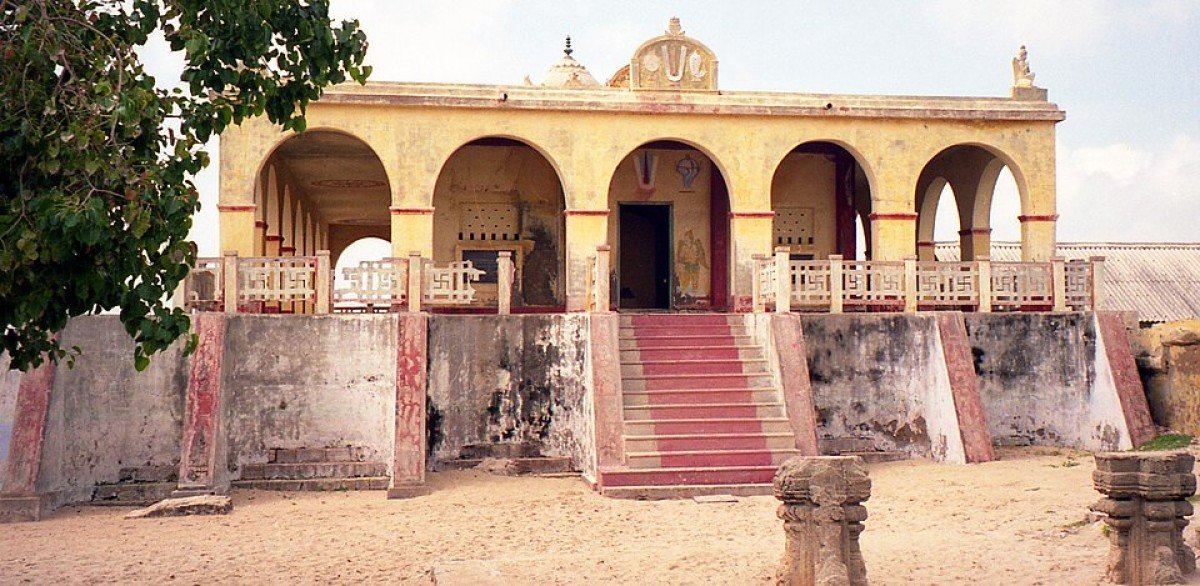
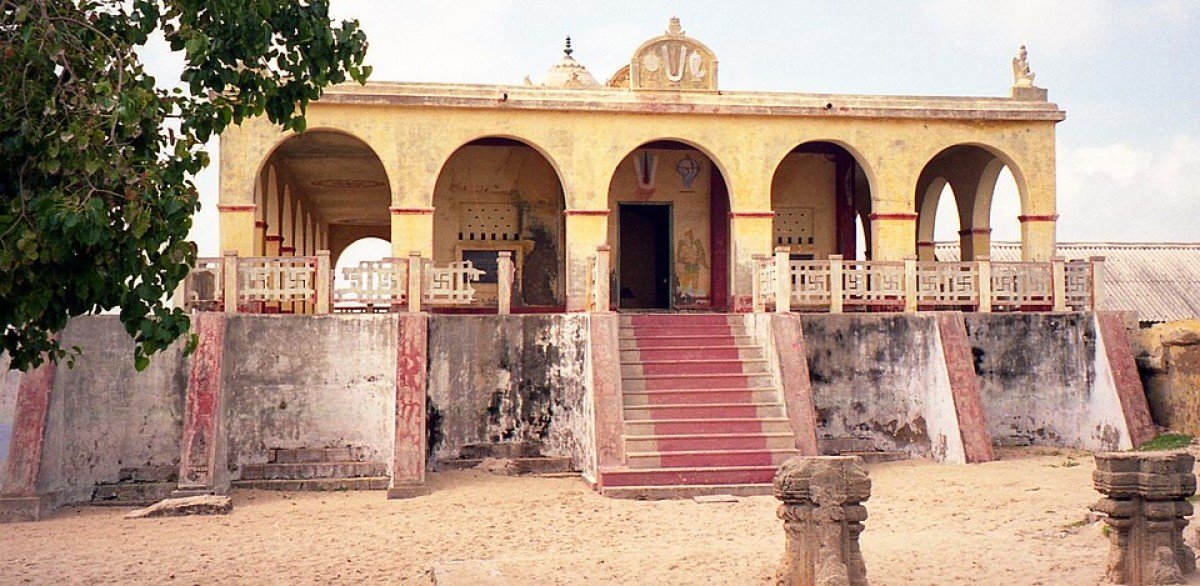
Kothandaramaswamy Temple
General information
-
Ideal Duration:
1-2 HoursPlace Type:
Temple, Pilgrimage Site, Historical SiteEntry Fees:
Free Entry and Paid Services: Entry to the Kothandaramaswamy Temple itself is Free for all devotees and tourists. There are no mandatory tickets or entry fees to access the main shrine or the immediate temple complex.
Voluntary Donations and Ri...Free Entry and Paid Services: Entry to the Kothandaramaswamy Temple itself is Free for all devotees and tourists. There are no mandatory tickets or entry fees to access the main shrine or the immediate temple complex.
Voluntary Donations and Ritual Charges: While entry is free, visitors are encouraged to make voluntary cash donations (Kanikkai) for the upkeep of the temple. Additionally, fees are charged for specific, optional Pooja (worship) rituals, such as Archana (prayers for an individual), Abhishekam (ritual bathing of the idol), or special services offered by the priests. The cost for these services typically ranges from INR 10 to INR 100 or more, depending on the complexity of the ritual and the materials provided.
Photography Fees and Associated Costs: There may be a nominal fee charged for using a still camera or video camera inside certain parts of the temple complex, though enforcement can be variable. The main associated cost is the shared jeep or taxi fare to reach the temple from Rameswaram town, which is a significant and necessary expense due to the distance.
():Timing:
Regular Temple Timings: The temple generally operates in two main time slots, following the traditional South Indian temple practice. The morning session runs from approximately 6:00 AM to 1:00 PM. The temple then closes for a mid-day break and reopens for the evening sess...Regular Temple Timings: The temple generally operates in two main time slots, following the traditional South Indian temple practice. The morning session runs from approximately 6:00 AM to 1:00 PM. The temple then closes for a mid-day break and reopens for the evening session from around 3:00 PM to 6:00 PM or 7:00 PM. Timings are subject to change based on festivals or special Pooja schedules, so it is advisable to check locally before visiting, especially on Fridays.
Ideal Visit Time: The ideal time to visit is during the early morning slot, specifically between 6:00 AM and 8:00 AM. This period offers cooler weather, the opportunity to witness the morning Aarti ceremony, and the best light for photography, especially of the sunrise over the ocean. The evening slot after 4:00 PM is also recommended for the beautiful light and the serenity of the sunset, avoiding the intense heat of the Afternoon. The temple is less crowded during weekdays compared to Saturdays and Sundays.
():Special Events:
The Vibhishana Pattabhishekam Festival: The most significant special event, though not fixed to a specific month, is the celebration of the Vibhishana Pattabhishekam (Coronation) ceremony. This re-enactment is performed to commemorate the moment Lord Rama coronated Vibhisha...The Vibhishana Pattabhishekam Festival: The most significant special event, though not fixed to a specific month, is the celebration of the Vibhishana Pattabhishekam (Coronation) ceremony. This re-enactment is performed to commemorate the moment Lord Rama coronated Vibhishana. The temple comes alive with special Abhishekam ceremonies, elaborate decoration of the deities (known as Alangaram), and a grand procession. It draws a large number of devotees, featuring traditional South Indian music (Nadaswaram) and devotional singing.
Ram Navami Celebrations: The festival of Ram Navami (celebrated in the March/April month), marking the birth of Lord Rama, is also a major event. The temple organizes special Pooja ceremonies, Bhajans (devotional songs), and Pravachans (discourses) focused on the life and virtues of Lord Rama. The day is characterized by high spiritual fervor and community feasting (Annadanam), creating a vibrant and joyful atmosphere for all visitors.
():Best Photo Spots:
The Ocean Confluence Viewpoint: The point right outside the temple, where one can clearly see the distinct colors and wave patterns of the Gulf of Mannar and the Bay of Bengal merging, is the best photo spot. The vast, empty horizon and the sound of the waves create a drama...The Ocean Confluence Viewpoint: The point right outside the temple, where one can clearly see the distinct colors and wave patterns of the Gulf of Mannar and the Bay of Bengal merging, is the best photo spot. The vast, empty horizon and the sound of the waves create a dramatic backdrop.
Temple Against the Sea: The classic shot is capturing the ancient, stone structure of the Kothandaramaswamy Temple with the uninterrupted, blue sea stretching out behind it. This frame beautifully contrasts human history with natural grandeur and highlights the temple's remote location at the land's end, especially impactful during Sunrise or Sunset.
The Dhanushkodi Road Perspective: The long, scenic road (NH-87) leading towards the temple and Dhanushkodi, with the ocean visible on both sides, offers spectacular driving and photography opportunities. Capturing the road disappearing into the distance, framed by the sea, is a highly sought-after shot that symbolizes the journey's end. This spot also provides a unique vantage point of the temple from a distance.
():Photo Gallery
Things To Do
-
Spiritual Immersion and Worship:
Offer Prayers: Participate in the morning or evening Aarti (worship) to experience the temple’s profound spiritual atmosphere. Devotees often perform abhishekam (ritual bathing) and offer vastras (cloth) to the deities of Rama and Vibhishana.
Recite the Ramayana: Spend time meditating or reciting verses from the Ramayana in the peaceful surroundings, especially in the hall outside the Garbhagriha.
Exploring the Secluded Coastline and Dhanushkodi:
Witness the Ocean Confluence: Walk along the surrounding beach to observe the point where the Gulf of Mannar (calmer) meets the Bay of Bengal (rougher), a distinct geographical phenomenon.
Visit the Ghost Town: Take a sh...Spiritual Immersion and Worship:
Offer Prayers: Participate in the morning or evening Aarti (worship) to experience the temple’s profound spiritual atmosphere. Devotees often perform abhishekam (ritual bathing) and offer vastras (cloth) to the deities of Rama and Vibhishana.
Recite the Ramayana: Spend time meditating or reciting verses from the Ramayana in the peaceful surroundings, especially in the hall outside the Garbhagriha.
Exploring the Secluded Coastline and Dhanushkodi:
Witness the Ocean Confluence: Walk along the surrounding beach to observe the point where the Gulf of Mannar (calmer) meets the Bay of Bengal (rougher), a distinct geographical phenomenon.
Visit the Ghost Town: Take a shared taxi or jeep from the temple area further down the road to the ruins of Dhanushkodi town, a poignant and haunting historical experience. This requires separate transport and is a major, though nearby, activity.
Photography: Capture the unique view of the temple standing alone against the vast ocean backdrop, especially at sunrise or sunset.
Connecting with History and Local Culture:
Engage with Priests: Speak with the resident priests about the temple's history, the specific mythological tales associated with the Vibhishana episode, and the accounts of its survival during the 1964 cyclone. This offers a personalized and in-depth cultural experience.
Relaxation: The peaceful, uncrowded atmosphere of this secluded beach makes it an excellent spot for quiet reading, nature observation, or simply sitting by the shore, providing a complete contrast to the bustling city life of Rameswaram.
Try Local Snacks: Although fewer vendors are present than in the main town, look for local fishing village vendors near the temple for fresh coconut water and simple, authentic Tamil snacks, supporting the local economy.
Shell Collection: The beach is known for interesting seashells and corals washed ashore, making for a pleasant, leisurely activity, though large-scale collection is discouraged to protect the ecosystem.
Walk to Arichal Munai: The point where the land ends is a significant spot for photos and contemplation, marking the symbolic starting point of Rama Setu.
Meditate: Use the temple's tranquil and secluded location for a focused meditation session, absorbing the divine energy and sea breeze.
():
Information
-
Why Famous:
Mythological Nexus: The temple's primary fame rests on its explicit connection to the Ramayana. It is universally recognized as the site where Vibhishana was accepted by Lord Rama and given the title of future King of Lanka, a moment of great moral and strategic importance ...Mythological Nexus: The temple's primary fame rests on its explicit connection to the Ramayana. It is universally recognized as the site where Vibhishana was accepted by Lord Rama and given the title of future King of Lanka, a moment of great moral and strategic importance in the epic. The deities of Rama, Lakshmana, Sita, Hanuman, and Vibhishana are all installed together, symbolizing this crucial event. This tangible link to the revered epic makes it a powerful destination for Hindu devotees worldwide.
The 1964 Cyclone Miracle: A significant part of its modern fame is its survival of the catastrophic 1964 cyclone. As the sole structure left standing in the area of Dhanushkodi, it acquired a reputation for being divinely protected. This miraculous survival story draws tourists, historians, and devotees alike, keen to witness the structure that defied nature’s fury. The location at the confluence of two seas, combined with this story, creates a sense of profound spiritual energy.
Geographical Extremity and Scenic Beauty: The temple is famous for its location at Arichal Munai, the very tip of the Indian landmass from where Rama Setu is believed to begin. The breathtaking views of the converging oceans, the secluded beach, and the sense of standing at the edge of India contribute immensely to its fame as one of the most picturesque and geographically significant pilgrimage sites.
(): -
Architecture:
Dravidian Style and Simple Grandeur: The architecture of the Kothandaramaswamy Temple adheres to the traditional Dravidian style, characterized by its stone construction, mandapams (halls), and sanctum (Garbhagriha). However, unlike the colossal scale of the main Ramanathas...Dravidian Style and Simple Grandeur: The architecture of the Kothandaramaswamy Temple adheres to the traditional Dravidian style, characterized by its stone construction, mandapams (halls), and sanctum (Garbhagriha). However, unlike the colossal scale of the main Ramanathaswamy Temple, this shrine exhibits a more humble and ancient aesthetic, reflecting its isolated location and the time of its origin. The structure is built predominantly from local stone and features modest, yet intricately carved, pillars and minor gopurams (towers).
Cyclone-Resilient Construction and Dimension: The temple's resilience against the ferocious 1964 cyclone is a key architectural point. Its low-profile, sturdy construction, likely designed to withstand the coastal elements, allowed it to survive where the nearby town of Dhanushkodi was lost. The main shrine houses the idols of the central deities. While precise dimensions of the complex are not as widely documented as larger temples, the main temple courtyard is relatively compact. The shrine is positioned on a slightly elevated stone platform, protecting it from the high-tide sea. The outer walls are robust, and the overall design is functional, emphasizing the spiritual focus over grand ornamentation. The interior features painted panels and stone relief work depicting scenes from the Ramayana, particularly the story of Vibhishana's surrender, linking the structure directly to the mythology.
(): -
How To Reach:
By Air (Approx.
180 KMS): The nearest major airport is Madurai International Airport (IXM). From Madurai, one can hire a pre-paid taxi or take a government or private bus to Rameswaram (4-5 hours). Alternatively, one can fly to Tiruchirappalli (TRZ, ~250 KMS) or T...By Air (Approx.
180 KMS): The nearest major airport is Madurai International Airport (IXM). From Madurai, one can hire a pre-paid taxi or take a government or private bus to Rameswaram (4-5 hours). Alternatively, one can fly to Tiruchirappalli (TRZ, ~250 KMS) or Thoothukudi (TCR, ~190 KMS) and proceed by road or train.
By Train: Rameswaram Railway Station (RMM) is the terminal station connecting the island to the mainland. The station is well-connected to major cities like Chennai, Madurai, and Coimbatore. From Rameswaram station, hire an auto-rickshaw or taxi for the remaining ~13 KMS journey to the temple. Taking the train ride over the Pamban Bridge is an experience in itself.
By Road (From Rameswaram City): The temple is situated at the very end of NH-87, the road that leads to Dhanushkodi. The most common way to reach is by hiring a private taxi or, more economically, by taking a shared jeep/van from the Rameswaram city bus stand or near the Ramanathaswamy Temple. Local auto-rickshaws are also available but can be costly for a round trip. The road is scenic, with the ocean visible on both sides in parts.
By Local Transport: Within the island, local buses may operate towards Dhanushkodi up to a certain point, but the shared jeep/van service remains the most reliable and direct local transport option to reach the temple's location at Arichal Munai.
(): -
Weather and Best Time to Visit:
Different Types of Seasons:
Winter (October to March): This is the Best Time to Visit. The weather is pleasantly cool, with temperatures ranging from 20°C to 30°C, making sightseeing and coastal walks comfortable.
Read MoreDifferent Types of Seasons:
Winter (October to March): This is the Best Time to Visit. The weather is pleasantly cool, with temperatures ranging from 20°C to 30°C, making sightseeing and coastal walks comfortable.
Summer (April to June): This period is intensely hot and humid, with temperatures soaring past 35°C. It is not recommended due to the difficulty of prolonged outdoor activities.
Monsoon (July to September): This season brings moderate to heavy rainfall. While the landscape is lush, heavy rain can disrupt travel plans and limit access to the remote beach areas, though the bridge views are often dramatic.
Different Parts of the Day: Early Morning (6:00 AM - 9:00 AM) The ideal time. The cool air, the beautiful sunrise over the ocean, and the opportunity for a peaceful temple darshan before the crowds and heat build up. Late Afternoon/Evening (4:00 PM - 6:00 PM) The second-best time. The heat subsides, and the lighting is perfect for photography, especially capturing the stunning sunset views over the water, creating a tranquil atmosphere. Mid-Day (10:00 AM - 3:00 PM) This period should be avoided due to the scorching heat and intense sun.
():Near Tourist Places:
Dhanushkodi Ghost Town and Beach (2 KMS), Rama Setu (Adam's Bridge) Viewpoint (2 KMS), Villoondi Theertham (15 KMS), Pamban Bridge Viewing Point (20 KMS), A. P. J. Abdul Kalam National Memorial (18 KMS), Jada Theertham (10 KMS), Five Faced Hanuman Temple (14 KMS), Rama Theertham (13 KMS), Lakshmana Theertham (13 KMS), Ramanathaswamy Temple (13 KMS).
(Total 10 Places):Tourism Tips
-
Health & Safety:
Hydration: Carry ample drinking water, especially if visiting in the Summer or Mid-Day, as the remote location has limited shops.
Footwear: Wear comfortable sandals or floaters; you will nee...Health & Safety:
Hydration: Carry ample drinking water, especially if visiting in the Summer or Mid-Day, as the remote location has limited shops.
Footwear: Wear comfortable sandals or floaters; you will need to walk on the beach sand, and many temple areas require removing shoes.
Sun Protection: Use high-SPF sunscreen, sunglasses, and a hat or cap, as the coastal sun exposure is intense.
Packing:
Light Clothing: Pack light, breathable cotton clothing. For the temple, ensure you have modest attire (shoulders and knees covered) for both men and women.
Camera: Bring a good camera for the spectacular coastal scenery.
Basic First Aid: Carry basic medical supplies like antiseptic wipes and pain relievers, given the remote location.
Accommodation: Stay in Rameswaram town, as there are no viable accommodation options near the temple. Book hotels close to the Ramanathaswamy Temple or the bus stand for easy access to shared transport. Options range from budget dharamsalas to mid-range hotels.
Other Topics (Respect & Local Custom):
Respect the Ruins: If you proceed to nearby Dhanushkodi, respect the ruins and the history of the 1964 cyclone victims.
Photography Restriction: Be mindful of photography restrictions, especially within the temple's inner sanctum.
Shared Transport: For travel efficiency and cost-saving, utilize the shared jeep/van service to Dhanushkodi; confirm the return time with the driver.
():
Reviews
FAQs
Rameswaram Itineray And Cost:-
Kothandaramaswamy Temple Tourism:-
Other Places In Rameswaram :-
Other States In India :-
Information about New and Updated Locations() of Tamil Nadu Has Been Added :-
Card subtitle
Note:-
Information provided here in good Faith and for reference only.
Near Places
Agnitheertham
Some quick example text to build on the card title and make up the bulk of the card's content.
Go somewhere
Ariyaman Beach
Some quick example text to build on the card title and make up the bulk of the card's content.
Go somewhere
Badrakaliamman Temple
Some quick example text to build on the card title and make up the bulk of the card's content.
Go somewhere
Devipattinam Navagraha Temple
Some quick example text to build on the card title and make up the bulk of the card's content.
Go somewhere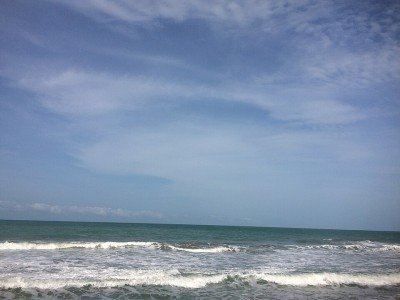
Dhanushkodi Beach & Ghost Town
Some quick example text to build on the card title and make up the bulk of the card's content.
Go somewhere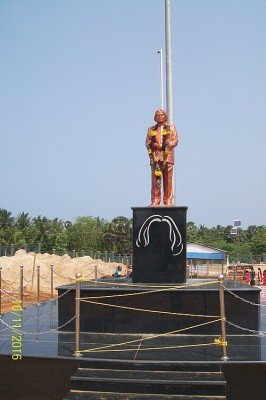
Dr. A.P.J. Abdul Kalam Memorial
Some quick example text to build on the card title and make up the bulk of the card's content.
Go somewhere
Dr. APJ Abdul Kalam's House
Some quick example text to build on the card title and make up the bulk of the card's content.
Go somewhere
Five Faced Hanuman Temple
Some quick example text to build on the card title and make up the bulk of the card's content.
Go somewhere
Gandhamathana Parvatham
Some quick example text to build on the card title and make up the bulk of the card's content.
Go somewhere
Jada Theertham
Some quick example text to build on the card title and make up the bulk of the card's content.
Go somewhere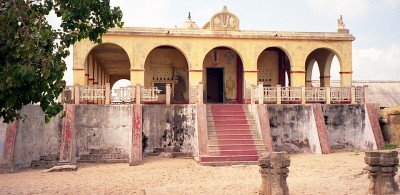
Kothandaramaswamy Temple
Some quick example text to build on the card title and make up the bulk of the card's content.
Go somewhere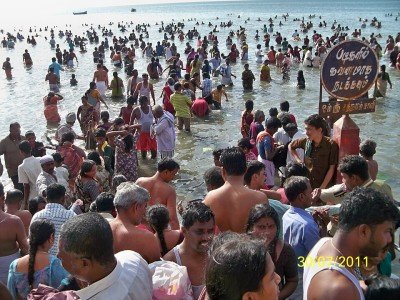
Kunthu Kal Beach
Some quick example text to build on the card title and make up the bulk of the card's content.
Go somewhere
Lakshmana Theertham
Some quick example text to build on the card title and make up the bulk of the card's content.
Go somewhere
Nambu Nayagiamman Temple
Some quick example text to build on the card title and make up the bulk of the card's content.
Go somewhere
Rama Setu
Some quick example text to build on the card title and make up the bulk of the card's content.
Go somewhere
Rama Theertham
Some quick example text to build on the card title and make up the bulk of the card's content.
Go somewherein Other Cities