
Raja Mahal
General information
-
Ideal Duration:
1. 5 - 2 HoursPlace Type:
Historical, Architecture, PalaceEntry Fees:
Indian Nationals: The entry fee for the Orchha Fort Complex, which includes the Raja Mahal and Jehangir Mahal, is approximately Rs.10 per person. Camera fees are separate and typically around Rs.25 for a still camera and Rs.250 for a video camera. This minimal fee makes the site...Indian Nationals: The entry fee for the Orchha Fort Complex, which includes the Raja Mahal and Jehangir Mahal, is approximately Rs.10 per person. Camera fees are separate and typically around Rs.25 for a still camera and Rs.250 for a video camera. This minimal fee makes the site highly accessible for domestic tourists.
Foreign Nationals: The entry fee for international visitors is significantly higher, typically around Rs.250 per person. This fee is often inclusive of the camera fee.
Conservation Levy and Usage: The fees collected are mandated by the Archaeological Survey of India (ASI) or the relevant state body and are directly used for the conservation, maintenance, and upkeep of the historical monuments within the complex, including the structural preservation and restoration of the delicate interior murals.
Timing:
Regular Timings: The Raja Mahal and the entire Orchha Fort Complex generally open at 9:00 AM and close at 5:00 PM daily, seven days a week. It is advisable to verify the closing time seasonally.
Ideal Visit Time: The best time to visit the ...Regular Timings: The Raja Mahal and the entire Orchha Fort Complex generally open at 9:00 AM and close at 5:00 PM daily, seven days a week. It is advisable to verify the closing time seasonally.
Ideal Visit Time: The best time to visit the palace is immediately upon opening at 9:00 AM or after 3:00 PM. The morning hours offer the best light for the exterior and allow you to explore the complex before the large tourist crowds arrive, ensuring a peaceful experience in the courtyards. The late afternoon provides excellent golden light for the exterior and views.
Avoiding Midday Heat: From 11:00 AM to 3:00 PM, especially during the summer and shoulder seasons (March to June), the sunlight is harsh and the heat in the exposed courtyards can be intense, making exploration less comfortable.
Special Events:
The Orchha Heritage Festival: While the main palace does not host daily events, it is a central venue during the annual Orchha Heritage Festival, typically held in the winter months (December-January). The courtyards are often used for classical music, dance, and folk perfo...The Orchha Heritage Festival: While the main palace does not host daily events, it is a central venue during the annual Orchha Heritage Festival, typically held in the winter months (December-January). The courtyards are often used for classical music, dance, and folk performances, bringing the ancient palace to life with cultural activities.
Sound and Light Show: The adjacent fort complex hosts a daily spectacular Sound and Light Show in the evening. Although it focuses on the entire fort history, the Raja Mahal is a central narrative piece, with lights illuminating its facade and narrating the stories of the Bundela kings, making it a compelling special event to witness.
Best Photo Spots:
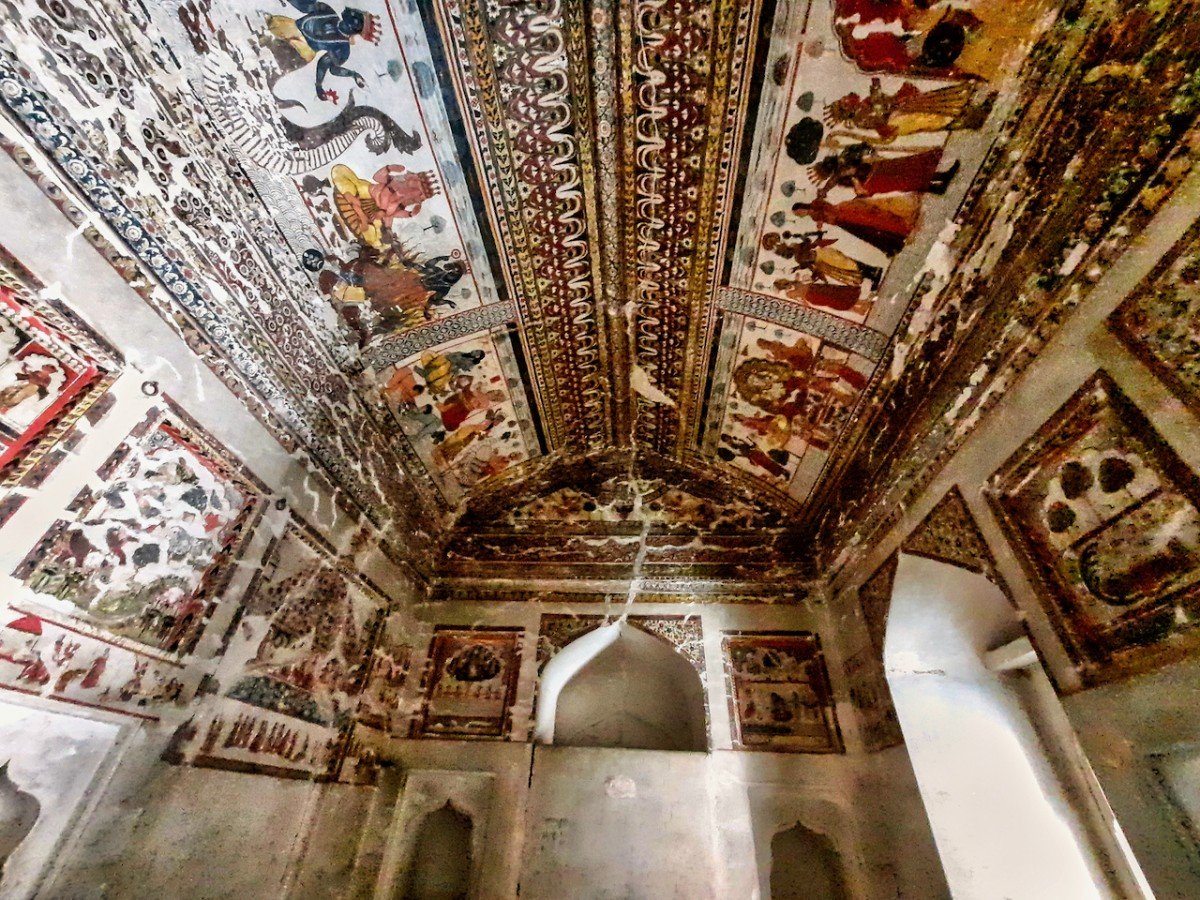
Mural Photography in the Inner Courtyards: The brightly painted inner chambers, particularly those with the best-preserved frescoes, are unparalleled for color photography. Use the archways as natural frames to capture the murals.
Tip: Shoo...Mural Photography in the Inner Courtyards: The brightly painted inner chambers, particularly those with the best-preserved frescoes, are unparalleled for color photography. Use the archways as natural frames to capture the murals.
Tip: Shoot with a wide-angle lens to capture the entire ceiling or wall, and use a high ISO or a small tripod (where permitted) for low-light detail.
View from the Topmost Jharokhas: The elevated balconies on the upper floors offer a panoramic view of the entire Orchha Fort complex, the Betwa River, and the surrounding town, making for excellent landscape and architectural shots, especially during the soft light of early morning.
Capturing the Exterior's Scale: The main eastern or western facade of the Raja Mahal allows for powerful wide-angle shots that emphasize the sheer scale and austere, fortified nature of the Bundeli architecture, especially when framed against the backdrop of the clear Madhya Pradesh sky.
Photo Gallery
Things To Do
-
Explore the Grand Diwan-e-Aam and Diwan-e-Khaas: Spend time visualizing the royal court in session in the pillared hall of the Diwan-e-Aam (Hall of Public Audience) and the more intimate Diwan-e-Khaas (Hall of Private Audience). Pay close attention to the platform where the Bundela King would have sat, imagining the political and cultural life that unfolded there. The scale of the Diwan-e-Aam is impressive, demanding a quiet contemplation of its historical significance.
Detailed Study of the Mural Art: Dedicatedly examine the vibrant frescoes, which are the palace's artistic treasure. Start with the mythological scenes, identifying figures like Lord Rama and Lord Vishnu, then move to the secular panels depicting elephants, horses, and courtly figures. Consider hiring a knowledgeable local guide or art historian to help deciph...Explore the Grand Diwan-e-Aam and Diwan-e-Khaas: Spend time visualizing the royal court in session in the pillared hall of the Diwan-e-Aam (Hall of Public Audience) and the more intimate Diwan-e-Khaas (Hall of Private Audience). Pay close attention to the platform where the Bundela King would have sat, imagining the political and cultural life that unfolded there. The scale of the Diwan-e-Aam is impressive, demanding a quiet contemplation of its historical significance.
Detailed Study of the Mural Art: Dedicatedly examine the vibrant frescoes, which are the palace's artistic treasure. Start with the mythological scenes, identifying figures like Lord Rama and Lord Vishnu, then move to the secular panels depicting elephants, horses, and courtly figures. Consider hiring a knowledgeable local guide or art historian to help decipher the complex narratives and understand the techniques used, such as the fresco-secco method. The intricate patterns and color schemes offer a masterclass in Bundeli miniature-style painting applied to architecture.
Ascend to the Upper Floors and Balconies: Climb the narrow staircases to the upper tiers of the Mahal. The elevated balconies and jharokhas provide not only a stunning vantage point for photography of the fort's periphery but also an opportunity to study the architectural transition from floor to floor. The view of the adjacent Jehangir Mahal and the surrounding landscape is exceptional, providing a geographical context to the historical complex.
Engage with the Fort Complex History: Since the Raja Mahal is part of the larger Orchha Fort complex, dedicate time to connecting its history with the stories of the nearby structures like the Ram Raja Temple (originally a part of this complex) and the Jehangir Mahal. Understanding the timeline of construction helps in appreciating the political history of the Bundela kings. This connective sightseeing enhances the experience significantly.
Observe the Sunset from the Ramparts: While the palace itself closes, the ramparts of the surrounding fort complex near the Mahal are an ideal place to watch the sunset over the Betwa River and the Chhatris (Cenotaphs). The red and golden light illuminates the sandstone, making the Mahal glow and providing a magical end to the day.
Photography Focus on Contrast: Focus your photography on the stark contrast between the simple, fortified exterior and the highly ornate, painted interior. Look for framing opportunities using the archways and jharokhas to highlight the murals, and capture the interplay of shadow and light in the courtyards, a key design element of the architecture.
Information
-
Why Famous:
Symbol of Bundela Royal Power: The Raja Mahal is famous primarily as the historical seat of power of the Bundela dynasty, making it the most significant political structure in the region. It was the residence of rulers like Madhukar Shah, who was instrumental in the religio...Symbol of Bundela Royal Power: The Raja Mahal is famous primarily as the historical seat of power of the Bundela dynasty, making it the most significant political structure in the region. It was the residence of rulers like Madhukar Shah, who was instrumental in the religious and cultural development of Orchha.
Artistic and Mural Heritage: The palace's fame rests heavily on its extraordinarily well-preserved, vibrant interior wall paintings. These murals, dating back to the 16th and 17th centuries, are some of the finest examples of early Bundeli school of art in India, providing a visual record of religious beliefs, court customs, and artistic tastes of the era, distinguishing it from the simpler, more Mughal-influenced architecture of other palaces.
Fusion of Architectural Styles: The Mahal is celebrated for its pure Bundeli-Rajput style, standing in contrast to the later, more syncretic Jehangir Mahal. This makes it a crucial site for architectural historians studying the local indigenous building tradition. The transition from simple exterior to opulent interior symbolizes the hidden richness of the Bundela kingdom.
-
Architecture:
Architectural Style and Design Principles: The Raja Mahal is a prime example of the indigenous Bundeli architectural style, characterized by its imposing yet unornamented exterior walls and richly detailed interior spaces, reflecting a unique fusion of Rajput and local influ...Architectural Style and Design Principles: The Raja Mahal is a prime example of the indigenous Bundeli architectural style, characterized by its imposing yet unornamented exterior walls and richly detailed interior spaces, reflecting a unique fusion of Rajput and local influences before the major influx of Mughal aesthetics seen in the nearby Jehangir Mahal.
Fortified Structure and Dimensions: The palace is integrated into the larger fort complex, designed for defense. It is a multi-storeyed structure, built around two central courtyards. The precise dimensions of the overall structure are not publicly documented, but the inner courtyards are large rectangular spaces, providing light and ventilation. The external walls are high (estimated over 10 meters) and thick, with minimal fenestration on the lower levels for security. The palace's height, with its multi-level design and a five-storey side, emphasizes the King's preeminence.
Elements of Bundela Artistry: Key architectural features include projecting balconies (jharokhas), arcaded passages, and flat roofs supported by intricately carved brackets, all distinct features of Rajput-style royal architecture. The most notable elements are the interior murals. These frescoes, found on the ceilings and walls of the royal apartments, depict vibrant scenes from the Ramayana, Mahabharata, and court life, executed in a color palette dominated by rich reds, blues, and golds. The structural integrity is maintained by load-bearing stone walls and vaulted roofs over the halls. The architecture speaks of a transitionary phase, where a defensive fortress slowly evolves into a residential palace while retaining its core fortifications.
-
How To Reach:
By Air: The nearest major airport is Gwalior Airport (Rajmata Vijaya Raje Scindia Airport, Gwalior), approximately 120 KM away. It connects to major Indian cities like Delhi and Mumbai. From the airport, one must hire a pre-booked taxi or use a private car to reach Orchha,...By Air: The nearest major airport is Gwalior Airport (Rajmata Vijaya Raje Scindia Airport, Gwalior), approximately 120 KM away. It connects to major Indian cities like Delhi and Mumbai. From the airport, one must hire a pre-booked taxi or use a private car to reach Orchha, a drive of about 3-4 hours. Another option is Khajuraho Airport, about 170 KM away, which is also well-connected.
By Train: The most convenient railway station is Jhansi Junction (JHS), a major railhead located just 18 KM from Orchha. Jhansi is excellently connected to all parts of India, including Delhi, Mumbai, Kolkata, and Chennai, via numerous express and superfast trains. From Jhansi, one can easily take a local taxi, auto-rickshaw, or a bus to Orchha. There is a small local station in Orchha itself, but very few express trains stop there.
By Road: Orchha is well-connected by road via National Highway 39 (NH39) and other state highways. State-run and private bus services operate from nearby major cities like Jhansi, Gwalior, and Khajuraho. The road journey from Jhansi is quick (approx. 30 minutes). Driving a personal or hired car is comfortable due to decent road conditions.
By Local Transport: Within Orchha, the core tourist area is small and largely walkable. To reach the fort complex from the main town or hotels, one can take cycle-rickshaws or auto-rickshaws, which are easily available and cost-effective.
-
Weather and Best Time to Visit:
Different Types of Seasons: Winter (October to March) is the absolute best time to visit. The weather is cool and pleasant, ideal for extensive outdoor exploration of the fort complex without the fatigue of heat. Summer (April to June) is extremely hot, with temperatures s...Different Types of Seasons: Winter (October to March) is the absolute best time to visit. The weather is cool and pleasant, ideal for extensive outdoor exploration of the fort complex without the fatigue of heat. Summer (April to June) is extremely hot, with temperatures soaring, and is best avoided. The Monsoon season (July to September) transforms the surrounding landscape into lush greenery and the Betwa River is full, which is visually beautiful, but occasional heavy rain can disrupt travel plans.
Different Parts of the Day: Early Morning is the superior time for visiting the Mahal, specifically between 9:00 AM and 11:00 AM. The light is soft, the air is cool, and the site is less crowded, allowing for detailed viewing of the interior murals and peaceful photography. Late Afternoon (3:00 PM onwards) is also good, leading up to the sunset and the evening Sound and Light Show.
-
Near Tourist Places:
Jehangir Mahal (0. 3 KM), Ram Raja Temple (0. 5 KM), Sawan Bhado Pillars (0. 2 KM), Chaturbhuj Temple (1 KM), Lakshminarayan Temple (2 KM), Chhatris (Cenotaphs) (1. 5 KM), Phool Bagh (1 KM), Sunder Mahal (0. 8 KM), Uth Khana (0. 1 KM), Dauji ki Haveli (0. 9 KM).
Tourism Tips
-
Health & Safety: Carry a personal First Aid Kit with basic medicines, antiseptic cream, and rehydration salts, especially during the summer. Wear comfortable, sturdy walking shoes as the fort complex involves uneven steps and pathways. Be wary of stray animals, particularl...Health & Safety: Carry a personal First Aid Kit with basic medicines, antiseptic cream, and rehydration salts, especially during the summer. Wear comfortable, sturdy walking shoes as the fort complex involves uneven steps and pathways. Be wary of stray animals, particularly monkeys, and do not feed them. Always drink bottled water.
Packing: Essential packing includes sunglasses, a hat or cap, and high-SPF sunscreen, regardless of the season, due to the exposed nature of the courtyards. Carry light, breathable cotton clothing for warmer months. For winter, pack a light jacket or shawl for mornings and evenings. A good camera with extra battery/memory is a must for the murals.
Accommodation: Book accommodation in advance, especially during the peak winter season (November to February). Orchha offers a range of stays from luxury heritage hotels (Sheesh Mahal) to budget guesthouses. Staying closer to the core temple/fort area allows for easier walking access to all main sites.
Other Different Topics: Hire a local, officially recognized guide at the gate to get in-depth historical and architectural context, which greatly enhances the visit (negotiate the price beforehand). Respect the local culture by dressing modestly, especially when visiting the nearby Ram Raja Temple. Be prepared to walk extensively and allow sufficient time (at least 2 hours) to explore the Raja Mahal properly without rushing.
Reviews
FAQs
Orchha Itineray And Cost:-
Other Places In Orchha :-
Other States In India :-
Information about New and Updated Locations() of Madhya Pradesh Has Been Added :-
Card subtitle
Note:-
Information provided here in good Faith and for reference only.
Near Places
Baradari
Some quick example text to build on the card title and make up the bulk of the card's content.
Go somewhere
Betwa Ghat
Some quick example text to build on the card title and make up the bulk of the card's content.
Go somewhere
Betwa Retreat
Some quick example text to build on the card title and make up the bulk of the card's content.
Go somewhere
Betwa River
Some quick example text to build on the card title and make up the bulk of the card's content.
Go somewhere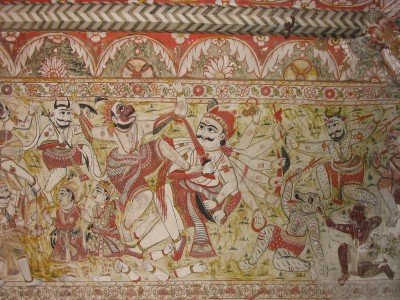
Betwa River Rafting/Boating
Some quick example text to build on the card title and make up the bulk of the card's content.
Go somewhere
Cenotaph of Bir Singh Deo
Some quick example text to build on the card title and make up the bulk of the card's content.
Go somewhere
Cenotaph of Indrajit Singh
Some quick example text to build on the card title and make up the bulk of the card's content.
Go somewhere
Cenotaph of Madhukar Shah
Some quick example text to build on the card title and make up the bulk of the card's content.
Go somewhere
Cenotaphs
Some quick example text to build on the card title and make up the bulk of the card's content.
Go somewhere
Chattris
Some quick example text to build on the card title and make up the bulk of the card's content.
Go somewhere
Chaturbhuj Temple
Some quick example text to build on the card title and make up the bulk of the card's content.
Go somewhere
Chhatris
Some quick example text to build on the card title and make up the bulk of the card's content.
Go somewhere
Datia Palace
Some quick example text to build on the card title and make up the bulk of the card's content.
Go somewhere
Dauji Ki Haveli
Some quick example text to build on the card title and make up the bulk of the card's content.
Go somewhere
Dinman Hardaul Palace
Some quick example text to build on the card title and make up the bulk of the card's content.
Go somewhere
Dinman Hardaul's Palace
Some quick example text to build on the card title and make up the bulk of the card's content.
Go somewherein Other Cities