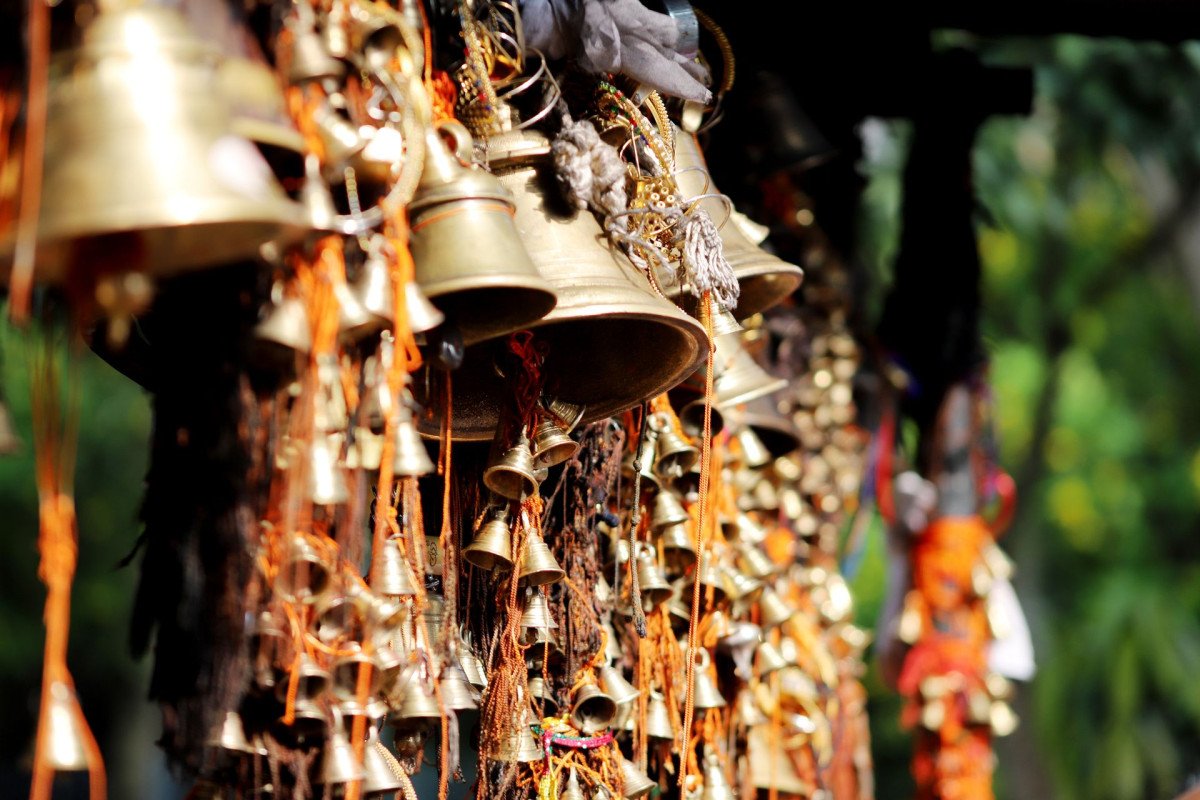
Rudranath Temple
General information
-
Ideal Duration:
3-4 Days (Including Trek)Place Type:
Religious Site, Panch Kedar Temple, Trekking DestiEntry Fees:
Strictly No Entry Fee for Temple Darshan: There is absolutely no entry fee to visit the main Rudranath Temple or to enter the Garbhagriha for darshan, as it is a publicly accessible religious shrine.
Mandatory Trekking Permit/Forest Fee: Whi...Strictly No Entry Fee for Temple Darshan: There is absolutely no entry fee to visit the main Rudranath Temple or to enter the Garbhagriha for darshan, as it is a publicly accessible religious shrine.
Mandatory Trekking Permit/Forest Fee: While the temple is free, visitors are often required to pay a nominal forest entry fee or secure a trekking permit from the Forest Department check post (usually near Sagar or Gopeshwar) to enter the Kedarnath Wildlife Sanctuary area where the temple is located. This fee helps fund conservation and maintenance of the trail. The fee is usually a few hundred rupees per person for Indian nationals and slightly higher for foreign nationals.
Porter/Guide Charges and Accommodation: The trek requires hiring local guides, porters, and sometimes mules, which incurs substantial costs over the multi-day journey. Accommodation at the basic dharamshalas or tented camps along the route also has associated, albeit minimal, charges per night.Timing:
Seasonal and Daily Schedule: The temple remains closed for approximately six months during the severe winter season, usually from the last week of October or early November to the third week of May. During this time, the symbolic idol (Utsav Murti) is shifted to the Gopinat...Seasonal and Daily Schedule: The temple remains closed for approximately six months during the severe winter season, usually from the last week of October or early November to the third week of May. During this time, the symbolic idol (Utsav Murti) is shifted to the Gopinath Mandir in Gopeshwar for winter worship.
Regular Timings (Summer): When open (typically May-October), the temple is generally open from 6:00 AM to 7:30 PM, with the main morning rituals beginning early.
Ideal Visit Time: The best time is immediately after the temple opens in May-June when the snow has recently melted, or in September-October when the skies are clearest, offering the most spectacular mountain views before the winter closure.Special Events:
The Temple Opening/Closing Ceremonies: The ceremonial movement of the Doli (symbolic image of Shiva) from Gopinath Mandir in Gopeshwar to Rudranath (for summer opening in May-June) and its return (for winter closing in October-November) is a major, vibrant, and multi-day spi...The Temple Opening/Closing Ceremonies: The ceremonial movement of the Doli (symbolic image of Shiva) from Gopinath Mandir in Gopeshwar to Rudranath (for summer opening in May-June) and its return (for winter closing in October-November) is a major, vibrant, and multi-day spiritual event with mass participation.
The Panch Kedar Festival: Although part of a larger circuit, the special Panch Kedar gathering and Puja performed around the time of the temple's opening marks a significant religious celebration, involving numerous priests and sadhus.
Ancestor Worship Days: Special days designated for ancestor worship (Shradh), particularly during the Pitru Paksha, draw numerous devotees to perform Pind Daan rituals at Rudraganga.Best Photo Spots:
The Peaks and Temple Backdrop: The classic shot is capturing the rustic temple structure with the imposing, snow-capped Himalayan peaks of Nanda Devi, Trishul, and Nanda Ghunti as a majestic, distant backdrop, best captured from a slight elevation during the early morning. <...The Peaks and Temple Backdrop: The classic shot is capturing the rustic temple structure with the imposing, snow-capped Himalayan peaks of Nanda Devi, Trishul, and Nanda Ghunti as a majestic, distant backdrop, best captured from a slight elevation during the early morning.
The Trekking Trail and Bugyals: Capture the vastness of the alpine meadows (Bugyals) like Panar or Lyuti, especially when they are dotted with colorful wildflowers (post-monsoon) or the vibrant rhododendron forests along the initial path.
Sunrise from Pitradhar: The Pitradhar Ridge offers a superb, extremely high-altitude spot to photograph the sunrise over the eastern peaks, illuminating the entire Garhwal range in golden light.
The Sacred Kunds: Photograph the serene, clear waters of Surya-kund or Chandra-kund, often reflecting the sky and the surrounding mountains, providing a tranquil contrast to the rugged landscape.Photo Gallery
Things To Do
-
Undertake the Rudranath Trek: The primary activity is the challenging 20 kms trek (from Sagar Village) through enchanting forests, bugyals (alpine meadows), and high ridges, which is an adventure for both the body and the spirit.
Perform Ancestral Rites (Pind Daan): Engage in the sacred duty of performing Pind Daan and tarpan for ancestors on the banks of the Rudraganga or at the Pitradhar ridge.
Worship the Ekanan Linga: Have darshan and worship the unique Ekanan (face) of Lord Shiva in the main sanctum, a spiritual highlight of the Panch Kedar circuit.
Visit the Sacred Kunds: Explore and offer prayers at the numerous sacred water tanks near the temple, including Surya-kund, Chandra-kund, Tara-kund, and Mana-Kund.
Capture Himalayan ...Undertake the Rudranath Trek: The primary activity is the challenging 20 kms trek (from Sagar Village) through enchanting forests, bugyals (alpine meadows), and high ridges, which is an adventure for both the body and the spirit.
Perform Ancestral Rites (Pind Daan): Engage in the sacred duty of performing Pind Daan and tarpan for ancestors on the banks of the Rudraganga or at the Pitradhar ridge.
Worship the Ekanan Linga: Have darshan and worship the unique Ekanan (face) of Lord Shiva in the main sanctum, a spiritual highlight of the Panch Kedar circuit.
Visit the Sacred Kunds: Explore and offer prayers at the numerous sacred water tanks near the temple, including Surya-kund, Chandra-kund, Tara-kund, and Mana-Kund.
Capture Himalayan Vistas: Dedicate time to photography of the magnificent, snow-capped peaks like Trishul, Nanda Devi, and Nanda Ghunti that form the temple's spectacular backdrop, particularly during sunrise.
Experience Camping in the Bugyals: Spend a night camping in the vast, serene alpine meadows of Panar or Lyuti Bugyal, enjoying the night sky and the tranquility of the high Himalayas.
Worship Vandevi: Participate in the local custom of first worshipping Vandevi (the Forest Goddess) near the temple as an act of respect for the mountain and forest spirits.
Explore the Nandikund: Take a detour to Nandikund to witness the ancient swords believed to be of the Pandavas protruding from the rocks.
Trek to Saraswati Kund: The short 800-meter trek to Saraswati Kund offers a chance for solitary reflection and a different view of the surrounding landscape.
Engage with Shepherds: Interact with the local Garhwali shepherds and villagers (like those at Panar) to learn about their unique, isolated mountain lifestyle and culture.
Information
-
Why Famous:
Worship of Lord Shiva's Face: Rudranath is uniquely famous as the place where the Ekanan (face) of Lord Shiva is worshipped, contrasting with Kedarnath (hump) and Pashupatinath (Nepal) (full body), making it distinct among Shiva's abodes.
Pind D...Worship of Lord Shiva's Face: Rudranath is uniquely famous as the place where the Ekanan (face) of Lord Shiva is worshipped, contrasting with Kedarnath (hump) and Pashupatinath (Nepal) (full body), making it distinct among Shiva's abodes.
Pind Daan for Ancestors: It is highly famous as a paramount site for performing Pind Daan (ancestral rites). Devotees believe that performing these rituals here ensures salvation for their ancestors, a spiritual boon considered equivalent to rituals at the sacred city of Gaya.
The Challenging Pilgrimage: The demanding 20 km trek through dense forests and high alpine meadows (bugyals) elevates its fame as a test of faith and endurance, attracting serious pilgrims and high-altitude trekkers.
The Vaitarani River: The temple's proximity to the holy Vaitarani River (or Rudraganga), the mythical river of the underworld that souls must cross, significantly increases its spiritual draw. -
Architecture:
Rustic Himalayan Stone Structure: The architecture of the main Rudranath Temple is characteristic of the North-Indian Himalayan Temple style, but its remoteness and high altitude have resulted in a simple, highly functional, and rustic stone structure.
Read MoreRustic Himalayan Stone Structure: The architecture of the main Rudranath Temple is characteristic of the North-Indian Himalayan Temple style, but its remoteness and high altitude have resulted in a simple, highly functional, and rustic stone structure.
The Natural Rock Deity: Unlike typical temples, the sanctum houses a naturally formed rock, resembling the Ekanan (face) of Lord Shiva, which has been minimally modified, signifying a sacred connection to the geological landscape.
Foundation and Materials: The temple is constructed predominantly with large, unpolished stones, expertly fitted together without complex ornamentation. This durable stonework is essential for withstanding extreme weather, including heavy snow and high winds at 3,600 meters.
The Garbhagriha: The central shrine, which houses the linga, is a small, focused space, often built partially utilizing the cave or rock face it emerged from, reinforcing the ancient, primal connection to the deity.
Roof and Dimension: The roofing is usually a simple, sturdy wooden structure covered with slate or stone slabs, designed with a steep slope to prevent snow accumulation. The overall structure is modest in scale, perhaps 8-12 meters in height and a small footprint of approximately 10 meters by 15 meters for the main shrine, prioritizing stability over elaborate design, consistent with other Panch Kedar shrines.How To Reach:
By Air: Nearest is Jolly Grant Airport, Dehradun (DED), approximately 258 kms from the trek base at Gopeshwar. Hire a taxi to Gopeshwar or Sagar Village (219 kms from Rudraprayag).
By Train: Nearest railhead is Rishikesh Railway Station (RK...By Air: Nearest is Jolly Grant Airport, Dehradun (DED), approximately 258 kms from the trek base at Gopeshwar. Hire a taxi to Gopeshwar or Sagar Village (219 kms from Rudraprayag).
By Train: Nearest railhead is Rishikesh Railway Station (RKSH), approximately 241 kms from Gopeshwar. From the station, take a bus or taxi to Gopeshwar via Rudraprayag or Srinagar.
By Road: The closest major motorable road ends at Sagar Village (20 km trek) or Mandal Village (26 km trek) near Gopeshwar (which is in Chamoli district). Reaching Gopeshwar requires a long drive via Rudraprayag and Karnaprayag. Buses are available to Gopeshwar or Mandal.
By Trek/Local Transport: From the end of the motorable road (Sagar or Mandal), the journey is a strenuous, multi-day trek. Local porters and guides are essential and must be hired from these base villages.Weather and Best Time to Visit:
Seasons for Visit: The small window between late May to Early June and the post-monsoon period of September to October is the only safe and ideal time. Monsoon (July-August) makes the trek highly dangerous due to extreme mud and landslides, and Winter (November-April) is im...Seasons for Visit: The small window between late May to Early June and the post-monsoon period of September to October is the only safe and ideal time. Monsoon (July-August) makes the trek highly dangerous due to extreme mud and landslides, and Winter (November-April) is impossible due to heavy, road-closing snowfall and temple closure.
Ideal Parts of the Day: Early Morning is crucial for starting the day's trek before the sun is too harsh. Reaching the temple area or camp by Late Afternoon allows enough time to settle and enjoy the sunset.Near Tourist Places:
Gopinath Mandir, Gopeshwar (20 kms), Tungnath Temple (10 kms), Anusuya Devi Temple (20 kms), Sagar Village (20 kms), Panar Bugyal (6 kms), Nandikund (9. 5 kms), Madhyamaheshwar Temple (Challenging multi-day trek), Chopta (40 kms drive + trek), Joshimath (45 kms trek), Kalpeshwar Temple (12. 9 kms).Tourism Tips
-
Health & Safety: This is a high-altitude trek (3,600m); be prepared for Acute Mountain Sickness (AMS). Acclimatize properly, move slowly, and stay hydrated. Carry adequate protection against cold and rain. Inform local authorities or your trekking agency before starting ...Health & Safety: This is a high-altitude trek (3,600m); be prepared for Acute Mountain Sickness (AMS). Acclimatize properly, move slowly, and stay hydrated. Carry adequate protection against cold and rain. Inform local authorities or your trekking agency before starting the trek.
Packing: Essential gear includes proper trekking boots, layered thermal clothing, a good quality backpack, rain gear, a first-aid kit with AMS medication, a headlamp, and sufficient dry food/energy bars.
Accommodation: Accommodation along the trek is very basic, typically in small dharamshalas, forest rest houses, or tented camps (bugyals). Do not expect luxury; book or arrange accommodation through a trekking agency beforehand.
Other Different Topics: Do not litter the fragile high-altitude environment. Hire a registered local guide, which is highly recommended for safety and navigation. Respect the religious sanctity of the bugyals and temple area. Carry sufficient cash, as ATMs are not available after Gopeshwar.
Reviews
FAQs
Rudraprayag Itineray And Cost:-
Rudranath Temple Tourism:-
Other Places In Rudraprayag :-
Other States In India :-
Information about New and Updated Locations() of Uttarakhand Has Been Added :-
Card subtitle
Note:-
Information provided here in good Faith and for reference only.
Near Places
Agastyamuni Temple
Some quick example text to build on the card title and make up the bulk of the card's content.
Go somewhere
Augustmuni Town
Some quick example text to build on the card title and make up the bulk of the card's content.
Go somewhere
Basukedar Temple
Some quick example text to build on the card title and make up the bulk of the card's content.
Go somewhere
Deoria Tal Lake
Some quick example text to build on the card title and make up the bulk of the card's content.
Go somewhere
Dhari Devi Temple
Some quick example text to build on the card title and make up the bulk of the card's content.
Go somewhere
Gaurikund
Some quick example text to build on the card title and make up the bulk of the card's content.
Go somewhere
Indrasani Mansa Devi Temple
Some quick example text to build on the card title and make up the bulk of the card's content.
Go somewhere
Jakholi Village
Some quick example text to build on the card title and make up the bulk of the card's content.
Go somewhere
Kalimath Temple
Some quick example text to build on the card title and make up the bulk of the card's content.
Go somewhere
Kartik Swami Temple
Some quick example text to build on the card title and make up the bulk of the card's content.
Go somewhere
Koteshwar Mahadev Temple
Some quick example text to build on the card title and make up the bulk of the card's content.
Go somewhere
Okhimath
Some quick example text to build on the card title and make up the bulk of the card's content.
Go somewhere
Phata
Some quick example text to build on the card title and make up the bulk of the card's content.
Go somewhere
Rudranath Temple
Some quick example text to build on the card title and make up the bulk of the card's content.
Go somewhere
Rudraprayag
Some quick example text to build on the card title and make up the bulk of the card's content.
Go somewhere
Rudraprayag Sangam
Some quick example text to build on the card title and make up the bulk of the card's content.
Go somewherein Other Cities