


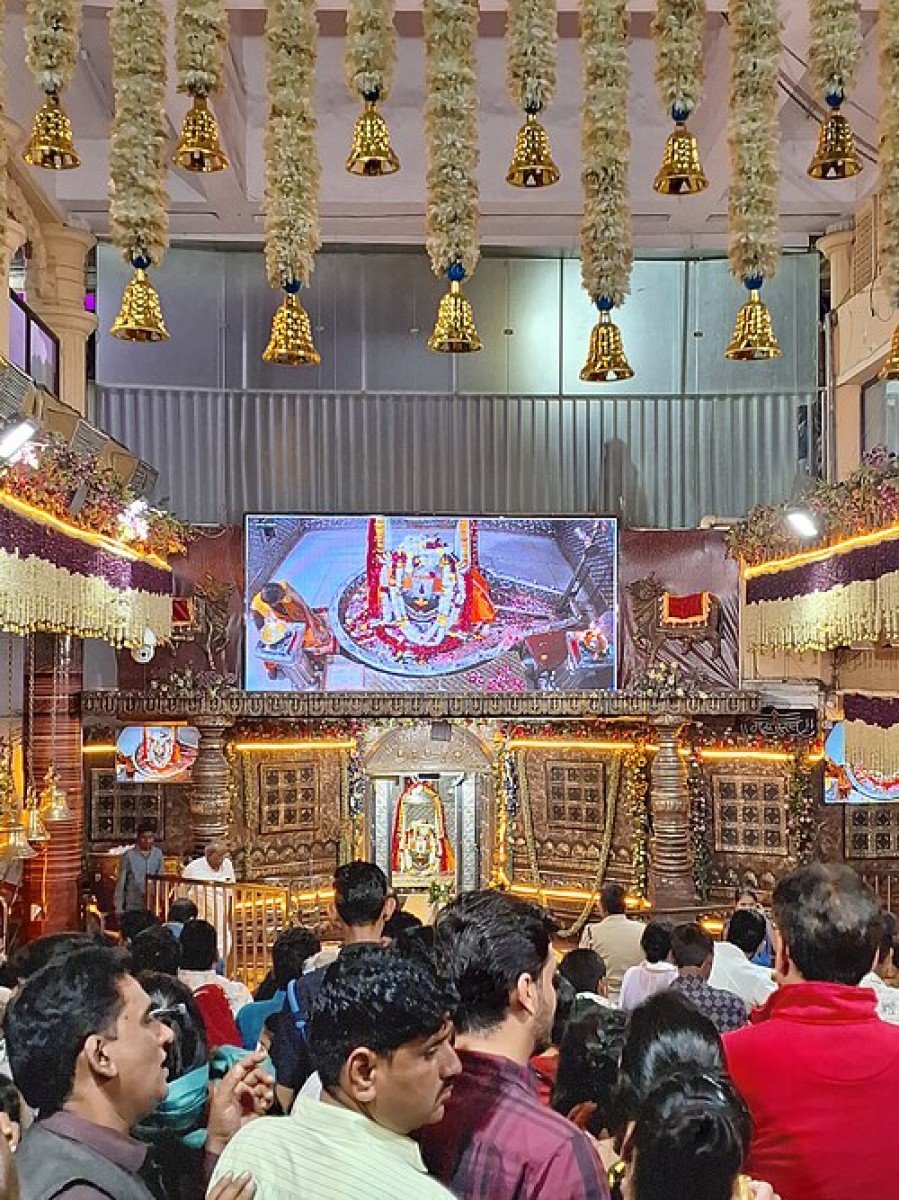
Shree Mahakaleshwar Temple
General information
-
Ideal Duration:
2 - 4 Hours (Excluding Bhasm Aarti time)Place Type:
Jyotirlinga Temple, Major Religious Site, ArchitecEntry Fees:
General Entry is Free for all devotees for regular darshan. There is no charge to enter the main temple complex, the Mahakal Lok corridor, or for general prayer.
Bhasm Aarti Pass: A free online booking is mandatory for the Bhasm Aarti. Devotees must register at th...General Entry is Free for all devotees for regular darshan. There is no charge to enter the main temple complex, the Mahakal Lok corridor, or for general prayer.
Bhasm Aarti Pass: A free online booking is mandatory for the Bhasm Aarti. Devotees must register at the official temple website, providing Aadhar details. While the pass is free, it is extremely limited and requires booking up to 30 days in advance.
VIP Darshan Pass: For quicker and closer darshan on very crowded days or for a specific time slot, the temple offers a VIP Darshan facility, which typically costs around Rs.250 per person. This pass is separate from the Bhasm Aarti pass and grants access to a dedicated queue.
Pooja and Ritual Fees: Charges for specific rituals like Rudrabhishek, Mahamrityunjay Path, and others vary depending on the duration, materials used, and the number of priests involved, and are paid directly to the temple trust office.Timing:
Regular Timings: The temple is generally open from 4:00 AM (starting with Bhasm Aarti) to 11:00 PM daily. However, the timings can be slightly adjusted based on the day's pujas and the pilgrim rush. It is best to check the official temple website for the schedule on the da...Regular Timings: The temple is generally open from 4:00 AM (starting with Bhasm Aarti) to 11:00 PM daily. However, the timings can be slightly adjusted based on the day's pujas and the pilgrim rush. It is best to check the official temple website for the schedule on the day of your visit.
Ideal Visit Time: For the most profound spiritual experience, the best time is for the Bhasm Aarti at 4:00 AM. For a more relaxed and less crowded darshan (excluding the VIP line), the hours between 11:00 AM to 1:00 PM or after 8:00 PM are generally less busy, especially on weekdays.
Festival Timings: During major festivals like Maha Shivaratri and the Simhastha Kumbh Mela, the temple remains open almost non-stop for long durations, and crowd management plans are implemented with special timings and darshan lines.Special Events:
Maha Shivaratri: This is the temple's biggest festival, celebrated with immense fervor, lasting for nine days. The temple is open 48 hours straight, attracting millions of devotees. Special ceremonies, processions (Shiv Baraat), and a spectacular all-night aarti are perfor...Maha Shivaratri: This is the temple's biggest festival, celebrated with immense fervor, lasting for nine days. The temple is open 48 hours straight, attracting millions of devotees. Special ceremonies, processions (Shiv Baraat), and a spectacular all-night aarti are performed, making the atmosphere electric and deeply spiritual.
Bhairav Ashtami: Though more focused on the Kaal Bhairav Temple, this festival is significant here as Mahakal is the supreme authority. Special pujas are performed, and the city's Kotwal (Kaal Bhairav) pays homage to the Lord of Time.
Nag Panchami: The one day in the entire year when the Nagchandreshwar Temple on the third floor is opened for darshan, leading to massive crowds who come to witness the rare idol of Shiva seated on the serpent. This event usually falls in July or August during the monsoon season.Best Photo Spots:
Mahakal Lok Sculptures: The massive, intricately carved statues of Lord Shiva and his Ganas along the Mahakal Lok corridor are the premier photo spot, especially in the golden hour just before sunset, which makes the red sandstone glow.
The Main...Mahakal Lok Sculptures: The massive, intricately carved statues of Lord Shiva and his Ganas along the Mahakal Lok corridor are the premier photo spot, especially in the golden hour just before sunset, which makes the red sandstone glow.
The Main Temple Shikhar (Tower): A classic shot is capturing the main Shikhar of the temple from the Rudra Sagar Lake side, which often includes the reflection of the towering structure in the water (if the lake is full). This captures the traditional Maratha architecture.
The Temple Entrance Gateway: The main Nandi Dwara entrance, often adorned with traditional Malwa paintings and beautiful lighting in the evening, provides an excellent frame for pictures that capture the devotion of the incoming pilgrims.Photo Gallery

Things To Do
-
Witnessing the Bhasm Aarti (Must-See): This is the most crucial activity. Booking a pass online weeks in advance is mandatory. Arrive by 3:00 AM to complete verification and find a spot. The ritual begins at 4:00 AM and is a powerful, unforgettable experience. Only men are allowed to enter the Garbha Griha (sanctum sanctorum) during this time and must wear a dhoti. Women must wear a saree and observe from outside the main doors.
Performing the Jalabhishek and Rudrabhishek: Devotees can offer water, milk, and other items to the Jyotirlinga. For a more elaborate ritual, booking a Rudrabhishek (a special worship involving chanting and offerings) can be done through the temple trust office.
Exploring the Mahakal Lok Corridor: Dedicate at least an hour to walk through the magnificent new Mahakal...Witnessing the Bhasm Aarti (Must-See): This is the most crucial activity. Booking a pass online weeks in advance is mandatory. Arrive by 3:00 AM to complete verification and find a spot. The ritual begins at 4:00 AM and is a powerful, unforgettable experience. Only men are allowed to enter the Garbha Griha (sanctum sanctorum) during this time and must wear a dhoti. Women must wear a saree and observe from outside the main doors.
Performing the Jalabhishek and Rudrabhishek: Devotees can offer water, milk, and other items to the Jyotirlinga. For a more elaborate ritual, booking a Rudrabhishek (a special worship involving chanting and offerings) can be done through the temple trust office.
Exploring the Mahakal Lok Corridor: Dedicate at least an hour to walk through the magnificent new Mahakal Lok. Study the large sculptures depicting Shiv Leela (stories of Lord Shiva) and the murals in the Puranic Story Gallery. This area is a pilgrimage and cultural experience in itself, perfect for photography and learning about Shaivism.
Visiting the Smaller Shrines: Within the main complex and the surrounding area, take time to visit the shrines of Lord Ganesha, Goddess Parvati, and the Nagchandreshwar Temple (if open). Also, visit the Vridh Mahakaleshwar Temple nearby, which is the older shrine.
Taking a Holy Dip in Rudra Sagar: Although the lake is often dry or not clean enough for a full bath, the act of sprinkling its water upon oneself is considered a gesture of devotion. The lake's presence adds to the sanctity of the temple's location.
Participating in Evening Aarti: After the main shrine closes for the day, a less elaborate but still beautiful aarti is performed, which is a perfect time for a peaceful evening darshan away from the morning crowds.
Shopping for Prasad and Souvenirs: Buy the famous laddoo prasad from the temple's official counter and shop for Rudraksha beads, copper vessels for Jalabhishek, and devotional pictures from the shops lining the main street leading to the temple.
Information
-
Why Famous:
The Swayambhu Jyotirlinga: The temple is famous for having one of the 12 Jyotirlingas—the holiest shrines of Lord Shiva—which is self-manifested (Swayambhu), unlike the others. This makes it an incredibly powerful spiritual vortex.
The Bhas...The Swayambhu Jyotirlinga: The temple is famous for having one of the 12 Jyotirlingas—the holiest shrines of Lord Shiva—which is self-manifested (Swayambhu), unlike the others. This makes it an incredibly powerful spiritual vortex.
The Bhasm Aarti Ritual: This daily dawn ritual is world-famous. The lingam is ceremonially smeared with holy ash, symbolizing the eternal reality of the bhasm (ash) and the ephemeral nature of the physical world. Witnessing this ritual is considered the highest form of devotion in Ujjain.
The Lord of Time: Mahakaleshwar is literally the 'Great Lord of Time/Death'. The deity is revered as the only one in the Kala Chakra (cosmic time cycle) to reside here, and devotees believe that worshipping him protects them from untimely death and grants salvation.
The Mahakal Lok Corridor: The recently inaugurated corridor, a monumental project, is one of the largest temple expansion projects in India, featuring hundreds of intricate statues and murals, which has dramatically increased the temple's fame and visual grandeur. -
Architecture:
Architectural Style and Layout: The temple complex primarily exhibits a Maratha, Bhumiya, and Chalukya blend of architectural styles due to multiple reconstructions. The main temple is built over three stories. The ground level houses the Mahakaleshwar Jyotirlinga, the mid...Architectural Style and Layout: The temple complex primarily exhibits a Maratha, Bhumiya, and Chalukya blend of architectural styles due to multiple reconstructions. The main temple is built over three stories. The ground level houses the Mahakaleshwar Jyotirlinga, the middle level has the idol of Omkareshwar Mahadev, and the third level, which is only open on Nag Panchami, is dedicated to Nagchandreshwar. The main structure features a Shikhara (tower) in the traditional North Indian style.
Dimension and Mahakal Lok: The entire temple complex is vast. The original temple courtyard measures approximately 100 feet by 100 feet. The recent addition of the Mahakal Lok corridor has dramatically expanded the site. This new corridor is about 900 meters long, featuring intricate carvings, over 100 large, aesthetically imposing statues of Shiva and other mythological figures, and murals depicting stories from the Puranas, creating a grand, modern entrance and pathway to the main shrine. The use of traditional stone masonry and red sandstone for the new corridor maintains a sense of ancient grandeur. -
How To Reach:
By Air: The nearest airport is Devi Ahilyabai Holkar Airport (IDR) in Indore, located approximately 55 KMS from Ujjain. From IDR, you can hire a private taxi, which takes about 1. 5 hours to reach the temple. Prepaid taxi services are the most reliable option and charge ar...By Air: The nearest airport is Devi Ahilyabai Holkar Airport (IDR) in Indore, located approximately 55 KMS from Ujjain. From IDR, you can hire a private taxi, which takes about 1. 5 hours to reach the temple. Prepaid taxi services are the most reliable option and charge around Rs.1200 - Rs.1500. Ujjain does not have its own major commercial airport.
By Train: Ujjain Junction Railway Station (UJN) is extremely close to the temple (approx. 1. 5 KMS). It is a major hub with connectivity to almost all major Indian cities. From the station, the best and quickest way to reach the temple is by a local auto-rickshaw (about 10 minutes ride) or an e-rickshaw, which is very inexpensive and readily available right outside the station.
By Road: Ujjain is well-connected by National Highway 47. State-run and private buses operate frequently to Indore, Bhopal, and other cities. The main bus stand is about 4 KMS away. From the bus stand, a local auto-rickshaw or taxi is the most convenient way to reach the temple complex.
By Local Transport: Within Ujjain, the temple is the focal point. Auto-rickshaws and e-rickshaws are plentiful and affordable for local travel. The Mahakal Lok entrance is well-connected to all parts of the city. Due to heavy pedestrian traffic, private vehicles are not allowed right up to the temple gate. -
Weather and Best Time to Visit:
Different Types of Seasons:
Winter (October to March): The weather is ideal, with comfortable temperatures for waiting in the darshan queue and exploring the vast Mahakal Lok corridor. This is the best time to visit.
Read MoreDifferent Types of Seasons:
Winter (October to March): The weather is ideal, with comfortable temperatures for waiting in the darshan queue and exploring the vast Mahakal Lok corridor. This is the best time to visit.
Summer (April to June): Intense heat and high humidity can make waiting in line very difficult. If visiting, restrict your trip to the Bhasm Aarti time or the late evening.
Monsoon (July to September): The weather is pleasant and green, but sudden, heavy rains can cause inconvenience. However, the month of Shravan (July/August) is considered the holiest month for Shiva worship, and despite the crowds, the spiritual atmosphere is unmatched.
Different Parts of the Day: Early Morning Darshan (4 AM - 6 AM) The Ideal Time for the Bhasm Aarti and the most spiritually fulfilling experience. Daytime Darshan (9 AM - 6 PM) The most crowded time. Plan for long queues, especially on weekends and Mondays. Evening Darshan (7 PM - 10 PM) Less crowded than the day, allowing for a relatively quicker and more peaceful darshan.Near Tourist Places:
Shipra River Bank (Ram Ghat) (0. 5 KMS), Bade Ganeshji Ka Mandir (0. 1 KMS), Harsiddhi Temple (0. 3 KMS), Vikram Kirti Mandir Museum (2 KMS), Gopal Mandir (1 KMS), Chintaman Ganesh Temple (7 KMS), Siddhavat Ghat (5 KMS), Kaal Bhairav Temple (8 KMS), Triveni Museum (3 KMS), Mangalnath Temple (5 KMS).Tourism Tips
-
Health & Safety: Book your Bhasm Aarti pass only through the official temple website to avoid fraud. Dress appropriately, covering shoulders and legs; this is mandatory for the Bhasm Aarti sanctum entry. Avoid touching the Jyotirlinga (it is strictly prohibited now) or ta...Health & Safety: Book your Bhasm Aarti pass only through the official temple website to avoid fraud. Dress appropriately, covering shoulders and legs; this is mandatory for the Bhasm Aarti sanctum entry. Avoid touching the Jyotirlinga (it is strictly prohibited now) or taking pictures inside the Garbha Griha. Be wary of touts or self-proclaimed guides outside the main gates.
Packing: Carry a water bottle, especially during daytime visits. For the Bhasm Aarti, carry the specified attire (dhoti for men, saree for women). Leave all electronic gadgets (phones, cameras) and leather goods in your hotel or a locker outside the temple, as they are often prohibited inside the sanctum.
Accommodation: Hotels near the Mahakal Lok provide the best accessibility to the temple. Book a room that includes transport or a wake-up call for the Bhasm Aarti. The temple trust also offers economical guesthouses (Dharamshalas) that can be booked online.
Other Different Topics Heading:
VIP Darshan: If time is a major constraint, consider purchasing the VIP ticket to significantly reduce your queue time, particularly on Mondays or festival days.
Prasad: Buy prasad only from the government-run stalls for authenticity.
Footwear: A free footwear deposit counter is available near the entrance of Mahakal Lok.
Reviews
FAQs
Ujjain Itineray And Cost:-
Shree Mahakaleshwar Temple Tourism:-
Other Places In Ujjain :-
Other States In India :-
Information about New and Updated Locations() of Madhya Pradesh Has Been Added :-
Card subtitle
Note:-
Information provided here in good Faith and for reference only.
Near Places

Harsiddhi Temple
Some quick example text to build on the card title and make up the bulk of the card's content.
Go somewhere
Kark Rajeshwar Temple
Some quick example text to build on the card title and make up the bulk of the card's content.
Go somewhere
Mahakal Lok Corridor
Some quick example text to build on the card title and make up the bulk of the card's content.
Go somewhere
Mahakaleshwar Jyotirlinga Temple
Some quick example text to build on the card title and make up the bulk of the card's content.
Go somewhere
Mahakaleshwar Jyotirlinga
Some quick example text to build on the card title and make up the bulk of the card's content.
Go somewhere
Mahalaxmi Temple
Some quick example text to build on the card title and make up the bulk of the card's content.
Go somewhere
Mangalnath Temple
Some quick example text to build on the card title and make up the bulk of the card's content.
Go somewhere
Rudra Sagar Lake
Some quick example text to build on the card title and make up the bulk of the card's content.
Go somewhere
Sahasra Shiva Lingas
Some quick example text to build on the card title and make up the bulk of the card's content.
Go somewhere
Sudama Setu
Some quick example text to build on the card title and make up the bulk of the card's content.
Go somewhere
Triveni Museum
Some quick example text to build on the card title and make up the bulk of the card's content.
Go somewhere
Ved Shala
Some quick example text to build on the card title and make up the bulk of the card's content.
Go somewhere
Vikram Kirti Mandir Museum
Some quick example text to build on the card title and make up the bulk of the card's content.
Go somewherein Other Cities