...

FAQs On Radha Govinda Temple

Bishnupur, West Bengal, India
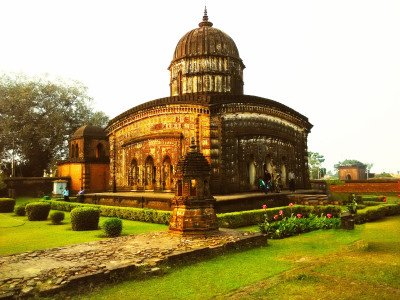
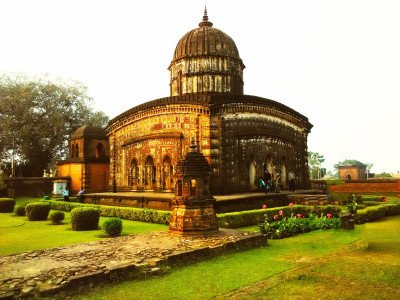
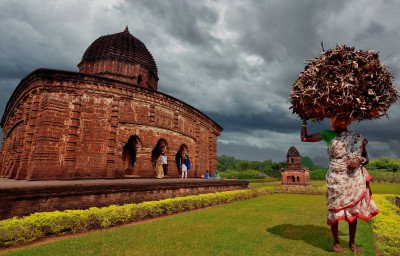
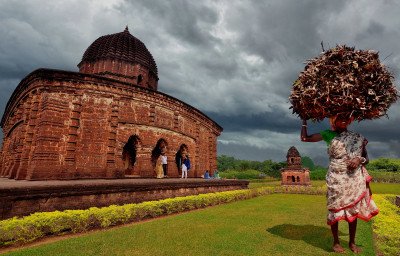
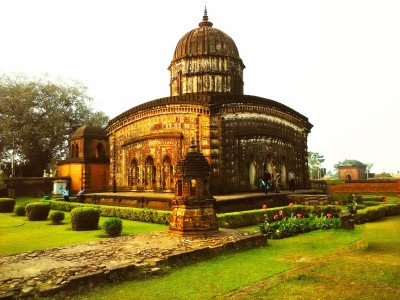
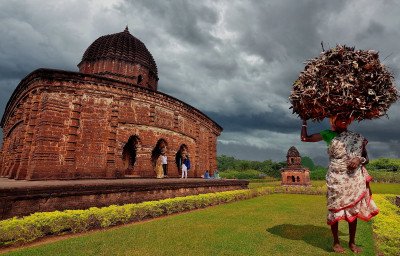
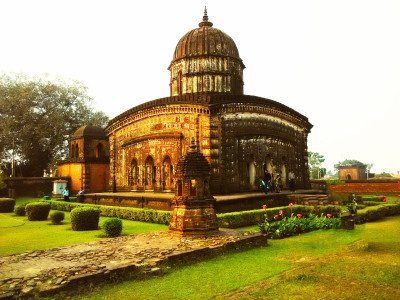
The Radha Govinda Temple is a beautiful example of the rich architectural and religious heritage of the Malla dynasty in Bishnupur. Built in 1729 AD by the Malla King Krishna Singha, this temple is dedicated to the Hindu deities Lord Krishna and Radha. The temple is made from laterite bricks and sta nds as a testament to the exquisite terracotta artistry that defines Bishnupur's identity. The walls are adorned with intricate terracotta carvings that depict scenes from the Hindu epics, especially the life of Lord Krishna, as well as mythological tales and social life of that era. The temple's location near the Lalbandh, a large pond, adds to its serene and picturesque setting. As you walk around the temple, you can feel the stories etched in the burnt bricks come to life. The detailed artwork, from dancing figures to battle scenes, showcases the remarkable skill of the artisans of the 18th century.

Ans:- Answer: "Pankha" is a traditional decorative technique where a mixture of lime, clay, and other organic binders is applied over the rough laterite stone to create a smooth surface for fine carvings. This allowed artisans to achieve a level of detail similar to terracotta on the much harder laterite stone, although this layer is prone to peeling over centuries.

Ans:- Answer: Generally, the temple follows the standard ASI timings from sunrise to sunset. While some individual temples in Bishnupur may be free to enter, a composite ticket is often required for the main cluster of monuments. It is advisable to check the current rates at the ticket counter near Rasmancha or Shyam Rai Temple before heading to Radha Govinda.

Ans:- Answer: Photography is usually permitted in the temple complex for personal use. However, the use of tripods or professional video equipment may require special permission from the ASI. Visitors are encouraged to capture the beautiful interplay of light and shadow on the laterite carvings, especially during the golden hours of early morning or late afternoon.

Ans:- Answer: The Radha Govinda Temple was constructed in 1729 AD during the reign of Malla King Krishna Singha, who was the son of King Gopal Singha. It is one of the later additions to the magnificent temple complex of Bishnupur, reflecting the peak of Malla architectural patronization before the eventual decline of the dynasty.

Ans:- Answer: The southern facade of the temple contains the most significant decorations. You can see bas-reliefs depicting mythological scenes, floral patterns, and geometric designs. There are also depictions of daily life, including musicians, dancers, and royal processions. Though much of the original stucco has weathered away, the remaining stone carvings still display great artistic finesse.

Ans:- Answer: The temple is dedicated to Lord Krishna (Govinda) and his consort Radha. Like most Malla temples in Bishnupur, it reflects the deep influence of Gaudiya Vaishnavism, which became the state religion under King Bir Hambir. While the original idols may no longer be in active daily worship here, the temple remains a sacred pilgrimage site.

Ans:- Answer: The temple stands on a low platform and has a square base measuring approximately 12.4 meters by 12.4 meters. It reaches a total height of about 10.7 meters. The compact yet sturdy design is typical of laterite temples, which were built to withstand the humid climate and heavy monsoon rains of the Bengal region.

Ans:- Answer: The triple-arched entrance is a classic feature of Bengal temple architecture. It provides a grand entry into the porch (mandapa) before the sanctum. The pillars of these arches are often the most decorated parts of the temple, featuring intricate motifs that represent the entrance to a divine realm, blending local folk styles with broader Hindu architectural traditions.

Ans:- Answer: This temple follows the "Eka-Ratna" (single-towered) style, which is a hallmark of Bishnupur architecture. It features a square base with a curved "chala" style roof, topped by a single central pinnacle or Shikhara. The structure is built primarily of laterite stone, which was a common building material in this region due to the scarcity of sandstone.

Ans:- Answer: Unlike the Shyam Rai Temple, which is a "Pancha-Ratna" (five-towered) structure built mainly of terracotta bricks, the Radha Govinda Temple is an "Eka-Ratna" structure made of laterite stone. While Shyam Rai is famous for its dense terracotta plaques, Radha Govinda features carvings on laterite that were originally covered with a fine lime-and-clay plaster known as "Pankha."

Ans:- Answer: Yes, Radha Govinda Temple is located in the southern part of the temple town, close to the Nandalal Temple and the Radha Madhav Temple. This cluster allows tourists to see several different variations of the Eka-Ratna style within a short walking distance, making it a very efficient part of a Bishnupur sightseeing tour.

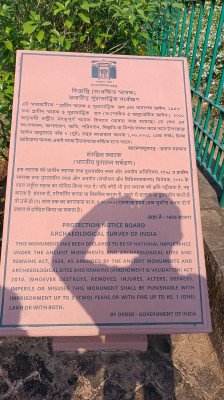
Ans:- Answer: Yes, the Radha Govinda Temple is a protected monument under the Archaeological Survey of India (ASI). The ASI is responsible for its structural maintenance, the preservation of its carvings, and the upkeep of the surrounding gardens. Visitors are expected to follow strict rules to ensure the heritage site is not damaged by human touch or graffiti.

Ans:- Answer: Yes, there is a very interesting miniature terracotta chariot located to the southeast of the main temple. This small structure resembles a miniature temple itself and is highly detailed. Some historians suggest it may have served as a structural model or "blueprint" before the construction of larger temples in the Bishnupur area.
Information about New and Updated Locations(575+) of West Bengal Has Been Added :-
Card subtitle

Note:-

Information provided here in good Faith and for reference only.

All information and pictures will be updated soon, please keep visiting.

Near Places
...
Acharya Jogesh Chandra Museum

Some quick example text to build on the card title and make up the bulk of the card's content.

Go somewhere

...
Big Stone Gateway

Some quick example text to build on the card title and make up the bulk of the card's content.

Go somewhere
...
Bishnupur Mela Ground

Some quick example text to build on the card title and make up the bulk of the card's content.

Go somewhere
...
Bishnupur Rajbari

Some quick example text to build on the card title and make up the bulk of the card's content.

Go somewhere
...
Chhinnamasta Temple

Some quick example text to build on the card title and make up the bulk of the card's content.

Go somewhere
...
Dalmadal Cannon

Some quick example text to build on the card title and make up the bulk of the card's content.

Go somewhere
...
Garh Darwaja

Some quick example text to build on the card title and make up the bulk of the card's content.

Go somewhere
...
Gokul Chand Temple

Some quick example text to build on the card title and make up the bulk of the card's content.

Go somewhere
...
Hadal-Narayanpur

Some quick example text to build on the card title and make up the bulk of the card's content.

Go somewhere
...
Jhilimili & Sutan Forest

Some quick example text to build on the card title and make up the bulk of the card's content.

Go somewhere
in Other Cities