...

FAQs On Shyam Rai Temple

Bishnupur, West Bengal, India
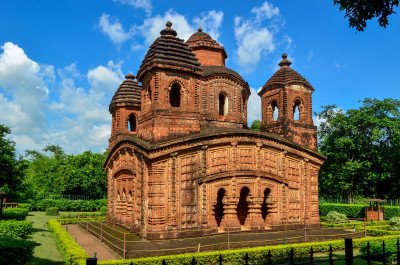
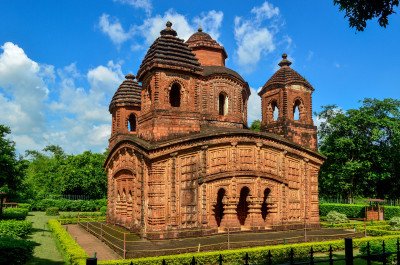
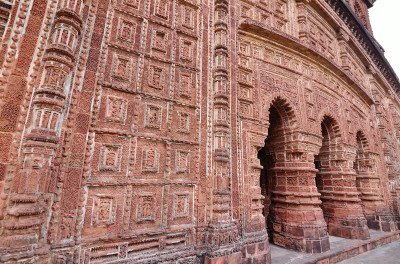
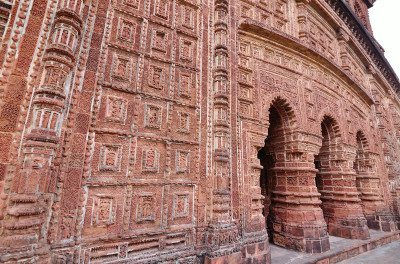
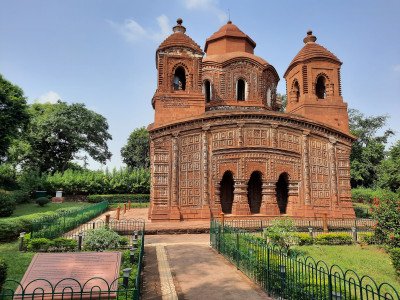
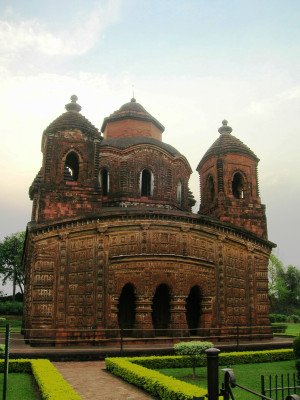
The Shyam Rai Temple, also known as the Pancha Ratna Temple (Five Gems Temple), is one of the most stunning examples of the terracotta architecture in Bishnupur. Built by Malla King Raghunath Singha in 1643 AD, this temple is dedicated to Lord Krishna (Shyam) and Radhika (Radha). The temple is famou s for its intricate and profuse terracotta carvings that cover the exterior walls, illustrating scenes from the Krishna Lila, episodes from the Hindu epics like the Ramayana and Mahabharata, and various Puranic narratives. It stands on a low square plinth and features an ambulatory path (pradakshina path) with porches on all four sides. The sheer artistry displayed in the panels makes it a significant cultural and historical site. It is currently maintained by the Archaeological Survey of India (ASI).

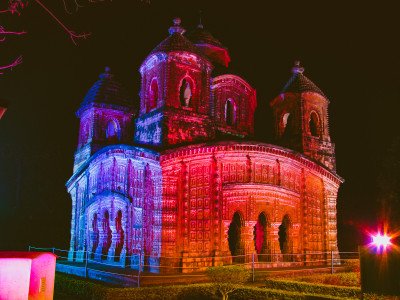
Ans:- Answer: "Pancha-Ratna" means five gems or towers. The temple has a square base with a curved roof typical of Bengali huts. On top of this roof, there are four small towers at the corners and one larger central tower. This design creates a balanced, symmetrical look and provided a way to display the deities on a higher level during festivals.

Ans:- Answer: Because of the density of the art, you should plan to spend at least 1 hour at the Shyam Rai Temple. It takes time to look closely at the hundreds of individual plaques and understand the stories they tell. If you are interested in Indian mythology or art history, you could easily spend half a day here exploring every corner.

Ans:- Answer: Early morning is the best time for photography because the rising sun hits the eastern facade directly, highlighting the depth of the terracotta carvings. The low-angle light brings out the 3D effect of the plaques. Afternoon light is also good for the western side, but the temple complex can get crowded with tourists later in the day.

Ans:- Answer: Locally, the temple is often called "Panch Chura" (Five Peaks) because of its five distinctive towers. This name is a simple Bengali description of the Pancha-Ratna style. For the local people, these towers are not just architectural features but symbolize the five "ratnas" or jewels of their cultural and spiritual heritage that have survived through the ages.

Ans:- Answer: The ASI uses various scientific methods to preserve the terracotta, including chemical cleaning to remove moss and lichen. They also work on "pointing" the brickwork to prevent water seepage. Because the terracotta is fragile, visitors are strictly prohibited from touching the carvings, as the oils from human skin can cause the ancient clay to degrade over time.

Ans:- Answer: The designs on the terracotta panels of the Shyam Rai Temple have long served as the primary inspiration for the motifs found on Baluchari sarees. Weavers often replicate the scenes of the Ramayana, Mahabharata, and Krishna Leela from these temple walls onto the silk borders of the sarees, creating a beautiful link between architecture and textile art.

Ans:- Answer: The panels depict a wide range of themes, primarily centered on the life of Lord Krishna (Krishna Leela). You can see the famous Ras-Mandala (the dance of Krishna with Gopis), scenes from the Ramayana and Mahabharata, and even depictions of contemporary 17th-century social life, including hunting scenes, soldiers, and European voyagers in ships.

Ans:- Answer: The Ras-Mandala carvings at Shyam Rai Temple are among the most beautiful in India. They depict Krishna and the Gopis dancing in a circle. The intricate detail in the clothing, jewelry, and expressions of the figures is stunning. These panels represent the spiritual core of Vaishnavism—the divine love and the cosmic dance of the soul with the divine.

Ans:- Answer: The Shyam Rai Temple is constructed entirely of high-quality burnt clay bricks. Because stone was scarce in the alluvial plains of Bengal, the Malla kings perfected the art of using brick and terracotta. The bricks used here are incredibly durable, and the terracotta plaques were baked to a specific hardness to ensure they could survive the elements for centuries.

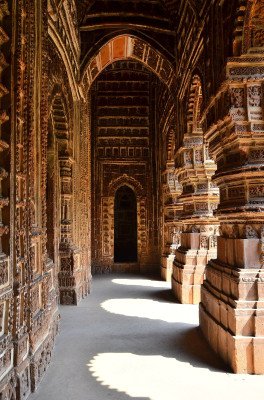
Ans:- Answer: The Shyam Rai Temple is world-renowned for having the most elaborate and finest terracotta carvings among all the temples in Bishnupur. Every inch of its walls, both inside and out, is covered with intricate plaques. It is also famous for its "Pancha-Ratna" (five-towered) architecture, making it a masterpiece of 17th-century Bengal temple art.

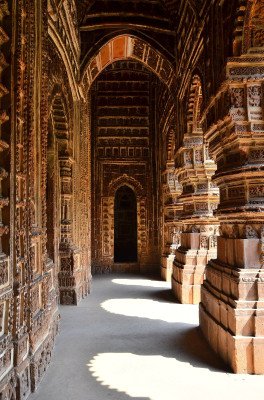
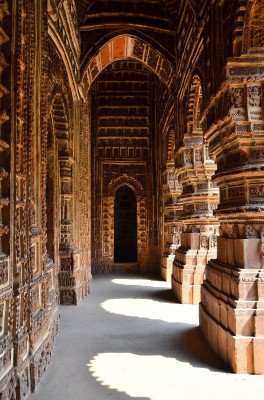
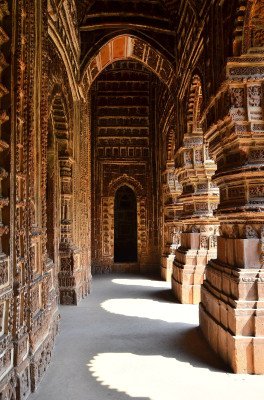
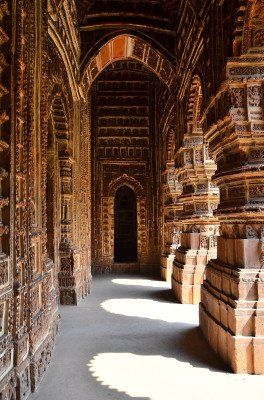
Ans:- Answer: The temple features triple-arched entrances on all four sides. These arches are heavily decorated with terracotta motifs. The pillars supporting the arches are square and divided into several horizontal panels, each telling a different story. This repetitive yet diverse decoration is a hallmark of the "Bishnupur style" that reached its peak in this temple.

Ans:- Answer: The temple was built in 1643 AD by King Raghunath Singha, who was one of the most powerful and culturally inclined rulers of the Malla dynasty. His reign is often considered the "Golden Age" of Bishnupur, during which some of the most beautiful terracotta structures were commissioned to honor the deity Lord Krishna.

Ans:- Answer: Tourists can generally enter the porch and the circumambulatory path around the sanctum. However, the innermost chamber where the deity was originally kept is often restricted or empty, as the original idols are now kept in other active temples for safety. The focus for tourists is the breathtaking art on the interior and exterior walls.

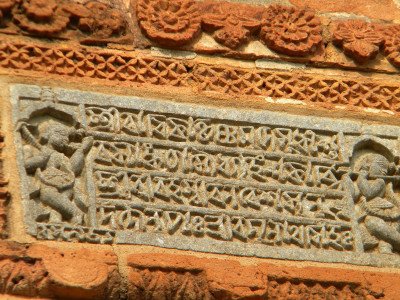
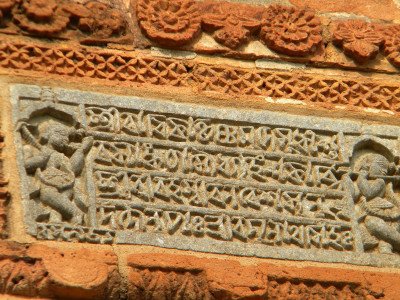
Ans:- Answer: Yes, the temple contains a dedicatory inscription in Sanskrit written in the old Bengali script. This inscription provides the date of construction (1643 AD) and names King Raghunath Singha as the builder. Such inscriptions are vital for historians to accurately trace the timeline of the Malla dynasty and the evolution of their architectural styles.

Ans:- Answer: Yes, the temple is situated within a well-maintained compound with green lawns and flower beds managed by the ASI. This provides a peaceful environment for visitors to sit and admire the architecture. The surrounding greenery also offers a beautiful backdrop for photographs and helps protect the temple from the dust of the nearby town roads.
Information about New and Updated Locations(575+) of West Bengal Has Been Added :-
Card subtitle

Note:-

Information provided here in good Faith and for reference only.

All information and pictures will be updated soon, please keep visiting.

Near Places
...
Acharya Jogesh Chandra Museum

Some quick example text to build on the card title and make up the bulk of the card's content.

Go somewhere

...
Big Stone Gateway

Some quick example text to build on the card title and make up the bulk of the card's content.

Go somewhere

...
Bishnupur Mela Ground

Some quick example text to build on the card title and make up the bulk of the card's content.

Go somewhere
...
Bishnupur Rajbari

Some quick example text to build on the card title and make up the bulk of the card's content.

Go somewhere
...
Chhinnamasta Temple

Some quick example text to build on the card title and make up the bulk of the card's content.

Go somewhere
...
Dalmadal Cannon

Some quick example text to build on the card title and make up the bulk of the card's content.

Go somewhere
...
Garh Darwaja

Some quick example text to build on the card title and make up the bulk of the card's content.

Go somewhere
...
Gokul Chand Temple

Some quick example text to build on the card title and make up the bulk of the card's content.

Go somewhere
...
Hadal-Narayanpur

Some quick example text to build on the card title and make up the bulk of the card's content.

Go somewhere
...
Jhilimili & Sutan Forest

Some quick example text to build on the card title and make up the bulk of the card's content.

Go somewhere
in Other Cities