Shyam Rai Temple
General information
-
Ideal Duration:
45 Minutes to 1 Hour 15 Minutes.Place Type:
Religious/Historical/Architectural.Entry Fees:
ASI Ticket System: A single composite ticket issued by the Archaeological Survey of India (ASI) covers entry to most of the protected temples in Bishnupur, including Shyam Rai Temple. This ticket is often purchased at the first ASI-protected site visited, usually Rasmancha....ASI Ticket System: A single composite ticket issued by the Archaeological Survey of India (ASI) covers entry to most of the protected temples in Bishnupur, including Shyam Rai Temple. This ticket is often purchased at the first ASI-protected site visited, usually Rasmancha.
Fee for Indian Nationals: The typical charge is a nominal fee of approximately Rs.25 to Rs.30 per person (as of recent information, subject to change). This single ticket is valid for one day and grants access to all major protected sites.
Fee for Foreign Nationals: The charge is higher for foreign tourists, typically around Rs.300 per person (as of recent information, subject to change).
Additional Fees: There are generally no separate camera or video recorder fees for still photography. However, commercial or drone photography may require special permission and additional charges.Timing:
Regular Timings: Generally 6:00 AM to 6:00 PM daily. Since it is an ASI-protected monument, access is limited to daylight hours.
Ideal Visit Time: The best time is during the early morning (around 7:00 AM to 9:00 AM) or late afternoon (arou...Regular Timings: Generally 6:00 AM to 6:00 PM daily. Since it is an ASI-protected monument, access is limited to daylight hours.
Ideal Visit Time: The best time is during the early morning (around 7:00 AM to 9:00 AM) or late afternoon (around 4:00 PM to 5:30 PM). The soft, directional sunlight during these times enhances the shadow and texture of the terracotta carvings, making them look stunning in person and in photographs. The temperature is also more comfortable.Special Events:
The Rasa Festival Connection: Although the main congregational event happens at the Rasmancha, the Shyam Rai Temple traditionally plays a key role during the Rasa Festival (usually held in the Bengali month of KRs.rtik - November-December). During this time, the idol from the...The Rasa Festival Connection: Although the main congregational event happens at the Rasmancha, the Shyam Rai Temple traditionally plays a key role during the Rasa Festival (usually held in the Bengali month of KRs.rtik - November-December). During this time, the idol from the Shyam Rai Temple would historically be taken in a procession to the Rasmancha for public display and worship. This event showcases the religious zeal and community spirit of the town.
Poila Baishakh (Bengali New Year): While not specific to this temple, the entire Bishnupur temple complex sees special rituals and increased festive activity during the Bengali New Year (mid-April), celebrating the region's cultural heritage.Best Photo Spots:
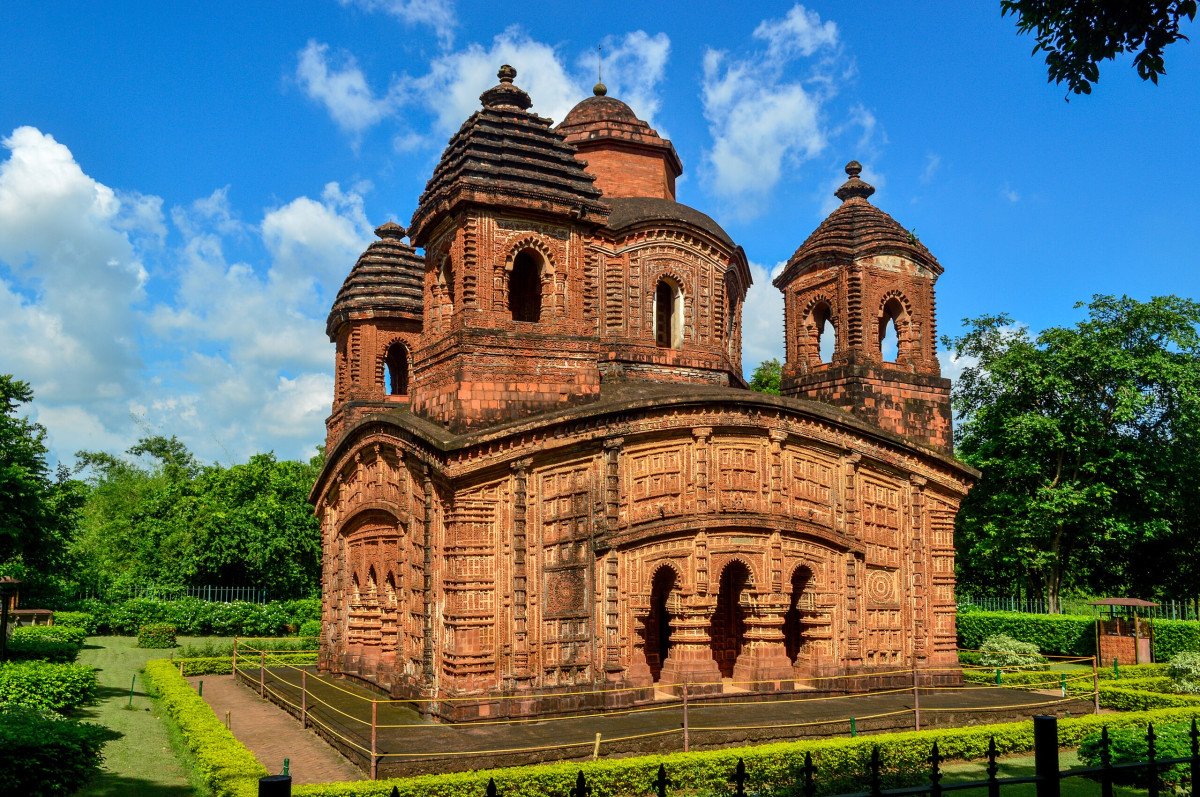
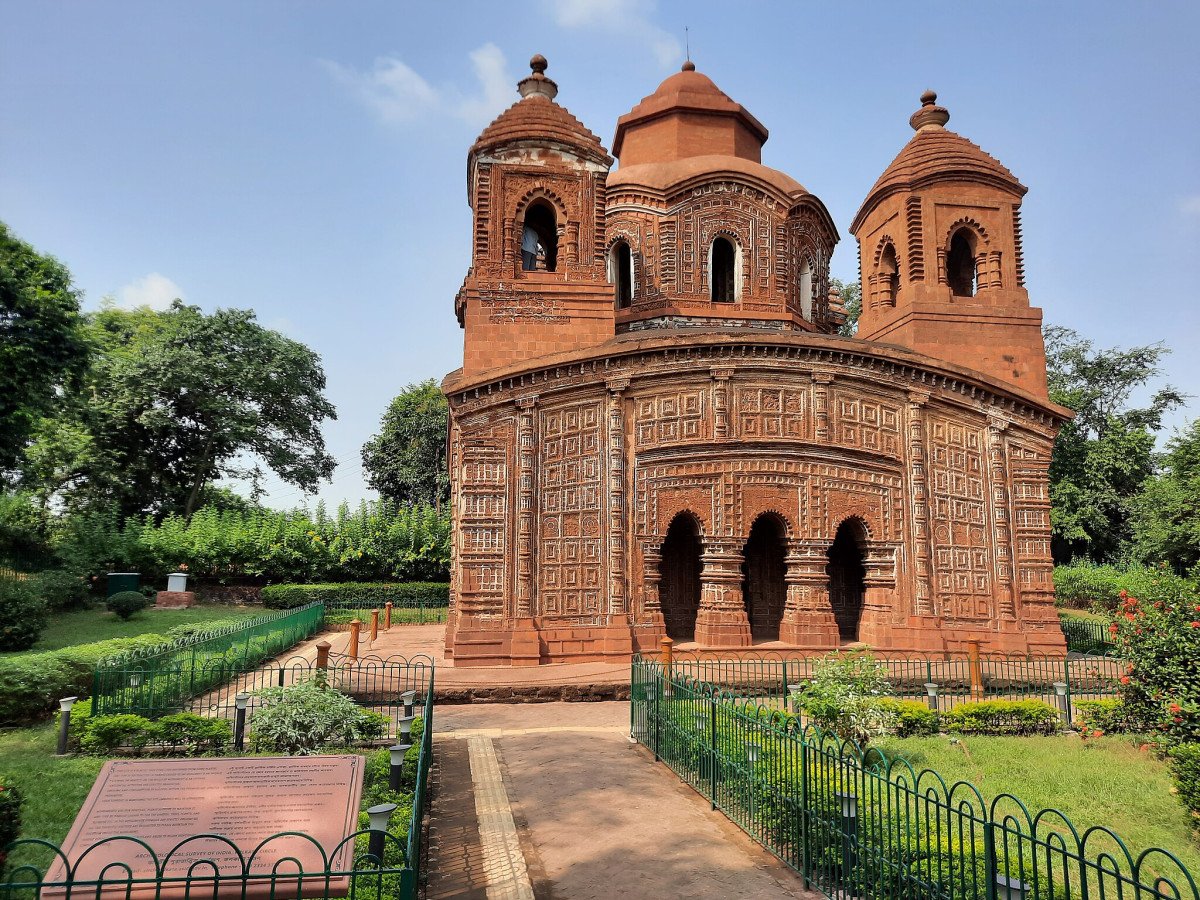
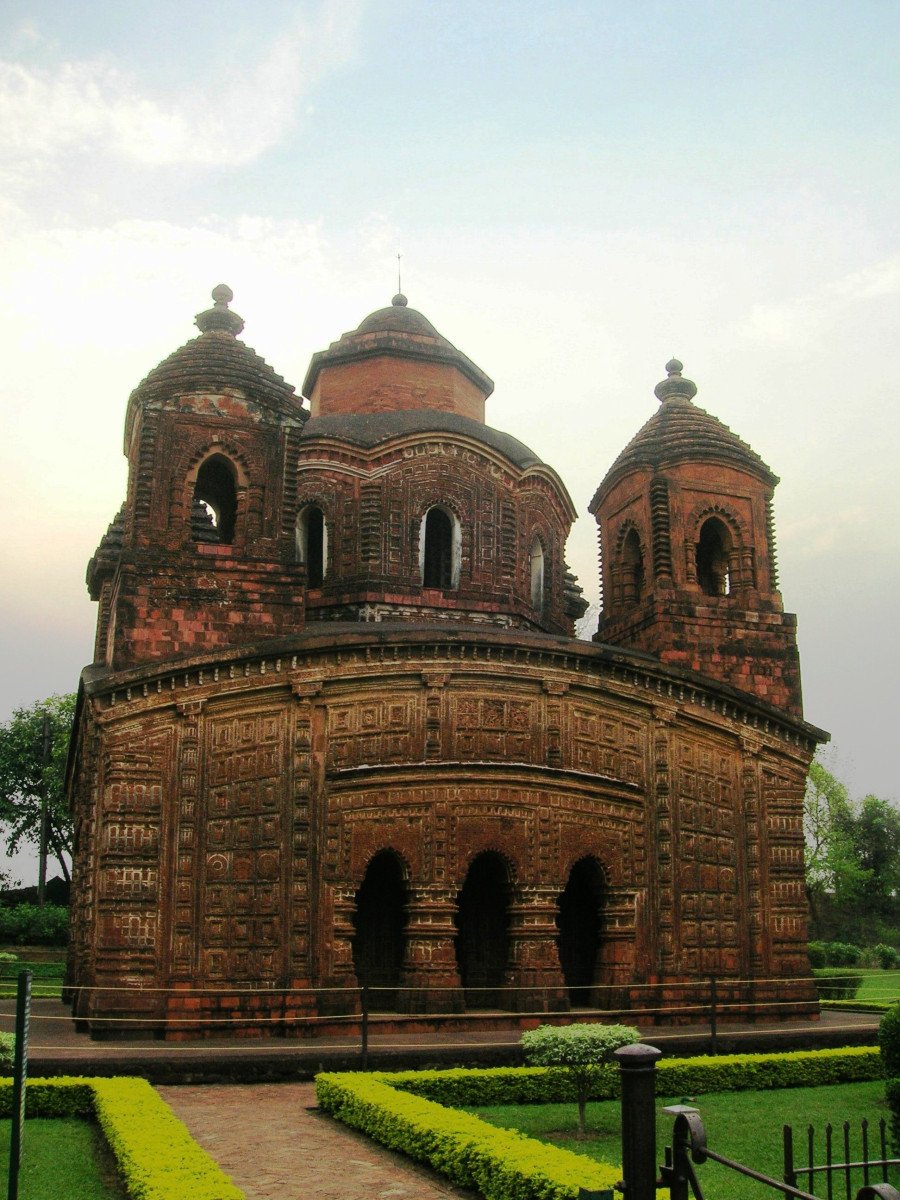
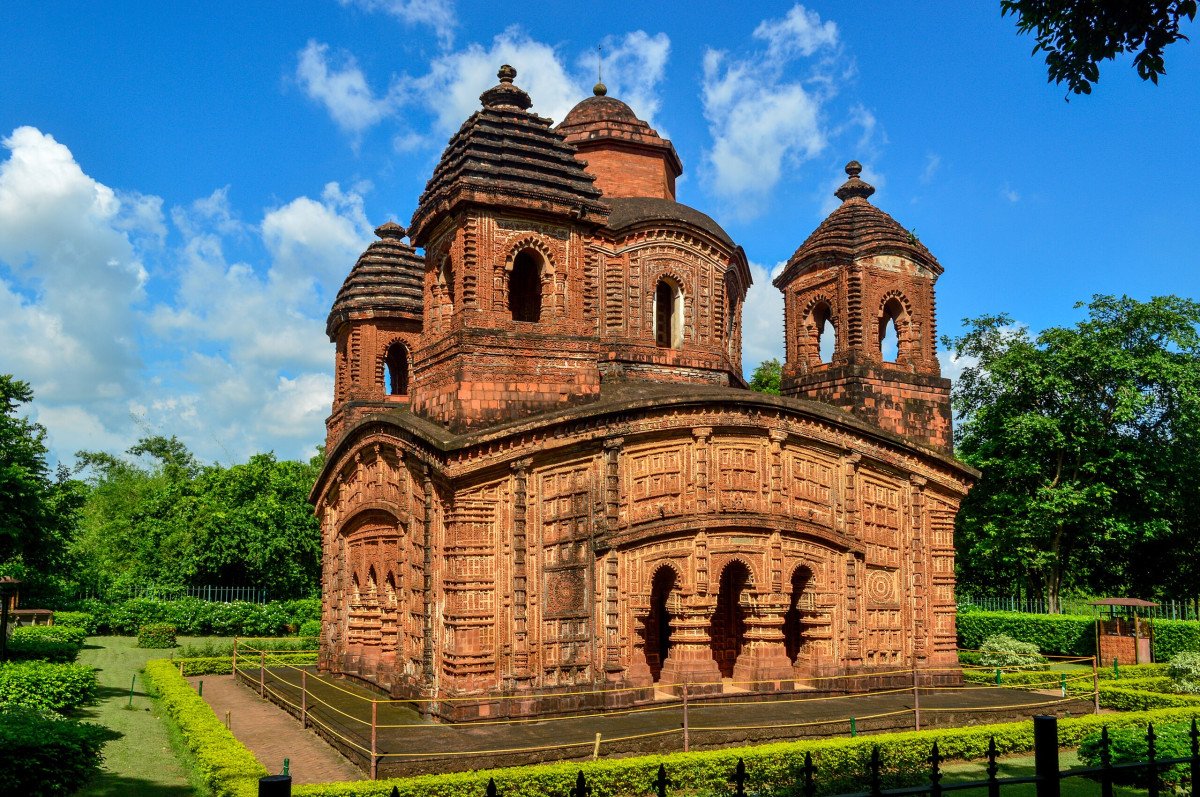
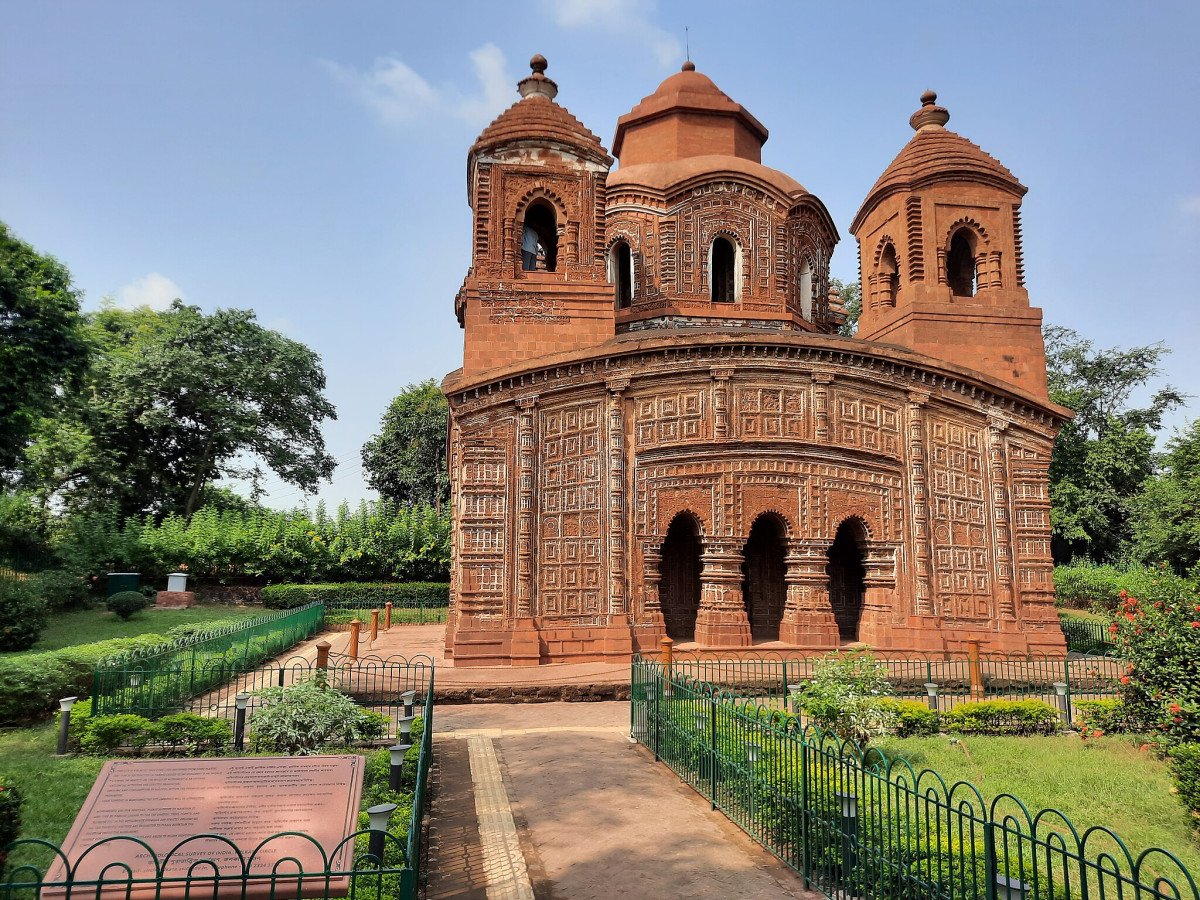
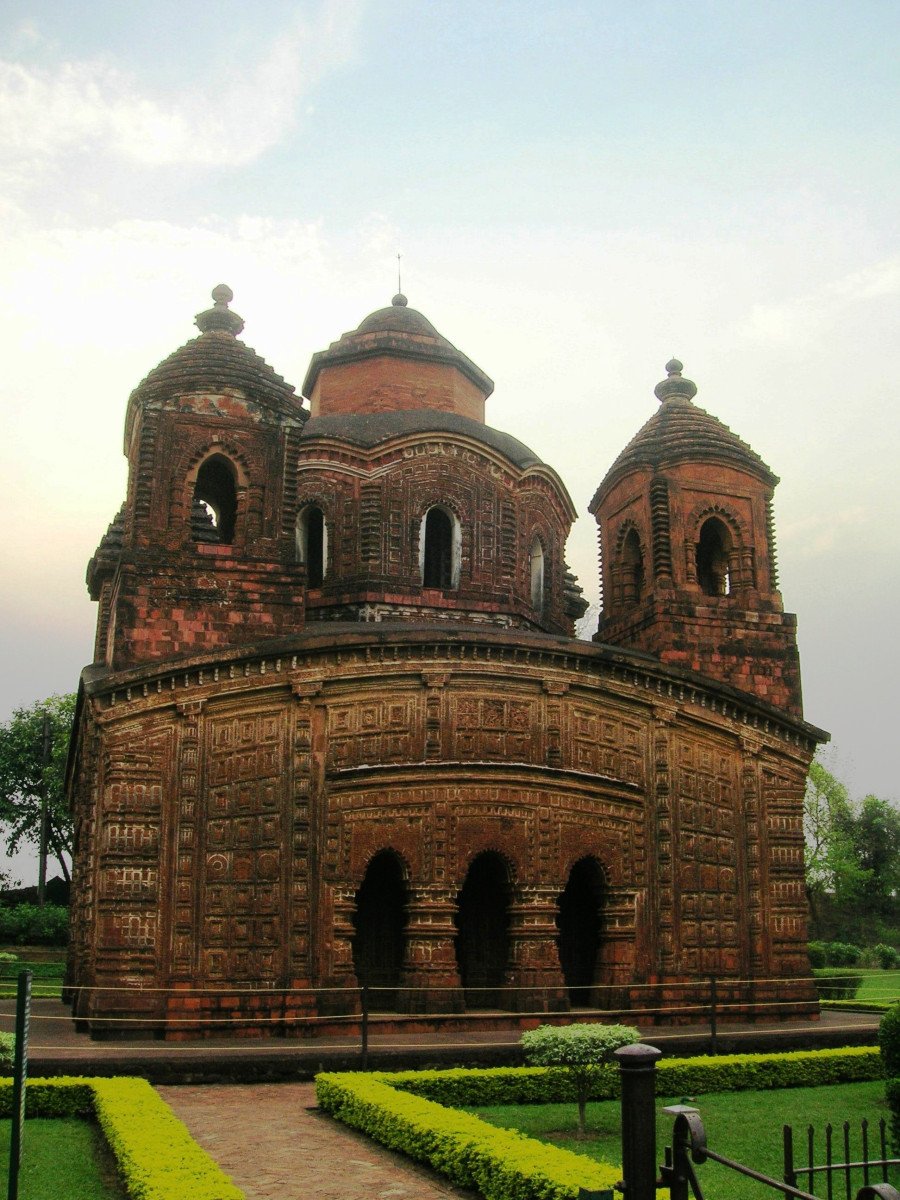
The Corner View: The best angle to capture the entire Pancha Ratna structure, including all five towers, is from one of the corners of the compound. This shot shows the temple's symmetry and the three-arched entrance of the porch.
Close-up of T...The Corner View: The best angle to capture the entire Pancha Ratna structure, including all five towers, is from one of the corners of the compound. This shot shows the temple's symmetry and the three-arched entrance of the porch.
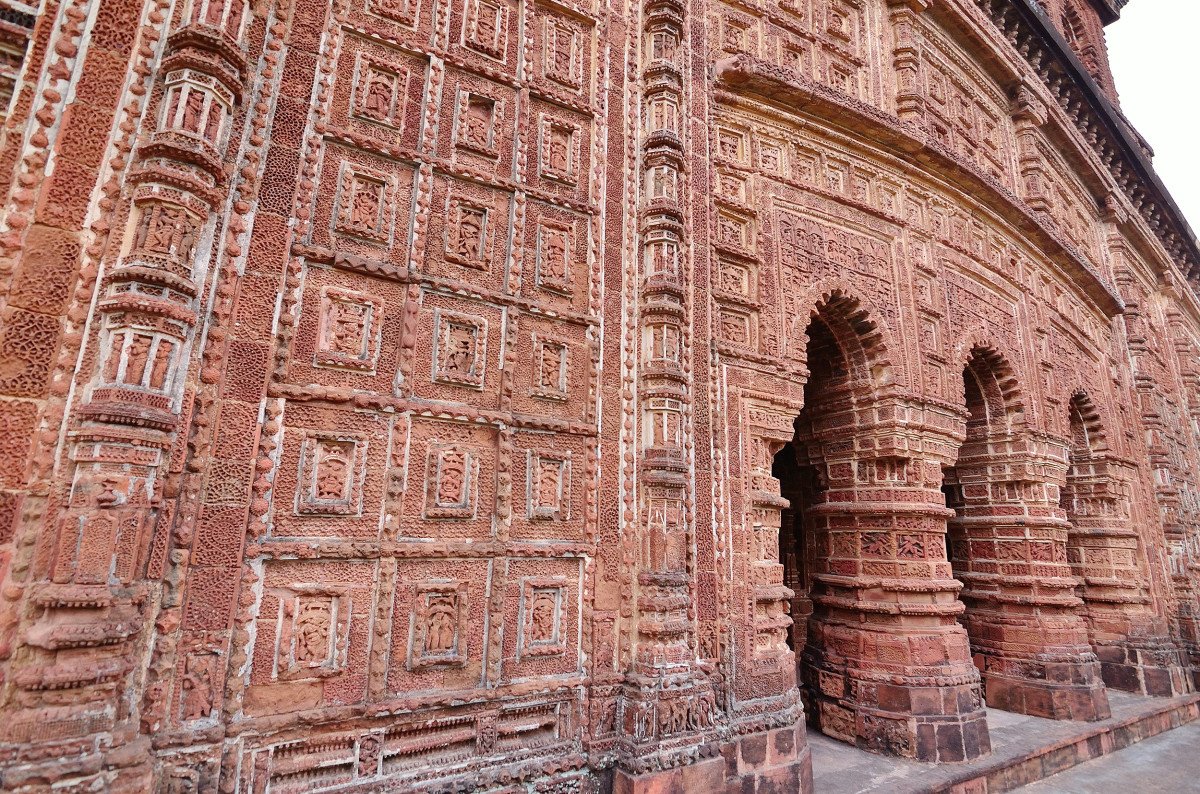
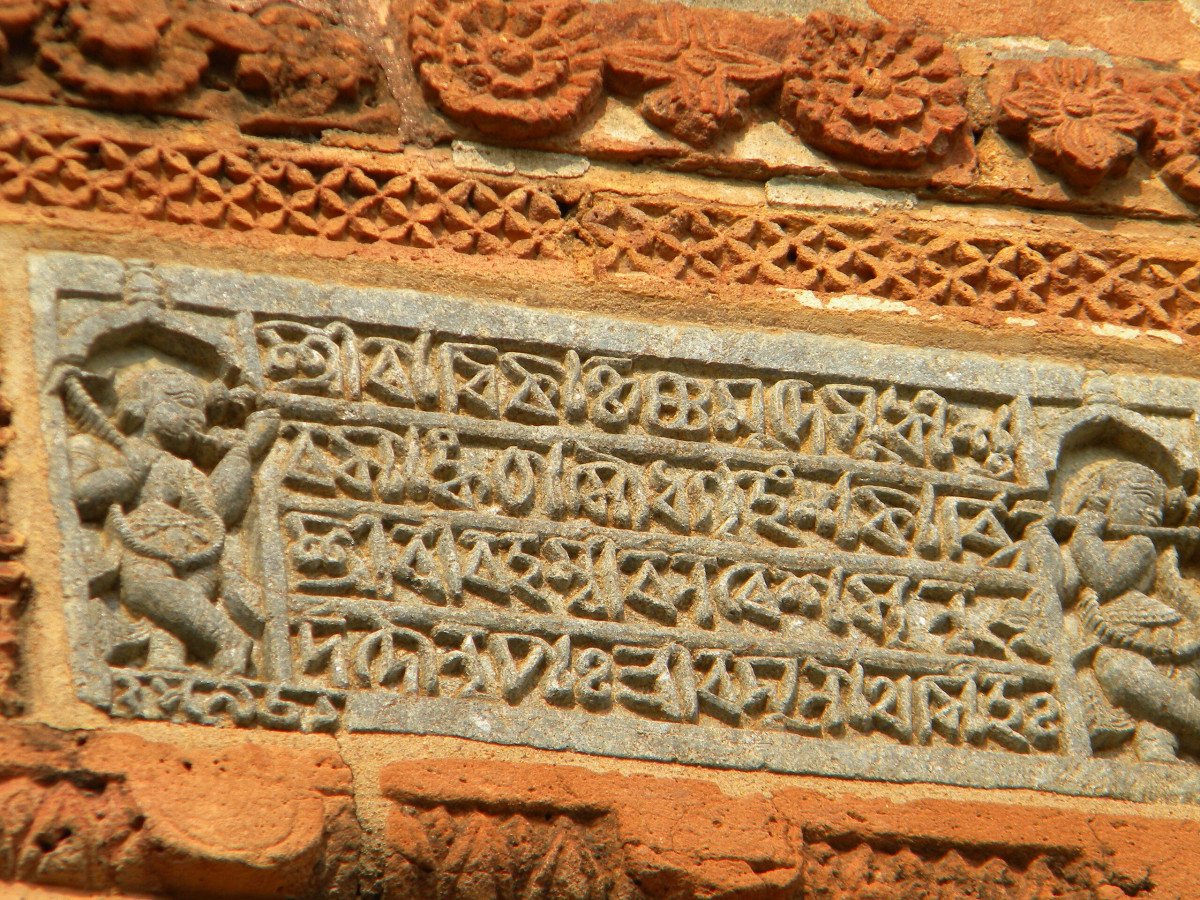
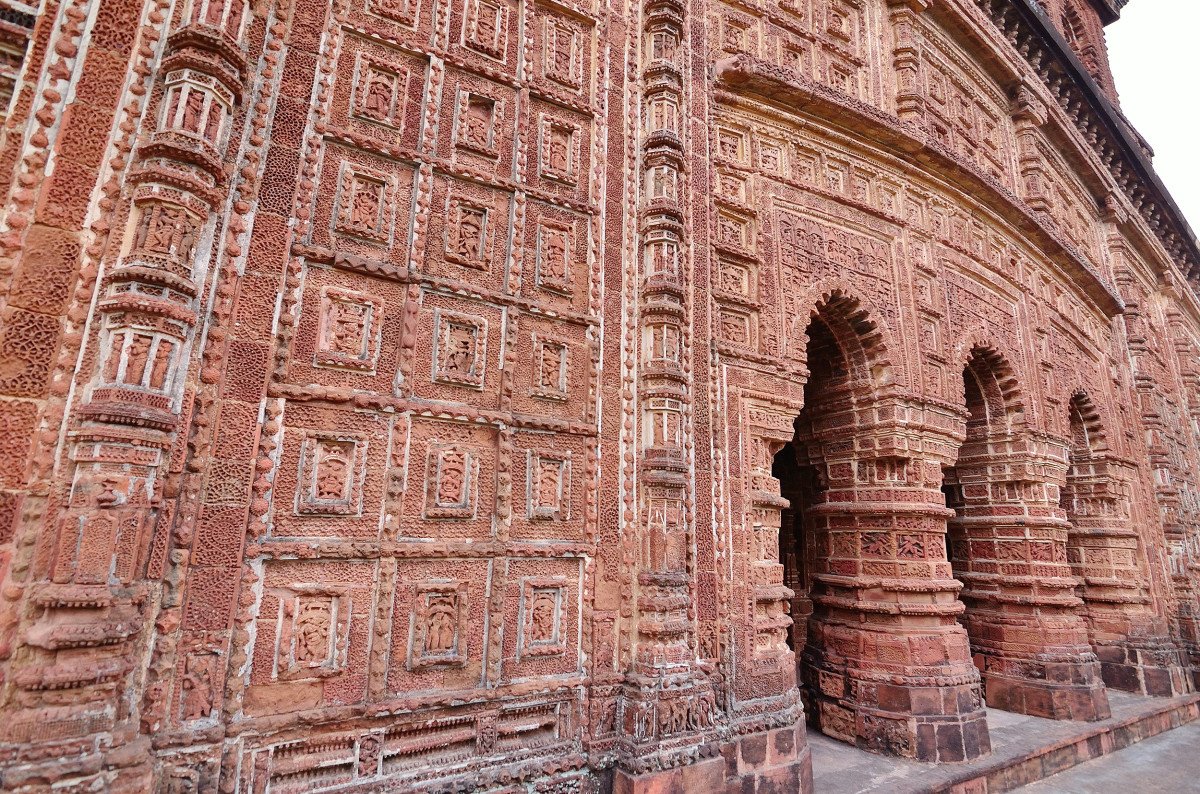
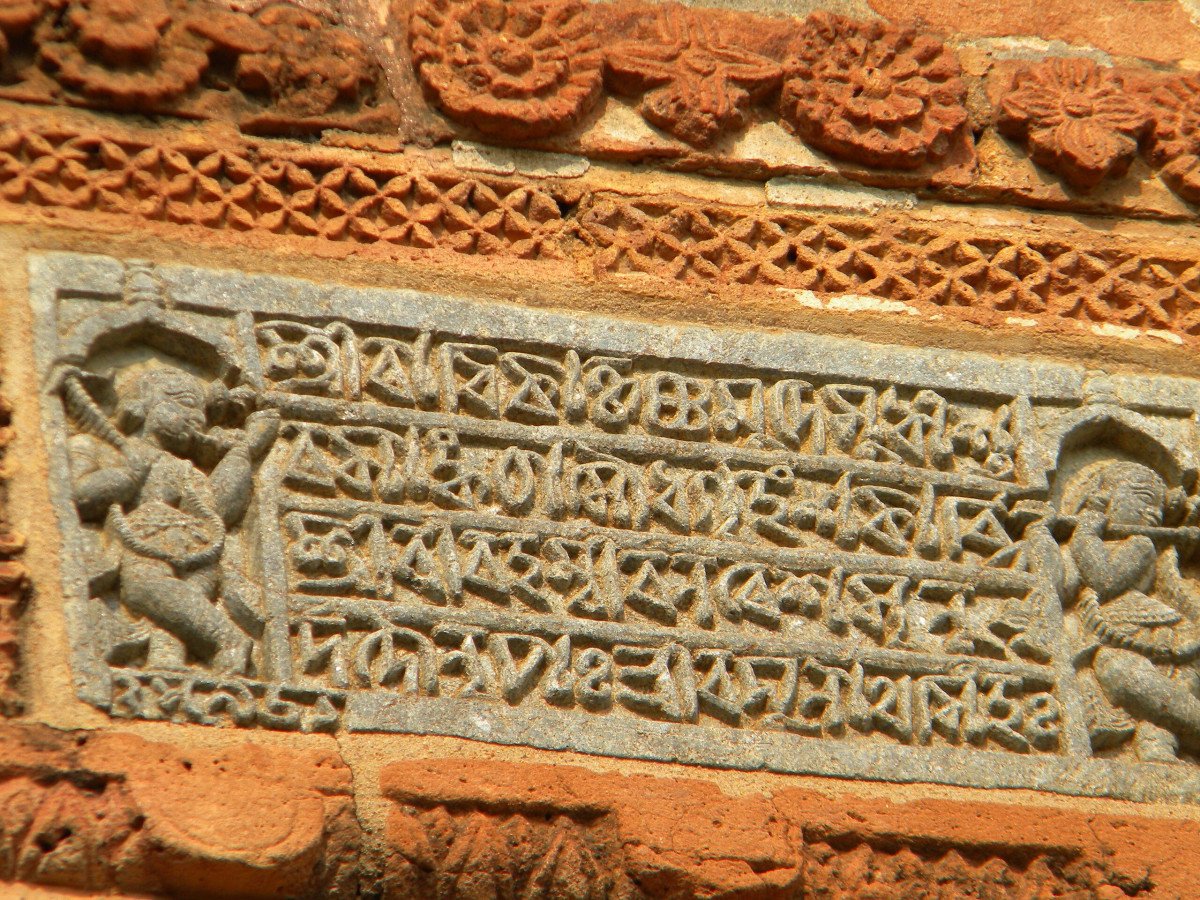
Close-up of Terracotta Panels: Focus your camera on the richly carved central panels above the arches and the friezes running along the wall base. These close-up shots highlight the mastery of the terracotta craftsmen.
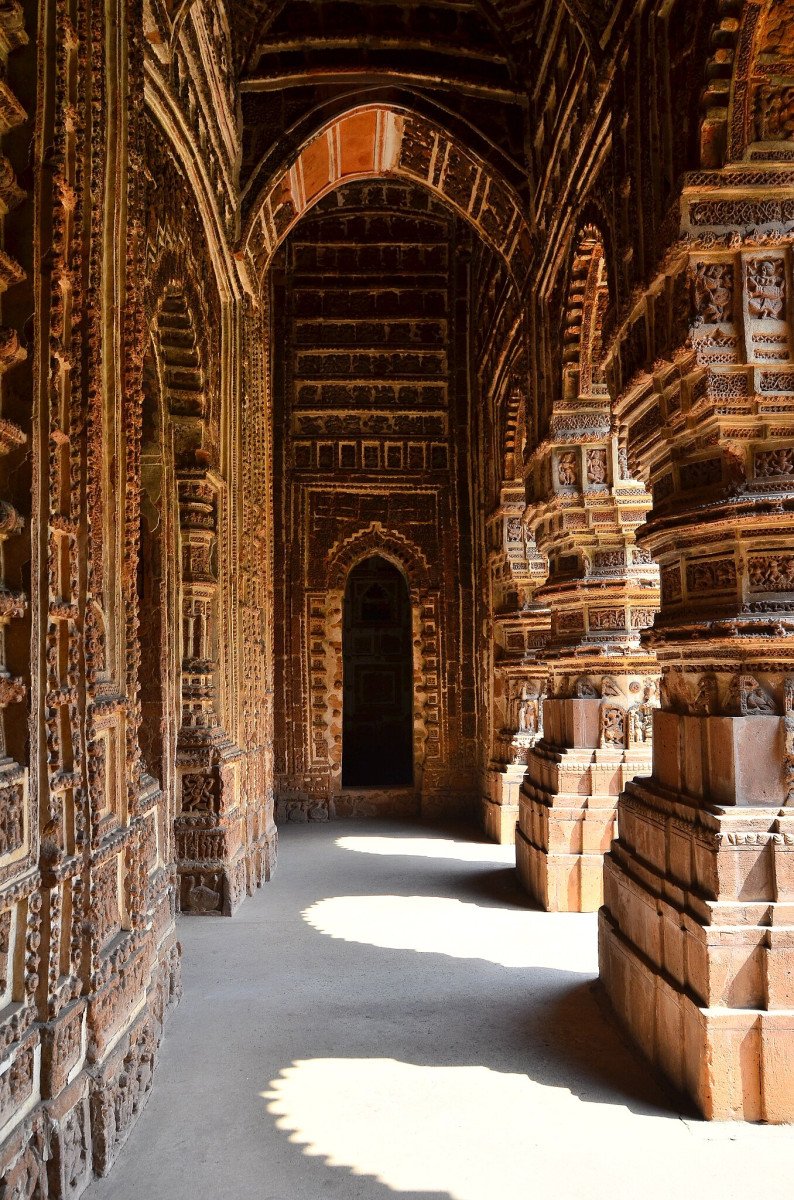
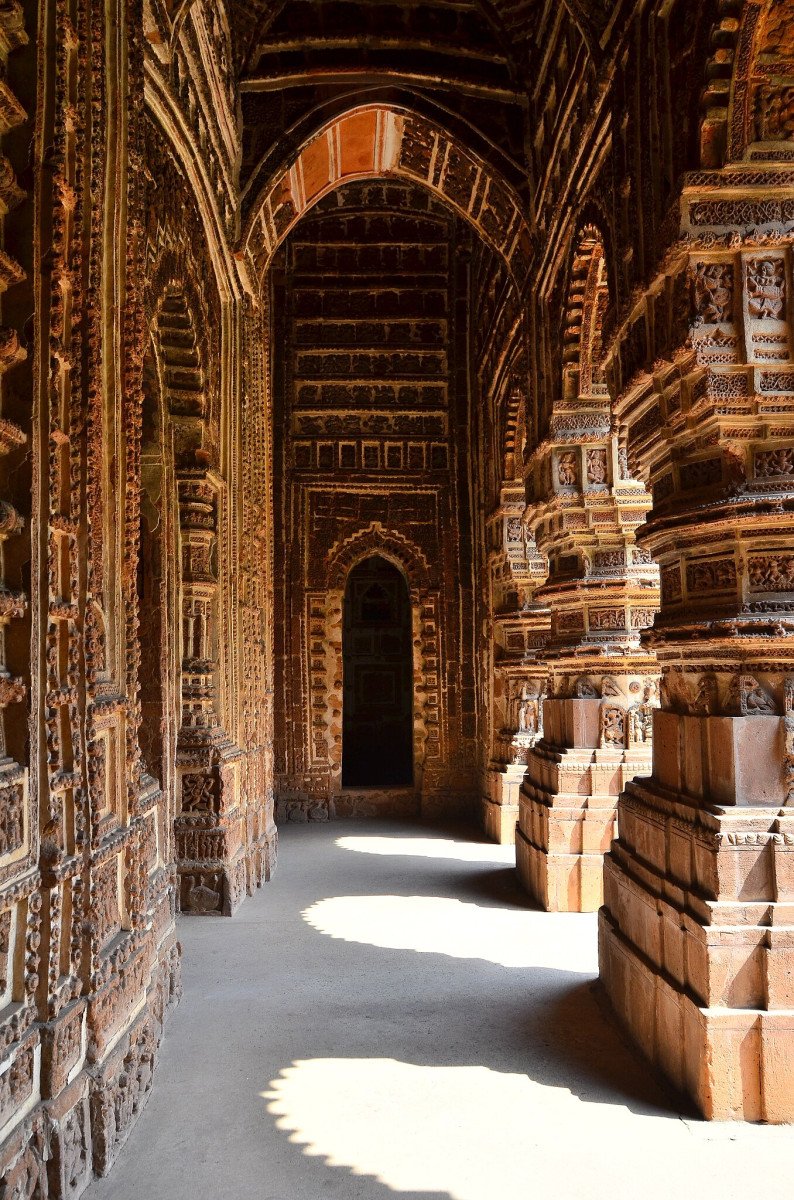
Framed by Arches: Stand in the ambulatory path and frame the inner sanctum through one of the multi-cusped arches. This provides a sense of depth and highlights the blend of architectural styles.
Garden Foreground: Use the lush green lawns and hedges maintained by the ASI in the foreground to provide a contrast to the reddish-brown brick structure. A picture taken early morning or late afternoon with soft light can enhance the texture of the brickwork.Photo Gallery
Things To Do
-
Detailed Terracotta Photography: Dedicate significant time to photographing the exterior walls. Focus on capturing the fine details of the terracotta panels, particularly the mythical figures, battle scenes, and the elaborate floral borders. Use a telephoto lens if possible to isolate specific carvings.
Architectural Study: Spend time analyzing the Pancha Ratna architecture. Walk around the temple to appreciate the symmetry of the five towers and the structure's overall design. Observe the transition from the base to the roof and how the weight is distributed.
Historical Context Exploration: Research the history of King Raghunath Singha and the Vaishnavism movement in Bishnupur. Imagine the scene during its construction and when it was an active place of worship. Local guides can provide de...
Information
-
Why Famous:
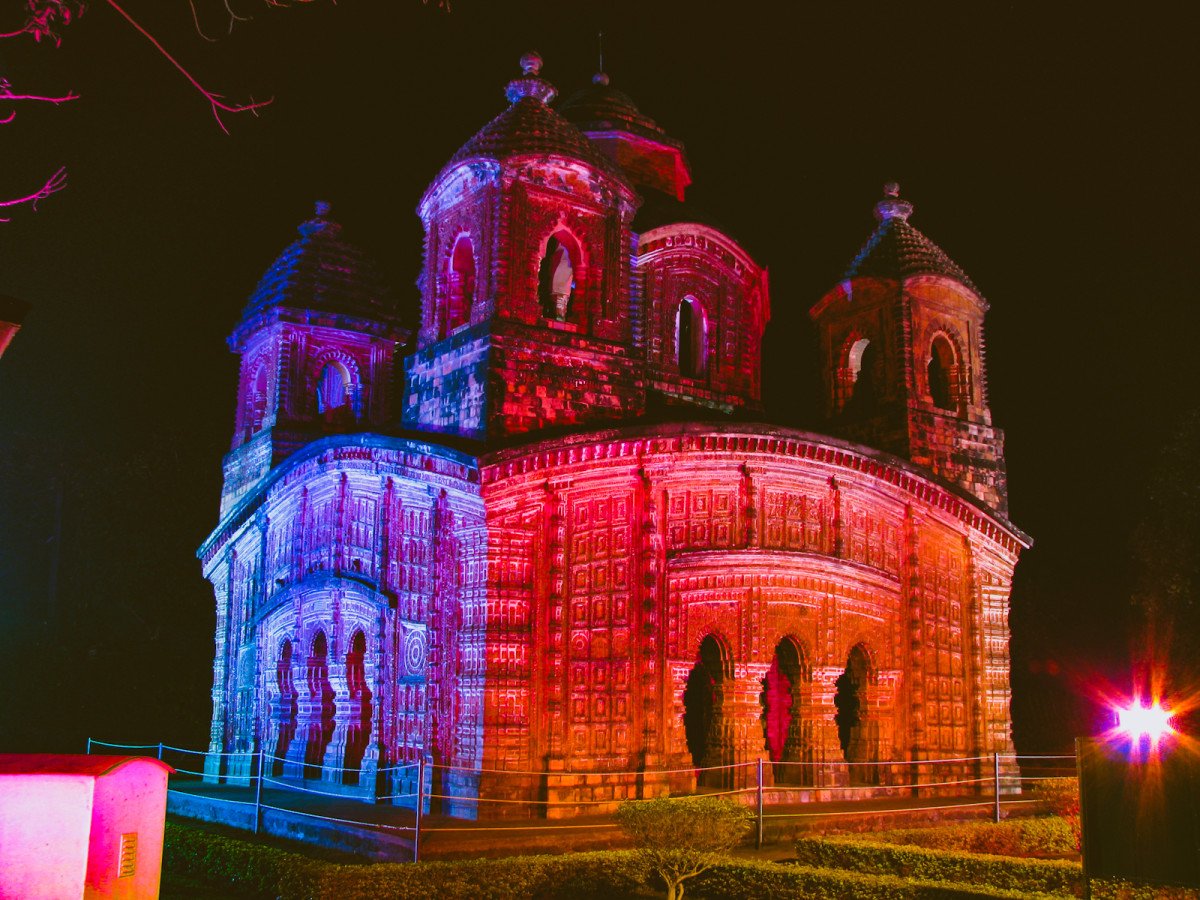
Magnificent Pancha Ratna Structure: It is a defining example of the five-tower temple style developed under the Malla Kings. Its unique and balanced five-pinnacle structure makes it instantly recognizable and architecturally important.
Highest ...Magnificent Pancha Ratna Structure: It is a defining example of the five-tower temple style developed under the Malla Kings. Its unique and balanced five-pinnacle structure makes it instantly recognizable and architecturally important.
Highest Terracotta Detail: The temple is renowned for having the most richly decorated exterior surface of all the Bishnupur temples. The quality, volume, and depth of the terracotta work are exceptional, providing a comprehensive visual guide to 17th-century religious and social life.
Historical and Royal Patronage: Built by King Raghunath Singha, a significant Malla ruler, the temple marks a high point in the kingdom's artistic and religious prosperity. Its dedication to Radha-Krishna reflects the strong Vaishnavite movement that flourished in the region. -
Architecture:
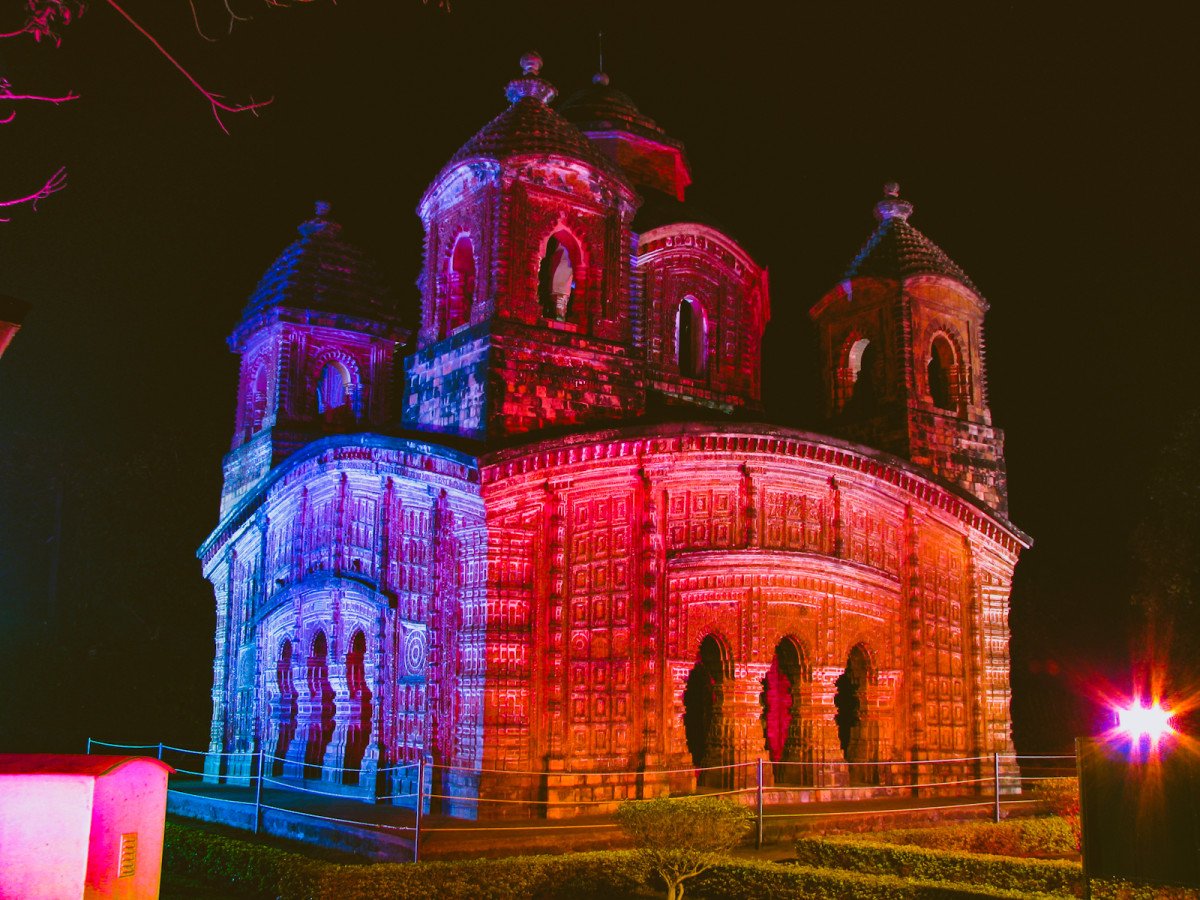
Architectural Style: Pancha Ratna (Five Towers) Style The temple is a prime specimen of the Pancha Ratna style, a unique form of Bengal temple architecture. The main structure is a square brick building with a curved roof typical of the Bengali chala style, surmounted by fi...Architectural Style: Pancha Ratna (Five Towers) Style The temple is a prime specimen of the Pancha Ratna style, a unique form of Bengal temple architecture. The main structure is a square brick building with a curved roof typical of the Bengali chala style, surmounted by five ornamental towers or shikharas.
Tower Configuration: The central tower is octagonal, while the remaining four towers at the corners are square. This five-tower arrangement gives the temple its name.
Terracotta Ornamentation: The most remarkable feature is the extensive use of terracotta plaques. These detailed carvings adorn the walls, featuring floral motifs, geometric patterns, and vivid depictions of mythological stories. The density of the carvings on the Shyam Rai Temple is arguably the highest among all the Bishnupur temples.
Dimensions: The temple has a square base, approximately 11. 4 m (37 ft) in length and 11. 4 m (37 ft) in width, with a maximum height of about 10. 7 m (35 ft).
Interior Design: The temple features an ambulatory pathway around the sanctum, and the ceiling of the temple's arches shows an influence of Islamic architecture with its curved vaulting, a feature less common in other temples in the area. -
How To Reach:
By Air: The nearest major airport is Netaji Subhas Chandra Bose International Airport (CCU) in Kolkata, approximately 150 KMS away. From Kolkata, you can hire a taxi or take a train/bus to Bishnupur.
By Train: The most convenient way. Bish... -
Near Tourist Places:
1. Jor Bangla Temple (Less than 0. 5 KMS) Famous for its twin-hut structure and terracotta work. 2. Radhashyam Temple (Less than 0. 5 KMS) Another beautiful Eka-Ratna temple. 3. Lalji Temple (Approx 1 KMS) Laterite stone Eka-Ratna temple dedicated to Radha-Krishna. 4. Kalachand Temple (Approx 1. 5 KMS) Early Eka-Ratna laterite temple. 5. Rasmancha (Approx 2 KMS) The oldest brick structure, a massive pyramidal pavilion. 6. Madan Mohan Temple (Approx 2. 5 KMS) Famous Eka-Ratna brick temple. 7. Dalmadal Cannon (Approx 2 KMS) Historic cannon of the Malla Kings. 8. Pathar Darja (Approx 2 KMS) The main gateway of the ancient fort. 9. Bishnupur Museum (Acharya Jogesh Chandra Purakriti Bhawan) (Approx 3 KMS) For historical artifacts. 10. Panchmura (10 KMS) Village famous for the original Bishnupur Terracotta Horse craft.
Tourism Tips
-
Health & safety: Carry sufficient water, especially if visiting between March and October. Wear comfortable walking shoes. The terracotta pathways can be uneven. Use sunscreen and wear a hat. Be aware of your surroundings, especially in crowded areas.
Read More
Reviews
Shyam Rai Temple Tourism:-
Information about New and Updated Locations(575+) of West Bengal Has Been Added :-
Card subtitle
Note:-
Information provided here in good Faith and for reference only.
All information and pictures will be updated soon, please keep visiting.
Near Places
Acharya Jogesh Chandra Museum
Some quick example text to build on the card title and make up the bulk of the card's content.
Go somewhere
Big Stone Gateway
Some quick example text to build on the card title and make up the bulk of the card's content.
Go somewhere
Bishnupur Mela Ground
Some quick example text to build on the card title and make up the bulk of the card's content.
Go somewhere
Bishnupur Rajbari
Some quick example text to build on the card title and make up the bulk of the card's content.
Go somewhere
Chhinnamasta Temple
Some quick example text to build on the card title and make up the bulk of the card's content.
Go somewhere
Dalmadal Cannon
Some quick example text to build on the card title and make up the bulk of the card's content.
Go somewhere
Garh Darwaja
Some quick example text to build on the card title and make up the bulk of the card's content.
Go somewhere
Gokul Chand Temple
Some quick example text to build on the card title and make up the bulk of the card's content.
Go somewhere
Hadal-Narayanpur
Some quick example text to build on the card title and make up the bulk of the card's content.
Go somewhere
Jhilimili & Sutan Forest
Some quick example text to build on the card title and make up the bulk of the card's content.
Go somewherein Other Cities