

WARANGAL
General information
-
Ideal Duration:
2 DaysPlace Type:
Heritage & PilgrimageEntry Fees:
Minimal Charges: Entry to the Warangal Fort and Thousand Pillar Temple costs around Rs.25 for Indians and Rs.300 for foreigners.
Extra Fees: Camera usage for professional photography or video might attract a separate fee of Rs.25 to Rs.100 depending...Minimal Charges: Entry to the Warangal Fort and Thousand Pillar Temple costs around Rs.25 for Indians and Rs.300 for foreigners.
Extra Fees: Camera usage for professional photography or video might attract a separate fee of Rs.25 to Rs.100 depending on the site.Timing:
Fort Timings: Open from 10:00 AM to 7:00 PM. The Sound and Light show usually starts around 6:30 PM in Telugu and English.
Temple Hours: Thousand Pillar Temple is open from 5:00 AM to 9:00 PM, allowing for early morning spiritual visits and...Fort Timings: Open from 10:00 AM to 7:00 PM. The Sound and Light show usually starts around 6:30 PM in Telugu and English.
Temple Hours: Thousand Pillar Temple is open from 5:00 AM to 9:00 PM, allowing for early morning spiritual visits and prayers.Special Events:
Sammakkka Saralamma Jatara: The world's largest tribal festival held biennially at Medaram, drawing millions of devotees to the Warangal region.
Bathukamma: A vibrant floral festival celebrated by women during Navratri, where the city lakes ...Sammakkka Saralamma Jatara: The world's largest tribal festival held biennially at Medaram, drawing millions of devotees to the Warangal region.
Bathukamma: A vibrant floral festival celebrated by women during Navratri, where the city lakes are filled with colorful flower stacks.Best Photo Spots:
Kirti Toranas: The four massive gateways at the fort are the most photographed spots, especially during the golden hour of sunset.
Bhadrakali Lake: The viewpoint from the temple stairs during sunrise offers a stunning reflection of the templ...Kirti Toranas: The four massive gateways at the fort are the most photographed spots, especially during the golden hour of sunset.
Bhadrakali Lake: The viewpoint from the temple stairs during sunrise offers a stunning reflection of the temple in the lake waters.Photo Gallery
Things To Do
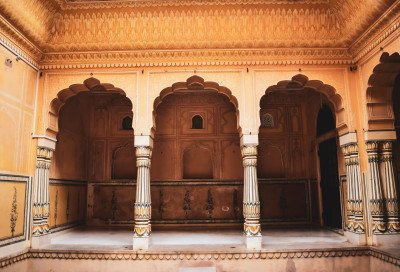 Warangal Fort is one of the most historically significant sites in Telangana, serving as the capital of the formidable Kakatiya Dynasty from the 12th to the 14th centuries. The fort complex, spread across a massive area, is renowned for its unique concentric circular fortifications, which once made it virtually impregnable. The original structure, begun by King Ganapatideva and completed by his daughter, Queen Rudrama Devi, consisted of an outer earthen wall, a middle stone wall (approximately 1.21 KMS in diameter), and an innermost core that housed the ruined Great Shiva Temple. The most iconic features are the four majestic Kakatiya Kala Thoranam (ornamental gateways), which stand at the cardinal points and are now the official emblem of the state of Telangana. Despite enduring numerous sieges and attacks, notably by the Delhi Sultanate under Malik Kafur and later by the Tughlaq Dynasty, the remnants of the fort still reflect the grandeur and engineering prowess of the Kakatiya period. Today, the ruins contain various historical structures, including the remnants of temples, a Shiva lingam, and the Kush Mahal (a later addition), making it a sprawling outdoor museum for Indian history and architecture.:
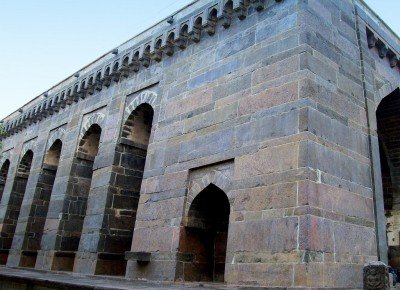 @@Historical Context: Khush Mahal (also known as Shitab Khan Mahal) is a significant 14th-century structure that stands within the ruins of the inner ring of the Warangal Fort. Its history is complex, reflecting the transition of power after the fall of the Kakatiya dynasty. It is primarily attributed to the Tughlaq dynasty's Prince Ulugh Khan (who later became Muhammad bin Tughlaq) after the conquest of Warangal in 1323 CE, often built on the site of the former Kakatiya palace. @@Later Use: Some accounts suggest it was built or significantly used later by Shitab Khan, the Qutb Shahi Governor of Warangal in the 16th century, who allegedly used it as an auditorium or a grand audience hall (Diwan-i-Aam), which is the most widely accepted purpose today. The Khush Mahal is one of the few standing structures reflecting the early Indo-Islamic or Tughlaq architectural style in the region. @@Significance: The structure is a powerful reminder of the layered history of Warangal, a city that served as the capital for the Kakatiya dynasty and subsequently fell under the control of the Delhi Sultanate, Bahmani, and Qutb Shahi dynasties. It houses a small museum displaying fragmented idols and sculptures excavated from the fort ruins, including those from the nearby Jain and Swayambhu temple enclosures.
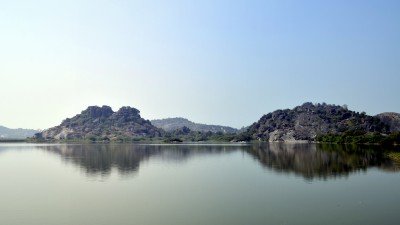 The Badrakali Foreshore Bund is a beautifully developed stretch along the man-made Bhadrakali Lake, providing a pleasant pathway for walking and enjoying the views. Built during the Kakatiya reign, the lake was originally created for irrigation purposes. The bund, recently developed, offers a modern, recreational space for locals and tourists alike to relax near the water. The surrounding environment is characterized by lush greenery and the prominent Ekashila Gutta rock formations in the distance, creating a tranquil atmosphere ideal for unwinding. This area perfectly blends historical significance with contemporary urban development, making it a popular spot for evening strolls and morning jogs. The bund acts as a major hub for community gathering, especially at sunset.
 These recently discovered limestone caves are a geological marvel, often compared to the Borra Caves. Inside, visitors find incredible formations of stalactites and stalagmites that have taken millions of years to grow. The caves consist of several chambers, some of which require crawling through narrow passages, adding an adventurous touch. The interior remains cool even when the outside temperature is high, providing a unique microclimate. Archeologists believe these caves might have served as shelters for prehistoric humans due to found artifacts. It is a must-visit for those who love geology and subterranean exploration.
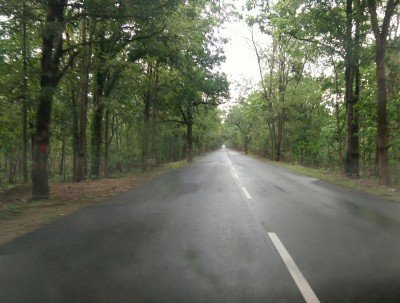 Eturnagaram Wildlife Sanctuary is one of the oldest and most significant protected areas in Telangana, established in 1953 by the erstwhile Hyderabad government. Spanning over 812 square kilometers, this sanctuary is a sanctuary of biodiversity, nestled near the borders of Maharashtra and Chhattisgarh. The sanctuary is bifurcated by the perennial Dayyum Vagu river, which provides a vital water source for the diverse fauna inhabiting the region. The landscape is a stunning mix of undulating plains, gentle slopes, and dense tropical dry deciduous forests. Visitors are treated to a canopy of Teak, Bamboo, and Maddi trees that reach heights of over 60 feet. Historically, this region has been home to various indigenous tribes who have coexisted with the wildlife for centuries. The sanctuary serves as a critical corridor for migratory animals and is a haven for several endangered species. The air here is thick with the scent of wild blossoms and the sounds of a thriving ecosystem. It offers a stark contrast to the historical monuments of Warangal, providing a raw, natural experience that showcases the ecological wealth of the Deccan. The sanctuary is not just a forest but a living laboratory for researchers and a paradise for nature lovers. Efforts by the Telangana Forest Department have made it more accessible through eco-tourism initiatives, including forest stays and guided safaris that educate visitors about conservation.
@@Establishment and Purpose: The Regional Science Center, Warangal, is a popular educational and recreational destination established under the National Council of Science Museums (NCSM). Its primary mission is to promote scientific temper, popularize science and technology among students and the general public, and offer an interactive learning experience that complements formal education. It is strategically located near the Vana Vigyan Kendra (Zoo Park) on Hunter Road. @@Exhibits and Themes: The center houses various permanent and temporary exhibitions focusing on different scientific concepts, including the basics of physics and chemistry, human anatomy, and local flora and fauna (given its location near the forest/zoo park). The exhibits are designed to be hands-on, encouraging visitors of all ages to engage directly with the concepts through models, puzzles, and interactive displays. @@Educational Outreach: Beyond static exhibits, the center actively conducts science demonstrations, educational film shows, sky observation programs (often using its small telescope), and science-related workshops for school students and teachers, fulfilling its role as a key scientific resource center for the region.
Eturnagaram Wildlife Sanctuary is one of the oldest and most significant protected areas in Telangana, established in 1953 by the erstwhile Hyderabad government. Spanning over 812 square kilometers, this sanctuary is a sanctuary of biodiversity, nestled near the borders of Maharashtra and Chhattisgarh. The sanctuary is bifurcated by the perennial Dayyum Vagu river, which provides a vital water source for the diverse fauna inhabiting the region. The landscape is a stunning mix of undulating plains, gentle slopes, and dense tropical dry deciduous forests. Visitors are treated to a canopy of Teak, Bamboo, and Maddi trees that reach heights of over 60 feet. Historically, this region has been home to various indigenous tribes who have coexisted with the wildlife for centuries. The sanctuary serves as a critical corridor for migratory animals and is a haven for several endangered species. The air here is thick with the scent of wild blossoms and the sounds of a thriving ecosystem. It offers a stark contrast to the historical monuments of Warangal, providing a raw, natural experience that showcases the ecological wealth of the Deccan. The sanctuary is not just a forest but a living laboratory for researchers and a paradise for nature lovers. Efforts by the Telangana Forest Department have made it more accessible through eco-tourism initiatives, including forest stays and guided safaris that educate visitors about conservation.
@@Establishment and Purpose: The Regional Science Center, Warangal, is a popular educational and recreational destination established under the National Council of Science Museums (NCSM). Its primary mission is to promote scientific temper, popularize science and technology among students and the general public, and offer an interactive learning experience that complements formal education. It is strategically located near the Vana Vigyan Kendra (Zoo Park) on Hunter Road. @@Exhibits and Themes: The center houses various permanent and temporary exhibitions focusing on different scientific concepts, including the basics of physics and chemistry, human anatomy, and local flora and fauna (given its location near the forest/zoo park). The exhibits are designed to be hands-on, encouraging visitors of all ages to engage directly with the concepts through models, puzzles, and interactive displays. @@Educational Outreach: Beyond static exhibits, the center actively conducts science demonstrations, educational film shows, sky observation programs (often using its small telescope), and science-related workshops for school students and teachers, fulfilling its role as a key scientific resource center for the region.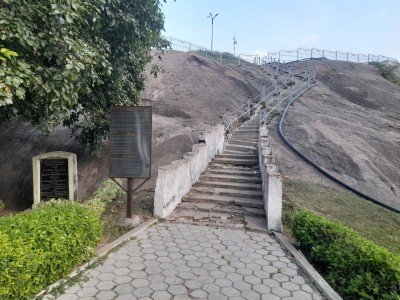 Ekashila Gutta literally means 'Single Stone Hill' (Eka-One, Shila-Stone, Gutta-Hill) and is the massive monolithic rock on which the ancient city of Orugallu (the historical name for Warangal) was founded by the Kakatiya dynasty. The city and its fort derived their name from this prominent geological feature. Perched atop the rock is a small, ancient temple, likely dedicated to Lord Shiva, which adds to its historical and spiritual significance. The rock formation is an integral part of the outer ring of the Warangal Fort's fortifications, demonstrating its strategic importance as a natural defense. Today, it offers a high vantage point for a panoramic view of the surrounding Warangal landscape and the ancient fort remains.Show All
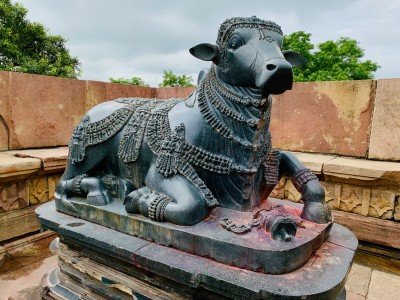 Also known as the Ramalingeswara Temple, this is a UNESCO World Heritage Site. Built in 1213 AD, it is the only temple in India named after its chief architect, Ramappa. The temple is dedicated to Lord Shiva and is world-renowned for its "floating bricks" and intricate black basalt carvings. The craftsmanship is so fine that some sculptures produce musical notes when tapped. The temple has survived earthquakes due to its innovative sandbox foundation. It stands as a testament to the golden age of the Kakatiya dynasty and attracts historians and pilgrims from across the globe.
Information
-
Why Famous:
Kakatiya Heritage: Famous for the Warangal Fort and the iconic Kirti Toranas which are now the official emblem of the Telangana state.
Religious Splendor: Home to the Bhadrakali Temple and the Thousand Pillar Temple, representing the height ...Kakatiya Heritage: Famous for the Warangal Fort and the iconic Kirti Toranas which are now the official emblem of the Telangana state.
Religious Splendor: Home to the Bhadrakali Temple and the Thousand Pillar Temple, representing the height of South Indian stone carving. -
Architecture:
Temple Architecture: The Thousand Pillar Temple features a 'Trikutalayam' design with three shrines dedicated to Shiva, Vishnu, and Surya.
Fort Dimensions: The fort is protected by three circular walls; the inner stone wall has a diameter o...Temple Architecture: The Thousand Pillar Temple features a 'Trikutalayam' design with three shrines dedicated to Shiva, Vishnu, and Surya.
Fort Dimensions: The fort is protected by three circular walls; the inner stone wall has a diameter of roughly 1. 2 KM with 45 towers.
Gateway Features: The Kirti Toranas (Gateways of Glory) stand 30 feet high, carved from single massive rocks without any mortar. -
How To Reach:
By Air: The nearest international airport is in Hyderabad (160 KM); however, a domestic airport at Mamnoor is being revitalized.
By Train: Warangal and Kazipet are major railway junctions connected to all parts of India including Delhi, Che...By Air: The nearest international airport is in Hyderabad (160 KM); however, a domestic airport at Mamnoor is being revitalized.
By Train: Warangal and Kazipet are major railway junctions connected to all parts of India including Delhi, Chennai, and Mumbai.
By Road: Excellent connectivity via NH163; AC and non-AC buses run every 15 minutes from Hyderabad (Uppal/MGBS) taking 3 hours.
By Local Transport: The city has a robust network of city buses, auto-rickshaws, and app-based cabs like Ola for easy internal commuting. -
Weather and Best Time to Visit:
Winter Peak: October to March is the peak season with cool nights and pleasant days, making it ideal for exploring the open-air fort ruins.
Early Morning: The best time of day to visit temples is between 6:00 AM and 8:00 AM to avoid crowds a...Winter Peak: October to March is the peak season with cool nights and pleasant days, making it ideal for exploring the open-air fort ruins.
Early Morning: The best time of day to visit temples is between 6:00 AM and 8:00 AM to avoid crowds and the afternoon heat. -
Near Tourist Places:
Ramappa Temple (65 KM), Laknavaram Lake (75 KM), Pakhal Lake (50 KM), Medaram (100 KM), Etunagaram (110 KM), Pembarti (60 KM), Kolanupaka (80 KM), Ghanpur Temples (30 KM), Mallikarjuna Swamy (25 KM), Kazipet (6 KM)
Tourism Tips
-
Health & Safety: The fort area involves a lot of walking on uneven stones; wear sturdy shoes and carry an umbrella for shade.
Packing Tips: Carry a power bank for your camera and wear light cotton clothes. Keep some cash for local snacks a...Health & Safety: The fort area involves a lot of walking on uneven stones; wear sturdy shoes and carry an umbrella for shade.
Packing Tips: Carry a power bank for your camera and wear light cotton clothes. Keep some cash for local snacks and entry tickets.
Accommodation: Plenty of options ranging from budget lodges near the station to luxury hotels like Haritha Kakatiya run by the government.
Tour Planning: Dedicate one full day to the city (Fort, Bhadrakali, 1000 Pillars) and another day for nearby sites like Ramappa and Laknavaram.
Reviews
FAQs
WARANGAL Itineray And Cost:-
Information about New and Updated Locations() of Telangana Has Been Added :-
Card subtitle
Note:-
Information provided here in good Faith and for reference only.
Near Places
Adilabad
Some quick example text to build on the card title and make up the bulk of the card's content.
Go somewhere
Bhongir
Some quick example text to build on the card title and make up the bulk of the card's content.
Go somewhere
Bodhan
Some quick example text to build on the card title and make up the bulk of the card's content.
Go somewhere
Gadwal
Some quick example text to build on the card title and make up the bulk of the card's content.
Go somewhere
HYDERABAD
Some quick example text to build on the card title and make up the bulk of the card's content.
Go somewhere
Jagtial
Some quick example text to build on the card title and make up the bulk of the card's content.
Go somewhere
Jangaon
Some quick example text to build on the card title and make up the bulk of the card's content.
Go somewhere
Kamareddy
Some quick example text to build on the card title and make up the bulk of the card's content.
Go somewhere
Karimnagar
Some quick example text to build on the card title and make up the bulk of the card's content.
Go somewhere
KHAMMAM
Some quick example text to build on the card title and make up the bulk of the card's content.
Go somewhere
Kothagudem
Some quick example text to build on the card title and make up the bulk of the card's content.
Go somewhere
Mahabubabad
Some quick example text to build on the card title and make up the bulk of the card's content.
Go somewhere
Mahabubnagar
Some quick example text to build on the card title and make up the bulk of the card's content.
Go somewhere
Mancherial
Some quick example text to build on the card title and make up the bulk of the card's content.
Go somewhere
Medak
Some quick example text to build on the card title and make up the bulk of the card's content.
Go somewhere
Nagarjunakonda
Some quick example text to build on the card title and make up the bulk of the card's content.
Go somewherein Other Cities