...

Place To Visit And Things To Do In Patan

Gujarat, India
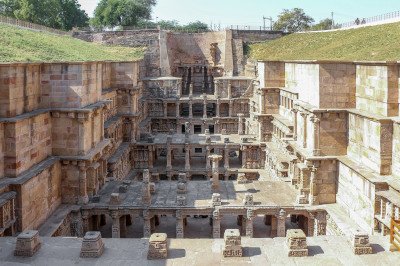
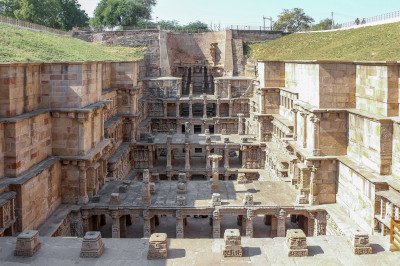
Medieval Splendor: Rani Ki Vav, a UNESCO World Heritage site, was built in the 11th century by Queen Udayamati in memory of King Bhimdev I of the Solanki dynasty. This inverted temple design descends seven levels deep into the earth, highlighting the sanctity of water in ancient times. Intricate Car vings: The stepwell houses more than 500 principal sculptures and 1,000 minor ones, mostly depicting the various avatars of Lord Vishnu. The craftsmanship is so detailed that even the fabric patterns on the dancers' clothes are visible. Historical Resurrection: For centuries, the well lay buried under the silt of the Saraswati River, preserving the carvings in pristine condition until its excavation in the 1980s. It is now recognized as the "Queen of Stepwells" globally. Cultural Pride: The structure is so iconic that it is featured on the rear side of the new Indian 100-rupee note. Beyond its beauty, it served as a secret escape route via a 30-meter tunnel leading to the town of Siddhpur.

Things To Do

Card image cap
Aghar Darwaja

@@Historic Defense Architecture: Aghar Darwaja is one of the ancient historical city gates of old Patan, which was once a fortified capital city known...
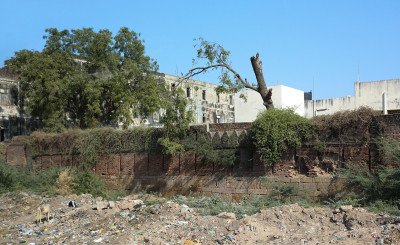
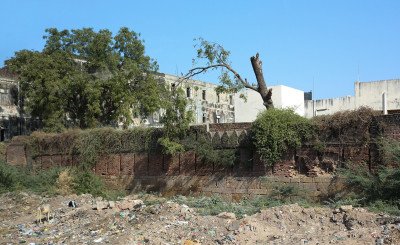
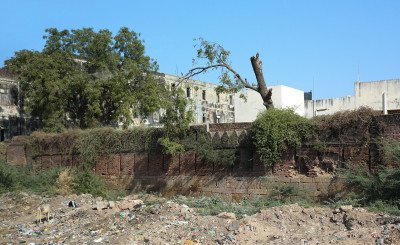
@@Historic Defense Architecture: Aghar Darwaja is one of the ancient historical city gates of old Patan, which was once a fortified capital city known as Anhilpur Patan. These gates served as crucial defense points and entryways into the royal city during the Solanki era and later periods. The gate is named after the village of Aghar located in the western direction of the city. While the original fortification wall has largely vanished due to urban expansion, this gate stands as a powerful reminder of Patan’s medieval grandeur and strategic importance. It marks the historical boundary of the city and is a key landmark in the old city’s layout. Over the centuries, it has witnessed the rise and fall of various dynasties, from the Chaulukyas to the Sultanate rulers, each leaving an imprint on the city's infrastructure and life. Today, it is integrated into the bustling city life on Station Road, serving as a monument and a traffic junction. @@Sultanate Influence: Although the foundation of Patan dates back to the 8th century by Vanraj Chavda, the surviving structure of Aghar Darwaja, like many other gates in the region, shows strong influences and additions from the later Gujarat Sultanate period. This blend of architectural styles reflects the diverse history of the region. It is a structure of simple yet robust construction, built with large stone blocks and designed to withstand sieges, typical of the defense architecture of the time. The gate is a testament to the continuous effort to protect the wealth and heritage of the capital city. Its proximity to the modern railway station underscores its lasting importance as a major access point to Patan.:
Card image cap
Bagvada Darwaja

@@Historical Significance and Location: Bagvada Darwaja is another of the principal historical gates of the ancient walled city of Anhilpur Patan, str...

@@Historical Significance and Location: Bagvada Darwaja is another of the principal historical gates of the ancient walled city of Anhilpur Patan, strategically located on the eastern side of the old city. Like Aghar Darwaja, this gate was an integral part of the city’s defense mechanism, controlling access and providing security for the populace and the royal establishments, particularly against invasions from the eastern plains. The gate, which stands near the modern General Hospital, derives its name from the direction or a nearby locality from which the road originates. Its existence testifies to the meticulous urban planning of the Solanki and later rulers who recognized the need for robust fortifications to protect their capital, which was a hub of trade, art, and religion. It has seen its surrounding landscape transform from open fields to a densely populated urban area, yet the gate remains a fixed point of historical reference. @@Architecture and Preservation Status: The structure is a powerful visual element, despite the loss of the city wall it was once connected to. It provides a rare insight into the scale of the fortification work done in the medieval period. Although not as ornate as the temples and stepwells of Patan, its strength lies in its simple, functional design. It's constructed from large stone blocks, reflecting the engineering priorities of a defensive structure. Efforts by local historical enthusiasts and authorities focus on preserving the gate as a monument of the city’s defensive history, recognizing its role as a key historical marker in the city's complex past. It continues to be an active part of the city’s traffic flow, an ancient archway through which modern life flows.:
Card image cap
Bindu Sarovar

Bindu Sarovar is one of the most revered water bodies in India, recognized as one of the Pancha Sarovar (five holy lakes) mentioned in Hindu scripture...
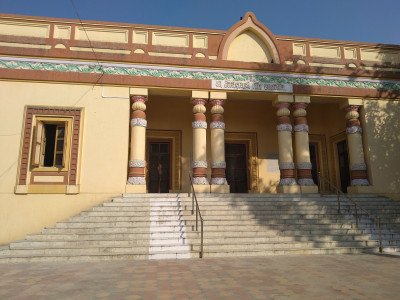
Bindu Sarovar is one of the most revered water bodies in India, recognized as one of the Pancha Sarovar (five holy lakes) mentioned in Hindu scriptures. Located in the town of Siddhpur, often called the Kashi of the West, this lake holds a unique position as the only place in the country dedicated to Matru Shradh (rituals for deceased mothers). According to mythology, the lake was formed from the tears of Lord Vishnu, which fell at the spot where Sage Kardhama performed intense penance. It is also the site where Sage Kapila, an incarnation of Vishnu, imparted the supreme knowledge of Sankhya Philosophy to his mother Devahuti. The spiritual atmosphere here is palpable, with the gentle ripples of the water reflecting centuries of devotion. Pilgrims flock to this site, especially during the holy month of Kartik, to seek salvation for their maternal ancestors. The surrounding complex includes several small temples dedicated to Kapila Muni, Lord Parshuram, and Gaya Gadhadhara, each adding to the sanctity of the location. Unlike other tourist spots, Bindu Sarovar offers a profound sense of peace and emotional closure, making it a mandatory stop for those exploring the religious heritage of Gujarat. The site is beautifully maintained by the local authorities, ensuring that the ancient steps (ghats) remain accessible for rituals and reflection. Visitors often find themselves moved by the sight of hundreds of devotees performing silent prayers, creating a bridge between the living and the departed.
Card image cap
Hemchandracharya Jain Gnan Mandir

@@Historical and Intellectual Foundation: The Hemchandracharya Jain Gnan Mandir (Library of Knowledge) is named after the renowned Jain scholar, poet,...

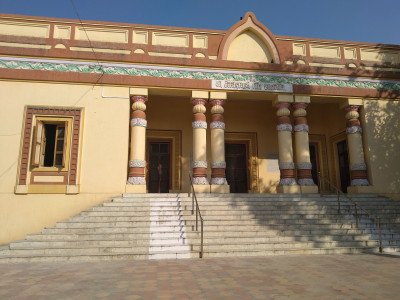
@@Historical and Intellectual Foundation: The Hemchandracharya Jain Gnan Mandir (Library of Knowledge) is named after the renowned Jain scholar, poet, and polymath Acharya Hemachandra Suriji (1088–1172 AD), who was a prominent figure and advisor in the court of Solanki rulers Siddharaj Jayasimha and Kumarapala. The institution, though the present structure is more recent, serves to honor his vast contributions to Sanskrit and Prakrit literature, grammar, lexicography, and Jain philosophy. It acts as a living tribute to the intellectual and religious flourishing of Patan during its golden age. The Mandir's primary function is the preservation of ancient Jain religious and literary manuscripts, making it an irreplaceable treasure house of knowledge. @@Preservation and Collection: This Gnan Mandir houses one of the largest and most significant collections of ancient Jain texts, including palm-leaf manuscripts (some dating back over 800 years) and paper manuscripts. These manuscripts cover a wide array of subjects beyond religion, such as history, art, astrology, and traditional Indian sciences, many written in Prakrit, Apabhramsa, and old Gujarati. The institution plays a critical role in conservation, often employing traditional methods to protect these fragile documents from decay, making it a pivotal center for scholars and researchers globally. It is deeply connected to the nearby Panchasara Parshwanath Jain Derasar, forming a spiritual and intellectual complex.:
Card image cap
Khan Sarovar

@@Historical Development and Function: Khan Sarovar is a significant historical water tank located in Patan, built in 1589 AD by Mirza Aziz Kokah, who...
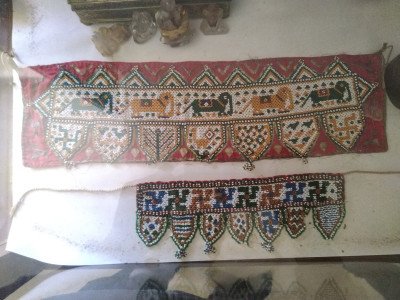
@@Historical Development and Function: Khan Sarovar is a significant historical water tank located in Patan, built in 1589 AD by Mirza Aziz Kokah, who was the governor of Gujarat during the reign of the Mughal Emperor Akbar. The reservoir was a crucial addition to Patan’s extensive water management system, complementing the older Sahastralinga Talav and numerous stepwells, and was essential for supplying water for irrigation and drinking to the growing city during the later medieval period. It is believed that the construction materials, particularly the stone blocks and pillars, were sourced from the ruins of older structures, potentially including the parts of the demolished Rudra Mahalaya temple in nearby Sidhpur, adding a layer of complex historical reuse. The tank is notable for its substantial dimensions and solid stone masonry, a hallmark of the utility structures built during the Sultanate and Mughal periods. @@Current Status and Park: While the tank itself is a historical monument, the surrounding area has been developed into a local park, making it a popular recreational spot for residents. The combination of the historical stone structure with the modern green space creates a unique urban oasis. The sarovar is a testament to the continuous importance of water conservation in the semi-arid region of North Gujarat. Its massive stone steps leading down to the water are a characteristic feature, and the presence of an outflow system demonstrates sophisticated planning to manage water levels during the heavy Monsoon season.:
Card image cap
Kund of Bahubali

@@Religious Significance: The Kund of Bahubali is a sacred water body or pond dedicated to Lord Bahubali (also known as Gommateshwara), who is a highl...

@@Religious Significance: The Kund of Bahubali is a sacred water body or pond dedicated to Lord Bahubali (also known as Gommateshwara), who is a highly revered figure in Jainism. Bahubali was the son of Rishabhanatha (the first Tirthankara) and is renowned for attaining enlightenment (Kevala Jnana) after meditating motionless in a standing posture (Kayotsarga) for one year, during which climbing plants grew around his legs. Although the most famous statue of Bahubali is at Shravanabelagola, this small Kund in Patan holds local and regional significance as a place of devotion, particularly for the Digambara Jain community. The Kund is often associated with a small shrine or Charan Pith (footprints) dedicated to the Lord, serving as a site for ritualistic bathing and penance. It symbolizes the water that cleansed the path to Bahubali's spiritual victory over ego and worldly attachment. @@Historical Context: The history of this specific site is often intertwined with the broader history of Jainism in Patan, which was a major intellectual and religious center during the Solanki era. While the Kund itself may have undergone renovations, its dedication to Bahubali reflects the deep-rooted presence and diverse sects of the Jain religion in the city, coexisting alongside the Hindu faith. It is a place of quiet devotion, away from the main commercial centers, offering pilgrims a space for spiritual reflection and observance of Jain rituals. It is a simpler, less monumental site compared to the main Jain temples in Patan but is equally important for its spiritual value.:
Card image cap
Panchasara Jain Temple

@@Historical Significance: The Panchasara Parshwanath Jain Derasar is one of the most revered and important Jain temples in Patan, a city that has bee...
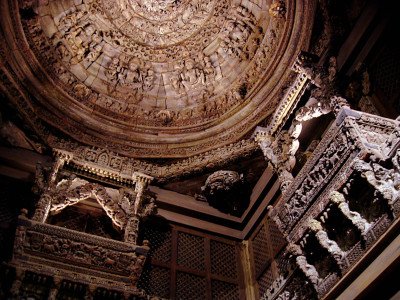
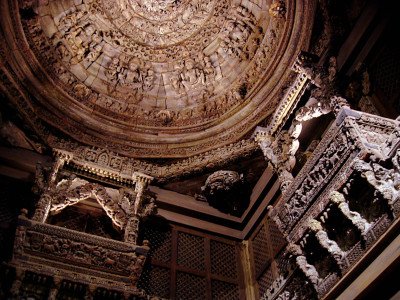
@@Historical Significance: The Panchasara Parshwanath Jain Derasar is one of the most revered and important Jain temples in Patan, a city that has been a major center of Jainism since the Solanki dynasty era. The temple is dedicated to Lord Parshwanath, the 23rd Tirthankara. The temple's name, 'Panchasara' (five-pinnacled), refers to its original five towering spires (Shikharas). Though the current structure has seen rebuilding and restoration, its origins date back centuries, reflecting the strong historical patronage of Jainism by the Solanki rulers. @@Cultural Context: Patan was the birthplace of the great Jain scholar, Acharya Hemachandra, who influenced King Siddharaj Jaysinh and was instrumental in the spread of Jain philosophy. The temple stands as a testament to this intellectual and spiritual lineage. @@Current Status: It is a vibrant, active place of worship, located within the maze of the old city's residential quarters (Pols), maintaining a high level of sanctity and traditional practices.
Card image cap
Panchasara Parshwanath Jain Derasar

@@Historical Foundation and Royal Patronage: The Panchasara Parshwanath Jain Derasar is one of the most ancient and historically significant Jain temp...
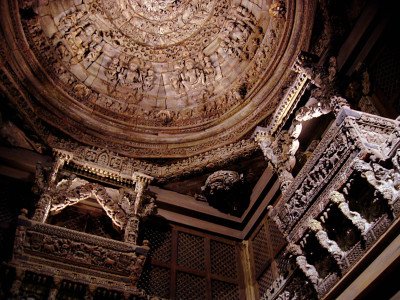
@@Historical Foundation and Royal Patronage: The Panchasara Parshwanath Jain Derasar is one of the most ancient and historically significant Jain temples in Gujarat, with its origins dating back to the founding of Anhilpur Patan by King Vanraj Chavda in 746 AD (802 Vikram Samvat). The temple was built to honor his spiritual guru, Acharya Shri Sheelgunsuriji, and the main idol of Bhagwan Parshvanath (the 23rd Tirthankara) was brought from Panchasara, the capital of his ancestors, lending the temple its name. It has been a continuous center of Jain worship, receiving patronage from successive powerful rulers like Moolraj, Siddhraj Jayasimha, and Kumarapala of the Solanki dynasty, all of whom contributed to its renovation and expansion. Despite being damaged and rebuilt multiple times, including an attack by Malik Kaafoor in the 14th century, the temple's spiritual sanctity and historical continuity have remained unbroken, a testament to the resilience of the Jain community. @@Spiritual Importance: The temple houses the revered 120 cm high idol of Bhagwan Panchasara Parshvanath in the Padmasana posture, uniquely protected by a canopy of seven snake hoods. It is considered one of the most miraculous and spiritually potent idols in Gujarat, making the Derasar a primary destination for Jain pilgrims globally. The complex is not just a place of worship but a vibrant center of Jain learning, with ancillary structures, including the famous Hemchandracharya Jain Gnan Mandir nearby.:
Card image cap
Patan City Museum

@@Collection and Purpose: The Patan City Museum is a crucial institution dedicated to preserving and exhibiting the archaeological finds and cultural ...
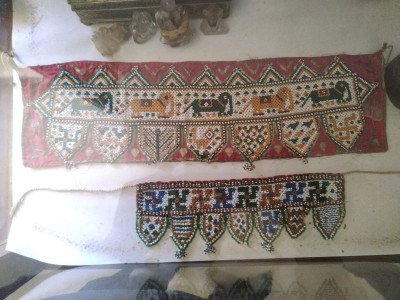
@@Collection and Purpose: The Patan City Museum is a crucial institution dedicated to preserving and exhibiting the archaeological finds and cultural heritage of Patan and the surrounding region. It is conveniently located within the complex of the famous Rani ki Vav, making it an essential extension of the stepwell visit. The museum's collection is primarily focused on the materials recovered during the excavation and restoration of the Rani ki Vav and other sites in the Patan district, spanning from the Solanki period onward. The exhibits include a rich array of Hindu and Jain sculptures, ancient pottery, metallic artifacts, coins, and copies of important manuscripts. It serves as an interpretive center, providing historical context to the grand architectural marvels outside. @@Exhibits and Focus: The museum is generally divided into several galleries, notably the Sculpture Gallery, which showcases beautifully carved stone figures, including several Vishnu and Jain Tirthankara idols. There is often a dedicated section for textiles, including the globally renowned Patola silk sarees, displaying samples, tools, and the intricate process of their double ikat weaving. The coin and manuscript sections offer a glimpse into the economic and intellectual life of medieval Patan. Its size is modest but its cultural value is immense, offering visitors a deeper, academic appreciation of Patan's former glory as the capital of Gujarat.:
Card image cap
Patan Fort

@@Historical Importance and Founding: The Patan Fort represents the core of the ancient capital, Anhilpur Patan, founded by King Vanraj Chavda in the ...
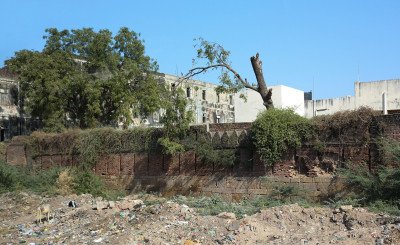
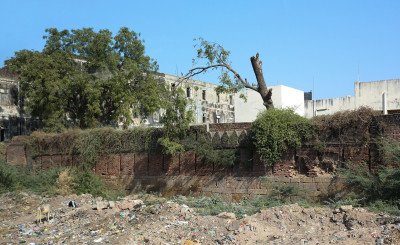
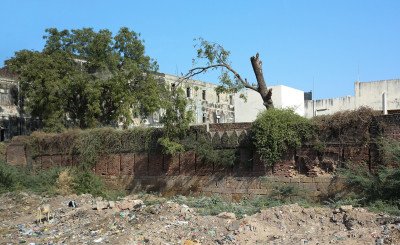
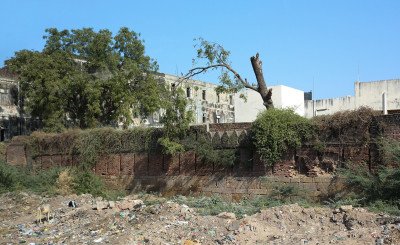
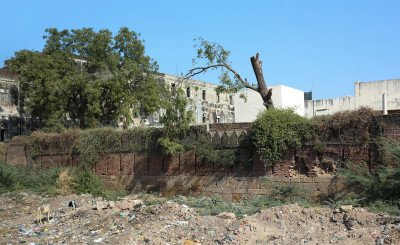
@@Historical Importance and Founding: The Patan Fort represents the core of the ancient capital, Anhilpur Patan, founded by King Vanraj Chavda in the 8th century and later becoming the capital of the powerful Solanki (Chaulukya) dynasty from the 10th to the 13th centuries. This fort was the royal residence and the administrative and military center of the kingdom, a city known for its immense prosperity, flourishing trade, and monumental architecture. Although much of the original structure has sadly deteriorated over centuries due to invasions, neglect, and the reuse of materials for later constructions, the remaining ruins and earth mounds still outline the area of the historical citadel. Its decline began after the devastating invasion by Alauddin Khilji's general, Ulugh Khan, which severely damaged the city's fortifications and central structures. @@Symbol of Past Glory: Today, the fort area is a set of scattered ruins, but it remains a profound symbol of Patan's former political power and military might. The site provides valuable archaeological insights into the city's layout, defensive strategies, and urban planning under the various dynasties that controlled Gujarat. It is less of a well-preserved fortress and more of a historical landscape, offering a tangible link to the vast history of the city that gave birth to architectural marvels like Rani ki Vav and Sahastralinga Talav. The visible remnants, like fragments of walls and towers, encourage imagination of the city's grand past.:
Card image cap
Patan Patola Heritage Museum

@@Historical and Artistic Significance: The Patan Patola Heritage Museum is a specialized institution dedicated to the preservation and promotion of t...

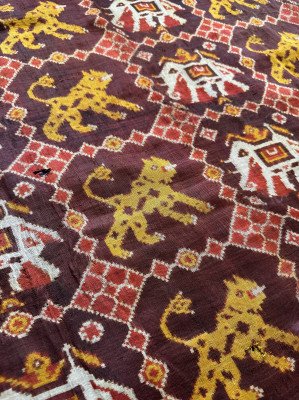
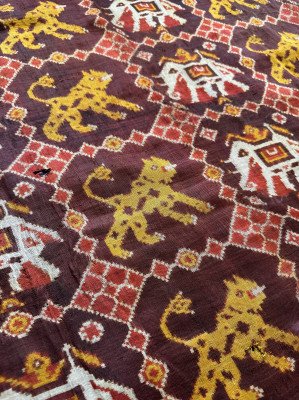
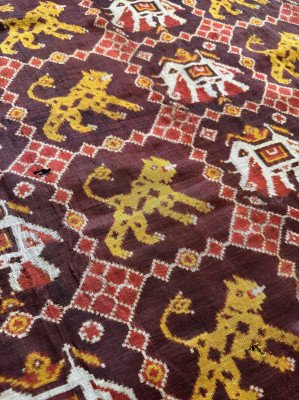
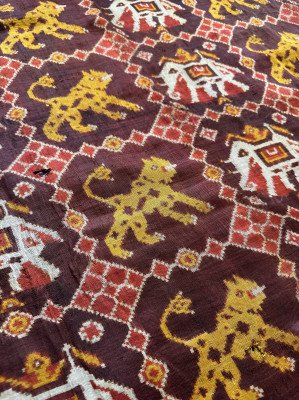
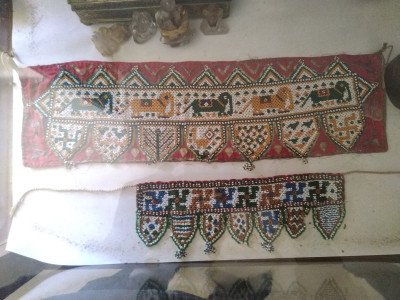
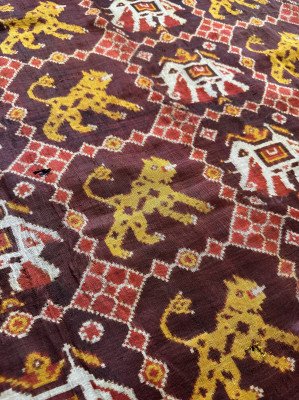
@@Historical and Artistic Significance: The Patan Patola Heritage Museum is a specialized institution dedicated to the preservation and promotion of the ancient, complex, and highly revered art of Patola weaving. Patola is a double-ikat silk fabric where both the warp and weft threads are individually tie-dyed before weaving, a process that requires incredible precision and is one of the most intricate forms of weaving in the world. The craft dates back to the 12th century when it flourished under the patronage of the Solanki rulers of Patan. This museum is typically managed by the Salvi family, the last remaining family of traditional Patola weavers, ensuring that the history and secrets of this highly specialized craft are kept alive. It is less a traditional museum and more a living workshop and exhibition space. @@The Double Ikat Process: The museum showcases the entire, labor-intensive process, which can take several months to over a year to create a single saree. The intricacy lies in the precise calculation needed for the pre-dying of the threads so that, when woven, the pattern perfectly aligns on both sides of the fabric (double-ikat), making the Patola reversible and identical on both sides. The museum displays antique Patola sarees, centuries-old sketches of patterns, the specialized tools, and often, live demonstrations of the weaving and dyeing process. Its role is crucial in educating the world about this endangered and unique craft, which is a cornerstone of Gujarat’s artistic legacy.:
Card image cap
Rani ki Vav

@@Historical Context: The Rani ki Vav, or the Queen's Stepwell, is an intricately constructed stepwell located in the town of Patan in Gujarat, India....
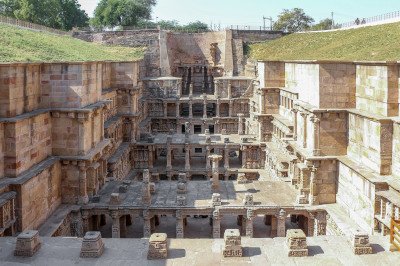
@@Historical Context: The Rani ki Vav, or the Queen's Stepwell, is an intricately constructed stepwell located in the town of Patan in Gujarat, India. It was built during the reign of the Chaulukya dynasty, around the 11th century AD, by Queen Udayamati in memory of her deceased husband, King Bhimdev I. It is one of the finest and largest examples of a stepwell and a spectacular example of subterranean water architecture of Gujarat. This deep, seven-story structure was initially submerged under the Saraswati river's floods and silted up over time, which paradoxically helped preserve its intricate carvings. It was only excavated and restored in the late 1980s by the Archaeological Survey of India (ASI). @@Cultural Significance: The stepwell is designed as an inverted temple, highlighting the sanctity of water. It is adorned with thousands of sculptures, primarily dedicated to Lord Vishnu, in his ten incarnations (Dashavataras), including Kalki, Rama, and Krishna. The carvings also feature Apsaras (celestial dancers), Yoginis, and other celestial beings, presenting a visual encyclopedia of the religious, social, and mythological themes of the era. It served not only as a functional water source but also as a place for social gathering and religious rituals. The scale and artistry of the carvings are unparalleled, reflecting the pinnacle of Solanki architectural style in the region. Its designation as a UNESCO World Heritage Site in 2014 cemented its global importance, attracting visitors from all corners of the world to witness this submerged marvel. Its history is a testament to the love and dedication of Queen Udayamati, making it a monument of both historical and emotional significance.:
Card image cap
Regional Science Centre/Museum Patan

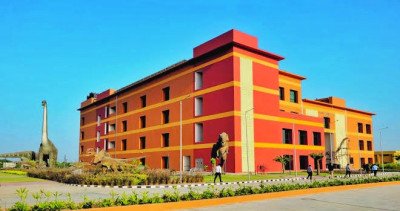
@@Objective and Focus: The Regional Science Centre (RSC) in Patan is a major initiative by the Government of Gujarat and the National Council of Scien...

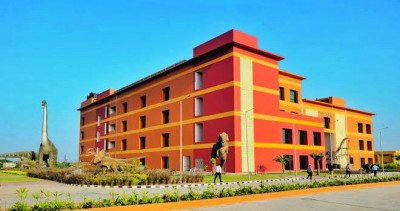
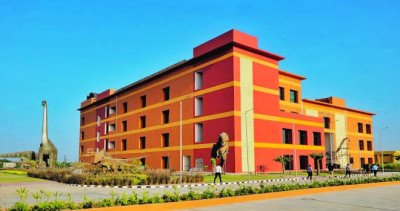
@@Objective and Focus: The Regional Science Centre (RSC) in Patan is a major initiative by the Government of Gujarat and the National Council of Science Museums (NCSM) to promote a scientific temper, especially among the youth. It serves as an interactive hub to communicate the growth of Science and Technology and its application in daily life. @@Exhibition Galleries: The center houses several themed galleries. Key exhibits include a large gallery dedicated to the Human Body and health, an Environment and Climate Change section, and a focus on local industrial and agricultural applications of science. There is a strong emphasis on hands-on exhibits that encourage learning through direct experience. @@Educational Role: The RSC is not just a museum but a dynamic center that hosts numerous educational programs, including science camps, popular lectures, seminars, demonstrations, and astronomy-related activities like sky-gazing workshops, making it a critical regional resource for science education. @@Features and Attractions: Beyond the main galleries, the center is equipped with a 5D Theater, a specialized Dinosaur Ride attraction, and a VR (Virtual Reality) experience, all aimed at making complex scientific concepts accessible and entertaining for visitors of all ages.
Card image cap
Rudra Mahalaya

Rudra Mahalaya, also known as Rudramal, stands as a hauntingly beautiful testament to the architectural brilliance of the Chaulukya (Solanki) dynasty....

Rudra Mahalaya, also known as Rudramal, stands as a hauntingly beautiful testament to the architectural brilliance of the Chaulukya (Solanki) dynasty. Built in the 12th Century by the legendary ruler Siddhraj Jaysinh, it was once a magnificent multi-storied temple dedicated to Lord Shiva. Today, the site consists of magnificent ruins, including massive pillars, intricate torans (gateways), and carved porches that hint at its former glory. Historical records suggest the temple was originally a colossal structure with eleven subsidiary shrines dedicated to the Ekadasa Rudras. It was unfortunately destroyed during various invasions by the Delhi Sultanate and later by Ahmed Shah I, with parts of the complex being converted into a mosque. Despite its fragmented state, the remaining fragments showcase the peak of Maru-Gurjara architecture, with every inch of sandstone covered in detailed carvings of deities, dancers, and floral motifs. The surviving Kirti Torana is particularly famous, standing as a lone sentinel of a golden era. Walking through the ruins, one can almost feel the echoes of the grand hymns that once filled the air. It is a site of great archaeological importance, protected by the Archaeological Survey of India (ASI). The blend of Hindu and Islamic architectural elements at the site provides a deep insight into the complex history of the region. For history buffs and art lovers, Rudra Mahalaya is not just a pile of stones but a canvas of Indian heritage that has survived the ravages of time and conflict.
Card image cap
Sadarambapa Statue

@@Historical Significance: The Sadarambapa Statue is a tribute to a revered local saint, social reformer, or spiritual leader, Sadarambapa, who is hel...

@@Historical Significance: The Sadarambapa Statue is a tribute to a revered local saint, social reformer, or spiritual leader, Sadarambapa, who is held in high esteem by a specific community or the general populace of Patan and the surrounding region. Unlike the ancient monarchs, this statue commemorates a figure from more recent history who significantly impacted the local community through spiritual guidance, social service, or philanthropy. @@Cultural Context: Statues of local spiritual figures are a common feature in Gujarat, often erected by their followers to preserve their memory and teachings. The statue serves as a community gathering point and a symbol of the values Sadarambapa espoused. @@Location: It is typically situated in a community-centric location, often a park, a society entrance (e.g., Chamunda Society), or a small chowk (square), indicating its importance to the local residents rather than just a general tourist flow.
Card image cap
Sahasralinga Talav

@@Historical Context: Sahasralinga Talav (meaning 'Lake of a Thousand Lingams') is a massive, medieval artificial water tank commissioned by the power...

@@Historical Context: Sahasralinga Talav (meaning 'Lake of a Thousand Lingams') is a massive, medieval artificial water tank commissioned by the powerful Chaulukya King Siddharaj Jaysinh in the early 12th century (around 1084 AD). It was built over an older tank called Durlabh Sarovar. The reservoir served as a critical water management system for the ancient city of Anahilwada Patan. @@Religious Significance: The Talav was named for the 1,008 Shiva shrines (lingams) that once adorned its banks, making it a major pilgrimage center dedicated to Lord Shiva. The complex also included a system of ghats, kunds, and temples. @@Curse and Legend: A famous local legend associated with the lake involves a woman named Jasma Odan, who cursed the tank not to fill with water after King Siddharaj Jaysinh tried to force her to marry him. The curse was eventually nullified by a human sacrifice, a hero named Mayo or Mahya, after which the tank filled with water.
Card image cap
Siddhraj Jaysinh Statue

@@Historical Significance: The statue is a tribute to Siddharaj Jaysinh (r. 1092-1142 AD), one of the most powerful and celebrated rulers of the Chaul...

@@Historical Significance: The statue is a tribute to Siddharaj Jaysinh (r. 1092-1142 AD), one of the most powerful and celebrated rulers of the Chaulukya (Solanki) dynasty. His reign is considered the Golden Age of Gujarat, during which the capital, Anahilwada Patan, flourished as a major center of learning, trade, and architectural excellence. He is credited with commissioning major works like the Sahasralinga Talav and sponsoring the great Jain scholar Acharya Hemachandra. @@Cultural Importance: Erecting a statue of a monarch in a public space is a modern way of honoring his legacy and reminding citizens of the city's historical importance. The statue serves as a public icon of Patan's historical pride and a popular local landmark. @@Location: The statue is typically located in a prominent public square or traffic intersection, making it visible and accessible to the public, often near the railway station area for maximum visibility to newcomers.
Card image cap
Tomb Of Shaikh Farid

@@Historical Significance: The Tomb of Shaikh Farid, or Hazrat Shaikh Fariduddin Razi-ud-din Ganjshakar's shrine (or a local saint named Shaikh Farid)...

@@Historical Significance: The Tomb of Shaikh Farid, or Hazrat Shaikh Fariduddin Razi-ud-din Ganjshakar's shrine (or a local saint named Shaikh Farid), is a significant monument from the Gujarat Sultanate period, though often locally attributed to a different, less famous Shaikh Farid. It represents the city's shift in religious and political landscape following the decline of the Solanki dynasty. The mosque and the tomb complex, known as a Rauza, became centers of Islamic learning and spiritual guidance in medieval Patan. @@Architectural Context: The architecture is a prime example of the early Gujarat Sultanate style, characterized by a blend of indigenous Hindu and Jain temple architecture features (like carved pillars and corbelled domes) with traditional Islamic elements (like the mihrab and geometric screens). @@Spiritual Importance: The tomb remains an active place of worship (Dargah), attracting devotees from all faiths seeking the saint's blessings, emphasizing the syncretic spiritual culture of Gujarat.
Card image cap
Tran Darwaja

@@Historical Significance: The Tran Darwaja (meaning 'Three Gates') is a historical triumphal archway that once served as one of the main entrances to...

@@Historical Significance: The Tran Darwaja (meaning 'Three Gates') is a historical triumphal archway that once served as one of the main entrances to the fortified medieval city of Anahilwada Patan. Although the city walls have largely disappeared, this triple gateway remains a significant architectural marker, reminding visitors of the city's past glory as the capital of Gujarat for over 600 years. It stands as a testament to the transition period from the Solanki to the Sultanate rule, as later additions and repairs were made by the Muslim rulers who subsequently controlled the region. @@Cultural Context: Like the famous Teen Darwaza in Ahmedabad, the Tran Darwaja in Patan was a hub of royal proclamations, public ceremonies, and market activities. It was a crucial point in the city's internal and external trade routes. @@Current Status: Today, the structure is integrated into the busy local life of Patan, surrounded by shops and modern traffic. It is a state-protected monument and a key landmark. The gateway is a crucial component of the old town's urban fabric.
Card image cap
Trikam Barot Ni Vav

@@Historical Context: Trikam Barot Ni Vav, also known as Bahadur Singh Stepwell, is a lesser-known but historically significant stepwell in Patan. It ...

@@Historical Context: Trikam Barot Ni Vav, also known as Bahadur Singh Stepwell, is a lesser-known but historically significant stepwell in Patan. It is believed to have been constructed during the later period of the Solanki dynasty or shortly after, possibly with materials repurposed from other older structures (some accounts suggest material from the partially-silted Rani ki Vav was used in its construction in the 19th century, although its foundations are likely older). @@Architectural Purpose: Like all stepwells (Vavs), its primary function was a practical one: to provide reliable access to groundwater, conserve water, and serve as a cool, underground retreat, especially for women, during the hot summer months. It showcases the widespread culture of stepwell building in the region. @@Current Status: The Vav is a protected heritage site, though not as grand or well-maintained as Rani ki Vav. It serves as a quieter alternative for those interested in stepwell architecture and is situated away from the main city's bustle.
Show All

Patan Itineray And Cost:-

Information about New and Updated Locations() of Gujarat Has Been Added :-
Card subtitle

Note:-

Information provided here in good Faith and for reference only.

Near Places
...
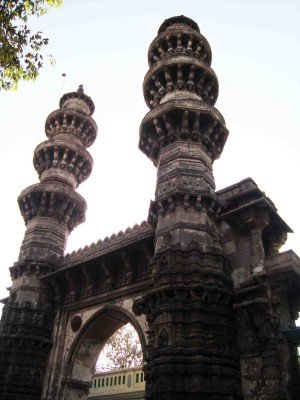
Ahmedabad

Some quick example text to build on the card title and make up the bulk of the card's content.

Go somewhere
...
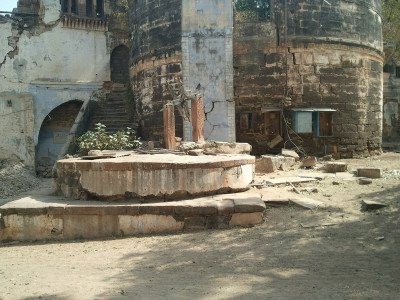
Bhuj

Some quick example text to build on the card title and make up the bulk of the card's content.

Go somewhere
...
Chotila

Some quick example text to build on the card title and make up the bulk of the card's content.

Go somewhere
...
Dahod

Some quick example text to build on the card title and make up the bulk of the card's content.

Go somewhere

...
Dandi

Some quick example text to build on the card title and make up the bulk of the card's content.

Go somewhere
...
Kevadia

Some quick example text to build on the card title and make up the bulk of the card's content.

Go somewhere
...
Kutch

Some quick example text to build on the card title and make up the bulk of the card's content.

Go somewhere
...
Lothal

Some quick example text to build on the card title and make up the bulk of the card's content.

Go somewhere
...
Mandvi

Some quick example text to build on the card title and make up the bulk of the card's content.

Go somewhere
...
Modhera

Some quick example text to build on the card title and make up the bulk of the card's content.

Go somewhere
...
Near Ahmedabad

Some quick example text to build on the card title and make up the bulk of the card's content.

Go somewhere
...
Palanpur

Some quick example text to build on the card title and make up the bulk of the card's content.

Go somewhere
...
Palitana

Some quick example text to build on the card title and make up the bulk of the card's content.

Go somewhere
...
Patan

Some quick example text to build on the card title and make up the bulk of the card's content.

Go somewhere
...
Pavagadh

Some quick example text to build on the card title and make up the bulk of the card's content.

Go somewhere
...
Porbandar

Some quick example text to build on the card title and make up the bulk of the card's content.

Go somewhere
in Other Cities