

Trimukhi Temple
General information
-
Ideal Duration:
1 HourPlace Type:
Ancient and Historical Temple:Entry Fees:
Free Entry: The Trimukhi Temple (Karna Mandir) and the entire surrounding Kalachuri Temple complex are free to enter, as they are managed by the Archaeological Survey of India (ASI) and are open heritage sites.
Parking and Guide Fees: No ent...Free Entry: The Trimukhi Temple (Karna Mandir) and the entire surrounding Kalachuri Temple complex are free to enter, as they are managed by the Archaeological Survey of India (ASI) and are open heritage sites.
Parking and Guide Fees: No entry fee is required. Tourists should only budget for parking vehicles outside the main complex and for the voluntary hire of a local guide, which is highly recommended for historical context.
Donation Policy: The site is a protected monument, and large donation boxes are not typically present. Voluntary offerings to the resident priests (if any are performing duties) are at the visitor's discretion.Timing:
Regular Timings: 6:00 AM to 8:00 PM daily. The site is open for a longer duration than the natural sites.
Ideal Visit Time: Early Morning (6:00 AM - 9:00 AM) or Late Afternoon (4:00 PM - 6:00 PM) for comfortable weather and the best photogr...Regular Timings: 6:00 AM to 8:00 PM daily. The site is open for a longer duration than the natural sites.
Ideal Visit Time: Early Morning (6:00 AM - 9:00 AM) or Late Afternoon (4:00 PM - 6:00 PM) for comfortable weather and the best photographic light. Mid-day should be avoided due to the heat and the stones heating up.Special Events:
Mahashivaratri Celebration: As the temple is dedicated to Lord Shiva (Mahesh), the festival of Mahashivaratri sees thousands of devotees visiting the temple for special prayers, processions, and a large annual fair. The temple complex is beautifully illuminated during this ...Mahashivaratri Celebration: As the temple is dedicated to Lord Shiva (Mahesh), the festival of Mahashivaratri sees thousands of devotees visiting the temple for special prayers, processions, and a large annual fair. The temple complex is beautifully illuminated during this time, providing a completely different, vibrant experience.
Narmada Jayanti: While not directly at this temple, its proximity to the Narmadakund means it participates in the grand celebration of Narmada's birth, attracting a massive number of pilgrims.Best Photo Spots:
The High Platform View: A wide-angle shot from the edge of the manicured lawn, capturing the entire Trimukhi Temple perched on its high platform against the backdrop of the sky, emphasizing its height and scale.
Carving Close-ups: Close-up p...The High Platform View: A wide-angle shot from the edge of the manicured lawn, capturing the entire Trimukhi Temple perched on its high platform against the backdrop of the sky, emphasizing its height and scale.
Carving Close-ups: Close-up photographs of the richly decorated door-frame of the Garbha-Griha, particularly the dancing Ganesha on the lintel, showcasing the intricate Kalachuri artistry.
Temple Group Panorama: A panorama shot capturing the cluster of the major Kalachuri temples (Trimukhi, Pataleshwar, Machendranath) to illustrate the complex's density and historical importance.Photo Gallery
Things To Do
-
Historical Exploration: Spend time examining the intricate carvings, statues, and architectural features of the Trimukhi Temple and the adjacent smaller temples in the Kalachuri group (Pataleshwar, Machendranath).
Photography of Heritage: Capture the classic Nagara Shikhara and the detailed wall panels, focusing on the beautiful stone artistry and the contrast of the ancient stone against the green lawns.
Meditation and Prayer: Due to its spiritual significance and quieter nature compared to the bustling Narmadakund, the temple offers a peaceful setting for prayer, silent reflection, or simply enjoying the historical silence.
Archeological Study: Read the information boards provided by the ASI to fully appreciate the complex's history, construction timeline, and ...Historical Exploration: Spend time examining the intricate carvings, statues, and architectural features of the Trimukhi Temple and the adjacent smaller temples in the Kalachuri group (Pataleshwar, Machendranath).
Photography of Heritage: Capture the classic Nagara Shikhara and the detailed wall panels, focusing on the beautiful stone artistry and the contrast of the ancient stone against the green lawns.
Meditation and Prayer: Due to its spiritual significance and quieter nature compared to the bustling Narmadakund, the temple offers a peaceful setting for prayer, silent reflection, or simply enjoying the historical silence.
Archeological Study: Read the information boards provided by the ASI to fully appreciate the complex's history, construction timeline, and the different temples within the same compound.
Attending Evening Rituals: Although primarily a day-visit site, observing any smaller, quiet evening rituals performed by the priests at the adjacent temples can be a special experience.
Family Walk: The manicured lawns of the ASI complex are ideal for a leisurely, gentle walk with the family, combining spirituality with a historical outing.
Information
-
Why Famous:
Architectural Excellence: It is a prime example of the artistic and engineering brilliance of the Kalachuri Dynasty of Tripuri, making it a key historical monument protected by the ASI. The unique triple-shrine layout and the detailed carvings are unparalleled in the region...Architectural Excellence: It is a prime example of the artistic and engineering brilliance of the Kalachuri Dynasty of Tripuri, making it a key historical monument protected by the ASI. The unique triple-shrine layout and the detailed carvings are unparalleled in the region.
Royal Patronage: The temple is famously linked to Maharaja Karnadeva, signifying its royal importance and massive scale of construction during the 11th century. This history attracts scholars and history buffs alike.
Location in Tirthraj: Its central location, directly opposite the Narmadakund, the origin of the holiest river, places it at the religious and geographical heart of Amarkantak, or Tirthraj. -
Architecture:
Style and Distinctive Features:
Nagara Style and Triple-Shrine Plan: The temple complex follows the classical Nagara style of temple architecture prevalent in Central India. It is a unique triple-shrine complex (Tri-Ratha), built on a high, ...Style and Distinctive Features:
Nagara Style and Triple-Shrine Plan: The temple complex follows the classical Nagara style of temple architecture prevalent in Central India. It is a unique triple-shrine complex (Tri-Ratha), built on a high, massive platform (Jagati) that elevates it above the surrounding structures. The main, largest shrine faces west, while the other two, smaller shrines face north and south.
Vimana and Jangha Details: The vertical structure (Vimana) follows a Sapta-Ratha (seven offsets) pattern. The wall section (Jangha) is richly divided into three tiers by elaborate moldings (Bandhana). The tower (Shikhara) is intricately carved, though the main feature is the temple's crown, possibly featuring the three-faced top that gives it the name Trimukhi. The main shrine features a Garbha-Griha (sanctum), Antarala (vestibule), and a Mandapa (pillared hall).
Intricate Carvings: The door-frame is decorated with five ornamental bands (Pancha-Shakha), and the lintel features the image of a dancing Ganesha (Lalata-Bimba). The exterior walls are adorned with beautiful sculptures, though many niches are now empty. -
How To Reach:
By Air: The most convenient route is landing at Jabalpur Airport (240 KMS), followed by a 5-6 hour road journey. Alternatively, fly to Bilaspur Airport (150 KMS) and take a connecting road route. Both offer taxi and bus services to Amarkantak.
...By Air: The most convenient route is landing at Jabalpur Airport (240 KMS), followed by a 5-6 hour road journey. Alternatively, fly to Bilaspur Airport (150 KMS) and take a connecting road route. Both offer taxi and bus services to Amarkantak.
By Train: The closest railhead is Pendra Road (17 KMS). The nearest major junction is Anuppur (70 KMS) or Bilaspur (120 KMS). From any of these, dedicated taxis or shared jeeps are the quickest way to reach Amarkantak town. The temple is centrally located, easily accessible from the bus stand.
By Road: Amarkantak town is well-connected by State Highways. The temple is situated right opposite the Narmadakund and is very easy to find. State transport buses from Shahdol, Bilaspur, and Jabalpur drop passengers at the main Amarkantak bus stand, a very short walk from the temple complex.
By Local Transport: The temple is practically in the town center, making it a very short and cheap auto-rickshaw ride or a pleasant 10-15 minute walk from most local hotels/ashrams and the main Narmada complex. -
Weather and Best Time to Visit:
Different Seasons: Winter (October to March) is the ideal time, as the cool weather allows for comfortable exploration of the open-air temple complex. The site is a pleasant historical space even during the daytime in winter. Monsoon adds a lush green backdrop, which is be...Different Seasons: Winter (October to March) is the ideal time, as the cool weather allows for comfortable exploration of the open-air temple complex. The site is a pleasant historical space even during the daytime in winter. Monsoon adds a lush green backdrop, which is beautiful for photography, but rainfall can disrupt a leisurely visit.
Different Parts of the Day: Early Morning is best for a solitary, reflective experience with excellent directional light on the carvings. Late Afternoon is great for the low sun illuminating the main west-facing shrine. -
Near Tourist Places:
Narmadakund and Temples: <1 KMS (Opposite the street, river origin) Pataleshwar Temple: <1 KMS (Within the Kalachuri complex) Machendranath Temple: <1 KMS (Within the Kalachuri complex) Shri Sarvodaya Digambar Jain Temple:
1 KMS (New Jain temple) Mai ki Bagiya:
5 KMS (Mother’s Garden) Kapil Dhara Waterfall: 6 KMS (First Narmada waterfall) Dudh Dhara Waterfall:
7 KMS (Narmada Waterfall) Shri Yantra Mandir: 2 KMS (Unique geometric temple) Shri Jwaleshwar Mahadev:
4 KMS (Origin of Johila River) Kabir Chabutra: 13 KMS (Saint Kabir’s meditation place)
Tourism Tips
-
Health & Safety: Be cautious of the high platform stairs and the uneven steps in the ancient complex. Wear sturdy footwear. It is necessary to dress modestly as this is an active religious site.
Photography Tips: Focus on capturing the arc...Health & Safety: Be cautious of the high platform stairs and the uneven steps in the ancient complex. Wear sturdy footwear. It is necessary to dress modestly as this is an active religious site.
Photography Tips: Focus on capturing the architectural detail and the unique triple-shrine structure. Use the beautiful ASI lawns for framing the temple. The light is harsh between 11:00 AM and 3:00 PM.
Respect the Heritage: Do not touch or lean on the ancient stone carvings to help preserve this historical treasure. Avoid creating any noise or disturbance for the pilgrims.
Accommodation: Plenty of ashrams, government guest houses, and small private hotels are available right near the temple complex and the Narmadakund area.
Reviews
FAQs
Amarkantak Itineray And Cost:-
Other Places In Amarkantak :-
Other States In India :-
Information about New and Updated Locations() of Madhya Pradesh Has Been Added :-
Card subtitle
Note:-
Information provided here in good Faith and for reference only.
Near Places
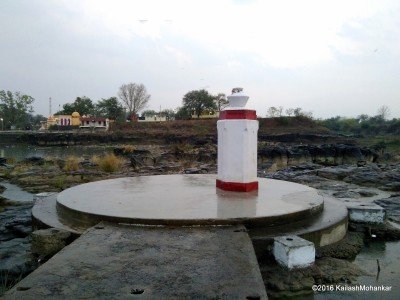
Acharya Vinoba Bhave Ashram
Some quick example text to build on the card title and make up the bulk of the card's content.
Go somewhere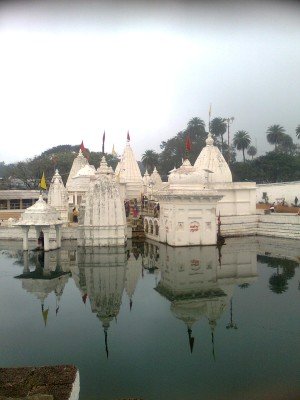
Amarkantak
Some quick example text to build on the card title and make up the bulk of the card's content.
Go somewhere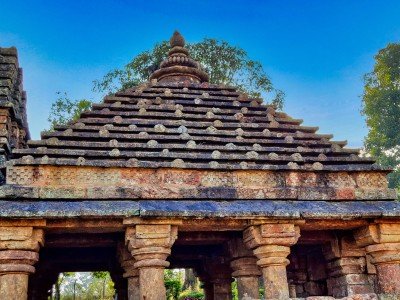
Ancient Kalachuri Temples
Some quick example text to build on the card title and make up the bulk of the card's content.
Go somewhere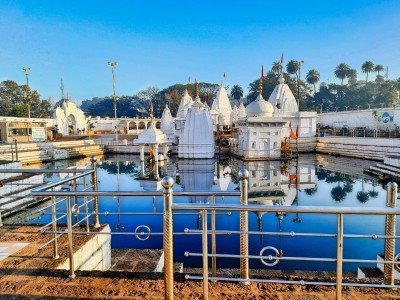
Bhrigu Kamandal
Some quick example text to build on the card title and make up the bulk of the card's content.
Go somewhere
Dhuni Pani
Some quick example text to build on the card title and make up the bulk of the card's content.
Go somewhere
Dudh Dhara Waterfall
Some quick example text to build on the card title and make up the bulk of the card's content.
Go somewhere
Durga Mandir
Some quick example text to build on the card title and make up the bulk of the card's content.
Go somewhere
Indira Gandhi National Tribal University
Some quick example text to build on the card title and make up the bulk of the card's content.
Go somewhere
Jwaleshwar Mahadev Temple
Some quick example text to build on the card title and make up the bulk of the card's content.
Go somewhere
Kabir Chabutra
Some quick example text to build on the card title and make up the bulk of the card's content.
Go somewhere
Kapil Dhara Waterfall
Some quick example text to build on the card title and make up the bulk of the card's content.
Go somewhere
Kapila Maharshi Ashram
Some quick example text to build on the card title and make up the bulk of the card's content.
Go somewhere
Narmada Ashram
Some quick example text to build on the card title and make up the bulk of the card's content.
Go somewhere
Narmada Kund & Temples
Some quick example text to build on the card title and make up the bulk of the card's content.
Go somewhere
Narmada Mandir
Some quick example text to build on the card title and make up the bulk of the card's content.
Go somewhere
Narmada Udgam & Kund
Some quick example text to build on the card title and make up the bulk of the card's content.
Go somewherein Other Cities