Triveni Sangam
General information
-
Ideal Duration:
2-3 Hours:Place Type:
Natural/Religious Site:Entry Fees:
No Entry Fee:The Triveni Sangam itself, as a natural, holy confluence, has no entry fee. Access to the riverbank and the ghats for general viewing is absolutely free of charge.
Boat Hire Fee:The primary cost is the mandatory fee for hiring ...No Entry Fee:The Triveni Sangam itself, as a natural, holy confluence, has no entry fee. Access to the riverbank and the ghats for general viewing is absolutely free of charge.
Boat Hire Fee:The primary cost is the mandatory fee for hiring a boat (Naav) to reach the exact point of the confluence. This fee is negotiable and varies significantly based on the number of passengers, the duration of the ride, and the season (it is highest during the Kumbh Mela).
Priest/Ritual Fee:The fees for engaging a priest (Panda) to perform a specific ritual (puja or Pind Daan) are separate and should be negotiated and agreed upon before the ritual begins. The overall cost is highly variable, depending on the services sought:Timing:
Regular Timings:The Triveni Sangam is a natural confluence, technically accessible 24 hours a day. However, boat services usually run from 5:00 AM in the morning until 7:00 PM in the evening, as bathing after sunset is rare.
Ideal Visit Time:Regular Timings:The Triveni Sangam is a natural confluence, technically accessible 24 hours a day. However, boat services usually run from 5:00 AM in the morning until 7:00 PM in the evening, as bathing after sunset is rare.
Ideal Visit Time:The ideal visit time is the early morning (around 5:30 AM to 7:30 AM) for both the most peaceful spiritual experience and the best photography of the sunrise and the distinct river colors. Late afternoon is also a good time.
Mela Timings:During the Magh or Kumbh Mela, the ghats and boat services are active around the clock, especially on the highly auspicious bathing days:Special Events:
The Maha Kumbh Mela (Every 12 Years):The supreme event, where tens of millions gather for the Shahi Snan (Royal Bath) on the most auspicious days, an overwhelming display of faith.
The Annual Magh Mela (Every Year):A month-long, smaller vers...The Maha Kumbh Mela (Every 12 Years):The supreme event, where tens of millions gather for the Shahi Snan (Royal Bath) on the most auspicious days, an overwhelming display of faith.
The Annual Magh Mela (Every Year):A month-long, smaller version of the Kumbh, held during the Hindu month of Magh (January/February), offering a similar spiritual and cultural experience.
Makar Sankranti and Mauni Amavasya:These two days, which usually fall within the Mela period, are the most astronomically and astrologically significant bathing days (Snan), attracting the largest crowds of the entire season.
Basant Panchami:Another highly auspicious bathing day during the Mela season, dedicated to Goddess Saraswati:Best Photo Spots:
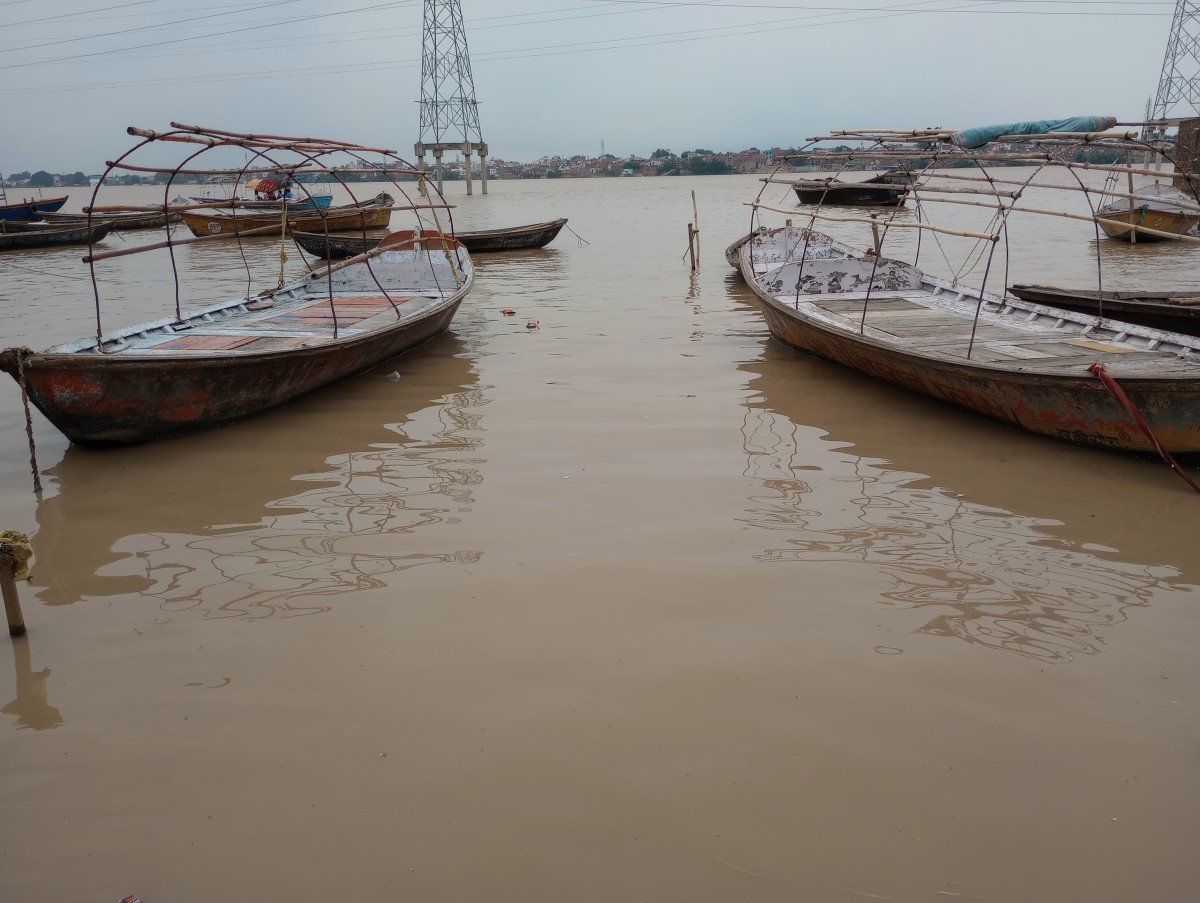
The Color Line from the Boat:The undisputed best photo spot is from a small boat directly at the confluence, capturing the clear, stark line where the muddy Ganga and the clear Yamuna waters meet, symbolizing the Sangam.
Sunrise over the Conflue...The Color Line from the Boat:The undisputed best photo spot is from a small boat directly at the confluence, capturing the clear, stark line where the muddy Ganga and the clear Yamuna waters meet, symbolizing the Sangam.
Sunrise over the Confluence:A wide-angle shot from the ghat steps or a boat, capturing the early morning sunrise over the river, with the sun's rays reflecting off the vast expanse of water and the distant shoreline.
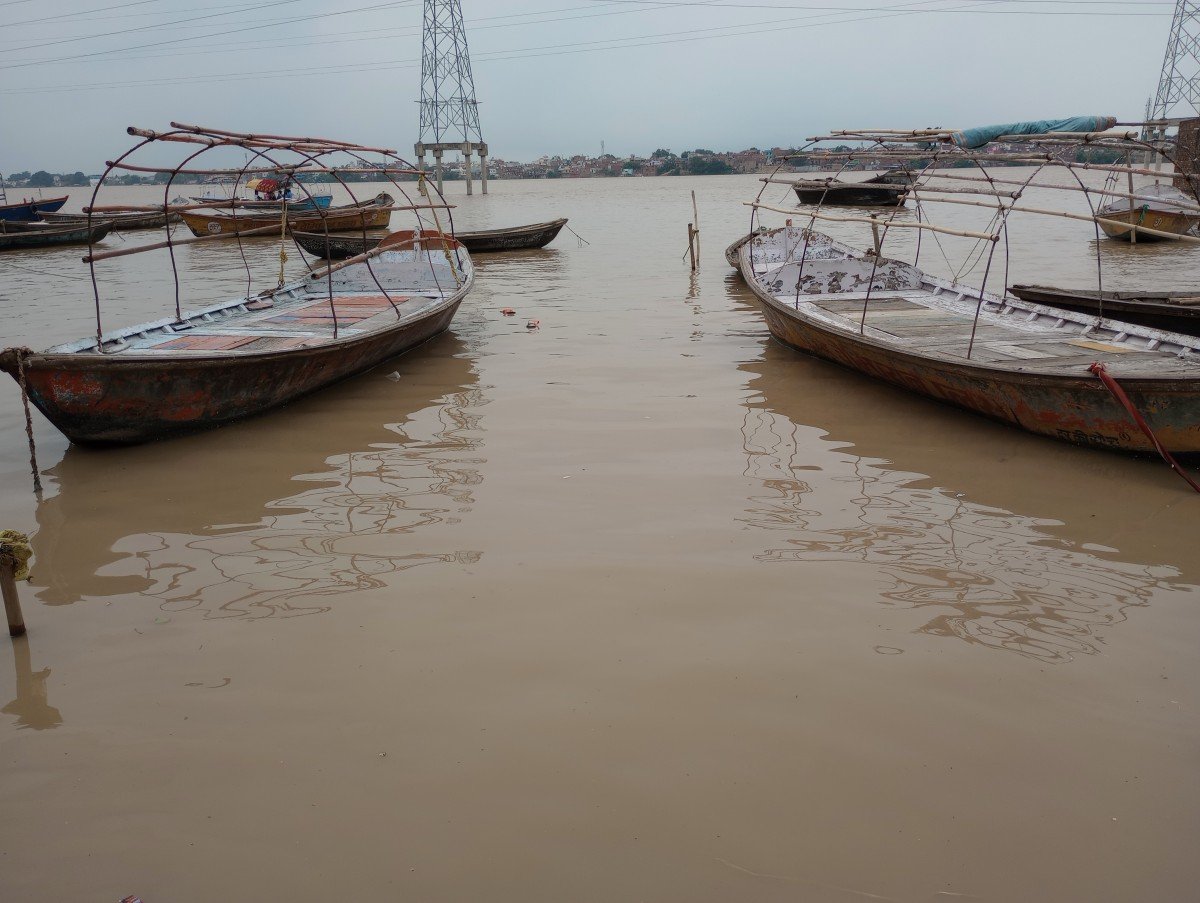
The Riverbank Activities:A documentary-style photograph capturing the numerous priests (Pandas) on their small wooden platforms in the water, performing rituals with the devotees, showcasing the spiritual activity.
Illuminated Shri Adi Shankar Vimana Mandapam:A shot from the water at dusk, featuring the illuminated Shri Adi Shankar Vimana Mandapam tower rising behind the ghats, contrasting the spiritual activity with the modern landmark:Photo Gallery
Things To Do
-
Take the Holy Bath (Triveni Snan):The main activity is performing the ritual bath (Snan) at the confluence point, which is typically reached by hiring a boat (Naav). Devotees believe this act cleanses sins and promises moksha.
Hire a Boat to the Confluence:Hire a local boatman (Naav-wala) to take you to the precise point where the two visible rivers meet. This is essential for the visual and spiritual experience. The boatmen are often also Pandas (priests) and can assist with performing short pujas.
Perform Rituals and Pind Daan:Engage a priest (Panda) to perform specific rituals like Pind Daan (rites for the deceased ancestors) or a general puja to seek blessings for the family, a traditional part of the Prayag pilgrimage.
Capture the Color Distinction:Take a...Take the Holy Bath (Triveni Snan):The main activity is performing the ritual bath (Snan) at the confluence point, which is typically reached by hiring a boat (Naav). Devotees believe this act cleanses sins and promises moksha.
Hire a Boat to the Confluence:Hire a local boatman (Naav-wala) to take you to the precise point where the two visible rivers meet. This is essential for the visual and spiritual experience. The boatmen are often also Pandas (priests) and can assist with performing short pujas.
Perform Rituals and Pind Daan:Engage a priest (Panda) to perform specific rituals like Pind Daan (rites for the deceased ancestors) or a general puja to seek blessings for the family, a traditional part of the Prayag pilgrimage.
Capture the Color Distinction:Take a close-up photograph from the boat, focusing on the distinct color line where the muddy Ganga water meets the clearer Yamuna water, a natural wonder.
Witness the Mela (Seasonal):If visiting during the January-March period, witness the massive scale, vibrant colors, and spiritual intensity of the Magh or Kumbh Mela encampments and the bathing rituals.
Visit the Nearby Sites:Combine the visit with the immediately accessible sites like the Prayagraj Fort, the Patalpuri Temple, and the Bade Hanumanji Temple, which are all part of the essential Prayag Darshan.
Enjoy the Sunrise:Arrive at the ghats before sunrise to witness the beautiful light painting the sky and the water, a serene moment before the daily rush begins:
Information
-
Why Famous:
The Three Rivers Confluence:It is famously the most sacred confluence in India, where the visible Ganga and Yamuna meet the mythical Saraswati, creating a powerful spiritual energy believed to grant salvation.
The Visible Color Line:The natu...The Three Rivers Confluence:It is famously the most sacred confluence in India, where the visible Ganga and Yamuna meet the mythical Saraswati, creating a powerful spiritual energy believed to grant salvation.
The Visible Color Line:The natural phenomenon of the two rivers' distinctly colored waters (muddy-brown Ganga and clearer-blue Yamuna) meeting without immediately mixing is a stunning, visible spectacle that draws both pilgrims and tourists.
The Kumbh Mela Site:It is the site of the Maha Kumbh Mela, the largest peaceful human gathering in the world, making it a place of global cultural and spiritual importance recognized by UNESCO: -
Architecture:
Natural Architecture and River Dynamics:The architecture of the Triveni Sangam is primarily a masterpiece of natural geography—the meeting point of two major river systems on the Gangetic plain. The Ganga flows from the east, and the Yamuna from the southwest. The visibl...Natural Architecture and River Dynamics:The architecture of the Triveni Sangam is primarily a masterpiece of natural geography—the meeting point of two major river systems on the Gangetic plain. The Ganga flows from the east, and the Yamuna from the southwest. The visible architecture consists of the tiered ghats (steps) built along the riverbanks to facilitate bathing and rituals.
Temporary Structures:During the massive Mela events, the architectural highlight is the creation of a sophisticated, vast, temporary city, including dozens of temporary pontoon bridges over the rivers, a grid of roads, and thousands of tented accommodations on the flat, sandy banks. These temporary structures are designed for high-density pedestrian and vehicular traffic and are a remarkable feat of functional civil engineering, which is entirely dismantled after the event, leaving the original riverbank untouched for the rest of the year: -
How To Reach:
By Air (Approx.
15 KMS):The nearest airport is Prayagraj Airport (IXD). A prepaid cab or taxi should be taken directly to the Sangam area or the nearest motorable drop-off point near the fort/ghats. By Train (Approx.
5 KMS):The ne...By Air (Approx.
15 KMS):The nearest airport is Prayagraj Airport (IXD). A prepaid cab or taxi should be taken directly to the Sangam area or the nearest motorable drop-off point near the fort/ghats. By Train (Approx.
5 KMS):The nearest major stations are Prayagraj Junction (PRYJ) and Prayag Ghat (PRG). From the station, the final approach to the Sangam is by auto-rickshaw or e-rickshaw to the designated vehicle parking area, followed by a short walk to the boat-boarding point.
By Road:Access by private vehicle is highly restricted near the ghats, especially during the Mela season. It is best to take local transport to the drop-off point.
By Local Transport:Hiring an auto-rickshaw is the best local way. Be prepared for a walk from the final vehicle drop-off point to the water's edge, as the banks are often sandy and pedestrian-only: -
Weather and Best Time to Visit:
Winter Season (October to March):This is the best time to visit. The cool, pleasant weather makes the boat ride and the time spent on the riverbank enjoyable. The major Mela events occur during this period.
Summer Season (April to June):Th...Winter Season (October to March):This is the best time to visit. The cool, pleasant weather makes the boat ride and the time spent on the riverbank enjoyable. The major Mela events occur during this period.
Summer Season (April to June):The heat is intense. An early morning visit is mandatory. The low water level can sometimes expose more sandy banks, requiring a longer walk to the boat.
Monsoon Season (July to September):The river current is very strong, and the water level is high and sometimes turbulent. Boat rides may be restricted or more expensive, making this period less ideal for a relaxed visit.
Different Parts of the Day:The early morning sunrise is the ideal daily visit time for both spiritual reasons and scenic beauty: -
Near Tourist Places:
Prayagraj Fort (1 KMS), Bade Hanumanji Temple (1 KMS), Patalpuri Temple (1 KMS, inside Fort), Shri Adi Shankar Vimana Mandapam (0. 5 KMS), Nagvasuki Temple (2. 5 KMS), Minto Park (3 KMS), Saraswati Ghat (3. 5 KMS), Khusro Bagh (6 KMS), Ulta Qila (8 KMS), New Yamuna Bridge (6 KMS):
Tourism Tips
-
Health & Safety:Be extremely cautious on the boats; ensure life vests are available, and do not overload the boat. When bathing, stay within the roped-off, safe areas and follow the instructions of the water police. Be vigilant about vendors and keep your belongings secur...Health & Safety:Be extremely cautious on the boats; ensure life vests are available, and do not overload the boat. When bathing, stay within the roped-off, safe areas and follow the instructions of the water police. Be vigilant about vendors and keep your belongings secure.
Packing Essentials:Wear comfortable, modest, and quick-drying clothes if you plan to take a dip. Carry cash for the boat fare and priest services. Sunscreen and a hat are essential.
Accommodation:Staying in Civil Lines offers the best comfort and connectivity. For an authentic experience during the Mela, book a tent camp in the Mela grounds.
Other Important Tips:Bargain firmly but respectfully with the boatmen for the price of the ride. Only use the services of licensed, authorized priests for rituals:
Reviews
FAQs
Prayagraj Itineray And Cost:-
Other Places In Prayagraj :-
Other States In India :-
Information about New and Updated Locations() of Uttar Pradesh Has Been Added :-
Card subtitle
Note:-
Information provided here in good Faith and for reference only.
Near Places
Akshayavat
Some quick example text to build on the card title and make up the bulk of the card's content.
Go somewhere
All Saints Cathedral
Some quick example text to build on the card title and make up the bulk of the card's content.
Go somewhere
Allahabad Fort
Some quick example text to build on the card title and make up the bulk of the card's content.
Go somewhere
Allahabad High Court
Some quick example text to build on the card title and make up the bulk of the card's content.
Go somewhere
Allahabad Museum
Some quick example text to build on the card title and make up the bulk of the card's content.
Go somewhere
Allahabad Pillar
Some quick example text to build on the card title and make up the bulk of the card's content.
Go somewhere
Alopi Devi Mandir
Some quick example text to build on the card title and make up the bulk of the card's content.
Go somewhere
Anand Bhavan
Some quick example text to build on the card title and make up the bulk of the card's content.
Go somewhere
Bade Hanuman Ji Temple
Some quick example text to build on the card title and make up the bulk of the card's content.
Go somewhere
Chandra Shekhar Azad Park
Some quick example text to build on the card title and make up the bulk of the card's content.
Go somewhere
Clock Tower
Some quick example text to build on the card title and make up the bulk of the card's content.
Go somewhere
Jawahar Planetarium
Some quick example text to build on the card title and make up the bulk of the card's content.
Go somewhere
Kalyani Devi Temple
Some quick example text to build on the card title and make up the bulk of the card's content.
Go somewhere
Khusro Bagh
Some quick example text to build on the card title and make up the bulk of the card's content.
Go somewhere
Law Museum & Archives
Some quick example text to build on the card title and make up the bulk of the card's content.
Go somewhere
Mankameshwar Temple
Some quick example text to build on the card title and make up the bulk of the card's content.
Go somewherein Other Cities