Bogibeel Bridge
General information
-
Ideal Duration:
1Rs.2 hours (for a complete round trip drive, stopping for photos/views, and general admiration).Place Type:
Engineering Marvel/Infrastructure/Sightseeing/TranEntry Fees:
Bridge Access (Roadway): There is generally no direct 'entry fee' for an individual tourist to simply stop and view the bridge from the approach roads or the surrounding areas. The structure is a public thoroughfare and is accessible to everyone for viewing and photography....Bridge Access (Roadway): There is generally no direct 'entry fee' for an individual tourist to simply stop and view the bridge from the approach roads or the surrounding areas. The structure is a public thoroughfare and is accessible to everyone for viewing and photography.
Toll Charges for Vehicles: The primary cost associated with the bridge is the Toll Fee for vehicles using the upper road deck (National Highway 15). Toll rates are subject to revision by the National Highways Authority of India (NHAI).
Typical rates apply based on the vehicle type: FourRs.wheelers (Cars, Jeeps) usually have one rate for a single journey. Buses and Trucks have significantly higher rates. Motorcycles and mathbfScooters} are generally exempted from tolls. Tourists should check the current rates before driving across.
Railway Travel Cost: Using the lower deck requires purchasing a Railway Ticket from the Northeast Frontier Railway (NFR) for a journey that crosses the bridge. This is a standard train fare and is not an 'entry fee' to the bridge itself. The fare will depend on the class of travel and the total distance of the journey (e. g. , from Dibrugarh to North Lakhimpur).
Zero Fee for Viewing/Photography: It is important for tourists to know that simply visiting the site to admire the engineering, take pictures, or enjoy a sunset from the safe viewing points on the riverbank or the approach roads involves zero cost. It is a public infrastructure and a major sightseeing location.
Hidden Costs (Parking/Local Services): While there's no official fee, local services near the bridge might charge a small, nominal fee for Parking in unauthorized or informal parking spots on the approach roads. Always be prepared to pay a small amount to local operators if you park your vehicle.Timing:
Regular Bridge Timings:
24/7 Operation: The Bogibeel Bridge is a functional part of the national highway (NH-15) and the railway network. Therefore, it is open 24 hours a day, 7 days a week, 365 days a year for vehicular and rail traffic. T...Regular Bridge Timings:
24/7 Operation: The Bogibeel Bridge is a functional part of the national highway (NH-15) and the railway network. Therefore, it is open 24 hours a day, 7 days a week, 365 days a year for vehicular and rail traffic. There are no opening or closing times for tourists who simply wish to cross the bridge or view it from the approach roads.
Ideal Visit Time - Photography and Views: The absolute best time for a visit is during the Golden Hour—the mathbfmorning} mathbfsunrise} (around 5:00 AM to 6:30 AM depending on the month) or the mathbfevening} mathbfsunset} (around 4:30 PM to 6:00 PM). The light during these times is soft, casting a beautiful glow on the steel structure and providing the most dramatic backdrops over the Brahmaputra River.
Ideal Visit Time - General Crossing: Any time during the day is suitable for a simple crossing. Mid-day (11:00 AM to 3:00 PM) is usually the brightest but can be hot, particularly from March to September. The reduced traffic flow during mid-day can make the drive more peaceful.
Ideal Visit Time - Rail Crossing: To experience a train crossing the lower deck, you must check the latest train schedules from the Northeast Frontier Railway (NFR) for trains passing between Dibrugarh and Dhemaji/North Lakhimpur and plan your trip around those timings.
Crowd and Traffic Timings: Traffic tends to be higher during local rush hours, which are typically 9:00 AM to 11:00 AM and 4:00 PM to 7:00 PM. For a more relaxed experience, try to visit outside of these hours.Special Events:
The Grand Inauguration of December 2018: The most significant and special event was the official inauguration on December 25, 2018, by Prime Minister Narendra Modi. This day marked the culmination of a project that took 16 years to complete and was a massive celebration for the people of Assam and ...The Grand Inauguration of December 2018: The most significant and special event was the official inauguration on December 25, 2018, by Prime Minister Narendra Modi. This day marked the culmination of a project that took 16 years to complete and was a massive celebration for the people of Assam and Arunachal Pradesh. It was a widely televised event, with the first passenger train, the Tinsukia-Naharlagun Express, running across the bridge, symbolizing a new era of connectivity and development for the region.
Seasonal Picnics and Fairs (Bihu Season): While not a formal event, the area surrounding the bridge's approach on the Dibrugarh side becomes a popular spot for picnics and informal gatherings, especially during the harvest festival of Bihu (April and January). Families gather on the riverbanks to celebrate, often with local food and music, turning the landmark into a center for community celebration. The Anniversary of Foundation Day (January 1997): Every January, the anniversary of the foundation laying by former Prime Minister H. D. Deve Gowda is a moment of reflection and remembrance of the project's long journey. While not a public holiday, local media and community groups often mark the day by discussing the bridge's impact, highlighting its political and social journey from an accord promise to a finished reality.
Defense Movements and Drills (Occasional): Due to the bridge's crucial strategic importance, it occasionally serves as a focal point for defense-related exercises and movements. While these are not tourist events, witnessing a large military convoy moving across the bridge can be an impressive and significant event, underscoring its role as a key logistics corridor for the Indian Army towards the border regions.Best Photo Spots:
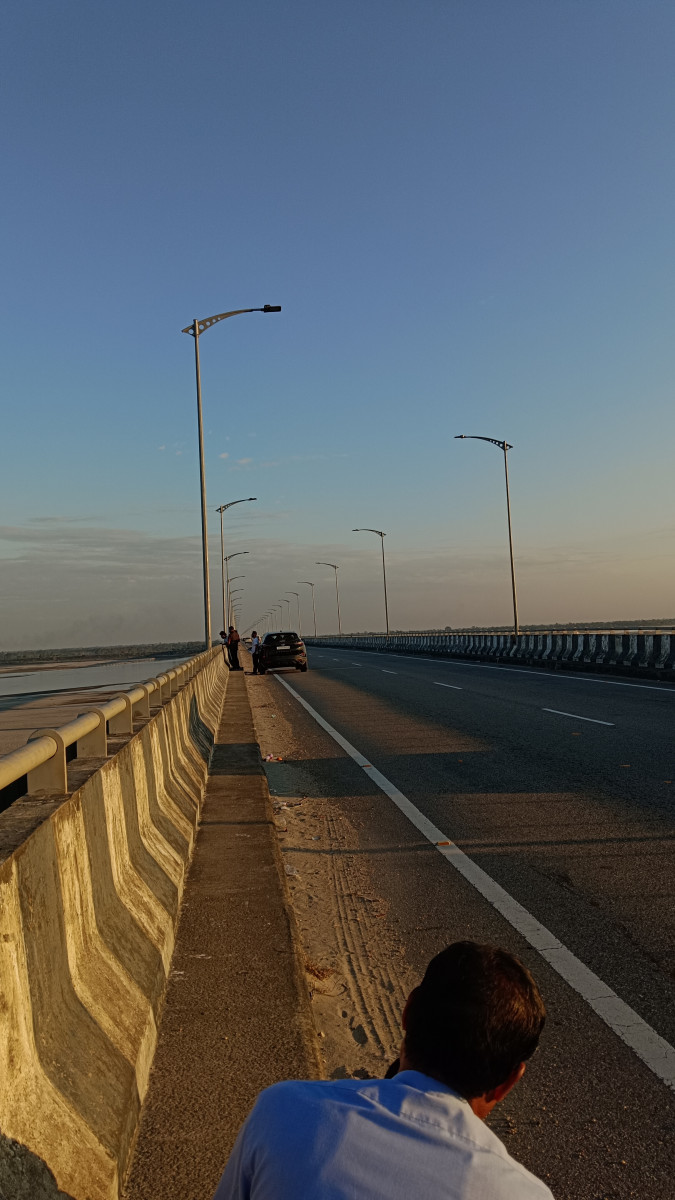
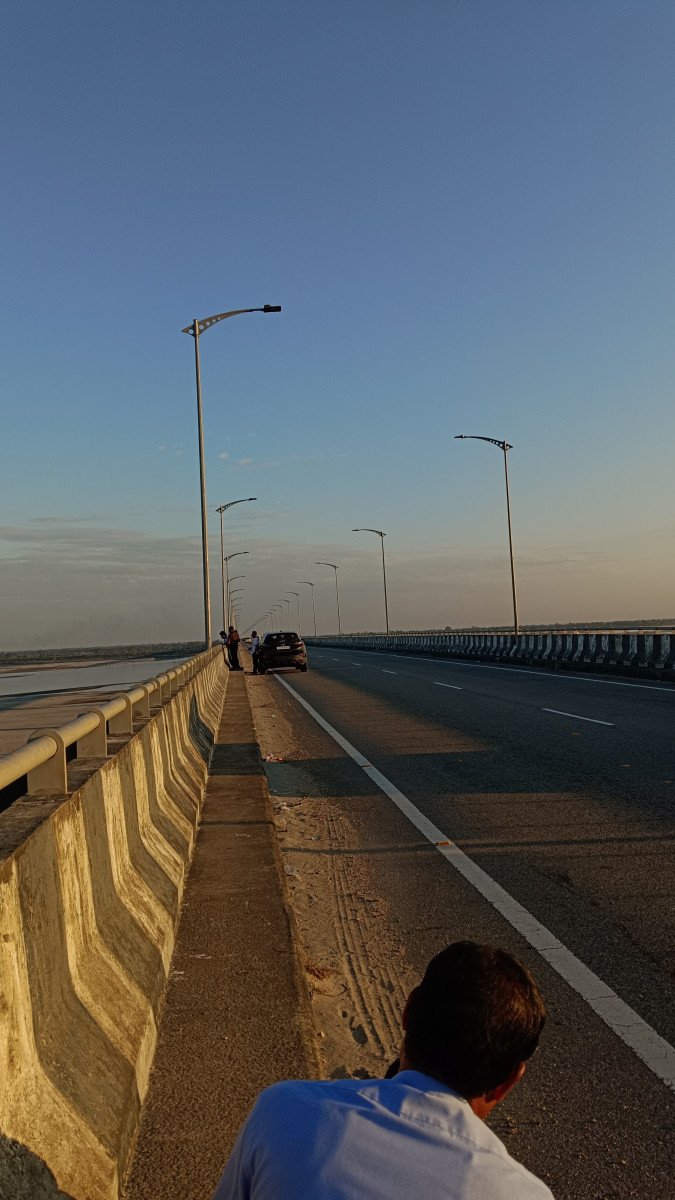
The Elevated Approach Roads: The approach roads, particularly on the Dibrugarh side, are arguably the best spot. Since the road is elevated to a great height, you get a clean, uninterrupted view of the bridge stretching into the distance over the river. This spot is perfec...The Elevated Approach Roads: The approach roads, particularly on the Dibrugarh side, are arguably the best spot. Since the road is elevated to a great height, you get a clean, uninterrupted view of the bridge stretching into the distance over the river. This spot is perfect for capturing the bridge's entire length and its perspective, especially during the Golden Hour (early morning or late afternoon).
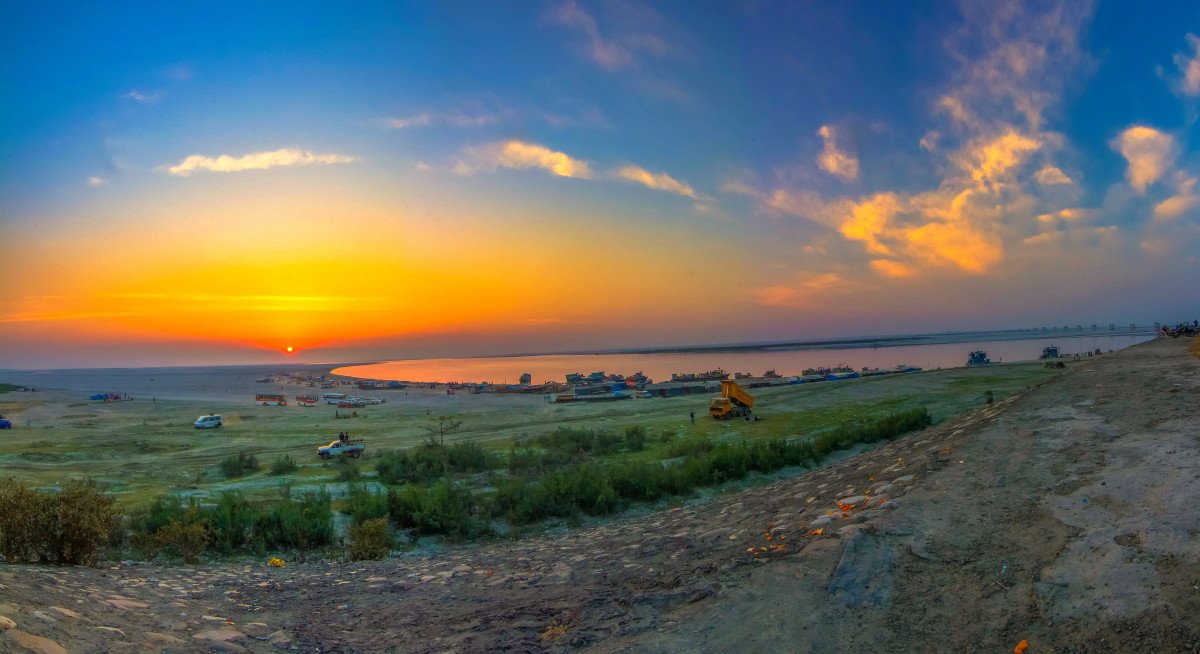
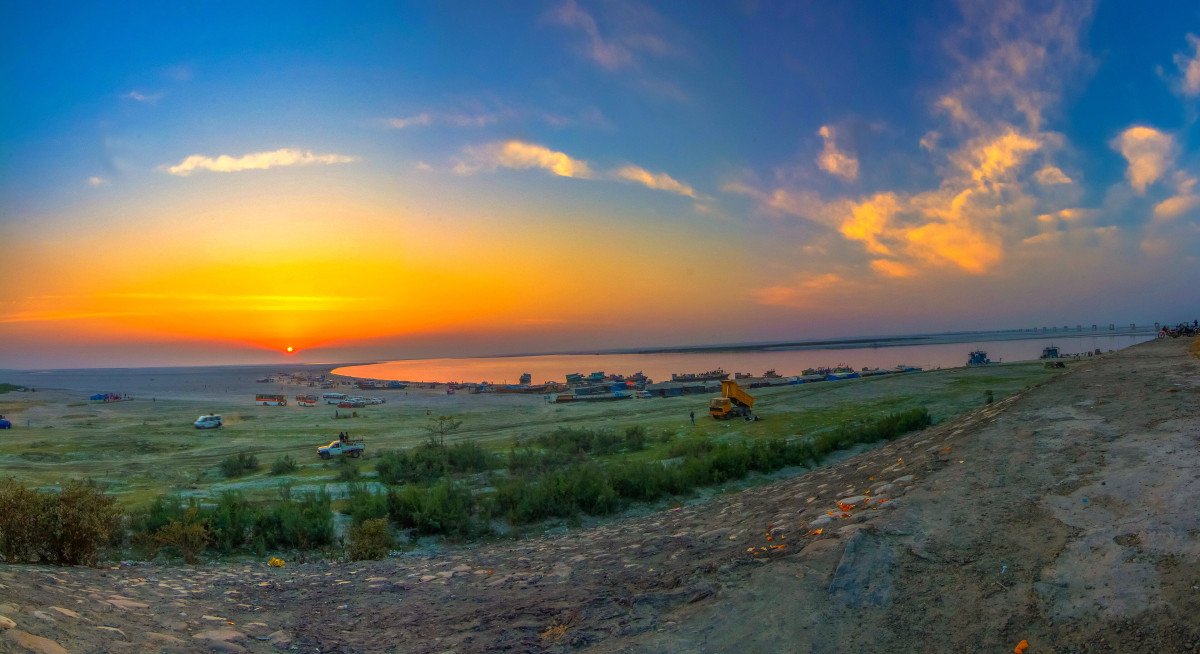
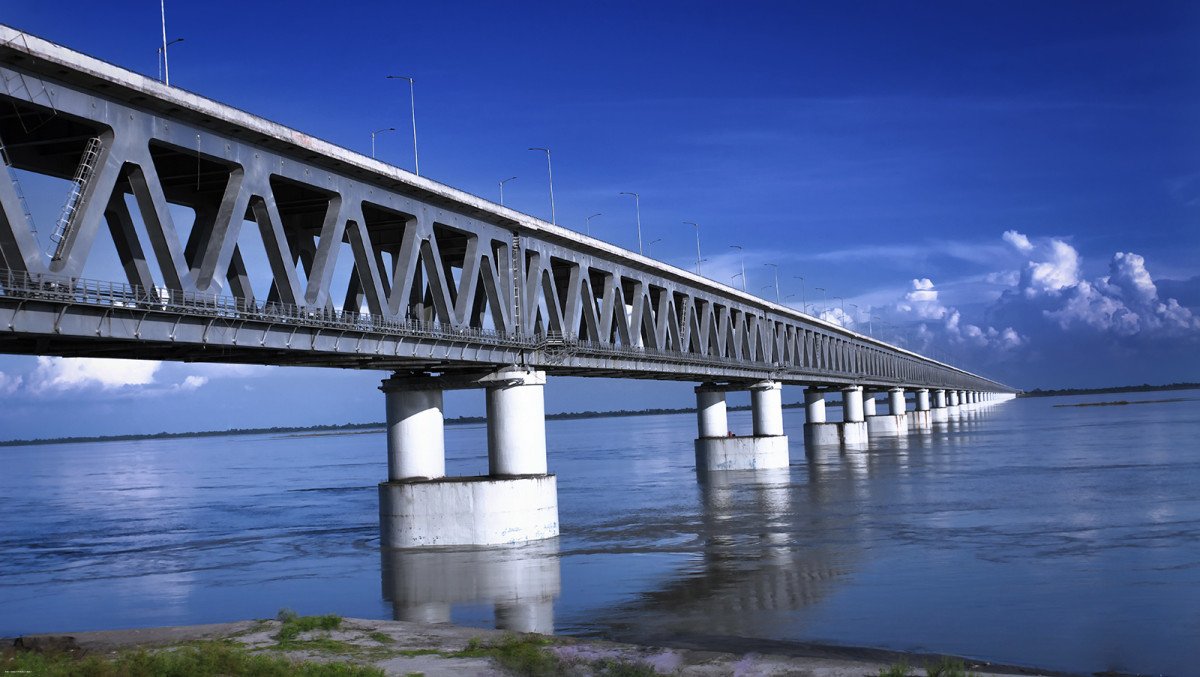
The Southern River Bank: For ground-level and wide-angle shots, park safely and walk down to the riverbank on the south side. From here, you can capture the massive piers (pillars) rising from the water and the sheer scale of the steel superstructure. This is the ideal spot for a sunset silhouette shot, where the bridge is framed dramatically against the orange and purple sky.
From a Passing Train: For a truly unique and intimate perspective, take a short train journey across the lower deck. Shooting from the train window (safely) captures the massive 125-meter steel trusses passing right by you, showcasing the structural complexity up close. This offers a powerful, dynamic photo of the railway line on the lower deck.
The Northern Bank (Dhemaji Side) View: Crossing the bridge entirely and viewing it from the Dhemaji side offers a different, often less-crowded, perspective. From here, the bridge appears to emerge from the dense greenery of the north bank. This spot is excellent for capturing the bridge and the Brahmaputra river with the backdrop of the Dibrugarh plains in the distance.
Near the Toll Gates/Entrances: Although toll gates (if operational) are functional areas, the entrance areas are designed to be monumental. They offer clear, close-up shots of the signage, which can be great for travel photos to officially mark your visit to the 'Longest Rail-Road Bridge of India'. Ensure you follow all safety and traffic rules in these high-traffic areas.
Panoramic Shots from the Road Deck: While driving across, it's possible to capture quick, beautiful panoramic shots (if the traffic allows and you are a passenger) of the vast Brahmaputra flowing on both sides. The height gives a commanding view of the river's width and the distant landscape of Assam.Photo Gallery
Things To Do
-
Drive Across the Engineering Marvel: The primary activity is simply driving across the 4. 94 km bridge on the three-lane upper deck. Take your time (while adhering to traffic rules) to appreciate the sheer scale of the construction. It's a surreal experience to drive high above the massive Brahmaputra river, seeing the water spread out beneath you. This drive provides a seamless connection between the two districts, and the experience of crossing a structure of this magnitude is a memorable event in itself.
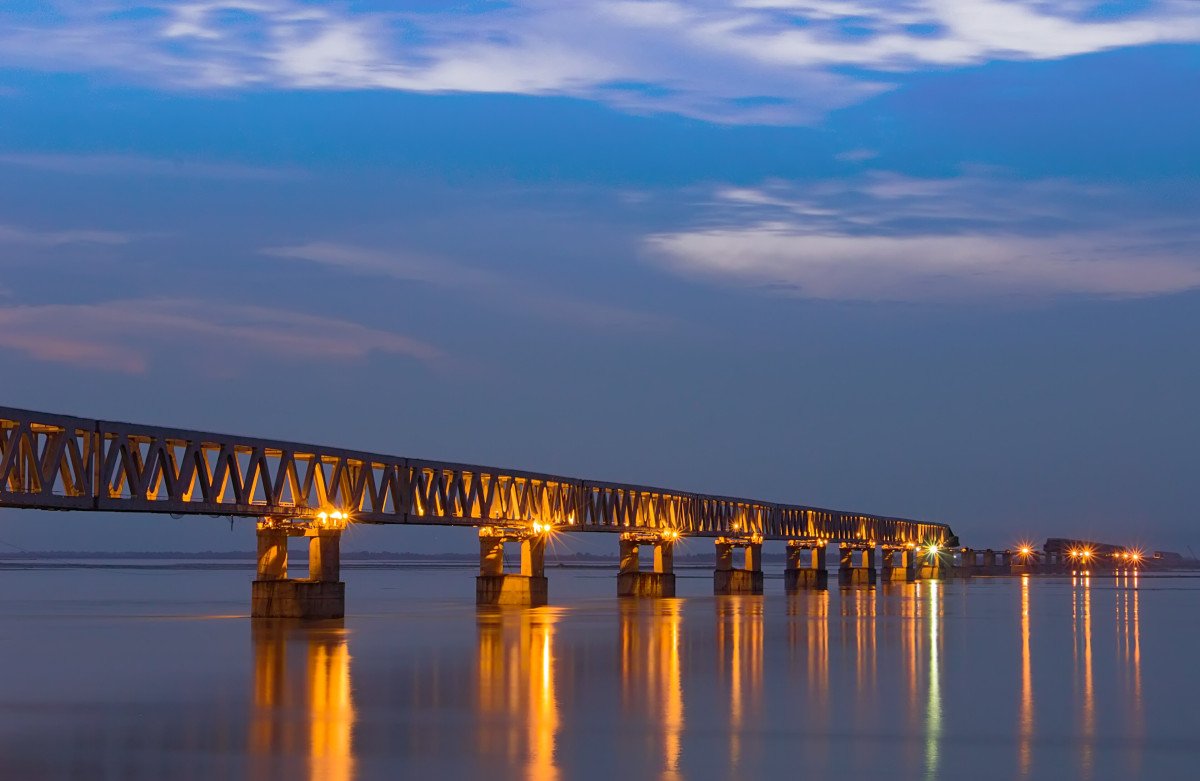
Photography and Sunset Views: The bridge offers spectacular photographic opportunities. The massive steel trusses and the rhythmic pattern of the pillars make for stunning architectural shots. The best time for photography is during sunrise and, more popularly, sunset. The sun setting over the Brahmaputra River paints th...Drive Across the Engineering Marvel: The primary activity is simply driving across the 4. 94 km bridge on the three-lane upper deck. Take your time (while adhering to traffic rules) to appreciate the sheer scale of the construction. It's a surreal experience to drive high above the massive Brahmaputra river, seeing the water spread out beneath you. This drive provides a seamless connection between the two districts, and the experience of crossing a structure of this magnitude is a memorable event in itself.
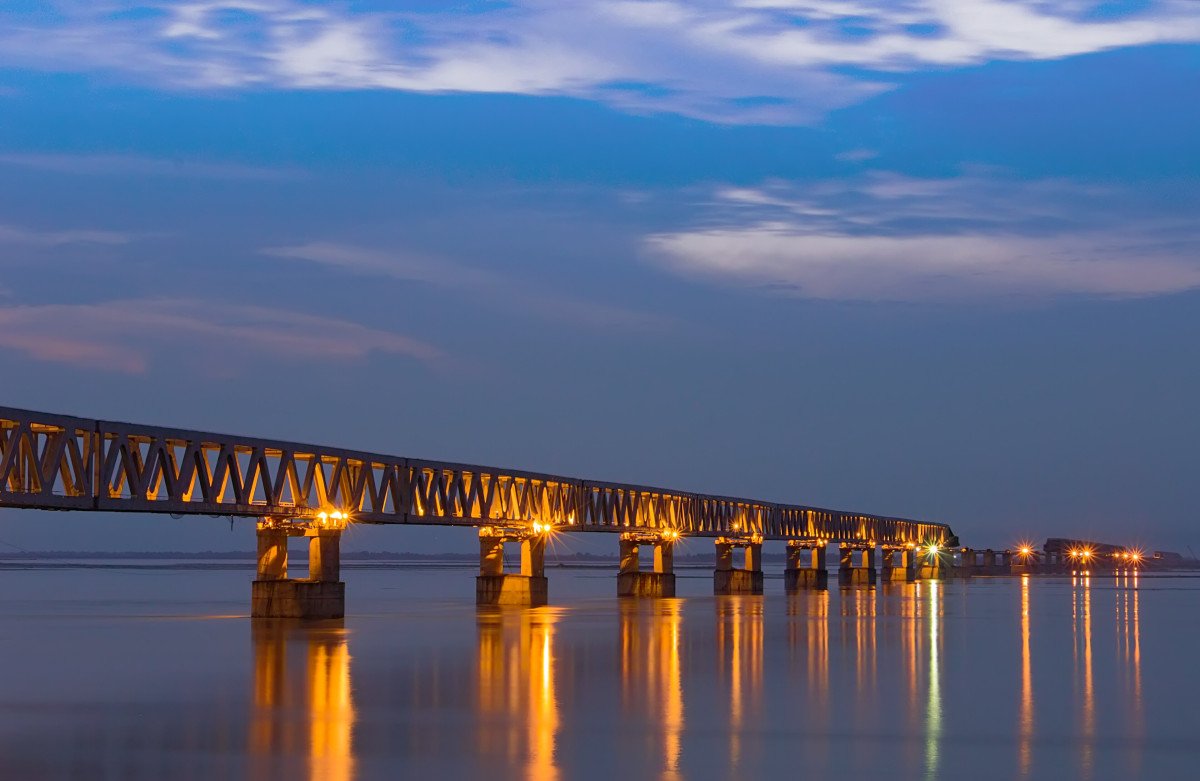
Photography and Sunset Views: The bridge offers spectacular photographic opportunities. The massive steel trusses and the rhythmic pattern of the pillars make for stunning architectural shots. The best time for photography is during sunrise and, more popularly, sunset. The sun setting over the Brahmaputra River paints the sky in vibrant colors, creating a breathtaking backdrop for the bridge's silhouette. Park safely at designated spots on the approach road or view the bridge from the riverbank to capture its full glory.
Watch a Train Pass By: The Bogibeel Bridge is a double-deck bridge. Finding a safe vantage point near the beginning or end of the bridge to watch a train cross the lower deck is a unique sight. The experience of seeing rail and road traffic moving simultaneously on the same structure is a highlight and truly captures the bridge's utility. This is a must-do for railway enthusiasts or 'railfans'.
Riverbank Picnics and Relaxation: On the Dibrugarh side, near the approach road, you can often find quiet spots by the riverbank during the winter months when the water level is lower. Locals frequently use these areas for safe, family picnics. It's an excellent way to relax, enjoy the natural beauty of the Brahmaputra, and view the bridge from a distance.
Visit Local Eateries on the Banks: The construction of the bridge has spurred small local businesses, including tea stalls and temporary eateries, near the access points. Stopping at one of these local 'dhabas' or stalls to enjoy traditional Assamese snacks and a cup of authentic Assam Tea is a great way to experience local culture and hospitality.
Explore the Dhemaji Side (North Bank): Since the bridge connects to the Dhemaji district, an extended trip involves crossing completely and exploring the north bank. This region is less developed but offers a different, more raw landscape and serves as the gateway to the remote parts of Arunachal Pradesh. This excursion provides a deeper understanding of the connectivity the bridge offers.
Stroll on the Approach Roads: Take a safe walk on the wide, elevated approach roads (not the main bridge deck itself) on either side. These roads are designed to elevate the structure above the flood-prone areas, offering another great perspective of the bridge's height and length. A walk here, especially in the early morning, can be a refreshing activity.
Appreciating the Scale of the Brahmaputra: The bridge's sheer length emphasizes the enormous width of the Brahmaputra river. Take a moment to stand and look at the vast expanse of the river, especially during the monsoon season when it is at its widest and most powerful. This contemplation allows one to appreciate the immense challenge the engineers faced in building the bridge.
Information
-
Why Famous:
India's Longest Rail-Road Bridge: The most defining reason for its fame is its title as the longest rail-cum-road bridge in India. This 4. 94 kilometer structure dramatically showcases India's capability in overcoming significant geographical challenges posed by the mighty ...India's Longest Rail-Road Bridge: The most defining reason for its fame is its title as the longest rail-cum-road bridge in India. This 4. 94 kilometer structure dramatically showcases India's capability in overcoming significant geographical challenges posed by the mighty Brahmaputra River. This title naturally draws tourists, engineers, and curious travelers.
Strategic Defense Significance: The bridge is located just 20 km from the Assam - Arunachal Pradesh border, making it a crucial strategic asset. Its design, which is robust enough to handle the weight of main battle tanks and is rumored to support fighter jet landings, ensures rapid and reliable deployment of Indian Armed Forces to the disputed border areas with China. This defense utility makes it famous far beyond a simple infrastructure project.
A Lifeline for Northeast Connectivity: For the nearly five million people in Upper Assam and Arunachal Pradesh, the bridge is a lifeline. Before its construction, crossing the Brahmaputra involved a long, time-consuming ferry ride or an extremely long detour via Tezpur (over 270 km away). The bridge has reduced the travel time between Dibrugarh and Dhemaji to mere minutes and has substantially cut the road distance to Itanagar, the capital of Arunachal Pradesh, by over 700 km.
German Technology and Seismic Resistance: Its use of state-of-the-art welded steel truss girders and being one of India's first fully welded bridges with a 120-year lifespan adds to its fame. The fact that it is built to withstand earthquakes up to 7. 0 Richter scale in a high-seismic zone highlights its world-class construction quality. -
Architecture:
German and Swedish Design Influence: The bridge's superstructure utilized advanced welded steel truss girders, a design choice influenced by technologies seen in European structures like the Oresund Bridge that connects Denmark and Sweden. This method was chosen for its hig...German and Swedish Design Influence: The bridge's superstructure utilized advanced welded steel truss girders, a design choice influenced by technologies seen in European structures like the Oresund Bridge that connects Denmark and Sweden. This method was chosen for its high durability and strength, which is essential for a bridge spanning a river as formidable as the Brahmaputra.
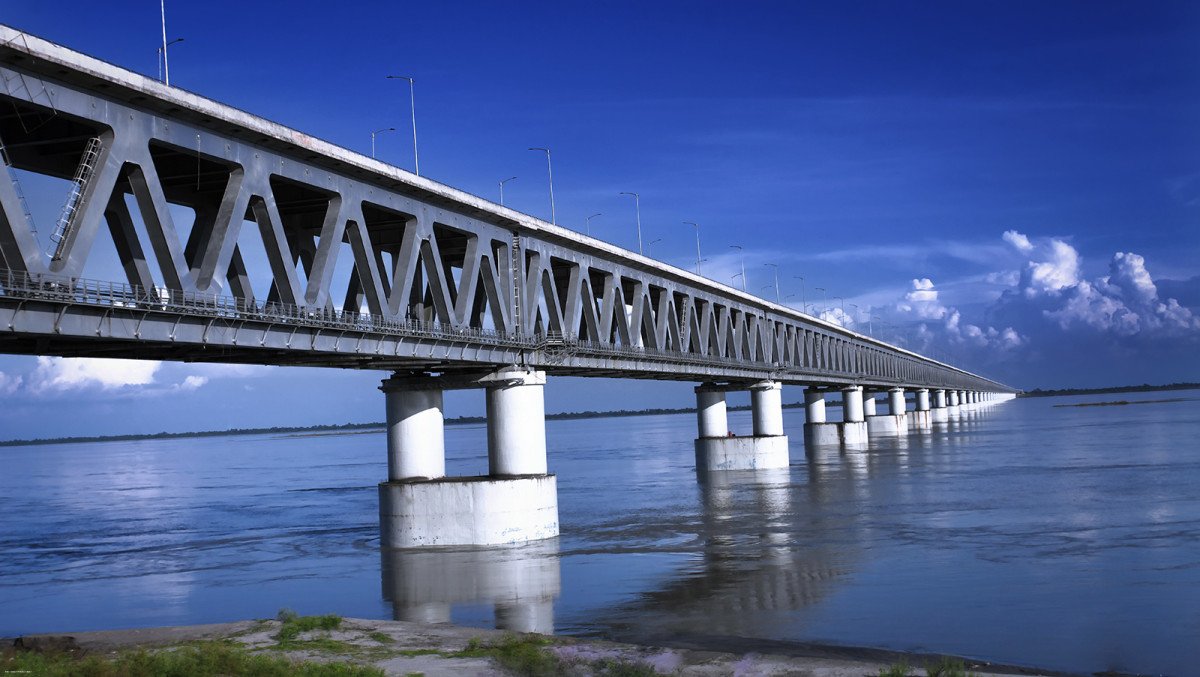
Dimensions and Structure: The total length of the main bridge spans 4. 94 kilometers (4940 meters). It is built on 41 spans, each measuring 125 meters, along with two end spans of 32. 75 meters. The bridge's foundation, known as well foundations, are massive, deep foundations necessary to handle the enormous loads and the fierce river currents.
Seismic Resistance: Located in a highly earthquake-prone zone, the Bogibeel Bridge is a marvel of resilience. It is India's first bridge to feature fully welded steel-concrete support beams (truss girders), designed to withstand earthquakes up to a magnitude of 7. 0 on the Richter scale.
Double-Deck Configuration: The bridge employs a double-deck system for dual transport. The lower deck consists of a double-line broad-gauge railway track, which enhances rail connectivity and logistics. The upper deck features a three-lane road that is part of National Highway 15 (NH-15), providing seamless road movement across the river. -
How To Reach:
By Air (Flights): The nearest airport is Dibrugarh Airport (also known as Mohanbari Airport), with the IATA code DIB. It is located approximately 15Rs.20 kilometers from the bridge site and is well-connected to major Indian cities.
From the Airp...By Air (Flights): The nearest airport is Dibrugarh Airport (also known as Mohanbari Airport), with the IATA code DIB. It is located approximately 15Rs.20 kilometers from the bridge site and is well-connected to major Indian cities.
From the Airport: Upon landing at Dibrugarh Airport, you can easily hire a pre-paid taxi or a local cab service directly to the Bogibeel Bridge. The journey by road takes about 30 to 45 minutes, depending on the traffic.
By Train (Railways): The region is served by a primary railway network, which is part of the bridge's function.
Nearest Major Station: The closest major railway station is New Dibrugarh Railway Station (DBRT) or the older Dibrugarh Town Railway Station (DBRT). Both stations are well-connected to cities like Guwahati, Kolkata, Delhi, and Chennai.
Direct Train Crossing: For the unique experience of crossing the bridge itself by rail, you must board a train going towards the north bank, such as the Dibrugarh-Naharlagun Intercity Express or other local passenger trains that utilize the new rail link.
By Road (Driving/Bus): The bridge is accessible via National Highway 15 (NH-15).
From Dibrugarh: The bridge is located 17 km from the main city center. You can drive your own vehicle or hire a taxi from any part of Dibrugarh city. The road approach is well-maintained.
Inter-State Connectivity: The bridge is a critical link for travelers driving from Assam to Arunachal Pradesh, significantly reducing the road travel distance to towns like Itanagar and Pasighat.
By Local Transport:
Auto-Rickshaws/Taxis: The most common form of local transport in Dibrugarh is the hired taxi or auto-rickshaw. You can negotiate a round-trip fare with a driver to take you to the bridge, wait for your visit, and bring you back to the city.
Bus Services: Limited local bus services might ply on the route connecting the city to the areas near the bridge. However, a taxi or hired vehicle is the more reliable and comfortable option for tourists. It's recommended to hire a vehicle for the entire round trip from Dibrugarh town. -
Weather and Best Time to Visit:
Best Season:
Winter (November to February): This period is overwhelmingly the best time to visit. The weather is cool, dry, and pleasant, with average temperatures ranging from 10Rs.C to 25Rs.C.
Pleasant Viewing:Best Season:
Winter (November to February): This period is overwhelmingly the best time to visit. The weather is cool, dry, and pleasant, with average temperatures ranging from 10Rs.C to 25Rs.C.
Pleasant Viewing: The clear, haze-free skies of winter offer the best visibility for spectacular panoramic views of the bridge and the surrounding landscape.
River Accessibility: The water level in the Brahmaputra is at its lowest, allowing safe access to the riverbanks for picnics and better photo opportunities from below the structure.
Avoid Season:
Monsoon (June to September): This is the least ideal time. Assam experiences very heavy rainfall, which can make the bridge and approach roads slippery.
High Water Levels: The Brahmaputra swells to its maximum width and flow, making riverbank access impossible and potentially obstructing views due to rain and mist.
Second
Best Season:
Post-Monsoon/Autumn (October and March to May): These transitional months offer decent conditions. October offers a pleasant transition with greenery and moderate temperatures before the severe winter chill sets in. mathbfMarch} and mathbfApril} are beautiful, with the weather warming up before the intense mathbfsummer} heat and humidity arrive.
Best Part of the Day:
Sunrise and Sunset (Golden Hours): As a photography subject, the bridge is most magnificent during the mathbfGolden} Hours. Sunrise (5:00 AM - 6:30 AM) Perfect for witnessing the sun rising over the distant hills of Arunachal mathbfPradesh} and casting a warm glow on the mathbfBrahmaputra} river. Sunset (4:30 PM - 6:00 PM) Provides the most dramatic and colorful views, ideal for capturing the bridge's silhouette against a vibrant sky.
Mid-Day: While hot in mathbfsummer, mid-day can be a good time for clear, bright architectural photos of the bridge structure itself. -
Near Tourist Places:
Mancotta Tea Estate: (Approx. 10Rs.15 km) Famous for being one of the oldest tea gardens in Dibrugarh.
Dibrugarh City Center: (Approx. 17 km) Main commercial hub for shopping and dining.
Dibru-Saikhowa National Park: (Approx. 60 km) A major biodiversity hotspot famous for feral horses and migratory birds.
DTP Dyke Dibrugarh: (Approx. 18 km) A popular riverbank spot on the mathbfBrahmaputra} for evening walks and sunset views.
Jeypore Rainforest: (Approx. 70Rs.80 km) A rich rainforest with diverse flora and fauna.
Raidongia Dol: (Approx. 35 km) A historic temple from the Ahom kingdom era.
Sri Jagannath Temple: (Approx. 20 km) A modern, replica temple built in the style of the famous Puri Jagannath Temple.
Tilinga Mandir (Bell Temple): (Approx. 40 km) A unique temple where thousands of bells are offered by devotees.
Kekuri Peak: (Approx. 25 km) A local scenic spot for trekking and views.
Sivasagar (Historical Town): (Approx. 100 km) Home to ancient Ahom monuments like Sivadol and Rang Ghar.
Tourism Tips
-
Health & Safety:
Traffic Caution: The bridge is a high-speed zone, especially on the NHRs.15 upper deck. mathbfNever} stop your vehicle on the main bridge itself. Use the designated safe areas on the approach roads for stopping and photogr...Health & Safety:
Traffic Caution: The bridge is a high-speed zone, especially on the NHRs.15 upper deck. mathbfNever} stop your vehicle on the main bridge itself. Use the designated safe areas on the approach roads for stopping and photography.
Riverbank Safety: If you visit the riverbank, especially during the mathbfMonsoon} season, be extremely careful. The mathbfBrahmaputra} river currents are very strong, and the banks can be slippery and unstable. mathbfDo} mathbfnot} venture too close to the water's edge.
Sun Protection: Even in mathbfwinter}, the sunlight in mathbfAssam} can be strong. Carry sunscreen, a hat, and sunglasses, especially if visiting during mid-day.
Stay Hydrated: Always carry drinking water, particularly outside the mathbfwinter} months.
Packing Essentials:
Camera Gear: A good camera with a wide-angle lens is essential to capture the scale of the 4. 94 km bridge. A telephoto lens can be useful for capturing trains on the lower deck.
Warm Clothes: If visiting between mathbfNovember} and mathbfFebruary}, pack warm jackets, sweaters, and shawls, as the mornings and evenings can be quite chilly.
Insect Repellent: Useful, especially if you plan to spend time near the riverbanks, particularly after sunset.
Accommodation in Dibrugarh:
City Stay: The best accommodation options, ranging from luxury hotels to budget guesthouses, are available in mathbfDibrugarh} mathbfCity} mathbfCenter}, about 17 km from the bridge.
Prior Booking: It is advisable to book accommodation, especially during the peak mathbfwinter} tourist season (mathbfNovember} - mathbfFebruary}) and during the mathbfBihu} festivals (mathbfJanuary} and mathbfApril}).
Local Etiquette and Other Tips:
Follow Traffic Rules: Strictly adhere to the speed limits and traffic laws on the bridge and its approaches to ensure safety for all.
Respect the Environment: Do not litter. Keep the bridge and its surrounding areas clean.
Enjoy Local Cuisine: While in Dibrugarh, try the local Assamese cuisine, including dishes like 'Khar' and 'Tenga', and, of course, the world-famous mathbfAssam} mathbfTea}.
Language: While Assamese is the local language, Hindi and English are widely understood by local service providers and in the city.
Reviews
FAQs
Dibrugarh Itineray And Cost:-
Other Places In Dibrugarh :-
Other States In India :-
Information about New and Updated Locations() of Assam Has Been Added :-
Card subtitle
Note:-
Information provided here in good Faith and for reference only.
Near Places
Anthropological Museum Of Indigenous Peoples
Some quick example text to build on the card title and make up the bulk of the card's content.
Go somewhere
Barbarua Maidam
Some quick example text to build on the card title and make up the bulk of the card's content.
Go somewhere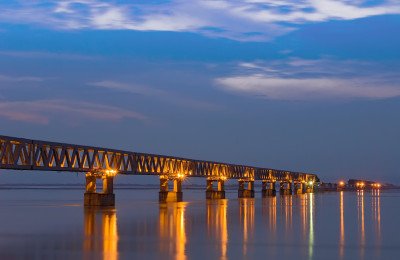
Bogibeel Bridge
Some quick example text to build on the card title and make up the bulk of the card's content.
Go somewhere
Brahmaputra Riverfront
Some quick example text to build on the card title and make up the bulk of the card's content.
Go somewhere
Dehing Namti Satra
Some quick example text to build on the card title and make up the bulk of the card's content.
Go somewhere
Dibrugarh Phoolbagan Ferry Ghat
Some quick example text to build on the card title and make up the bulk of the card's content.
Go somewhere
Dinjoy Satra
Some quick example text to build on the card title and make up the bulk of the card's content.
Go somewhere
Jokai Botanical Garden
Some quick example text to build on the card title and make up the bulk of the card's content.
Go somewhere
Lekai Chetia Maidam
Some quick example text to build on the card title and make up the bulk of the card's content.
Go somewhere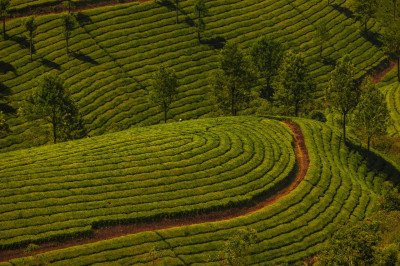
Mancotta Tea Estate
Some quick example text to build on the card title and make up the bulk of the card's content.
Go somewhere
Naharkatia Town
Some quick example text to build on the card title and make up the bulk of the card's content.
Go somewhere
Radha Krishna Mandir
Some quick example text to build on the card title and make up the bulk of the card's content.
Go somewhere
Raidongia Dol
Some quick example text to build on the card title and make up the bulk of the card's content.
Go somewhere
Raidongia Dol or Raidongia Shiv Doul
Some quick example text to build on the card title and make up the bulk of the card's content.
Go somewhere
Sarumechlow and Bormechow Maidam
Some quick example text to build on the card title and make up the bulk of the card's content.
Go somewhere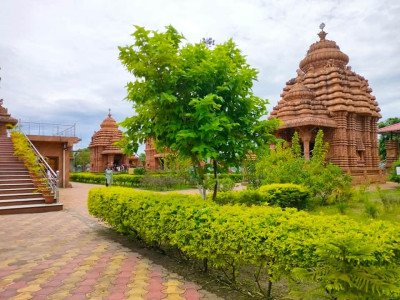
Shri Jagannath Temple
Some quick example text to build on the card title and make up the bulk of the card's content.
Go somewherein Other Cities