
Monasteries
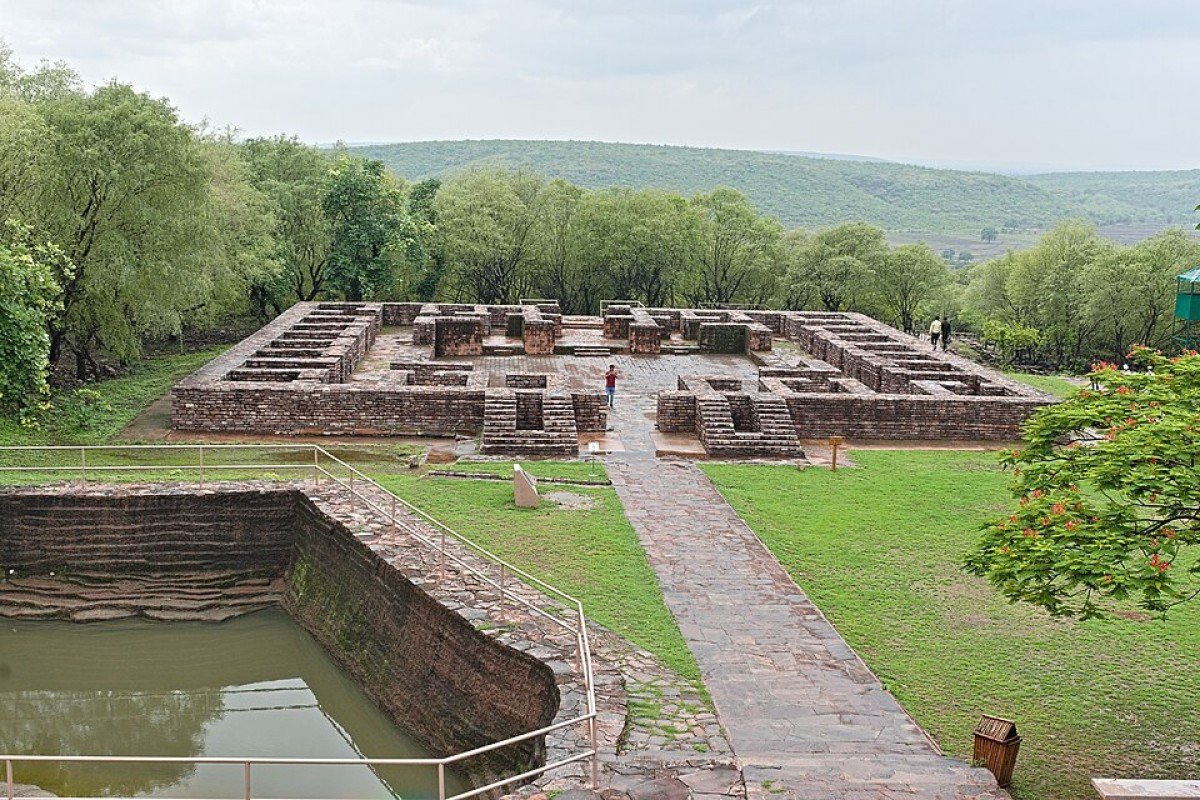
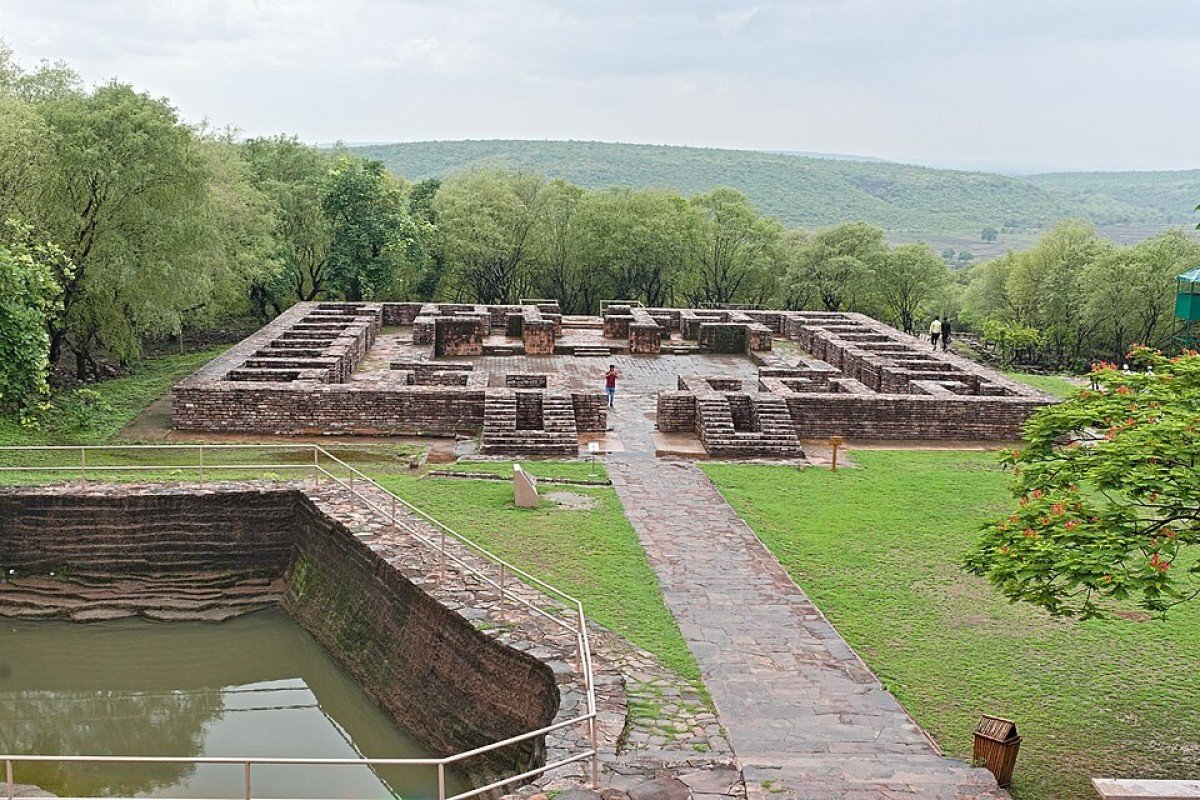
Historical Role: The ruins of numerous monasteries (Viharas) across the Sanchi hilltop, dating from the Mauryan period (3rd century BCE) to the 12th century CE, demonstrate that Sanchi was a vibrant, thriving center of Buddhist learning and monastic life, not just a place for Stupas. These monasteri es provided shelter, food, and education for hundreds of monks (Sangha). They were built in successive periods, showing the continuous prosperity of the site through various dynasties like the Shungas, Satavahanas, and Guptas. Monastery 51 Specifics: Monastery 51 is a later structure, well-preserved, built on a natural rock shelf below the main terrace. Its design is typical of later-period monasteries: a central open courtyard, surrounded by a verandah, which leads to small cells for the monks, reflecting a systematic approach to monastic communal living. The presence of the huge stone bowl (The Great Bowl) nearby, used for distributing food to the monks, further underscores the logistical importance of these monasteries.
General information
-
Ideal Duration:
1. 5 hours (for all ruins)Entry Fees:
Monuments Complex Ticket: Included in the general entry ticket for the Buddhist Monuments at Sanchi:
Indian Citizens: Rs.40 per person;
Foreign Nationals: Rs.600 per person.
No Separ...Monuments Complex Ticket: Included in the general entry ticket for the Buddhist Monuments at Sanchi:
Indian Citizens: Rs.40 per person;
Foreign Nationals: Rs.600 per person.
No Separate Fee: There is no separate ticket for the monastery ruins. Access is covered by the main monument ticket.
Educational Concessions: Given the academic value of the layout, students and researchers from relevant fields can sometimes secure special permission for extended study through the ASI with a formal letter of request.
Audio Guide Option: An audio guide, available for a small fee (Rs.50), is highly recommended for the monasteries, as they lack the self-explanatory narrative of the Toranas.Timing:
Regular Timings: Open from Sunrise to Sunset (approx. 6:30 AM to 6:30 PM), daily.
Ideal Visit Time: Late Morning (10:00 AM - 1:00 PM) is ideal after visiting the main Stupa. The sun is overhead, allowing you to clearly see into the courtya...Regular Timings: Open from Sunrise to Sunset (approx. 6:30 AM to 6:30 PM), daily.
Ideal Visit Time: Late Morning (10:00 AM - 1:00 PM) is ideal after visiting the main Stupa. The sun is overhead, allowing you to clearly see into the courtyards and the layout of the cells, which can be obscured by long shadows in the early morning.
Time Allocation: Allocate a good amount of time here, as the monasteries are spread out and require more focused walking and exploration than the central stupas.Special Events:
Vihara Foundation Anniversary: While not a public event, the local Maha Bodhi Society and ASI sometimes observe the founding anniversary of the original Viharas with small scholarly seminars or memorial services, often highlighting the educational history of the complex.Vihara Foundation Anniversary: While not a public event, the local Maha Bodhi Society and ASI sometimes observe the founding anniversary of the original Viharas with small scholarly seminars or memorial services, often highlighting the educational history of the complex.
Guided Walks on Monastic Life: During special heritage weeks (November), the ASI or local history groups may organize specialized guided walks focusing solely on the life and architecture of the monastic ruins, offering detailed insights.Best Photo Spots:
Courtyard Perspective: An overhead or slightly high-angle shot of the central courtyard, capturing the geometric layout of the surrounding cells and walls, emphasizing the architectural symmetry.
Repetitive Cells: A long-exposure shot or a d...Courtyard Perspective: An overhead or slightly high-angle shot of the central courtyard, capturing the geometric layout of the surrounding cells and walls, emphasizing the architectural symmetry.
Repetitive Cells: A long-exposure shot or a detailed close-up of a row of the monk's cells, focusing on the repetition and the simple doorways, symbolizing the uniform, ascetic life of the Sangha.
Ruins in Context: Frame the ruins of a monastery in the foreground with the towering dome of Stupa No. 1 in the background, showing the relationship between the residences and the place of worship.
Monastery 51 and the Sky: The low-lying location of Monastery 51 offers a great chance to frame its well-preserved walls against a wide expanse of the sky, giving a sense of its quiet isolation.Photo Gallery
Things To Do
-
Exploring the Layout: Walk through the various cells, courtyards, and verandahs of a well-preserved structure like Monastery 51 to imagine the daily life of a Buddhist monk two thousand years ago—from meditation to communal meals.
Contrasting Ruin Styles: Visit a variety of monastery ruins, from the earliest (near Stupa No. 1) to the latest (near Temple 45), to observe the different construction materials and layout changes over a period of over a thousand years.
Photography of Repetition: The repetitive nature of the small cells around the courtyard in the ruins makes for excellent photographic compositions, capturing the symmetry and communal spirit of the monastic design.
Locating the Great Bowl: Find the giant stone bowl (or Mahaparinirvana) near Monastery...Exploring the Layout: Walk through the various cells, courtyards, and verandahs of a well-preserved structure like Monastery 51 to imagine the daily life of a Buddhist monk two thousand years ago—from meditation to communal meals.
Contrasting Ruin Styles: Visit a variety of monastery ruins, from the earliest (near Stupa No. 1) to the latest (near Temple 45), to observe the different construction materials and layout changes over a period of over a thousand years.
Photography of Repetition: The repetitive nature of the small cells around the courtyard in the ruins makes for excellent photographic compositions, capturing the symmetry and communal spirit of the monastic design.
Locating the Great Bowl: Find the giant stone bowl (or Mahaparinirvana) near Monastery 51 and reflect on its purpose—a tangible piece of the Sangha's daily routine.
Meditation Spot: The quiet, enclosed nature of the courtyards, away from the main stupas, is ideal for a few minutes of quiet meditation and reflection, allowing you to connect with the history of the place.
Reading Donor Inscriptions: Look for short inscriptions on the walls or pillars of the monasteries, which often record the names of donors from nearby Vidisha, highlighting the financial support the community provided.
Information
-
Why Famous:
Life of the Sangha: The monasteries are famous for providing a complete picture of the economic and social organization of ancient Buddhist monastic life in India. They prove that Sanchi was a residential university of Buddhism for over a millennium.
Read MoreLife of the Sangha: The monasteries are famous for providing a complete picture of the economic and social organization of ancient Buddhist monastic life in India. They prove that Sanchi was a residential university of Buddhism for over a millennium.
Architectural Evolution: They are key to understanding the architectural evolution of Viharas—from simple shelters to complex, multi-celled structures—providing a tangible link to similar monasteries found across India and Southeast Asia.
Monastery 51's Preservation: Monastery 51 is particularly noted for its relatively good state of preservation, allowing visitors to clearly visualize the layout of a typical large monastic complex.Architecture:
Vihara Architectural Plan: Monasteries at Sanchi generally follow the classic Vihara design: a quadrilateral plan with a central, open courtyard surrounded by a pillared verandah, and a row of monk's cells (varying from 3m x 3m to 4m x 4m in size) opening onto the verandah. ...Vihara Architectural Plan: Monasteries at Sanchi generally follow the classic Vihara design: a quadrilateral plan with a central, open courtyard surrounded by a pillared verandah, and a row of monk's cells (varying from 3m x 3m to 4m x 4m in size) opening onto the verandah. Monastery 51 measures approximately 33. 22 meters north-south and 32. 69 meters east-west.
Construction Material: The earliest monasteries were likely wooden, but later ones are built of stone blocks, sometimes veneered with bricks, as seen in Monastery 51. The structures are generally simple and functional, in contrast to the ornate stupa gateways, emphasizing the ascetic lifestyle of the resident monks. Later monasteries often included a central shrine or small stupa within the courtyard.How To Reach:
By Air: Nearest airport is Bhopal (BHO), 55 km. The monasteries are within the main hilltop complex.
By Train: Nearest rail station is Sanchi (SCI), 2 km. Better connectivity at Vidisha (BHS), 10 km.
By Road:<...By Air: Nearest airport is Bhopal (BHO), 55 km. The monasteries are within the main hilltop complex.
By Train: Nearest rail station is Sanchi (SCI), 2 km. Better connectivity at Vidisha (BHS), 10 km.
By Road: Sanchi is on NH 146. The ruins are on the hill, accessed by the main road.
By Local Transport: Auto-rickshaws will drop you at the main gate. From there, the monasteries are accessed by walking up the main path and following the signposts around the stupa and down to the lower ledges (for Monastery 51). Monastery 51 requires a short walk down a dedicated path near the West Gate.Weather and Best Time to Visit:
Different Types of Seasons: Winter (October to March) is perfect for the extensive walking required to explore all the ruins. Monsoon makes the courtyards lush green but also makes the stone pathways slippery; wear good grip shoes. Summer is challenging due to the lack of...Different Types of Seasons: Winter (October to March) is perfect for the extensive walking required to explore all the ruins. Monsoon makes the courtyards lush green but also makes the stone pathways slippery; wear good grip shoes. Summer is challenging due to the lack of shade in the exposed ruins.
Different Parts of the Day: Late Morning is best for clear, shadow-free viewing of the ground plans and cells. Late Afternoon provides a cooler experience, and the low sun casts interesting shadows that highlight the walls and foundations.Near Tourist Places:
Great Stupa (Stupa No. 1) (<50m)Western Gateway (Torana) (<50m to Monastery 51 path)The Great Bowl (100m)Stupa No. 2 (300m)Gupta Temple (No. 17) (100m)Sanchi Museum (ASI) (1 km)Vidisha (10 km)Udayagiri Caves (13 km)Bhopal (46 km)Bhojpur Temple (65 km):Tourism Tips
-
Health & safety: Be careful of tripping hazards, especially around the foundation walls and uneven stone pathways in the ruins. Carry water, as there is little shade among the monasteries.
Packing: Bring an ASI map or site plan, as the ruin...Health & safety: Be careful of tripping hazards, especially around the foundation walls and uneven stone pathways in the ruins. Carry water, as there is little shade among the monasteries.
Packing: Bring an ASI map or site plan, as the ruins are numerous and spread out, and a map helps put their historical sequence into context.
Accommodation: Staying in Vidisha or Bhopal is most convenient. Sanchi is quieter but has limited options.
Other Different Topics:
Respect the History: Do not walk on the top of the walls or disturb any loose stones.
Observation: Carry a small pocket compass to determine the cardinal directions of the monastery cells, which is a key feature of the Vihara plan.
Reviews
FAQs
Sanchi Itineray And Cost:-
Other Places In Sanchi :-
Other States In India :-
Information about New and Updated Locations() of Madhya Pradesh Has Been Added :-
Card subtitle
Note:-
Information provided here in good Faith and for reference only.
Near Places

Mata Mandir
Some quick example text to build on the card title and make up the bulk of the card's content.
Go somewhere
Sanchi Museum
Some quick example text to build on the card title and make up the bulk of the card's content.
Go somewhere
The Great Bowl
Some quick example text to build on the card title and make up the bulk of the card's content.
Go somewhere
Turtle Rock
Some quick example text to build on the card title and make up the bulk of the card's content.
Go somewhere
Western Gateway
Some quick example text to build on the card title and make up the bulk of the card's content.
Go somewhere
Zoo Rock
Some quick example text to build on the card title and make up the bulk of the card's content.
Go somewherein Other Cities