
Sanchi Ruins
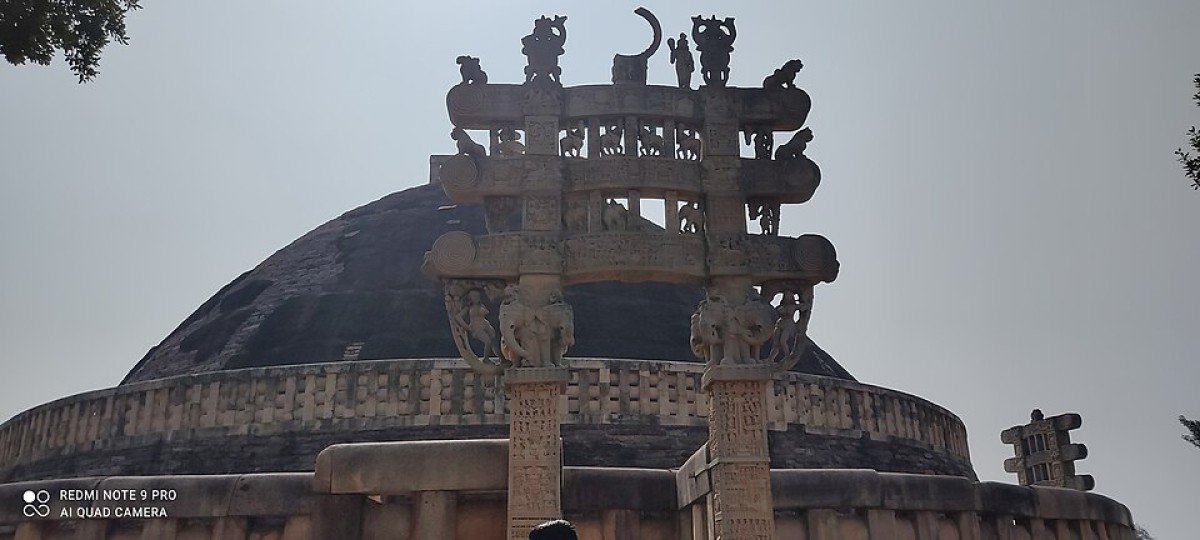
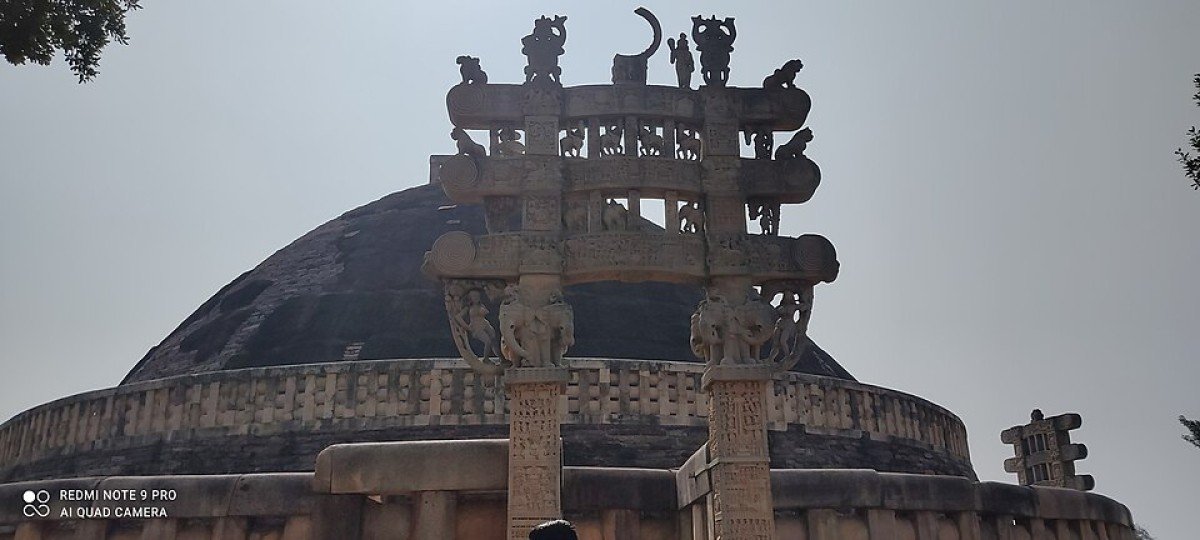
The Sanchi Ruins refer to the entire hill-top complex of monuments, encompassing the main Great Stupa (No. 1), smaller Stupas, temples, monasteries (Viharas), and pillars, collectively designated as a UNESCO World Heritage Site since 1989: This site offers a chronological record of the evolution of Buddhist art and architecture in India, spanning from the 3rd century BCE (Mauryan) to the 12th century CE (Late Medieval), showcasing the rise and fall of the religion's patronage.: Beyond the famous stupas, the ruins include the remains of several monastic complexes and one of the earliest known structural temples in India, the Gupta Temple (Temple 17), highlighting the site's importance not just for stupa architecture but for the genesis of temple construction as well.: It stands as a profound testament to the thriving cultural and spiritual activity that characterized the ancient kingdom of Malwa, attracting scholars and visitors globally.:
General information
-
Ideal Duration:
4 - 5 Hours:Place Type:
UNESCO World Heritage Site,Entry Fees:
Combined Ticket: The entry ticket purchased for the Great Stupa and the main complex is valid for all the Sanchi Ruins on the hill-top: This fee is generally Rs.40 for Indians and Rs.600 for foreigners. :
No Separate Fee: There is no separate en...Combined Ticket: The entry ticket purchased for the Great Stupa and the main complex is valid for all the Sanchi Ruins on the hill-top: This fee is generally Rs.40 for Indians and Rs.600 for foreigners. :
No Separate Fee: There is no separate entry fee for individual ruins like Stupa 2, Stupa 3, or the Gupta Temple, as they are all part of the single, controlled archaeological site managed by the ASI. :
Value Proposition: The single ticket provides access to a thousand years of continuous architectural history, making it excellent value for the depth of cultural experience offered. :Timing:
Consistent with Stupa 1: The entire ruin complex follows the same opening hours as the Great Stupa, from Sunrise (approx. 6:30 AM) to Sunset (approx. 6:30 PM). :
Ideal Visit Time (Mid-Morning): Unlike the main Stupa, the extensive area of the ruins is best covered...Consistent with Stupa 1: The entire ruin complex follows the same opening hours as the Great Stupa, from Sunrise (approx. 6:30 AM) to Sunset (approx. 6:30 PM). :
Ideal Visit Time (Mid-Morning): Unlike the main Stupa, the extensive area of the ruins is best covered after the first rush, perhaps from 9:00 AM to 12:00 PM, allowing enough time to walk between the various distant structures like Stupa 2 on the lower slope. :
Ideal Visit Time (Full Day): For a dedicated history lover, a full day is recommended, with a break during the hot midday, as exploring all the monastic ruins and minor stupas requires considerable time. :Special Events:
International Buddhist Conventions: The site often hosts international delegations, especially from South-East Asian countries (like Sri Lanka, Myanmar), for special prayers, ceremonies, or conferences to promote global Buddhist ties and the preservation of the heritage, so...International Buddhist Conventions: The site often hosts international delegations, especially from South-East Asian countries (like Sri Lanka, Myanmar), for special prayers, ceremonies, or conferences to promote global Buddhist ties and the preservation of the heritage, sometimes including relic processions. :Best Photo Spots:
View of Stupa 3 and Stupa 1 Together: The alignment of Stupa No. 3 and the Great Stupa from a point near the Gupta Temple provides a great layered perspective. :
Ruins of Temple 17 (Gupta Temple): The classical simplicity of this temple, es...View of Stupa 3 and Stupa 1 Together: The alignment of Stupa No. 3 and the Great Stupa from a point near the Gupta Temple provides a great layered perspective. :
Ruins of Temple 17 (Gupta Temple): The classical simplicity of this temple, especially with the backdrop of the larger ruins, offers a striking architectural contrast. :
Monastery Courtyard Ruins: Photographing the orderly rows of foundation walls of the monastic complexes gives a powerful sense of the scale of the former community and their daily life. :
Column Fragments and Capitals: Close-up shots of the scattered remnants of pillars and capitals (some highly polished) showcase the superior craftsmanship of different eras. :Photo Gallery
Things To Do
-
Historical Trail Walk: Systematically follow the official walking trail to explore all the numbered ruins—Stupas, Temples, and Monasteries—to observe the chronological development of architecture from the Mauryan to the Gupta and later periods. :
Study Architectural Evolution: Pay specific attention to the transition in building materials and styles, comparing the simple design of Temple 17 with the complex structure of the main Stupa's gateways. :
Identify Monastic Structures: Try to discern the different functions of the ruined buildings—the cells, assembly halls, and courtyards—to reconstruct the daily routine of the ancient Buddhist community. :
Interpret the ASI Signage: Read the detailed information boards provided by the Archaeological Survey of Indi...Historical Trail Walk: Systematically follow the official walking trail to explore all the numbered ruins—Stupas, Temples, and Monasteries—to observe the chronological development of architecture from the Mauryan to the Gupta and later periods. :
Study Architectural Evolution: Pay specific attention to the transition in building materials and styles, comparing the simple design of Temple 17 with the complex structure of the main Stupa's gateways. :
Identify Monastic Structures: Try to discern the different functions of the ruined buildings—the cells, assembly halls, and courtyards—to reconstruct the daily routine of the ancient Buddhist community. :
Interpret the ASI Signage: Read the detailed information boards provided by the Archaeological Survey of India (ASI) at each major ruin to understand its specific history, date of construction, and significance within the broader complex. :
Find the Second Ashoka Pillar: Locate the remnants of a second Ashoka Pillar near Temple 40, often overlooked, which further confirms the density of the Mauryan presence at the site. :
Sketching/Plein Air Art: The ruins offer superb subjects for sketching or painting, especially the various column fragments and foundational remains, capturing the sense of antiquity. :
Photography: Capture the juxtaposition of the grand Stupa 1 against the more humble remains of the surrounding monasteries and the simple beauty of the Gupta Temple. :
Information
-
Why Famous:
Comprehensive History: It's an unparalleled site that documents the entire timeline of Buddhism in India for over a millennium in one location, a unique feature compared to other single-focus Buddhist sites. :
The Gupta Temple: The presence ...Comprehensive History: It's an unparalleled site that documents the entire timeline of Buddhism in India for over a millennium in one location, a unique feature compared to other single-focus Buddhist sites. :
The Gupta Temple: The presence of the Gupta Temple (Temple 17), a small but perfectly formed structure, is highly significant as it represents a crucial stage in the development of Hindu temple architecture. :
Rediscovery: The site's "rediscovery" in 1818 by General Taylor and its subsequent careful excavation and restoration by Sir John Marshall brought this crucial piece of history back to global attention. : -
Architecture:
Diverse Architectural Styles: The ruins showcase a spectrum of construction techniques, beginning with the highly polished monolithic Ashoka Pillar (Mauryan period), transitioning through the dry masonry and stone facing of the Stupas (Shunga/Satavahana periods), and culmin...Diverse Architectural Styles: The ruins showcase a spectrum of construction techniques, beginning with the highly polished monolithic Ashoka Pillar (Mauryan period), transitioning through the dry masonry and stone facing of the Stupas (Shunga/Satavahana periods), and culminating in the structural precision of the Gupta Temple (5th century CE). :
Monastery Layout: Remains of numerous monasteries (e. g. , Monastery No. 51) are present, typically featuring a central courtyard surrounded by cells for monks, reflecting the communal living pattern of the Sangha. : The Gupta Temple (Temple 17): Often cited as one of the first structural temples, it is notable for its simple, classical design—a plain flat roof, square sanctum (garbhagriha), and a small pillared porch (mandapa), marking a key shift in religious architecture from rock-cut shrines to built temples. :
Evolutionary Record: The site demonstrates how materials shifted from brick/wood to stone, and how art evolved from aniconic (symbols) to early iconic representations of the Buddha (found later in the complex). : -
How To Reach:
Accessibility: The complex is accessed via a road that climbs the hill from the Sanchi town center: Local transport options (auto-rickshaws, taxis) drop visitors at the main entry gate, which is followed by a short walk up to the hill-top proper. :
Read MoreAccessibility: The complex is accessed via a road that climbs the hill from the Sanchi town center: Local transport options (auto-rickshaws, taxis) drop visitors at the main entry gate, which is followed by a short walk up to the hill-top proper. :
Self-Drive/Hired Cab: For maximum convenience in accessing the ruins, especially during less-peak hours, a self-driven or hired car from Bhopal is the best option. :
Internal Movement: Once inside the main gate, the ruins are explored entirely on foot, with well-marked pathways connecting the major monuments. :
Nearest Railway/Bus: The small Sanchi railway station (6 kms) is the nearest point of arrival, with frequent auto-rickshaws available for the short final leg. :Weather and Best Time to Visit:
Winter (October to March): The moderate climate of winter is essential for comfortably walking and exploring the entire sprawling complex of ruins, which involves covering significant distance between structures. :
Clear Days: Visit on clear...Winter (October to March): The moderate climate of winter is essential for comfortably walking and exploring the entire sprawling complex of ruins, which involves covering significant distance between structures. :
Clear Days: Visit on clear, non-cloudy days, as the best appreciation of the ruins (especially the foundations) is achieved in bright sunlight, and the hilltop views are more spectacular. :
Avoid Weekends/Holidays: The ruins can be heavily crowded during peak tourist season weekends and public holidays, making it difficult to fully appreciate the tranquility of the ancient site. :Near Tourist Places:
Vidisha (10 KMS - Historical/Ancient City): Udayagiri Caves (13 KMS - Gupta period rock-cut caves): Bhimbetka Rock Shelters (85 KMS - UNESCO Site with pre-historic paintings): Bhojpur Temple (65 KMS - Massive unfinished Shiva Temple): Islamnagar Fort (50 KMS - Historical Afghan fort ruins): Bhopal (46 KMS - Capital city with lakes and museums):
Satdhara Stupas (9 KMS - Group of minor Stupas):
Sonari Stupas (10 KMS - Other Buddhist ruins):
GyarasPUR (36 KMS - Ancient temple complex): Chetiyagiri Vihara (Near Site - Modern Buddhist monastery):Tourism Tips
-
Mapping the Site: Obtain a map of the Sanchi archaeological site either from the ticket office or online beforehand, as the complex is quite large and scattered, helping to navigate between Stupa 1, Stupa 2, Stupa 3, and the various temple/monastery ruins. : Guide vs.
<...Mapping the Site: Obtain a map of the Sanchi archaeological site either from the ticket office or online beforehand, as the complex is quite large and scattered, helping to navigate between Stupa 1, Stupa 2, Stupa 3, and the various temple/monastery ruins. : Guide vs.
Self-Guided: Consider a self-guided tour with a good historical book or audio guide if you prefer to linger and reflect; the sheer number of ruins means a traditional guide might rush the exploration of the minor structures. :
Sun Protection: As many areas are open ruins without shade, sun protection (hat, sunscreen) is absolutely crucial, particularly between 10 AM and 4 PM. :
Photography Permission: While general photography is allowed, inquire about restrictions if planning any professional or commercial shoots, which may require special permission from the ASI. :
Reviews
FAQs
Sanchi Itineray And Cost:-
Other Places In Sanchi :-
Other States In India :-
Information about New and Updated Locations() of Madhya Pradesh Has Been Added :-
Card subtitle
Note:-
Information provided here in good Faith and for reference only.
Near Places

Mata Mandir
Some quick example text to build on the card title and make up the bulk of the card's content.
Go somewhere
Sanchi Museum
Some quick example text to build on the card title and make up the bulk of the card's content.
Go somewhere
The Great Bowl
Some quick example text to build on the card title and make up the bulk of the card's content.
Go somewhere
Turtle Rock
Some quick example text to build on the card title and make up the bulk of the card's content.
Go somewhere
Western Gateway
Some quick example text to build on the card title and make up the bulk of the card's content.
Go somewhere
Zoo Rock
Some quick example text to build on the card title and make up the bulk of the card's content.
Go somewherein Other Cities