

Southern Gateway
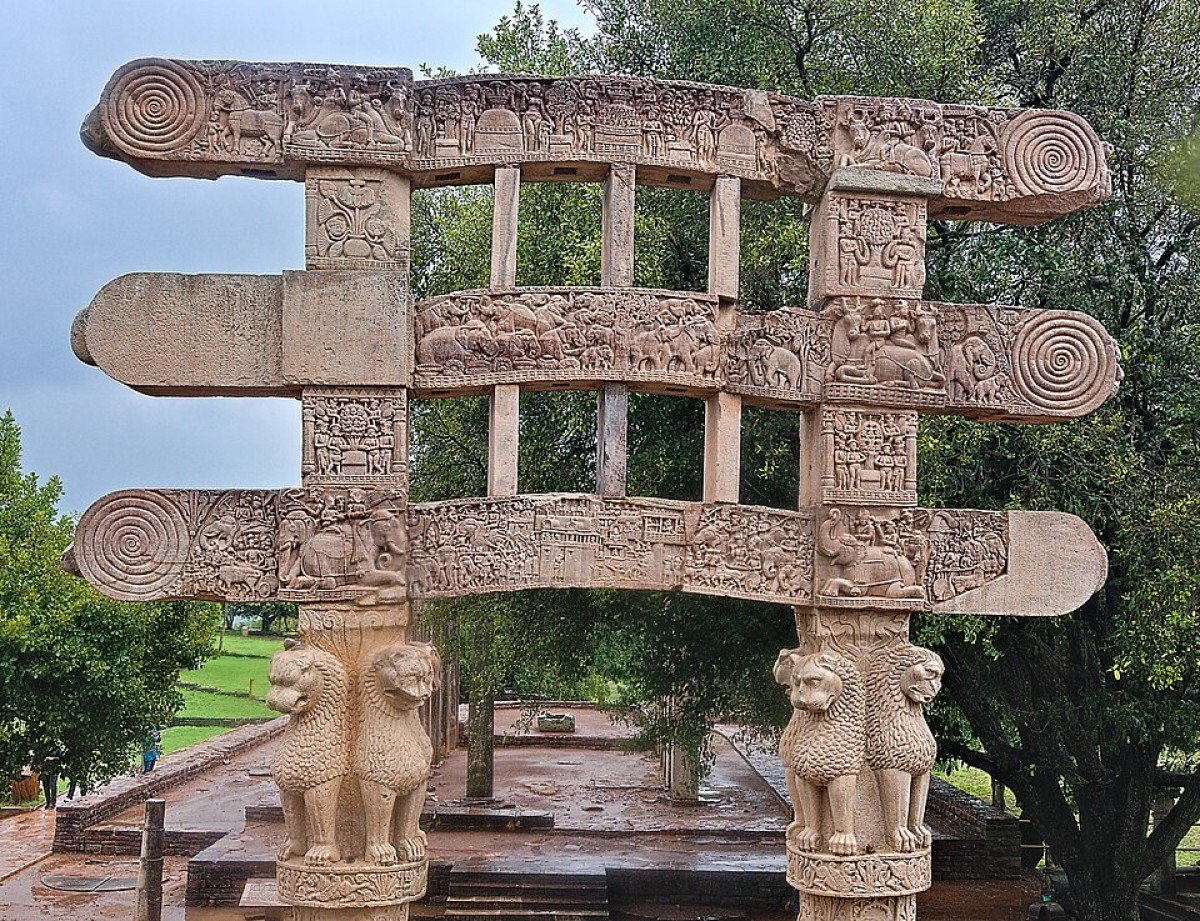
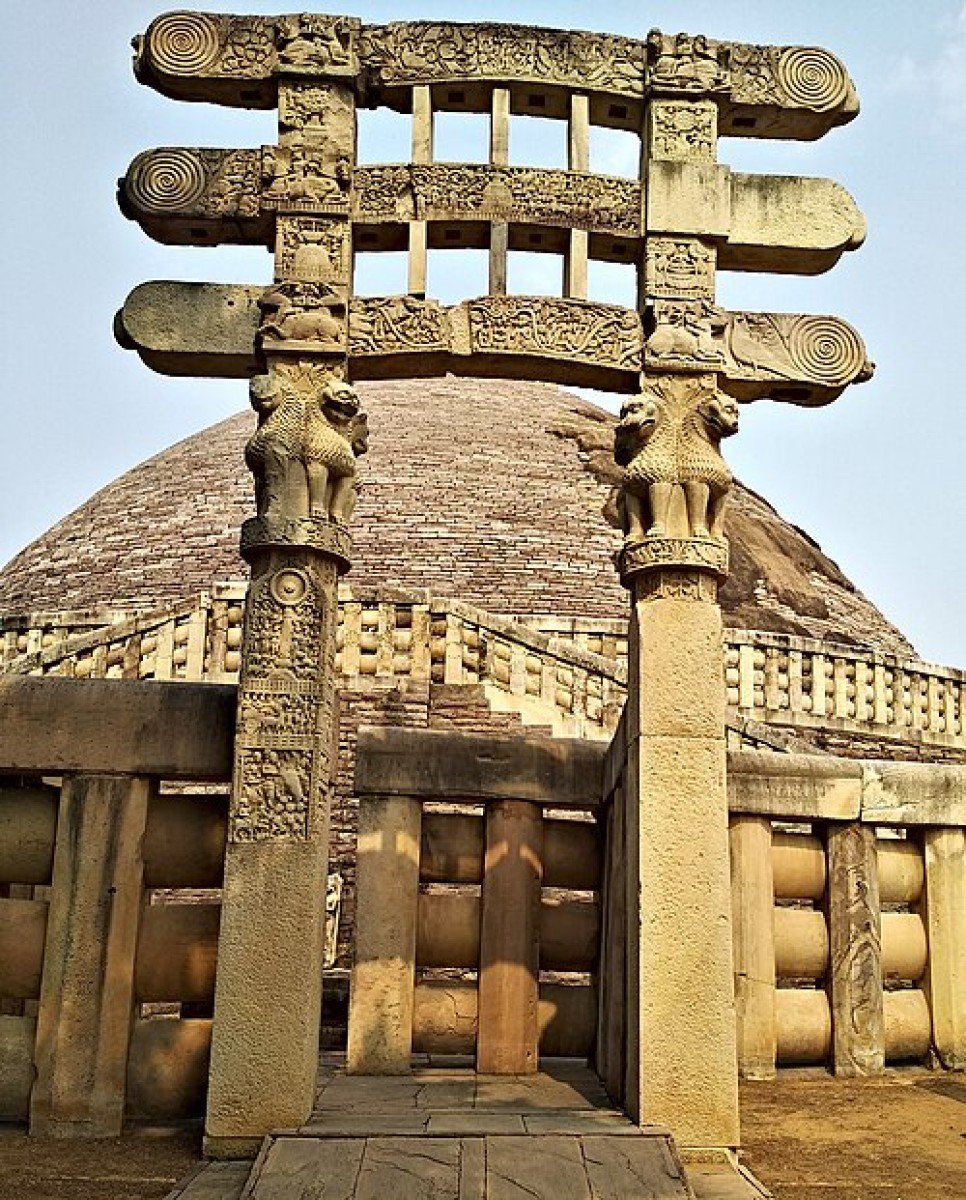
Narrative and Historical Theme: The Southern Gateway is considered to be the first of the four Toranas to be constructed (circa 1st century BCE), making it the oldest. It was erected right in front of the main staircase of Stupa No. 1, confirming its role as the principal ceremonial entrance. The pr imary narrative on this gateway focuses on the events surrounding the Buddha’s birth (Nativity) and his early life, including the story of the Vulture’s Peak and the visit of Emperor Ashoka to the Ramagrama Stupa. Condition and Patronage: Although it was the first, it is the most heavily restored, particularly by Major Cole in the late 19th century, with parts of the right column being new. However, the original stone carvings provide a crucial glimpse into the earliest phase of Satavahana sculpture at Sanchi. The carving style here is comparatively rigid and slightly less refined than the later gates, reflecting the initial, formative period of stone carving skill transfer from wood/ivory. Inscription: The middle architrave is inscribed with the name of Balamitra, the pupil of Aya Cuda, a preacher of the law, indicating the contribution of both artisans and the Buddhist community.
General information
-
Ideal Duration:
30 minutesEntry Fees:
Monuments Complex Ticket: Included in the general entry ticket for the Buddhist Monuments at Sanchi:
Indian Citizens: Rs.40 per person;
Foreign Nationals: Rs.600 per person.
No Separ...Monuments Complex Ticket: Included in the general entry ticket for the Buddhist Monuments at Sanchi:
Indian Citizens: Rs.40 per person;
Foreign Nationals: Rs.600 per person.
No Separate Fee: No separate ticket is required for any of the four gateways. The single entry ticket covers the entire complex.
Guide Fee: A certified guide is highly recommended to explain the historical context of the reconstruction and the meaning of the carvings, which are less obvious than the later gates.
Concessions: Senior citizens often receive a complimentary wheelchair/assistance service from the ASI staff, although the hilltop pathways can still be challenging.Timing:
Regular Timings: Open from Sunrise to Sunset (approx. 6:30 AM to 6:30 PM), daily.
Ideal Visit Time: Early Morning (6:30 AM - 8:30 AM) is the best time for this gate, as the low-angle sun from the East illuminates the side reliefs and the fr...Regular Timings: Open from Sunrise to Sunset (approx. 6:30 AM to 6:30 PM), daily.
Ideal Visit Time: Early Morning (6:30 AM - 8:30 AM) is the best time for this gate, as the low-angle sun from the East illuminates the side reliefs and the front façade, bringing out the detail of the carvings and the two sets of lions on the pillar.
Avoid Late Afternoon: The gateway will be in deep shadow in the late afternoon, making viewing and photography difficult, as the stupa dome blocks the light.Special Events:
Buddha Purnima Procession: As the main ceremonial entrance, the Southern Gateway is a key focal point for the annual Buddha Purnima (May) procession, which often begins or ends here, symbolizing the Buddha’s cycle from birth (represented here) to enlightenment.Buddha Purnima Procession: As the main ceremonial entrance, the Southern Gateway is a key focal point for the annual Buddha Purnima (May) procession, which often begins or ends here, symbolizing the Buddha’s cycle from birth (represented here) to enlightenment.
ASI Restoration Anniversary: Occasional small ceremonies are held to commemorate the work of Major Cole and Sir John Marshall near this gate, recognizing the critical restoration work needed to save this oldest Torana.Best Photo Spots:
Ashoka Pillar and Gateway Frame: The best shot is a composition that includes both the broken Ashoka Pillar shaft and a portion of the Southern Gateway architrave, symbolizing the two major construction phases of the site.
Nativity Relief Close-...Ashoka Pillar and Gateway Frame: The best shot is a composition that includes both the broken Ashoka Pillar shaft and a portion of the Southern Gateway architrave, symbolizing the two major construction phases of the site.
Nativity Relief Close-up: A detailed photograph of the top architrave, focusing on the carving of the Buddha’s birth narrative, capturing the intricate details of the figures and the aniconic symbols.
Lion Capital Shadow: A shot taken in the morning or late afternoon when the sun casts a deep shadow that highlights the four seated lions on the pillar capital, giving them a three-dimensional depth.
Staircase Perspective: A wide-angle shot from the top of the main staircase of the Great Stupa, looking down through the gateway, providing a unique view of the path and the surrounding landscape.Photo Gallery
Things To Do
-
Studying the Birth Narratives: Focus on the top architrave, which depicts the Birth of the Buddha (often symbolized by Queen Maya standing on a lotus with two elephants pouring water over her). Trace the narrative with the help of a guidebook.
Contrasting with the Pillar: Spend time comparing the sophisticated polish and stone of the adjacent Ashoka Pillar with the highly carved, slightly rougher texture of the Southern Gateway stone, understanding the 200-year time gap between the two constructions.
Photography of the Lions: Capture the Lion Capital on the pillars, framing them to contrast with the more famous Ashoka Lion Capital in the nearby museum.
Observing the Staircase: The gateway stands directly in front of the Great Stupa’s main staircase. Observe t...Studying the Birth Narratives: Focus on the top architrave, which depicts the Birth of the Buddha (often symbolized by Queen Maya standing on a lotus with two elephants pouring water over her). Trace the narrative with the help of a guidebook.
Contrasting with the Pillar: Spend time comparing the sophisticated polish and stone of the adjacent Ashoka Pillar with the highly carved, slightly rougher texture of the Southern Gateway stone, understanding the 200-year time gap between the two constructions.
Photography of the Lions: Capture the Lion Capital on the pillars, framing them to contrast with the more famous Ashoka Lion Capital in the nearby museum.
Observing the Staircase: The gateway stands directly in front of the Great Stupa’s main staircase. Observe the remnants of the stone railing that connected the gateway to the stupa's base.
Circumambulation Start: Begin your pradakshina (clockwise walk) of the Great Stupa from this gate, as it was the original, ceremonial entrance. This ritual walk allows you to pass all the major monuments in their historical sequence.
Looking for the Balamitra Inscription: Search for the Brahmi inscription on the middle architrave, which names the donor Balamitra, a tangible connection to the individuals who funded the art.
Information
-
Why Famous:
The First Gateway: Its primary fame is its historical and architectural seniority; it was the first of the magnificent gateways to be erected, marking the commencement of the Satavahana enhancement of the Great Stupa.
Ashoka Connection: It ...The First Gateway: Its primary fame is its historical and architectural seniority; it was the first of the magnificent gateways to be erected, marking the commencement of the Satavahana enhancement of the Great Stupa.
Ashoka Connection: It is the location of the broken Ashoka Pillar shaft, creating a powerful visual juxtaposition between the Mauryan and Satavahana eras and symbolizing the continuous sanctity of the spot over centuries.
Lions and Nativity: It is famous for its pillar's Lion Capital (an imitation of the Ashoka one) and for the profound narrative of the Buddha’s birth and early life found on its architraves. -
Architecture:
Early Satavahana Architecture: The gateway is a freestanding archway, approximately 10. 6 meters high.
It follows the standard Torana design: two square uprights supporting three carved architraves with volute ends. It is similar in dimensi...Early Satavahana Architecture: The gateway is a freestanding archway, approximately 10. 6 meters high.
It follows the standard Torana design: two square uprights supporting three carved architraves with volute ends. It is similar in dimension to the other gates.
The Lion Capital: The pillars are famously crowned by a capital with four seated lions, which may have influenced the Ashoka Pillar Capital or were carved in imitation of it, emphasizing the continuity of the royal and religious symbol. This is the only gateway with a lion capital.
Carving and Restoration: The carvings are narrative bas-reliefs, depicting events from the Jataka tales and the Buddha’s life (aniconically). Due to its age and damage, it had to be substantially reconstructed. The carvings here are key for art historians to track the initial styles and techniques of the Satavahana sculptors, observing their first attempts at translating intricate wooden forms into stone. -
How To Reach:
By Air: Nearest airport is Bhopal (BHO), 55 km. Taxis are the fastest route.
By Train: Nearest rail station is Sanchi (SCI), 2 km. Vidisha (BHS), 10 km, is the best option for major train routes.
By Road: ...By Air: Nearest airport is Bhopal (BHO), 55 km. Taxis are the fastest route.
By Train: Nearest rail station is Sanchi (SCI), 2 km. Vidisha (BHS), 10 km, is the best option for major train routes.
By Road: Sanchi is well-connected via NH 146 to Bhopal (46 km). The monument complex is easily reached by road.
By Local Transport: The gateway is located directly on the main terrace of the Great Stupa. You will have to walk up the main path from the ticket counter. Auto-rickshaws will drop you at the main gate/parking area. -
Weather and Best Time to Visit:
Different Types of Seasons: Winter (October to March) is ideal for comfortable outdoor exploration of the carvings. Monsoon can be visually appealing, with the wet stone enhancing the contrast of the relief work, but paths can be slippery. Summer is extremely hot and shoul...Different Types of Seasons: Winter (October to March) is ideal for comfortable outdoor exploration of the carvings. Monsoon can be visually appealing, with the wet stone enhancing the contrast of the relief work, but paths can be slippery. Summer is extremely hot and should be avoided.
Different Parts of the Day: Early Morning is optimal for the best light, which is crucial for appreciating the details of the highly restored and historically significant carvings on this first Torana. The cool temperature also aids in a contemplative experience. -
Near Tourist Places:
Ashoka Pillar (10m)Great Stupa (Stupa No. 1) (<10m)Western Gateway (Torana) (100m)Monastery 51 (150m)Stupa No. 2 (300m)Sanchi Museum (ASI) (1 km)Vidisha (10 km)Udayagiri Caves (13 km)Bhopal (46 km)Bhojpur Temple (65 km):
Tourism Tips
-
Health & safety: Be mindful of the uneven surface around the base of the pillar and the gateway. Use the railings on the stupa steps.
Packing: Carry a camera with a good zoom to study the carvings, especially the Nativity scene high up on t...Health & safety: Be mindful of the uneven surface around the base of the pillar and the gateway. Use the railings on the stupa steps.
Packing: Carry a camera with a good zoom to study the carvings, especially the Nativity scene high up on the architraves. A good site map is useful for understanding the surrounding structures.
Accommodation: Staying in Sanchi offers the quietest experience, allowing for a very early morning start to beat the crowds at the main gate.
Other Different Topics:
Respect the History: This gate is a conservation triumph. Help preserve it by not touching the reconstructed or original stone.
Guided Tour: Ask the guide to specifically explain the Ashoka to Satavahana time transition, which is physically represented here by the proximity of the pillar and the gate.
Reviews
FAQs
Sanchi Itineray And Cost:-
Southern Gateway Tourism:-
Other Places In Sanchi :-
Other States In India :-
Information about New and Updated Locations() of Madhya Pradesh Has Been Added :-
Card subtitle
Note:-
Information provided here in good Faith and for reference only.
Near Places

Mata Mandir
Some quick example text to build on the card title and make up the bulk of the card's content.
Go somewhere
Sanchi Museum
Some quick example text to build on the card title and make up the bulk of the card's content.
Go somewhere
The Great Bowl
Some quick example text to build on the card title and make up the bulk of the card's content.
Go somewhere
Turtle Rock
Some quick example text to build on the card title and make up the bulk of the card's content.
Go somewhere
Western Gateway
Some quick example text to build on the card title and make up the bulk of the card's content.
Go somewhere
Zoo Rock
Some quick example text to build on the card title and make up the bulk of the card's content.
Go somewhere