Ramkot
General information
-
Ideal Duration:
4 to 5 HoursPlace Type:
Historical, Religious, and FortressEntry Fees:
Temple Entry: Entry to the Ram Janmabhoomi and other major temples in Ramkot is free; the trust does not charge for "Darshan," ensuring that every devotee can visit regardless of their status.
VIP Darshan: There are options for special "Su...Temple Entry: Entry to the Ram Janmabhoomi and other major temples in Ramkot is free; the trust does not charge for "Darshan," ensuring that every devotee can visit regardless of their status.
VIP Darshan: There are options for special "Sugam Darshan" or fast-track entry which may require a small donation or pre-booking online through the official trust website for convenience.
:Timing:
Regular Timings: Most temples in Ramkot open at 5:00 AM and close around 10:00 PM, with a brief closure in the afternoon (usually 12:00 PM to 2:00 PM) for the deity's rest.
Ideal Visit Time: Arriving at 6:00 AM is ideal to beat the heat and...Regular Timings: Most temples in Ramkot open at 5:00 AM and close around 10:00 PM, with a brief closure in the afternoon (usually 12:00 PM to 2:00 PM) for the deity's rest.
Ideal Visit Time: Arriving at 6:00 AM is ideal to beat the heat and the long queues, allowing you to witness the morning Aarti and explore the area in the cooler, quieter morning air.
:Special Events:
Ram Navami is the grandest event in Ramkot, celebrated with massive processions, flower decorations, and the "Abhishek" of the deity amidst chanting and music.
Vivah Panchami: This event celebrates the wedding of Ram and Sita; the temples in Ramkot are decorated l...Ram Navami is the grandest event in Ramkot, celebrated with massive processions, flower decorations, and the "Abhishek" of the deity amidst chanting and music.
Vivah Panchami: This event celebrates the wedding of Ram and Sita; the temples in Ramkot are decorated like wedding halls, and a symbolic marriage procession is taken through the streets.
:Best Photo Spots:
The Main Entrance Gate (Singh Dwar): The intricate carvings and the massive scale of the new temple's entrance provide a majestic background for architectural and travel photography.
View from Hanuman Garhi: From the top of this temple, you...The Main Entrance Gate (Singh Dwar): The intricate carvings and the massive scale of the new temple's entrance provide a majestic background for architectural and travel photography.
View from Hanuman Garhi: From the top of this temple, you can capture the sprawling rooftops and temple spires of Ramkot, giving a sense of the density and history of the city.
The Colorful Lanes: The vibrant yellow and ochre walls of the old houses, combined with the saffron flags fluttering everywhere, create a very "photogenic" and culturally rich visual palette.
:Photo Gallery
Things To Do
-
Visit the Shri Ram Janmabhoomi Teerth Kshetra: This is the primary activity; walking through the grand corridors and offering prayers at the sanctum sanctorum of the new temple is a once-in-a-lifetime experience.
Climb the Hanuman Garhi Steps: Located at the entrance of Ramkot, this temple dedicated to Lord Hanuman requires climbing 76 steps and offers a panoramic view of the entire fortified area.
Explore the Kanak Bhawan: Visit this "Golden House" gifted to Sita; the idols here are breathtakingly beautiful, and the palace-like architecture is a treat for those interested in royal history.
Walk the Parikrama Path: Join the pilgrims in the Panch Kosi Parikrama, a ritual walk around the sacred boundary of Ramkot that is believed to bring immense spiritual merit...Visit the Shri Ram Janmabhoomi Teerth Kshetra: This is the primary activity; walking through the grand corridors and offering prayers at the sanctum sanctorum of the new temple is a once-in-a-lifetime experience.
Climb the Hanuman Garhi Steps: Located at the entrance of Ramkot, this temple dedicated to Lord Hanuman requires climbing 76 steps and offers a panoramic view of the entire fortified area.
Explore the Kanak Bhawan: Visit this "Golden House" gifted to Sita; the idols here are breathtakingly beautiful, and the palace-like architecture is a treat for those interested in royal history.
Walk the Parikrama Path: Join the pilgrims in the Panch Kosi Parikrama, a ritual walk around the sacred boundary of Ramkot that is believed to bring immense spiritual merit and peace.
Shop for Religious Souvenirs: The lanes of Ramkot are filled with shops selling Sandalwood, Tulsi malas, and small brass idols; it is the best place to buy authentic religious artifacts and local crafts.
Listen to Vedic Chanting: Many ashrams in Ramkot run Vedic schools; standing outside these buildings in the morning allows you to hear the powerful and rhythmic chanting of ancient scriptures by young students.
Feeding the Monkeys: While you must be careful, feeding the local macaques is a common tradition here; they are considered part of Hanuman’s army and are an integral part of the Ramkot experience.
Attend a Religious Discourse: Many learned saints give daily "Pravachans" (lectures) in the various Bhavans of Ramkot; sitting in on one of these gives a deep insight into Indian philosophy and the life of Lord Ram.
:
Information
-
Why Famous:
Ramkot is world-famous as the Birthplace of Lord Ram, making it the supreme pilgrimage destination for millions of Hindus across the globe.
Epicenter of Faith: It is the site of the long-awaited Ram Janmabhoomi Mandir, a symbol of cultural resurgence and architectu...Ramkot is world-famous as the Birthplace of Lord Ram, making it the supreme pilgrimage destination for millions of Hindus across the globe.
Epicenter of Faith: It is the site of the long-awaited Ram Janmabhoomi Mandir, a symbol of cultural resurgence and architectural brilliance that has attracted global attention recently.
Historical Fortress: It is famous for its unique layout as a fortified city center, mentioned in ancient texts as a place of impenetrable beauty and divine protection under the Ikshvaku dynasty.
Festivals and Crowds: The area is the focal point for the Ram Navami mela, where the crowd density is among the highest in India, showing the deep-rooted faith of the people in the legends of Ramkot.
: -
Architecture:
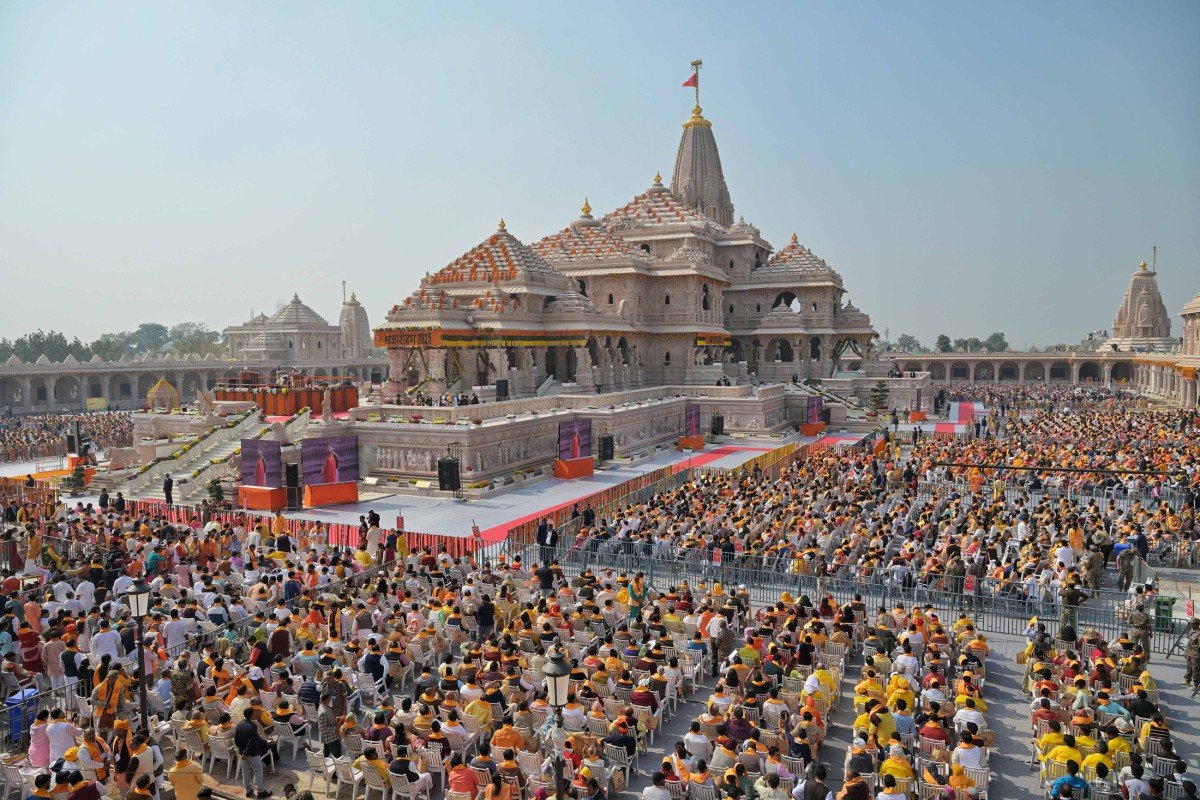
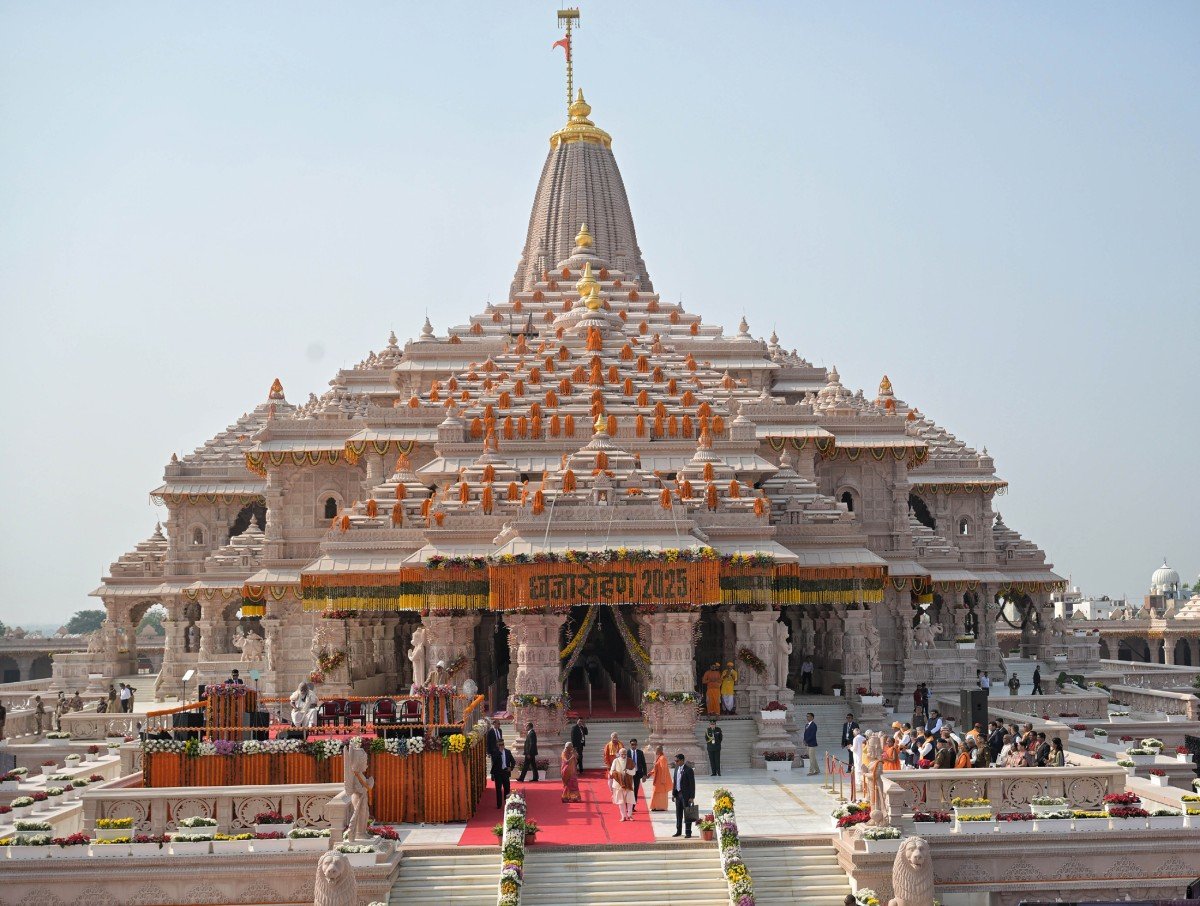
The architecture of Ramkot is a palimpsest of different eras, ranging from ancient foundations to the stunning Nagara style of the new Ram Mandir.
The New Ram Mandir: This masterpiece is built entirely of pink sandstone without the use of iron, featuring 392 pillar...The architecture of Ramkot is a palimpsest of different eras, ranging from ancient foundations to the stunning Nagara style of the new Ram Mandir.
The New Ram Mandir: This masterpiece is built entirely of pink sandstone without the use of iron, featuring 392 pillars and 12 portals, standing at a height of 161 feet.
Traditional Havelis: Many structures in Ramkot follow the Awadhi architectural style, characterized by arched doorways, internal courtyards (Aangans), and intricate stucco work on the facades.
Defensive Topography: The area is built on a natural mound, and the architecture reflects this with various levels connected by stone staircases and sloping ramps that provide a commanding view of the city.
Temple Spires: The skyline of Ramkot is dominated by various Shikharas (spires), each unique in its carving and height, representing the diverse sects of Hinduism present in Ayodhya.
: -
How To Reach:
By Air: Fly into Ayodhya Airport, then take a pre-paid taxi directly to the Ramkot drop-off point, which is approximately a 20-minute drive depending on the traffic and security.
By Train: Exit at Ayodhya Dham Junction; from there, you can...By Air: Fly into Ayodhya Airport, then take a pre-paid taxi directly to the Ramkot drop-off point, which is approximately a 20-minute drive depending on the traffic and security.
By Train: Exit at Ayodhya Dham Junction; from there, you can take a cycle-rickshaw or an E-rickshaw to the Hanuman Garhi crossing, which serves as the main gateway to the Ramkot area.
By Road: If coming from Lucknow by car, park at the designated multi-level parking lots near Tedhi Bazaar, as private vehicles are often restricted inside the narrow, high-security lanes of Ramkot.
By Local Transport: The best way to navigate the actual mound of Ramkot is on foot, as the lanes are too narrow for cars; for longer distances within the zone, E-rickshaws are the only viable option.
: -
Weather and Best Time to Visit:
Winter Season: October to February is the peak season; the cool air makes the extensive walking required in Ramkot very pleasant, and the festive spirit is at its highest during this period.
Summer Season: April to June can be harsh; if v...Winter Season: October to February is the peak season; the cool air makes the extensive walking required in Ramkot very pleasant, and the festive spirit is at its highest during this period.
Summer Season: April to June can be harsh; if visiting then, stick to the early morning hours or late evenings when the stone floors of the temple complexes have cooled down significantly.
Monsoon Season: July to September brings refreshing rains that wash the dust off the ancient temples; the area looks beautiful, but be prepared for some muddy lanes in the older sections of the fort.
: -
Near Tourist Places:
1. Ram Ki Paidi (1. 5 KMS), 2. Dashrath Mahal (0. 5 KMS), 3. Tulsi Chaura (0. 8 KMS), 4. Raj Gaddi (0. 6 KMS), 5. Sugriv Qila (1 KMS), 6. Angad Tila (0. 7 KMS), 7. Dant Dhawan Kund (1. 2 KMS), 8. Janki Mahal (1. 5 KMS), 9. Birla Dharmshala (1. 8 KMS), 10. Mani Parvat (3 KMS)
Tourism Tips
-
Security Protocol: Ramkot is a high-security zone; avoid carrying large bags, electronics, or prohibited items like lighters and tobacco when heading to the main Ram Janmabhoomi complex.
Dress Code: Wear modest and traditional clothing to ...Security Protocol: Ramkot is a high-security zone; avoid carrying large bags, electronics, or prohibited items like lighters and tobacco when heading to the main Ram Janmabhoomi complex.
Dress Code: Wear modest and traditional clothing to respect the sanctity of the site; many temples require you to remove footwear, so wearing easy-to-slip-on sandals is a very practical choice.
Hydration and Health: The walk through Ramkot involves a lot of stairs and slopes; carry a water bottle and wear a hat to protect yourself from the sun, especially during the middle of the day.
Connectivity and ATMs: While mobile signals are strong, many areas within the temples are "no-phone zones"; there are several ATMs near Hanuman Garhi, but keep cash for small donations and snacks.
:
Reviews
FAQs
Ayodhya Itineray And Cost:-
Other Places In Ayodhya :-
Other States In India :-
Information about New and Updated Locations() of Uttar Pradesh Has Been Added :-
Card subtitle
Note:-
Information provided here in good Faith and for reference only.
Near Places
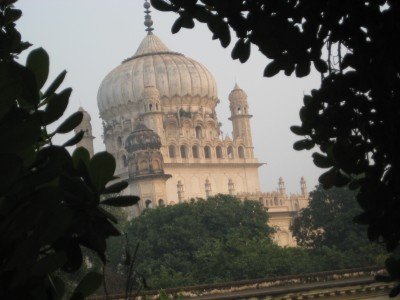
Bahu Begum ka Maqbara
Some quick example text to build on the card title and make up the bulk of the card's content.
Go somewhere
Brahma Kund Gurudwara
Some quick example text to build on the card title and make up the bulk of the card's content.
Go somewhere
Chhoti Devkali Temple
Some quick example text to build on the card title and make up the bulk of the card's content.
Go somewhere
Dashrath Bhavan
Some quick example text to build on the card title and make up the bulk of the card's content.
Go somewhere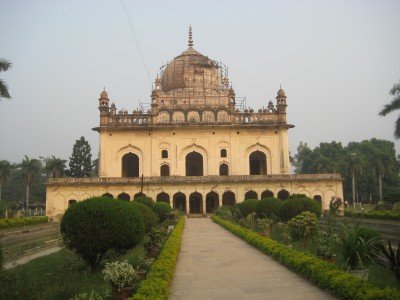
Gulab Bari
Some quick example text to build on the card title and make up the bulk of the card's content.
Go somewhere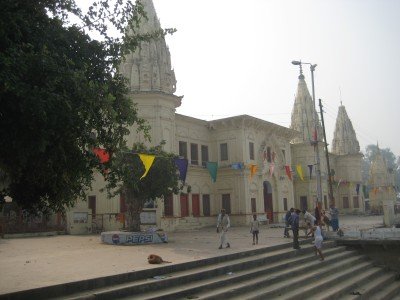
Guptar Ghat
Some quick example text to build on the card title and make up the bulk of the card's content.
Go somewhere
Hanuman Garhi
Some quick example text to build on the card title and make up the bulk of the card's content.
Go somewhere
Jain Shwetamber Temple
Some quick example text to build on the card title and make up the bulk of the card's content.
Go somewhere
Kanak Bhawan
Some quick example text to build on the card title and make up the bulk of the card's content.
Go somewhere
Lata Mangeshkar Chowk
Some quick example text to build on the card title and make up the bulk of the card's content.
Go somewhere
Mani Parbat
Some quick example text to build on the card title and make up the bulk of the card's content.
Go somewhere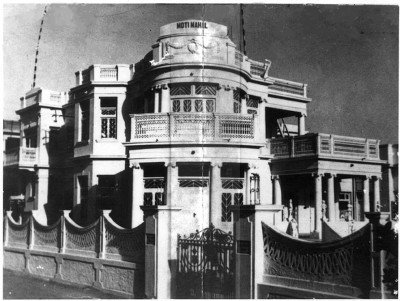
Moti Mahal
Some quick example text to build on the card title and make up the bulk of the card's content.
Go somewhere
Nageshwarnath Temple
Some quick example text to build on the card title and make up the bulk of the card's content.
Go somewhere
Queen Huh Memorial Park
Some quick example text to build on the card title and make up the bulk of the card's content.
Go somewhere
Raja Dasharath Samadhi Sthal
Some quick example text to build on the card title and make up the bulk of the card's content.
Go somewhere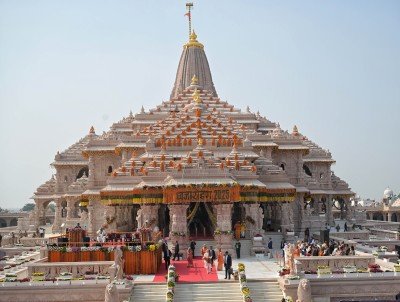
Ram Janmabhoomi Temple
Some quick example text to build on the card title and make up the bulk of the card's content.
Go somewherein Other Cities