Gujari Mahal Archaeological Museum
General information
-
Ideal Duration:
1 Hour 30 Minutes to 2 HoursPlace Type:
Archaeological Museum, Historical Palace, CulturalEntry Fees:
Included in Gwalior Fort Entry: The entry to the museum is covered by the Gwalior Fort ticket.
Fort Entry Fees for Indians: Typically around Rs.75 for adults.
Fort Entry Fees for Foreigners: Usually around Rs.25...Included in Gwalior Fort Entry: The entry to the museum is covered by the Gwalior Fort ticket.
Fort Entry Fees for Indians: Typically around Rs.75 for adults.
Fort Entry Fees for Foreigners: Usually around Rs.250 per person.
Photography/Camera Fee: A separate fee (around Rs.50 to Rs.100) is typically charged for carrying a camera into the museum. Seeing the original Salabhanjika often requires special, separate permission from the curator.
Timing:
Regular Timings: 10:00 AM to 5:00 PM. The museum is typically Closed on Mondays. Always verify the closing day and hours.
Ideal Visit Time: Visit in the Morning right after the fort opens, or right after lunch, to spend time with the artif...Regular Timings: 10:00 AM to 5:00 PM. The museum is typically Closed on Mondays. Always verify the closing day and hours.
Ideal Visit Time: Visit in the Morning right after the fort opens, or right after lunch, to spend time with the artifacts before the rush.
Shortest Queue: Being the first structure for many fort visitors, the queue is often shortest right at 10:00 AM.
Indoor Activity: It offers a good, shaded indoor option during the midday heat.
Special Events:
Museum Anniversaries: Special lectures, workshops, or exhibitions are sometimes held on the museum's foundation day (1922) or on days significant to the Archaeological Survey of India (ASI).
Cultural Seminars: The museum complex occasionally...Museum Anniversaries: Special lectures, workshops, or exhibitions are sometimes held on the museum's foundation day (1922) or on days significant to the Archaeological Survey of India (ASI).
Cultural Seminars: The museum complex occasionally hosts academic seminars on art history, archaeology, and the local history of Gwalior, though these are less frequent.
Mahavir Jayanti: Due to the strong Jain collection, the museum sees a higher footfall and is often highlighted during Mahavir Jayanti celebrations.
Best Photo Spots:
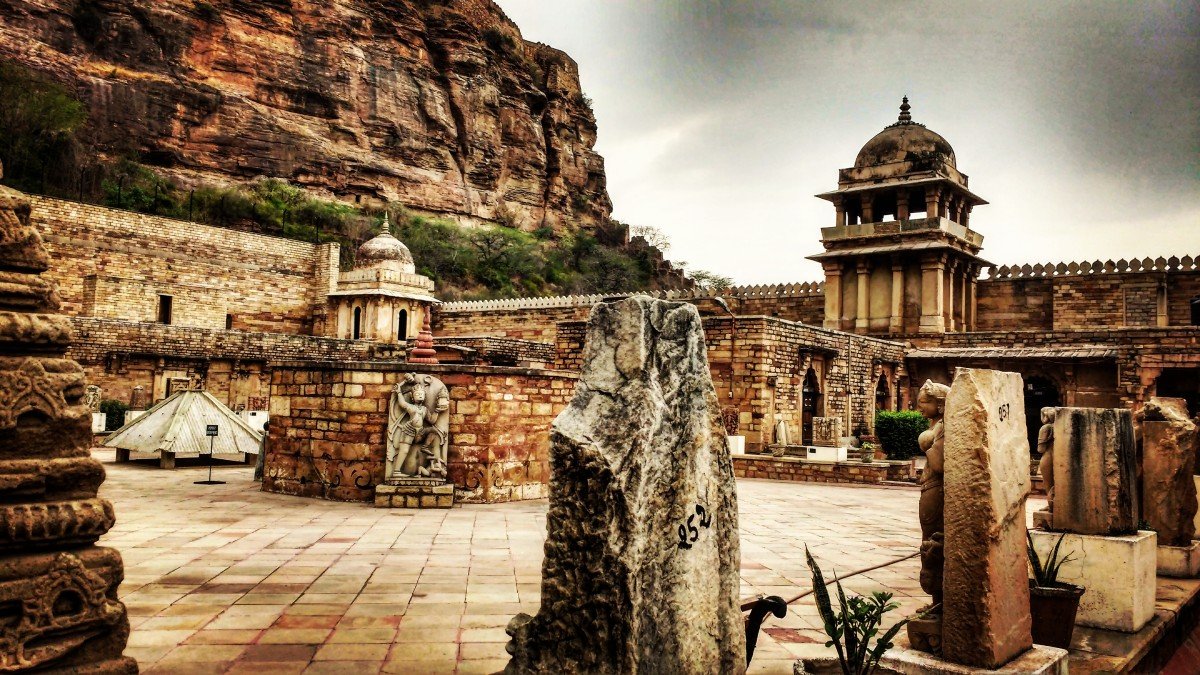
Palace Exterior: Capture the rugged, handsome exterior of the Gujari Mahal with its simple sandstone facade, often used to frame the beginning of the fort's story.
Varaha Statue: The large Varaha statue is a classic piece of Indian sculpture...Palace Exterior: Capture the rugged, handsome exterior of the Gujari Mahal with its simple sandstone facade, often used to frame the beginning of the fort's story.
Varaha Statue: The large Varaha statue is a classic piece of Indian sculpture, providing a great, detailed close-up opportunity.
Courtyard Views: The inner courtyards, often featuring small gardens, offer a quieter, aesthetically pleasing composition.
Sculpture Hall: Wide shots of the main sculpture display hall to convey the density and richness of the collection.
Intricate Carvings: Close-ups of the finer details on the smaller statues and terracotta objects.
Photo Gallery
Things To Do
-
View the Main Sculptures: Focus on the famous Varaha (Boar Incarnation) statue, the Salabhanjika (if accessible), and the intricate Jain Tirthankara sculptures.
Explore the Palace Architecture: Pay attention to the original features of the Gujari Mahal structure itself, as it's a great example of 15th-century Rajput design.
Study Ancient Inscriptions and Coins: The museum has a valuable numismatic and epigraphic collection that provides historical evidence of the region's past dynasties.
Photography: Capture the artifacts (with permission) and the architectural details of the palace exterior and courtyard.
Read the Legends: Take time to read the display descriptions to appreciate the love story of Man Singh and Mrignayani.View the Main Sculptures: Focus on the famous Varaha (Boar Incarnation) statue, the Salabhanjika (if accessible), and the intricate Jain Tirthankara sculptures.
Explore the Palace Architecture: Pay attention to the original features of the Gujari Mahal structure itself, as it's a great example of 15th-century Rajput design.
Study Ancient Inscriptions and Coins: The museum has a valuable numismatic and epigraphic collection that provides historical evidence of the region's past dynasties.
Photography: Capture the artifacts (with permission) and the architectural details of the palace exterior and courtyard.
Read the Legends: Take time to read the display descriptions to appreciate the love story of Man Singh and Mrignayani.
Visit the Bagh Cave Fresco Copies: The collection of copies of these famous frescoes provides a glimpse into a separate but related artistic tradition.
Information
-
Why Famous:
The Love Story: It is famous for the romantic legend of Raja Man Singh and Queen Mrignayani, making the palace a symbol of enduring royal love and respect for a commoner queen.
Salabhanjika Statue: The museum is renowned for housing the exqu...The Love Story: It is famous for the romantic legend of Raja Man Singh and Queen Mrignayani, making the palace a symbol of enduring royal love and respect for a commoner queen.
Salabhanjika Statue: The museum is renowned for housing the exquisite miniature statue of Salabhanjika, considered one of the finest examples of Indian sculptural art, though often kept in the curator's custody and requiring special permission to view.
Ancient Sculptures: It holds a priceless collection of Hindu and Jain sculptures, including rare artifacts from the Gupta and Kushan periods, making it essential for art historians.
Proximity to the Fort: Its location at the fort entrance makes it easily accessible and a mandatory first stop for visitors exploring the fort's history.
-
Architecture:
Rajput-Islamic Fusion: The Gujari Mahal itself is an excellent example of early Indo-Islamic and Rajput architecture, characterized by its sturdy sandstone walls, elaborately carved pillars, balconies, and simple yet elegant facade. It was designed to be both a palace and a...Rajput-Islamic Fusion: The Gujari Mahal itself is an excellent example of early Indo-Islamic and Rajput architecture, characterized by its sturdy sandstone walls, elaborately carved pillars, balconies, and simple yet elegant facade. It was designed to be both a palace and a small fortress.
Gallery Structure: The museum's exhibits are housed within the original palace's historic rooms and courtyards. The building's architecture is a key exhibit, offering a chance to explore a genuine 15th-century royal interior.
Key Artifacts: The museum is famous for the original statue of Salabhanjika (or Indian Mona Lisa), a highly detailed miniature sculpture, and a renowned 9th-century statue of Vishnu in his boar incarnation, Varaha.
Dimension: While the entire palace is large, the museum is arranged in several galleries displaying hundreds of stone sculptures, terracotta objects, inscriptions, coins, and copies of Bagh Cave frescoes.
-
How To Reach:
By Air: Nearest is Gwalior Airport (GWL), about 10-12 KMs away. Take a taxi or auto-rickshaw to the base of Gwalior Fort near the Hathi Pol or main entrance.
By Train: Nearest is Gwalior Junction (GWL), about 2-3 KMs away. Take an auto-ric...By Air: Nearest is Gwalior Airport (GWL), about 10-12 KMs away. Take a taxi or auto-rickshaw to the base of Gwalior Fort near the Hathi Pol or main entrance.
By Train: Nearest is Gwalior Junction (GWL), about 2-3 KMs away. Take an auto-rickshaw or taxi to the fort entrance.
By Road: The Gujari Mahal is located right near the main entrance/base of the Gwalior Fort hill, making it easily accessible from all parts of the city.
By Local Transport: Auto-rickshaws and cycle-rickshaws will drop you at the fort entrance. You can also drive to the fort entrance.
-
Weather and Best Time to Visit:
Different Types of Seasons: Winter (October to March) is the Best Time to Visit for the overall fort experience, but as the museum is indoors, it's a good spot year-round. Summer visits are comfortable inside the museum but the walk outside to the next fort monument will be...Different Types of Seasons: Winter (October to March) is the Best Time to Visit for the overall fort experience, but as the museum is indoors, it's a good spot year-round. Summer visits are comfortable inside the museum but the walk outside to the next fort monument will be hot.
Different Parts of the Day: Morning or Midday are the best times. The museum offers shade and a break from the sun, making it an excellent stop in the middle of a hot day.
Tourism Tips
-
Health & safety: Do not touch the sculptures, as the oils from your hands can damage the ancient stone. Photography may be restricted in certain parts; respect the rules.
Packing: Carry a camera (with the fee paid) and reading glasses for ...Health & safety: Do not touch the sculptures, as the oils from your hands can damage the ancient stone. Photography may be restricted in certain parts; respect the rules.
Packing: Carry a camera (with the fee paid) and reading glasses for the small inscription details.
Accommodation: Stay in the hotels near the city center or the station; the fort complex itself does not offer tourist accommodation.
Other Different Topics: Plan the visit to the museum first, as it's near the fort entrance, then proceed to the other monuments inside the fort like Man Mandir Palace. Budget extra time if you wish to see the Salabhanjika statue.
Reviews
FAQs
Gwalior Itineray And Cost:-
Gujari Mahal Archaeological Museum Tourism:-
Other Places In Gwalior :-
Other States In India :-
Information about New and Updated Locations() of Madhya Pradesh Has Been Added :-
Card subtitle
Note:-
Information provided here in good Faith and for reference only.
Near Places

Assi Khamba Ki Bawadi
Some quick example text to build on the card title and make up the bulk of the card's content.
Go somewhere
Bhadawana Waterfall
Some quick example text to build on the card title and make up the bulk of the card's content.
Go somewhere
Captain Roop Singh Stadium
Some quick example text to build on the card title and make up the bulk of the card's content.
Go somewhere
Durbar Hall
Some quick example text to build on the card title and make up the bulk of the card's content.
Go somewhere
Gopachal Parvat
Some quick example text to build on the card title and make up the bulk of the card's content.
Go somewhere
Gopachal Parvat Jain Sculptures
Some quick example text to build on the card title and make up the bulk of the card's content.
Go somewhere
Gujari Mahal Archaeological Museum
Some quick example text to build on the card title and make up the bulk of the card's content.
Go somewhere
Gurudwara Data Bandi Chhod
Some quick example text to build on the card title and make up the bulk of the card's content.
Go somewhere
Gwalior Fort
Some quick example text to build on the card title and make up the bulk of the card's content.
Go somewhere
Gwalior Safari
Some quick example text to build on the card title and make up the bulk of the card's content.
Go somewhere
Gwalior Trade Fair Ground
Some quick example text to build on the card title and make up the bulk of the card's content.
Go somewhere
Hazira Chowk
Some quick example text to build on the card title and make up the bulk of the card's content.
Go somewhere
Jai Vilas Palace & Museum
Some quick example text to build on the card title and make up the bulk of the card's content.
Go somewhere
Jiyaji Chowk Bazaar
Some quick example text to build on the card title and make up the bulk of the card's content.
Go somewhere
Ladhedi Gate
Some quick example text to build on the card title and make up the bulk of the card's content.
Go somewhere
Lashkar City Area
Some quick example text to build on the card title and make up the bulk of the card's content.
Go somewherein Other Cities