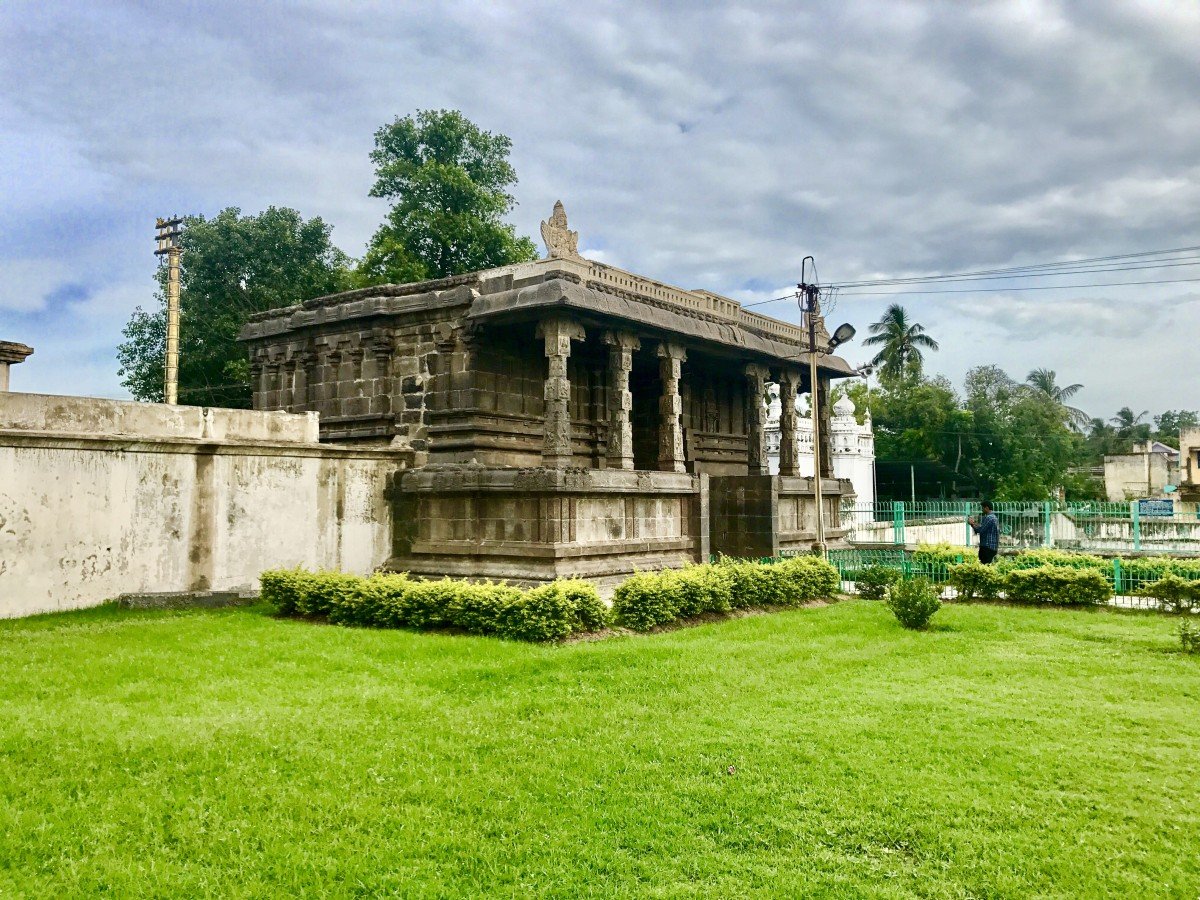


Kanchipuram
General information
-
Ideal Duration:
1 to 2 DaysPlace Type:
Pilgrimage & Heritage CityEntry Fees:
Temple Entry: Entry to all temples is free for everyone. Some temples might have a special darshan ticket for Rs.50 or Rs.100 to skip long queues.
Museum Fee: Kanchi Kudil has a small entry fee of Rs.20. Professional photography inside temple pr...Temple Entry: Entry to all temples is free for everyone. Some temples might have a special darshan ticket for Rs.50 or Rs.100 to skip long queues.
Museum Fee: Kanchi Kudil has a small entry fee of Rs.20. Professional photography inside temple premises might require special permission and a fee.Timing:
Regular Timings: Temples are generally open from 6:00 AM to 12:30 PM and 4:00 PM to 8:30 PM. The Kamakshi Amman Temple stays open longer during festivals.
Ideal Visit: October to March is the best time for sightseeing. Visit the temples ea...Regular Timings: Temples are generally open from 6:00 AM to 12:30 PM and 4:00 PM to 8:30 PM. The Kamakshi Amman Temple stays open longer during festivals.
Ideal Visit: October to March is the best time for sightseeing. Visit the temples early in the morning to avoid the afternoon sun and large crowds.Special Events:
Brahmotsavam: Held in May/June at the Varadaraja Perumal Temple, attracting thousands of devotees. The chariot procession is a spectacular sight to behold.
Mahashivratri: Celebrated with great fervor in February/March at the Kailasanathar a...Brahmotsavam: Held in May/June at the Varadaraja Perumal Temple, attracting thousands of devotees. The chariot procession is a spectacular sight to behold.
Mahashivratri: Celebrated with great fervor in February/March at the Kailasanathar and Ekambareswarar temples. Devotees stay awake all night for special pujas.Best Photo Spots:
Temple Towers: The Raja Gopuram of Ekambareswarar looks stunning during the golden hour. The shadows on the stone walls create a dramatic effect.
Kailasanathar Sculptures: The sandstone carvings of this temple are best photographed in the s...Temple Towers: The Raja Gopuram of Ekambareswarar looks stunning during the golden hour. The shadows on the stone walls create a dramatic effect.
Kailasanathar Sculptures: The sandstone carvings of this temple are best photographed in the soft morning light. The detail in the sculptures is truly incredible.Photo Gallery


Things To Do
 @@Overview: Kumarakottam is a significant Hindu temple dedicated to Lord Murugan (Subramaniya Swamy), the son of Lord Shiva and Goddess Parvati.: @@Religious Significance: The temple is revered for its unique Som?skandha representation, where Lord Murugan is seated between his parents, aligning it symbolically with the nearby Ekambareswarar Temple (Shiva) and Kamakshi Amman Temple (Parvati).: @@Literary Connection: This is the hallowed site where the great scholar Kachiappa Shivacharya composed the celebrated Tamil epic, the Kandha Puranam, in the 16th century. A hall within the complex, the Kandhapur?na Arangetra Mantapam, is believed to be where the epic was completed and first presented.: @@Deity Form: The central image of Murugan is distinct, often depicted as Brahma-Sh?st?, holding a kamandalu (water pot) and Rudr?ksha beads, reflecting a legend where Murugan explained the meaning of the Pranava Mantra (Om) to Brahma. The current structure was primarily rebuilt in 1915 CE. The temple is an important pilgrimage center for devotees of Lord Murugan.:
 This rare and significant temple is uniquely dedicated to Lord Chitragupta, the celestial record-keeper and assistant to Yama, the Hindu God of Death. He is entrusted with the critical duty of maintaining the comprehensive register of the Karma (good and bad deeds) of every living being on Earth, which determines their fate in the afterlife (heaven or hell). The temple, believed to have been built by the Chola kings around the 9th century CE, holds immense spiritual importance for devotees who believe that worshipping here can mitigate the adverse effects of the planet Ketu in their horoscopes or lessen the impact of their past wrongdoings. The legend states that Chitragupta was born from a Chitra (picture) drawn by Lord Shiva and Goddess Parvati on a gold plate, hence his name 'Chitra-Gupta' (secret picture). Visiting this temple is considered an act of seeking spiritual clarity, seeking reprieve from karmic debts, and gaining a deeper understanding of justice and cosmic balance. The temple's modest size, compared to the larger shrines in Kanchipuram, belies its powerful religious significance and the specific nature of the deity worshipped here, making it a powerful destination for spiritual accounting and introspection. It is one of the very few temples in India dedicated solely to this deity, attracting pilgrims from across the nation, particularly on auspicious days. This place serves as a crucial reminder of the law of action and consequence, central to Hindu philosophy. (399 words)
@@Overview: The Thiruparuthikundram Jain Temple is a collection of two historic Jain temples: the Trilokyanatha Temple (dedicated to the Tirthankara Trilokyanatha) and the Chandra Prabha Temple (dedicated to the Tirthankara Chandra Prabha).: @@Historical Significance: Often referred to as Jina Kanchi or Jain Kanchi, this site is a profound testament to the ancient existence and influence of Jainism in Kanchipuram, dating back to at least the 9th century CE when the Pallavas ruled.: @@Art and Painting: The temple is particularly famous for its beautiful, rare, and well-preserved paintings on the ceilings and walls, which depict the lives and legends of the Tirthankaras.: @@Deities: The main temple, Trilokyanatha, is dedicated to the three Tirthankaras and houses a large idol of Mahaveerar made of a bright pink stone, alongside shrines for other Jain figures.:
This rare and significant temple is uniquely dedicated to Lord Chitragupta, the celestial record-keeper and assistant to Yama, the Hindu God of Death. He is entrusted with the critical duty of maintaining the comprehensive register of the Karma (good and bad deeds) of every living being on Earth, which determines their fate in the afterlife (heaven or hell). The temple, believed to have been built by the Chola kings around the 9th century CE, holds immense spiritual importance for devotees who believe that worshipping here can mitigate the adverse effects of the planet Ketu in their horoscopes or lessen the impact of their past wrongdoings. The legend states that Chitragupta was born from a Chitra (picture) drawn by Lord Shiva and Goddess Parvati on a gold plate, hence his name 'Chitra-Gupta' (secret picture). Visiting this temple is considered an act of seeking spiritual clarity, seeking reprieve from karmic debts, and gaining a deeper understanding of justice and cosmic balance. The temple's modest size, compared to the larger shrines in Kanchipuram, belies its powerful religious significance and the specific nature of the deity worshipped here, making it a powerful destination for spiritual accounting and introspection. It is one of the very few temples in India dedicated solely to this deity, attracting pilgrims from across the nation, particularly on auspicious days. This place serves as a crucial reminder of the law of action and consequence, central to Hindu philosophy. (399 words)
@@Overview: The Thiruparuthikundram Jain Temple is a collection of two historic Jain temples: the Trilokyanatha Temple (dedicated to the Tirthankara Trilokyanatha) and the Chandra Prabha Temple (dedicated to the Tirthankara Chandra Prabha).: @@Historical Significance: Often referred to as Jina Kanchi or Jain Kanchi, this site is a profound testament to the ancient existence and influence of Jainism in Kanchipuram, dating back to at least the 9th century CE when the Pallavas ruled.: @@Art and Painting: The temple is particularly famous for its beautiful, rare, and well-preserved paintings on the ceilings and walls, which depict the lives and legends of the Tirthankaras.: @@Deities: The main temple, Trilokyanatha, is dedicated to the three Tirthankaras and houses a large idol of Mahaveerar made of a bright pink stone, alongside shrines for other Jain figures.: The Kamakshi Amman Temple is one of the most sacred and celebrated Hindu temples in India, dedicated to Goddess Kamakshi, a form of Goddess Parvati (Shakti). It is considered one of the 51 Shakti Peethams and the primary center of Shakti worship in Kanchipuram, often referred to as the city's Moola Peetham. The name Kamakshi is derived from Ka (Goddess Saraswati), Ma (Goddess Lakshmi), and Akshi (Eye), meaning the Goddess who has Saraswati and Lakshmi as her two eyes, showering knowledge and wealth. The temple's origins are ancient, with its current structure and prominence heavily influenced by the contributions of the Pallava, Chola, and Vijayanagara dynasties. The great philosopher and saint Adi Shankaracharya is closely associated with this temple, having established the Sri Chakra (a sacred geometric diagram) near the Goddess's idol to pacify her fierce form and restore cosmic balance, thus founding the Kanchi Kamakoti Peetham nearby. The main deity, Kamakshi Amman, is seated in a graceful yogic posture (Padmasana), holding a sugarcane bow and floral arrows. The temple is the only major shrine to the Goddess in the city, where all other local Goddesses are considered her manifestations. This spiritual centrality makes it an indispensable pilgrimage site. (400 words)
@@Overview: Varadharaja Perumal Temple, also known as Hastagiri or Devarajaswami Temple, is a colossal and highly important Vaishnavite temple, considered the premier of the 108 Divya Desams in Kanchipuram.: @@Historical Patronage: The temple's history is marked by continuous patronage from the Cholas, Pandyas, Cheras, Kakatiyas, and especially the Vijayanagara kings, who made massive contributions, giving it its current grand scale.: @@The Deity: Dedicated to Lord Vishnu as Varadharaja Perumal (The Giver of Boons). The main sanctum has a stone idol, but a highly revered wooden idol of Athi Varadhar is immersed in the temple tank and taken out for darshan once every 40 years.: @@Architectural Grandeur: The temple complex is immense, covering 23 acres and containing 32 shrines, 19 Vimanams (towers), and approximately 400 pillared halls, making it an architectural city in itself.:
The Kamakshi Amman Temple is one of the most sacred and celebrated Hindu temples in India, dedicated to Goddess Kamakshi, a form of Goddess Parvati (Shakti). It is considered one of the 51 Shakti Peethams and the primary center of Shakti worship in Kanchipuram, often referred to as the city's Moola Peetham. The name Kamakshi is derived from Ka (Goddess Saraswati), Ma (Goddess Lakshmi), and Akshi (Eye), meaning the Goddess who has Saraswati and Lakshmi as her two eyes, showering knowledge and wealth. The temple's origins are ancient, with its current structure and prominence heavily influenced by the contributions of the Pallava, Chola, and Vijayanagara dynasties. The great philosopher and saint Adi Shankaracharya is closely associated with this temple, having established the Sri Chakra (a sacred geometric diagram) near the Goddess's idol to pacify her fierce form and restore cosmic balance, thus founding the Kanchi Kamakoti Peetham nearby. The main deity, Kamakshi Amman, is seated in a graceful yogic posture (Padmasana), holding a sugarcane bow and floral arrows. The temple is the only major shrine to the Goddess in the city, where all other local Goddesses are considered her manifestations. This spiritual centrality makes it an indispensable pilgrimage site. (400 words)
@@Overview: Varadharaja Perumal Temple, also known as Hastagiri or Devarajaswami Temple, is a colossal and highly important Vaishnavite temple, considered the premier of the 108 Divya Desams in Kanchipuram.: @@Historical Patronage: The temple's history is marked by continuous patronage from the Cholas, Pandyas, Cheras, Kakatiyas, and especially the Vijayanagara kings, who made massive contributions, giving it its current grand scale.: @@The Deity: Dedicated to Lord Vishnu as Varadharaja Perumal (The Giver of Boons). The main sanctum has a stone idol, but a highly revered wooden idol of Athi Varadhar is immersed in the temple tank and taken out for darshan once every 40 years.: @@Architectural Grandeur: The temple complex is immense, covering 23 acres and containing 32 shrines, 19 Vimanams (towers), and approximately 400 pillared halls, making it an architectural city in itself.: The Ekambareswarar Temple is one of the largest and most revered temples in Kanchipuram, dedicated to Lord Shiva and representing the element Earth (Prithvi) among the five great Pancha Bootha Sthalams (five elemental temples of Shiva) in South India. The presiding deity is Lord Ekambareswarar (Ekamranathar), and the Goddess is Elavarkuzhali. The temple's history dates back to the Pallava dynasty (as early as the 600 CE), but the current massive structure and towering Rajagopuram were largely built and expanded by the later Chola and Vijayanagara kings, particularly the powerful Krishnadevaraya. Legend tells of Goddess Parvati (known here as Elavarkuzhali), who performed intense penance under the temple's ancient sacred Mango Tree to re-join Lord Shiva after he cursed her. The 3500-year-old mango tree, believed to yield four different kinds of fruit representing the four Vedas, is the temple’s most sacred and unique living element. The temple complex is sprawling, covering over 25 acres and featuring magnificent halls and shrines, making it a central point of Shaivite pilgrimage in Tamil Nadu. (400 words)
@@Overview: Pandava Dhootha Perumal Temple, also known as Thiruppadagam, is one of the 108 Divya Desams (holy abodes of Lord Vishnu) and is dedicated to Lord Vishnu in the form of Pandava Thoothar.: @@Legend of Vishwaroopam: The temple's legend is deeply rooted in the Mahabharata epic. Lord Krishna, acting as an emissary (Dhootha) for the Pandavas in the court of the Kauravas, reveals his gigantic cosmic form (Vishwaroopam) to Duryodhana to prevent his capture.: @@Deity Form and Size: The presiding deity, Pandava Thoothar Perumal, is a colossal 25-foot-tall idol in a seated posture, representing the Lord's magnificent Vishwaroopam that he showed to Duryodhana. The name Thiruppadagam literally means the place where he showed his "big form.": @@Historical Context: The temple's earliest structure is believed to have been constructed during the reign of the Pallava kings, possibly as far back as the 8th century CE, with later contributions from the Cholas.:Show All
This ancient temple is dedicated to Lord Shiva, worshipped here as Kachapeshwarar, which translates to the 'Lord worshipped by the Tortoise.' The legend associated with the temple is unique and deeply rooted in Hindu mythology, particularly the episode of the Samudra Manthan (Churning of the Ocean of Milk). According to the legend, Lord Vishnu took the form of the giant tortoise, Kurma Avatar (Kachaba), to support the Mandara mountain used as the churning rod. After the colossal effort, Vishnu in his tortoise form is believed to have worshipped Lord Shiva at this very spot to seek refuge and regain his strength. This act of reverence is what gives the temple its unique name and religious significance, making it a powerful site where the harmony between the Vaishnavite and Shaivite traditions is celebrated. The temple’s history spans various dynasties, with contributions from the Pallavas, Cholas, and Vijayanagara kings, all of whom enriched its structure and religious life. Devotees believe that worshipping Kachapeshwarar here can grant them longevity, help overcome obstacles, and resolve the negative effects of planetary positions, making it a compelling destination for spiritual aspirants. The complex houses several shrines, including one for the Goddess Anjanatchi and a separate shrine for Lord Muruga, making it a place of diverse worship. (400 words)
The Ekambareswarar Temple is one of the largest and most revered temples in Kanchipuram, dedicated to Lord Shiva and representing the element Earth (Prithvi) among the five great Pancha Bootha Sthalams (five elemental temples of Shiva) in South India. The presiding deity is Lord Ekambareswarar (Ekamranathar), and the Goddess is Elavarkuzhali. The temple's history dates back to the Pallava dynasty (as early as the 600 CE), but the current massive structure and towering Rajagopuram were largely built and expanded by the later Chola and Vijayanagara kings, particularly the powerful Krishnadevaraya. Legend tells of Goddess Parvati (known here as Elavarkuzhali), who performed intense penance under the temple's ancient sacred Mango Tree to re-join Lord Shiva after he cursed her. The 3500-year-old mango tree, believed to yield four different kinds of fruit representing the four Vedas, is the temple’s most sacred and unique living element. The temple complex is sprawling, covering over 25 acres and featuring magnificent halls and shrines, making it a central point of Shaivite pilgrimage in Tamil Nadu. (400 words)
@@Overview: Pandava Dhootha Perumal Temple, also known as Thiruppadagam, is one of the 108 Divya Desams (holy abodes of Lord Vishnu) and is dedicated to Lord Vishnu in the form of Pandava Thoothar.: @@Legend of Vishwaroopam: The temple's legend is deeply rooted in the Mahabharata epic. Lord Krishna, acting as an emissary (Dhootha) for the Pandavas in the court of the Kauravas, reveals his gigantic cosmic form (Vishwaroopam) to Duryodhana to prevent his capture.: @@Deity Form and Size: The presiding deity, Pandava Thoothar Perumal, is a colossal 25-foot-tall idol in a seated posture, representing the Lord's magnificent Vishwaroopam that he showed to Duryodhana. The name Thiruppadagam literally means the place where he showed his "big form.": @@Historical Context: The temple's earliest structure is believed to have been constructed during the reign of the Pallava kings, possibly as far back as the 8th century CE, with later contributions from the Cholas.:Show All
This ancient temple is dedicated to Lord Shiva, worshipped here as Kachapeshwarar, which translates to the 'Lord worshipped by the Tortoise.' The legend associated with the temple is unique and deeply rooted in Hindu mythology, particularly the episode of the Samudra Manthan (Churning of the Ocean of Milk). According to the legend, Lord Vishnu took the form of the giant tortoise, Kurma Avatar (Kachaba), to support the Mandara mountain used as the churning rod. After the colossal effort, Vishnu in his tortoise form is believed to have worshipped Lord Shiva at this very spot to seek refuge and regain his strength. This act of reverence is what gives the temple its unique name and religious significance, making it a powerful site where the harmony between the Vaishnavite and Shaivite traditions is celebrated. The temple’s history spans various dynasties, with contributions from the Pallavas, Cholas, and Vijayanagara kings, all of whom enriched its structure and religious life. Devotees believe that worshipping Kachapeshwarar here can grant them longevity, help overcome obstacles, and resolve the negative effects of planetary positions, making it a compelling destination for spiritual aspirants. The complex houses several shrines, including one for the Goddess Anjanatchi and a separate shrine for Lord Muruga, making it a place of diverse worship. (400 words)Information
-
Why Famous:
Temple Architecture: It is home to the Kailasanathar Temple, the oldest in the city, known for its exquisite sandstone carvings. The temple towers dominate the city's skyline.
Kanchipuram Silk: The world-renowned Kanchipuram Silk Saris are ...Temple Architecture: It is home to the Kailasanathar Temple, the oldest in the city, known for its exquisite sandstone carvings. The temple towers dominate the city's skyline.
Kanchipuram Silk: The world-renowned Kanchipuram Silk Saris are hand-woven here. They are considered an essential part of South Indian weddings and festivals. -
Architecture:
Pallava and Vijayanagara Style: The Kailasanathar Temple is built of sandstone and features 58 small shrines. The Ekambareswarar Temple has a Raja Gopuram that is 59 meters tall.
Mandapams: The Varadaraja Perumal Temple features a 100-pilla...Pallava and Vijayanagara Style: The Kailasanathar Temple is built of sandstone and features 58 small shrines. The Ekambareswarar Temple has a Raja Gopuram that is 59 meters tall.
Mandapams: The Varadaraja Perumal Temple features a 100-pillar hall with chains carved out of a single stone. It covers an area of 23 acres with multiple prakarams. -
How To Reach:
By Air: Chennai International Airport (MAA) is the nearest airport, about 65 km away. Frequent taxis and buses are available from the airport to the city.
By Train: Kanchipuram has its own railway station connected to Chennai and Chengalpat...By Air: Chennai International Airport (MAA) is the nearest airport, about 65 km away. Frequent taxis and buses are available from the airport to the city.
By Train: Kanchipuram has its own railway station connected to Chennai and Chengalpattu. Local passenger trains run frequently throughout the day.
By Road: Well-connected by a network of roads; buses from Chennai (CMBT) run every 15 minutes. It is an easy 2-hour drive from the state capital.
Local Transport: Auto-rickshaws are the most common way to move between temples. Cycle-rickshaws are also available for a slower, traditional experience in narrow lanes. -
Weather and Best Time to Visit:
Winter Season: November to February is very pleasant with temperatures between 18°C and 28°C. This is the peak season for pilgrims and tourists.
Summer Season: March to June can be extremely hot and humid, with temperatures above 35°C. ...Winter Season: November to February is very pleasant with temperatures between 18°C and 28°C. This is the peak season for pilgrims and tourists.
Summer Season: March to June can be extremely hot and humid, with temperatures above 35°C. Sightseeing during the day can be very tiring.
Monsoon Season: July to October brings rain, which makes the temple tanks full and the surroundings green. However, it might hinder walking between temples. -
Near Tourist Places:
Chennai (75 km), Mahabalipuram (65 km), Vellore (70 km), Vedanthangal Bird Sanctuary (50 km), Arignar Anna Zoological Park (55 km), Uttiramerur (30 km), Sriperumbudur (35 km), Covelong Beach (60 km), Tiruttani (45 km), Madurantakam (50 km)
Tourism Tips
-
Health and Safety: Drink plenty of bottled water and wear light cotton clothing. Be careful of monkeys near temple entrances; keep your belongings and food secure.
Packing: Carry a scarf or shawl to cover your shoulders when entering templ...Health and Safety: Drink plenty of bottled water and wear light cotton clothing. Be careful of monkeys near temple entrances; keep your belongings and food secure.
Packing: Carry a scarf or shawl to cover your shoulders when entering temples. Slip-on shoes are convenient as you have to remove them at every temple entrance.
Accommodation: There are many hotels ranging from budget lodges to heritage stays. It is better to stay near the Kanchipuram Bus Stand for easy access.
Local Etiquette: Always walk clockwise around the deities and avoid touching the sculptures. Photography is strictly prohibited inside the inner sanctum of all temples.
Reviews
FAQs
Kanchipuram Itineray And Cost:-
Other Places In Tamil Nadu :-
Other States In India :-
Information about New and Updated Locations() of Tamil Nadu Has Been Added :-
Card subtitle
Note:-
Information provided here in good Faith and for reference only.
Near Places
Chennai
Some quick example text to build on the card title and make up the bulk of the card's content.
Go somewhere
Chidambaram
Some quick example text to build on the card title and make up the bulk of the card's content.
Go somewhere
Coimbatore
Some quick example text to build on the card title and make up the bulk of the card's content.
Go somewhere
Courtallam
Some quick example text to build on the card title and make up the bulk of the card's content.
Go somewhere
Dindigul
Some quick example text to build on the card title and make up the bulk of the card's content.
Go somewhere
Kanchipuram
Some quick example text to build on the card title and make up the bulk of the card's content.
Go somewhere
Kanyakumari
Some quick example text to build on the card title and make up the bulk of the card's content.
Go somewhere
Karaikal
Some quick example text to build on the card title and make up the bulk of the card's content.
Go somewhere
Karaikudi
Some quick example text to build on the card title and make up the bulk of the card's content.
Go somewhere
Kodaikanal
Some quick example text to build on the card title and make up the bulk of the card's content.
Go somewhere
Kovalam
Some quick example text to build on the card title and make up the bulk of the card's content.
Go somewhere
Kumbakonam
Some quick example text to build on the card title and make up the bulk of the card's content.
Go somewhere
Madurai
Some quick example text to build on the card title and make up the bulk of the card's content.
Go somewhere
Mahabalipuram
Some quick example text to build on the card title and make up the bulk of the card's content.
Go somewhere
Masinagudi
Some quick example text to build on the card title and make up the bulk of the card's content.
Go somewhere
Nagapattinam
Some quick example text to build on the card title and make up the bulk of the card's content.
Go somewherein Other Cities