



Thanjavur
General information
-
Ideal Duration:
1-2 DaysPlace Type:
Heritage & PilgrimageEntry Fees:
Temple Entry: Entry to the Brihadisvara Temple is free for all; however, there are small fees for special darshan queues during festivals.
Museum Fees: The Royal Palace and Museum charge a nominal fee of Rs.50 for adults and Rs.20 for children ...Temple Entry: Entry to the Brihadisvara Temple is free for all; however, there are small fees for special darshan queues during festivals.
Museum Fees: The Royal Palace and Museum charge a nominal fee of Rs.50 for adults and Rs.20 for children to access all sections.
Camera Charges: Most sites charge Rs.30 to Rs.100 for photography, while professional videography requires special permission and higher fees from authorities.Timing:
Temple Hours: The main temple remains open from 6:00 AM to 12:30 PM and then from 4:00 PM to 8:30 PM daily.
Museum Hours: The Palace Museum and Library are typically open from 10:00 AM to 1:00 PM and 1:30 PM to 5:30 PM.
Read MoreTemple Hours: The main temple remains open from 6:00 AM to 12:30 PM and then from 4:00 PM to 8:30 PM daily.
Museum Hours: The Palace Museum and Library are typically open from 10:00 AM to 1:00 PM and 1:30 PM to 5:30 PM.
Ideal Visit: The best time to enter the temple is 4:30 PM to avoid the heat and witness the evening lamps being lit.Special Events:
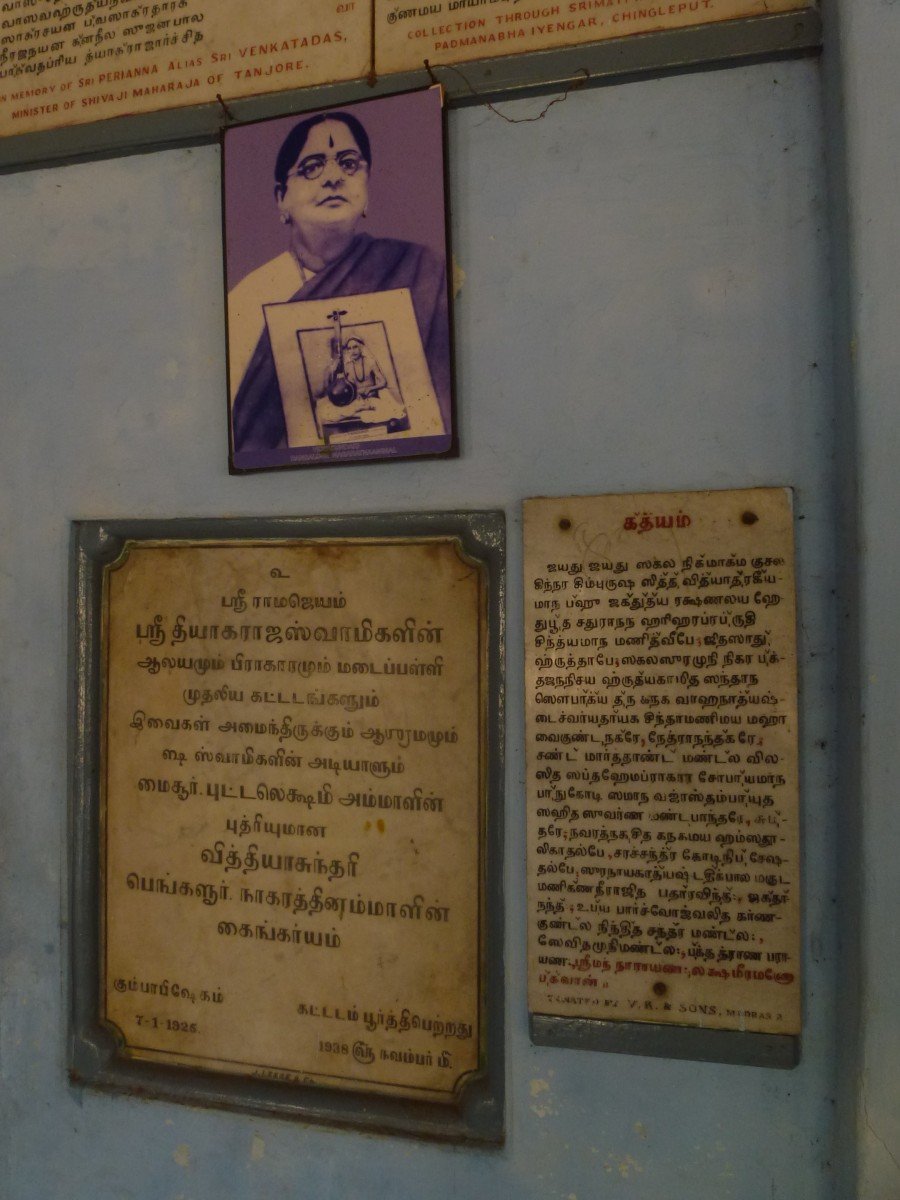
Thyagaraja Festival: A massive music festival held in nearby Thiruvaiyaru in January, attracting thousands of musicians and fans of Carnatic music.
Maha Shivaratri: Celebrated with grand processions and all-night prayers at the Big Temple, w...Thyagaraja Festival: A massive music festival held in nearby Thiruvaiyaru in January, attracting thousands of musicians and fans of Carnatic music.
Maha Shivaratri: Celebrated with grand processions and all-night prayers at the Big Temple, where the deity is decorated with elaborate jewels.
Pongal: The harvest festival in January is celebrated with great joy, featuring traditional dances and special decorations throughout the historic town.Best Photo Spots:
Nandi Statue: The giant monolithic bull provides a majestic foreground for photos of the main temple tower during the early morning.
Temple Entrance: The Keralantakan gate offers a perfectly framed shot of the Vimana as you walk into the mas...Nandi Statue: The giant monolithic bull provides a majestic foreground for photos of the main temple tower during the early morning.
Temple Entrance: The Keralantakan gate offers a perfectly framed shot of the Vimana as you walk into the massive courtyard.
Palace Courtyard: The durbar hall of the Maratha Palace features vibrant wall paintings and pillars that provide a colorful backdrop for portraits.Photo Gallery




Things To Do
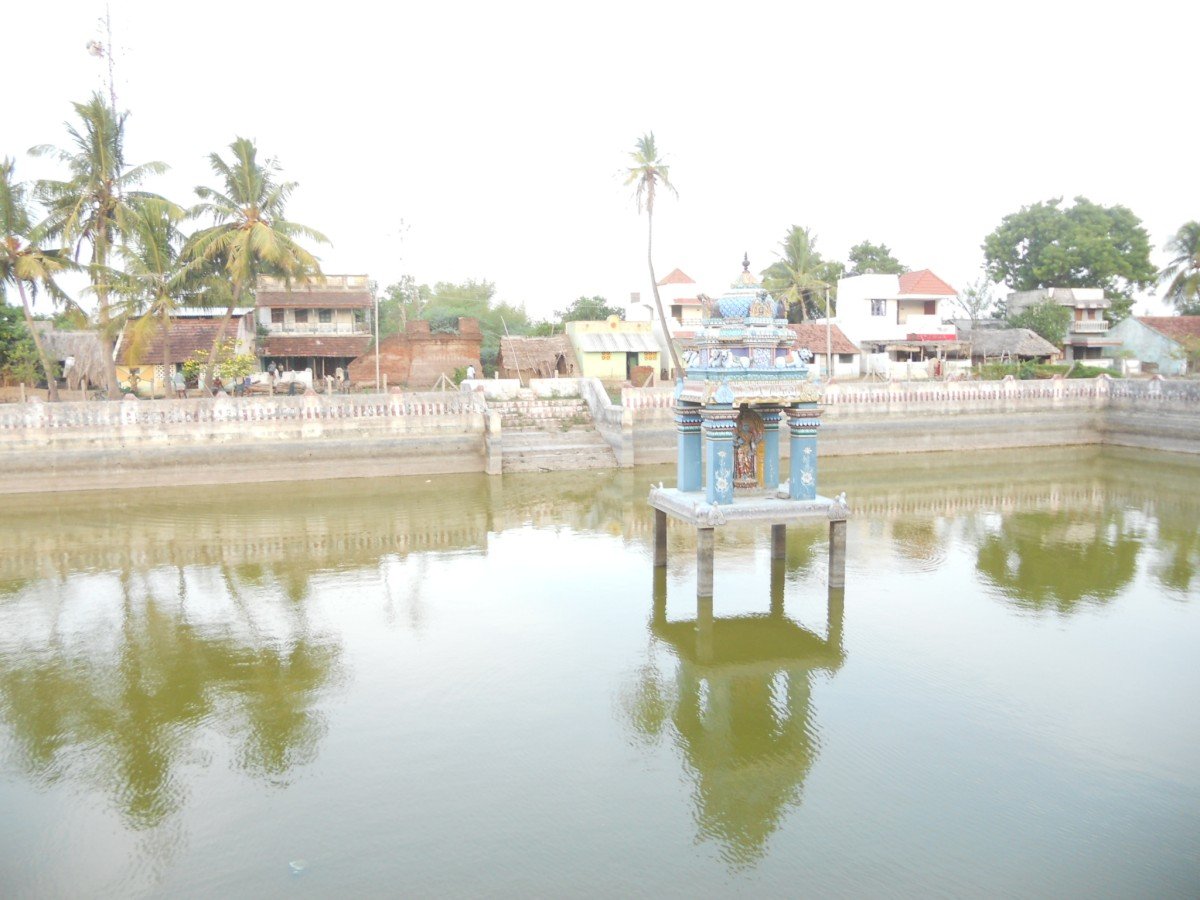
 The Brahmasirakandeswarar Temple in Kandiyur is a highly significant Shiva temple and one of the Ashta Veerattam sites, where Lord Shiva performed eight acts of valor. This specific temple marks the spot where Shiva is believed to have nipped off one of the five heads of Lord Brahma to curb his pride. The temple is also unique because it houses a separate shrine for Brahma and his consort Saraswati, which is rare in Hindu tradition. The presiding deity is Shiva as Kandeeswarar, and the Goddess is Mangalambikai. The temple is situated on the southern bank of the Kudamurutti River, a tributary of the Kaveri. It is a Paadal Petra Sthalam, having been praised in the hymns of the Saivite saints Appar and Sambandar. The temple complex is compact but spiritually vibrant, featuring ancient inscriptions from the Chola and Nayak periods. Pilgrims visit this temple to seek relief from 'Brahmahathi Dosham'. The atmosphere is deeply traditional, with regular Vedic chants and rituals. The temple architecture reflects the early and middle Chola styles, with a focus on symbolic sculptures. It is one of the Saptha Sthanam temples of Thiruvaiyaru, making it a key part of the local religious circuit. :
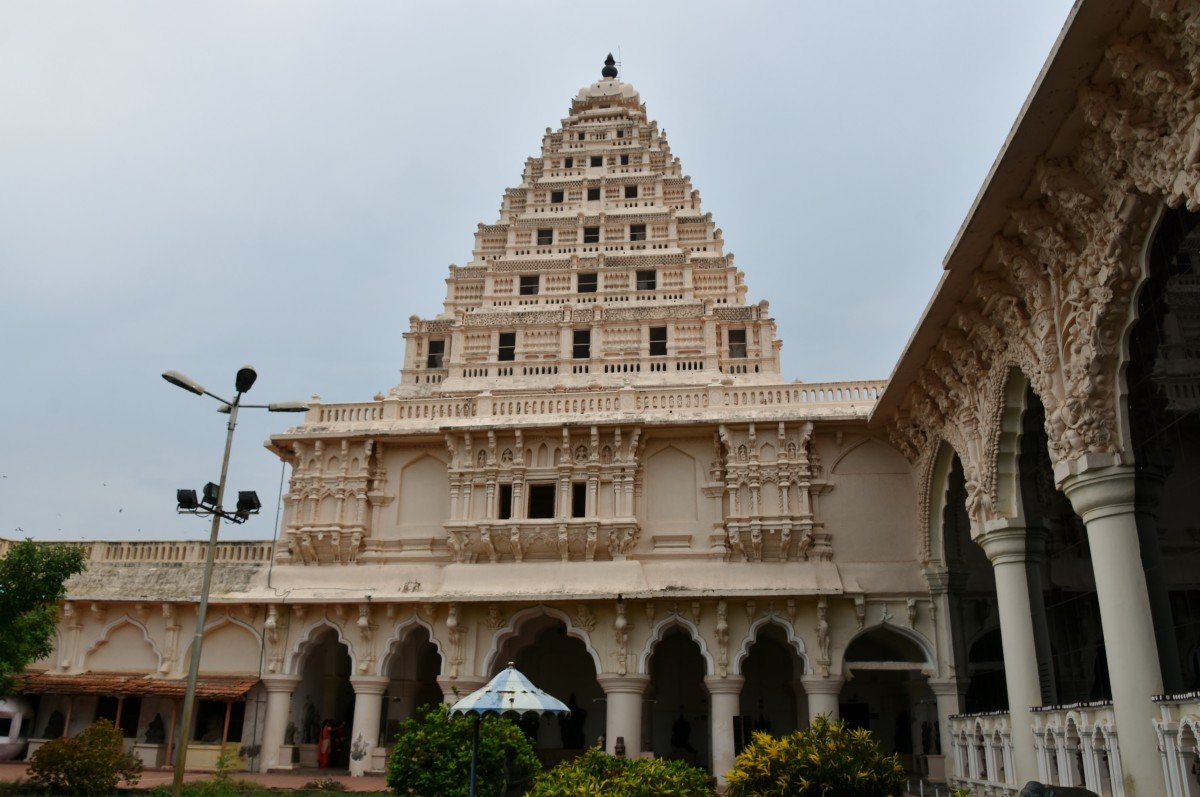
 @@A Blend of Nayak and Maratha Dynasties:: The Thanjavur Royal Palace, locally known as the Aranmanai, is a sprawling and intricate complex that served as the primary residence and administrative center for the Nayak rulers, and later for the Maratha rulers of Thanjavur. The original structures were built by the Nayaks, starting with Sevappa Nayak around the 16th century, and were significantly expanded and renovated by the Marathas, particularly during the reign of Serfoji II. This dual patronage has resulted in a unique blend of Dravidian and Maratha architectural styles visible throughout the complex. The palace is not a single building but a collection of courtyards, buildings, museums, and art galleries, often described as a maze-like structure. The palace complex contains several important and historical structures, including the Saraswathi Mahal Library, the Art Gallery, the Durbar Hall, the Bell Tower, and the Arsenal Tower. Despite its partially ruined state, the palace continues to house the descendants of the Maratha royal family in a reserved section. The palace walls, once part of a larger fortification (Sivagangai Fort), hint at its original purpose as a defensive structure, containing narrow staircases and defensive measures. It remains one of the most important cultural and historical landmarks in Thanjavur, offering a tangible connection to the region's rich dynastic past. The collections housed within its walls, especially the priceless manuscripts and Chola bronze idols, are a treasure trove for scholars and tourists alike.
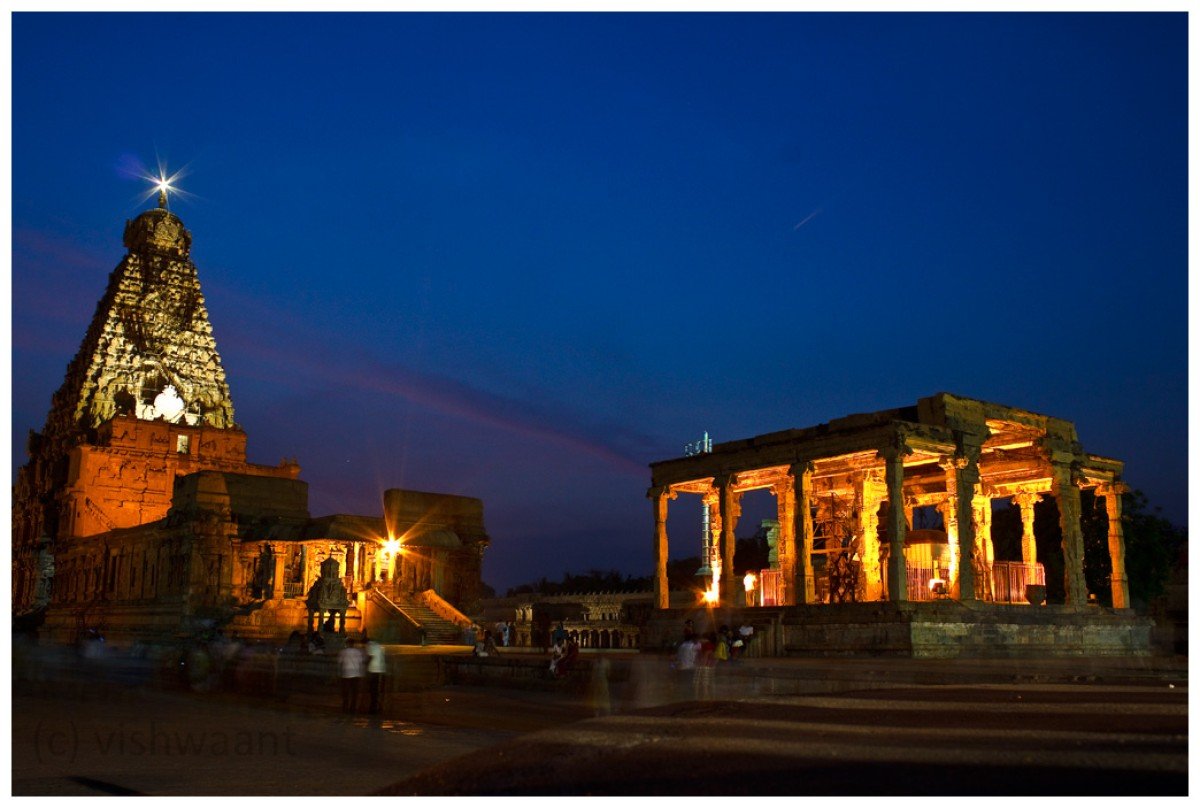
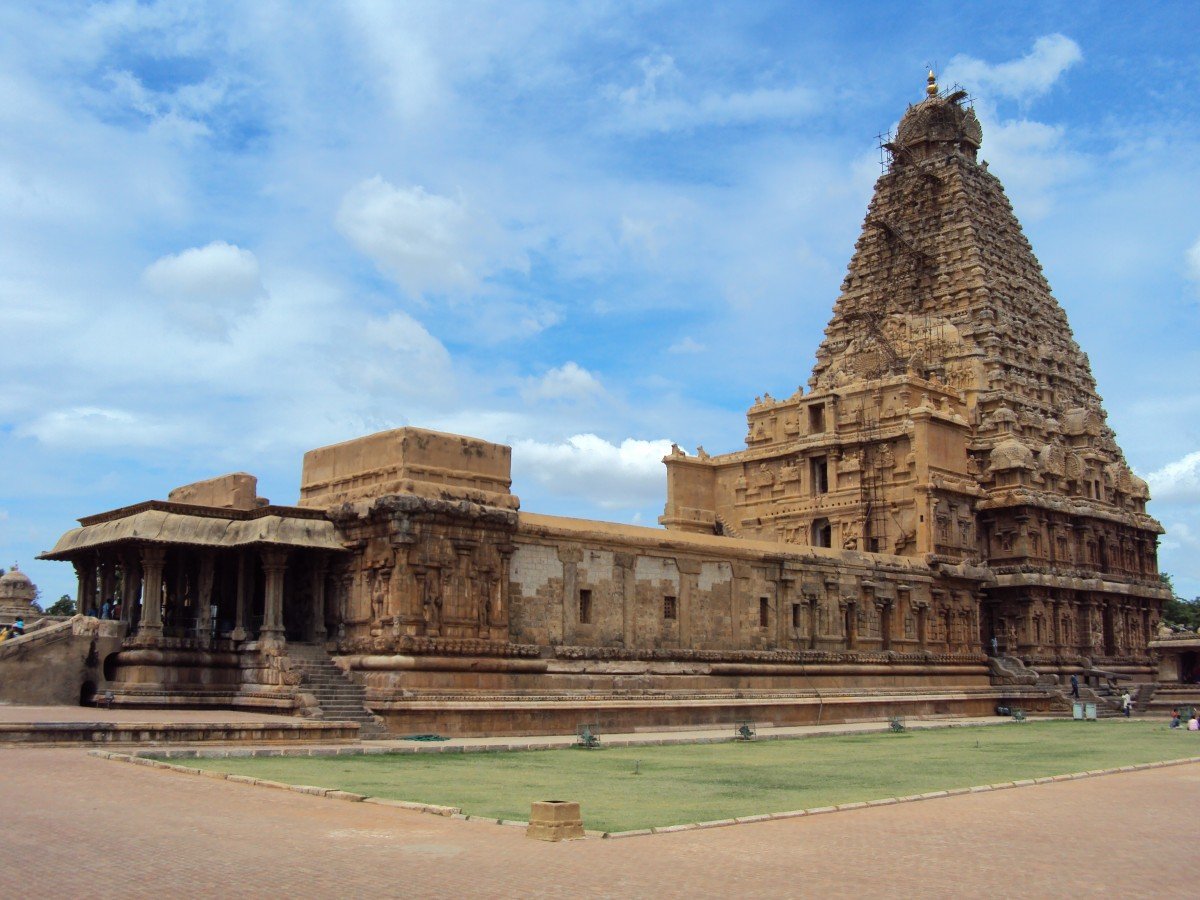
 @@History and Significance: Built by the great Raja Raja Chola I between 1003 and 1010 CE, this temple is a paramount example of Dravidian architecture and a testament to the might of the Chola empire: The original name was Rajarajeswaram and it is dedicated to Lord Shiva: It celebrated its 1000th year in 2010: The temple served as a ritual and cultural center, patronizing the arts, and its massive endowments reflect the wealth and administration of the Chola dynasty: The inscriptions detailing the temple's daily life and administration are a rich source of historical information: The temple's towering structure symbolizes the king's divine right and the scale of the empire:
 @@A Historic Recreational Space:: Sivaganga Park is a popular recreational park and a green lung located in the heart of Thanjavur, immediately adjacent to the magnificent Brihadeeswarar Temple. The park was established much later by the Tanjore municipality in 1871–72, initially known as the People's Park, but its history is deeply linked to the ancient past through the Sivaganga Tank that it encompasses. The park is a favorite spot for locals and tourists alike, offering a break from the historical intensity of the nearby monuments. The park is well-maintained and provides a variety of facilities, making it an ideal destination for a relaxing family outing. It contains a decent collection of plants, a small zoological garden, a toy train, and the boating facilities in the historic tank. Over the years, especially after renovations for the 1994 World Tamil Conference, it has become a major city attraction. Its location within the original boundaries of the Vijayanagar Fort and its proximity to the Palace complex make it a vital part of the city's historical and cultural landscape, bridging the gap between ancient history and modern recreation. The park often serves as a central point for city life and activities.
@@History and Significance: This memorial hall was built in 1991 to commemorate the 8th World Tamil Conference and serves as a lasting tribute to the great Chola emperor, Raja Raja Chola I, the builder of the Brihadeeswarar Temple: The structure is designed to reflect the architectural style of the Chola period, creating a link to the city's golden age: The ground floor houses a museum maintained by the State Archaeology Department, which displays artifacts, coins, sculptures, and paintings related to the Chola dynasty and the region's history: The complex also features a well-maintained park and garden, making it a popular spot for locals and visitors alike:
@@A Historic Recreational Space:: Sivaganga Park is a popular recreational park and a green lung located in the heart of Thanjavur, immediately adjacent to the magnificent Brihadeeswarar Temple. The park was established much later by the Tanjore municipality in 1871–72, initially known as the People's Park, but its history is deeply linked to the ancient past through the Sivaganga Tank that it encompasses. The park is a favorite spot for locals and tourists alike, offering a break from the historical intensity of the nearby monuments. The park is well-maintained and provides a variety of facilities, making it an ideal destination for a relaxing family outing. It contains a decent collection of plants, a small zoological garden, a toy train, and the boating facilities in the historic tank. Over the years, especially after renovations for the 1994 World Tamil Conference, it has become a major city attraction. Its location within the original boundaries of the Vijayanagar Fort and its proximity to the Palace complex make it a vital part of the city's historical and cultural landscape, bridging the gap between ancient history and modern recreation. The park often serves as a central point for city life and activities.
@@History and Significance: This memorial hall was built in 1991 to commemorate the 8th World Tamil Conference and serves as a lasting tribute to the great Chola emperor, Raja Raja Chola I, the builder of the Brihadeeswarar Temple: The structure is designed to reflect the architectural style of the Chola period, creating a link to the city's golden age: The ground floor houses a museum maintained by the State Archaeology Department, which displays artifacts, coins, sculptures, and paintings related to the Chola dynasty and the region's history: The complex also features a well-maintained park and garden, making it a popular spot for locals and visitors alike: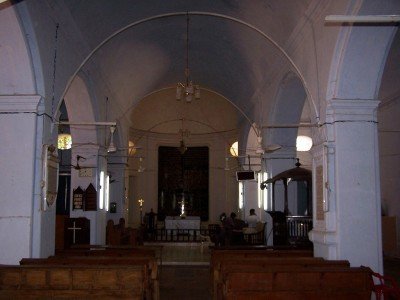 The Manora Fort is an extraordinary historical monument located on the shores of the Bay of Bengal. Built by the Maratha King Serfoji II in 1814, it stands as a unique "Victory Tower" to commemorate the British victory over Napoleon Bonaparte at the Battle of Waterloo. The name is derived from the word 'Minaret' and the structure served as a summer residence and lighthouse for the royal family. It is an eight-story hexagonal tower rising majestically amidst coconut groves. The fort is surrounded by a moat that was historically filled with seawater. It represents a rare instance of a memorial built for a foreign victory on Indian soil. Visitors can enjoy panoramic views of the sea from the lower levels. The site was significantly affected by the 2004 Tsunami but has since been restored by the Tamil Nadu Archaeological Department. It remains a symbol of Maratha engineering and strategic maritime history. The peaceful surroundings make it a perfect spot for history buffs and families looking for a coastal retreat.
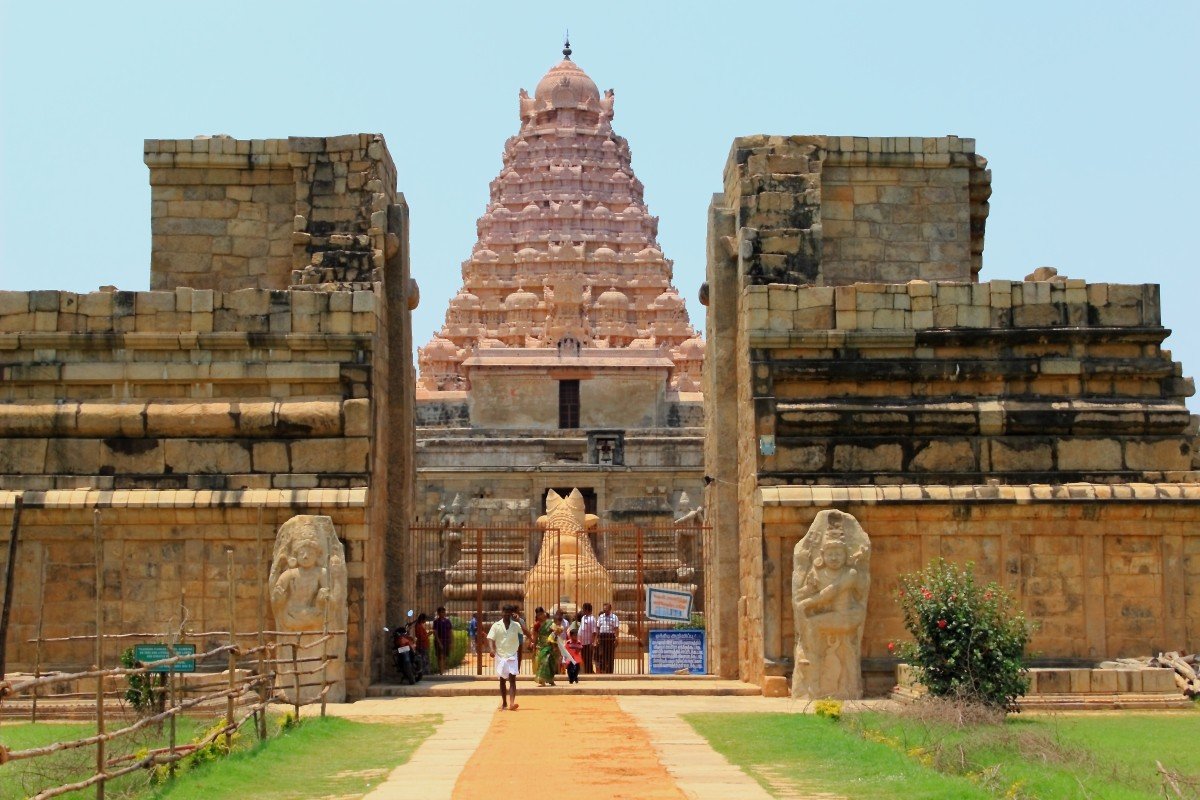
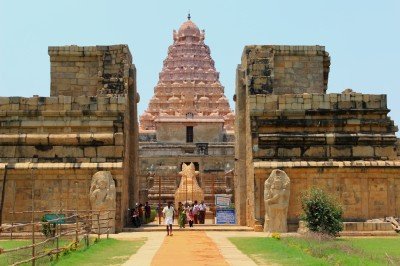 The Gangaikonda Cholapuram Temple, a UNESCO World Heritage site, stands as a testament to the imperial might of the Chola Empire under Rajendra Chola I. Built in the 11th Century, it was designed to surpass the Brihadeeswarar Temple in Thanjavur to celebrate the King's victory over the northern kingdoms near the Ganges. The main deity is Lord Shiva, represented by a massive four-meter-high Lingam made of a single rock. The temple complex is surrounded by lush green lawns, providing a serene atmosphere that contrasts with its powerful history. Historically, this site served as the capital of the Cholas for over 250 years. Visitors can witness the intricate stone carvings that depict various Hindu mythologies and the daily lives of the Chola people. The temple's Vimana is shorter than the one in Thanjavur but features a more feminine, curving silhouette that is unique in Dravidian art. It is a place of profound spiritual energy and historical depth, attracting scholars and pilgrims alike. The surrounding village of Gangaikonda Cholapuram remains quiet, preserving the ancient charm of the region. Exploring this site offers a deep dive into the artistic and administrative brilliance of the medieval Tamil era. The vast courtyard and the massive Nandi statue at the entrance are awe-inspiring. It is an essential stop for anyone interested in Indian heritage. :Show All
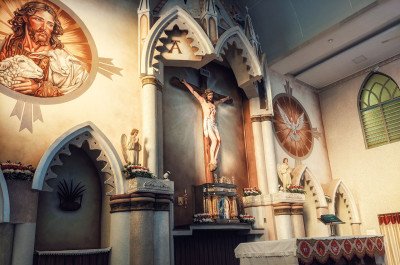 @@History and Significance: Also known as the Fort Church, this historical church was built in 1779 by the Maratha King Serfoji II (then a young prince) in appreciation of his tutor and mentor, the Danish missionary Reverend Christian Friedrich Schwarz (Schwartz): The church is a rare and profound symbol of inter-faith friendship and tolerance between the Hindu royalty and the Christian missionary: Father Schwartz conducted regular masses here from April 1780: Its historical significance is further marked by a marble sculpture commissioned by Serfoji II from the famous Italian sculptor John Flaxman in 1807, depicting Schwartz on his deathbed with the King beside him: It is a simple, beautiful, and profoundly historical building:
Information
-
Why Famous:
World Heritage: Home to the Great Living Chola Temples, which are recognized globally for their historical and structural integrity.
Artistic Excellence: Famous for the Thanjavur Doll and gold-leaf paintings that depict Hindu deities in rich...World Heritage: Home to the Great Living Chola Temples, which are recognized globally for their historical and structural integrity.
Artistic Excellence: Famous for the Thanjavur Doll and gold-leaf paintings that depict Hindu deities in rich, embossed colors and precious stones.
Saraswathi Mahal: The library here is one of the oldest in Asia, housing rare palm-leaf manuscripts and medieval maps of the world. -
Architecture:
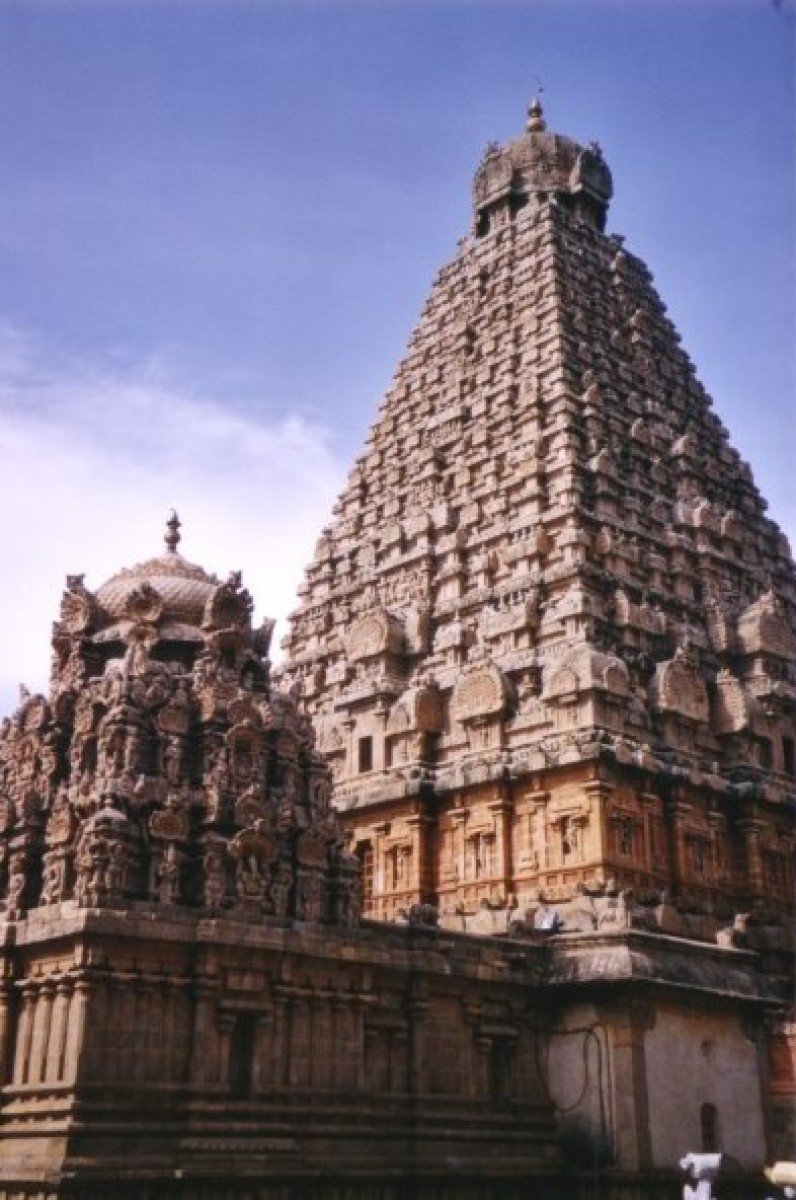
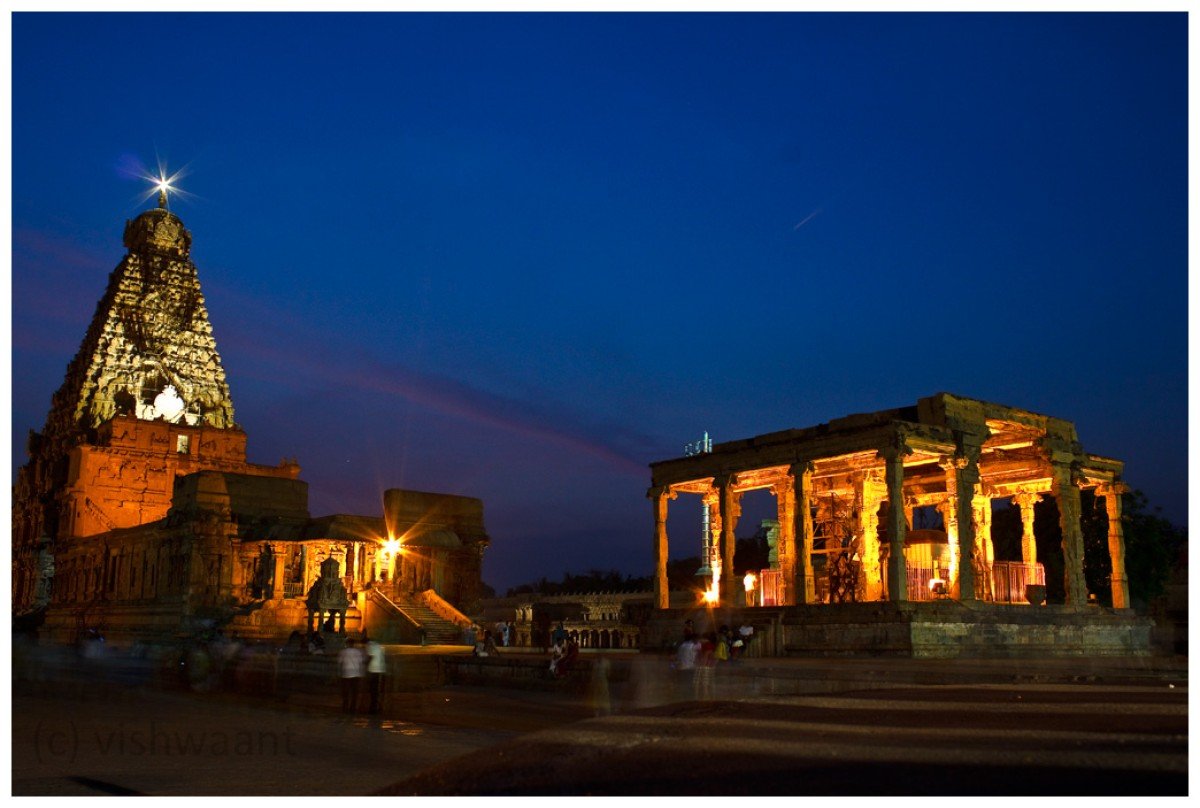
Temple Design: The Brihadisvara Temple stands within a rectangular complex measuring 240m by 121m with a towering Vimana.
Vimana Height: The main tower is 66m high, built with an interlocking stone method without using any binding mortar or ...Temple Design: The Brihadisvara Temple stands within a rectangular complex measuring 240m by 121m with a towering Vimana.
Vimana Height: The main tower is 66m high, built with an interlocking stone method without using any binding mortar or cement.
Monolithic Nandi: A massive Nandi statue carved from a single rock sits at the entrance, measuring 6m in length and 3m in height.
Engineering Marvel: The temple is made of 130,000 tons of granite, featuring a Kumbam (capstone) weighing 80 tons at the very peak. -
How To Reach:
By Air: The nearest airport is Tiruchirappalli (TRZ), located about 60 km away, which has frequent domestic and international flights.
By Train: Thanjavur Junction is well-connected to Chennai, Madurai, and Trichy with several daily express ...By Air: The nearest airport is Tiruchirappalli (TRZ), located about 60 km away, which has frequent domestic and international flights.
By Train: Thanjavur Junction is well-connected to Chennai, Madurai, and Trichy with several daily express and passenger train services.
By Road: Regular bus services are available from all major cities in Tamil Nadu, and private taxis can be hired for comfortable travel.
Local Transport: Auto-rickshaws and local buses are the primary means of transport; walking is feasible within the immediate temple and palace vicinity. -
Weather and Best Time to Visit:
Winter Season: October to March is the best time as the weather is pleasant and ideal for exploring the vast stone temple complexes.
Summer Season: April to June is quite hot, with temperatures exceeding 38°C, making outdoor sightseeing dif...Winter Season: October to March is the best time as the weather is pleasant and ideal for exploring the vast stone temple complexes.
Summer Season: April to June is quite hot, with temperatures exceeding 38°C, making outdoor sightseeing difficult during the peak afternoon hours.
Monsoon Season: July to September brings moderate rainfall, which refreshes the landscape but might hinder temple visits and photography due to cloudy skies. -
Near Tourist Places:
Srirangam (60 km), Kumbakonam (40 km), Darasuram (35 km), Gangaikonda Cholapuram (70 km), Trichy (58 km), Pudukkottai (60 km), Velankanni (95 km), Nagore (90 km), Mannargudi (38 km), Thiruvarur (62 km).
Tourism Tips
-
Footwear: Visitors must remove shoes before entering temple premises; socks are recommended during summer as the stone floors get very hot.
Clothing: Wear modest traditional attire; men should wear dhotis or trousers and women should wear ...Footwear: Visitors must remove shoes before entering temple premises; socks are recommended during summer as the stone floors get very hot.
Clothing: Wear modest traditional attire; men should wear dhotis or trousers and women should wear sarees or long skirts to respect customs.
Hydration: Always carry a water bottle as the temple complex is large and requires a lot of walking under the sun.
Guides: Hire authorized guides at the temple entrance to understand the complex history and hidden meanings behind the many wall inscriptions.
Reviews
FAQs
Thanjavur Itineray And Cost:-
Other Places In Tamil Nadu :-
Other States In India :-
Information about New and Updated Locations() of Tamil Nadu Has Been Added :-
Card subtitle
Note:-
Information provided here in good Faith and for reference only.
Near Places
Chennai
Some quick example text to build on the card title and make up the bulk of the card's content.
Go somewhere
Chidambaram
Some quick example text to build on the card title and make up the bulk of the card's content.
Go somewhere
Coimbatore
Some quick example text to build on the card title and make up the bulk of the card's content.
Go somewhere
Courtallam
Some quick example text to build on the card title and make up the bulk of the card's content.
Go somewhere
Dindigul
Some quick example text to build on the card title and make up the bulk of the card's content.
Go somewhere
Kanchipuram
Some quick example text to build on the card title and make up the bulk of the card's content.
Go somewhere
Kanyakumari
Some quick example text to build on the card title and make up the bulk of the card's content.
Go somewhere
Karaikal
Some quick example text to build on the card title and make up the bulk of the card's content.
Go somewhere
Karaikudi
Some quick example text to build on the card title and make up the bulk of the card's content.
Go somewhere
Kodaikanal
Some quick example text to build on the card title and make up the bulk of the card's content.
Go somewhere
Kovalam
Some quick example text to build on the card title and make up the bulk of the card's content.
Go somewhere
Kumbakonam
Some quick example text to build on the card title and make up the bulk of the card's content.
Go somewhere
Madurai
Some quick example text to build on the card title and make up the bulk of the card's content.
Go somewhere
Mahabalipuram
Some quick example text to build on the card title and make up the bulk of the card's content.
Go somewhere
Masinagudi
Some quick example text to build on the card title and make up the bulk of the card's content.
Go somewhere
Nagapattinam
Some quick example text to build on the card title and make up the bulk of the card's content.
Go somewherein Other Cities