

Ranikhet
General information
-
Ideal Duration:
2 to 3 DaysPlace Type:
Serene / Military HeritageEntry Fees:
Museum and Park Fees: The KRC Museum and some of the local parks have a small entry fee, usually around 20 INR to 50 INR. These fees are used for the maintenance and preservation of the historical and natural sites. This makes Ranikhet a very affordable destination for tra...Museum and Park Fees: The KRC Museum and some of the local parks have a small entry fee, usually around 20 INR to 50 INR. These fees are used for the maintenance and preservation of the historical and natural sites. This makes Ranikhet a very affordable destination for travelers who want to explore its heritage and beauty.
Golf Course Charges: If you wish to play a round of golf at the Upat Golf Course, there is a green fee that ranges from 500 INR to 1000 INR. For those who just want to visit and walk around, there might be a nominal entry charge. These fees help in the upkeep of the world-class golfing facilities in the high-altitude region.Timing:
Operating Hours: Most temples and museums are open from 9:00 AM to 5:00 PM. The Sadar Bazar is most active between 10:00 AM and 8:00 PM. It is best to plan your outdoor activities during the daylight hours to enjoy the views and travel safely on the mountain roads.Operating Hours: Most temples and museums are open from 9:00 AM to 5:00 PM. The Sadar Bazar is most active between 10:00 AM and 8:00 PM. It is best to plan your outdoor activities during the daylight hours to enjoy the views and travel safely on the mountain roads.
Ideal Time for Visits: The early morning hours between 6:30 AM and 9:00 AM are the best for viewing the Himalayan peaks and for nature walks. The air is most clear at this time, providing the best visibility. Evenings are perfect for a stroll in the local market and enjoying the cool mountain breeze at the various viewpoints.Special Events:
Ranikhet Club Events: The Ranikhet Club hosts various social and cultural events throughout the year, especially for the military community and its guests. These events often include musical nights, dinners, and traditional celebrations that showcase the town's social life....Ranikhet Club Events: The Ranikhet Club hosts various social and cultural events throughout the year, especially for the military community and its guests. These events often include musical nights, dinners, and traditional celebrations that showcase the town's social life. It is a great place to experience the colonial-era hospitality and the disciplined lifestyle of the cantonment.
Basant Panchami: The festival of Basant Panchami is celebrated with great joy in Ranikhet, marking the arrival of the spring season. People dress in yellow clothes and offer prayers to Goddess Saraswati, with traditional music and dance performances being held in different parts of the town. This festival reflects the cultural richness and the close connection of the local people with the changing seasons.Best Photo Spots:
Himalayan Range from Golf Course: The wide-open space of the Upat Golf Course provides the perfect vantage point for photographing the Himalayan peaks. The contrast between the green grass and the white snow-clad mountains creates a stunning visual. It is best to take phot...Himalayan Range from Golf Course: The wide-open space of the Upat Golf Course provides the perfect vantage point for photographing the Himalayan peaks. The contrast between the green grass and the white snow-clad mountains creates a stunning visual. It is best to take photos early in the morning when the light is soft and the air is clear.
Bells at Jhula Devi Temple: The thousands of brass bells at the Jhula Devi Temple offer a unique and artistic subject for photography. The repeating patterns of the bells and the play of light on their surfaces can make for some very creative shots. It is a place that captures the spiritual essence and the unique traditions of the region in a single frame.Photo Gallery
Things To Do
 @@Overview of Orchards: The Apple Garden is part of the sprawling Chaubatia Gardens, situated at an elevation of about 1,800 meters. This spot is renowned for its vast terraced cultivation of various temperate fruits, with apples being the most prominent. It serves as an important hub for fruit research in the Kumaon region and is a highly sought-after tourist destination due to its picturesque beauty and the refreshing cool breeze. @@Fruit Varieties: The orchard primarily cultivates high-quality apples, but also features other fruits like peaches, plums, and apricots, contributing significantly to the local economy and horticulture studies. @@Natural Ambiance: The sheer expanse of the fruit-laden trees against the backdrop of the majestic, snow-capped Himalayan peaks like Nanda Devi and Trishul provides a truly unforgettable and tranquil experience. Visitors can enjoy long, peaceful walks through the verdant rows of fruit trees, especially during the blooming and harvesting seasons. @@Horticultural Importance: It is one of the oldest surviving orchards from the British colonial era and hosts the Government Fruit Research Center.
 The Kalika Temple is a highly revered shrine dedicated to Goddess Kali, situated amidst the thick forests of pine and oak in the Kumaon region. This spiritual sanctuary is not only a place of worship but also a site of immense natural beauty, offering a panoramic view of the snow-clad Himalayan peaks like Nanda Devi and Trishul. The temple is deeply associated with the Kumaon Regiment of the Indian Army, who consider the deity their patron protector. Legend says the temple was established centuries ago to provide spiritual strength to the local community and soldiers. The atmosphere here is filled with the scent of pine and the sound of temple bells, providing a meditative environment for devotees. Visitors often feel a sense of profound peace while walking through the forested path leading to the temple complex. The temple serves as a focal point for the small town of Kalika, which has grown around this sacred site. It is a must-visit for those seeking both spiritual solace and a connection with the raw beauty of the Himalayas. The surrounding greenery remains lush throughout the year, making it a favorite for nature lovers. The temple's legacy is intertwined with the folklore of the Kumaon hills, where Goddess Kali is seen as the ultimate mother figure.
The Jhula Devi Temple is an ancient and highly revered Hindu shrine dedicated to Goddess Durga (known locally as Jhula Devi), located about 7 KMS from Ranikhet town, near the Chaubatia Gardens. ? The name 'Jhula Devi' literally translates to 'Goddess on the Cradle,' as the presiding deity is seen seated on a jhula (cradle). ? Legend states that the temple was built approximately 700 years ago after the Goddess appeared in a local shepherd's dream and advised him to excavate her idol to protect the villagers from the dense forest's wild animals, particularly tigers. ? The temple is most famous for the thousands of bells tied to its railing and roof by devotees whose wishes have been fulfilled, giving the temple a unique, resonant, and atmospheric quality. ? Devotees come here to make a wish, and upon its fulfillment, they return to offer a copper bell as a token of thanks to the Goddess. ? The sheer number of bells, hanging in clusters and ringing softly in the mountain breeze, creates a powerful spiritual ambiance. ? The temple complex also houses a small shrine dedicated to Lord Rama nearby. ? It is a profound spiritual experience that blends deep faith with the tranquility of the mountain forests. The constant ringing of the bells is often described as the sound of answered prayers. ? The temple is maintained and managed by a dedicated local committee. ? It is an essential stop on any Ranikhet itinerary, celebrated both for its religious significance and its picturesque location.
@@Spiritual Haven of Chiliyanuala: The Hairakhan Temple, also known as the Haidakhan Babaji Temple, is located in the peaceful hamlet of Chiliyanuala. Dedicated to Lord Shiva, this temple was established by Shri Haidakhan Maharaj, who is believed by his followers to be an incarnation of Lord Shiva. The temple is a significant spiritual center that draws people from all over the world. @@Divine Atmosphere: The temple complex is known for its pristine white structures and a large, majestic statue of Lord Shiva and Lord Hanuman. The atmosphere is charged with the sounds of bhajans and mantras, providing a sense of deep peace and rejuvenation. It is an ideal place for those looking to escape the hustle and bustle of modern life. @@The Legacy of Babaji: Haidakhan Babaji, or Bhole Baba, taught the principles of Truth, Simplicity, and Love. He lived in this region between 1970 and 1984, and his teachings continue to inspire thousands. The ashram complex includes several shrines, a dhuni (sacred fire), and a beautiful garden that overlooks the Kumaon valley. @@Panoramic Vistas: One of the most striking features of the Hairakhan Temple is the breathtaking view it offers of the Himalayan range. On clear days, peaks like Nanda Devi, Trishul, and Panchachuli are clearly visible. The combination of spiritual energy and natural splendor makes this temple one of the most visited spots in the Ranikhet area.
The Ram Mandir in Ranikhet is a sacred Hindu temple dedicated to Lord Rama, a central figure in the epic Ramayana. ? It is strategically situated on a hillock, requiring a climb of about 365 steps (one for each day of the year) to reach the main shrine, symbolizing an act of spiritual penance and dedication. ? The temple complex is believed to have been established by the revered ascetic Silent Saint Maharaj (Sant Sri Mouni Maharaj), who famously meditated in a cave within the complex for 14 years. ? Beyond a place of worship, the complex functions as a center for learning. It houses a small monastery where students are taught ancient Vedas and a unique combination of Vedic and modern mathematics, blending spirituality with traditional knowledge. ? The primary sanctum is dedicated to Lord Rama. There are also separate shrines for Lord Shiva and Lord Hanuman in the vicinity. ? The atmosphere is quiet, meditative, and offers a panoramic view of the surrounding forests. ? The belief that the Shri Ram Cave is spiritually connected to the Vaishno Devi shrine adds to its mystical allure. ? The blend of spiritual austerity, physical climb, and the center's educational mission makes it a unique pilgrimage site in Ranikhet. ? It is a smaller, more intimate temple compared to the nearby Jhula Devi Temple.
@@Extensive Orchard System: Chaubatia Gardens is not just an orchard but a massive complex of horticulture, sprawling over an altitude of 1,800 meters. The name 'Chaubatia' literally means 'four paths,' referring to the four main viewpoints or approaches it offers. @@Fruit Diversity: It is renowned as the 'Fruit Basket of Kumaon' for its extensive cultivation of 200+ varieties of fruits and flowers. Besides the famous apples, the orchards produce apricots, peaches, plums, chestnuts, and almonds, making it a hub for agricultural study. @@Viewpoints and Scenery: The location is strategically positioned to provide breathtaking, unobstructed, panoramic views of the mighty Himalayan peaks. On a clear day, one can see up to 350 KMS of the snowy range. @@Research and Development: The gardens are home to the Government Fruit Research Center, which plays a pivotal role in researching and developing new strains of fruits suitable for the Himalayan climate, making it an essential institution for the region's agricultural economy.
The Kalika Temple is a highly revered shrine dedicated to Goddess Kali, situated amidst the thick forests of pine and oak in the Kumaon region. This spiritual sanctuary is not only a place of worship but also a site of immense natural beauty, offering a panoramic view of the snow-clad Himalayan peaks like Nanda Devi and Trishul. The temple is deeply associated with the Kumaon Regiment of the Indian Army, who consider the deity their patron protector. Legend says the temple was established centuries ago to provide spiritual strength to the local community and soldiers. The atmosphere here is filled with the scent of pine and the sound of temple bells, providing a meditative environment for devotees. Visitors often feel a sense of profound peace while walking through the forested path leading to the temple complex. The temple serves as a focal point for the small town of Kalika, which has grown around this sacred site. It is a must-visit for those seeking both spiritual solace and a connection with the raw beauty of the Himalayas. The surrounding greenery remains lush throughout the year, making it a favorite for nature lovers. The temple's legacy is intertwined with the folklore of the Kumaon hills, where Goddess Kali is seen as the ultimate mother figure.
The Jhula Devi Temple is an ancient and highly revered Hindu shrine dedicated to Goddess Durga (known locally as Jhula Devi), located about 7 KMS from Ranikhet town, near the Chaubatia Gardens. ? The name 'Jhula Devi' literally translates to 'Goddess on the Cradle,' as the presiding deity is seen seated on a jhula (cradle). ? Legend states that the temple was built approximately 700 years ago after the Goddess appeared in a local shepherd's dream and advised him to excavate her idol to protect the villagers from the dense forest's wild animals, particularly tigers. ? The temple is most famous for the thousands of bells tied to its railing and roof by devotees whose wishes have been fulfilled, giving the temple a unique, resonant, and atmospheric quality. ? Devotees come here to make a wish, and upon its fulfillment, they return to offer a copper bell as a token of thanks to the Goddess. ? The sheer number of bells, hanging in clusters and ringing softly in the mountain breeze, creates a powerful spiritual ambiance. ? The temple complex also houses a small shrine dedicated to Lord Rama nearby. ? It is a profound spiritual experience that blends deep faith with the tranquility of the mountain forests. The constant ringing of the bells is often described as the sound of answered prayers. ? The temple is maintained and managed by a dedicated local committee. ? It is an essential stop on any Ranikhet itinerary, celebrated both for its religious significance and its picturesque location.
@@Spiritual Haven of Chiliyanuala: The Hairakhan Temple, also known as the Haidakhan Babaji Temple, is located in the peaceful hamlet of Chiliyanuala. Dedicated to Lord Shiva, this temple was established by Shri Haidakhan Maharaj, who is believed by his followers to be an incarnation of Lord Shiva. The temple is a significant spiritual center that draws people from all over the world. @@Divine Atmosphere: The temple complex is known for its pristine white structures and a large, majestic statue of Lord Shiva and Lord Hanuman. The atmosphere is charged with the sounds of bhajans and mantras, providing a sense of deep peace and rejuvenation. It is an ideal place for those looking to escape the hustle and bustle of modern life. @@The Legacy of Babaji: Haidakhan Babaji, or Bhole Baba, taught the principles of Truth, Simplicity, and Love. He lived in this region between 1970 and 1984, and his teachings continue to inspire thousands. The ashram complex includes several shrines, a dhuni (sacred fire), and a beautiful garden that overlooks the Kumaon valley. @@Panoramic Vistas: One of the most striking features of the Hairakhan Temple is the breathtaking view it offers of the Himalayan range. On clear days, peaks like Nanda Devi, Trishul, and Panchachuli are clearly visible. The combination of spiritual energy and natural splendor makes this temple one of the most visited spots in the Ranikhet area.
The Ram Mandir in Ranikhet is a sacred Hindu temple dedicated to Lord Rama, a central figure in the epic Ramayana. ? It is strategically situated on a hillock, requiring a climb of about 365 steps (one for each day of the year) to reach the main shrine, symbolizing an act of spiritual penance and dedication. ? The temple complex is believed to have been established by the revered ascetic Silent Saint Maharaj (Sant Sri Mouni Maharaj), who famously meditated in a cave within the complex for 14 years. ? Beyond a place of worship, the complex functions as a center for learning. It houses a small monastery where students are taught ancient Vedas and a unique combination of Vedic and modern mathematics, blending spirituality with traditional knowledge. ? The primary sanctum is dedicated to Lord Rama. There are also separate shrines for Lord Shiva and Lord Hanuman in the vicinity. ? The atmosphere is quiet, meditative, and offers a panoramic view of the surrounding forests. ? The belief that the Shri Ram Cave is spiritually connected to the Vaishno Devi shrine adds to its mystical allure. ? The blend of spiritual austerity, physical climb, and the center's educational mission makes it a unique pilgrimage site in Ranikhet. ? It is a smaller, more intimate temple compared to the nearby Jhula Devi Temple.
@@Extensive Orchard System: Chaubatia Gardens is not just an orchard but a massive complex of horticulture, sprawling over an altitude of 1,800 meters. The name 'Chaubatia' literally means 'four paths,' referring to the four main viewpoints or approaches it offers. @@Fruit Diversity: It is renowned as the 'Fruit Basket of Kumaon' for its extensive cultivation of 200+ varieties of fruits and flowers. Besides the famous apples, the orchards produce apricots, peaches, plums, chestnuts, and almonds, making it a hub for agricultural study. @@Viewpoints and Scenery: The location is strategically positioned to provide breathtaking, unobstructed, panoramic views of the mighty Himalayan peaks. On a clear day, one can see up to 350 KMS of the snowy range. @@Research and Development: The gardens are home to the Government Fruit Research Center, which plays a pivotal role in researching and developing new strains of fruits suitable for the Himalayan climate, making it an essential institution for the region's agricultural economy.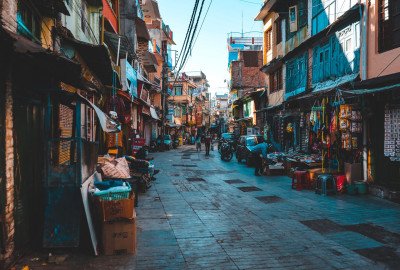 Sadar Bazaar is the vibrant, bustling commercial and social heart of the entire Ranikhet town. Unlike the quiet, green spaces of the cantonment, the bazaar is a hub of activity, providing a fascinating contrast. It is a traditional Himalayan market where locals and military families shop for their daily necessities, making it a place of authentic Kumaoni life. The bazaar is an elongated street lined with small shops selling everything from fresh local produce (seasonal fruits and vegetables), groceries, woolen garments, household goods, to local handicrafts and souvenirs. It's the best place to experience the local Kumaoni culture, interact with the residents, and taste authentic local cuisine from the small eateries. The name 'Sadar' implies 'main' or 'chief' market, reflecting its importance. This area is generally crowded, especially during the evening hours, but in a charming, small-town way. For tourists, it is the go-to place for last-minute essentials and unique local purchases. Due to its central location, it is a key reference point for all local transportation. The architecture consists of typical hill-station buildings—two or three-story structures with corrugated iron roofs, built close together along the main thoroughfare. A visit here is incomplete without picking up some local honey, jams, or the famous Kumaoni pickles:Show All
Haidakhan Baba Ashram is a highly revered spiritual sanctuary established by Haidakhan Babaji, also known as Bhole Baba, who taught publicly between 1970 and 1984. ? This ashram is not merely a temple but a full-fledged spiritual center, a "Vishwa Mahadham" which means the Great World Center. The establishment is a vibrant testament to the teachings of truth, simplicity, and love (Satya, Saralta, Prem), which Babaji propagated. ? The complex includes a main temple, meditation areas, residential quarters for devotees and guests, a small hospital, and a dhuni (sacred fire place). The entire atmosphere here is deeply peaceful and conducive to meditation and self-reflection, making it a powerful retreat for seekers from all over the world. ? Visitors often describe the atmosphere as highly charged with positive spiritual energy. It is an important pilgrimage site for the global community of Haidakhan Babaji's disciples. The ashram's location in Chiliyanaula provides an unmatched backdrop of the Kumaon Himalayas, enhancing its spiritual charm. The center runs on selfless service and dedication from its resident and visiting devotees. ? The core purpose is to practice and spread the message of karma yoga (selfless action). ? The ashram is impeccably maintained, reflecting the discipline and devotion of the community, and it welcomes people of all faiths and backgrounds, encouraging unity in spirituality. ? The lush green surroundings and the clear mountain air add to the tranquil experience. ? The daily routine includes aarti (worship ceremony), bhajans (devotional singing), and karma yoga sessions.
Sadar Bazaar is the vibrant, bustling commercial and social heart of the entire Ranikhet town. Unlike the quiet, green spaces of the cantonment, the bazaar is a hub of activity, providing a fascinating contrast. It is a traditional Himalayan market where locals and military families shop for their daily necessities, making it a place of authentic Kumaoni life. The bazaar is an elongated street lined with small shops selling everything from fresh local produce (seasonal fruits and vegetables), groceries, woolen garments, household goods, to local handicrafts and souvenirs. It's the best place to experience the local Kumaoni culture, interact with the residents, and taste authentic local cuisine from the small eateries. The name 'Sadar' implies 'main' or 'chief' market, reflecting its importance. This area is generally crowded, especially during the evening hours, but in a charming, small-town way. For tourists, it is the go-to place for last-minute essentials and unique local purchases. Due to its central location, it is a key reference point for all local transportation. The architecture consists of typical hill-station buildings—two or three-story structures with corrugated iron roofs, built close together along the main thoroughfare. A visit here is incomplete without picking up some local honey, jams, or the famous Kumaoni pickles:Show All
Haidakhan Baba Ashram is a highly revered spiritual sanctuary established by Haidakhan Babaji, also known as Bhole Baba, who taught publicly between 1970 and 1984. ? This ashram is not merely a temple but a full-fledged spiritual center, a "Vishwa Mahadham" which means the Great World Center. The establishment is a vibrant testament to the teachings of truth, simplicity, and love (Satya, Saralta, Prem), which Babaji propagated. ? The complex includes a main temple, meditation areas, residential quarters for devotees and guests, a small hospital, and a dhuni (sacred fire place). The entire atmosphere here is deeply peaceful and conducive to meditation and self-reflection, making it a powerful retreat for seekers from all over the world. ? Visitors often describe the atmosphere as highly charged with positive spiritual energy. It is an important pilgrimage site for the global community of Haidakhan Babaji's disciples. The ashram's location in Chiliyanaula provides an unmatched backdrop of the Kumaon Himalayas, enhancing its spiritual charm. The center runs on selfless service and dedication from its resident and visiting devotees. ? The core purpose is to practice and spread the message of karma yoga (selfless action). ? The ashram is impeccably maintained, reflecting the discipline and devotion of the community, and it welcomes people of all faiths and backgrounds, encouraging unity in spirituality. ? The lush green surroundings and the clear mountain air add to the tranquil experience. ? The daily routine includes aarti (worship ceremony), bhajans (devotional singing), and karma yoga sessions.Information
-
Why Famous:
The Kumaon Regiment: Ranikhet is world-famous as the home of the Kumaon Regiment, one of the most decorated regiments of the Indian Army. This military connection gives the town a clean and disciplined atmosphere that is rare in other hill stations. Visitors can explore th...The Kumaon Regiment: Ranikhet is world-famous as the home of the Kumaon Regiment, one of the most decorated regiments of the Indian Army. This military connection gives the town a clean and disciplined atmosphere that is rare in other hill stations. Visitors can explore the regimental museum and learn about the heroic stories of the soldiers who have served the nation.
Highest Golf Course: Another major reason for its fame is the Upat Golf Course, which is one of the highest and most beautiful golf courses in Asia. Surrounded by pine and deodar forests, it offers a stunning view of the Himalayas while playing. It is a favorite spot for golf enthusiasts and tourists who want to enjoy a leisurely walk on its lush green fairways. -
Architecture:
Colonial and Military Design: The architecture in Ranikhet is heavily influenced by British colonial and military styles, especially in the cantonment area. Buildings feature sloping roofs, large windows, and extensive stone masonry, designed to fit the mountain climate. T...Colonial and Military Design: The architecture in Ranikhet is heavily influenced by British colonial and military styles, especially in the cantonment area. Buildings feature sloping roofs, large windows, and extensive stone masonry, designed to fit the mountain climate. The KRC Museum is a prime example, housed in a heritage building that showcases traditional colonial aesthetics. These structures are built to be sturdy and functional, with an emphasis on symmetry and order. The dimensions of the army bungalows and administrative offices are often expansive, set amidst large wooded estates.
Traditional Kumaoni Influence: In the civilian parts of the town and nearby villages, traditional Kumaoni architecture is more prevalent. These houses use local stone and slate for roofing, with intricate wood carvings on the doors and windows. This style is not only aesthetically pleasing but also provides excellent insulation against the cold. The balance between the formal military architecture and the rustic local designs gives Ranikhet a unique visual appeal. Many modern constructions also try to replicate these traditional elements to maintain the town's architectural harmony and charm. -
How To Reach:
By Air: The nearest airport to Ranikhet is Pantnagar Airport, located about 115 KMS away. From the airport, you can hire a private taxi or take a bus to reach the town. The drive takes about 3 to 4 hours through the beautiful hills of the Kumaon region, offering scenic vie...By Air: The nearest airport to Ranikhet is Pantnagar Airport, located about 115 KMS away. From the airport, you can hire a private taxi or take a bus to reach the town. The drive takes about 3 to 4 hours through the beautiful hills of the Kumaon region, offering scenic views along the way.
By Train: Kathgodam Railway Station is the nearest railhead, situated approximately 80 KMS from Ranikhet. It is well-connected to major cities like Delhi, Lucknow, and Kolkata. From the station, several shared and private taxis are available to take you up to the hill station in about 2 to 3 hours.
By Road: Ranikhet is well-connected by road to major towns in North India like Delhi, Haldwani, and Nainital. State-run buses and private volvo services operate daily from ISBT Anand Vihar in Delhi. The road journey is scenic and offers a transition from the plains to the lush green hills of the Almora district.
Local Transport: Within the town, the best way to get around is by walking or hiring a local taxi for longer distances. Shared jeeps are also a popular and affordable mode of transport among the locals and tourists. Many people also prefer to rent a scooter to explore the town and its nearby orchards at their own pace. -
Weather and Best Time to Visit:
Summer and Autumn: The best time to visit Ranikhet is from March to June and from September to November. During these months, the weather is pleasant and the sky is clear, offering the best views of the Himalayas. This is also the ideal time for golfing, trekking, and expl...Summer and Autumn: The best time to visit Ranikhet is from March to June and from September to November. During these months, the weather is pleasant and the sky is clear, offering the best views of the Himalayas. This is also the ideal time for golfing, trekking, and exploring the orchards.
Winter Charm: For those who enjoy the cold and want to see snow, December to February is a good time to visit. The town often receives light snowfall, turning it into a beautiful winter wonderland. Be prepared for low temperatures and carry enough warm clothing to enjoy the season comfortably. -
Near Tourist Places:
1. Almora (46km), 2. Nainital (56km), 3. Kausani (59km), 4. Dwarahat (37km), 5. Majkhali (12km), 6. Chaubatia (10km), 7. Upat Golf Course (6km), 8. Jhula Devi (7km), 9. Bhalu Dam (13km), 10. Jageshwar (80km)
Tourism Tips
-
Health and Safety: Always carry a first-aid kit and basic medicines for motion sickness, as the mountain roads can be quite winding. Stay hydrated and avoid over-exerting yourself during treks to prevent fatigue. It is also important to follow the rules of the cantonment a...Health and Safety: Always carry a first-aid kit and basic medicines for motion sickness, as the mountain roads can be quite winding. Stay hydrated and avoid over-exerting yourself during treks to prevent fatigue. It is also important to follow the rules of the cantonment area and respect the privacy of the military residents.
Packing Essentials: Carry comfortable walking shoes and layered clothing, as the weather can change quickly in the hills. Even in summer, light woolens are necessary for the evenings which can get quite cool. If you plan to visit in winter, make sure you have heavy jackets, gloves, and caps to stay warm and protected from the cold.
Reviews
FAQs
Ranikhet Itineray And Cost:-
Other Places In Uttarakhand :-
Other States In India :-
Information about New and Updated Locations() of Uttarakhand Has Been Added :-
Card subtitle
Note:-
Information provided here in good Faith and for reference only.
Near Places
Chakrata
Some quick example text to build on the card title and make up the bulk of the card's content.
Go somewhere
Chamba
Some quick example text to build on the card title and make up the bulk of the card's content.
Go somewhere
Chamoli
Some quick example text to build on the card title and make up the bulk of the card's content.
Go somewhere
Champawat
Some quick example text to build on the card title and make up the bulk of the card's content.
Go somewhere
Chopta
Some quick example text to build on the card title and make up the bulk of the card's content.
Go somewhere
Corbett
Some quick example text to build on the card title and make up the bulk of the card's content.
Go somewhere
Dehradun
Some quick example text to build on the card title and make up the bulk of the card's content.
Go somewhere
Dhanaulti
Some quick example text to build on the card title and make up the bulk of the card's content.
Go somewhere
Gwaldam
Some quick example text to build on the card title and make up the bulk of the card's content.
Go somewhere
Haldwani
Some quick example text to build on the card title and make up the bulk of the card's content.
Go somewhere
Haridwar
Some quick example text to build on the card title and make up the bulk of the card's content.
Go somewhere
Joshimath
Some quick example text to build on the card title and make up the bulk of the card's content.
Go somewhere
Kanatal
Some quick example text to build on the card title and make up the bulk of the card's content.
Go somewhere
Kashipur
Some quick example text to build on the card title and make up the bulk of the card's content.
Go somewhere
Kausani
Some quick example text to build on the card title and make up the bulk of the card's content.
Go somewhere
Kedarnath
Some quick example text to build on the card title and make up the bulk of the card's content.
Go somewherein Other Cities