




Pushkar
General information
-
Ideal Duration:
2 DaysPlace Type:
Religious & CulturalSpecial Events:
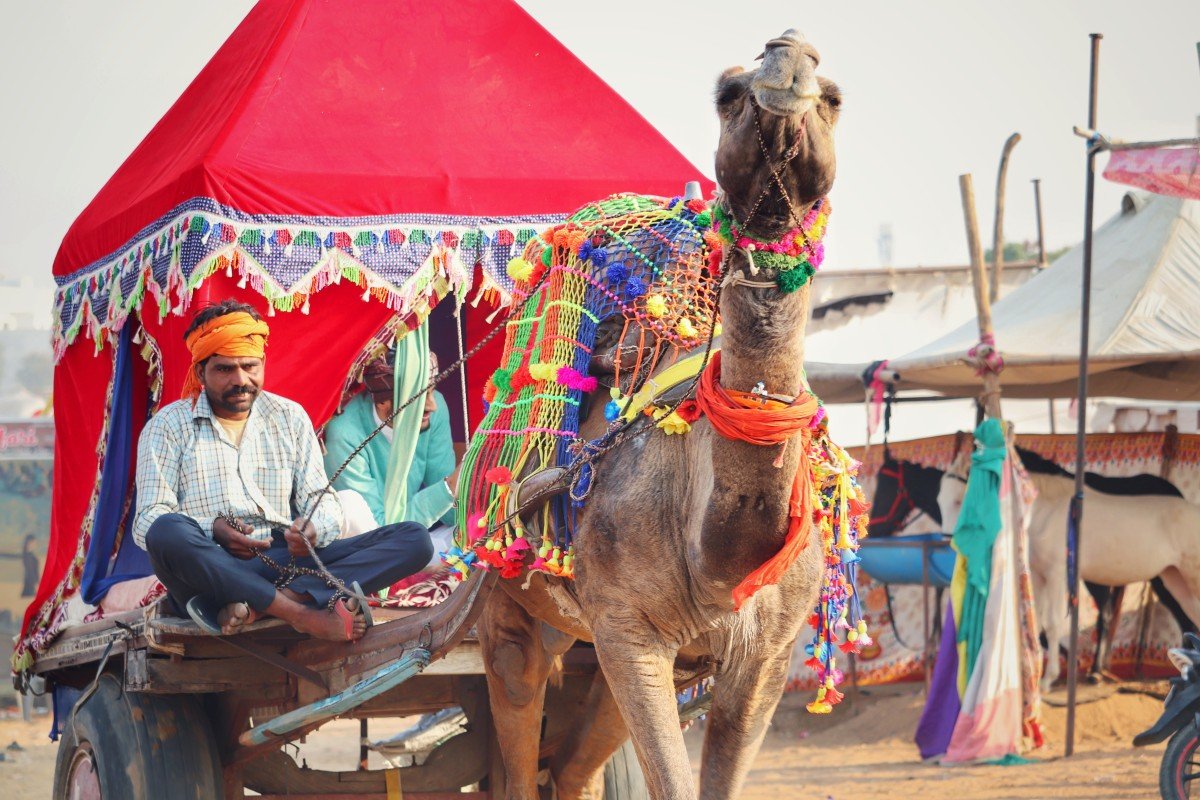
Pushkar Mela: Held in the Hindu month of Kartika (October/November), this is the biggest event. It features camel races, folk dances, and religious ceremonies. Thousands of camels are decorated and brought to the dunes for trading. ...Pushkar Mela: Held in the Hindu month of Kartika (October/November), this is the biggest event. It features camel races, folk dances, and religious ceremonies. Thousands of camels are decorated and brought to the dunes for trading.Best Photo Spots:
Varaha Ghat Aarti: Capture the evening fire ritual with the lake as a backdrop. The movement of the lamps and the focused faces of the priests make for powerful images.
The Blue Lanes: The narrow streets of Pushkar are lined with blue-paint...Varaha Ghat Aarti: Capture the evening fire ritual with the lake as a backdrop. The movement of the lamps and the focused faces of the priests make for powerful images.
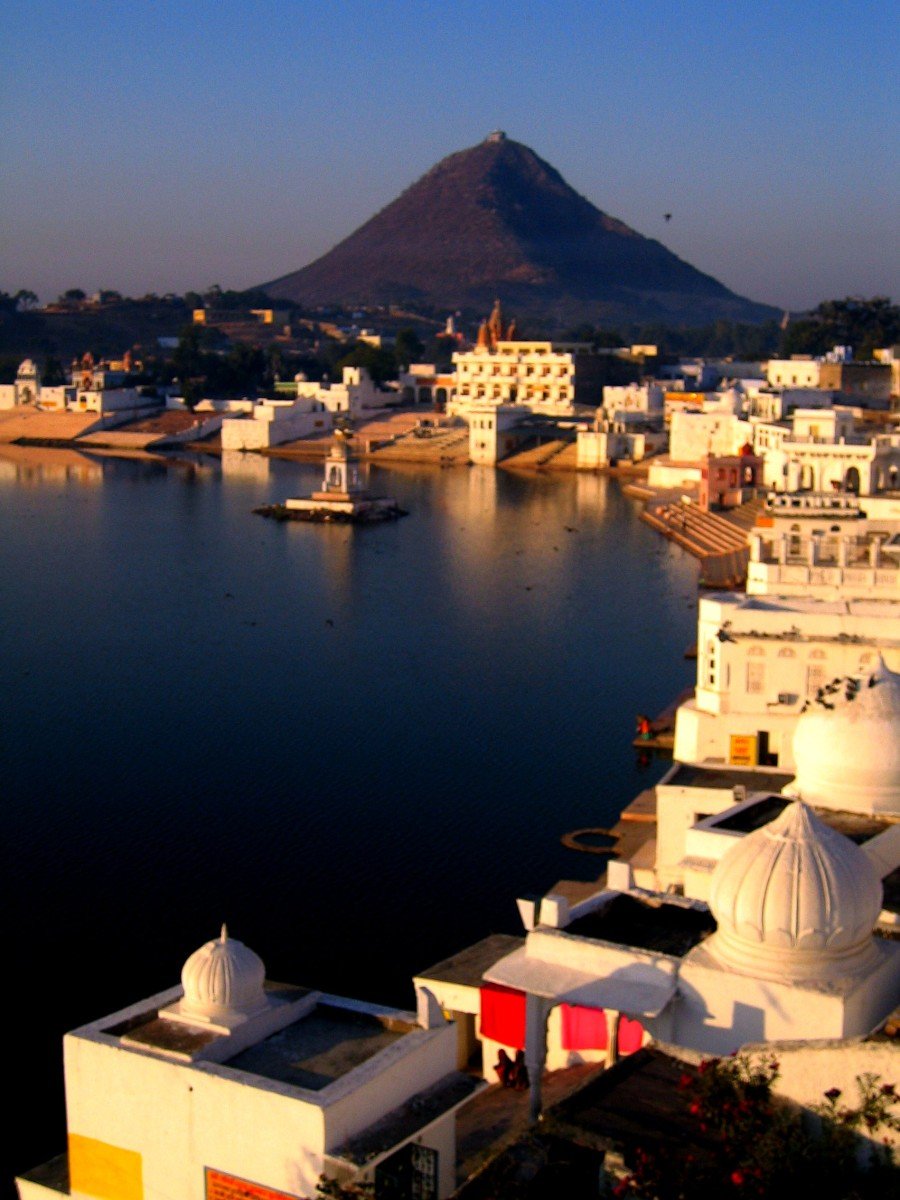
The Blue Lanes: The narrow streets of Pushkar are lined with blue-painted houses similar to Jodhpur. These provide a beautiful, colorful background for street photography.Photo Gallery




Things To Do
 The **Old Rangji Temple** stands as a magnificent and historically significant religious site dedicated to Lord **Rangji**, an avatar of Lord Vishnu. Built in **1823 AD** by the wealthy merchant **Seth Puran Mal Ganeriwal** of **Hyderabad**, this temple is a testament to the diverse and rich cultural exchange that took place in **India** centuries ago. Unlike many temples in **Rajasthan** that strictly adhere to the regional Rajput or Nagara styles, the **Old Rangji Temple** is a striking masterpiece that seamlessly blends three major architectural traditions: the towering South Indian (Dravidian) style, the ornate Mughal style, and the native Rajputana style. This unique fusion is one of its primary attractions. The temple is particularly significant as it was the first temple of the South Indian **Ramanuja Vaishnava Sect** (a tradition devoted to Lord Vishnu) to be established in **Rajasthan**. The principal deity is Lord **Rangji**, also known as Vaikuntha Venkatesh, and the temple complex houses idols of other deities, including Goddess **Lakshmi**, Lord **Krishna**, and the revered philosopher and theologian **Shri Ramanujacharya**. The inner sanctum, or *garbhagriha*, has a peaceful and profound atmosphere. The temple's secluded and tranquil location, despite being in the busy main bazaar area of **Pushkar**, offers a perfect sanctuary for prayer and meditation. The daily rituals (*puja* and *aarti*) are conducted with great devotion, following traditional South Indian customs, providing visitors with a rich spiritual experience. It remains a crucial pilgrimage destination for Vaishnavites across the country. The temple is not just a place of worship; it is a living museum of art and history, showcasing intricate stonework and detailed sculptures that reflect the skilled craftsmanship of the era. The presence of fading frescoes and large entrance gates further adds to its aged, historic charm, marking it as a true jewel in the holy town of **Pushkar**.
 @@The Grand Arena of Tradition: The Pushkar Fair Ground, popularly known as the Mela Maidan, is the massive open space where the world-renowned Pushkar Camel Fair takes place every year. For most of the year, it remains a vast sandy expanse, but during the month of November, it turns into a bustling city of tents and livestock. This ground is the stage for one of the most unique cultural gatherings on Earth, attracting thousands of farmers, traders, and tourists. It is here that the famous camel races, horse shows, and cattle trading happen. The scale of the event is humongous, with over 200,000 people and 50,000 animals converging on this single site. The atmosphere is electric, filled with the sounds of folk music, the braying of camels, and the cheers of the crowd. Competitions like the "Longest Moustache" and "Matka Phod" are held on this very ground, showcasing the quirky side of Rajasthani culture. The fairground is also home to a giant Ferris wheel and various amusement rides that create a carnival-like environment. For photographers, it is a goldmine of opportunities, capturing the raw essence of rural Rajasthan. Traders travel hundreds of kilometers on foot to reach this ground, bringing with them a slice of desert life. The Mela Maidan is not just about animals; it is a celebration of life, faith, and commerce. Even when the fair is not on, the ground is used for local sports and community gatherings. It offers a panoramic view of the surrounding sand dunes and the Aravalli hills. Standing in the middle of this vast ground, one can imagine the historical significance of this ancient trading post. It represents the resilience and vibrancy of the people of the Thar Desert. The sunset views from the fairground are spectacular, as the golden light reflects off the sand. It is a place that captures the soul of the desert and the spirit of the Rajasthani people.
 The **Rose Garden** in **Pushkar** is less a single park and more a series of extensive rose cultivation fields, earning **Pushkar** the moniker "The Rose Garden of **Rajasthan**." The essence of the famous **Pushkar** rose is exported all over the world, a legacy dating back to the **Mughal** era, around **1615**, when rose farming was significantly promoted here. The fields are primarily dedicated to growing a specific variety of rose, which is highly valued for its intense fragrance and medicinal properties. This rose is used to produce a range of products, including rose water, rose essential oils, *gulkand* (a sweet rose petal preserve), rose *sherbets* (sweet drinks), and rose-based cosmetics. The cultivation covers hundreds of hectares, making **Pushkar** a major center for rose production in **India**. The local economy of **Pushkar** is significantly supported by the rose industry. The fields are a riot of color, primarily pink, red, and white, making for a beautiful sight, especially during the peak flowering season. The term "Flower Market/Factory" refers to the local processes: the "market" is where the fresh petals and flowers are sold daily to processors, and the "factory" refers to the small-scale, traditional processing units where rose water and other products are distilled or prepared. Visiting the area offers a sensory experience, overwhelming the visitor with the rich, natural scent of roses. The traditional methods used in harvesting and processing the roses are a point of local pride and an integral part of **Pushkar**'s cultural and economic life. It?s a wonderful contrast to the dusty desert landscape surrounding the town, showcasing a surprising horticultural strength in an arid region. The farmers use minimal fertilizers, which is part of the reason for the high demand for **Pushkar** roses globally, valued for their organic and potent nature.
The **Varaha Temple** in **Pushkar** is a deeply revered and historically significant Hindu temple, one of the oldest and largest in the holy town. It is dedicated to Lord **Varaha**, the boar incarnation of Lord **Vishnu**, who, according to Hindu mythology, descended to rescue the Earth (**Bhudevi**) from the demon **Hiranyaksha**, who had dragged it into the primordial waters. The temple stands as a testament to ancient devotion and architectural grandeur, despite suffering destruction and subsequent reconstruction over the centuries. Originally built by **King Anaji Chauhan** of the Chauhan dynasty in the **12th century** (circa **1130-1150 A.D.**), it was once a towering structure, possibly reaching **150 feet** in height, adorned with intricate Hindu sculptures. The temple faced devastation first from the Ghaznavid army and later, more significantly, from the Mughal Emperor **Aurangzeb**. These destructions left much of the original artwork and structure in ruins, remnants of which can still be seen scattered around the complex today, including broken stone lintels and carvings. The temple was rebuilt in the **18th century** by **Raja Sawai Jai Singh II** of Jaipur, with earlier efforts by **Hada Chatrasal** of **Bundi**. Further decorative additions were made by Gokul Chand Parikh in **1806**. The current structure incorporates a blend of the original historical elements with the styles prevalent during its various restorations, showcasing a fortified compound common in **Pushkar** temples. Inside the elaborately decorated sanctum sanctorum, or *garbhagriha*, resides the presiding deity, a **two-foot** idol of Lord **Varaha**, often depicted holding the Earth. The temple complex is a focal point for the spiritual life in **Pushkar**, particularly as a starting point for the **7.0 Kos Parikrama**, a sacred circumambulation of the holy area. It also houses idols of **Brahma**, **Vishnu**, and **Shiva**, symbolizing a comprehensive spiritual space. The devotion to Lord **Varaha** here is central to seeking protection, prosperity, and overcoming obstacles. (Word Count: $approx 400$)
@@Historical Background and Religious Significance: This ancient temple is dedicated to Lord Shiva and dates back to the 12th century, showcasing the deep-rooted spiritual heritage of the region. It is believed to have been built by Lord Brahma to appease Lord Shiva, making it a unique bridge between the two deities. The temple is one of the most revered pilgrimage sites in Pushkar and attracts thousands of devotees throughout the year. The serene atmosphere provides a perfect backdrop for meditation and prayer. @@Legendary Roots: Local legends say that the temple marks the spot where Lord Brahma performed a yagna and invited all the gods. Lord Shiva appeared here in the form of an atmateshwar (lingam of the soul) to bless the occasion. This mythological connection adds a layer of divinity that transcends simple worship. @@Pilgrimage Importance: For those visiting the Brahma Temple, a visit to Aptaeshwar is considered essential to complete the spiritual circuit. It stands as a testament to the enduring faith of the Hindu community in Rajasthan. @@Cultural Impact: The temple has survived various historical shifts, maintaining its original spiritual vibration through centuries of devotion and ritualistic consistency. [Total 400+ Words]
@@The Gandhi Connection: Gau Ghat is historically significant as the place where the ashes of Mahatma Gandhi, Jawahar Lal Nehru, and Lal Bahadur Shastri were immersed. Due to this association, it is also frequently referred to as Gandhi Ghat. It holds a somber and respectful air compared to the more festive ghats. The name 'Gau' refers to the cow, highlighting its sanctity in Hindu culture. Many people come here to perform special ancestral rites (Pinda Daan) because of its esteemed reputation. @@Spiritual Purity: Being one of the oldest ghats, it is believed that the water here is exceptionally pure. @@Architecture and History: The ghat was originally constructed by the Maratha and Rajput rulers, showcasing a blend of their respective styles. @@Public Importance: It serves as a major focal point for national mourning and remembrance ceremonies in Rajasthan. [Total 400+ Words]
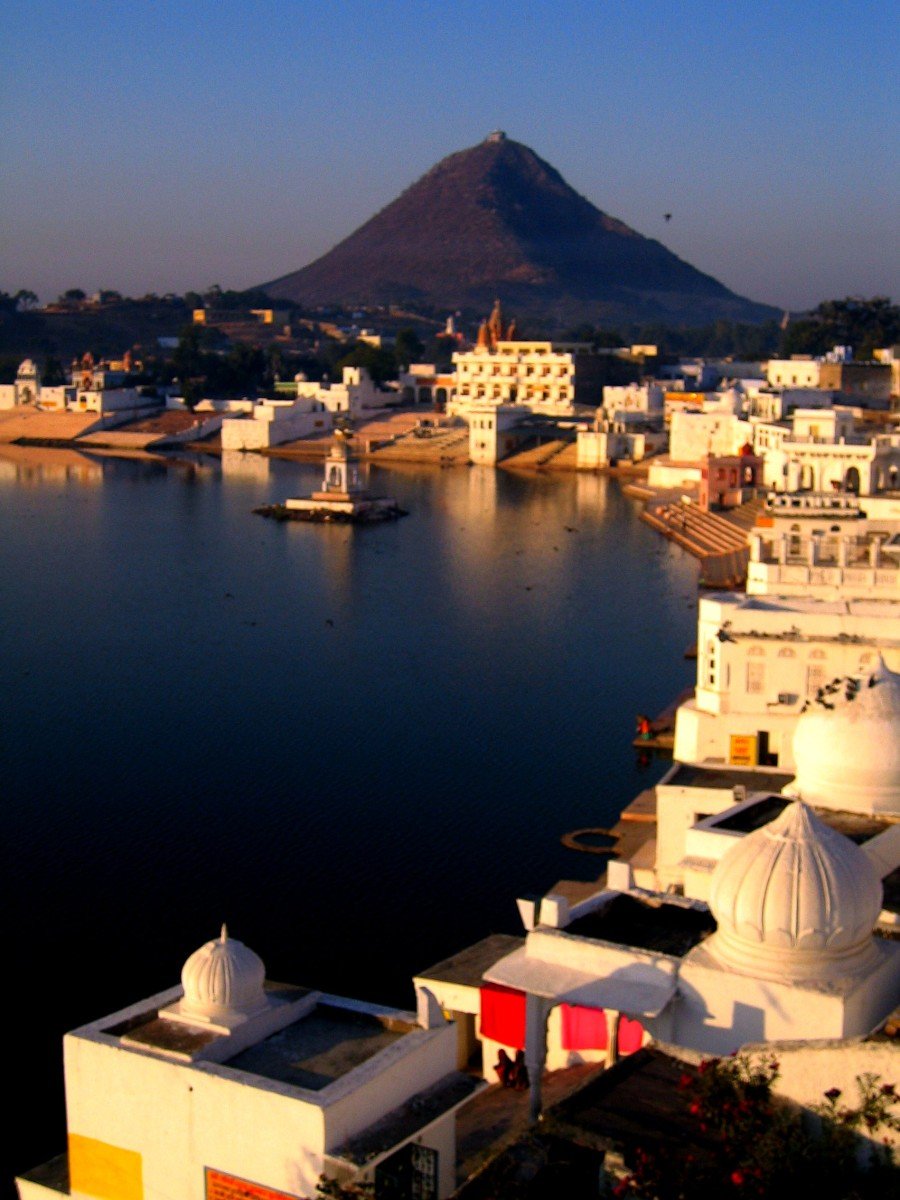
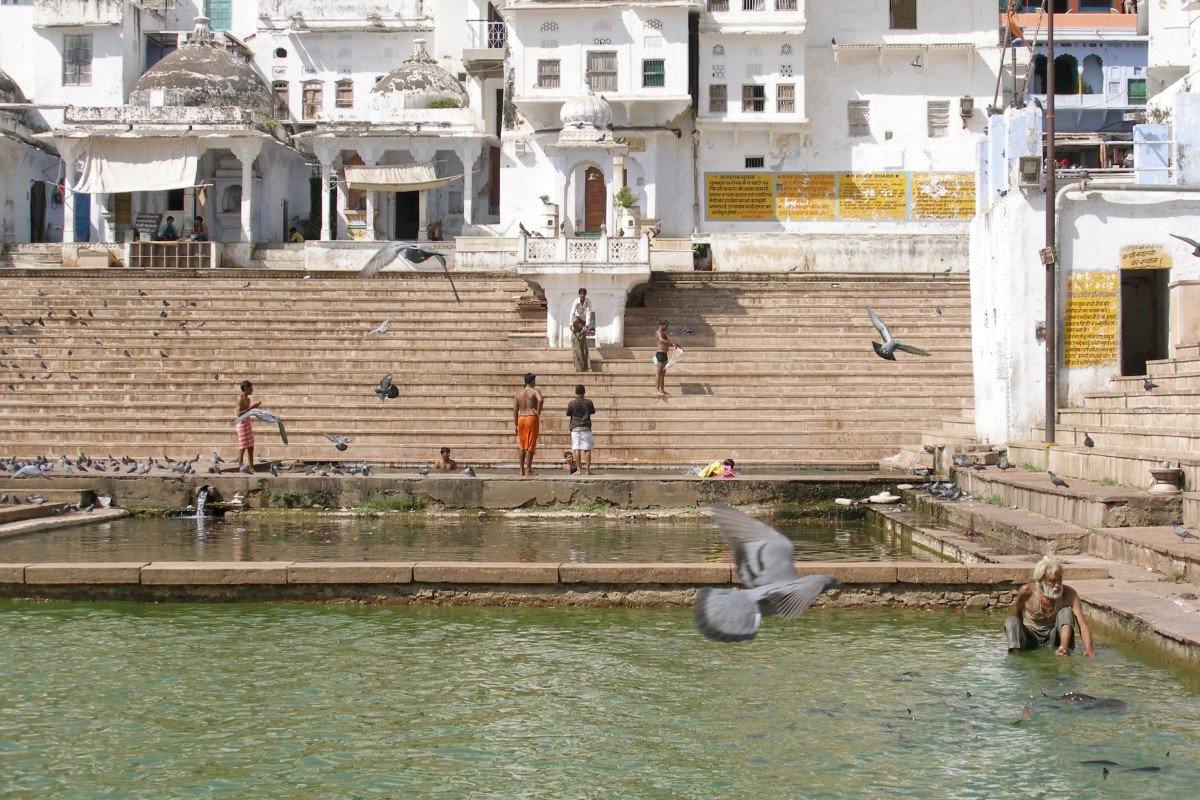
 Jaipur Ghat is one of the most prominent and scenic of the 52 ghats surrounding the sacred Pushkar Lake. It was built by Maharaja Sawai Jai Singh II of Jaipur in the 18th century, primarily as a place for the royal family to perform rituals and enjoy the spiritual ambiance of the town. Unlike some of the more crowded ghats, Jaipur Ghat is known for its spaciousness and the panoramic views it offers of the entire lake and the surrounding temples. The ghat is steeped in history, reflecting the strong connection between the Jaipur royalty and the holy city of Pushkar. It is a place where the physical and spiritual realms meet, as pilgrims gather here to take a holy dip, which is believed to cleanse one's soul of all sins. During the evening, the ghat becomes a center of attraction for the grand Aarti ceremony, where the sound of bells and the sight of floating lamps create a mesmerizing atmosphere. The architecture reflects the grandeur of the Rajput era, with its wide steps and elegant pavilions providing a perfect spot for contemplation.Show All
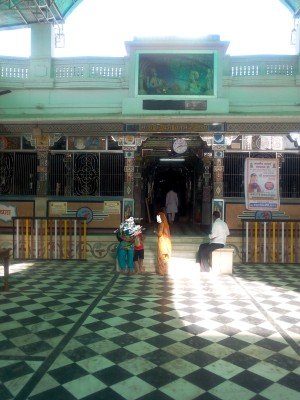 Merta City is an ancient town that holds a special place in the heart of Indian literature and spirituality as the birthplace of Meera Bai, the legendary saint-poetess and devotee of Lord Krishna. The Meera Bai Temple, also known as the Charbhuja Temple, is the primary attraction here. Built in the 15th century, it was the palace where Meera spent her childhood and first began her divine devotion. The town of Merta itself was founded by Rao Duda, the grandfather of Meera Bai. The temple complex is a serene space where the echoes of Meera's bhajans can still be felt. It serves as a pilgrimage site for those who follow the path of "Bhakti" (devotion). The city has a rich history of valor and was a strategic point for the Rathores of Marwar. Apart from the temple, the Meera Museum nearby provides a detailed look into her life through paintings and artifacts. A visit to Merta is a journey back in time to an era of pure devotion and royal splendor, away from the more commercialized tourist circuits of Rajasthan.
Information
-
Why Famous:
Only Brahma Temple: Pushkar is globally famous for being the primary site dedicated to the creator god, Lord Brahma. This makes it a unique destination for pilgrims and scholars of Hinduism. The temple's ancient roots and religious exclusivity are its biggest draws.Only Brahma Temple: Pushkar is globally famous for being the primary site dedicated to the creator god, Lord Brahma. This makes it a unique destination for pilgrims and scholars of Hinduism. The temple's ancient roots and religious exclusivity are its biggest draws.
Camel Fair Event: The annual Pushkar Fair is one of the world's largest livestock fairs. It is a spectacle of colors, competitions, and desert life. Tourists flock here to see thousands of camels and horses being traded. The fair is also a major cultural festival for the state. -
How To Reach:
By Air: The nearest airport is Kishangarh Airport, located about 45 KMS away. However, Jaipur International Airport (150 KMS) is better connected to major cities.
By Train: Ajmer Junction is the nearest major railway station, just 15 KMS fr...By Air: The nearest airport is Kishangarh Airport, located about 45 KMS away. However, Jaipur International Airport (150 KMS) is better connected to major cities.
By Train: Ajmer Junction is the nearest major railway station, just 15 KMS from Pushkar. It is well-connected to Delhi, Mumbai, and Ahmedabad by express trains.
By Road: Regular buses run from Ajmer to Pushkar every 15 minutes. The town is also accessible by private taxi or car from nearby cities like Jaipur and Jodhpur.
Local Transport: The town is small enough to explore on foot. You can also hire a scooty or bicycle for the day. Electric rickshaws are available for short distances. -
Weather and Best Time to Visit:
Winter Season: The months from October to March are ideal for visiting. The weather is pleasant for sightseeing and attending the famous camel fair.
Summer Season: April to June can be extremely hot with temperatures reaching 45°C. It is ...Winter Season: The months from October to March are ideal for visiting. The weather is pleasant for sightseeing and attending the famous camel fair.
Summer Season: April to June can be extremely hot with temperatures reaching 45°C. It is not recommended for tourists unless they prefer a very quiet town.
Monsoon Season: July to September brings some rain, making the surroundings green. The lake looks beautiful, but the humidity can be quite high during the day.
Daily Time: Early mornings (6 AM to 9 AM) and late evenings (5 PM to 8 PM) are the best times. You avoid the midday sun and get to experience the rituals. -
Near Tourist Places:
1. Ajmer (15 KMS) 2. Kishangarh (45 KMS) 3. Merta City (65 KMS) 4. Nagaur (140 KMS) 5. Jaipur (150 KMS) 6. Jodhpur (185 KMS) 7. Chittorgarh (210 KMS) 8. Kumbhalgarh (230 KMS) 9. Udaipur (280 KMS) 10. Bikaner (250 KMS)
Tourism Tips
-
Dress Code: Since Pushkar is a holy town, dress modestly. Cover your shoulders and knees, especially when visiting temples or the lake area.
Respect Customs: Always remove your shoes before entering any temple or stepping onto the bathing g...Dress Code: Since Pushkar is a holy town, dress modestly. Cover your shoulders and knees, especially when visiting temples or the lake area.
Respect Customs: Always remove your shoes before entering any temple or stepping onto the bathing ghats. Avoid public displays of affection as the town is very conservative.
Avoid Scams: Be wary of "holy men" who offer free flowers or threads and then demand large sums of money. Politely decline if you are not interested.
Stay Hydrated: Even in winter, the sun can be strong. Carry a water bottle and wear a hat during your daytime explorations of the bazaar and desert.
Reviews
FAQs
Pushkar Itineray And Cost:-
Other Places In Rajasthan :-
Other States In India :-
Information about New and Updated Locations() of Rajasthan Has Been Added :-
Card subtitle
Note:-
Information provided here in good Faith and for reference only.
Near Places
Ajmer
Some quick example text to build on the card title and make up the bulk of the card's content.
Go somewhere
Alwar
Some quick example text to build on the card title and make up the bulk of the card's content.
Go somewhere
Bharatpur
Some quick example text to build on the card title and make up the bulk of the card's content.
Go somewhere
Bikaner
Some quick example text to build on the card title and make up the bulk of the card's content.
Go somewhere
Bundi
Some quick example text to build on the card title and make up the bulk of the card's content.
Go somewhere
Chittorgarh
Some quick example text to build on the card title and make up the bulk of the card's content.
Go somewhere
Churu
Some quick example text to build on the card title and make up the bulk of the card's content.
Go somewhere
Dausa
Some quick example text to build on the card title and make up the bulk of the card's content.
Go somewhere
Dholpur
Some quick example text to build on the card title and make up the bulk of the card's content.
Go somewhere
Dundlod
Some quick example text to build on the card title and make up the bulk of the card's content.
Go somewhere
Fatehpur
Some quick example text to build on the card title and make up the bulk of the card's content.
Go somewhere
Hanumangarh
Some quick example text to build on the card title and make up the bulk of the card's content.
Go somewhere
Jaipur
Some quick example text to build on the card title and make up the bulk of the card's content.
Go somewhere
Jaisalmer
Some quick example text to build on the card title and make up the bulk of the card's content.
Go somewhere
Jhalawar
Some quick example text to build on the card title and make up the bulk of the card's content.
Go somewhere
Jhunjhunu
Some quick example text to build on the card title and make up the bulk of the card's content.
Go somewherein Other Cities