


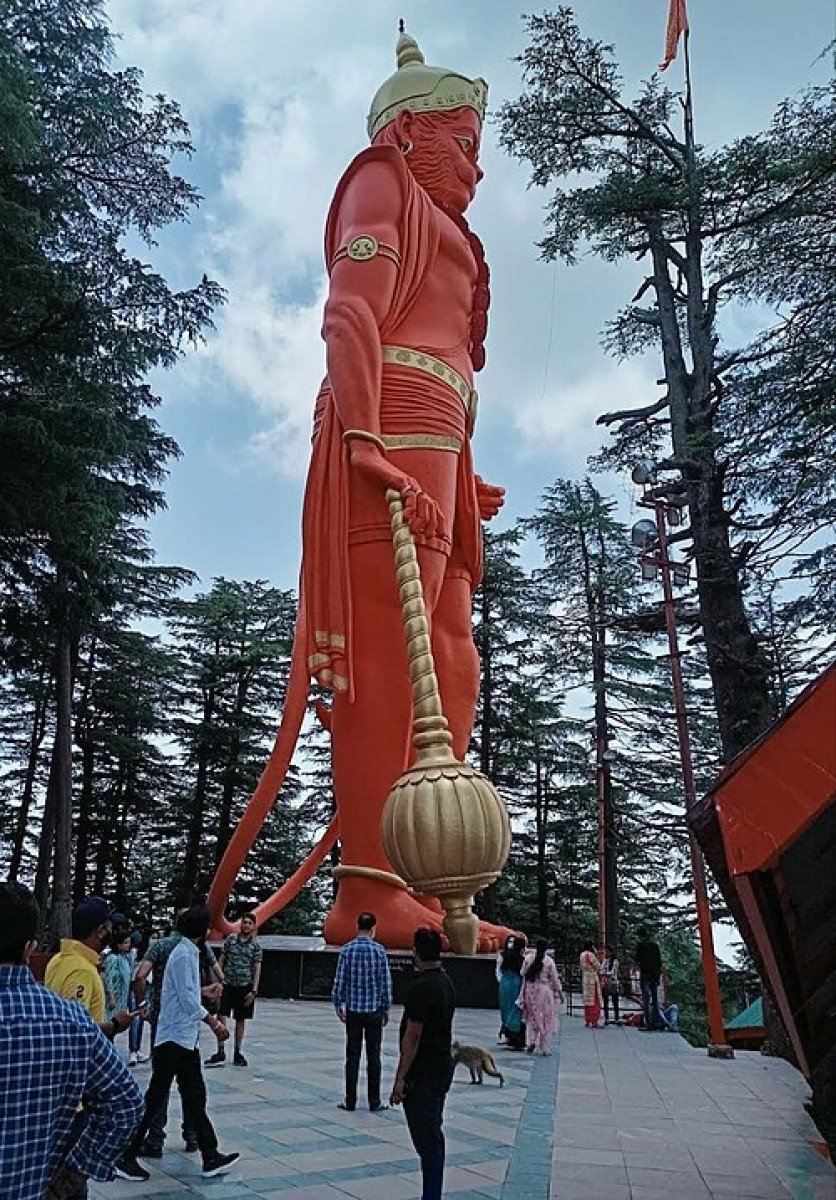
Shimla
General information
-
Ideal Duration:
2 to 3 DaysPlace Type:
Hill Station / HeritageSpecial Events:
Summer Festival: Held in June, this five-day festival features folk dances, musical performances, and exhibitions showcasing the talent of local artists from across the state. The festival turns The Ridge into a vibrant stage where both local and national celebrities perfor...Summer Festival: Held in June, this five-day festival features folk dances, musical performances, and exhibitions showcasing the talent of local artists from across the state. The festival turns The Ridge into a vibrant stage where both local and national celebrities perform under the open sky.
Winter Carnival: Celebrated in December, this event marks the onset of the snow season with cultural parades and sports activities like ice skating. It brings a festive cheer to the chilly winters of the city, culminating in a grand celebration on New Year's Eve.Best Photo Spots:
Scandal Point: This junction offers a perfect backdrop of the Christ Church and the distant snow-capped mountains during the golden hour of sunset. It is the most photographed spot in the city due to its open space and historical significance.
...Scandal Point: This junction offers a perfect backdrop of the Christ Church and the distant snow-capped mountains during the golden hour of sunset. It is the most photographed spot in the city due to its open space and historical significance.
The Ridge: The wide open space with the Neo-Gothic church and the statues of prominent leaders provides a classic Himalayan landscape photo. Early mornings are best for capturing the church in the soft light of the rising sun without the crowds.
Viceregal Lodge Gardens: The beautifully landscaped lawns and the stone facade of the heritage building offer a royal setting for portrait photography. The colorful flower beds and the vintage architecture create a timeless appeal for every visitor's camera lens.Photo Gallery


Things To Do
 @@Historical Grandeur and Significance: The Viceregal Lodge, now known as Rashtrapati Niwas (President's Residence) and home to the Indian Institute of Advanced Study (IIAS), is one of the most historically and architecturally significant buildings in India: It was the summer residence of the British Viceroy of India from 1888 until the country's independence: Built during the tenure of Lord Dufferin and completed in 1888, it was here that crucial decisions regarding India's future, including the planning for its partition and independence, were debated and finalized, notably during the Simla Conference of 1945: @@The IIAS and Current Use: After independence, it served as the summer retreat for the President of India: In 1965, it was handed over to the Ministry of Education and transformed into the Indian Institute of Advanced Study, a center for higher learning and research: The main building now houses the massive IIAS library, containing over 150,000 books and countless bound volumes in multiple languages: @@Lush Surroundings: The lodge is situated on Observatory Hill, the second highest point in Shimla, and is surrounded by an extensive, beautifully maintained Botanical Garden: The estate covers an immense area of 110 acres of sprawling lawns, exotic plants, and dense forests, offering a quiet, serene, and historically rich visiting experience:
 The Mall Road is the heart and soul of Shimla, serving as the primary social, commercial, and cultural hub of the city. Originally developed by the British, this pedestrian-only promenade is lined with colonial-era buildings, quaint cafes, and bustling shops. It is a place where history meets modern life, as locals and tourists alike gather to walk, talk, and enjoy the mountain air. No vehicles are allowed on the Mall Road, making it a unique and peaceful urban space where the sound of footsteps replaces the honking of horns. The road stretches from Scandal Point to the Ridge, offering stunning views of the valley below and the snow-capped mountains in the distance. Along the way, you can find heritage sites like the Gaiety Theatre, the Town Hall, and the Post Office, all of which retain their old-world charm. The Mall Road is also a shopper's paradise, offering everything from high-end brands to local Himachali handicrafts and woolens. In the evenings, the street lights up, creating a romantic and festive atmosphere that is quintessential to the Shimla experience. It is more than just a street; it is a living museum where every corner has a story to tell, from the colonial days to the present. Whether you are looking for a gourmet meal or a simple plate of steaming momos, the Mall Road has something for every palate and budget.
 @@Historical Significance: Annandale is a beautiful, flat, sprawling valley ground that was historically a playground for the British officers in Shimla during the colonial era, hosting popular events like horse racing, polo, and fancy fairs, making it a crucial social hub. The ground is named after Anna, the beloved of Charles Pratt Kennedy, one of the early British political agents. The expansive meadow is encircled by dense deodar and oak forests, offering a serene and picturesque environment that contrasts with the steep hills of the rest of Shimla. It has a military past and currently houses the Army Heritage Museum, a reminder of its strategic importance and historical association with the Indian military. The area serves a vital modern purpose beyond tourism, as it includes a fully operational helipad used for VIP travel and by the military, especially during times of natural disaster or emergency. The transition from a colonial leisure spot to a military and heritage center showcases the evolution of Shimla's history. The lush green expanse provides a significant lung space for the city, attracting nature lovers, picnickers, and those seeking a quiet escape from the hustle and bustle of The Mall Road. The cool, crisp air and panoramic views make it a favorite destination, representing a unique blend of natural beauty and historical relevance within the capital of Himachal Pradesh. The presence of a small golf course further enhances its reputation as a place for recreational activities and leisurely pursuits. This transition and continued utility make the ground a compelling part of the Shimla experience, a must-visit for its unique history and tranquil setting in the hills.:
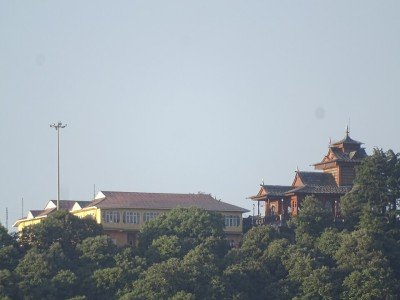 @@Mythological Origin and Deity: The Tara Devi Temple is a profoundly sacred site dedicated to Goddess Tara (a form of the Goddess Durga and the Sanskrit word for 'Star'), whose idol is believed to have been brought from West Bengal approximately 250 years ago: According to legend, a King from the Sen dynasty had a gold locket containing the deity's idol: He dreamt that the Goddess asked him to unveil her to the people, and he subsequently donated land to establish the original temple: The original idol was later replaced with a magnificent idol made of Ashtadhatu (eight metals) and installed in a grand ceremony in 1825: @@Location and Aura: The temple is perched at a stunning altitude of 1,851 meters (approx. 6,070 feet) above sea level, commanding an unmatched, panoramic view of the entire city of Shimla, the surrounding majestic hills, and the thick, dense deodar and pine forests: This elevated position and the surrounding tranquility make it a perfect spiritual retreat for meditation and reflection, away from the city's noise: @@Recent Restoration: The temple complex underwent a significant, costly reconstruction project over 3.5 years to replace the old wooden structure, which had been affected by time, with the aim of restoring its old charm and glory using modern, durable materials while maintaining the original Pahari architectural style: This ensures the preservation of this important religious and cultural landmark:
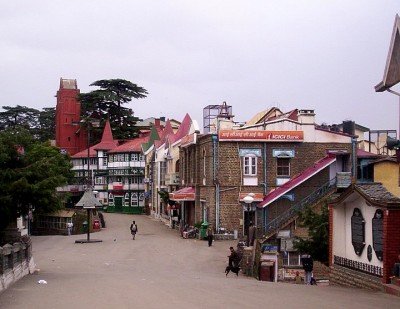 @@The Intrigued Name and Legend: Scandal Point is one of the most famous and talked-about spots in Shimla, deriving its name from a sensational alleged event in 1892: The popular legend recounts that the Maharaja of Patiala, Bhupinder Singh, supposedly eloped from this very spot with the daughter of the then British Viceroy, Lord Kitchener or another high official: The ensuing diplomatic furore and the Maharaja's subsequent banishment from Shimla by the British caused a massive 'scandal' that gave the junction its permanent and intriguing name: The Maharaja later established his own summer capital in Chail, just 45 KMS away, as a counter-move: @@Current Prominence: Today, the point is an open, important junction that links the two major arteries of Shimla's social life, and it is a key gathering spot for locals and tourists alike: Its most prominent feature is the bronze statue of the revered Indian freedom fighter Lala Lajpat Rai: The historic General Post Office (GPO), a marvelous structure made of stone dating back to the colonial era, stands right next to the point: @@A Viewpoint and Photography Spot: The point is a mountain lover's haven, offering a picturesque and unobstructed view of the surrounding gigantic mountains, dense fir and spruce forests, and the valley below, making it a prime location for photography and relaxing on one of the many public benches: It perfectly captures the charming, laid-back atmosphere of a classic hill station:
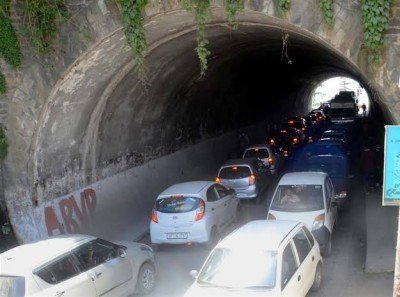 @@Historical Context and Purpose: The Victory Tunnel is a significant, yet often underappreciated, historical landmark in Shimla, constructed during the British colonial period and completed in 1940: It was built primarily to honor the bravery and service of the soldiers who fought in World War II, acting as a grand ceremonial entrance and a vital piece of infrastructure for the city: Its completion was a testament to the engineering prowess of the British era in the rugged Himalayan terrain: @@Engineering and Functionality: The tunnel is a functional part of the main Circular Road that bypasses the steep slopes of the upper city, providing a crucial link for vehicular and pedestrian traffic between the railway station, the bus stand, and the lower Mall Road area: It is one of the more than 100 tunnels built on the Kalka-Shimla railway line (which is nearby), but this one is uniquely for the road network: @@A Modern Landmark: Today, the tunnel remains a busy artery of Shimla, serving as a historic gateway for all visitors arriving by train and a daily route for locals: It provides a cool, dramatic experience for those walking through it, connecting the bustling lower market area (Bawa Market) with the road leading up to the city center and the railway station: It stands as a powerful, enduring symbol of the city's colonial engineering legacy and its historical connection to global events:
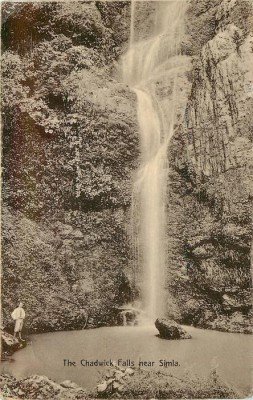 @@Natural Geography and Legend: Chadwick Falls is a majestic, multi-tiered waterfall nestled deep within the thick, emerald greenery of the Glen Forest, near Summer Hill. The water cascades down from an altitude of approximately 1,586 meters (5,203 feet) above sea level. The waterfall gets its name from an Anglicized corruption of the Hindi phrase "Chidku Jhaar," where "Chidku" means sparrow and "Jhaar" means a waterfall, a name rooted in a local legend suggesting only sparrows could climb to its summit, not humans. The sight of the water plunging from a height of about 86 to 100 meters into a gorge surrounded by gigantic deodar and pine trees is truly breathtaking. The journey to the falls is an experience in itself, requiring a trek through a dense forest path, which adds an element of adventure to the visit. This natural wonder is a primary draw for nature enthusiasts, trekkers, and those looking to witness the raw, unspoiled beauty of the Himalayan landscape. It is most spectacular during the monsoon season, when the heavy rainfall dramatically increases the volume and force of the cascade. The sheer, vibrant green of the surrounding vegetation during this period makes the white water stand out vividly. The tranquility and cool mist generated by the falling water offer a refreshing escape from the city life of Shimla, marking it as one of the region's most cherished natural landmarks. It's a place where the sound of the waterfall is the only constant, providing a meditative and rejuvenating environment for all visitors.:Show All
 Hawa Ghar literally translates to 'Wind House' and is essentially a small, elevated, covered viewing pavilion or balcony located near the popular Christ Church on The Ridge and at the entrance to Lakkar Bazar. It's strategically placed at an elevated point, offering one of the most splendid and encompassing views of the surrounding mountains, the valley, the bustling Mall Road, and the iconic heritage buildings like Christ Church. Although it is a very small structure, its primary appeal lies in its location, providing visitors with a perfect spot to rest, breathe in the fresh mountain air, and capture stunning panoramic photographs. It's often fondly called the 'Mall View Balcony' by locals. Due to its central location, it acts as a confluence point for tourists and local vendors, especially those operating in the adjacent Lakkar Bazar.
Information
-
Why Famous:
Colonial Heritage: Shimla is globally famous for its well-preserved British-era buildings that transport visitors back to the 19th century. Sites like the Viceregal Lodge and Town Hall are architectural masterpieces that highlight the city's political importance in history....Colonial Heritage: Shimla is globally famous for its well-preserved British-era buildings that transport visitors back to the 19th century. Sites like the Viceregal Lodge and Town Hall are architectural masterpieces that highlight the city's political importance in history.
Toy Train Ride: The Kalka-Shimla Railway is a UNESCO World Heritage site known for its scenic route through 103 tunnels and over 800 bridges. This narrow-gauge journey offers panoramic views of the Shivalik hills and is considered one of the most beautiful train rides in the world. -
How To Reach:
By Air: The nearest airport is Jubarhatti Airport, located about 22 KMS from the city, which handles limited flights from Delhi. Travelers can hire a prepaid taxi from the airport to reach the main city center in about an hour through winding mountain roads.By Air: The nearest airport is Jubarhatti Airport, located about 22 KMS from the city, which handles limited flights from Delhi. Travelers can hire a prepaid taxi from the airport to reach the main city center in about an hour through winding mountain roads.
By Train: The world-famous Kalka-Shimla Toy Train connects Kalka to Shimla in a journey that takes about 5 to 6 hours. For those coming from long distances, Chandigarh and Kalka are the nearest broad-gauge railway stations with regular trains from Delhi.
By Road: Shimla is well-connected by NH5 to major cities like Chandigarh (113 KMS) and Delhi (342 KMS). State-run HRTC buses and private Volvo buses operate daily, offering comfortable overnight journeys to the hill station from various northern states.
By Local Transport: Within the city, walking is the best way to explore the pedestrian-only zones of Mall Road and The Ridge. For other areas, local HRTC buses, taxis, and the Mall Road Lift are available to help navigate the steep terrain comfortably. -
Weather and Best Time to Visit:
Seasons: Summer (March to June) is the peak tourist season when the weather is pleasant and ideal for sightseeing and trekking. Winter (December to February) is perfect for snow lovers, as the city often gets covered in a thick blanket of white snow.
Read MoreSeasons: Summer (March to June) is the peak tourist season when the weather is pleasant and ideal for sightseeing and trekking. Winter (December to February) is perfect for snow lovers, as the city often gets covered in a thick blanket of white snow.
Parts of Day: Mornings are the best time for trekking to Jakhoo Hill or visiting the Water Catchment Sanctuary as the weather is cool. Evenings are meant for relaxing at the cafes on Mall Road or watching the sunset from the various viewpoints around the city.Near Tourist Places:
1. Kufri (15 KMS), 2. Chail (45 KMS), 3. Narkanda (60 KMS), 4. Mashobra (10 KMS), 5. Tattapani (52 KMS), 6. Fagu (18 KMS), 7. Solan (46 KMS), 8. Kandaghat (30 KMS), 9. Rohru (115 KMS), 10. Sarahan (160 KMS).Tourism Tips
-
Health & Safety: Always carry a basic medical kit and be aware that the steep climb can sometimes cause breathlessness for those not used to the altitude. Monkeys at Jakhoo Temple can be aggressive, so avoid carrying plastic bags or food items openly in your hands while wal...Health & Safety: Always carry a basic medical kit and be aware that the steep climb can sometimes cause breathlessness for those not used to the altitude. Monkeys at Jakhoo Temple can be aggressive, so avoid carrying plastic bags or food items openly in your hands while walking.
Packing Essentials: Even in summers, carry light woolens as the temperature can drop significantly after sunset or during a sudden rain shower. For winter visits, heavy jackets, thermal wear, gloves, and waterproof boots are essential to stay warm and dry during snowfall.
Accommodation: Shimla offers a wide range of stay options from luxury heritage hotels like The Oberoi Cecil to budget guesthouses in the Lower Bazaar. It is advisable to book in advance during peak months like May, June, and December to get the best rates.
Local Conduct: Respect the local culture by dressing modestly when visiting temples and avoid littering in the pristine mountain environment. Shimla has a strict no-smoking and no-plastic policy on Mall Road, and violators are fined heavily to maintain the city's cleanliness.
Reviews
FAQs
Shimla Itineray And Cost:-
Other Places In Himachal Pradesh :-
Other States In India :-
Information about New and Updated Locations() of Himachal Pradesh Has Been Added :-
Card subtitle
Note:-
Information provided here in good Faith and for reference only.
Near Places

Anandpur Sahib
Some quick example text to build on the card title and make up the bulk of the card's content.
Go somewhere
Bhuntar
Some quick example text to build on the card title and make up the bulk of the card's content.
Go somewhere
Bir Billing
Some quick example text to build on the card title and make up the bulk of the card's content.
Go somewhere
Chail
Some quick example text to build on the card title and make up the bulk of the card's content.
Go somewhere
Chamba
Some quick example text to build on the card title and make up the bulk of the card's content.
Go somewhere
Dalhousie
Some quick example text to build on the card title and make up the bulk of the card's content.
Go somewhere
Dharamshala
Some quick example text to build on the card title and make up the bulk of the card's content.
Go somewhere
Fagu
Some quick example text to build on the card title and make up the bulk of the card's content.
Go somewhere
Hamirpur
Some quick example text to build on the card title and make up the bulk of the card's content.
Go somewhere
Joginder Nagar
Some quick example text to build on the card title and make up the bulk of the card's content.
Go somewhere
Kangra
Some quick example text to build on the card title and make up the bulk of the card's content.
Go somewhere
Kasauli
Some quick example text to build on the card title and make up the bulk of the card's content.
Go somewhere
Kasol
Some quick example text to build on the card title and make up the bulk of the card's content.
Go somewhere
Khajjiar
Some quick example text to build on the card title and make up the bulk of the card's content.
Go somewhere
Kufri
Some quick example text to build on the card title and make up the bulk of the card's content.
Go somewhere
Kullu
Some quick example text to build on the card title and make up the bulk of the card's content.
Go somewherein Other Cities