


Caravanserai
General information
-
Ideal Duration:
40 MinutesPlace Type:
Inn, Public BuildingEntry Fees:
No Separate Fee: There is no separate entry fee for the Caravanserai; access is included in the main ticket for the Fatehpur Sikri complex, which is required for entry into the monument zone.
Main Monument Ticket Cost: The standard entry fe...No Separate Fee: There is no separate entry fee for the Caravanserai; access is included in the main ticket for the Fatehpur Sikri complex, which is required for entry into the monument zone.
Main Monument Ticket Cost: The standard entry fee for the fort complex is Rs.50 for Indian citizens and citizens of SAARC and BIMSTEC countries, and Rs.610 for all other Foreign Nationals. This single ticket covers all the structures within the core historical zone, including this one.
Ticket Requirement: The ticket must be purchased at the main ticketing counter near the parking lot or online. Access is controlled by security at the entrance to the fort complex, ensuring all visitors have paid the mandatory conservation fee.
Note on Distance: Although included in the ticket, the Caravanserai is one of the more distant stops, requiring a longer walk or a slight detour from the central palace complex, so factor in travel time to this site.Timing:
Regular Timings (Sunrise to Sunset): The monument is open during the general operating hours of the Fatehpur Sikri complex, typically from 6:00 AM to 6:00 PM daily, corresponding to sunrise and sunset.
Ideal Visit Time: The best time is the ...Regular Timings (Sunrise to Sunset): The monument is open during the general operating hours of the Fatehpur Sikri complex, typically from 6:00 AM to 6:00 PM daily, corresponding to sunrise and sunset.
Ideal Visit Time: The best time is the Late Afternoon (around 4:00 PM to 6:00 PM). The lower sun angle provides beautiful, warm light across the vast, open courtyard and casts deep shadows from the chambers, giving a dramatic feel to the ruins.
Best Day: Visit on a weekday morning to ensure the most solitude, allowing one to appreciate the scale and silence of the ruins without the distraction of large tourist groups, which tend to arrive mid-day.
Avoid Mid-day: The central courtyard is unshaded and becomes intensely hot during the mid-day sun (11:00 AM to 3:00 PM) during non-winter months, making exploration uncomfortable.Special Events:
The Caravanserai, as a functional ruin, does not host major events but is used for heritage activities.
ASI Documentation and Mapping: It is a frequent location for academic and ASI (Archaeological Survey of India) teams conducting mapping, surveying, and documentat...The Caravanserai, as a functional ruin, does not host major events but is used for heritage activities.
ASI Documentation and Mapping: It is a frequent location for academic and ASI (Archaeological Survey of India) teams conducting mapping, surveying, and documentation projects, especially for those studying Mughal non-palatial architecture and public works.
Venue for Conservation Training: Due to its semi-ruined state and structural simplicity, it is sometimes used as an open-air venue for practical training sessions for conservation architects and students on the techniques of restoring large stone masonry structures.
Local Cultural Gatherings: On rare occasions, the local community, with official permission, may use the large, open courtyard for non-religious, small-scale cultural performances or melas (fairs) that revive the site's historical function as a public meeting place.Best Photo Spots:
The Repeating Archways: A classic photo spot is a shot from the center of the courtyard, capturing the rhythmic, repeating pattern of the ruined arches of the surrounding chambers, emphasizing the massive scale of the accommodation.
The Grand Ga...The Repeating Archways: A classic photo spot is a shot from the center of the courtyard, capturing the rhythmic, repeating pattern of the ruined arches of the surrounding chambers, emphasizing the massive scale of the accommodation.
The Grand Gateway Profile: Take a photo of the main entrance gateway from the outside, focusing on the simple, formal red sandstone arch and the faint remnants of the marble inlay, best taken with a telephoto lens to compress the perspective.
Contrasting Textures: Focus on the contrast between the rough, weathered texture of the red sandstone walls and the remnants of the smoother white marble on the spandrels, ideal for black and white or sepia-toned photography.
Hiran Minar Backdrop: Frame the distant, tapering shape of the Hiran Minar (Deer Tower) through one of the Caravanserai's ruined archways, linking the two structures visually in a single composition that speaks of the city's outer infrastructure.
The Empty Court: A minimalist photo of the vast, empty central quadrangle, with only the lines of the ruins defining the space, creates a powerful image of silence and the city's abandonment, best taken on a quiet weekday morning.Photo Gallery

Things To Do
-
Visualize the Commercial Hub: Stand in the vast central courtyard and imagine the scene in the 16th century: camels and horses resting, merchants haggling over goods, and dignitaries socializing, using the surrounding ruined chambers to frame the mental picture of a bygone, vibrant marketplace.
Study the Standardized Plan: Compare the layout of this Caravanserai with other Mughal sarais across India. Note the classic four-sided, inward-facing design, which was an efficient, standardized format for traveler accommodation, an important architectural study.
Photography of Ruined Grandeur: Use the repetitive arches of the surrounding chambers and the vast, empty courtyard to capture the sense of scale and ruined grandeur, focusing on the texture of the weathered red sandstone and the hard lines of t...Visualize the Commercial Hub: Stand in the vast central courtyard and imagine the scene in the 16th century: camels and horses resting, merchants haggling over goods, and dignitaries socializing, using the surrounding ruined chambers to frame the mental picture of a bygone, vibrant marketplace.
Study the Standardized Plan: Compare the layout of this Caravanserai with other Mughal sarais across India. Note the classic four-sided, inward-facing design, which was an efficient, standardized format for traveler accommodation, an important architectural study.
Photography of Ruined Grandeur: Use the repetitive arches of the surrounding chambers and the vast, empty courtyard to capture the sense of scale and ruined grandeur, focusing on the texture of the weathered red sandstone and the hard lines of the foundations.
Walk the Perimeter: Carefully walk the entire perimeter of the courtyard, noting the entrances to the individual chambers and trying to determine which were for people, which for goods, and which for animals, engaging with the building's functional purpose.
Observe the Terracing: From the outer edge of the complex, try to observe how the architects integrated the construction with the natural slope of the hill, looking for the visible changes in foundation levels that represent the terraced engineering solution.
Combine with Hiran Minar Visit: Since the Caravanserai is adjacent to the Hathi Pol and near the Hiran Minar, visit all three as a logistical and public works grouping, understanding how they supported the movement of people, goods, and animals into the city.
Hunt for Water Features: Search for the remnants of the water tank and the connection point to the nearby Baoli on the southeast side, tracing the lines of the original water management system that was essential for the travelers' survival.
Information
-
Why Famous:
Hub of Mughal Trade: It is famous as a key remnant of Akbar's urban planning, highlighting the commercial and logistical importance of Fatehpur Sikri. It was the city's grand hotel and business exchange, showcasing the extent of the empire's trade routes.
Read MoreHub of Mughal Trade: It is famous as a key remnant of Akbar's urban planning, highlighting the commercial and logistical importance of Fatehpur Sikri. It was the city's grand hotel and business exchange, showcasing the extent of the empire's trade routes.
Proximity to Hathi Pol: Its location right next to the massive Hathi Pol (Elephant Gate) and Hiran Minar (Deer Tower) makes it a famous stop, linking the entry point of the city with the infrastructure designed to support a constant flow of high-profile travelers and their goods.
Example of Public Works: The Caravanserai is a famous, well-preserved example of Mughal public works architecture. Its functional design—a blend of practical utility, standardized layout, and modest but formal Mughal elements—is a valuable study in non-palatial imperial building.
Witness to the Grand Road: It sits near the presumed line of the imperial road network, making it famous as a site that directly connects the city to the wider Mughal Empire, evoking images of bustling activity, trade caravans, and military movements arriving and departing the capital.Architecture:
Rectangular Plan: The structure is built on a large rectangular plan, perfectly enclosing a spacious, four-sided quadrangular court in the center, typical of Persian and Mughal sarai (inn) designs.
Chambers and Terracing: Rooms were built on...Rectangular Plan: The structure is built on a large rectangular plan, perfectly enclosing a spacious, four-sided quadrangular court in the center, typical of Persian and Mughal sarai (inn) designs.
Chambers and Terracing: Rooms were built on all four sides of the courtyard. The complex is constructed on a ridge slope, cleverly utilizing terraced construction to manage the elevation change, a feature that also aids in drainage.
Dimension (Approximate Court Size): The courtyard is very large, likely exceeding 50 meters on each side, designed to accommodate large caravans, their goods, and livestock. The overall footprint of the complex is one of the largest non-residential buildings.
Gateway Design: The main entrance on the northwestern side is a formal gateway built over a raised plinth. It consists of a large main archway flanked by two smaller archways, decorated with marble in the spandrels and traces of former stucco-work, indicating a respectable, official Mughal style.
Material and Simplicity: Built entirely of local red sandstone, the architecture is functional and robust. It is characterized by its simplicity compared to the inner palaces, prioritizing durability and space over elaborate ornamentation, as befitting a public, utilitarian structure.How To Reach:
By Air (Entry via Agra): The nearest airport is Agra (AGR), approximately 35-40 KMS away. A taxi ride is required from the airport to the main Fatehpur Sikri parking area, where the journey continues with the mandatory local shuttle to the fort entrance.
Read MoreBy Air (Entry via Agra): The nearest airport is Agra (AGR), approximately 35-40 KMS away. A taxi ride is required from the airport to the main Fatehpur Sikri parking area, where the journey continues with the mandatory local shuttle to the fort entrance.
By Train (From Agra Cantt): The major railway station is Agra Cantt (AGC), about 37 KMS away. From there, take an authorized bus or taxi to Fatehpur Sikri town, then transfer to the local authorized CNG auto-rickshaw or electric bus to reach the monument complex.
By Road (Self-Drive or Bus): Fatehpur Sikri is on a well-connected national highway. The road trip from Agra is the most common approach, taking about 1 hour. All private vehicles must park at the designated external parking area.
By Local Transport (Shuttle and Walk): From the parking area, take the local shuttle bus or CNG auto-rickshaw to the main gate. The Caravanserai is then accessible via a walk through the outer parts of the fort complex, often past the Hathi Pol.Weather and Best Time to Visit:
Winter Season (October to March): This is the Best Time to Visit. The pleasant, cooler climate (around 10°C to 25°C) is ideal for walking the long distance to this site and exploring the vast, unshaded courtyard comfortably. Clear skies also provide the best light for ph...Winter Season (October to March): This is the Best Time to Visit. The pleasant, cooler climate (around 10°C to 25°C) is ideal for walking the long distance to this site and exploring the vast, unshaded courtyard comfortably. Clear skies also provide the best light for photography.
Summer Season (April to June): The high temperatures make this a difficult time. The massive, open courtyard offers no shade. Only a very brief, early morning visit is advisable, as the heat can be dangerous.
Monsoon Season (July to September): The rains bring a slight cooling, but the ruins can become muddy. The atmosphere is often dramatic with cloudy skies, which can be great for moody photography of the ruins.
Different Parts of the Day: Late Afternoon is the most picturesque time. The setting sun casts a beautiful, low, warm light that makes the red sandstone glow and brings out the texture of the ruins, creating a sense of historical isolation and grandeur.Near Tourist Places:
Hathi Pol (Elephant Gate) (Adjacent, <100 M), Baoli (Step-well) (Adjacent, <100 M), Hiran Minar (Approx. 300 M), Tomb of Salim Chishti (Approx. 2 KMS), Jami Masjid (Approx. 2 KMS), Buland Darwaza (Approx. 2 KMS), Diwan-i-Aam (Approx. 1. 5 KMS), Panch Mahal (Approx. 1. 8 KMS), Agra Fort (Approx. 37 KMS), Taj Mahal (Approx. 39 KMS).Tourism Tips
-
Health & safety: The ground is uneven, and the ruins are extensive; wear strong, closed-toe footwear. Carry ample water, as there are minimal refreshment facilities near this particular structure, which is on the edge of the complex.
Packing E...Health & safety: The ground is uneven, and the ruins are extensive; wear strong, closed-toe footwear. Carry ample water, as there are minimal refreshment facilities near this particular structure, which is on the edge of the complex.
Packing Essentials: A map of the entire complex is helpful, as the Caravanserai is slightly isolated. A polarizing filter on your camera can help to reduce glare from the open, sunlit courtyard for better photos.
Accommodation Advice: Plan your visit to Fatehpur Sikri as a day trip from Agra (37 KMS) where all levels of quality accommodation are available, as the local stay options are very basic.
Local Etiquette: Treat the ruins with respect; do not climb on the fragile walls or remove any stone fragments. The site is a protected UNESCO heritage area. Use an authorized guide if you wish to learn about its history, particularly its logistical role in the Mughal economy.
Reviews
FAQs
Fatehpur Sikri Itineray And Cost:-
Other Places In Fatehpur Sikri :-
Other States In India :-
Information about New and Updated Locations() of Uttar Pradesh Has Been Added :-
Card subtitle
Note:-
Information provided here in good Faith and for reference only.
Near Places

Abul Fazal and Faizi's Houses
Some quick example text to build on the card title and make up the bulk of the card's content.
Go somewhere
Agra Gate
Some quick example text to build on the card title and make up the bulk of the card's content.
Go somewhere
Anup Talao
Some quick example text to build on the card title and make up the bulk of the card's content.
Go somewhere
Archaeological Museum
Some quick example text to build on the card title and make up the bulk of the card's content.
Go somewhere
Baoli
Some quick example text to build on the card title and make up the bulk of the card's content.
Go somewhere
Birbal's House
Some quick example text to build on the card title and make up the bulk of the card's content.
Go somewhere
Buland Darwaza
Some quick example text to build on the card title and make up the bulk of the card's content.
Go somewhere
Caravanserai
Some quick example text to build on the card title and make up the bulk of the card's content.
Go somewhere
Daftar Khana
Some quick example text to build on the card title and make up the bulk of the card's content.
Go somewhere
Diwan-i-Aam
Some quick example text to build on the card title and make up the bulk of the card's content.
Go somewhere
Diwan-i-Khas
Some quick example text to build on the card title and make up the bulk of the card's content.
Go somewhere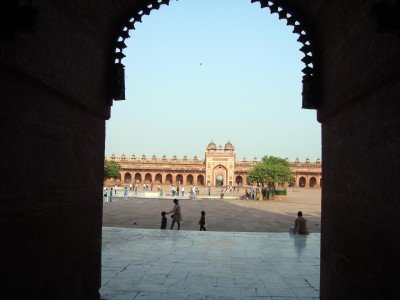
Jami Masjid
Some quick example text to build on the card title and make up the bulk of the card's content.
Go somewhere
King's Gate
Some quick example text to build on the card title and make up the bulk of the card's content.
Go somewhere
Naubat Khana
Some quick example text to build on the card title and make up the bulk of the card's content.
Go somewhere
Pachisi Court
Some quick example text to build on the card title and make up the bulk of the card's content.
Go somewhere
Panch Mahal
Some quick example text to build on the card title and make up the bulk of the card's content.
Go somewherein Other Cities