

Panch Mahal
General information
-
Ideal Duration:
45 MinutesPlace Type:
Palace, Recreational RetreatEntry Fees:
No Separate Fee: There is no separate entry fee for the Panch Mahal; access is included in the main ticket for the Fatehpur Sikri complex, which is required for entry into the monument zone.
Main Monument Ticket Cost: The standard entry fee...No Separate Fee: There is no separate entry fee for the Panch Mahal; access is included in the main ticket for the Fatehpur Sikri complex, which is required for entry into the monument zone.
Main Monument Ticket Cost: The standard entry fee for the fort complex is Rs.50 for Indian citizens and citizens of SAARC and BIMSTEC countries, and Rs.610 for all other Foreign Nationals. This single ticket covers all the core palace structures including this five-storey tower.
Safety and Conservation: Due to the open, tiered structure, the ASI imposes strict rules on climbing and movement, and certain parts may be temporarily closed for conservation, emphasizing the need to respect the monument's fragility.
No Climbing on Railings: Visitors are strictly prohibited from climbing the narrow railings on the upper floors for safety reasons, a rule enforced by the security staff.Timing:
Regular Timings (Sunrise to Sunset): The monument is open during the general operating hours of the Fatehpur Sikri complex, typically from 6:00 AM to 6:00 PM daily, corresponding to sunrise and sunset.
Ideal Visit Time: The Early Morning (be...Regular Timings (Sunrise to Sunset): The monument is open during the general operating hours of the Fatehpur Sikri complex, typically from 6:00 AM to 6:00 PM daily, corresponding to sunrise and sunset.
Ideal Visit Time: The Early Morning (between 7:00 AM and 9:00 AM) is the best time. The soft light is perfect for photography, and the cool air makes the ascent of the multiple steps comfortable. The quietude allows for an immersive appreciation of the intricate carvings.
Avoid Mid-day: The intense sun and heat make the open staircases and upper levels very uncomfortable during mid-day (10:00 AM to 3:00 PM), particularly in the non-winter months.
Duration Advice: Allow at least 45 minutes to 1 hour to climb all levels, study the carvings, and enjoy the panoramic views without rushing.Special Events:
Musical and Dance Performances: Historically, the terraces of the Panch Mahal were often used for imperial entertainment, hosting classical Indian musical concerts, instrumental performances, and dance recitals for the private viewing of the royal women, making it a site of ...Musical and Dance Performances: Historically, the terraces of the Panch Mahal were often used for imperial entertainment, hosting classical Indian musical concerts, instrumental performances, and dance recitals for the private viewing of the royal women, making it a site of cultural festivity.
Purdah-Protected Viewing: The palace's historical use as a space for royal women to observe the main court ceremonies in the Diwan-i-Khas courtyard below, while remaining unseen behind jali screens, was a daily cultural event showcasing the complex rules of Mughal court life.
Conservation and Study Tours: Due to its unique structure, it is a primary stop for international architectural study tours, where experts conduct lectures and on-site analysis of the structural and decorative principles of Akbar's syncretic style, often in the pleasant winter months.
World Heritage Day Photo Sessions: The beautiful symmetry and height of the Panch Mahal make it a preferred backdrop for official photography sessions and video documentation organized by the ASI or tourism bodies during World Heritage Week.Best Photo Spots:
The Grand Vertical Shot: The absolute best photo is a low-angle, wide-angle shot from the ground near the Anup Talao, looking up to capture all five tiers and the culminating chhatri, emphasizing the height and the unique architectural rhythm of the tapering structure.
<...The Grand Vertical Shot: The absolute best photo is a low-angle, wide-angle shot from the ground near the Anup Talao, looking up to capture all five tiers and the culminating chhatri, emphasizing the height and the unique architectural rhythm of the tapering structure.
Pillar Detail Close-up: Use a macro lens to capture the intricate, unique carvings on the ground floor pillars, focusing on the blend of Hindu and Islamic motifs, which serve as a visual manifesto of Akbar's syncretic vision.
Framed View from the Top: A photo taken from the top chhatri, using the four pillars as a frame for the surrounding courtyard, the Diwan-i-Khas, or the distant Buland Darwaza, offers a beautiful perspective and a sense of the royal view.
Shadow Play on the Pillars: Capture the strong shadow patterns cast by the columns on the interior floors and on the adjacent walls, best shot in the early morning or late afternoon light to emphasize the three-dimensionality of the open structure.
The Water Tank Reflection: If the Anup Talao is filled, try to capture the reflection of the Panch Mahal in the water, creating a symmetrical and ethereal photo that links the palace to its aquatic setting.Photo Gallery
Things To Do
-
Ascend for the Panoramic View: Climb the steps to the top chhatri (fifth floor) to gain a spectacular panoramic view of the entire Fatehpur Sikri complex, including Diwan-i-Khas, Jodha Bai's Palace, and the vast Diwan-i-Aam courtyard, using the height for a sense of the city's scale.
Study the Pillar Details: Spend time on the ground floor, walking around the 84 pillars to appreciate the claimed uniqueness of the carvings on each one, focusing on the Hindu and Jain motifs that are beautifully integrated into the supporting structures.
Visualize the Jali Screens: Look out from the pillared bays on each floor and imagine the space enclosed by the original delicate stone lattice screens (jali), visualizing the secluded life of the royal ladies and their hidden observation of the court activities bel...Ascend for the Panoramic View: Climb the steps to the top chhatri (fifth floor) to gain a spectacular panoramic view of the entire Fatehpur Sikri complex, including Diwan-i-Khas, Jodha Bai's Palace, and the vast Diwan-i-Aam courtyard, using the height for a sense of the city's scale.
Study the Pillar Details: Spend time on the ground floor, walking around the 84 pillars to appreciate the claimed uniqueness of the carvings on each one, focusing on the Hindu and Jain motifs that are beautifully integrated into the supporting structures.
Visualize the Jali Screens: Look out from the pillared bays on each floor and imagine the space enclosed by the original delicate stone lattice screens (jali), visualizing the secluded life of the royal ladies and their hidden observation of the court activities below.
Photography of Verticality: Capture a low-angle shot from the base of the palace, looking up to emphasize the verticality and the dramatic reduction in the size of the floors, highlighting the rhythmic structure of the five tiers.
Experience the Wind Tower Effect: On a hot day, stand on the lower levels and consciously feel the air circulation, especially if there is a breeze over the Anup Talao, connecting the structure's architecture with its functional cooling purpose.
Observe the Anup Talao Connection: Note the palace's position right next to the Anup Talao (Water Tank) and the walkways leading to it, understanding the integrated design of the Haram Sara and the role of water in the Mughal pleasure gardens.
Compare with the Hawa Mahal: Compare the cooling principles of the Panch Mahal with the nearby Hawa Mahal (Palace of Winds), noting the difference between the open, tiered tower design and the screened windows of the smaller structure.
Information
-
Why Famous:
Architectural Innovation: It is famous as one of the most architecturally unique structures in Fatehpur Sikri, known for its towering, tapering five-storey design and open-sided pillared construction, which showcases Akbar's experimental and eclectic building style.
...Architectural Innovation: It is famous as one of the most architecturally unique structures in Fatehpur Sikri, known for its towering, tapering five-storey design and open-sided pillared construction, which showcases Akbar's experimental and eclectic building style.
The Wind Tower Function: It is famous for its practical design as a Badgir (Wind Tower), providing a cool, airy retreat for the royal ladies of the Haram Sara during the intense summer heat, highlighting Mughal thermal engineering and planning for comfort.
Symbol of Syncretism: The design is famous for its strong link to traditional Buddhist Viharas and the pillars' blend of Hindu, Jain, and Islamic decorative motifs, making it a powerful physical symbol of Akbar's policy of religious and cultural fusion.
Royal Ladies' Viewing Gallery: Historically, the upper floors, enclosed by jali screens, were a famous observation point for the secluded royal women to watch court events, performances, and festivals in the main courtyard without being seen, giving it a unique social history. -
Architecture:
Vertical Tapering: A five-storey structure that tapers upwards, with each successive floor decreasing in both size and the number of supporting columns, a design highly influenced by Buddhist Viharas.
Pillar Count: The ground floor rests on ...Vertical Tapering: A five-storey structure that tapers upwards, with each successive floor decreasing in both size and the number of supporting columns, a design highly influenced by Buddhist Viharas.
Pillar Count: The ground floor rests on 84 pillars, the first on 56, the second on 20, the third on 12, and the top floor is a single domed kiosk (chhatri) supported by just 4 pillars. This reduction in Dimension and support is a key feature.
Open Plan: The palace is entirely open-sided, constructed solely of columns and beams, designed for maximum cross-ventilation, earning it the nickname Wind Tower (Badgir).
Material and Carvings: Built entirely of red sandstone, the columns on all levels feature a variety of intricate carvings, including geometric, Persian, floral, and Hindu-inspired bracket supports, showcasing a blend of architectural motifs.
Dimension (Approximate Height): The palace stands approximately 15-18 meters high, making it the tallest building in the complex, offering commanding views. -
How To Reach:
By Air (Via Agra): The nearest airport is Agra (AGR), approximately 35-40 KMS away. A taxi is the most direct way to get to the Fatehpur Sikri parking area, from where the final 1 KM is covered by the mandatory shuttle.
By Train (From Agra Cant...By Air (Via Agra): The nearest airport is Agra (AGR), approximately 35-40 KMS away. A taxi is the most direct way to get to the Fatehpur Sikri parking area, from where the final 1 KM is covered by the mandatory shuttle.
By Train (From Agra Cantt): The main railhead is Agra Cantt (AGC), about 37 KMS away. From the station, take a bus or taxi to Fatehpur Sikri town, then transfer to the local shuttle service.
By Road (Self-Drive or Bus): Fatehpur Sikri is on a well-connected national highway. The road trip from Agra is the most common approach. All private vehicles must park at the designated external parking area.
By Local Transport (Shuttle is Mandatory): As the Panch Mahal is in the core imperial zone, visitors must use the authorized CNG auto-rickshaws or electric bus shuttle service for the 1 KM final leg from the parking lot/ticket counter to the main fort entrance, followed by a short walk through the complex. -
Weather and Best Time to Visit:
Winter Season (October to March): This is the Best Time to Visit. The pleasant temperatures (around 10°C to 25°C) are ideal for the physical exertion of climbing the multiple storeys and for comfortable viewing from the upper decks.
Summer Se...Winter Season (October to March): This is the Best Time to Visit. The pleasant temperatures (around 10°C to 25°C) are ideal for the physical exertion of climbing the multiple storeys and for comfortable viewing from the upper decks.
Summer Season (April to June): The heat is intense, but the palace's function as a Wind Tower can be truly felt, offering a slight breeze on the upper levels. Visit only in the early morning to avoid the scorching sun on the exposed staircases.
Monsoon Season (July to September): The rains make the steps slippery and require caution, but the washed red sandstone and dramatic clouds can make for beautiful, atmospheric photos.
Different Parts of the Day: Early Morning is the optimal time for the best light, coolness, and solitude. The top floor provides an unparalleled sunrise viewing spot over the whole complex. -
Near Tourist Places:
Anup Talao (Adjacent, <100 M), Diwan-i-Khas (Adjacent, <100 M), Kwabgah (Akbar's Palace) (Adjacent, <100 M), Birbal's House (Approx. 200 M), Jodha Bai's Palace (Approx. 300 M), Diwan-i-Aam (Approx. 300 M), Buland Darwaza (Approx. 1. 5 KMS), Jami Masjid (Approx. 1. 5 KMS), Agra Fort (Approx. 37 KMS), Taj Mahal (Approx. 39 KMS).
Tourism Tips
-
Health & safety: Be highly cautious on the open staircases and narrow ledges on the upper floors; they can be steep and worn. Carry a bottle of water, as the climb can be strenuous.
Packing Essentials: Wear comfortable, non-slip shoes for ...Health & safety: Be highly cautious on the open staircases and narrow ledges on the upper floors; they can be steep and worn. Carry a bottle of water, as the climb can be strenuous.
Packing Essentials: Wear comfortable, non-slip shoes for safe climbing. A light jacket is advisable in the winter for the cool air on the upper floors. Use a wide-angle lens for capturing the entire height and scope of the structure.
Accommodation: Stay in Agra for the best hotel selection and travel to Fatehpur Sikri for the day. Local guesthouses are available but basic.
Local Etiquette: Do not sit or climb on the delicate railings or column capitals. The structure is fragile due to its open design. Be mindful of others climbing the narrow stairs.
Guide Insight: A guide is valuable for explaining the Buddhist architectural connection and identifying the unique carvings on the different pillars.
Reviews
FAQs
Fatehpur Sikri Itineray And Cost:-
Other Places In Fatehpur Sikri :-
Other States In India :-
Information about New and Updated Locations() of Uttar Pradesh Has Been Added :-
Card subtitle
Note:-
Information provided here in good Faith and for reference only.
Near Places

Abul Fazal and Faizi's Houses
Some quick example text to build on the card title and make up the bulk of the card's content.
Go somewhere
Agra Gate
Some quick example text to build on the card title and make up the bulk of the card's content.
Go somewhere
Anup Talao
Some quick example text to build on the card title and make up the bulk of the card's content.
Go somewhere
Archaeological Museum
Some quick example text to build on the card title and make up the bulk of the card's content.
Go somewhere
Baoli
Some quick example text to build on the card title and make up the bulk of the card's content.
Go somewhere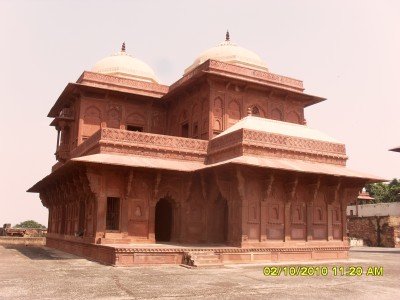
Birbal's House
Some quick example text to build on the card title and make up the bulk of the card's content.
Go somewhere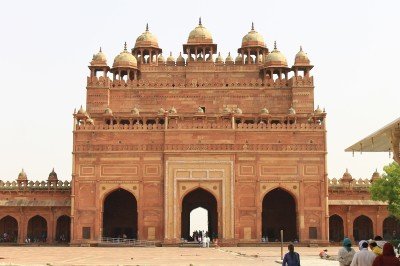
Buland Darwaza
Some quick example text to build on the card title and make up the bulk of the card's content.
Go somewhere
Caravanserai
Some quick example text to build on the card title and make up the bulk of the card's content.
Go somewhere
Daftar Khana
Some quick example text to build on the card title and make up the bulk of the card's content.
Go somewhere
Diwan-i-Aam
Some quick example text to build on the card title and make up the bulk of the card's content.
Go somewhere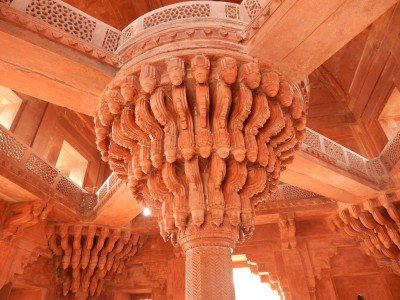
Diwan-i-Khas
Some quick example text to build on the card title and make up the bulk of the card's content.
Go somewhere
Jami Masjid
Some quick example text to build on the card title and make up the bulk of the card's content.
Go somewhere
King's Gate
Some quick example text to build on the card title and make up the bulk of the card's content.
Go somewhere
Naubat Khana
Some quick example text to build on the card title and make up the bulk of the card's content.
Go somewhere
Pachisi Court
Some quick example text to build on the card title and make up the bulk of the card's content.
Go somewhere
Panch Mahal
Some quick example text to build on the card title and make up the bulk of the card's content.
Go somewherein Other Cities