Hathi Pol
General information
-
Ideal Duration:
20 Minutes:Place Type:
Gateway/Fortification (Palace Complex)Entry Fees:
Part of the Complex Ticket::Entry to the area surrounding the Hathi Pol is included in the single, consolidated monument ticket for the Fatehpur Sikri palace complex. The fee is Rs.50 for Indian Nationals and Rs.610 for Foreign Tourists (children under 15 are free).Part of the Complex Ticket::Entry to the area surrounding the Hathi Pol is included in the single, consolidated monument ticket for the Fatehpur Sikri palace complex. The fee is Rs.50 for Indian Nationals and Rs.610 for Foreign Tourists (children under 15 are free).
No Separate Fee for the Gate::As an external gateway, there is no standalone ticket required for this structure. The ticket purchased at the main ticket office covers all the imperial buildings, including the Diwan-i-Khas, Jodha Bai's Palace, and the Hathi Pol.
Essential for Entry Flow::While not a building to enter, passing through the Hathi Pol area is often part of the standard walking tour flow. You must have your valid ticket available for inspection in the general complex area to fully appreciate the gate's context within the palace wall.
Cost of Local Access::A nominal fare of around Rs.10-20 for the CNG/electric shuttle from the main parking/bus drop-off point to the monument gate is typically required, as private vehicles are prohibited closer to the complex.Timing:
Regular Timings (Sunrise to Sunset)::The Hathi Pol is accessible during the regular operating hours of the Fatehpur Sikri complex: 6:00 AM to 6:00 PM daily. Since it is an external structure, its surrounding area is generally less restrictive, but the ticketed zone entry is...Regular Timings (Sunrise to Sunset)::The Hathi Pol is accessible during the regular operating hours of the Fatehpur Sikri complex: 6:00 AM to 6:00 PM daily. Since it is an external structure, its surrounding area is generally less restrictive, but the ticketed zone entry is strictly maintained during these hours.
Ideal Visit Time for Scale::The best time to visit the Hathi Pol to appreciate its grand scale is immediately upon arrival in the early morning (6:00 AM to 8:00 AM). The clear, tranquil atmosphere allows for an unobstructed, wide-angle view without the distraction of crowds.
Best Time for Dramatic Light::The late afternoon (4:30 PM to 6:00 PM) is ideal. The sun angle is low, creating deep, dramatic shadows within the archway and highlighting the rugged texture of the red sandstone, making it the perfect time for evocative photographs.
Duration and Planning::Budget a short time, approximately 15-20 minutes, for the Hathi Pol. It is a gateway structure and is best viewed as the imposing start or end of your walk around the larger imperial complex.Special Events:
Gate Lighting and Visual Shows::On rare occasions, during significant government-sponsored cultural festivals or specific heritage observances, the Hathi Pol is illuminated at night. Strategic lighting enhances the dramatic profile of the gate and its battlements, momentari...Gate Lighting and Visual Shows::On rare occasions, during significant government-sponsored cultural festivals or specific heritage observances, the Hathi Pol is illuminated at night. Strategic lighting enhances the dramatic profile of the gate and its battlements, momentarily restoring its imperial grandeur, a unique visual treat for evening visitors.
Heritage Walk Starting Point::Due to its status as a grand entrance, the Hathi Pol often serves as the designated starting or ending point for specialized, in-depth architectural or historical heritage walks that focus on the military and commercial aspects of Fatehpur Sikri. These events are often organized by local history societies or the ASI, typically on weekend mornings.
Festival of Strength Symbolism::Although no longer a ritual, historically, gates guarded by elephants were important sites for the Tula Daan (weighing ceremony) or processions celebrating military victories. Occasional cultural re-enactments or thematic displays, particularly around festivals like Dussehra (symbolic of strength and victory), might utilize the symbolic power of the Hathi Pol.Best Photo Spots:
The Road Approach View::The best photograph is a wide-shot taken from the path leading up to the gate, capturing the monumental scale and the imposing archway framed by the remnants of the flanking elephant statues, particularly effective with a wide-angle lens.The Road Approach View::The best photograph is a wide-shot taken from the path leading up to the gate, capturing the monumental scale and the imposing archway framed by the remnants of the flanking elephant statues, particularly effective with a wide-angle lens.
The Shadow Detail Shot::Wait for the sun to be at an angle (morning or late afternoon) to capture the dramatic shadows cast by the deep archway and the rugged texture of the rubble masonry, which conveys the gate's age and fortification better than a head-on shot.
Framing the Arch Against the Sky::Stand directly beneath the arch and look up to frame the top battlements and the sky through the archway. This perspective emphasizes the height of the structure and provides a powerful, geometric composition.
Close-up on the Elephant Remains::A detailed, close-up photograph of the surviving lower torso and legs of one of the stone elephants. Focusing on the remaining carvings and the worn texture tells the story of the gate's history and the damage it has sustained over the centuries.Photo Gallery
Things To Do
-
Study the Remains of the Elephants::Dedicate time to closely examine the surviving lower portions of the two elephant statues. Try to reconstruct in your mind the full, mighty image of the colossal animals that once guarded this imperial entrance. Compare the stone carving technique here with the finer details found inside the palaces.
Walk the Path of the Imperial Procession::Stand outside the gate and walk through the main archway, imagining the ceremonial entry of Emperor Akbar on a grand procession, perhaps on his elephant or accompanied by drummers from the gallery above. This imaginative reconstruction brings the silent stone to life.
Observe the Fortification Details::Inspect the battlements and the sturdy construction of the fortified walls. Look for any visible slots or openings that...Study the Remains of the Elephants::Dedicate time to closely examine the surviving lower portions of the two elephant statues. Try to reconstruct in your mind the full, mighty image of the colossal animals that once guarded this imperial entrance. Compare the stone carving technique here with the finer details found inside the palaces.
Walk the Path of the Imperial Procession::Stand outside the gate and walk through the main archway, imagining the ceremonial entry of Emperor Akbar on a grand procession, perhaps on his elephant or accompanied by drummers from the gallery above. This imaginative reconstruction brings the silent stone to life.
Observe the Fortification Details::Inspect the battlements and the sturdy construction of the fortified walls. Look for any visible slots or openings that might have been used for defense, which provides insight into the military engineering aspect of the gate's design, contrasting with the purely aesthetic elements of the inner palaces.
Take a Panorama of the Entrance::Step back from the gate to get a full view of its immense scale and the context of the surrounding wall. Use a wide-angle lens to capture the entire archway and the defensive features, which is essential for understanding its role as a monumental gateway.
Photography of the Symmetrical Arch::Focus on the symmetrical nature of the main entrance arch, using its plain geometry and the dramatic shadows it casts to create a powerful, imposing photograph. The plain facade against the bright red sandstone is a great study in simple architectural mass.
Connect to the Caravanserai::Walk towards the area where the Caravanserai once stood (now ruins or open ground) just outside the gate. This helps contextualize the Hathi Pol as the transition point from the public, commercial world to the private, royal one.
Information
-
Why Famous:
Symbol of Imperial Strength and Welcome::The Hathi Pol is famous for the massive, symbolic elephant statues it once housed, representing the imperial strength (Hathi means Elephant). The gate served as a grand, ceremonial entrance, creating an imposing welcome for all who a...Symbol of Imperial Strength and Welcome::The Hathi Pol is famous for the massive, symbolic elephant statues it once housed, representing the imperial strength (Hathi means Elephant). The gate served as a grand, ceremonial entrance, creating an imposing welcome for all who approached the royal complex, immediately communicating the power of the Mughal Empire.
The Historical Link to the Caravanserai::Its location next to the Caravanserai is key to its fame. It signifies Akbar's interest in trade and commerce. The gate was the point of transition from the busy world of commerce (the Caravanserai) into the disciplined, royal realm of the palace, making it a powerful visual metaphor for the different spheres of life in Fatehpur Sikri.
An Architectural Milestone::It stands as a testament to the grand scale of Mughal city planning. The size and fortification of the gate demonstrate the sophisticated engineering and military architecture employed in the construction of Akbar's new capital, acting as a historical milestone in Mughal urban design. -
Architecture:
Fortified Rubble and Red Sandstone::The Hathi Pol is a fortified gateway constructed primarily of rubble masonry, which is then finished and faced with the characteristic deep red sandstone of Fatehpur Sikri. Its exterior is designed for defense, featuring robust battlement...Fortified Rubble and Red Sandstone::The Hathi Pol is a fortified gateway constructed primarily of rubble masonry, which is then finished and faced with the characteristic deep red sandstone of Fatehpur Sikri. Its exterior is designed for defense, featuring robust battlements atop the structure.
Dimensions and Entrance Arch::The main entrance arch is a relatively plain structure, standing about 5. 2 meters high. The massive scale is achieved through its height and depth rather than heavy ornamentation. The gate once had two stone elephants, each approximately 3. 7 meters high, flanking the entrance, which gave the gate its name.
The Gallery and Staircase::A notable architectural feature is the 3-meter wide gallery located at the entrance arch, which is accessible by a narrow staircase on either side of the gate. This gallery would have been used for guards, observation, and potentially for musicians (Naubatkhana or drum house) to herald the arrival of the Emperor or important dignitaries, adding a ceremonial layer to its defensive function. The structure is a fine example of Mughal military-cum-ceremonial architecture. -
How To Reach:
By Air (Via Agra and Delhi)::The nearest access point is Agra Airport (AGR), 35-40 KMS away, requiring a taxi. For international and better domestic connectivity, the New Delhi Airport (DEL) is the major hub, approximately 3. 5 to 4 hours away by road to Fatehpur Sikri.By Air (Via Agra and Delhi)::The nearest access point is Agra Airport (AGR), 35-40 KMS away, requiring a taxi. For international and better domestic connectivity, the New Delhi Airport (DEL) is the major hub, approximately 3. 5 to 4 hours away by road to Fatehpur Sikri.
By Train (Fatehpur Sikri FTS)::The local Fatehpur Sikri Railway Station (FTS) is the nearest, only about 1 KM away, and reachable by a short walk or auto-rickshaw. The main, better-connected station for long-distance travel is Agra Cantt (AGC), which is 37 KMS away and requires an hour-long road transfer.
By Road (Easy Day Trip from Agra)::The town is directly connected to Agra via a good road network. Hired cabs and Uttar Pradesh State Road Transport Corporation (UPSRTC) buses regularly ply the 37 KMS route from Agra's Idgah Bus Stand. It is a well-established route for a day trip.
By Local Transport (The Final Stretch)::From the public parking lot, you must take the mandatory CNG auto-rickshaw or electric shuttle to the gate. Since the Hathi Pol is the entrance itself, a short walk from the drop-off point is necessary to reach the actual structure. -
Weather and Best Time to Visit:
The Winter Season (Maximum Comfort)::The months of November through March are the most comfortable. The pleasant temperatures (10°C to 25°C) allow for comfortable walking and uninterrupted appreciation of the grand external architecture without the discomfort of heat or h...The Winter Season (Maximum Comfort)::The months of November through March are the most comfortable. The pleasant temperatures (10°C to 25°C) allow for comfortable walking and uninterrupted appreciation of the grand external architecture without the discomfort of heat or humidity.
The Pre-Monsoon Winds (Atmospheric Drama)::Late June and early July (pre-monsoon) can be dramatic. The clear air and strong winds in the late afternoon give a feeling of historical power to the massive gate, often providing spectacular sunset light for photography.
Midday Sun as a Structural Highlighter::While generally avoided, the harsh midday sun can be used by photographers to create high-contrast, deep shadow lines within the archway, sharply defining the sheer mass and geometry of the Hathi Pol.
Timing the Visit Around Crowds::To avoid the large tour groups arriving from Agra, aim for a visit before 9:00 AM or after 4:00 PM, allowing a much better chance to get an unobstructed view of the gate's scale. -
Near Tourist Places:
Buland Darwaza (1.
5 KMS): Jama Masjid (1.
5 KMS): Tomb of Salim Chishti (1.
5 KMS): Hiran Minar (0.
7 KMS): Diwan-i-Khas (1.
0 KMS): Panch Mahal (1.
0 KMS): Diwan-i-Aam (1.
1 KMS): Turkish Sultana's House (1.
0 KMS): Birbal's House (1.
2 KMS):
Agra Fort (3
7 KMS):
Tourism Tips
-
Health & Safety (Guard Rails and Heights)::The structure involves walking around a gate and potentially steep staircases to access the gallery (if open). Be cautious on uneven stone steps and maintain distance from any ledges or restricted areas. The open nature of the are...Health & Safety (Guard Rails and Heights)::The structure involves walking around a gate and potentially steep staircases to access the gallery (if open). Be cautious on uneven stone steps and maintain distance from any ledges or restricted areas. The open nature of the area requires constant vigilance against the sun.
Packing (Camera and Sun Protection)::A wide-angle lens is essential to capture the massive scale of the gate. Given its exposed nature, water, a hat, and sunscreen are non-negotiable items for a visit at any time other than the very early morning.
Accommodation (Agra is Base Camp)::It is strongly recommended to use Agra as your accommodation base, as Fatehpur Sikri is primarily a historical site with limited traveler amenities. This allows for a day trip to the site and a comfortable return to a better-serviced city.
Other Topics (Respect the Boundary)::The gate marks the transition to the royal palace complex. Respect the boundary, and do not try to climb onto the partial remnants of the elephant statues, as this is a protected archaeological site and can be dangerous. Be aware of the local guides and negotiate fees firmly outside the gate area.
Reviews
FAQs
Fatehpur Sikri Itineray And Cost:-
Other Places In Fatehpur Sikri :-
Other States In India :-
Information about New and Updated Locations() of Uttar Pradesh Has Been Added :-
Card subtitle
Note:-
Information provided here in good Faith and for reference only.
Near Places

Abul Fazal and Faizi's Houses
Some quick example text to build on the card title and make up the bulk of the card's content.
Go somewhere
Agra Gate
Some quick example text to build on the card title and make up the bulk of the card's content.
Go somewhere
Anup Talao
Some quick example text to build on the card title and make up the bulk of the card's content.
Go somewhere
Archaeological Museum
Some quick example text to build on the card title and make up the bulk of the card's content.
Go somewhere
Baoli
Some quick example text to build on the card title and make up the bulk of the card's content.
Go somewhere
Birbal's House
Some quick example text to build on the card title and make up the bulk of the card's content.
Go somewhere
Buland Darwaza
Some quick example text to build on the card title and make up the bulk of the card's content.
Go somewhere
Caravanserai
Some quick example text to build on the card title and make up the bulk of the card's content.
Go somewhere
Daftar Khana
Some quick example text to build on the card title and make up the bulk of the card's content.
Go somewhere
Diwan-i-Aam
Some quick example text to build on the card title and make up the bulk of the card's content.
Go somewhere
Diwan-i-Khas
Some quick example text to build on the card title and make up the bulk of the card's content.
Go somewhere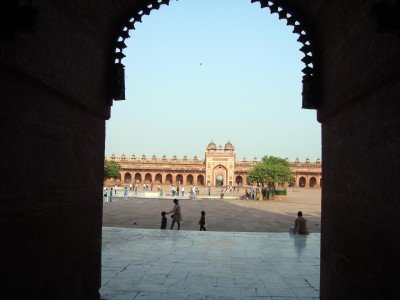
Jami Masjid
Some quick example text to build on the card title and make up the bulk of the card's content.
Go somewhere
King's Gate
Some quick example text to build on the card title and make up the bulk of the card's content.
Go somewhere
Naubat Khana
Some quick example text to build on the card title and make up the bulk of the card's content.
Go somewhere
Pachisi Court
Some quick example text to build on the card title and make up the bulk of the card's content.
Go somewhere
Panch Mahal
Some quick example text to build on the card title and make up the bulk of the card's content.
Go somewherein Other Cities