
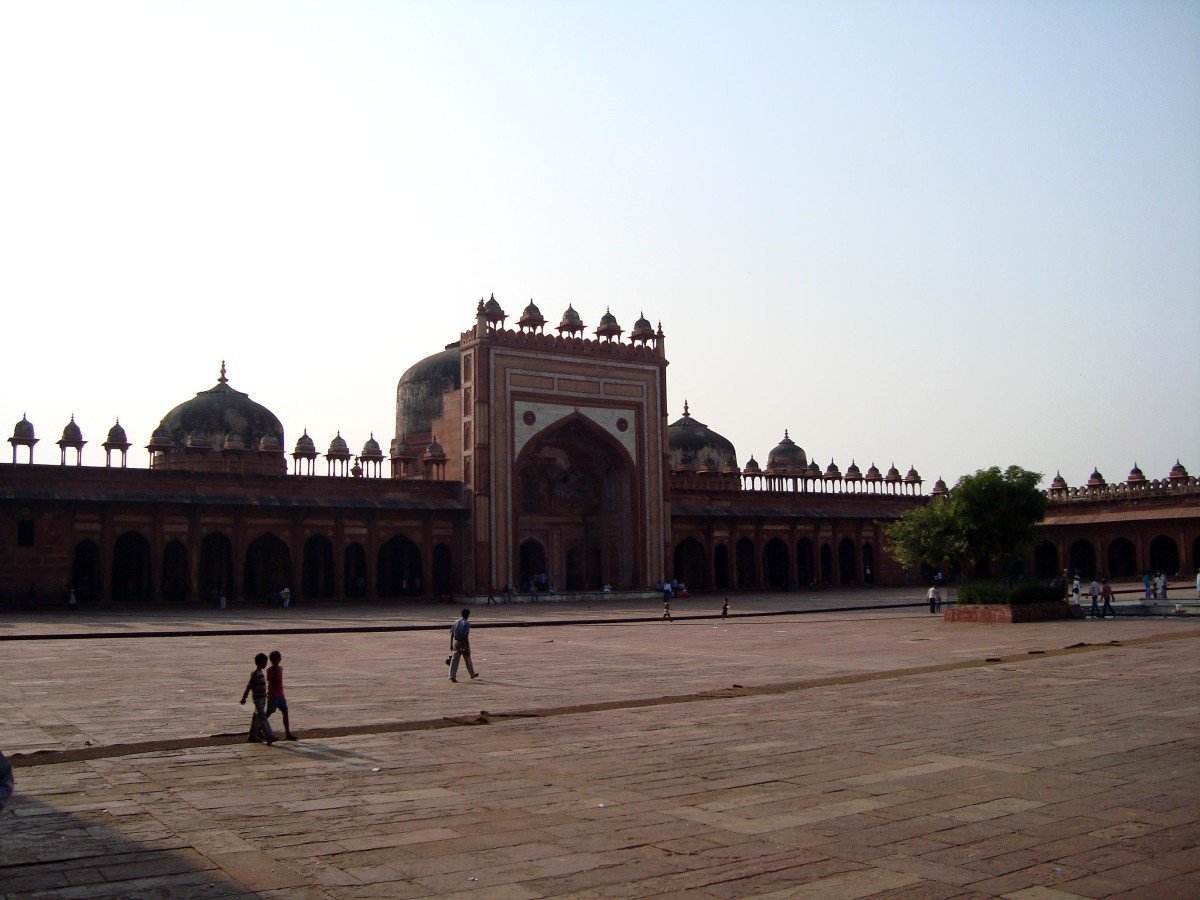
Jami Masjid
General information
-
Ideal Duration:
1 Hour 30 MinutesPlace Type:
Mosque, Religious SiteEntry Fees:
No Entry Fee for Worship: The Jami Masjid complex itself is a functioning religious site and traditionally has no entry fee for worshippers and visitors (unlike the palace complex), making it an accessible spiritual space.
Mandatory Contribution...No Entry Fee for Worship: The Jami Masjid complex itself is a functioning religious site and traditionally has no entry fee for worshippers and visitors (unlike the palace complex), making it an accessible spiritual space.
Mandatory Contribution/Donation: While technically free, visitors are often encouraged to make a voluntary contribution or place an offering at the Tomb of Sheikh Salim Chishti for the tomb's upkeep and charitable services.
Palace Ticket Proximity: Tourists visiting the mosque often have to pass the main Fatehpur Sikri ticketing point (for the palace area), making the two visits logistically linked, though the mosque is not covered by the Rs.50/Rs.610 ticket.
Shoe Minding Fee: A nominal fee (usually a few rupees) is charged by local attendants to mind your shoes at the entrance, as footwear is strictly prohibited inside the mosque and tomb courtyard.Timing:
Regular Timings (Open to Public): The mosque is open for public access and worship from early morning (around 5:30 AM) until late evening (around 7:00 PM), essentially from before sunrise to after sunset.
Ideal Visit Time: The Early Morning ...Regular Timings (Open to Public): The mosque is open for public access and worship from early morning (around 5:30 AM) until late evening (around 7:00 PM), essentially from before sunrise to after sunset.
Ideal Visit Time: The Early Morning (between 6:00 AM and 8:00 AM) is the best time. The light is beautiful, and the complex is often filled with the quiet atmosphere of morning prayers, offering a spiritual and less crowded experience.
Avoid Friday Mid-day: Avoid the hours around noon on Friday (the time of Juma prayer), as the courtyard will be densely crowded with local worshippers, which restricts movement for sightseeing.
Ideal Time for Qawwali: Thursday evening is the best time to visit for a chance to witness the traditional qawwali performances near the Tomb of Salim Chishti.Special Events:
The Annual Urs Ceremony: The most important event is the annual Urs (death anniversary) of Sheikh Salim Chishti, typically held in the Rajab month of the Islamic Calendar. This event draws thousands of Sufi pilgrims and devotees from across India, transforming the complex i...The Annual Urs Ceremony: The most important event is the annual Urs (death anniversary) of Sheikh Salim Chishti, typically held in the Rajab month of the Islamic Calendar. This event draws thousands of Sufi pilgrims and devotees from across India, transforming the complex into a vibrant, spiritual center with days of qawwali (devotional singing) and religious observance.
Eid Congregational Prayers: On Eid-ul-Fitr and Eid-ul-Adha, the vast courtyard is filled to capacity with worshippers for the main communal prayers, a stunning spectacle of religious unity and the mosque's continuous function.
Friday Prayers: Every Friday, the mosque hosts a large congregation, where local worshippers gather for Juma prayers, offering a glimpse into the mosque's ongoing role in the local community's life.
Traditional Qawwali Performances: Daily and especially on Thursday evenings (the night before Friday), qawwali performances take place near the tomb, a mesmerizing event of devotional Sufi music and a key part of the local spiritual tradition.Best Photo Spots:
The Red and White Contrast: The best photo spot is a long-shot from the courtyard, capturing the striking contrast between the vast red sandstone prayer hall and the jewel-like white marble Tomb of Sheikh Salim Chishti in the foreground.
The Bul...The Red and White Contrast: The best photo spot is a long-shot from the courtyard, capturing the striking contrast between the vast red sandstone prayer hall and the jewel-like white marble Tomb of Sheikh Salim Chishti in the foreground.
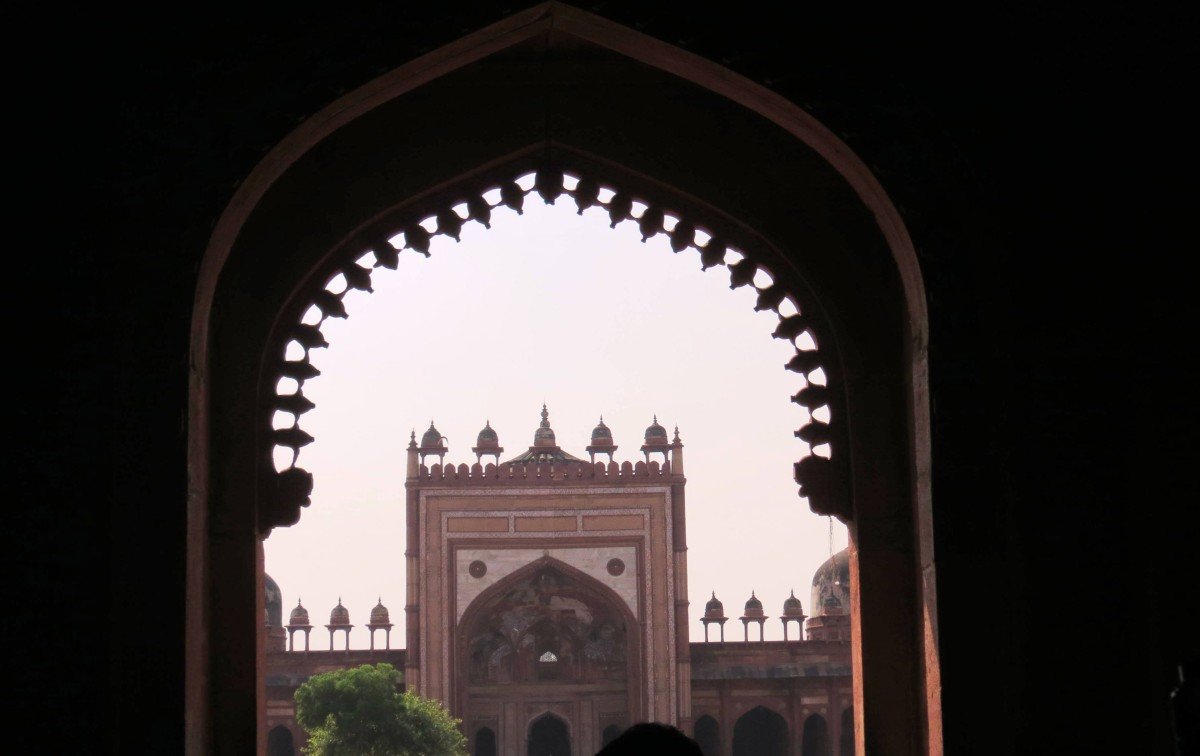
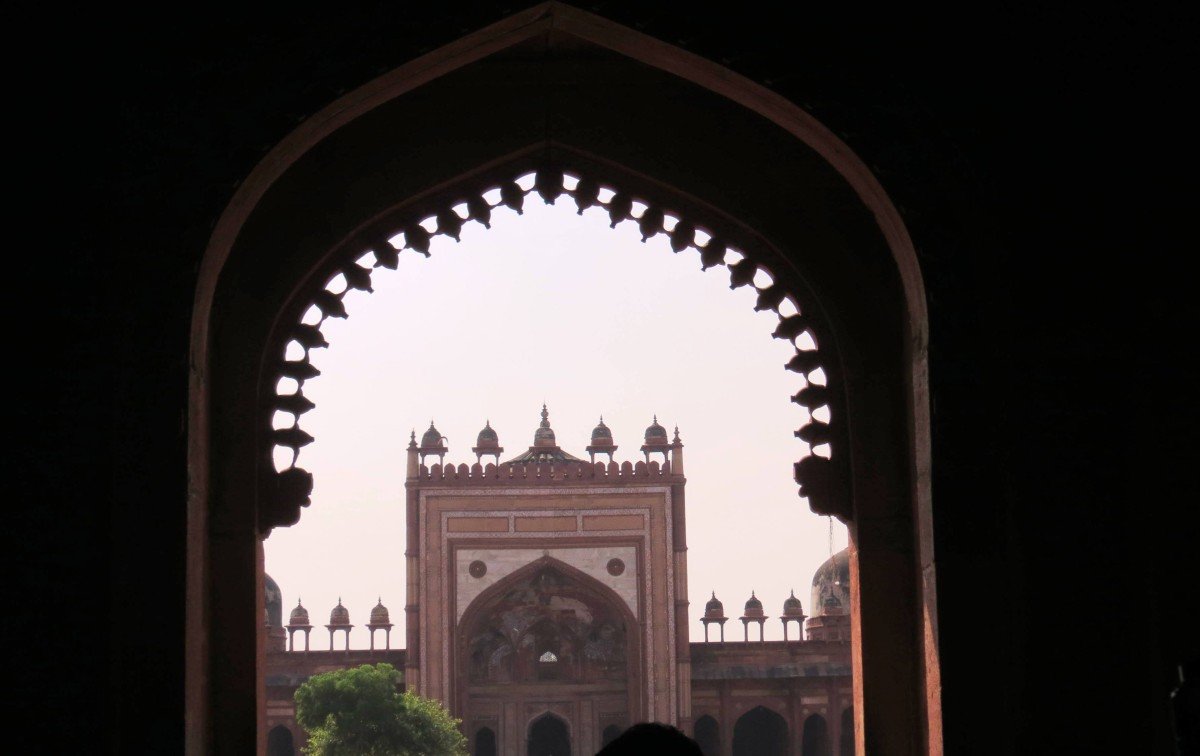
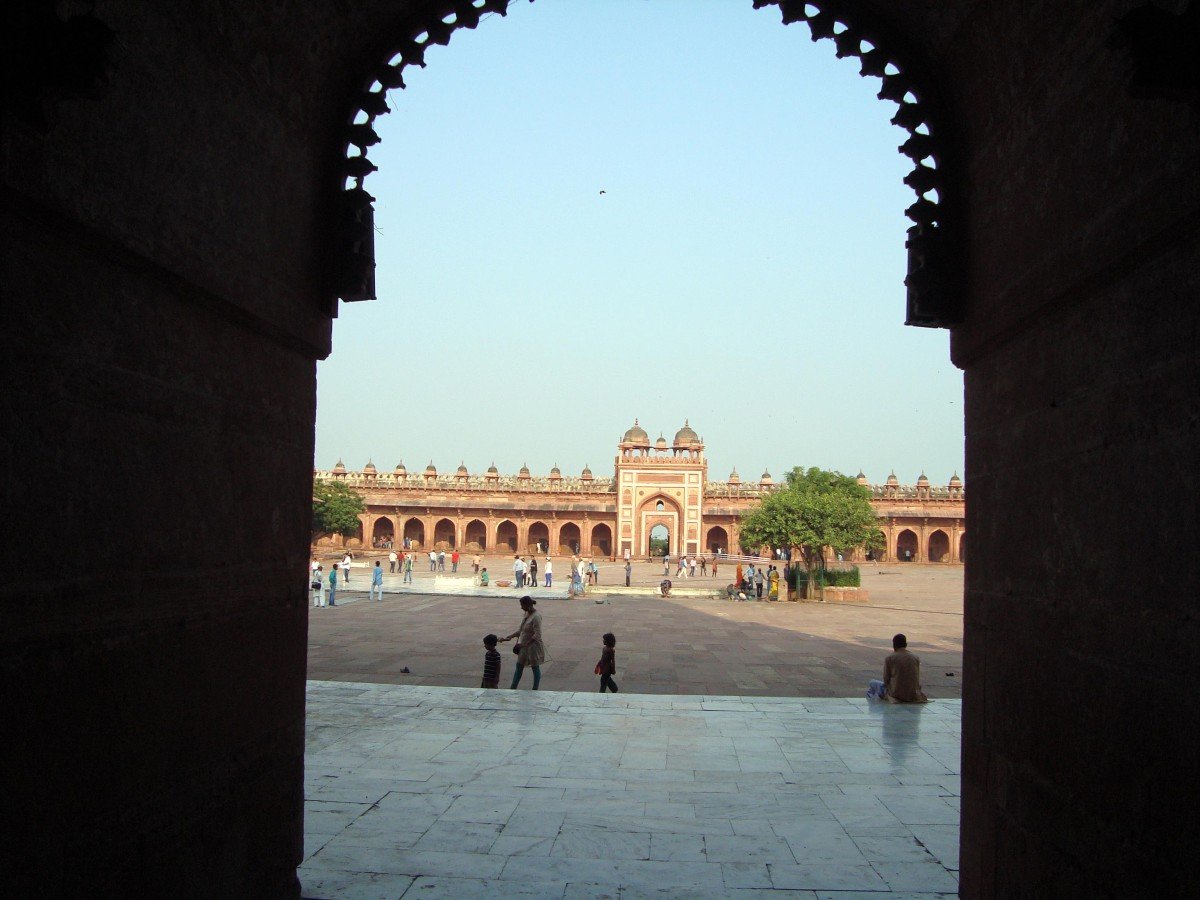
The Buland Darwaza Interior Frame: Turn towards the massive Buland Darwaza from the courtyard and use the central archway of the mosque's prayer hall to frame the towering gate, creating a powerful, layered image of the complex.
Close-up of the Jali Screens: Focus on the incredibly delicate, intricate lattice screens (jali) of the Salim Chishti Tomb, best captured in the diffused mid-day light to show the fragility and skill of the marble carving.
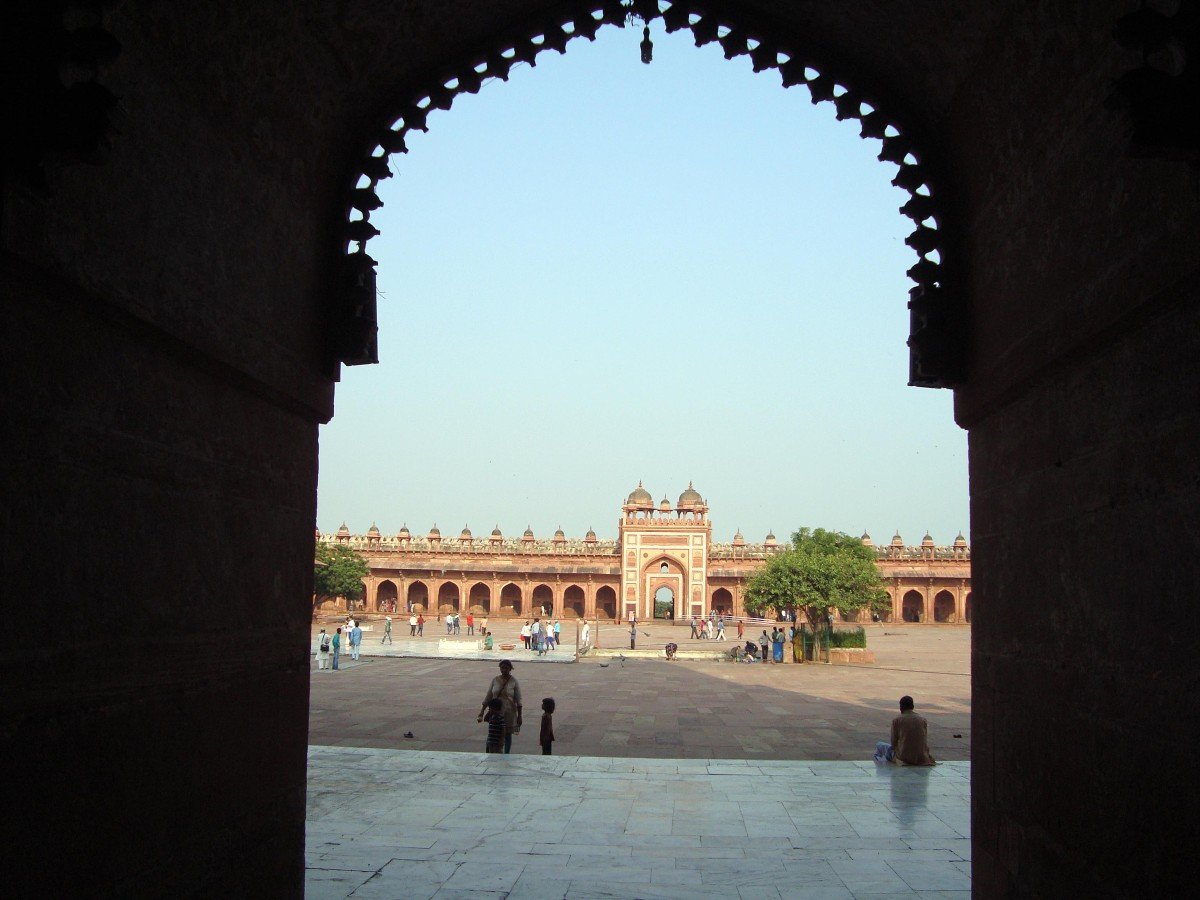
The Badshahi Darwaza Symmetry: Capture a symmetrical shot of the Badshahi Darwaza (Royal Gate) from the courtyard side, highlighting its refined proportions and its role as the Emperor's private entrance.
The Calligraphy on the Iwan: Use a telephoto lens to capture the ornate Arabic and Persian calligraphy on the main arch (iwan) of the prayer hall, highlighting the religious and historical inscriptions.Photo Gallery
Things To Do
-
Pilgrimage to Salim Chishti's Tomb: Pay a respectful visit to the white marble tomb, tie a sacred thread to the jali screen to seek blessings, and observe the unique architecture and the continuous flow of devotees.
Contemplate the Scale: Stand in the center of the massive courtyard and appreciate the sheer scale of the space, visualizing the thousands of people who would gather here for congregational Friday prayers (Juma).
Study the Architectural Details: Focus on the main iwan of the prayer hall, examining the intricate white marble inlay work, the geometric patterns, and the elegant calligraphy, which represents a high point of Mughal decorative art.
Photography of Contrast: Capture a photo that emphasizes the dramatic visual contrast between the massive, red...Pilgrimage to Salim Chishti's Tomb: Pay a respectful visit to the white marble tomb, tie a sacred thread to the jali screen to seek blessings, and observe the unique architecture and the continuous flow of devotees.
Contemplate the Scale: Stand in the center of the massive courtyard and appreciate the sheer scale of the space, visualizing the thousands of people who would gather here for congregational Friday prayers (Juma).
Study the Architectural Details: Focus on the main iwan of the prayer hall, examining the intricate white marble inlay work, the geometric patterns, and the elegant calligraphy, which represents a high point of Mughal decorative art.
Photography of Contrast: Capture a photo that emphasizes the dramatic visual contrast between the massive, red-hued sandstone of the mosque's walls and the pristine, delicate white marble of Salim Chishti's Tomb.
Visit the Badshahi Darwaza: Use the smaller Badshahi Darwaza (Royal Gate) as the entrance/exit, noting its refined decoration, which was historically reserved for the Emperor and his entourage, contrasting it with the public grandeur of the Buland Darwaza.
Observe the Living Culture: Spend time observing the atmosphere of the living mosque: the rituals of the worshippers, the qawwalis (devotional music) near the tomb, and the traditional life that continues within the ancient walls.
Walk the Cloisters: Walk along the pillared cloisters (dalan) that surround the courtyard, noting the rhythmic architecture and the inscriptions, and find a quiet spot for reflection or rest.
Information
-
Why Famous:
The Tomb of Salim Chishti: The mosque is most famous as the sacred resting place of the Sufi saint Sheikh Salim Chishti, whose blessings led to the birth of Akbar's heir, Prince Salim (later Emperor Jahangir). Pilgrims flock here to tie threads to the jali screens, seeking ...The Tomb of Salim Chishti: The mosque is most famous as the sacred resting place of the Sufi saint Sheikh Salim Chishti, whose blessings led to the birth of Akbar's heir, Prince Salim (later Emperor Jahangir). Pilgrims flock here to tie threads to the jali screens, seeking the saint's blessings for progeny.
The Buland Darwaza Connection: Its fame is inseparable from its colossal southern gateway, the Buland Darwaza, which is the highest gateway in the world and a towering symbol of Akbar's military might and imperial pride.
A Living Place of Worship: Unlike the palace, the mosque remains a continuously functioning religious center, making it famous as a vibrant spiritual hub where the 16th-century religious life of the city continues into the modern era.
Architectural Purity: It is famous as one of the finest and earliest examples of the mature Mughal architectural style, known for its balanced proportions, massive scale, and the masterful use of red sandstone and white marble contrasts. -
Architecture:
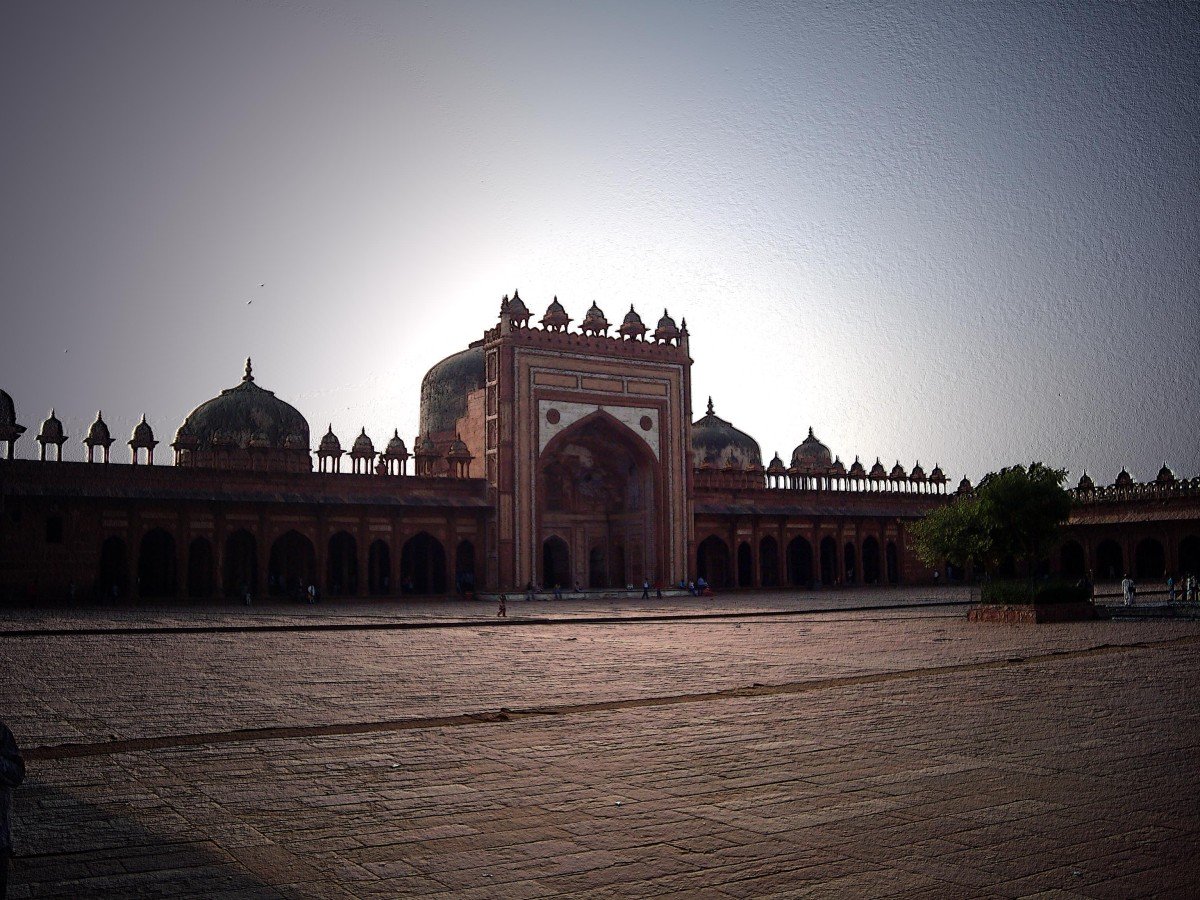
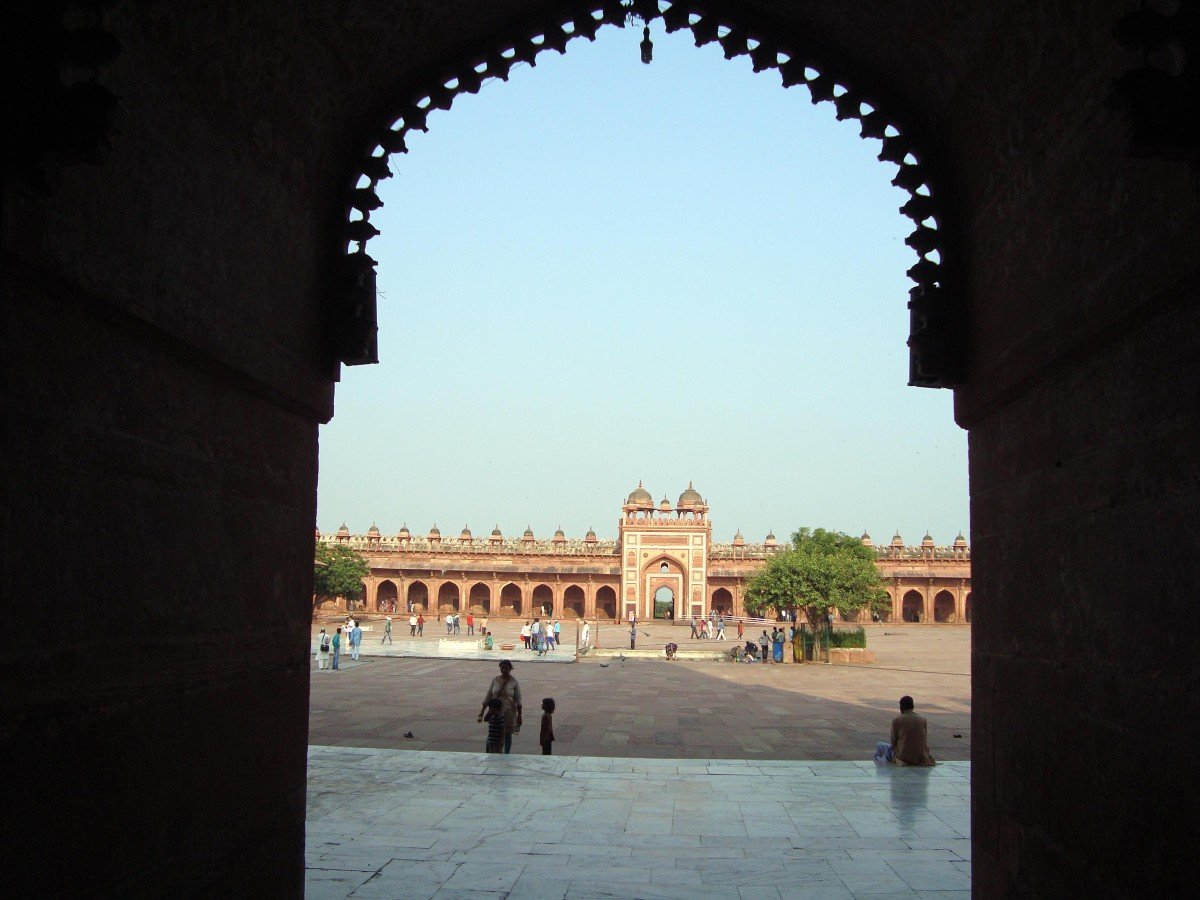
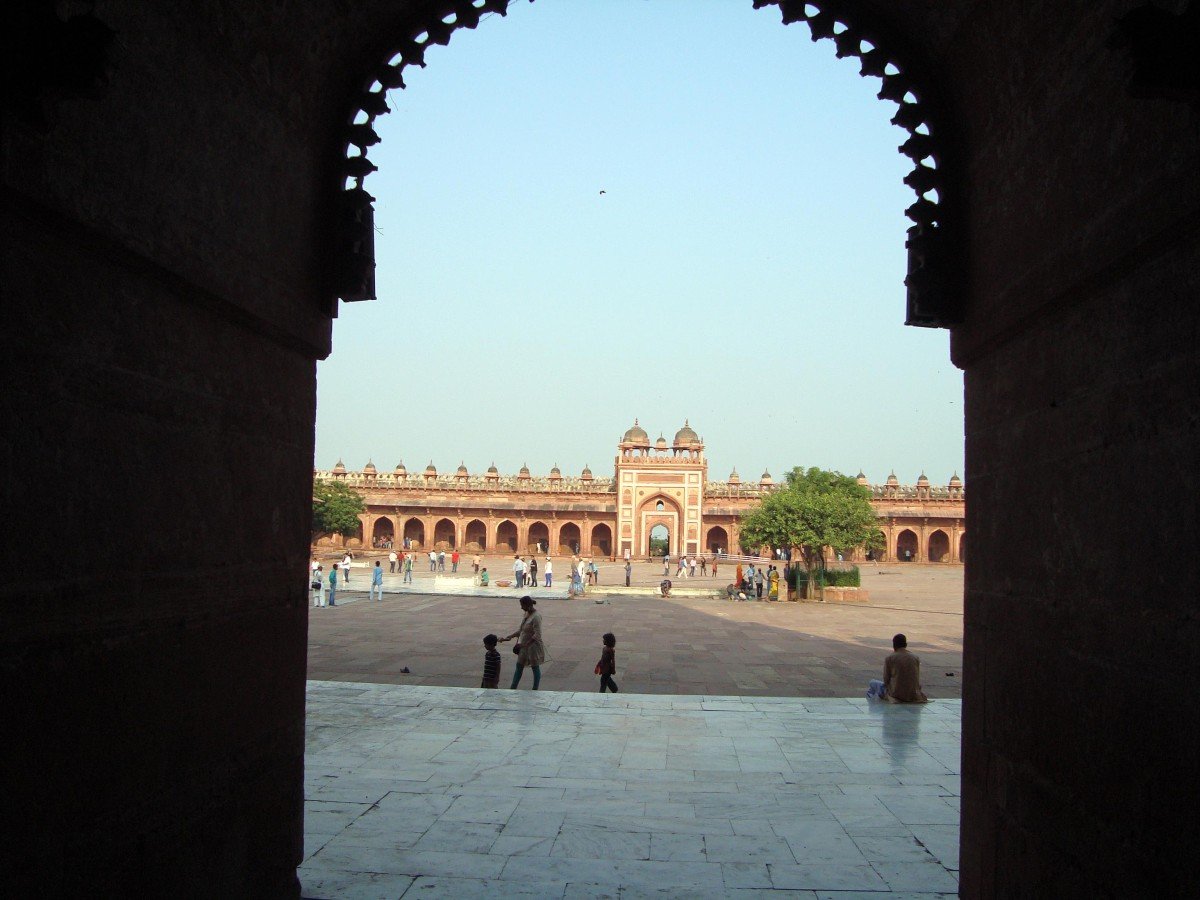
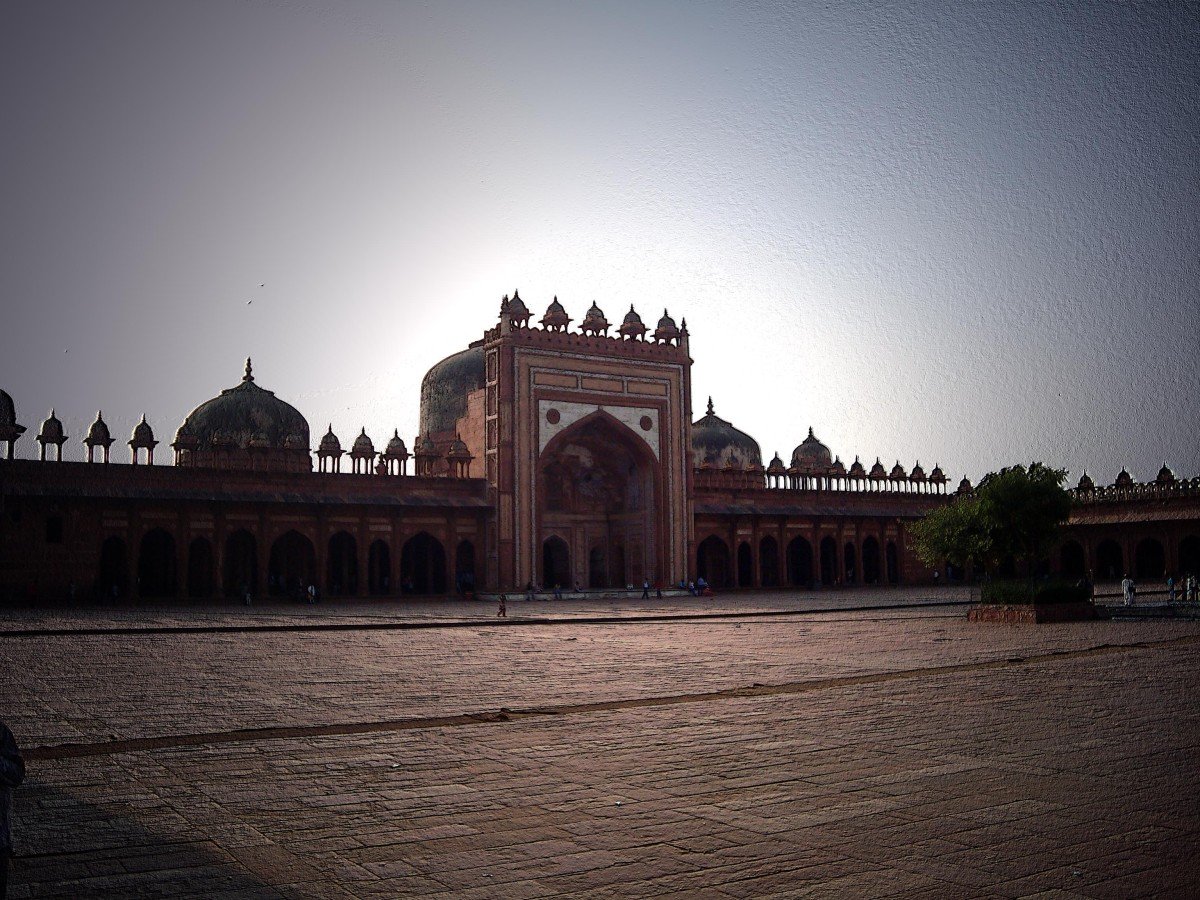
Vast Courtyard: The mosque complex is centered around one of the largest courtyards (sahn) in India, a Dimension of approximately 111 meters (North-South) by 139 meters (East-West), designed to hold a massive congregation.
Prayer Hall: The m...Vast Courtyard: The mosque complex is centered around one of the largest courtyards (sahn) in India, a Dimension of approximately 111 meters (North-South) by 139 meters (East-West), designed to hold a massive congregation.
Prayer Hall: The main prayer hall is a colossal, multi-domed hypostyle structure on the western side, featuring a grand, towering central arch (iwan), flanked by smaller arches and side arcades.
Gateways:
The complex has two major entrances: the immense Buland Darwaza (South) and the smaller, more refined Badshahi Darwaza (East), which is the royal entrance.
Tomb of Salim Chishti: Located within the courtyard, this tomb is a square-plan marble structure featuring intricate, delicate white marble jali screens, contrasting sharply with the red sandstone mosque walls.
Material and Decoration: Built predominantly of red sandstone with extensive use of white marble inlay and decorative jali work, particularly around the central mihrab (niche), showcasing high-quality Mughal decorative art and the syncretic blend of materials. -
How To Reach:
By Air (Via Agra): The nearest airport is Agra (AGR), approximately 35-40 KMS away. A taxi is required from the airport to the designated parking area at Fatehpur Sikri, where the final leg is covered by local transport.
By Train (Main Railhead...By Air (Via Agra): The nearest airport is Agra (AGR), approximately 35-40 KMS away. A taxi is required from the airport to the designated parking area at Fatehpur Sikri, where the final leg is covered by local transport.
By Train (Main Railhead): The most practical railway station is Agra Cantt (AGC), about 37 KMS away. From the station, take a bus or taxi to Fatehpur Sikri town, then transfer to the local shuttle.
By Road (Most Common Route): Fatehpur Sikri is on the main Agra-Jaipur road. The road trip from Agra is simple, taking about 1 hour. All private vehicles must park at the designated external parking area.
By Local Transport (Shuttle and Walk): From the parking area/ticket counter, take the authorized CNG auto-rickshaw or electric bus shuttle to the main town area. The mosque, including the Buland Darwaza, is then accessed via a short, mandatory walk up the hill and through the local bazaar area. -
Weather and Best Time to Visit:
Winter Season (October to March): This is the Best Time to Visit. The pleasant temperatures (around 10°C to 25°C) are perfect for comfortably walking the vast, open courtyard and for the climb up to the Buland Darwaza.
Summer Season (April to...Winter Season (October to March): This is the Best Time to Visit. The pleasant temperatures (around 10°C to 25°C) are perfect for comfortably walking the vast, open courtyard and for the climb up to the Buland Darwaza.
Summer Season (April to June): The intense heat makes the open courtyard and the climb to the Buland Darwaza very difficult at mid-day. Visit strictly in the early morning or late evening.
Monsoon Season (July to September): The rains bring a cool respite, but the stone is slippery, and the atmosphere can be humid. The washed red sandstone and dramatic clouds make for beautiful, atmospheric photos.
Different Parts of the Day: Early Morning is the optimal time for solitude and witnessing the quiet beauty of the mosque, often with local worshippers present. Late Afternoon is best for photography, as the setting sun dramatically lights the Buland Darwaza. -
Near Tourist Places:
Buland Darwaza (Adjacent, <100 M), Tomb of Salim Chishti (Inside, <100 M), Badshahi Darwaza (Adjacent, <100 M), Diwan-i-Aam (Approx. 1. 5 KMS), Panch Mahal (Approx. 1. 5 KMS), Birbal's House (Approx. 1. 5 KMS), Hiran Minar (Approx. 1. 5 KMS), Agra Fort (Approx. 37 KMS), Taj Mahal (Approx. 39 KMS), Bharatpur Bird Sanctuary (Keoladeo National Park) (Approx. 22 KMS).
Tourism Tips
-
Health & safety: Be mindful of crowds, particularly near the Salim Chishti Tomb and the Buland Darwaza. Keep your belongings secure. Wear modest clothing as a sign of respect for the functioning mosque (covering shoulders and legs is required).Health & safety: Be mindful of crowds, particularly near the Salim Chishti Tomb and the Buland Darwaza. Keep your belongings secure. Wear modest clothing as a sign of respect for the functioning mosque (covering shoulders and legs is required).
Packing Essentials: Bring a scarf or shawl (for women) to cover the head. Carry a bag to place your shoes in after removing them at the entrance. Carry small change for offerings and the shoe-minding service.
Accommodation: Day-trip from Agra (37 KMS) is the best option for comfortable lodging. Be aware of the local atmosphere of the bazaar leading to the gate, which can be assertive.
Local Etiquette: Remove your shoes at the designated point. Be respectful of the worshippers and do not photograph people without permission, especially during prayers. Do not touch or climb on the marble tomb's jali screens.
Guide Warning: Be wary of unauthorized individuals offering "tours" or "special blessings" around the tomb, which are often scams. Only hire licensed guides for historical context.
Reviews
FAQs
Fatehpur Sikri Itineray And Cost:-
Other Places In Fatehpur Sikri :-
Other States In India :-
Information about New and Updated Locations() of Uttar Pradesh Has Been Added :-
Card subtitle
Note:-
Information provided here in good Faith and for reference only.
Near Places

Abul Fazal and Faizi's Houses
Some quick example text to build on the card title and make up the bulk of the card's content.
Go somewhere
Agra Gate
Some quick example text to build on the card title and make up the bulk of the card's content.
Go somewhere
Anup Talao
Some quick example text to build on the card title and make up the bulk of the card's content.
Go somewhere
Archaeological Museum
Some quick example text to build on the card title and make up the bulk of the card's content.
Go somewhere
Baoli
Some quick example text to build on the card title and make up the bulk of the card's content.
Go somewhere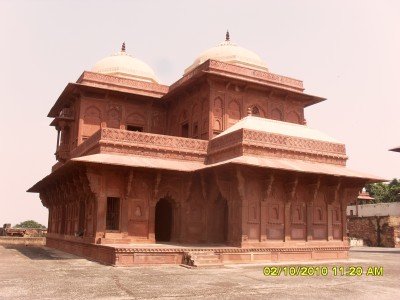
Birbal's House
Some quick example text to build on the card title and make up the bulk of the card's content.
Go somewhere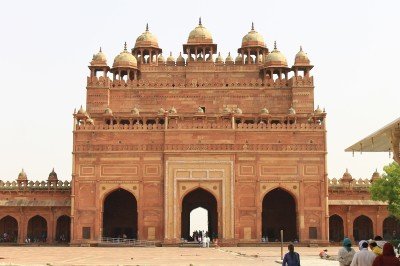
Buland Darwaza
Some quick example text to build on the card title and make up the bulk of the card's content.
Go somewhere
Caravanserai
Some quick example text to build on the card title and make up the bulk of the card's content.
Go somewhere
Daftar Khana
Some quick example text to build on the card title and make up the bulk of the card's content.
Go somewhere
Diwan-i-Aam
Some quick example text to build on the card title and make up the bulk of the card's content.
Go somewhere
Diwan-i-Khas
Some quick example text to build on the card title and make up the bulk of the card's content.
Go somewhere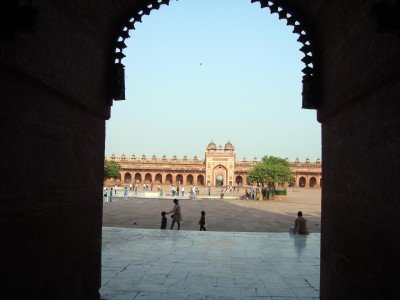
Jami Masjid
Some quick example text to build on the card title and make up the bulk of the card's content.
Go somewhere
King's Gate
Some quick example text to build on the card title and make up the bulk of the card's content.
Go somewhere
Naubat Khana
Some quick example text to build on the card title and make up the bulk of the card's content.
Go somewhere
Pachisi Court
Some quick example text to build on the card title and make up the bulk of the card's content.
Go somewhere
Panch Mahal
Some quick example text to build on the card title and make up the bulk of the card's content.
Go somewherein Other Cities