Hawa Mahal
General information
-
Ideal Duration:
One Hour:A quick stop-over to appreciate the detailed jali work and its historical function.Place Type:
Historic Structure:Part of the Zenana/Harem compEntry Fees:
Ticket Price for Fatehpur Sikri Complex:There is a combined ticket for entry into the Fatehpur Sikri Imperial Complex (which includes the Hawa Mahal and other palaces). The entry fee is subject to change but is generally affordable for citizens of India, SAARC, and BIMSTEC ...Ticket Price for Fatehpur Sikri Complex:There is a combined ticket for entry into the Fatehpur Sikri Imperial Complex (which includes the Hawa Mahal and other palaces). The entry fee is subject to change but is generally affordable for citizens of India, SAARC, and BIMSTEC countries, which is typically around INR 40 to INR 50.
Foreign Tourist Fee:The fee for foreign tourists is significantly higher, usually around INR 550 to INR 610, which contributes to the monument's maintenance and restoration.
Free Entry for Children:Children below the age of 15 years typically have free entry, making it an excellent family destination.
Separate Mosque Complex Entry:There is no separate fee for the Jama Masjid complex, which is a different part of Fatehpur Sikri. Always purchase tickets from the official Archaeological Survey of India (ASI) counter or online to avoid scams.Timing:
Regular Timings:The monument complex, including the Hawa Mahal, is open from Sunrise to Sunset every day of the week, typically from 6:00 AM to 6:30 PM.
Ideal Visit Time:The best time to visit is immediately after opening, between 6:00 AM an...Regular Timings:The monument complex, including the Hawa Mahal, is open from Sunrise to Sunset every day of the week, typically from 6:00 AM to 6:30 PM.
Ideal Visit Time:The best time to visit is immediately after opening, between 6:00 AM and 8:00 AM. The light is beautiful, the heat is low, and the crowds are minimal, allowing for peaceful exploration and photography of the intricate screens.
Avoid the Heat:Avoid the hours between 11:00 AM and 3:00 PM, especially during the summer months of April to June, as the red sandstone absorbs and radiates significant heat, making the visit uncomfortable.
Closing Time Ambience:Visiting right before sunset can offer a unique, golden-hour perspective, though time is limited.Special Events:
Mughal Harem Festivals and Private Gatherings:As part of the Zenana, the structure would have been an observation point for private celebrations and festivals of the royal ladies, such as Diwali or Eid. These were not public events but were vibrant within the palace walls, ...Mughal Harem Festivals and Private Gatherings:As part of the Zenana, the structure would have been an observation point for private celebrations and festivals of the royal ladies, such as Diwali or Eid. These were not public events but were vibrant within the palace walls, and the screens of the Hawa Mahal were their vantage point.
Observation of Mina Bazaar:The palace likely served as a viewing platform for the Mina Bazaar (Meena Bazaar) festivities, which was a special bazaar where Mughal women set up stalls and sold goods to the Emperor and his male courtiers. This was a rare occasion for the women to interact, and the Hawa Mahal offered a perfect, secluded viewing spot.Best Photo Spots:
Jali Screen Silhouettes:Photographing the intricate shadow patterns cast by the latticed windows on the red sandstone floors or walls, especially around noon or in the soft light of the late afternoon.
The View from Above:Capturing the panor...Jali Screen Silhouettes:Photographing the intricate shadow patterns cast by the latticed windows on the red sandstone floors or walls, especially around noon or in the soft light of the late afternoon.
The View from Above:Capturing the panoramic view of the courtyard and other parts of the Zenana complex from the upper storey. This photo spot provides a unique perspective on the spatial planning of the residential area.
Framed Views:Using the arched openings of the ground floor or the window frames of the upper floor to frame other monuments like the Jodha Bai's Palace or the distant landscape, adding depth and context to the photographs.
Symmetry and Repetition:Focusing on the repetitive pattern of the columns and arches in the ground floor arcade to capture the structural symmetry and the vastness of the domestic space.
The Red Sandstone Texture:Taking close-up photos that highlight the rich, warm texture and carving details of the red sandstone, contrasting it with the blue sky for a visually striking image.Photo Gallery
Things To Do
-
Studying Mughal Ventilation:Spend time studying the different patterns and thickness of the jali screens to understand the principles of air circulation and light diffusion used in the 16th-century. This is a must-do for architectural enthusiasts.
Photography of Jali Patterns:Focus on macro photography of the intricate geometric patterns of the latticework, capturing the interplay of light and shadow, especially during the soft light of early morning.
Connecting History with Social Custom:Reflect on the life of the Mughal women, standing where they would have stood, observing the vast courtyard and complex while remaining unseen. This intellectual exercise adds depth to the visit.
Exploring the Zenana Complex:Combine the visit with the adjacent Jodha Bai's Pala...Studying Mughal Ventilation:Spend time studying the different patterns and thickness of the jali screens to understand the principles of air circulation and light diffusion used in the 16th-century. This is a must-do for architectural enthusiasts.
Photography of Jali Patterns:Focus on macro photography of the intricate geometric patterns of the latticework, capturing the interplay of light and shadow, especially during the soft light of early morning.
Connecting History with Social Custom:Reflect on the life of the Mughal women, standing where they would have stood, observing the vast courtyard and complex while remaining unseen. This intellectual exercise adds depth to the visit.
Exploring the Zenana Complex:Combine the visit with the adjacent Jodha Bai's Palace, the Khwabgah and Panch Mahal (The Wind Tower) to fully grasp the flow and design of the royal ladies' residential and recreational areas.
Engaging with Local Guides:Hire an authorized local guide to get specific anecdotes and historical context about the royal household and the purpose of the Hawa Mahal within the private Zenana enclosure, which brings the quiet ruins to life.
Sitting and Reflecting:Find a cool spot in the pillared arcade on the ground floor to escape the sun and simply appreciate the serene, simple ambiance of the structure before moving on to the more grandiose public areas of the fort.
Documenting Architectural Details:Carry a notebook to sketch or document the dimensions and style of the columns and brackets in the ground floor. Compare them with the structural elements in other parts of Fatehpur Sikri to appreciate the subtle differences in the construction of a private domestic dwelling versus a public space.
Information
-
Why Famous:
The Ingenuity of Mughal Climate Control:It is famous for the innovative use of stone latticework that acted as an ancient air-conditioning unit, making life bearable for the royal women during the punishingly hot months of May and June. It represents the practical genius of...The Ingenuity of Mughal Climate Control:It is famous for the innovative use of stone latticework that acted as an ancient air-conditioning unit, making life bearable for the royal women during the punishingly hot months of May and June. It represents the practical genius of Mughal architects.
A Symbol of Privacy and Power:It symbolizes the hidden world of the Zenana (Harem), allowing the inhabitants to participate in the observation of the court's activities without compromising their seclusion. It offers a unique insight into the social customs and the architecture dedicated to them. -
Architecture:
Architectural Marvel of Lattice Screens:Red sandstone is the primary material. The structure is double-storeyed, with an open pillared arcade on the ground floor. The most notable architectural element is the use of intricately carved jali (latticed stone screens) on the u...Architectural Marvel of Lattice Screens:Red sandstone is the primary material. The structure is double-storeyed, with an open pillared arcade on the ground floor. The most notable architectural element is the use of intricately carved jali (latticed stone screens) on the upper storey.
Purpose and Function:The screens were designed to create a "breeze tunnel," naturally cooling the interiors, a technique vital for the hot local climate. This also ensured the purdah system for the royal ladies.
Dimensions and Features:The thick stone screens, with an approximate thickness of 63. 5 mm, ensure both shade and privacy. The design is simple, dominated by square columns in double rows on the ground floor. Stairways are present on the eastern and western side of the suite for access to the upper covered storey. The entire structure blends function with the aesthetic of the Mughal court, albeit on a small scale compared to other monuments.
Design Influence:The influence is predominantly Mughal and local Rajasthani with the use of the highly efficient jali screens, creating a subtle blend of styles. -
How To Reach:
By Air:The nearest domestic airport is Agra's Kheria Airport (AGR), which is approximately 33-40 KMS away. From there, one can hire a pre-paid taxi or a private cab. For international travellers, Indira Gandhi International Airport (DEL) in Delhi is the nearest major hub, ...By Air:The nearest domestic airport is Agra's Kheria Airport (AGR), which is approximately 33-40 KMS away. From there, one can hire a pre-paid taxi or a private cab. For international travellers, Indira Gandhi International Airport (DEL) in Delhi is the nearest major hub, around 215 KMS away, followed by a taxi, train, or bus journey to Fatehpur Sikri or Agra.
By Train:The nearest station is Fatehpur Sikri Railway Station (FTS), which is only about 1 KM from the main complex. However, it is a small station. The major rail hub is Agra Cantt (AGC), about 37 KMS away, with excellent connectivity from all major Indian cities like Delhi, Mumbai, and Kolkata. From Agra Cantt, one can take a local train to FTS or hire a taxi/bus.
By Road:Fatehpur Sikri is located approximately 36-40 KMS from Agra and is easily reachable via NH 19 and NH 44 (old NH 2). State-run buses and private air-conditioned tourist buses run regularly from Agra's Idgah Bus Stand. Taxis and pre-booked cabs offer the most comfortable option.
By Local Transport:The area near the complex is a restricted vehicular zone. From the main parking lot/bus stand, you must hire a CNG auto-rickshaw (a quick, cheap ride), or walk the short distance uphill to the main gate. This local transport is mandatory for the last segment of the journey to protect the monument from pollution. -
Weather and Best Time to Visit:
Different Types of Seasons:The best time is the Winter Season (October to March). The weather is pleasantly cool, with average temperatures ranging from 10Rs.C to 25Rs.C, perfect for all-day sightseeing. The Monsoon Season (July to September) is hot and humid but offers lush, ...Different Types of Seasons:The best time is the Winter Season (October to March). The weather is pleasantly cool, with average temperatures ranging from 10Rs.C to 25Rs.C, perfect for all-day sightseeing. The Monsoon Season (July to September) is hot and humid but offers lush, green surroundings. The Summer Season (April to June) is extremely hot, with temperatures often soaring above 40Rs.C, and should be avoided.
Different Parts of the Day:The best part of the day is the Early Morning (sunrise to 9:00 AM) to beat the heat and the crowds. The light is ideal for photography. Late Afternoon (4:00 PM to sunset) is the second-best time for a pleasant walk and to catch the golden light on the red sandstone. -
Near Tourist Places:
Jodha Bai's Palace (Mariam-uz-Zamani): Adjoining.
Khwabgah (Akbar's Private Residence): Less than 1 KM.
Panch Mahal (Wind Tower): Less than 1 KM.
Diwan-i-Khas (Hall of Private Audience): Less than 1 KM.
Diwan-i-Aam (Hall of Public Audience): Less than 1 KM.
Hiran Minar (Elephant Tower): Approx. 1 KM.
Jama Masjid (Mosque Complex with Buland Darwaza): Approx. 1 KM.
Tomb of Sheikh Salim Chishti: Within the Jama Masjid Complex.
Agra Fort: Approx. 37 KMS.
Taj Mahal (Agra): Approx. 40 KMS.
Tourism Tips
-
Health & Safety:Always carry a water bottle to stay hydrated, especially outside the Winter months. Wear comfortable walking shoes, as the complex involves a lot of walking on uneven historical grounds. Use official ASI guides.
Packing Essenti...Health & Safety:Always carry a water bottle to stay hydrated, especially outside the Winter months. Wear comfortable walking shoes, as the complex involves a lot of walking on uneven historical grounds. Use official ASI guides.
Packing Essentials:Carry sunglasses, a wide-brimmed hat, and high SPF sunscreen to protect yourself from the strong Indian sun. A good camera with an extra battery is essential for capturing the intricate architecture.
Accommodation:The city of Fatehpur Sikri has limited, basic accommodation. It is highly recommended to stay in Agra (36 KMS away) where there is a wide range of hotels, from budget to luxury, and take a day trip to the fort.
Respectful Conduct:Dress modestly, particularly when visiting the nearby Jama Masjid complex and the Tomb of Sheikh Salim Chishti. Photography is often restricted inside the tomb. Always ask for permission before photographing local people.
Hiring Guides:Only hire government-authorized guides. Negotiate the price and the scope of the tour (which palaces they will cover) beforehand to ensure clarity and fair pricing.
Ticket Purchase:Buy tickets only from the official counters or the ASI website to prevent overpaying to touts.
Bargaining in Bazaars:Be prepared to bargain firmly if you purchase souvenirs from the local shops or vendors outside the complex.
Reviews
FAQs
Fatehpur Sikri Itineray And Cost:-
Other Places In Fatehpur Sikri :-
Other States In India :-
Information about New and Updated Locations() of Uttar Pradesh Has Been Added :-
Card subtitle
Note:-
Information provided here in good Faith and for reference only.
Near Places

Abul Fazal and Faizi's Houses
Some quick example text to build on the card title and make up the bulk of the card's content.
Go somewhere
Agra Gate
Some quick example text to build on the card title and make up the bulk of the card's content.
Go somewhere
Anup Talao
Some quick example text to build on the card title and make up the bulk of the card's content.
Go somewhere
Archaeological Museum
Some quick example text to build on the card title and make up the bulk of the card's content.
Go somewhere
Baoli
Some quick example text to build on the card title and make up the bulk of the card's content.
Go somewhere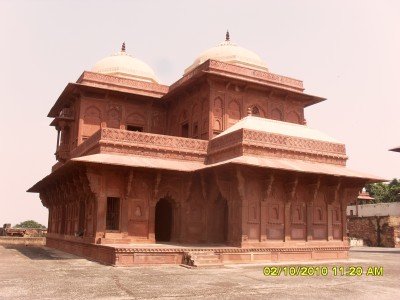
Birbal's House
Some quick example text to build on the card title and make up the bulk of the card's content.
Go somewhere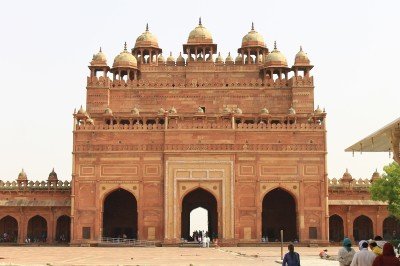
Buland Darwaza
Some quick example text to build on the card title and make up the bulk of the card's content.
Go somewhere
Caravanserai
Some quick example text to build on the card title and make up the bulk of the card's content.
Go somewhere
Daftar Khana
Some quick example text to build on the card title and make up the bulk of the card's content.
Go somewhere
Diwan-i-Aam
Some quick example text to build on the card title and make up the bulk of the card's content.
Go somewhere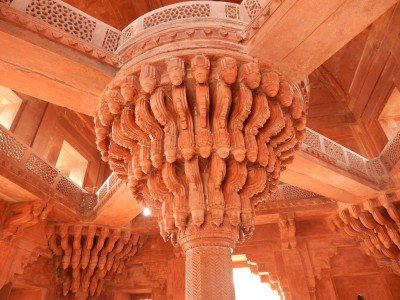
Diwan-i-Khas
Some quick example text to build on the card title and make up the bulk of the card's content.
Go somewhere
Jami Masjid
Some quick example text to build on the card title and make up the bulk of the card's content.
Go somewhere
King's Gate
Some quick example text to build on the card title and make up the bulk of the card's content.
Go somewhere
Naubat Khana
Some quick example text to build on the card title and make up the bulk of the card's content.
Go somewhere
Pachisi Court
Some quick example text to build on the card title and make up the bulk of the card's content.
Go somewhere
Panch Mahal
Some quick example text to build on the card title and make up the bulk of the card's content.
Go somewherein Other Cities