
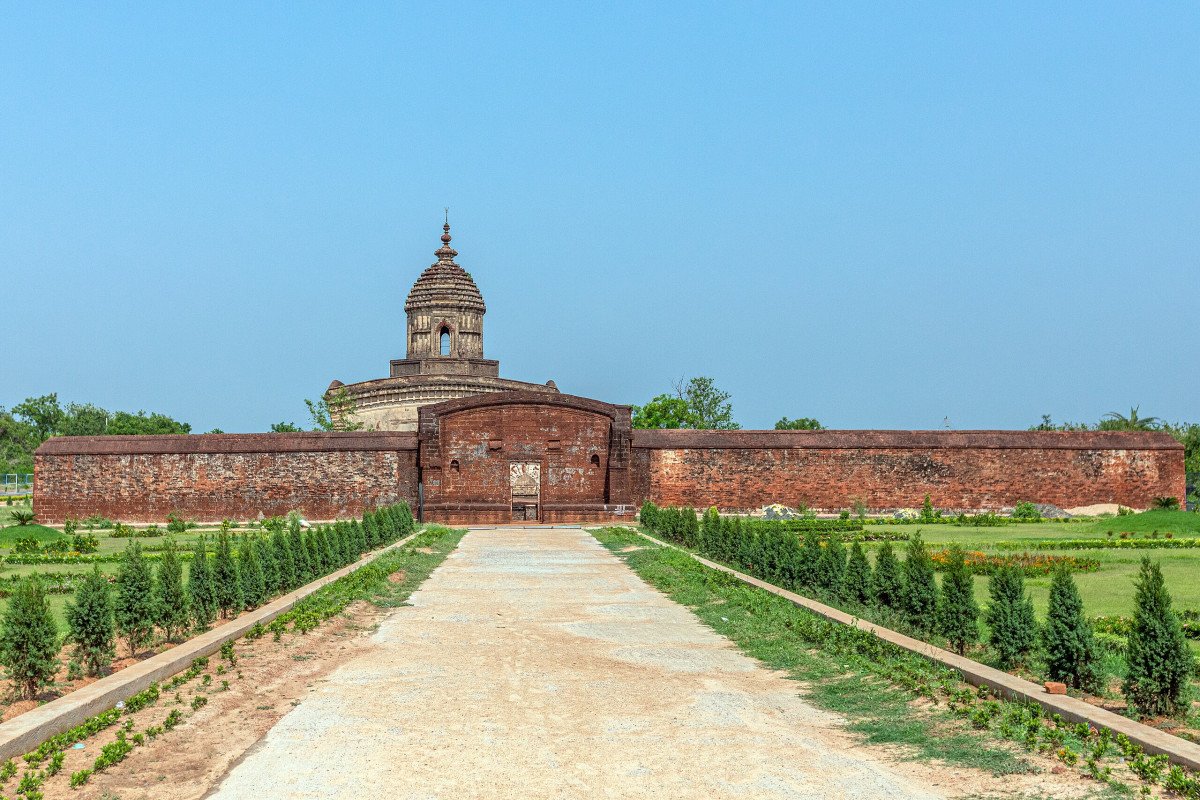

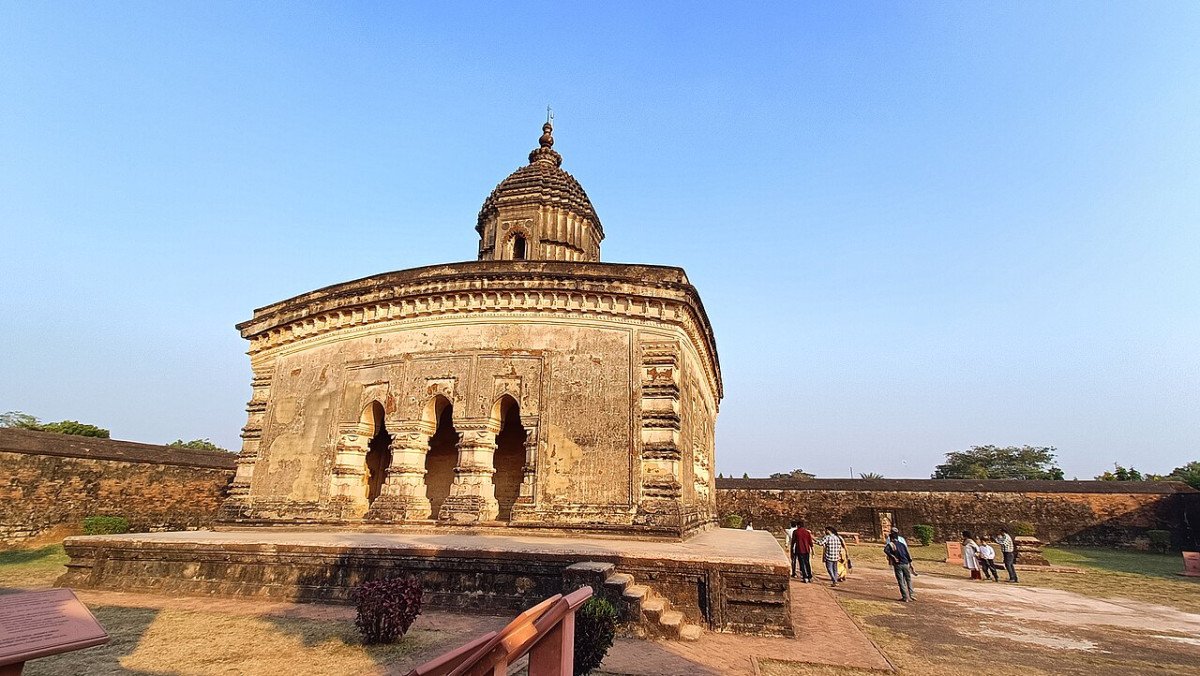
Radha Laljiu Temple
General information
-
Ideal Duration:
30 Minutes to 1 Hour (allows time for witnessing a puja or aarti).Place Type:
Religious/Worship Site.Entry Fees:
Active Temple Access: Since it is an active place of worship, there are typically No Entry Fees for visiting the compound or the temple itself for darshan (viewing the deity).
Donations: Visitors may offer voluntary donations for the temple'...Active Temple Access: Since it is an active place of worship, there are typically No Entry Fees for visiting the compound or the temple itself for darshan (viewing the deity).
Donations: Visitors may offer voluntary donations for the temple's upkeep or for puja materials, but this is optional and not a mandatory fee.Timing:
Regular Timings: Usually open from early morning (5:00 AM - 6:00 AM) to late evening (8:00 PM - 9:00 PM), with a possible break in the afternoon (e. g. , 1:00 PM to 4:00 PM) when the deity is said to rest.
Ideal Visit Time: Early morning or ...Regular Timings: Usually open from early morning (5:00 AM - 6:00 AM) to late evening (8:00 PM - 9:00 PM), with a possible break in the afternoon (e. g. , 1:00 PM to 4:00 PM) when the deity is said to rest.
Ideal Visit Time: Early morning or late afternoon/evening, especially during the aarti, to experience the spiritual ambiance.Special Events:
Rath Yatra and Jhulan Yatra: As a Krishna temple, the Rath Yatra (Chariot Festival, usually in June-July) and Jhulan Yatra (Swing Festival, usually in July-August) are significant events. During Rath Yatra, the temple's deities are traditionally taken out on a chariot in a ...Rath Yatra and Jhulan Yatra: As a Krishna temple, the Rath Yatra (Chariot Festival, usually in June-July) and Jhulan Yatra (Swing Festival, usually in July-August) are significant events. During Rath Yatra, the temple's deities are traditionally taken out on a chariot in a grand procession.Best Photo Spots:
The Temple Front During Rituals: Capture the temple with the colorful backdrop of a religious ceremony. The contrast between the solemn laterite stone and the vibrant ritual colors can be striking.
Close-up of Stucco Traces: Photograph the ...The Temple Front During Rituals: Capture the temple with the colorful backdrop of a religious ceremony. The contrast between the solemn laterite stone and the vibrant ritual colors can be striking.
Close-up of Stucco Traces: Photograph the remaining ornamental stucco work to document the intricate plaster art, which requires a focus on texture and fading details.
Framing the Shikhar (Tower): Use the boundary wall or the gateway arch to frame the temple's single tower against the sky, emphasizing its Eka-Ratna style.Photo Gallery

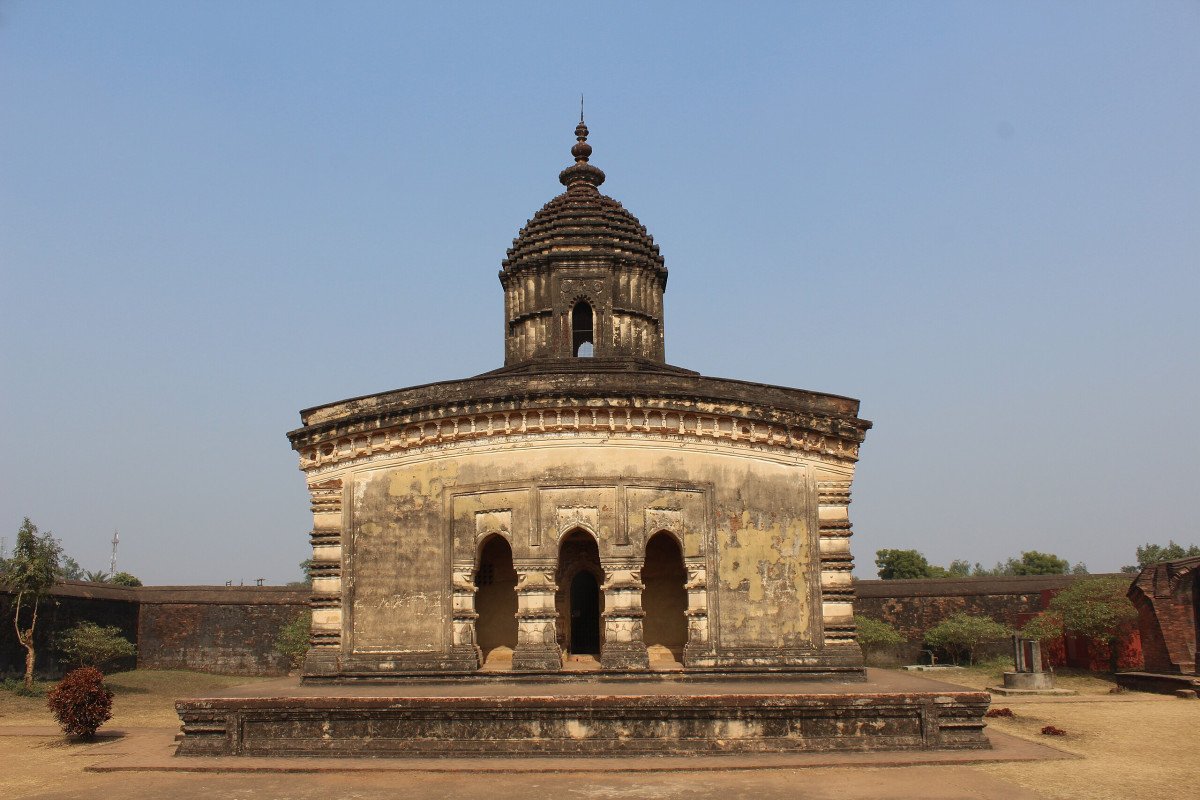

Things To Do
-
Attend Morning/Evening Aarti: Experience the spiritual side of Bishnupur by attending the aarti (ritual of light) for Laljiu. This provides a vibrant cultural and religious experience.
Observe Local Devotional Practices: Watch how local devotees perform puja (worship) and offer prayers. This is a chance to respectfully engage with the local religious culture.
Compare Stucco and Terracotta: Compare the style and subject matter of the stucco decoration here with the terracotta carvings on nearby brick temples like Shyam Rai. Notice the differences in texture and detail.
Explore the Compound: Walk through the inner and outer yards, often separated by a wall, and look for any smaller shrines dedicated to other deities, like Kameswar Siva, as mentioned in some hist...Attend Morning/Evening Aarti: Experience the spiritual side of Bishnupur by attending the aarti (ritual of light) for Laljiu. This provides a vibrant cultural and religious experience.
Observe Local Devotional Practices: Watch how local devotees perform puja (worship) and offer prayers. This is a chance to respectfully engage with the local religious culture.
Compare Stucco and Terracotta: Compare the style and subject matter of the stucco decoration here with the terracotta carvings on nearby brick temples like Shyam Rai. Notice the differences in texture and detail.
Explore the Compound: Walk through the inner and outer yards, often separated by a wall, and look for any smaller shrines dedicated to other deities, like Kameswar Siva, as mentioned in some historical accounts of the broader complex.
Hotels
● Ankush Resorts
Address: Bishnupur, WB
Distance: 3.2
Details: A decent mid-range option that offers free breakfast and comfortable rooms. The property is well-maintained and provides a quiet stay for families. It...
● Bishnupur River Side Resort
Address: Bishnupur, WB
Distance: 8
Details: A luxury-themed resort offering a swimming pool, on-site dining, and 24-hour service. Its spacious rooms and premium facilities ensure a relaxed stay....
● Holiday Resort
Address: Bishnupur, WB
Distance: 2.7
Details: A comfortable mid-range resort suitable for a variety of guests. The resort offers well-furnished rooms, 24/7 service, and a garden for guests to rela...
● Hotel Annapurna
Address: Professors Colony, Bishnupur, WB
Distance: 2.3
Details: Hotel Annapurna is a premier choice for travelers, offering luxury amenities including a swimming pool, multi-cuisine restaurant, and 24/7 room servic...
● Hotel Sonar Bangla
Address: Joypur Forest, Bishnupur, WB
Distance: 9.5
Details: A luxury resort surrounded by lush greenery. Facilities include an outdoor swimming pool, a well-equipped gym, and an on-site restaurant serving authe...
● Hotel Suryadeep
Address: Bishnupur Town, WB
Distance: 3.5
Details: A reliable mid-range hotel providing standard comforts. Amenities include free Wi-Fi, 24-hour check-in, and a restaurant. The rooms are simple and wel...
● Jyoti Resort
Address: Belsulia, Bishnupur, WB
Distance: 5
Details: A charming mid-range resort featuring well-decorated, spacious interiors and comfortable bedding. The property includes a restaurant and provides free...
● Lodge Meghmallar
Address: Bus stand Road, Bishnupur, WB
Distance: 2.9
Details: A budget-friendly property situated near the main bus stand. It offers basic clean rooms and essential amenities for travelers on a budget. It is a co...
● Monalisa Lodge
Address: Bus stand Road, Bishnupur, WB
Distance: 2.6
Details: A budget-friendly lodge offering basic yet clean accommodation. The property features a homely restaurant serving delicious local food and provides es...
● New Mukherjee Lodge
Address: Baburdanga, Bishnupur, WB
Distance: 1.4
Details: A well-regarded budget-to-mid-range lodge. It features a banquet hall and clean, functional rooms. The staff is noted for their hospitality and servic...
Show AllRestaurants
● Bawarchi
Address: Main Market, Bishnupur
Distance: 0.5 KM
Details: Bawarchi is a well-known name in the region, recognized for its expertise in preparing elaborate and flavorful Indian dishes. The restaurant has a rep...
Food List: Chicken Biryani', 'Naan', 'Mutton Korma', 'Dal Mak...
● Dehat
Address: Historic Center, Bishnupur
Distance: 0.3 KM
Details: Dehat offers a unique dining experience that celebrates the rustic charm and authentic taste of local heritage. The restaurant is beautifully decorate...
Food List: Kadhai Paneer', 'Keshari Kheer', 'Besan Gata', 'Lu...
● Guptas Veg
Address: Market Street, Bishnupur
Distance: 0.9 KM
Details: Guptas Veg is a premier destination for pure vegetarian dining in the town. It is widely praised for its high standards of hygiene and the quality of ...
Food List: Paneer Butter Masala', 'Butter Naan', 'Dal Makhani...
● Hotel Annapurna
Address: Market Area, Bishnupur
Distance: 0.8 KM
Details: Hotel Annapurna is a traditional establishment known for its authentic, homely food and welcoming atmosphere. The restaurant focuses on delivering a t...
Food List: Fish Kalia', 'Luchi', 'Alur Dom', 'Sukhto', 'Dal',...
● Hotel Sneha
Address: Near Station, Bishnupur
Distance: 1.2 KM
Details: Hotel Sneha combines comfortable lodging with an excellent dining facility that serves authentic regional cuisine. The restaurant is a popular choice ...
Food List: Fish Curry', 'Steamed Rice', 'Green Salad', 'Dal',...
Show AllInformation
-
Why Famous:
Active Worship Center: It is primarily famous for being a living temple where the deity is actively worshipped, drawing devotees for its spiritual significance. This contrasts with many historical ASI-protected temples in Bishnupur where the original deities were moved or w...Active Worship Center: It is primarily famous for being a living temple where the deity is actively worshipped, drawing devotees for its spiritual significance. This contrasts with many historical ASI-protected temples in Bishnupur where the original deities were moved or worship is limited.
Laterite Stone Craftsmanship: Along with a few others, it showcases the mastery of Malla craftsmen in using laterite stone for temple construction, providing a variation in the architectural landscape dominated by brick.
Radha-Krishna Devotion: As a temple dedicated to Radha-Krishna (Laljiu), it is a focal point for the regional Gaudiya Vaishnavism tradition, embodying the philosophy of divine love. -
Architecture:
Architectural Style: Eka-Ratna Style (Single Tower) with Laterite Stone The temple follows the Eka-Ratna pattern, characterized by a single tower (ratna) resting on a square, curved-roof building.
Construction Material: It is typically const...Architectural Style: Eka-Ratna Style (Single Tower) with Laterite Stone The temple follows the Eka-Ratna pattern, characterized by a single tower (ratna) resting on a square, curved-roof building.
Construction Material: It is typically constructed using laterite stone, a locally available, rust-colored material, providing a distinct appearance from the brick temples.
Stucco Decoration: The temple once bore elaborate stucco decorations in low relief carvings, which are now partially visible. Stucco allows for different forms of ornamentation compared to terracotta.
Auxiliary Structures: The complex may include a bhoga mandap (offering hall) and other associated minor temples within its walled premise, indicating its function as an active religious complex.
Circumambulatory Path: Like other major temples, it has a circumambulatory path around the main shrine. -
How To Reach:
Local Transport: Very close to the major temple clusters, making it easily accessible by a short walk or a cycle rickshaw ride from the main road near the Jor Bangla and Shyam Rai temples. ...Local Transport: Very close to the major temple clusters, making it easily accessible by a short walk or a cycle rickshaw ride from the main road near the Jor Bangla and Shyam Rai temples. -
Weather and Best Time to Visit:
Different Types of Seasons: Winter (October to March) is most comfortable. Visiting during Monsoon (July to September) offers a quieter, more reflective atmosphere.
Different Parts of the Day: Early morning to avoid the heat and witness the...Different Types of Seasons: Winter (October to March) is most comfortable. Visiting during Monsoon (July to September) offers a quieter, more reflective atmosphere.
Different Parts of the Day: Early morning to avoid the heat and witness the first puja is highly recommended. -
Near Tourist Places:
1. Jor Bangla Temple (Less than 0. 5 KMS) 2. Shyam Rai Temple (Approx 1 KMS) 3. Radhashyam Temple (Less than 0. 5 KMS)
Tourism Tips
-
Respectful Attire: Dress modestly when visiting an active place of worship. Remove footwear before entering the temple area.
Silence and Devotion: Maintain silence and respect the devotees engaging in prayer. Do not take flash photography ...Respectful Attire: Dress modestly when visiting an active place of worship. Remove footwear before entering the temple area.
Silence and Devotion: Maintain silence and respect the devotees engaging in prayer. Do not take flash photography inside the sanctum.
Reviews
FAQs
Ans:- The Radha Laljiu Temple, dedicated to Lord Krishna and Radha, was constructed by the Malla King Bir Singha II in 1658 CE. It stands as a significant architectural landmark reflecting the devotional fervor of the Malla dynasty. The temple is built on a high square raised plinth, characteristic of the period's religious architecture, and serves as a testament to the patronage of arts and religion by the rulers of Bishnupur, who were known for their profound commitment to Vaishnavism throughout their long and storied regional reign.Ans:- The temple is a fine example of the Eka-Ratna style of Bengali architecture. This design features a single tower or spire rising from a square, curved-roof sanctum, which is distinctively elegant. Constructed primarily using laterite stone, the temple facade was historically adorned with elaborate stucco carvings, though many have faded over the centuries. This style emphasizes the synthesis of traditional Bengal hut-style roofs with elevated platforms, reflecting the unique cultural evolution of temple construction during the medieval period in the region of Bankura, West Bengal.Ans:- Yes, the complex is quite extensive and includes several secondary structures. In front of the main temple lies a Natmandir, or dancing hall, meant for cultural and religious performances. To the west, there is an Orissan-style tower dedicated to Raghunathji. Additionally, the outer yard contains a smaller Pancharatna temple dedicated to Kameswar Siva, which adds to the religious diversity of the site. The entire premises are enclosed by a high boundary wall with a large, decorative eastern gateway, creating a serene and self-contained sacred environment.Ans:- The Natmandir is a crucial part of the temple's architectural and social fabric, designed as a dedicated space for devotional music, dance, and religious ceremonies. In the cultural context of Bishnupur, such halls were essential for the performance of Kirtans and other Vaishnava arts, which were heavily patronized by the Malla kings. It provided a platform where the common people could gather to witness spiritual offerings, effectively bridging the gap between the sanctum sanctorum and the community while enhancing the overall experience of the divine worship practiced at the temple.Ans:- The Laljiu Temple is currently under the protection of the Archaeological Survey of India (ASI), which works to preserve its structural integrity and historical carvings. Additionally, the daily maintenance and regular religious festivals are supported by the income from a debottar estate, a practice established historically by the Burdwan Raj. This combination of government oversight and traditional endowments ensures that the site remains accessible to the public and continues to serve its primary function as a place of worship for the local devotees and visiting pilgrims.Ans:- The Dashara festival is a particularly vibrant time at the Laljiu temple complex. Two traditional temple cars, or Raths, are housed in front of the gateway for this occasion. The smaller car belongs to Lalji, while the larger one belongs to Raghunathji. During the festival, these cars are taken out in a ceremonial procession, drawing large crowds of devotees who gather to participate in the pulling of the chariots. This long-standing tradition remains a highlight of the local calendar, reflecting the enduring spiritual and communal traditions of Bishnupur.Ans:- Yes, the temple is a popular tourist destination and is fully accessible to visitors. While it is a site of historical importance and active worship, tourists are welcome to explore the courtyard, admire the unique architecture, and observe the religious practices. Visitors should be mindful of the sanctity of the place and observe local customs. Because it is an open-air historical complex, it provides an excellent opportunity for photography and learning about medieval Bengali history, making it a staple stop on any comprehensive tour of the Bishnupur heritage circuit.Ans:- The best time to visit is during the winter months, specifically from October to March, when the weather in West Bengal is cool and pleasant. During these months, exploring the temple complex is comfortable, allowing visitors to spend more time observing the architectural details and the surrounding grounds. It is recommended to visit either in the early morning or late afternoon to avoid the midday heat and to experience the peaceful, spiritual ambiance of the temple during the time of the evening Arati ceremony.Ans:- Yes, the temple complex houses important historical inscriptions that provide clues to its past. For example, a loose stone slab preserved in the verandah features Bengali characters dated to 1577 Saka, corresponding to 1655 CE. Another inscription found over the gateway indicates that the thakurbari was further patronized by the Burdwan Raj in 1831 CE. These epigraphic records are invaluable for historians as they help verify the timeline of construction, the identity of the royal patrons, and the historical renovations that have taken place over the centuries.Ans:- The Kameswar Siva temple is a smaller, charming Pancharatna structure located within the outer yard of the Laljiu complex. Its presence highlights the religious inclusivity often found in the Malla period, where temples for various deities were frequently built within the same compound. This specific temple acts as an additional place of worship for the local community, emphasizing the coexistence of Vaishnava and Shaivite traditions in Bishnupur. Its architecture, while smaller, complements the main structure and adds layers of historical and religious significance to the entire temple premises.Ans:- Currently, the temple is part of the protected monument circuit in Bishnupur, and while some major sites have nominal entry fees, many of the smaller temples like Laljiu are freely accessible for visitors to explore the courtyard. However, it is advisable to carry some cash and check at the entrance for any updated guidelines from the Archaeological Survey of India. The local tourist guides or the office of the regional tourism department can provide the most accurate and up-to-date information regarding any potential ticketing for the broader historical site.Ans:- Yes, the temple is easily accessible by local transport. Totos (electric rickshaws), which are the most popular and efficient mode of transport within the town of Bishnupur, can drop visitors right at the entrance gate of the temple enclosure. Since the roads in the main town are narrow and winding, using a Toto is highly recommended for convenience and ease of travel between different temple sites. This ensures a stress-free experience, allowing you to focus on the historical beauty of the various heritage sites throughout your day.Ans:- The temple is generally open for public visitation from early morning, typically around 6:00 AM, until the conclusion of the evening Arati, which occurs around 8:00 PM. It is important to note that many temples in the area follow a traditional schedule, meaning they may close for a few hours in the afternoon, often between 12:00 PM and 4:00 PM, for the deity’s rest and daily rituals. Planning your visit for the morning or the early evening is the best way to ensure you can see the shrine.Ans:- The site is generally considered accessible for senior citizens, though it does involve some walking. The temple is situated on a raised platform, so visitors must climb a small flight of stairs to reach the main porch. These steps are manageable for most, and the surrounding courtyard area is flat and easy to traverse. As mentioned, Totos can get you very close to the gate, minimizing the walking distance required to reach the monument. With basic assistance, it is a relatively easy site to explore compared to more rugged ruins.Ans:- The temple is a sacred site dedicated to the worship of Radha and Krishna, reflecting the deep-rooted Vaishnava culture that flourished under the Malla kings. It serves as a spiritual sanctuary for the local population and a point of pilgrimage for those who appreciate the heritage of the region. Through its daily rituals, festivals, and the continuous presence of the deity, the temple maintains the historical and religious traditions of Bishnupur, keeping the spiritual legacy of the Malla dynasty alive in the hearts of both the local community and visitors alike.Bishnupur Itineray And Cost:-
Radha Laljiu Temple Tourism:-
Other Places In Bishnupur :-
Other States In India :-
Information about New and Updated Locations() of West Bengal Has Been Added :-
Card subtitle
Note:-
Information provided here in good Faith and for reference only.
Near Places

Acharya Jogesh Chandra Museum
Some quick example text to build on the card title and make up the bulk of the card's content.
Go somewhere
Big Stone Gateway
Some quick example text to build on the card title and make up the bulk of the card's content.
Go somewhere
Bishnupur Mela Ground
Some quick example text to build on the card title and make up the bulk of the card's content.
Go somewhere
Bishnupur Rajbari
Some quick example text to build on the card title and make up the bulk of the card's content.
Go somewhere
Chhinnamasta Temple
Some quick example text to build on the card title and make up the bulk of the card's content.
Go somewhere
Dalmadal Cannon
Some quick example text to build on the card title and make up the bulk of the card's content.
Go somewhere
Garh Darwaja
Some quick example text to build on the card title and make up the bulk of the card's content.
Go somewhere
Gokul Chand Temple
Some quick example text to build on the card title and make up the bulk of the card's content.
Go somewhere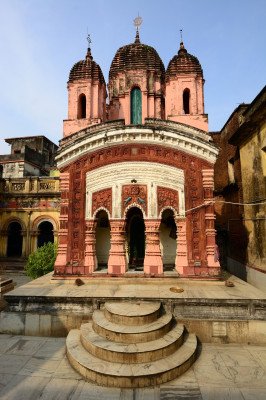
Hadal-Narayanpur
Some quick example text to build on the card title and make up the bulk of the card's content.
Go somewhere
Jhilimili & Sutan Forest
Some quick example text to build on the card title and make up the bulk of the card's content.
Go somewhere
Jor Bangla Temple
Some quick example text to build on the card title and make up the bulk of the card's content.
Go somewhere
Jor Mandir Complex
Some quick example text to build on the card title and make up the bulk of the card's content.
Go somewhere
Jorbangla Temple
Some quick example text to build on the card title and make up the bulk of the card's content.
Go somewhere
Joypur Forest
Some quick example text to build on the card title and make up the bulk of the card's content.
Go somewhere
Kalachand Temple
Some quick example text to build on the card title and make up the bulk of the card's content.
Go somewhere
Kamarpukur
Some quick example text to build on the card title and make up the bulk of the card's content.
Go somewherein Other Cities