Pathar Darwaja
General information
-
Ideal Duration:
30 minutes to 45 minutes (for photography and historical walk-around).Place Type:
Military Architecture, Fortification, Historical GEntry Fees:
Official Entry Fee Status (Free Access): The Pathar Darwaja (Garh Darwaja) is a protected monument under the Archaeological Survey of India (ASI) but is an open-air, self-standing structure. As such, there is NO entry fee or ticket required to walk up to the monument, throu...Official Entry Fee Status (Free Access): The Pathar Darwaja (Garh Darwaja) is a protected monument under the Archaeological Survey of India (ASI) but is an open-air, self-standing structure. As such, there is NO entry fee or ticket required to walk up to the monument, through its main archway, and around its exterior base. It is open to the public free of charge.
Composite Ticket Context: While this specific monument is free, the major clustered temples nearby (like the Rasmancha, Jor Bangla, and Shyam Rai Temple) require a single, composite ASI ticket for entry. Visitors planning to see all the major sites should purchase this ticket, but it is not required for the Pathar Darwaja.
Commercial Photography/Filming: As with all ASI monuments, permission and associated fees are strictly required for any high-end commercial photography, drone usage, or feature film production. For casual tourist photography, there is no charge.Timing:
Regular Timings: The Pathar Darwaja is an open-air structure on a public road and is accessible 24 hours a day. There are no gates or locking mechanisms. However, the ideal and safest period for visits is from Sunrise (around 6:00 AM) to Sunset (around 6:30 PM), as there i...Regular Timings: The Pathar Darwaja is an open-air structure on a public road and is accessible 24 hours a day. There are no gates or locking mechanisms. However, the ideal and safest period for visits is from Sunrise (around 6:00 AM) to Sunset (around 6:30 PM), as there is no specific illumination at night.
Ideal Visit Time (Photography & Comfort):
The two best times for visiting the stone gate are: Early Morning (7:00 AM - 8:30 AM) The eastern face of the gateway catches the soft, reddish glow of the rising sun, which beautifully accentuates the rough texture of the laterite stone. The traffic is minimal, ensuring clear, unobstructed photographs. Late Afternoon (4:30 PM - 6:00 PM) The western side, facing the inner fort, is bathed in the warm, setting sun (Golden Hour), providing a strong contrast and dramatic shadows, ideal for capturing the gate's colossal scale.Special Events:
Heritage Day Celebrations: While the gateway itself does not host a unique annual festival, it is a key focal point during government-organized Heritage Week or World Heritage Day celebrations, typically held in April. During these times, the ASI and local municipality ofte...Heritage Day Celebrations: While the gateway itself does not host a unique annual festival, it is a key focal point during government-organized Heritage Week or World Heritage Day celebrations, typically held in April. During these times, the ASI and local municipality often organize special guided tours, lighting, and cultural performances nearby to highlight the gateways importance as a non-religious heritage site.
The Bishnupur Mela Parade: The annual Bishnupur Mela (Fair) in late December/early January sees a cultural parade or procession that often utilizes the majestic background of the Pathar Darwaja. The sight of local artists, musicians, and people passing through the massive stone arch in traditional attire creates a powerful tableaua symbolic reenactment of the past and present meeting at the historical entrance to the kingdom.Best Photo Spots:
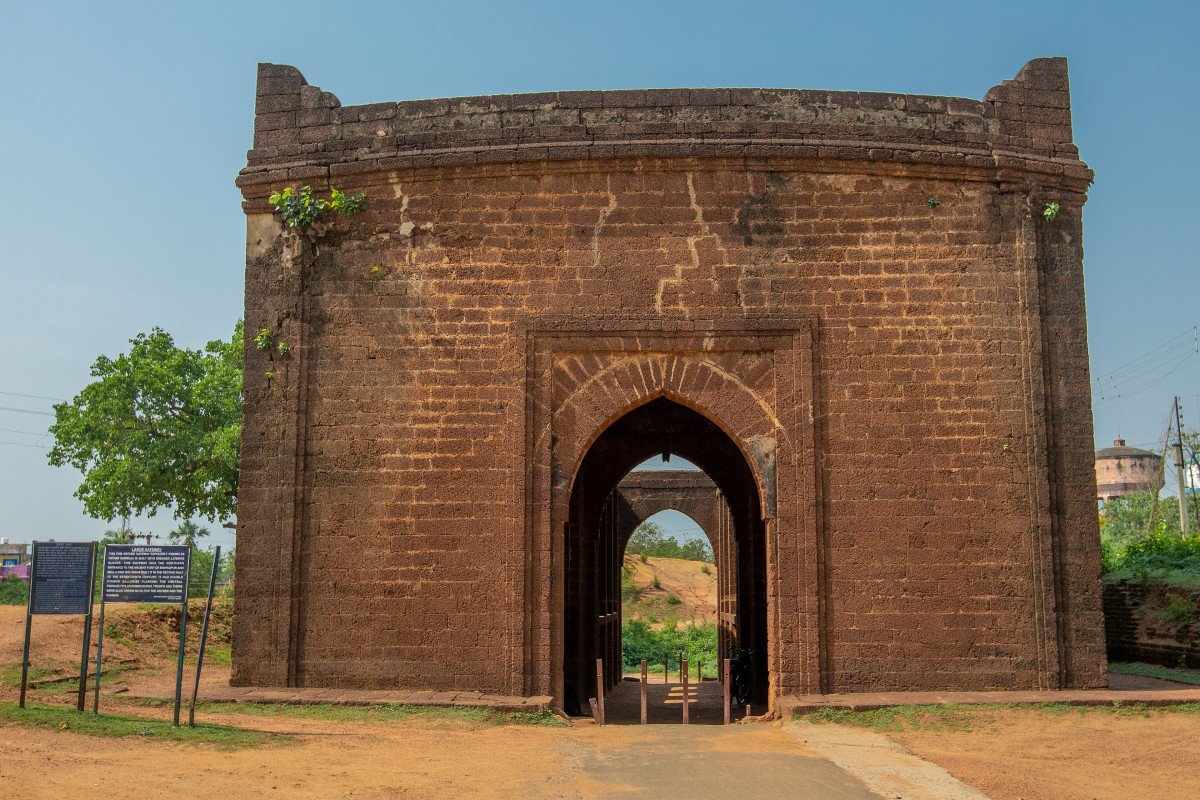
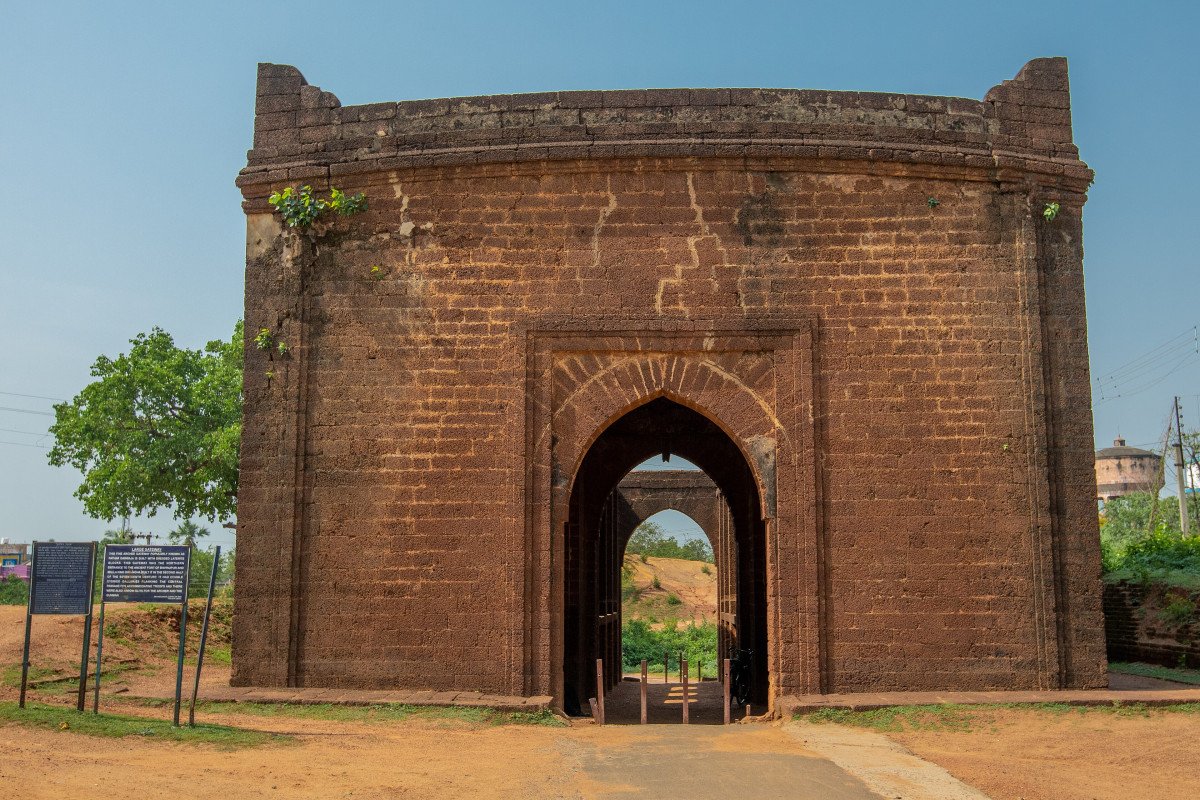
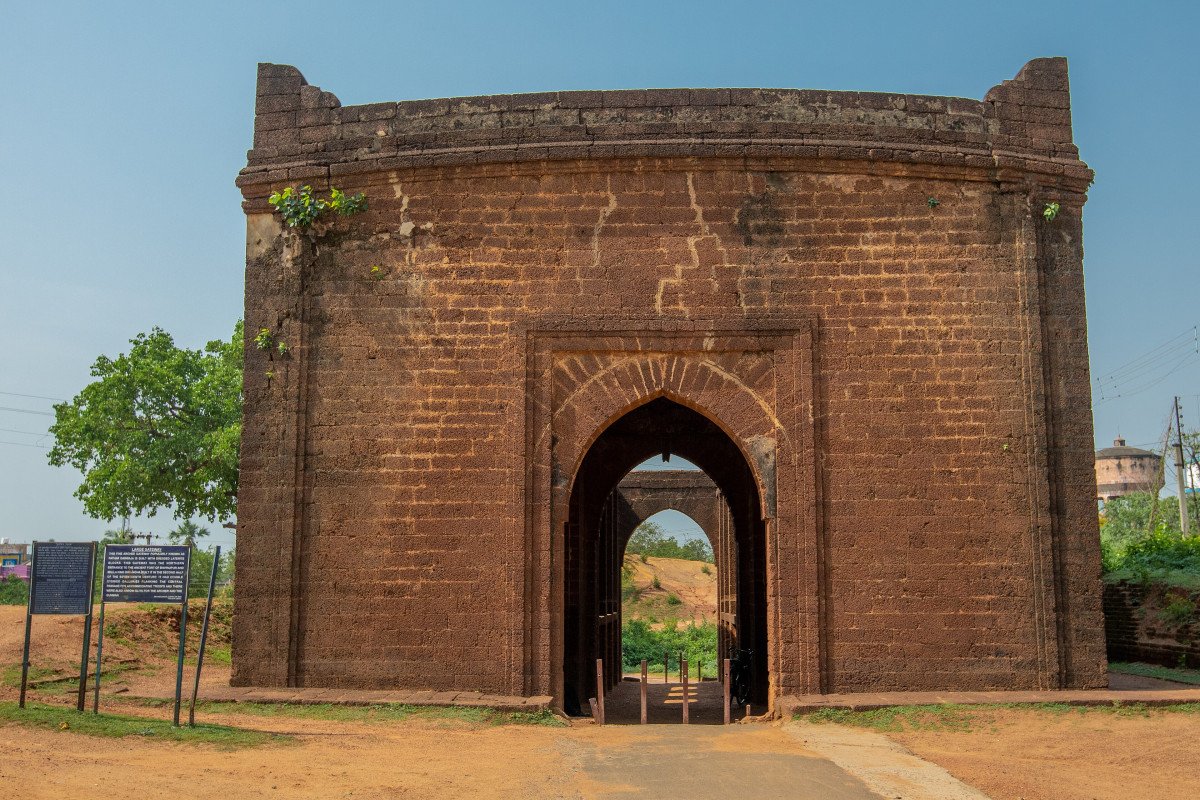
The Gateway Arch (Wide Shot): The most iconic photo spot, best captured from the main approach road, emphasizing its verticality and width.
Focus: Center the towering arch, e...The Gateway Arch (Wide Shot): The most iconic photo spot, best captured from the main approach road, emphasizing its verticality and width.
Focus: Center the towering arch, ensuring the flanking bastions are visible to convey the military scale.
Technique: Use a wide-angle lens and a low perspective to make the gateway look even more colossal and imposing against the sky.
The Arrow Slits Detail: A close-up of one of the narrow, deep arrow slits on the exterior.
Focus: A tight, detailed shot on the opening, highlighting the depth of the wall and the rough, weathered texture of the laterite.
Technique: Use bright, harsh sunlight to create deep shadows inside the slit, emphasizing its defensive nature. The photo should convey an air of mystery and impregnability.
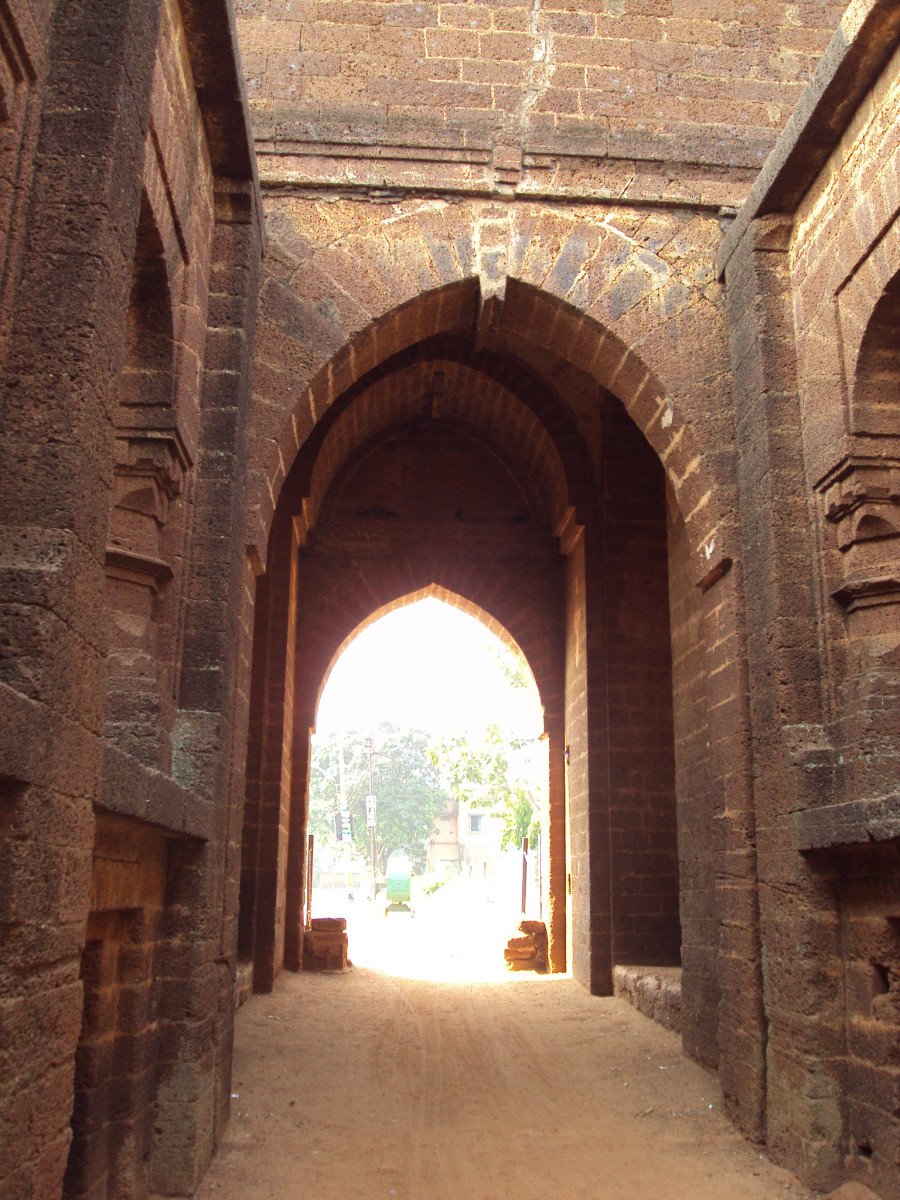
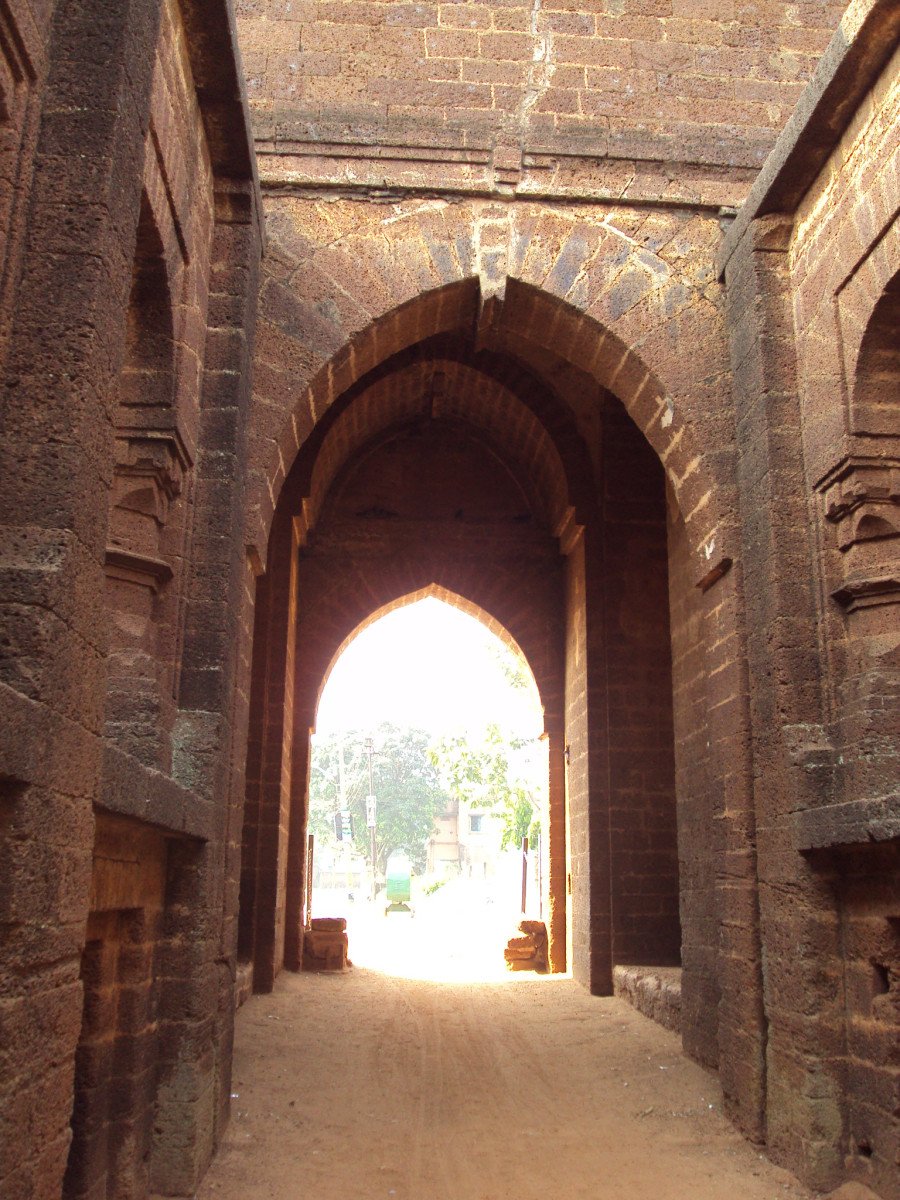
View from the Inner Courtyard: Standing on the inside of the fort (west side) and shooting back towards the arch.
Focus: The inner archway, often framing the distant trees or the blue sky outside.
Technique: A symmetrical shot that contrasts the rough, functional wall of the inner side with the open space of the long-vanished royal residence, symbolizing the protective shield the gateway offered the city.Photo Gallery
Things To Do
-
Defensive Architecture Study: Treat the Pathar Darwaja as an open-air classroom for defensive architecture.
Arrow Slit Examination: Closely examine the shape and angle of the arrow slits. Note how they widen towards the inside (splaying) to allow the archer/gunman a wider field of fire while maintaining a minimal opening to the outside for maximum protection.
Material Analysis: Observe the sheer size of the cut laterite blocks and how they are interlocked to form the robust structure. This is a study in weight, strength, and Malla-era stone engineering.
The Flanking Chambers: Walk through the main arched passage and try to conceptualize the double-storeyed rooms on the side as functional barracks and armories for the fort's guards.
Read MoreDefensive Architecture Study: Treat the Pathar Darwaja as an open-air classroom for defensive architecture.
Arrow Slit Examination: Closely examine the shape and angle of the arrow slits. Note how they widen towards the inside (splaying) to allow the archer/gunman a wider field of fire while maintaining a minimal opening to the outside for maximum protection.
Material Analysis: Observe the sheer size of the cut laterite blocks and how they are interlocked to form the robust structure. This is a study in weight, strength, and Malla-era stone engineering.
The Flanking Chambers: Walk through the main arched passage and try to conceptualize the double-storeyed rooms on the side as functional barracks and armories for the fort's guards.
Photography of Scale and Texture: The massive scale of the gateway provides excellent photographic opportunities.
Human Scale: Position a person (or yourself) at the center of the main archway, looking out, to provide a sense of scale and to dramatically emphasize the gateways immense size.
Symmetrical Shots: Take a head-on shot focusing on the perfect symmetry of the arched entrance and the flanking defense structures.
Detail Shots: Focus on the rough, porous texture and reddish hue of the laterite stone. Capture the battlements at the top of the structure against the clear sky.
Historical Context Walk: Integrate the visit to the gateway with other nearby military and religious sites.
The Dalmadal Cannon: Walk from the gateway to the nearby Dalmadal Cannon (the 'Maratha-killer'), which is logically positioned to defend the fort's approaches, and reflect on the coordination of the Malla defense.
Fort Walls Trace: Try to trace the remnants of the mud and stone fortification walls (Garh) that once extended from the gateway to encircle the entire capital, using the location as a physical starting point.
Fort-Palace Link: Walk from the gate towards the ruins of the palace (Rajbari/ Nutan Mahal), understanding how the gateway provided security for the royal residence.
Local Culture and Vendor Interaction: The areas surrounding major landmarks often have local vendors.
Handicraft Shopping: Look for vendors selling local terracotta miniatures (like the famous Bankura Horse) or Baluchari sarees nearby. Though the gateway is military, the Malla culture encompassed both war and art.
Local Snack Tasting: Try local Bengali snacks or refreshments from the small stalls near the monument to experience the contemporary social life of Bishnupur.
Rickshaw Ride Dialogue: Engage your rickshaw driver in conversation about the history of the gateway and the local belief in its defensive role.
Hotels
● Additional Hotel 5 (Generic Example)
Address: Bishnupur, West Bengal
Distance: N/A
Details: This represents a placeholder for additional budget or mid-range accommodation near the historic Pathar Darwaja. These hotels focus on providing a com...
● Additional Hotel 6 (Generic Example)
Address: Bishnupur, West Bengal
Distance: N/A
Details: This represents a placeholder for additional budget or mid-range accommodation near the historic Pathar Darwaja. These hotels focus on providing a com...
● Additional Hotel 7 (Generic Example)
Address: Bishnupur, West Bengal
Distance: N/A
Details: This represents a placeholder for additional budget or mid-range accommodation near the historic Pathar Darwaja. These hotels focus on providing a com...
● Additional Hotel 8 (Generic Example)
Address: Bishnupur, West Bengal
Distance: N/A
Details: This represents a placeholder for additional budget or mid-range accommodation near the historic Pathar Darwaja. These hotels focus on providing a com...
● Banalata Resort
Address: Bishnupur, West Bengal
Distance: ~5 km
Details: Banalata Resort is a high-end retreat situated near Pathar Darwaja. Guests can enjoy premium services, including well-appointed rooms, a restaurant se...
● Lodge Megh Mallar
Address: Bishnupur, West Bengal
Distance: ~2 km
Details: Lodge Megh Mallar is an affordable and accessible option located close to Pathar Darwaja. It offers guests clean, basic rooms with essential facilitie...
● Monalisa Lodge
Address: Bishnupur, West Bengal
Distance: ~2 km
Details: Monalisa Lodge is a simple, no-frills budget lodge situated near the iconic Pathar Darwaja. It provides travelers with clean and functional rooms, ens...
● New Mukherjee Lodge
Address: Bishnupur, West Bengal
Distance: ~3 km
Details: New Mukherjee Lodge serves as a comfortable mid-range accommodation near the historic Pathar Darwaja. It provides essential amenities in a clean and w...
● Resort Jorabangla
Address: Bishnupur, West Bengal
Distance: ~2 km
Details: Resort Jorabangla offers a charming budget-friendly stay near Pathar Darwaja. Guests can expect well-maintained and clean rooms with all the necessary...
● Spot On 48582 Monalisa Lodge
Address: Bishnupur, West Bengal
Distance: ~2 km
Details: Spot On 48582 Monalisa Lodge provides an economical and practical stay for tourists visiting Pathar Darwaja. Offering straightforward rooms and essent...
Show AllRestaurants
● Babu Moshai Hotel and Restaurant
Address: Local Area, Bishnupur, Bankura
Distance: 1.0 KM
Details: Babu Moshai Hotel and Restaurant is a hidden gem for food lovers, known for its authentic preparation of traditional local cuisine. The staff ensures ...
Food List: Special Thali', 'Mutton Curry', 'Fish Fry', 'Sona ...
● Bawarchi
Address: 7th Lane, Mayra Pukur, Bishnupur, Bankura
Distance: 0.8 KM
Details: Bawarchi is a celebrated culinary gem in the heart of Bishnupur, known for its authentic preparation of traditional Bengali and North Indian delicacie...
Food List: Chicken Biryani', 'Fish Curry', 'Mutton Kasha', 'B...
● Cha Coffee O Kobitai
Address: Chinnamasta Road, Dalmadal Para, Bishnupur
Distance: 0.9 KM
Details: Cha Coffee O Kobitai is more than just a restaurant; it is a cultural hub where literature and gastronomy meet under one roof. Located conveniently ne...
Food List: Masala Chai', 'Vegetable Pakora', 'Coffee', 'Sandw...
● Hotel Annapurna Restaurant
Address: Km High School Road, Bailapara, Bishnupur
Distance: 1.1 KM
Details: Hotel Annapurna Restaurant brings a home-cooked feel to the dining scene in Bishnupur. With a focus on traditional recipes, they serve meals that feel...
Food List: Machher Jhol', 'Steamed Rice', 'Shukto', 'Begun Bh...
● Hotel Sneha
Address: College Road, Bishnupur, Bankura
Distance: 0.3 KM
Details: Hotel Sneha is one of the closest dining options to the central parts of town, providing quick service for those in a hurry. The restaurant is popular...
Food List: Chicken Kebab', 'Fried Rice', 'Chilli Paneer', 'Ve...
Show AllInformation
-
Why Famous:
The Northern Fort Entrance: The Pathar Darwaja is the main, and most intact, surviving entrance to the entire Malla capital. It physically defines the boundary of the original fortified city (Garh), making it an invaluable piece of the historical and geographical p...
The Northern Fort Entrance: The Pathar Darwaja is the main, and most intact, surviving entrance to the entire Malla capital. It physically defines the boundary of the original fortified city (Garh), making it an invaluable piece of the historical and geographical puzzle of Mallabhum. Its the starting point for understanding the military aspect of the Malla rule, complementing the religious narrative of the temples.
Masterpiece of Laterite Masonry: While Bishnupur is globally renowned for its terracotta art, the Pathar Darwaja is a masterpiece showcasing the Malla builders equally impressive skill in handling massive laterite stone blocks. Its durability over centuries, despite minimal maintenance outside of ASI's protection, attests to the strength and engineering integrity of its construction. It stands as a monument to laterite architecture.
A Symbol of Martial Power: The presence of the flanking soldier chambers and the array of arrow slits are its most famous features. The gateway is a tangible symbol of the power and security of the Malla King, Bir Singha Dev, and his army, who protected the vast wealth and religious art of the kingdom from invaders. It connects directly to the nearby Dalmadal Cannon, which was famously used to defend the city against the Maratha incursions. -
Architecture:
Architectural Style and Material: The Pathar Darwaja is a prime example of laterite stone masonry, contrasting sharply with the town's famed terracotta structures. It employs a purely utilitarian and military architectural style. The construction material is dressed lateri...Architectural Style and Material: The Pathar Darwaja is a prime example of laterite stone masonry, contrasting sharply with the town's famed terracotta structures. It employs a purely utilitarian and military architectural style. The construction material is dressed laterite stone blocks, giving it an imposing, rustic, and formidable appearance. The material choice prioritized durability and defense over intricate artistic decoration, though the structure is aesthetically pleasing in its geometric simplicity and power.
Design and Military Function: The gateway is characterized by a central, tall, semi-circular archway forming the main passage. The key architectural features are its double-storied galleries (or chambers) on either side of the arch, built into the thickness of the structure. These galleries were the operational barracks for the fort's garrison. The exterior is notable for the strategic placement of arrow/gun slitssmall, vertical openingsat various levels, which allowed soldiers to maintain a commanding defensive position over the approach road without exposure. The top of the gate would have also served as a battlemented platform for defense.
Dimension (Estimated/Inferred): The sheer size of the structure is a major architectural feature:
Height: Approximately 10 to 12 meters (about 3-4 storeys).
Width: The structure spans approximately 15 to 18 meters across.
Archway: The main arch passage is tall enough to allow elephants and carriages to pass, roughly 5 meters wide and 7 meters high.
Thickness: The walls housing the flanking chambers are extremely thick, around 4 to 5 meters deep, to withstand siege weaponry. -
How To Reach:
Spot Located in Place Name: Bishnupur (Town), Bankura District, West Bengal, India.
By Air (Nearest Major Airport): Netaji Subhas Chandra Bose International Airport (CCU) in Kolkata (approx. 140 - 150 km). From the airport, follow the di...Spot Located in Place Name: Bishnupur (Town), Bankura District, West Bengal, India.
By Air (Nearest Major Airport): Netaji Subhas Chandra Bose International Airport (CCU) in Kolkata (approx. 140 - 150 km). From the airport, follow the directions for rail or road to Bishnupur.
By Train (Recommended for Inter-City Travel): Bishnupur Railway Station (VSU) is a functional junction on the South Eastern Railway line.
From Kolkata: Regular direct express trains like Rupasi Bangla Express provide a comfortable and time-efficient journey (~4 hours).
By Road (The Flexible Option):
Route: The drive from Kolkata (around 150 km) takes about 4-5 hours, primarily via major national and state highways.
Bus Connectivity: Frequent government and private bus services connect Bishnupur with Kolkata, Bankura, and Durgapur.
By Local Transport (Reaching Pathar Darwaja):
From Bishnupur City Center/Railway Station: The gateway is approximately 1. 0 km from the main center, near the ASI-protected temple complex.
Cycle Rickshaw/E-Rickshaw (Totos): The most popular and convenient way to travel within the town. The ride from the central temples to the gateway is very short (5 minutes) and cost-effective.
Walking: Given its central location, it is easily walkable from the main temple cluster (Jor Bangla, Rasmancha), which allows the traveler to trace the path of the ancient city wall. -
Weather and Best Time to Visit:
Ideal Season:
Winter (Late October to Early March):
Reason: The weather is perfectly mild for outdoor exploration. The sunny, dry days with c...Ideal Season:
Winter (Late October to Early March):
Reason: The weather is perfectly mild for outdoor exploration. The sunny, dry days with cool breezes are ideal for walking and photography, ensuring the laterite stone colors are vibrant without the haze of summer or the constant threat of rain from the monsoon.
Less
Ideal Season:
Monsoon (July to September):
Reason: Although the lush green vegetation surrounding the reddish gate is beautiful during the monsoon, heavy, unpredictable rains can disrupt sightseeing. The stone surface can also become slippery and waterlogged.
Summer (April to June):
Reason: The high heat and humidity during the day make midday visits very uncomfortable. Sun protection and early morning visits are mandatory.
Best Time of Day:
Morning for Atmosphere, Afternoon for Warmth: Sunrise (6:00 AM - 7:30 AM) Highly recommended. The solitude and silence of the early hour, combined with the dramatic light, allow for a truly immersive experience of the gate's history. Late Afternoon (4:00 PM - 6:00 PM) Excellent for photography as the setting sun's warm light makes the red laterite stone glow a fiery orange, contrasting beautifully with the deep blue sky. -
Near Tourist Places:
Serial No. Place Name Distance from Pathar Darwaja (Approx. ) Place Category 1. Choto Darwaja 0. 1 km Fort Gateway (Lesser) 2. Jor Bangla Temple 0. 5 km Terracotta Temple 3. Radha Shyam Temple 0. 4 km Laterite Temple 4. Nutan Mahal (Palace Ruins) 1. 0 km Historical Ruin 5. Rasmancha 1. 5 km Unique Brick Pavilion 6. Shyam Rai Temple (Pancha Ratna) 0. 8 km Terracotta Temple 7. Lalbandh 1. 0 km Historical Lake 8. Dalmadal Cannon 1. 8 km Historical Cannon 9. Acharya Jogeshchandra Museum 1. 2 km Archeological Museum 10. Madan Mohan Temple 2. 5 km Terracotta Temple
Tourism Tips
-
Health & Safety:
Traffic: The gateway is on a road still used by local traffic, so exercise caution when taking photographs from the road.
Stone Surface: Be careful of the rough, uneven surface of the dress...Health & Safety:
Traffic: The gateway is on a road still used by local traffic, so exercise caution when taking photographs from the road.
Stone Surface: Be careful of the rough, uneven surface of the dressed laterite blocks at the base of the gate to avoid tripping.
Hydration: Always carry water, especially during the long, sunny days outside of winter.
Packing Essentials:
Good Camera: Essential for capturing the sheer scale and architectural detail of the stone work.
Sun Protection: Hat, sunglasses, and sunscreen are needed even in winter.
Comfortable Shoes: Best for walking between the temples and the gateway.
Accommodation:
Proximity: Staying in a centrally located hotel allows you to easily walk to the Pathar Darwaja and begin your day of sightseeing early, before the crowds arrive.
Booking: Book your stay a few months in advance if your visit coincides with the Bishnupur Mela.
Other Tips (Context & Appreciation):
Historical Context: Before visiting, read up on King Bir Singha Dev and the Maratha attacks. Understanding the military threats of the 17th century will greatly enhance the appreciation for the gates design and purpose.
Guide Services: A licensed guide can provide specific details about the structure's military features and its role in the fort's defense, enriching the visit far beyond a simple photo stop.
Local Culture: Take the time to observe the daily life of the local community as they pass through this ancient structure, bridging the town's rich past with its present.
Reviews
FAQs
Ans:- The Pathar Darwaja, also known as the Garh Darwaja or Stone Gateway, served as the primary northern entrance to the fortified city of Bishnupur. Constructed during the reign of the Malla kings, likely by King Bir Singha Dev in the 17th century, it acted as a vital defensive structure for the citadel. This gateway was part of a complex system of fortifications, including ditches and ramparts, designed to protect the royal palaces and the town from external threats. Today, it remains one of the most imposing non-religious monuments, representing the strategic military architecture of that era.Ans:- The name "Pathar Darwaja" translates to "Stone Gateway" in Bengali, a direct reference to the materials used in its construction. Unlike many other structures in the region that utilized a combination of clay bricks and terracotta, this gateway was constructed primarily using dressed laterite blocks, which were abundant in the Bankura district. The use of solid stone blocks made the gateway exceptionally durable and formidable, fitting for its purpose as a high-security entrance to the royal fort, and it remains a striking example of military engineering from the medieval period in West Bengal.Ans:- Scholarly consensus and local tradition attribute the construction of the Pathar Darwaja to King Bir Singha Dev, the 52nd ruler of the Malla dynasty, who reigned from 1656 to 1682 CE. He was responsible for significantly enhancing the defensive capabilities of Bishnupur. The gate was built to provide a secure point of entry for the capital's citadel. The architecture reflects the period's military requirements, with features like double-storied galleries for troops and narrow slits in the walls for firing weapons, showcasing the king's foresight in securing his kingdom's borders.Ans:- The Pathar Darwaja was designed with several sophisticated defensive features. It included double-storied galleries flanking the central passage, which were specifically intended to accommodate troops stationed to guard the entrance. Furthermore, the walls featured narrow, rectangular apertures known as arrow-slits or gun-slits. These allowed soldiers to safely fire arrows or muskets at approaching enemies from inside the fort while remaining protected behind the thick laterite walls. These structural details emphasize that the gate was not merely an ornamental entrance but a functional military stronghold capable of repelling intruders during times of conflict.Ans:- Yes, there is a smaller gateway known as "Choto Darwaja" located about 80 meters northwest of the main Pathar Darwaja (or Garh Darwaja). While the Pathar Darwaja was the main, grander northern entrance, the Choto Darwaja served as an auxiliary entry point to the city. Its construction is slightly different, using a mix of laterite blocks in the lower half and brick with stucco on the upper portion. Both gates are remnants of the intricate defense systems that once protected the capital, and today, they stand as the sole survivors of the fort's original extensive defensive network.Ans:- The primary material used for the Pathar Darwaja is dressed laterite, a type of iron-rich soil-derived stone that is very common in the Bankura region. Laterite is known for being soft when quarried but hardening significantly upon exposure to air, making it an excellent and durable building material for fortresses and heavy structures. The gate's construction demonstrates the skillful use of this local stone by Malla artisans, who shaped these large blocks to build a sturdy, long-lasting fortification that has withstood the elements for several centuries without significant structural decay.Ans:- Yes, historical evidence suggests that both the Pathar Darwaja and the Choto Darwaja were protected by water-filled ditches, known as "bandhs," which acted as moats. These ditches would have been crossed by mobile structures, such as floating or drawbridges, which could be removed quickly in the event of an emergency or invasion. These water bodies were not only strategic defensive assets but also served the dual purpose of water storage for the city, reflecting the Malla rulers' intelligent approach to urban planning, resource management, and regional security for their capital.Ans:- While exact height measurements can vary due to ground levels and structural erosion over time, the Pathar Darwaja is a two-storied structure that was designed to be tall enough to allow the passage of soldiers and possibly horses or light transport while providing an elevated platform for archers and gunners. The gate's design is focused on imposing strength rather than height alone. The lower section represents the original gateway phase, while the taller, additional gateway section was added adjacent to the first, creating a multi-layered defensive passage that spans a significant vertical space.Ans:- Generally, tourists are not permitted to climb to the top of the Pathar Darwaja for safety and preservation reasons. The structures are ancient, and the stability of the upper levels is a concern for the Archaeological Survey of India. While some parts of these historic gates might have had staircases in the past, access to these areas is typically restricted to maintain the integrity of the monument. It is best to admire the impressive craftsmanship and the defensive architectural design from the ground level, where you can see the gun-slits and the scale of the laterite blocks clearly.Ans:- The Pathar Darwaja is located in the northern part of Bishnupur, relatively close to other major heritage sites. For example, it is situated approximately 300 meters north of the famous Jor-Bangla (Kesto-Rai) Temple. Because Bishnupur's heritage zone is quite concentrated, visitors can easily walk or take a short rickshaw ride between the Pathar Darwaja and nearby temples like the Madanmohan Temple or the Rasmancha. This proximity makes it very convenient for tourists to plan a comprehensive itinerary that covers both the religious terracotta temples and the secular defensive structures in a single day.Ans:- Yes, the Pathar Darwaja is part of a larger historical circuit in Bishnupur. Nearby attractions include the Choto Darwaja, which is just a short distance away, as well as the renowned Jor-Bangla Temple, Rasmancha, and the Madanmohan Temple. You can also visit the Acharya Jogesh Chandra Museum, which houses various artifacts from the Malla period. Because these sites are all within the town, they are easily accessible. Most visitors choose to hire a local guide or rent a cycle-rickshaw for the day to see all these monuments, as they provide a comprehensive view of the Malla kingdom's history.Ans:- Usually, there is no separate, hefty entry fee to view the Pathar Darwaja as it is an open-air historical gateway located in the vicinity of public roads. However, if it is part of a larger protected complex managed by the Archaeological Survey of India (ASI) under a combined heritage ticket for Bishnupur, you might need to show a pass. It is always best to check at the main tourist kiosk or the entry point of the town's primary monument complexes, as policies can change periodically regarding entry fees for specific monuments and heritage zones.Ans:- The Archaeological Survey of India (ASI) periodically monitors and performs maintenance on the Pathar Darwaja to ensure its stability and to protect it from further weathering. While there may not always be active, large-scale construction, minor conservation efforts, such as cleaning the laterite blocks or clearing vegetation that can damage the stone, are common. Visitors should respect any cordoned-off areas if maintenance is underway. These preservation efforts are crucial because the gateway is a vital piece of Bengal's military history and a rare surviving example of a Malla-era fortification gate.Ans:- The best season to visit the Pathar Darwaja and other heritage sites in Bishnupur is during the winter months, from October to March. During this time, the weather is pleasant and cool, making it comfortable to walk around the open-air sites for several hours. Summers can be extremely hot and humid in Bankura, which makes exploring the outdoor monuments challenging. The monsoon season also brings heavy rainfall, which might make the area slippery and hinder outdoor sightseeing, so planning your trip for the cooler, drier months will ensure a much more enjoyable and comfortable exploration of the historical landmarks.Ans:- Yes, you can easily find local guides in Bishnupur who are well-versed in the history of the Pathar Darwaja. These guides are often found near major tourist spots or can be arranged through your hotel or the local tourism office. Engaging a guide is highly recommended for this site, as they can explain the specific defensive tactics used by the Malla kings, the significance of the arrow-slits, and the historical context of the fort's layout. Their insights can bring the cold stone structure to life, helping you appreciate the strategic importance it held in 17th-century Bengal.Bishnupur Itineray And Cost:-
Information about New and Updated Locations() of West Bengal Has Been Added :-
Card subtitle
Note:-
Information provided here in good Faith and for reference only.
Near Places
Acharya Jogesh Chandra Museum
Some quick example text to build on the card title and make up the bulk of the card's content.
Go somewhere
Big Stone Gateway
Some quick example text to build on the card title and make up the bulk of the card's content.
Go somewhere
Bishnupur Mela Ground
Some quick example text to build on the card title and make up the bulk of the card's content.
Go somewhere
Bishnupur Rajbari
Some quick example text to build on the card title and make up the bulk of the card's content.
Go somewhere
Chhinnamasta Temple
Some quick example text to build on the card title and make up the bulk of the card's content.
Go somewhere
Dalmadal Cannon
Some quick example text to build on the card title and make up the bulk of the card's content.
Go somewhere
Garh Darwaja
Some quick example text to build on the card title and make up the bulk of the card's content.
Go somewhere
Gokul Chand Temple
Some quick example text to build on the card title and make up the bulk of the card's content.
Go somewhere
Hadal-Narayanpur
Some quick example text to build on the card title and make up the bulk of the card's content.
Go somewhere
Jhilimili & Sutan Forest
Some quick example text to build on the card title and make up the bulk of the card's content.
Go somewhere
Jor Bangla Temple
Some quick example text to build on the card title and make up the bulk of the card's content.
Go somewhere
Jor Mandir Complex
Some quick example text to build on the card title and make up the bulk of the card's content.
Go somewhere
Jorbangla Temple
Some quick example text to build on the card title and make up the bulk of the card's content.
Go somewhere
Joypur Forest
Some quick example text to build on the card title and make up the bulk of the card's content.
Go somewhere
Kalachand Temple
Some quick example text to build on the card title and make up the bulk of the card's content.
Go somewhere
Kamarpukur
Some quick example text to build on the card title and make up the bulk of the card's content.
Go somewherein Other Cities