
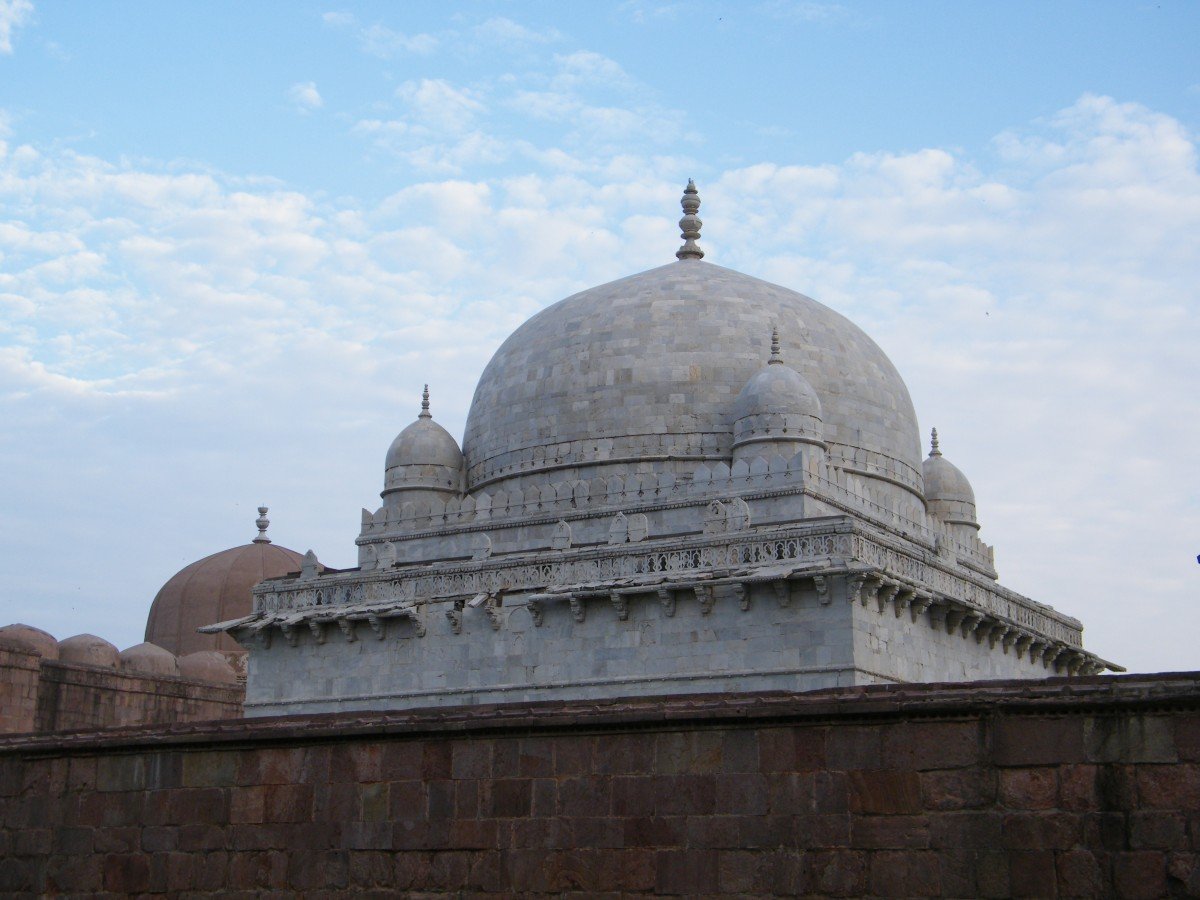

Jami Masjid
General information
-
Ideal Duration:
1-2 hours:Place Type:
Mosque, Historical Monument, Religious Site:Entry Fees:
Free Entry: The Jami Masjid (Great Mosque) does not charge an entry fee for the general visitor. This is common for active places of worship in India. This makes it an incredibly accessible historical site.
General Composite Ticket for Complex...Free Entry: The Jami Masjid (Great Mosque) does not charge an entry fee for the general visitor. This is common for active places of worship in India. This makes it an incredibly accessible historical site.
General Composite Ticket for Complex: While the mosque itself is free, the entire Central Group complex (including the adjacent ticketed sites like the Ashrafi Mahal and Hoshang Shah's Tomb) requires a composite ticket, which is typically around INR 25 for Indian citizens and INR 300 for foreign tourists. This ticket allows entry to the entire complex area.
Guide Fees: A local guide can be hired from the entrance area. The charges are separate, but their historical and architectural knowledge is invaluable for fully appreciating the mosque's significance and details.
No Video Camera Fee (But be Respectful): Generally, no fee is charged for carrying a video camera, but photography/videography of worshippers during prayer is strictly prohibited out of respect. ()Timing:
Regular Timings: The Jami Masjid is typically open from 8:00 AM to 6:00 PM for tourists. However, as it is an active religious site, it is open for daily prayers outside of these hours, but tourists should be cautious not to disturb worshippers.Regular Timings: The Jami Masjid is typically open from 8:00 AM to 6:00 PM for tourists. However, as it is an active religious site, it is open for daily prayers outside of these hours, but tourists should be cautious not to disturb worshippers.
Ideal Visit Time: The best time to visit for a calm, unhurried experience is the early morning (8:00 AM to 10:00 AM). The midday sun can be very harsh, especially in the vast, exposed courtyard. Late afternoon is also pleasant, providing warmer light for photography.
Prayer Times: Avoid visiting during the main congregational prayer times, especially the Friday afternoon prayer (Jummah), as the mosque will be crowded with worshippers. Check local timings for Asr (late afternoon) and Maghrib (sunset) prayers as well.
Duration: Allocate at least 1 hour to fully explore the scale and architectural details of the mosque and its courtyards, plus extra time for the adjacent Hoshang Shah's Tomb and Ashrafi Mahal. ()Special Events:
Eid and Religious Celebrations: As the principal mosque, the Jami Masjid is the center for major Islamic festivals, particularly Eid-ul-Fitr and Eid-ul-Adha. Thousands of people gather here for congregational prayers, creating a powerful spiritual and community atmosphere. ...Eid and Religious Celebrations: As the principal mosque, the Jami Masjid is the center for major Islamic festivals, particularly Eid-ul-Fitr and Eid-ul-Adha. Thousands of people gather here for congregational prayers, creating a powerful spiritual and community atmosphere. These are the most significant annual events.
Local Urus Festivals: Minor religious gatherings and local Urus festivals (commemorating a saint or a historical figure) are occasionally held in the complex, often drawing in the local population for prayers, devotional music (Qawwali), and community meals (Langar).
Archaeological and Heritage Walks: Due to its historical importance, the ASI or local heritage groups often use the Jami Masjid complex as the starting or ending point for guided heritage walks and scholarly lectures, especially during the Mandu Festival. ()Best Photo Spots:
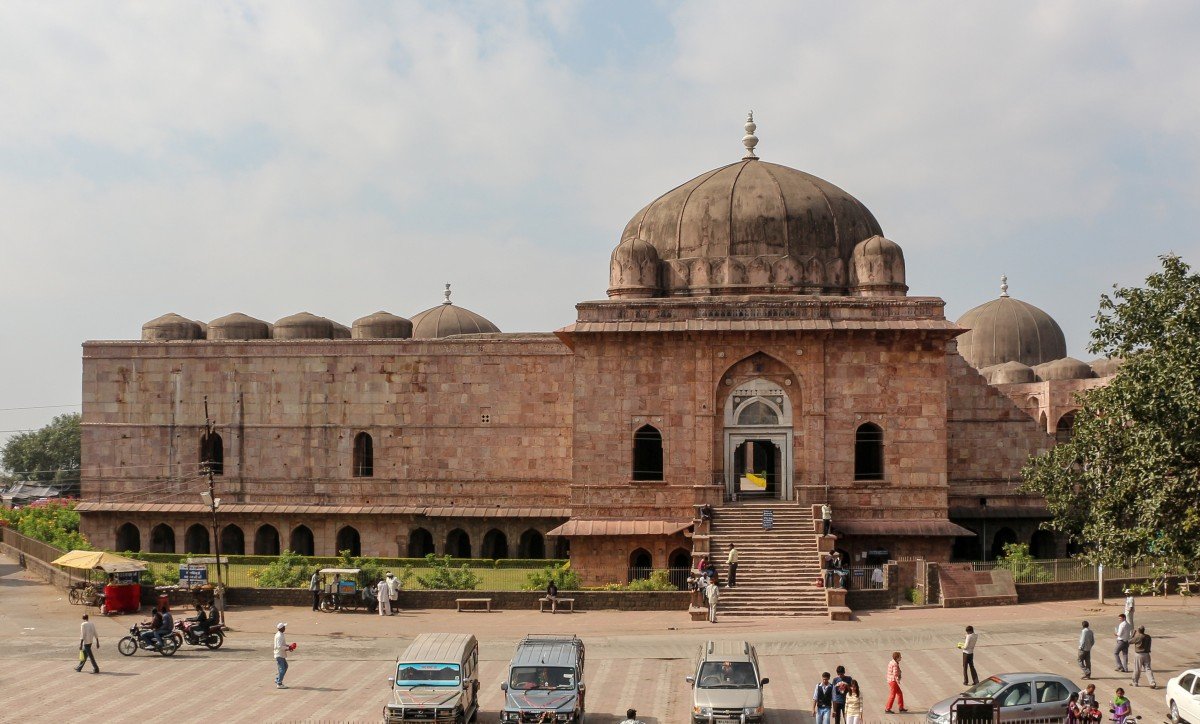
The Arched Eastern Gateway: The imposing eastern entrance provides a perfect frame for the entire mosque, capturing its huge scale, its symmetry, and the repetitive lines of the arcade from a distance. This is the classic shot.
The Dome-Pattern...The Arched Eastern Gateway: The imposing eastern entrance provides a perfect frame for the entire mosque, capturing its huge scale, its symmetry, and the repetitive lines of the arcade from a distance. This is the classic shot.
The Dome-Pattern from the Ashrafi Mahal Ruins: Climb the ruins of the opposite Ashrafi Mahal (especially the remains of the victory tower) for a unique, elevated view of the 158 domes of the Jami Masjid, providing a stunning geometrical pattern.
The Interior Arcades and Shadows: Inside the prayer hall, the repeating arches and the play of light and shadow created by the high domes offer excellent opportunities for dramatic black-and-white or high-contrast photography.
The Marble Tomb and the Mosque Frame: Use the delicate marble lattice work (jalis) and the dome of Hoshang Shah's Tomb (right next to the mosque) as a foreground element or a frame to capture the grandeur of the mosque in the background, creating a juxtaposition of simplicity and detail. ()Photo Gallery
Things To Do
-
Leisurely Walk the Grand Courtyard: Take a slow, reflective walk across the immense, open courtyard. Its size is designed to invoke a sense of awe and spiritual humility, and walking it allows you to appreciate the mosque's scale and proportion fully.
Examine the Mihrabs and Calligraphy: Spend time in the prayer hall to closely examine the beautiful marble and sandstone mihrabs on the Qibla wall, which are decorated with fine calligraphy of Quranic verses. This showcases the highest level of craftsmanship.
Visit Hoshang Shah's Tomb: The tomb, located immediately behind the mosque, is a must-see. It is the first structure in India entirely made of marble, and its lattice work is exquisite. The tomb and the mosque are designed to be complementary parts of the complex.
Read MoreLeisurely Walk the Grand Courtyard: Take a slow, reflective walk across the immense, open courtyard. Its size is designed to invoke a sense of awe and spiritual humility, and walking it allows you to appreciate the mosque's scale and proportion fully.
Examine the Mihrabs and Calligraphy: Spend time in the prayer hall to closely examine the beautiful marble and sandstone mihrabs on the Qibla wall, which are decorated with fine calligraphy of Quranic verses. This showcases the highest level of craftsmanship.
Visit Hoshang Shah's Tomb: The tomb, located immediately behind the mosque, is a must-see. It is the first structure in India entirely made of marble, and its lattice work is exquisite. The tomb and the mosque are designed to be complementary parts of the complex.
Experience the Acoustic Wonder: Ask a local guide to demonstrate the unique acoustic properties near the central mihrab. Hearing a soft sound resonate across the hall is a memorable experience.
Capture the Symmetry: Use your camera to capture the stunning, perfect symmetry and the repetitive pattern of the domes from the courtyard. The lines of the colonnades are also perfect for a dramatic perspective shot.
Observe Local Worshippers: If visiting during non-prayer times, observe the tranquility; if visiting during the call to prayer, do so respectfully from a distance to witness the community's spiritual life.
Climb the Tower (if permitted): If you are lucky enough to be permitted to climb the minaret tower, take the chance for the best panoramic view of the Mandu plateau. ()
Information
-
Why Famous:
Grandeur and Austere Simplicity: It is famous for its colossal scale and the powerful, majestic, yet austere architectural simplicity. The sheer size of its courtyard and the uniformity of the 158 domes create a breathtaking visual impact, setting it apart from other Indian...Grandeur and Austere Simplicity: It is famous for its colossal scale and the powerful, majestic, yet austere architectural simplicity. The sheer size of its courtyard and the uniformity of the 158 domes create a breathtaking visual impact, setting it apart from other Indian mosques of the time.
Model for Later Mosques: Its design, particularly the spacious courtyard and the powerful prayer hall, is considered a major and early benchmark for later Indo-Islamic mosques, especially in the Deccan region. It is one of the finest and largest examples of Afghan architecture in India.
Proximity to Hoshang Shah's Tomb: Its close proximity to Hoshang Shah's Tomb, which is hailed as India's first marble tomb and a potential inspiration for the Taj Mahal, significantly contributes to its fame as part of a highly important architectural complex.
Religious and Historical Significance: The mosque served as the principal religious center of the Malwa Sultanate for centuries, making it a critical historical landmark reflecting the power, wealth, and faith of the rulers who governed from Mandu. It is a major pilgrimage site for the local Muslim community. () -
Architecture:
Architectural Style and Dimension: The Jami Masjid is a sublime example of the Indo-Islamic architectural style that developed uniquely in the Malwa region, known for its emphasis on large, simple volumes and austere elegance.
Dimension and Scal...Architectural Style and Dimension: The Jami Masjid is a sublime example of the Indo-Islamic architectural style that developed uniquely in the Malwa region, known for its emphasis on large, simple volumes and austere elegance.
Dimension and Scale: The mosque stands on a huge, elevated plinth, with an immense courtyard measuring approximately 97 meters square. The prayer hall on the west side is an imposing structure, fronted by a vast arcade. The building is entered through three grand, projecting gateways on the east, north, and south sides, with the eastern gate being the most imposing.
Distinct Features: The most striking features are the repetitive, simple, yet grand arches and the harmonious arrangement of the 158 identical domes that crown the entire structure, giving it a uniform, majestic skyline. The interior of the prayer hall is supported by pillared aisles (colonnades) and features elaborate mihrabs (niches indicating the direction of Mecca) adorned with finely carved Arabic and Persian calligraphy, although ornamentation is generally restrained compared to later Mughal architecture. The structure's powerful, unornamented simplicity is its defining characteristic, setting a high standard for subsequent Afghan architecture in India. It utilizes red sandstone and marble for the mihrabs and minbar. The sheer repetitive geometry of the design creates an atmosphere of overwhelming scale and spiritual focus. : () -
How To Reach:
By Air (Via Indore): Fly to Devi Ahilyabai Holkar Airport (IDR) in Indore, which is about 100 kilometers away. From the airport, a taxi or private car is the most direct way to reach Mandu (2. 5 to 3 hours travel time). The journey is on a good state highway.By Air (Via Indore): Fly to Devi Ahilyabai Holkar Airport (IDR) in Indore, which is about 100 kilometers away. From the airport, a taxi or private car is the most direct way to reach Mandu (2. 5 to 3 hours travel time). The journey is on a good state highway.
By Train (Via Indore): The most convenient major railhead is Indore Junction (INDB), which has excellent connectivity to metropolitan cities across India. Hire a cab or take a local bus from the station to Mandu. The local bus station in Mandu is very close to the Jami Masjid area.
By Road (Bus Connectivity): Regular bus services are available from major cities in Madhya Pradesh like Indore, Dhar, and Bhopal. The road network is solid. A self-drive trip from Indore is straightforward, and the central location of the mosque makes it one of the first major stops upon entering the core fort area.
By Local Transport in Mandu: The mosque is located in the Central Group of Monuments, which is the hub of the ancient city and very close to the modern Mandu Bus Stand (200 meters according to some sources). This location is easily accessible by auto-rickshaw, hired cab, or even on foot from the bus stand. Auto-rickshaws are the most common way to get between the different monument groups. () -
Weather and Best Time to Visit:
Different Seasons (Winter Perfection): The period from October to March offers a mild and agreeable climate, which is ideal for spending time in the large, open, and unshaded courtyard of the mosque. The winter sun is pleasant, not harsh.
Diffe...Different Seasons (Winter Perfection): The period from October to March offers a mild and agreeable climate, which is ideal for spending time in the large, open, and unshaded courtyard of the mosque. The winter sun is pleasant, not harsh.
Different Seasons (Monsoon Contrast): The monsoon season (July to September) brings a dramatic contrast, with the dark stone of the mosque standing out against the bright green backdrop of the surrounding plateau. Rain can be a minor hindrance, but the air is clean and the atmosphere is serene.
Different Parts of the Day (Morning Serenity): Early morning (8:00 AM to 10:00 AM) is highly recommended. The low angle of the sun enhances the texture of the stone, and the complex is at its most peaceful. Midday heat in the courtyard is intense, even in winter, due to the large, reflective stone surfaces. () -
Near Tourist Places:
1. Hoshang Shah's Tomb (50m, Central Group)2. Ashrafi Mahal (100m, Central Group)3. Mahmud Khilji's Tomb (200m, Central Group)4. Gada Shah's Shop and Palace (300m, Central Group)5. Taveli Mahal Museum (1. 5 KMS, Royal Group)6. Jahaz Mahal (1. 5 KMS, Royal Group)7. Hindola Mahal (1. 6 KMS, Royal Group)8. Champa Baoli (1. 7 KMS, Royal Group)9. Darya Khan's Tomb (4 KMS, Sagar Talao Group)10.
Hathi Mahal (4 KMS, Sagar Talao Group):
Tourism Tips
-
Health & Safety (Respectful Attire): As an active religious site, visitors are strongly advised to dress modestly. Shoulders and knees should be covered for both men and women. Shoes must be removed before entering the prayer hall (a safe shoe-keeping system is usually ava...Health & Safety (Respectful Attire): As an active religious site, visitors are strongly advised to dress modestly. Shoulders and knees should be covered for both men and women. Shoes must be removed before entering the prayer hall (a safe shoe-keeping system is usually available for a small fee).
Packing Essentials (Sun Protection): Bring a hat, even during winter, as the large open courtyard offers no shade. Sunscreen and a water bottle are mandatory.
Accommodation (Central Location): Staying near the bus stand in Mandu provides the easiest access to the Jami Masjid and the surrounding monuments like Hoshang Shah's Tomb and Ashrafi Mahal.
Cultural Sensitivity: Be quiet and respectful, especially in the prayer hall. Do not take photos of people praying. Always check the Qibla (direction of Mecca) before sitting or standing.
Guide Recommendation: Hiring a guide for the Central Group is highly beneficial to understand the architectural history and the inspiration behind the mosque's Damascus-like design. ()
Reviews
FAQs
Mandu Itineray And Cost:-
Other Places In Mandu :-
Other States In India :-
Information about New and Updated Locations() of Madhya Pradesh Has Been Added :-
Card subtitle
Note:-
Information provided here in good Faith and for reference only.
Near Places
Alamgir Darwaza
Some quick example text to build on the card title and make up the bulk of the card's content.
Go somewhere
Ashrafi Mahal
Some quick example text to build on the card title and make up the bulk of the card's content.
Go somewhere
Bagh Caves
Some quick example text to build on the card title and make up the bulk of the card's content.
Go somewhere
Baz Bahadur's Palace
Some quick example text to build on the card title and make up the bulk of the card's content.
Go somewhere
Bhangi Darwaza
Some quick example text to build on the card title and make up the bulk of the card's content.
Go somewhere
Champa Baoli
Some quick example text to build on the card title and make up the bulk of the card's content.
Go somewhere
Dai ka Mahal
Some quick example text to build on the card title and make up the bulk of the card's content.
Go somewhere
Dai ki Chhoti Bahen ka Mahal
Some quick example text to build on the card title and make up the bulk of the card's content.
Go somewhere
Dai ki Chhoti Behan ka Mahal
Some quick example text to build on the card title and make up the bulk of the card's content.
Go somewhere
Darya Khan's Tomb
Some quick example text to build on the card title and make up the bulk of the card's content.
Go somewhere
Delhi Darwaza
Some quick example text to build on the card title and make up the bulk of the card's content.
Go somewhere
Delhi Gate
Some quick example text to build on the card title and make up the bulk of the card's content.
Go somewhere
Dharampuri
Some quick example text to build on the card title and make up the bulk of the card's content.
Go somewhere
Dilawar Khan's Mosque
Some quick example text to build on the card title and make up the bulk of the card's content.
Go somewhere
Echo Point
Some quick example text to build on the card title and make up the bulk of the card's content.
Go somewhere
Eco Point
Some quick example text to build on the card title and make up the bulk of the card's content.
Go somewherein Other Cities