

Aligarh
General information
-
Ideal Duration:
1 to 2 DaysPlace Type:
Educational & IndustrialEntry Fees:
Most of the historical buildings in AMU have no entry fee. Aligarh Fort may have restricted access due to military presence. Local parks and museums usually charge a very nominal fee. The Aligarh Exhibition has a small entry ticket price.
Information: It is best...Most of the historical buildings in AMU have no entry fee. Aligarh Fort may have restricted access due to military presence. Local parks and museums usually charge a very nominal fee. The Aligarh Exhibition has a small entry ticket price.
Information: It is best to check with local authorities for museum timings. University areas are generally open to respectful visitors. Some research libraries might require special permission for entry. Photography might be restricted in certain sensitive areas.Timing:
Regular Hours: The university campus is accessible during daylight hours. Museums generally operate from 10:00 AM to 5:00 PM. Local markets open late in the morning and stay active till night. Markets are usually closed on a specific day of the week.
Read MoreRegular Hours: The university campus is accessible during daylight hours. Museums generally operate from 10:00 AM to 5:00 PM. Local markets open late in the morning and stay active till night. Markets are usually closed on a specific day of the week.
Ideal Visit Time: The best time to visit is during the winter months. Mornings are perfect for campus walks and bird watching. Evenings are ideal for exploring the bustling food streets. Visiting during the Numaish festival in January is highly recommended.Special Events:
Aligarh Numaish: This historic exhibition started in 1880. It is held annually at the exhibition grounds. It features cultural programs, Mushairas, and sports events. It is a true representation of the city's vibrant communal harmony.
Sir Sye...Aligarh Numaish: This historic exhibition started in 1880. It is held annually at the exhibition grounds. It features cultural programs, Mushairas, and sports events. It is a true representation of the city's vibrant communal harmony.
Sir Syed Day: Celebrated on October 17th, it marks the birth of the university founder. The campus is beautifully illuminated with lights. A grand dinner is organized in all the hostels. It is a day of pride and celebration for all university members.Best Photo Spots:
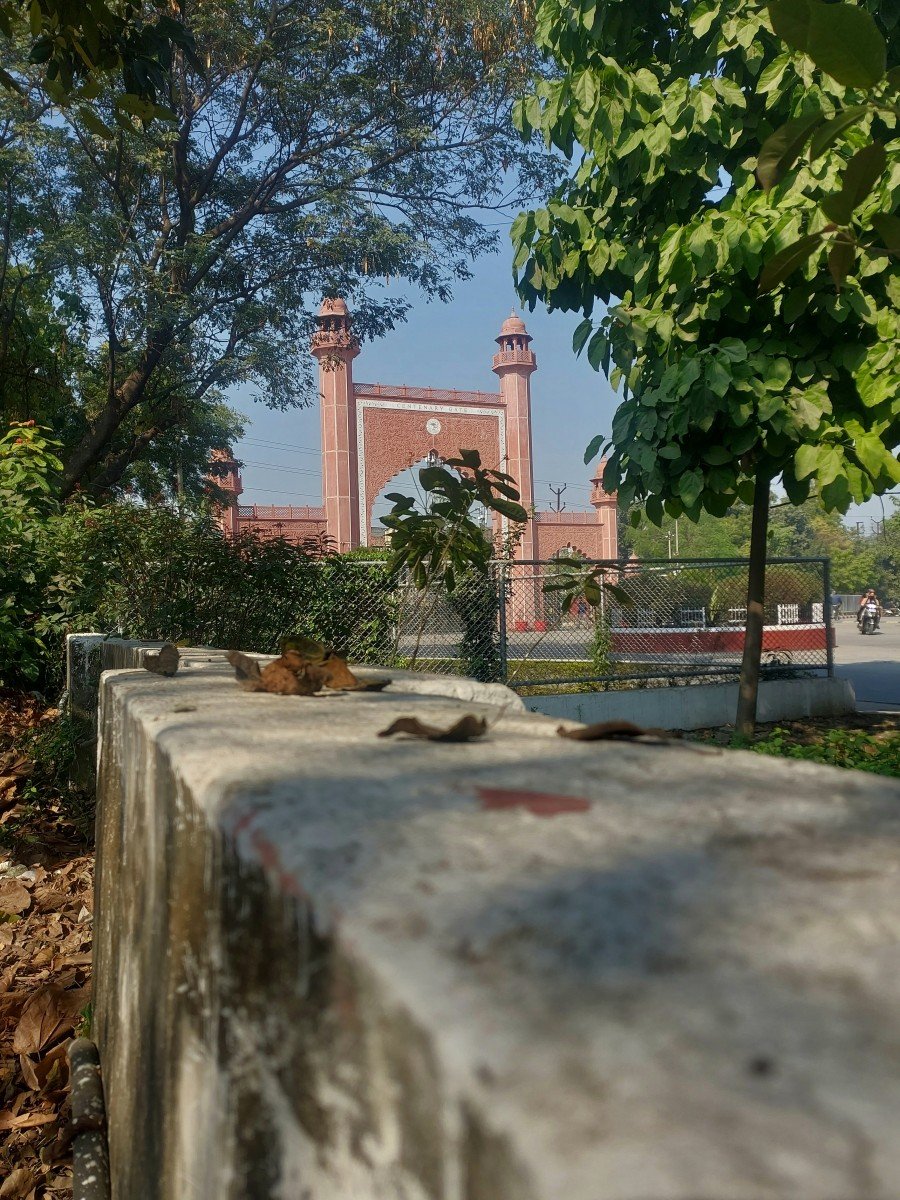
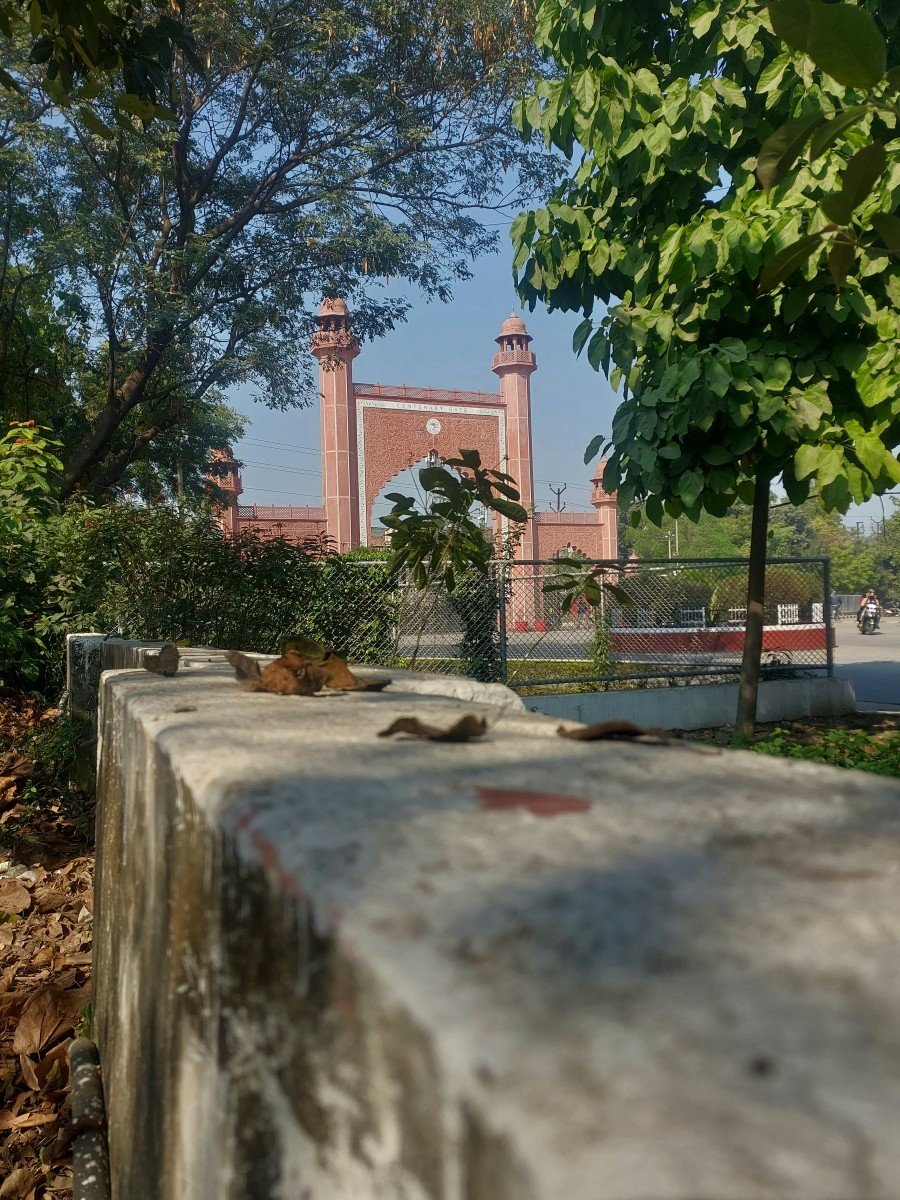
University Gates: The Bab-e-Syed gate is the most photographed spot in the city. Its majestic arch and lighting look stunning at night. It represents the entrance to the world of knowledge. Many students and visitors take commemorative photos here.
Read MoreUniversity Gates: The Bab-e-Syed gate is the most photographed spot in the city. Its majestic arch and lighting look stunning at night. It represents the entrance to the world of knowledge. Many students and visitors take commemorative photos here.
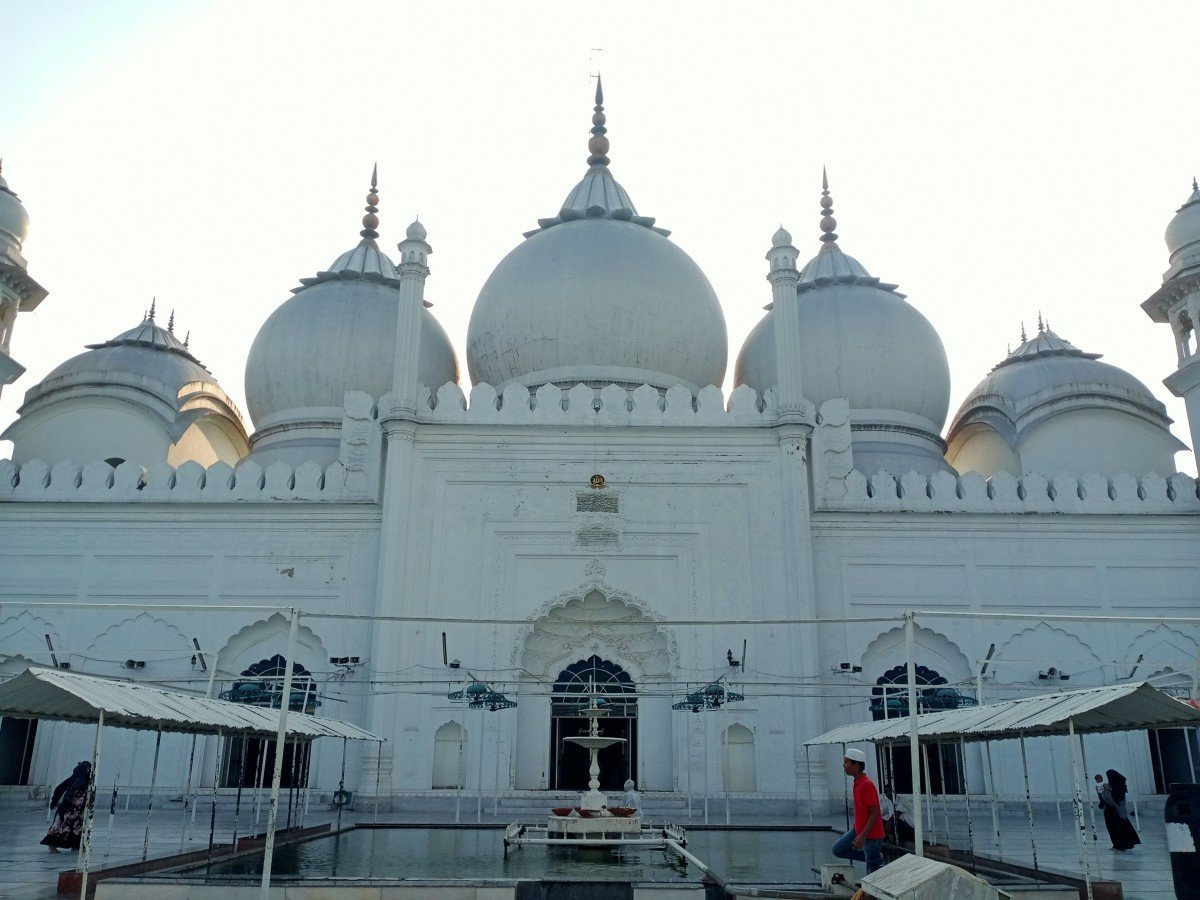
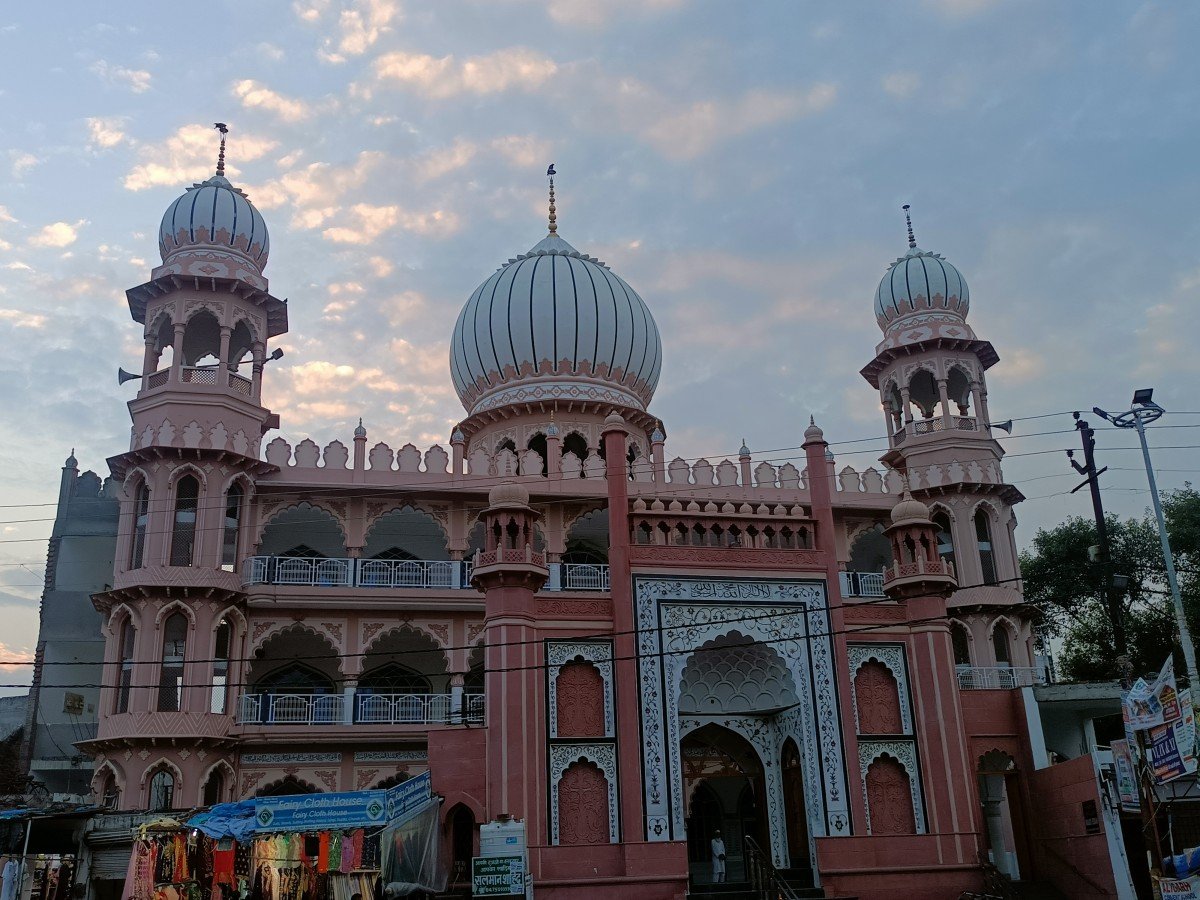
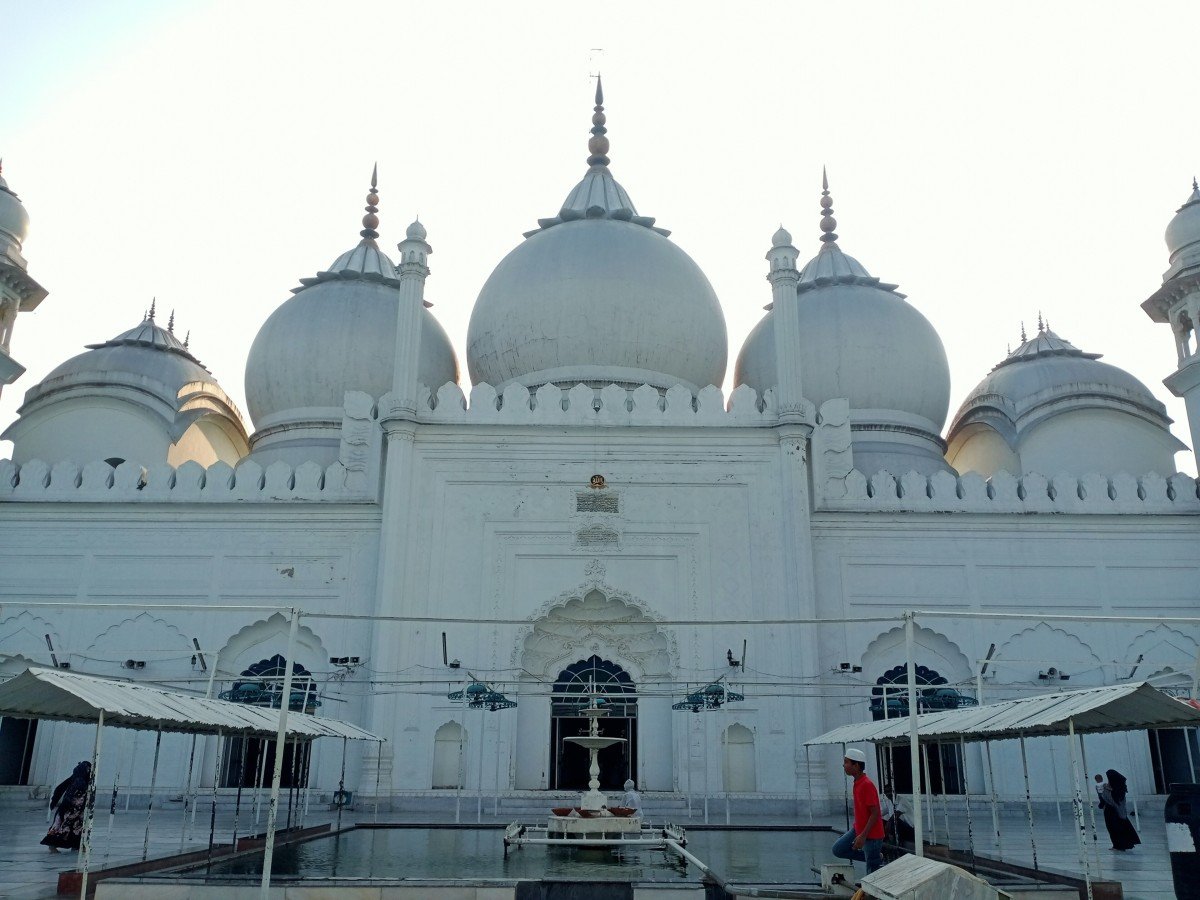
Jama Masjid AMU: The golden domes of the mosque reflect the sunlight beautifully. The intricate patterns on the walls make for great detail shots. The surrounding gardens provide a peaceful green background. It is a symbol of spiritual and architectural beauty.Photo Gallery


Things To Do
 @@Overview and Founders: $mathbfTeerthdham ext{ Mangalayatan}$ is a grand, relatively $mathbfmodern}$ $mathbfJain}$ pilgrimage and research complex situated on the $mathbfAligarh-Agra ext{ Highway}$. It was promoted and developed by the $mathbfShri ext{ Adinath } Kund-Kund } Kahan ext{ Digamber } Jain ext{ Trust}$ and is spread over a vast area of 16 acres. @@Spiritual Offerings: The complex is not just a collection of temples but a center for $mathbfJain ext{ philosophy}$, $mathbfmeditation}$, and $mathbfspiritual ext{ research}$. It houses a total of $mathbffive ext{ temples}$ dedicated to various $mathbfTirthankaras}$. Key attractions include the main temple of $mathbfBhagwan ext{ Adinath}$ and a unique $mathbfman-made ext{ hill}$ called $mathbfKailash ext{ Parvat}$. @@Key Temple Structures: The complex includes the $mathbfBhagwan ext{ Mahavir } Temple}$ (walls encrypted with $mathbfSamaysaar}$), the $mathbfBhagwan ext{ Bahubali } Temple}$ (encrypted with $mathbfMokshamarg ext{ Prakashak}$ and $mathbfChahdhaala}$), and the $mathbfPandit ext{ Daulatram } Jinvaani ext{ Temple}$ for the preservation of sacred Jain literature. @@Community and Wellness: $mathbfMangalayatan}$ is a self-sufficient spiritual town, offering amenities like the $mathbfBhagwan ext{ Mahavir } Charitable ext{ Hospital}$, an $mathbfAcharya ext{ Samantbhadra } Meditation ext{ Centre}$, a $mathbfstudent's ext{ hostel}$, and $mathbfaccommodation}$ for visiting pilgrims ($mathbfMangal ext{ Basadi}$). It represents a significant hub for the $mathbfDigamber ext{ Jain}$ community. (Word Count Target: 400)
 @@Specialist History of Medicine Museum: The Hakim Karam Hussain Museum on History of Medicine and Sciences is a specialized academic unit and museum operating under the Ibn Sina Academy of Medieval Medicine and Sciences (IAMMS). Its primary theme is the cultural history of health and disease, with a strong focus on Medieval Medicine (especially Unani and Ayurveda) and related sciences. The museum's collections include illustrations, medical manuscripts, philately (stamps), and memorabilia of physicians and Nobel laureates.
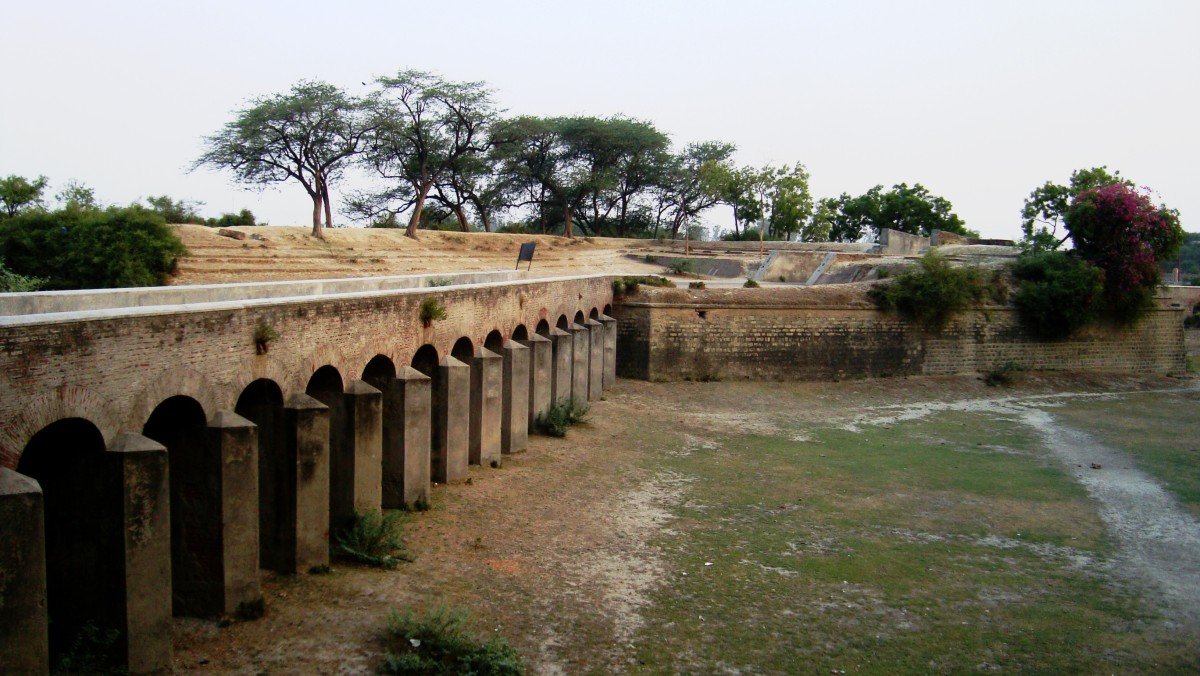
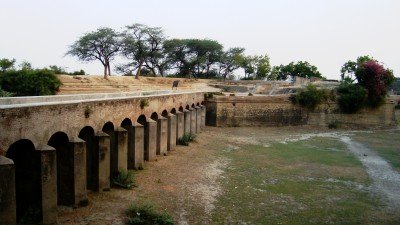 @@History & Resilience of Aligarh Fort: Located on the Grand Trunk Road, the fort's construction began in the 15th century by the governor of Kol under the Ibrahim Lodi Sultanate. It was significantly rebuilt by Sabit Khan and later heavily modified by French engineers like De Boigne and Perron under the Maratha rule of Madhavrao I Scindia. Its strategic importance was proven during the Battle of Ally Ghur in 1803 when the British captured it. Today, it stands as a testament to the layered military and political history of the region. A section of the inner fort is now managed by Aligarh Muslim University (AMU).
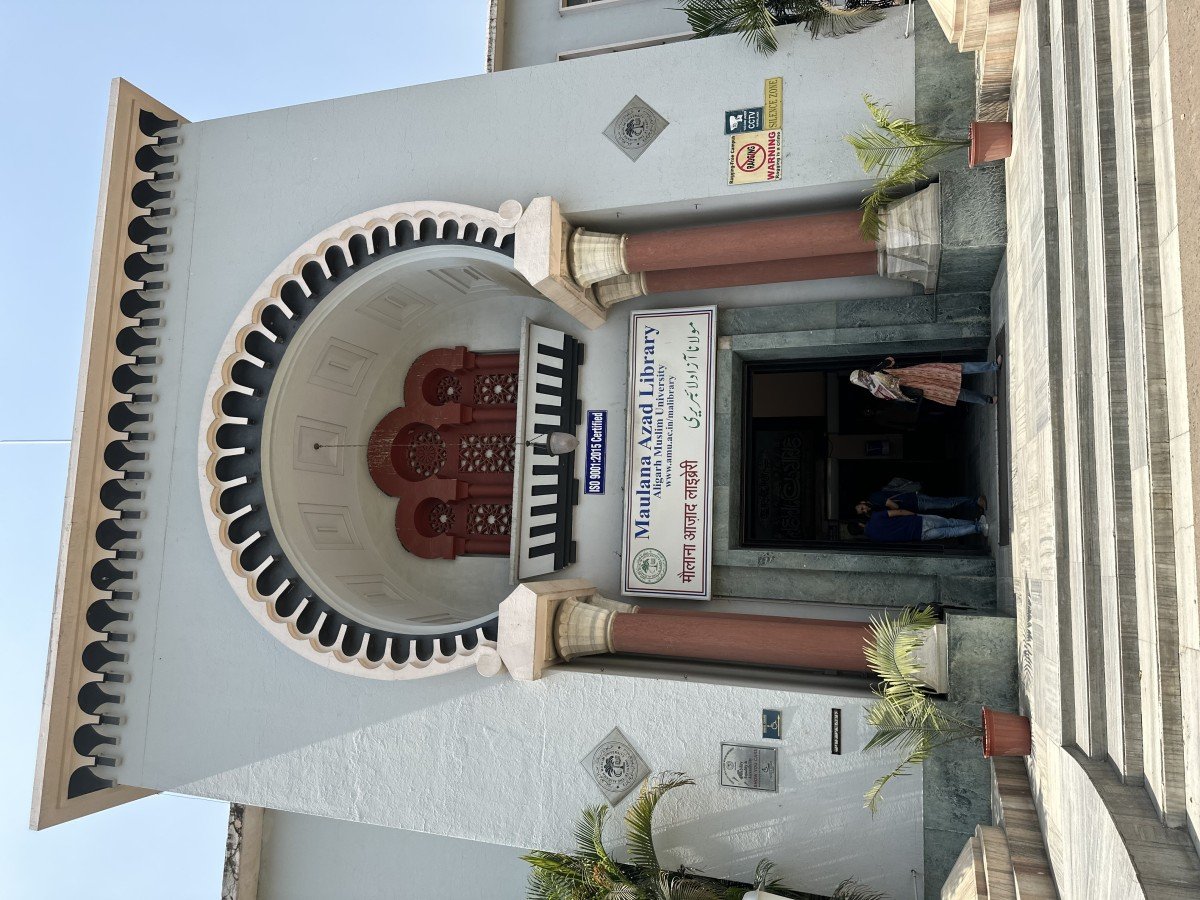
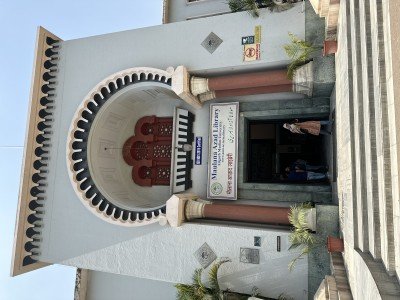
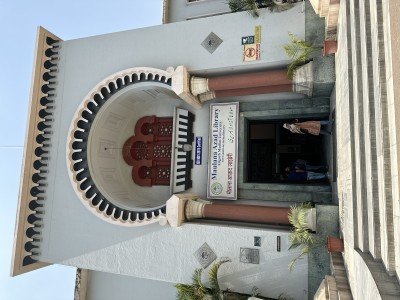
@@Establishment and History: Formally established in 1960, though its origins date back to the Lytton Library founded by Sir Syed Ahmad Khan in 1877, the Maulana Azad Library is the central library of Aligarh Muslim University (AMU). It was named after Maulana Abul Kalam Azad, India's first Education Minister. @@Collection and Holdings: The library is renowned as the largest university library in Asia, boasting a vast collection of approximately 1.8 million volumes, including books, journals, and a remarkable collection of rare manuscripts in Arabic, Persian, Turkish, and Urdu. It is particularly famous for housing the personal collection of Maulana Azad. @@Role in Education: Serving over 28,000 students and faculty daily, it is the intellectual heart of AMU, providing comprehensive research and reading facilities. The library features eight small and six large reading halls with a total seating capacity of about 2000, remaining open for long hours to support academic rigor. @@Digital Resources and Services: In the modern era, the library also offers extensive digital resources, providing access to online journals and research databases through a dedicated Digital Resource Centre. Its massive collection includes rare artifacts and original letters from historical figures, making it an archive of national significance. (Word Count Target: 400)
@@History & Resilience of Aligarh Fort: Located on the Grand Trunk Road, the fort's construction began in the 15th century by the governor of Kol under the Ibrahim Lodi Sultanate. It was significantly rebuilt by Sabit Khan and later heavily modified by French engineers like De Boigne and Perron under the Maratha rule of Madhavrao I Scindia. Its strategic importance was proven during the Battle of Ally Ghur in 1803 when the British captured it. Today, it stands as a testament to the layered military and political history of the region. A section of the inner fort is now managed by Aligarh Muslim University (AMU).
@@Establishment and History: Formally established in 1960, though its origins date back to the Lytton Library founded by Sir Syed Ahmad Khan in 1877, the Maulana Azad Library is the central library of Aligarh Muslim University (AMU). It was named after Maulana Abul Kalam Azad, India's first Education Minister. @@Collection and Holdings: The library is renowned as the largest university library in Asia, boasting a vast collection of approximately 1.8 million volumes, including books, journals, and a remarkable collection of rare manuscripts in Arabic, Persian, Turkish, and Urdu. It is particularly famous for housing the personal collection of Maulana Azad. @@Role in Education: Serving over 28,000 students and faculty daily, it is the intellectual heart of AMU, providing comprehensive research and reading facilities. The library features eight small and six large reading halls with a total seating capacity of about 2000, remaining open for long hours to support academic rigor. @@Digital Resources and Services: In the modern era, the library also offers extensive digital resources, providing access to online journals and research databases through a dedicated Digital Resource Centre. Its massive collection includes rare artifacts and original letters from historical figures, making it an archive of national significance. (Word Count Target: 400)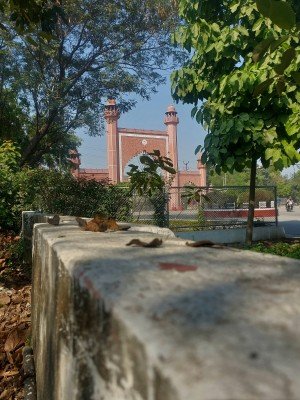 @@Symbol of AMU's 100-Year Legacy: The Centenary Gate is the grand main entrance to the prestigious Aligarh Muslim University (AMU) campus, one of India's foremost educational institutions. It was inaugurated to mark the 100th anniversary (Centenary) of the university, replacing or supplementing the earlier gates. It stands as a powerful symbol of Sir Syed Ahmad Khan's vision and the cultural heritage of the Aligarh Movement. The gate is a hub of student activity, connecting the academic world to the outside city.
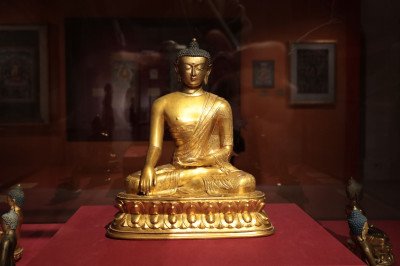 @@Establishment and Significance: The $mathbfSir ext{ Syed } Academy ext{ Museum}$ is a historical and biographical museum dedicated to the life, vision, and legacy of $mathbfSir ext{ Syed } Ahmad ext{ Khan}$ (1817?1898), the founder of the $mathbfAligarh ext{ Muslim } University}$ (AMU). It was inaugurated on $mathbfOctober ext{ 22, } 1974$, and is housed in the historic building known as Sir Syed House. @@The Building's History: The building itself was originally a military mess before being purchased in 1876 by $mathbfSyed ext{ Mahmood}$, $mathbfSir ext{ Syed's}$ son, to serve as his father's residence for the last 22 years of his life. It was meticulously restored to its original grandeur in the early 1970s before being converted into the Academy and Museum. @@Collection Overview: The museum's collection is primarily $mathbfpersonalia}$—historical artifacts, documents, photographs, and personal effects related to $mathbfSir ext{ Syed } Ahmad ext{ Khan}$ and his contemporaries. The exhibits trace his efforts in social reform, education, and the establishment of the $mathbfMAO ext{ College}$ (which later became AMU). @@Gallery Structure: The museum is generally organized into several key galleries. The first gallery focuses on the introductory life events of $mathbfSir ext{ Syed}$ and his key companions. The second gallery details the various developmental stages of the $mathbfMAO ext{ College}$ prior to 1920. The museum serves as a powerful testament to the intellectual movement that shaped modern $mathbfMuslim ext{ education}$ in $mathbfIndia}$. (Word Count Target: 400)
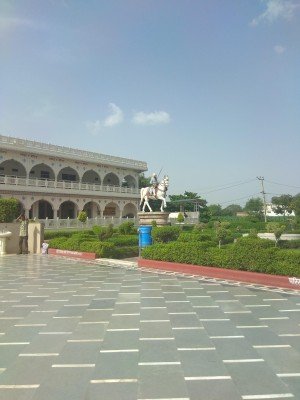
 @@A Premium Wedding and Event Venue: Fort Royal is a well-known, modern Banquet Hall and Wedding Venue in Aligarh, strategically located on Qila Road, near the historical Aligarh Fort. While the name evokes a sense of history and grandeur, the establishment itself is a contemporary facility built for hosting lavish events, particularly weddings and corporate functions. Established around 2012, it boasts luxurious interiors, expansive outdoor lawns, and comprehensive catering facilities. It symbolizes the city's blend of tradition (in its naming) and modern commercial growth.Show All
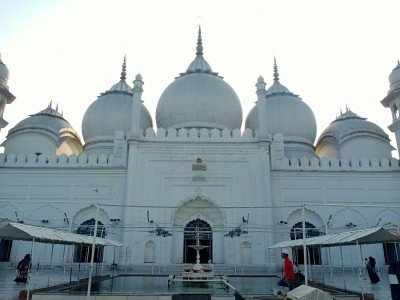 @@Sir Syed Ahmad Khan's Vision: Located in the heart of the Aligarh Muslim University (AMU) campus, the Jama Masjid (also known as Sir Syed Mosque or Sir Syed Hall Mosque) was started in 1879 by the university's founder, Sir Syed Ahmad Khan, and completed in 1915. The mosque is famous for its history of enabling both Sunni and Shi'ite Muslims to worship together, embodying a spirit of tolerance and unity. Adjacent to it is the Tomb of Sir Syed Ahmad Khan, making it a key historical and religious site for the university and the city.
Information
-
Why Famous:
Lock Industry: Aligarh is the largest producer of locks in the country. Almost every household in the old city is involved in this craft. The variety of locks produced ranges from tiny padlocks to heavy security locks. It is a unique industrial heritage of the state.
...Lock Industry: Aligarh is the largest producer of locks in the country. Almost every household in the old city is involved in this craft. The variety of locks produced ranges from tiny padlocks to heavy security locks. It is a unique industrial heritage of the state.
Aligarh Muslim University: This university is a symbol of modern Muslim education in India. Its history is closely linked with the Indian independence movement. The campus contains many historical buildings and museums. It is a "city within a city" with a very distinct atmosphere. -
Architecture:
Fort Design: The Aligarh Fort is one of the strongest forts in India. It features high bastions and a deep moat surrounding the walls. The structure was modified by various rulers over time. It represents a mix of Mughal and British military styles.
Read MoreFort Design: The Aligarh Fort is one of the strongest forts in India. It features high bastions and a deep moat surrounding the walls. The structure was modified by various rulers over time. It represents a mix of Mughal and British military styles.
AMU Buildings: The buildings in the AMU campus like Strachey Hall are iconic. They feature Indo-Saracenic architecture with pointed arches. The use of red bricks and white detailing is very prominent. The Jama Masjid in the campus has golden domes and minarets.How To Reach:
By Air: The nearest international airport is in New Delhi (140 KMS away). From Delhi, one can take a train or a private taxi. There are plans for a local airport to start operations soon. Currently, Delhi remains the most viable air link.
By ...By Air: The nearest international airport is in New Delhi (140 KMS away). From Delhi, one can take a train or a private taxi. There are plans for a local airport to start operations soon. Currently, Delhi remains the most viable air link.
By Train: Aligarh Junction is a major station on the Delhi-Kolkata route. Many superfast trains like Shatabdi and Rajdhani stop here. It is very well connected to Agra, Kanpur, and Lucknow. Trains are the fastest way to reach from neighboring states.
By Road: The city is situated on the NH-91 which connects Delhi and Kanpur. Frequent bus services are available from the ISBT in Delhi. Private car travel via the Yamuna Expressway is also convenient. The road connectivity within the district is quite good.
Local Transport: Shared autos are the primary mode of transport within the city. Cycle-rickshaws are available for narrow lanes of the old town. App-based taxi services are limited but increasing. Most students and locals prefer using bicycles or scooters.Weather and Best Time to Visit:
Winter Season: October to March is the most pleasant time. Temperatures are cool, making it easy to walk around the campus. The Aligarh Exhibition takes place during this season. It is also the best time for bird watching at Shekha Jheel.
Sum...Winter Season: October to March is the most pleasant time. Temperatures are cool, making it easy to walk around the campus. The Aligarh Exhibition takes place during this season. It is also the best time for bird watching at Shekha Jheel.
Summer Season: April to June can be very hot and dry. Outdoor activities during the day can be tiring. It is better to plan visits for early morning or late evening. Drinking plenty of fluids is necessary during the summer months.
Monsoon Season: July to September brings relief from the heat with rains. The campus turns into a lush green paradise. Humidity can be high after the rain showers. It is a nice time to enjoy the scenic beauty of the university.Near Tourist Places:
1. Agra (90 KMS), 2. Mathura (65 KMS), 3. Vrindavan (75 KMS), 4. Bulandshahr (70 KMS), 5. Hathras (35 KMS), 6. Kasganj (60 KMS), 7. Khurja (50 KMS), 8. Etah (70 KMS), 9. Narora (60 KMS), 10. Delhi (140 KMS).Tourism Tips
-
Health & Safety: The city is generally safe for tourists during the day. Be cautious of heavy traffic on the main roads. It is better to travel in groups when exploring remote areas. Drink only purified or bottled water to avoid infections.
P...Health & Safety: The city is generally safe for tourists during the day. Be cautious of heavy traffic on the main roads. It is better to travel in groups when exploring remote areas. Drink only purified or bottled water to avoid infections.
Packing Tips: Carry modest clothing for university and religious sites. Comfortable footwear is a must for walking through the large campus. A light jacket is needed for the winter months. Don't forget your camera and binoculars for bird watching.
Accommodation: There are several hotels located near the railway station and Civil Lines. University guest houses are available for visiting academics. Budget guesthouses can be found in the Centre Point area. It is advisable to choose hotels with good reviews for safety.
Other Advice: Try to learn a few words of the local polite Urdu dialect. Respect the academic environment of the university campus. Plan your visit to the Numaish on a weekday to avoid crowds. Ask for permission before taking photos inside university buildings.
Reviews
FAQs
Aligarh Itineray And Cost:-
Other Places In Uttar Pradesh :-
Other States In India :-
Information about New and Updated Locations() of Uttar Pradesh Has Been Added :-
Card subtitle
Note:-
Information provided here in good Faith and for reference only.
Near Places
Agra
Some quick example text to build on the card title and make up the bulk of the card's content.
Go somewhere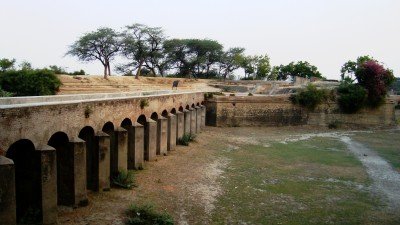
Aligarh
Some quick example text to build on the card title and make up the bulk of the card's content.
Go somewhere
Ayodhya
Some quick example text to build on the card title and make up the bulk of the card's content.
Go somewhere
Azamgarh
Some quick example text to build on the card title and make up the bulk of the card's content.
Go somewhere
Bahraich
Some quick example text to build on the card title and make up the bulk of the card's content.
Go somewhere
Bareilly
Some quick example text to build on the card title and make up the bulk of the card's content.
Go somewhere
Chitrakoot
Some quick example text to build on the card title and make up the bulk of the card's content.
Go somewhere
Fatehpur Sikri
Some quick example text to build on the card title and make up the bulk of the card's content.
Go somewhere
Ghaziabad
Some quick example text to build on the card title and make up the bulk of the card's content.
Go somewhere
Gorakhpur
Some quick example text to build on the card title and make up the bulk of the card's content.
Go somewhere
Hastinapur
Some quick example text to build on the card title and make up the bulk of the card's content.
Go somewhere
Jhansi
Some quick example text to build on the card title and make up the bulk of the card's content.
Go somewhere
Kanpur
Some quick example text to build on the card title and make up the bulk of the card's content.
Go somewhere
Kushinagar
Some quick example text to build on the card title and make up the bulk of the card's content.
Go somewhere
Lucknow
Some quick example text to build on the card title and make up the bulk of the card's content.
Go somewhere
Mathura
Some quick example text to build on the card title and make up the bulk of the card's content.
Go somewherein Other Cities